How to Wrap Holiday Lights on a Saguaro or Palm in Arizona Without Hurting It

A saguaro can stand for well over a century, and it never asked to be a Christmas tree. I love a glowing yard as much as anyone.
Before you grab that tangle of strands, let’s talk about a smarter way to light up the desert. Your cactus and your palm will thank you.
Keep Lights Off The Saguaro
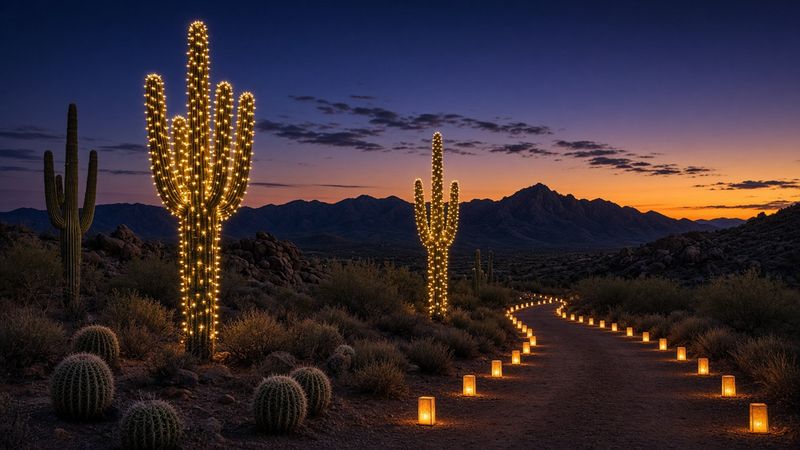
Here is the short answer: leave the saguaro bare and decorate around it. A saguaro is a big, slow-growing cactus with a skin that does not bounce back easily from scrapes.
Strands that rub, press, or poke could add stress you simply do not need.
University of Arizona Cooperative Extension lists physical damage as a source of saguaro problems. It also says abrasions and punctures should be prevented, and notes that a hurt plant can be hard to fix.
That is the reason for caution, and it is a good one.
Now for the fair part. The guidance does not test holiday lights, and it does not say a single strand will harm your cactus.
Nobody has shown that lights cause infection or rot, so skip that worry. Still, why gamble with a plant that took decades to reach your yard?
Treat it like a museum piece and put the sparkle somewhere else.
Palm Trunks Have A Different Injury Concern
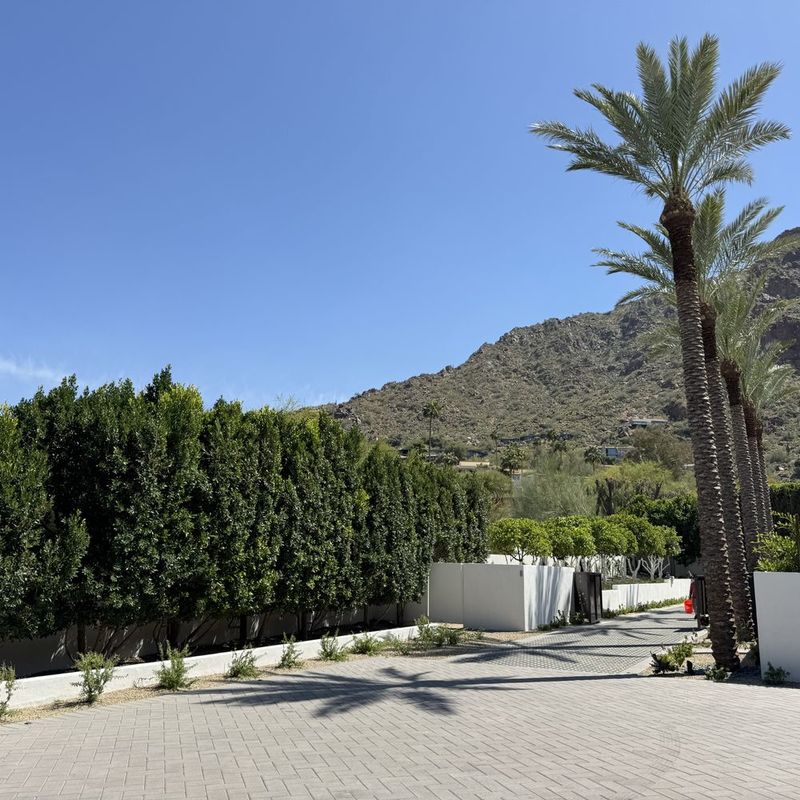
Palms play by different rules than cacti. Their trunks do not heal over the way many trees do, so a wound tends to stay put.
Arizona’s landscape palm guide from Extension says trunk wounds are permanent, and it advises against nails and climbing spikes during maintenance. It also warns that trunk wounds can open the door to disease or insects.
That is why staples, nails, and screws are a hard no for hanging lights. A tiny hole may seem harmless, but it lasts as long as the palm does.
The same guide cautions against skinning or shaving the trunk, so rough treatment is out as well.
Palms are a diverse bunch, and species and condition vary from yard to yard. Extension stresses management that fits the species, so no single trick is right for every palm.
Nobody is saying every light strand will injure every palm. The sensible move is simply to avoid anything that wounds the trunk.
Choose A Lower-Contact Display
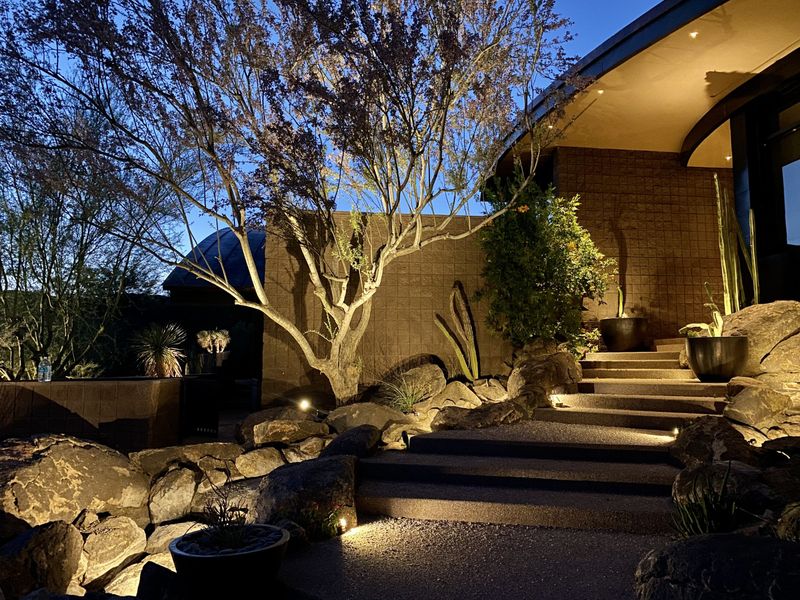
Want the glow without the contact? Build the show next to the plant instead of on it.
A freestanding frame, an outlined wall or ramada, or ground-level lights placed a safe distance away all do the job.
These are sensible risk-reduction ideas, not methods tested in plant-care research. Their appeal is simple.
Nothing rubs the cactus, nothing hangs its weight on a palm, and nothing needs a fastener. That lines up with Extension’s advice to prevent abrasions and punctures on saguaros, and with the palm guidance on avoiding trunk wounds.
Try a tall frame of lights a few feet behind a saguaro so it stands in silhouette. Line a nearby fence or roofline with warm strands.
Keep ground lights well clear of spines and trunks, and leave room for the plant to grow. The plant becomes the star, and you get a photo-worthy yard.
A Palm Drape Is Not A Proven Safe Method
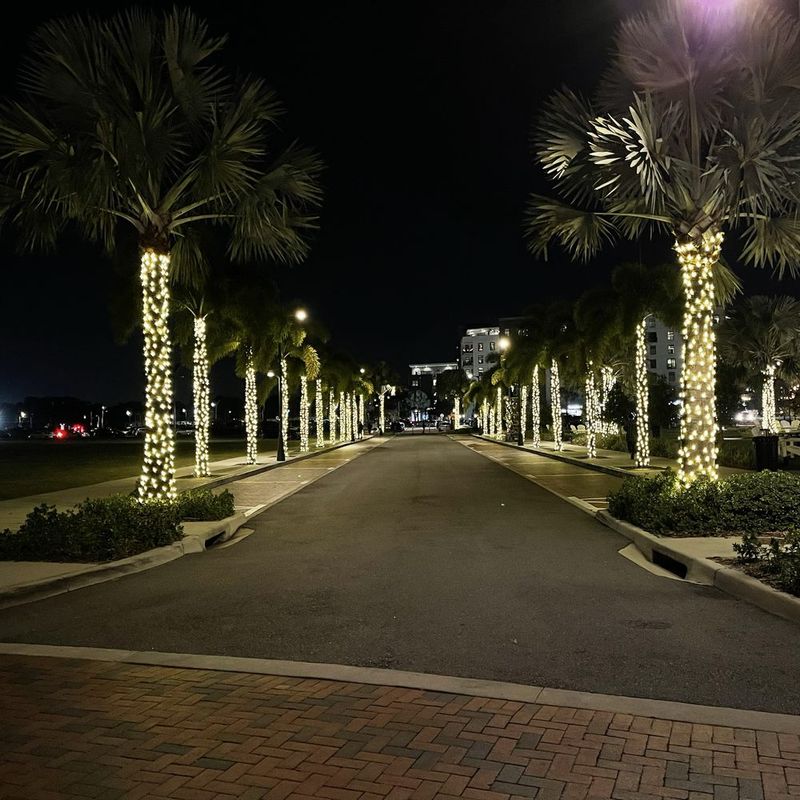
Some folks will still want lights on a palm, so let’s be honest. Nobody has established a safe wrapping method, a safe tension, or a safe time limit.
The Arizona palm guide covers trunk wounds and maintenance, not holiday decorating. Any claim of a guaranteed safe wrap is a guess.
If you decide to try a loose, temporary drape anyway, treat it as a cautious choice and not a promise. Keep it slack, and take it down soon after the holidays.
Check the trunk for rubbing along the way.
Steer clear of tight wraps left up all season. Never use staples, nails, screws, or anything that pierces the trunk, since those wounds are permanent.
The simplest path remains a freestanding display nearby, which sidesteps the question entirely.
LEDs Reduce Heat But Do Not Make Contact Safe
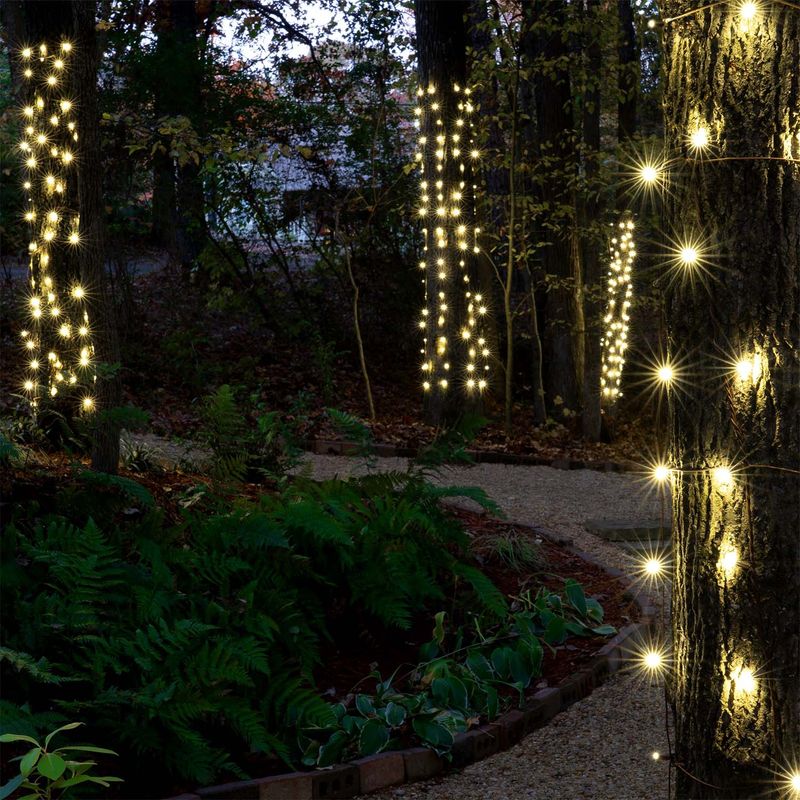
LEDs get a lot of praise, and some of it is earned. In its comparison of lighting types, University of Minnesota Extension reports that LED bulbs produce less heat than incandescent bulbs.
So if you are choosing between the two, LEDs are the cooler option.
Cooler does not mean harmless. A strand can still rub a cactus, press into a trunk, or sit there holding its own weight.
Less heat does not change any of that, and it does not make close contact safe for a plant.
Think of LEDs as a nice bonus for your freestanding display, not a permission slip. Pick them for the lower heat and likely lower fuss, then keep them on the frame, the wall, or the ground.
The plant stays untouched either way.
Check Outdoor Labels And Inspect Strands
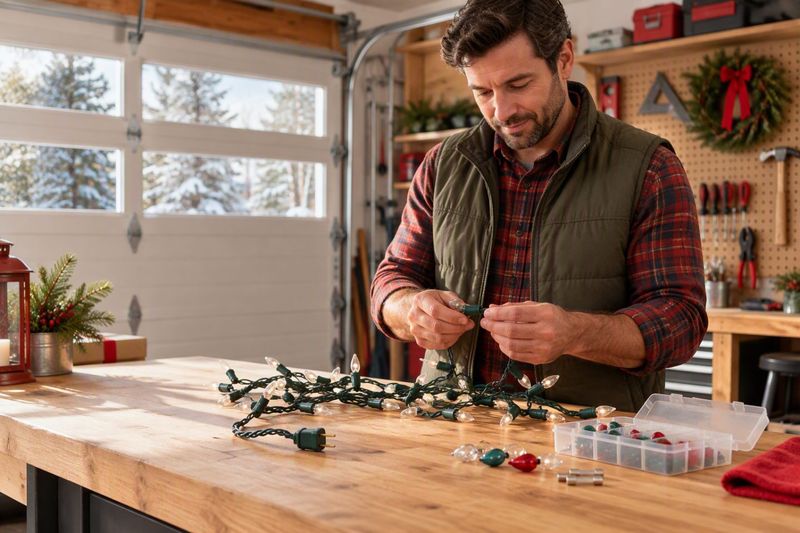
Before the first bulb goes up, read the box. Labels tell you whether a string is for indoor use only or for indoors and outdoors.
UL explains that decorative strings are distinguished by these labels, so look for one marked for outdoor use.
Next, follow the product instructions. Then give each strand a quick once-over for damage, such as cracked or frayed wire.
Set aside anything that looks worn rather than hoping it holds up.
The U.S. Consumer Product Safety Commission notes that seasonal lighting can pose shock and fire hazards when used unsafely.
That is reason enough to stay careful with the basics. Do this check on a patio table, well away from your saguaro and palm.
Let The Lights Frame The Plant
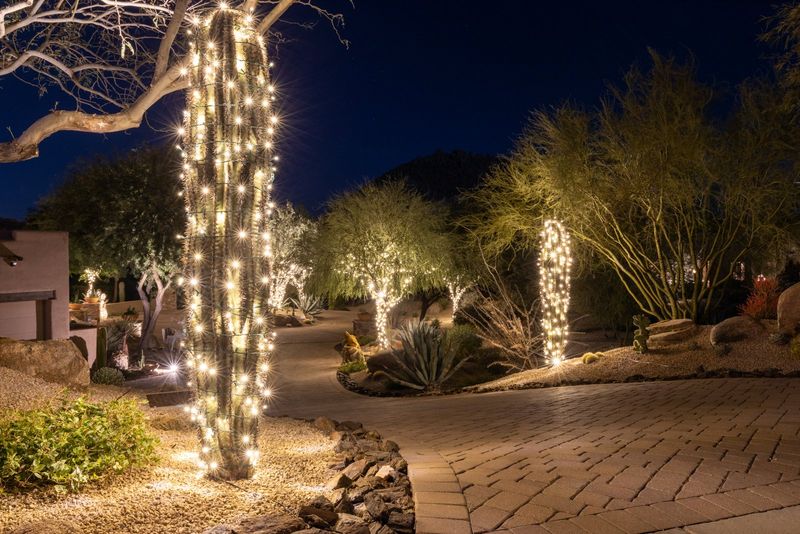
Leave the saguaro unwrapped, keep fasteners out of palm trunks, and put your lights on a frame, a wall, or the ground nearby. The plants stay untouched, and the glow still makes them look great.
If you have a legal question about protected native plants, ask Arizona authorities.
A saguaro already knows how to stand out. Your job is just to give it a good spotlight.