The Lawn Mistake Every Texas Homeowner Makes Right Before Winter
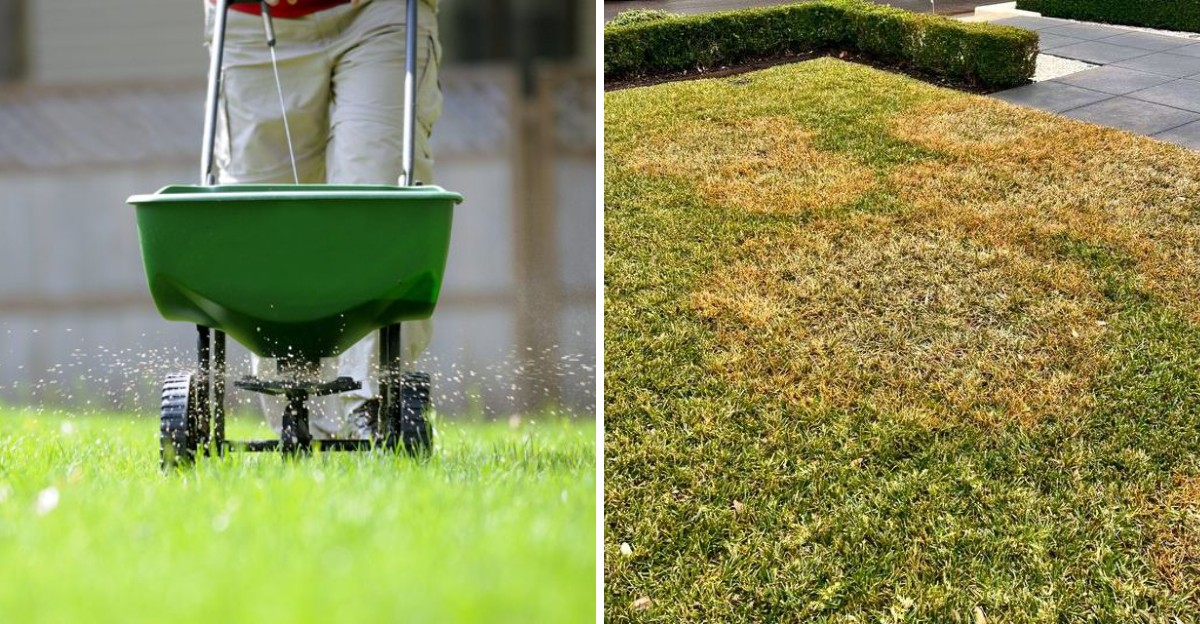
One bag of lawn food spread in November can leave a yard weaker by March. That’s a little wild, considering most of us buy that bag with the best intentions.
Texas grass senses the season changing long before we do. Cooler nights and shorter days tell St. Augustine and Bermuda to slow down and stash energy in their roots, so under the surface, the lawn is quietly packing for a long nap.
The mistake feels completely normal, which is what makes it so common. The air turns crisp, the yard looks a bit tired, and your hands start itching to help, especially when a garden center display is stacked with colorful bags.
Plenty of homeowners have made this exact move at least once. What if the kindest thing your lawn needs right now is a lot less than you think?
1. That Last Bag of Lawn Fertilizer Could Backfire
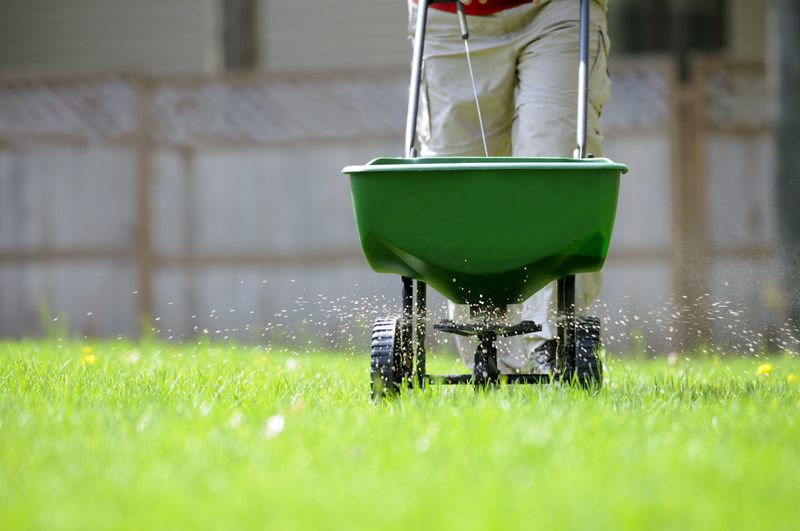
Spreading fertilizer feels like a gift to your grass. For warm-season lawns in late fall, though, that gift often arrives at the worst possible moment.
The mistake is simple. Homeowners feed nitrogen to St. Augustine, Bermuda, or zoysia when the grass is already slowing down for winter.
Texas A&M AgriLife turf specialists recommend wrapping up nitrogen feeding well before the first expected frost.
Late nitrogen sends the wrong signal. Your grass is trying to store sugars in its roots and runners, yet the fertilizer tells it to grow fresh blades instead.
That tug-of-war leaves the plant with fewer reserves for the cold months ahead.
Money is part of the story too. Grass that is barely growing takes up little nitrogen, so much of what you spread just sits there.
Rain can wash it into storm drains, creeks, and lakes, where extra nutrients feed algae.
I like to think of fall as a quiet season for the lawn. Mowing, watering when dry, and raking leaves off the turf help much more than one last feeding.
Your grass already knows how to get ready for winter.
Holding off on that bag might feel strange at first. Come spring, you will likely be glad you did.
2. St. Augustine and Bermuda Grass Are Winding Down for Dormancy
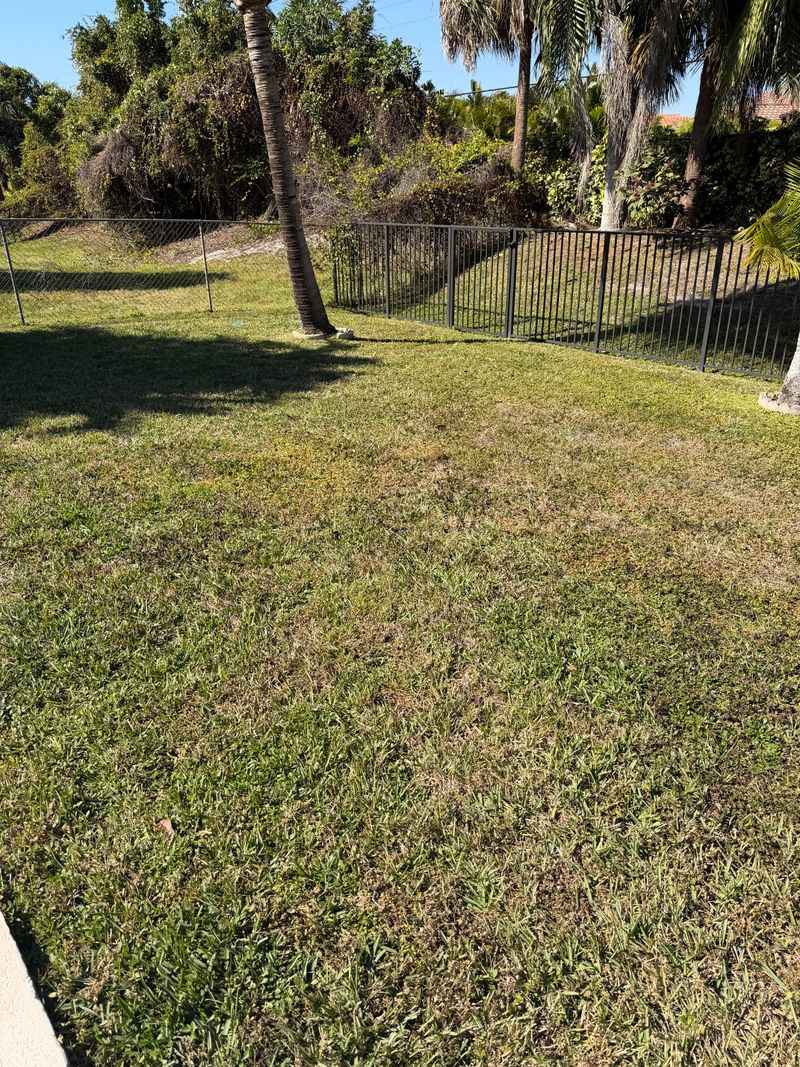
Bermuda grass turning tan in November is not a sign of trouble. It is the lawn doing exactly what nature designed it to do.
Warm-season grasses grow best in hot weather. Once soil temperatures drop into the low 60s and below, growth slows sharply.
Many lawns across North and Central Texas go mostly brown after the first hard frost, while yards along the Gulf Coast and in the Rio Grande Valley may stay partly green.
Here’s something worth knowing about that brown color. The blades may look tired, but the crowns, runners, and roots stay alive underground.
They hold stored carbohydrates that fuel green-up next spring.
St. Augustine, zoysia, centipede, and buffalograss all follow this same basic rhythm. Some hold color a bit longer than others, especially in shady or protected spots.
None of them want to start a growth spurt right before cold weather.
Dormancy is a survival plan, and a clever one. Your lawn is shutting down the expensive work of making leaves and saving energy for later.
So when the yard starts fading, resist the urge to fix it. A tan lawn in December is a lawn that is resting well.
3. Nitrogen Pushes Soft Green Grass Blades at the Wrong Time
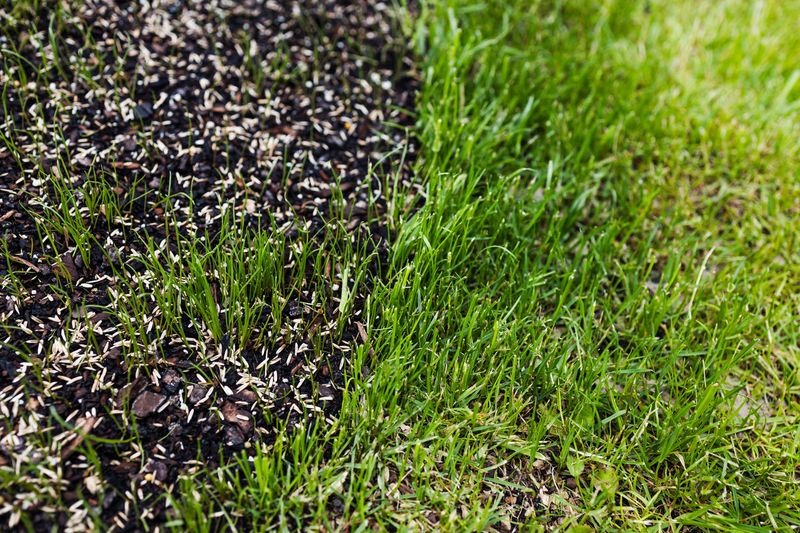
Nitrogen is the gas pedal of lawn care. It is the first number on a fertilizer bag, and its main job is to push leafy green growth.
During summer, that push is helpful. Your grass is growing fast, and nitrogen helps it fill in thick and dark.
In late fall, the same push creates soft, juicy new blades right when the plant should be slowing down.
Those fresh blades have thin cell walls and lots of water inside. They have not had time to toughen up the way older growth does as days get cooler.
Turf experts call this process hardening off, and late feeding interrupts it.
There is also an energy cost. Building new leaves uses up carbohydrates the grass would otherwise tuck away in its roots and stolons.
The plant heads into winter with a thinner savings account.
You might be surprised by how quickly a lawn responds. A quick-release nitrogen product can green up grass within a week or two, even in cool weather.
That pretty color is tempting, but it is a short-lived reward.
Letting growth slow naturally gives the plant a firmer, sturdier body for winter.
4. Frosty Mornings Hit Freshly Fed Lawns Hardest
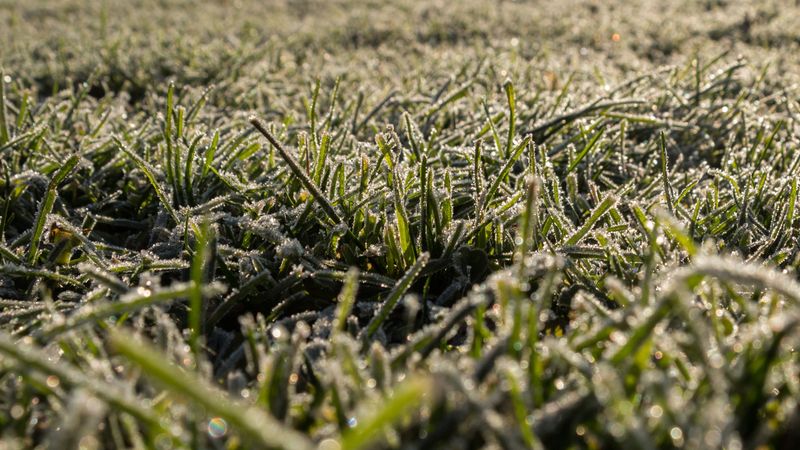
Frost sparkles beautifully on a lawn at sunrise. For tender, freshly pushed grass, that sparkle can spell trouble.
When temperatures dip below freezing, ice can form inside and between plant cells. Soft new growth holds more water and has less natural protection, so it tends to suffer more injury.
The result is often brown, mushy blades that look scorched.
St. Augustine is the most cold-sensitive of the common Texas lawn grasses. Hard freezes, like the one in February 2021, left many yards with thin or bare areas the following spring.
Lawns pushed into late growth have less stored energy to bounce back from that kind of stress.
Not every brown patch after a freeze comes from fertilizer, of course. Shade, poor drainage, low mowing, and drought stress all play a role.
Still, late nitrogen stacks the odds against your grass.
A few simple habits help. Water a dry lawn a day or two before a forecasted freeze, since moist soil holds heat better than dry soil.
Keep mowing height on the higher side through fall.
Above all, let your lawn harden naturally. Tougher blades and full root reserves handle a cold snap far better.
5. Brown Rings in St. Augustine Grass Can Follow Late Feeding
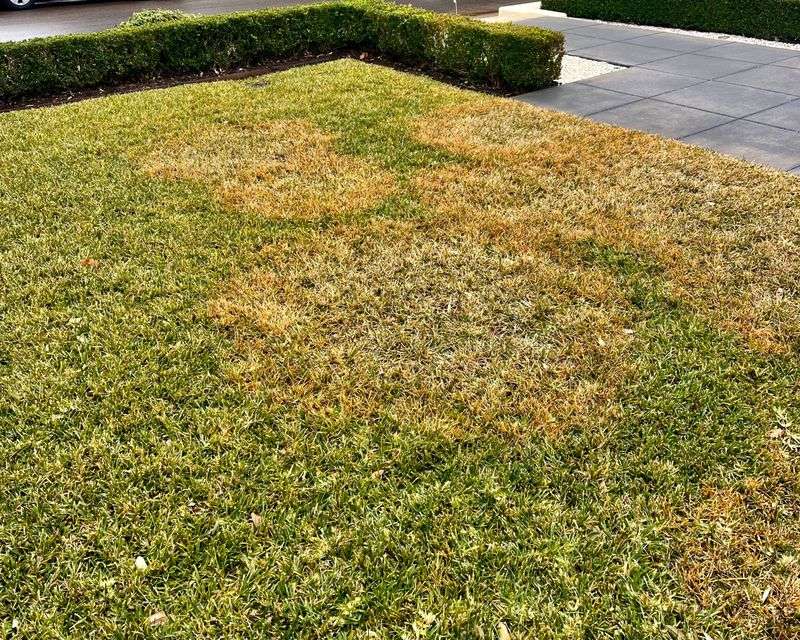
A ring of yellow and orange grass can pop up almost overnight in a cool, damp yard. Many Texans call it brown patch, while turf scientists call it large patch.
The culprit is a fungus called Rhizoctonia solani. It loves soil temperatures roughly between 60 and 75 degrees, plus moisture.
That makes fall and early spring prime time across much of Texas.
St. Augustine and zoysia are the most common targets. Texas A&M AgriLife lists excess nitrogen in fall as a leading trigger.
Lush, soft growth gives the fungus an easy meal.
Patches often start a few feet wide and grow into big circles. Look closely at the edges and you may see blades that pull loose easily, with dark, rotted spots near the base.
Prevention beats any cure here. Skip fall nitrogen on St. Augustine, water early in the morning only when needed, and improve drainage in low spots.
Avoid evening watering, since wet blades overnight help the fungus spread.
If patches show up anyway, a fungicide labeled for large patch can help limit spread. Damaged areas usually recover slowly once warm weather returns in spring.
6. Henbit and Chickweed Love That Late Fertilizer
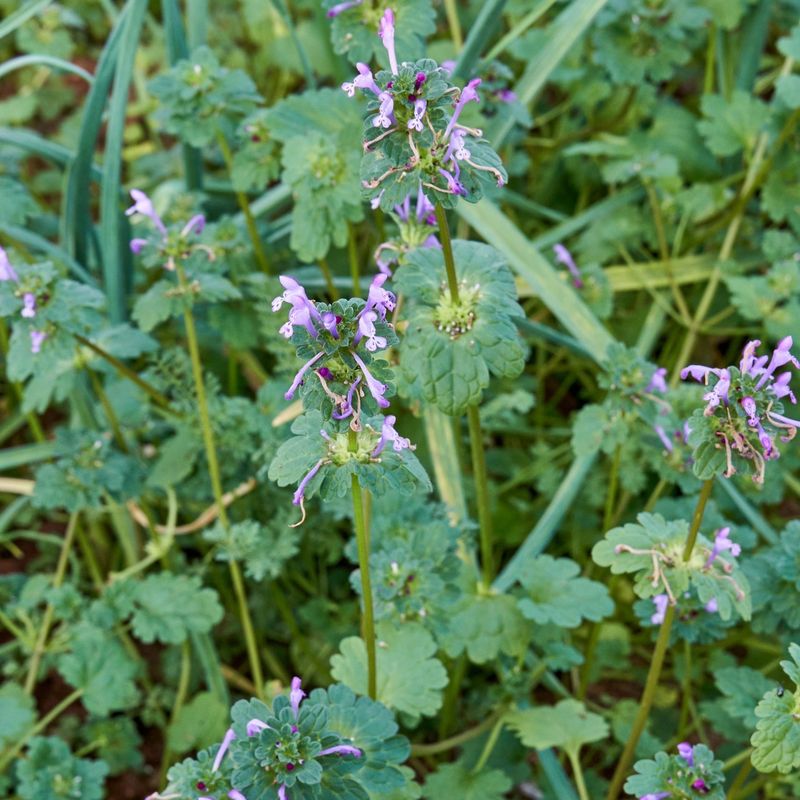
Guess who wakes up just as your grass is going to sleep? Winter weeds like henbit, chickweed, and annual bluegrass sprout in fall and grow all winter.
That timing matters. Dormant St. Augustine or Bermuda takes up very little nitrogen once growth stalls.
Cool-season weeds are actively growing, so they grab whatever food is sitting in the soil.
The result can be a lawn speckled with purple henbit flowers and bright green clumps of annual bluegrass by February. Those weeds then set seed, giving you an even bigger crop next year.
I find it a little funny that a bag meant for the grass ends up feeding the uninvited guests.
Healthy, thick turf is the best weed barrier you can have. Proper summer feeding and good mowing help with that far more than a late fall boost.
Many Texas homeowners also use a pre-emergent herbicide in early fall, often late August to early October, depending on region. It stops many winter weed seeds before they sprout.
Always follow label directions and check whether the product is safe for your grass type.
For a few stray weeds, hand pulling after a rain works nicely.
7. Early Fall Was the Sweet Spot for Feeding Your Lawn
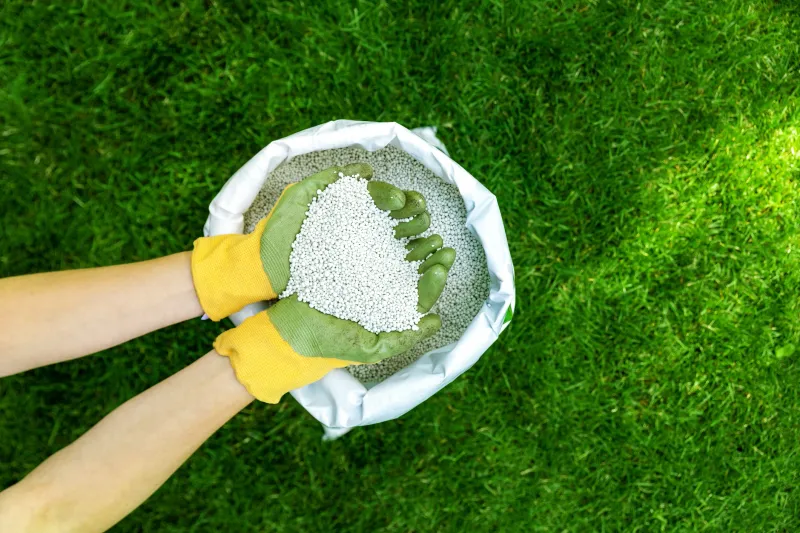
Timing is the real secret in lawn feeding. For warm-season grass, the last nitrogen application works best several weeks before your area’s average first frost.
Texas A&M AgriLife commonly suggests the final feeding about six weeks before first frost. In much of North Texas, that points to around mid-September to early October.
Central Texas may stretch a little later, while the Gulf Coast and South Texas get more breathing room.
St. Augustine is a special case. Many AgriLife experts advise skipping fall nitrogen on it altogether in areas prone to large patch, or using only a light rate.
Potassium is the third number on the bag. It supports cell strength and stress tolerance, though a soil test should guide whether you need it.
Many Texas soils already hold plenty, so adding more may not help.
A soil test through the Texas A&M AgriLife Soil, Water and Forage Testing Laboratory costs little and removes the guesswork. It tells you which nutrients your yard is actually missing.
If you missed the window this year, relax. Wait until spring, when the lawn has fully greened up and been mowed a couple of times, before feeding again.
8. Ryegrass and Tall Fescue Lawns Play by Different Rules
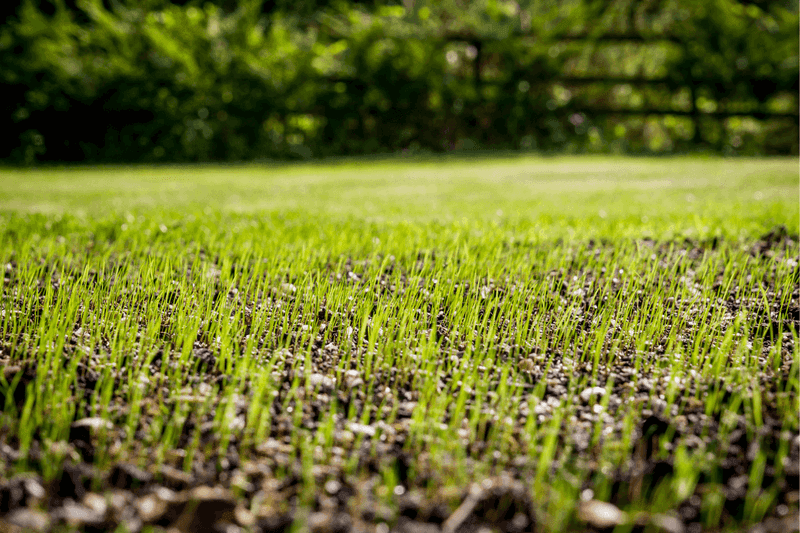
Not every Texas lawn is napping in winter. Some yards stay green on purpose, and they need a different game plan.
Overseeded ryegrass is a cool-season grass that grows during the colder months. Homeowners sow it over dormant Bermuda for winter color.
Light feedings during fall and winter keep it looking fresh, though too much nitrogen can slow the Bermuda’s spring return.
Tall fescue shows up in some shady North Texas yards and in the Panhandle. As a cool-season grass, it grows most in fall and spring.
That makes fall a main feeding season for fescue, which is the opposite of St. Augustine or Bermuda.
Mixed yards can get confusing. You might have St. Augustine in the sunny front and fescue under the big oak in back.
In that case, treat each area according to its own grass type.
Not sure what you have? Your county AgriLife Extension office can help identify a sample.
Snap clear photos of the blades and runners or bring in a small plug.
Knowing your grass is the most useful lawn tip of all. Feed it on its own schedule, and winter becomes a much easier season.