The Real Reason Your Texas Crape Myrtles Are Raining Sticky Sap This Month
Sticky liquid drips straight onto your patio floor overnight. Your crape myrtle glistens like it caught glossy syrup rain. You never spilled anything, yet this mess keeps spreading fast.
Underneath your tree, the ground feels tacky, damp, and strange. Tiny insects hiding in your branches caused this sticky mess. They feed on your sap and leave behind sugary waste.
That waste drips onto leaves, bark, and nearby pavement. Dark mold soon follows, coating your once glossy foliage. Ants notice quickly, marching straight toward your tree trunk.
Wasps and other pests soon join this unwanted parade. None of this means your crape myrtle faces real trouble. Texas heat and humidity make your yard especially vulnerable.
Gardeners across your Texas neighborhood face this exact problem. Understanding the cause puts you back in control quickly.
Fixing your crape myrtle starts with knowing what’s happening. Ignore this sticky mess, and watch your yard worsen.
Crape Myrtle Bark Scale And Aphids Are Behind The Sticky Sap
Tiny insects are draining your tree’s sap. Crape myrtle bark scale and aphids are the two main culprits behind sticky sap falling from your crape myrtles right now.
Both insects feed by piercing the plant and sucking out its sugary sap. What goes in must come out, and what comes out is a sweet, gooey waste called honeydew.
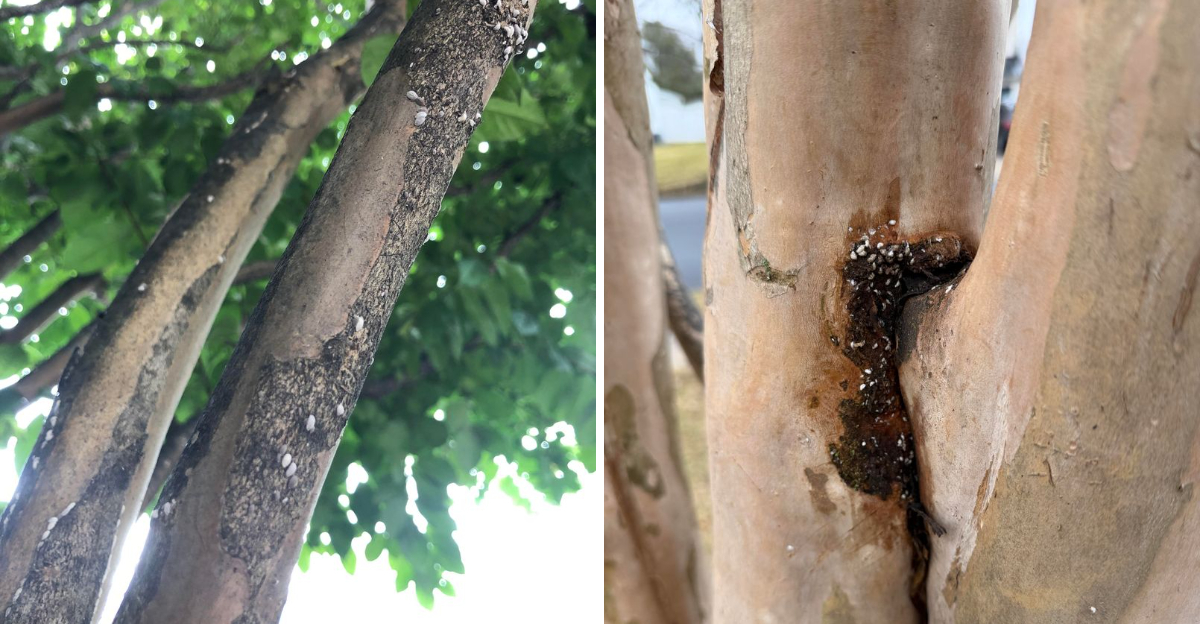
Crape myrtle bark scale looks like small white or gray crusty patches stuck to the bark. You might mistake them for lichen or paint flecks at first glance.
Aphids are softer, rounder, and usually cluster on new growth or the undersides of leaves. They reproduce fast, and a small group can quickly grow into a large colony.
Both pests excrete honeydew constantly while they feed. That honeydew drips down onto leaves, branches, furniture, and anything parked beneath the tree.
Crape myrtle bark scale is a newer pest in the United States, first spotted in Texas around 2004. It has since spread across the South and is now considered one of the most damaging crape myrtle pests around.
Aphids have been around forever, but they tend to multiply rapidly during warm, dry stretches. Hot summers create perfect feeding conditions for both of these insects.
Knowing which pest you are dealing with changes how you treat the problem. Identifying the right culprit is your most important first step.
How To Tell Scale Insects From Aphids On Your Crape Myrtle
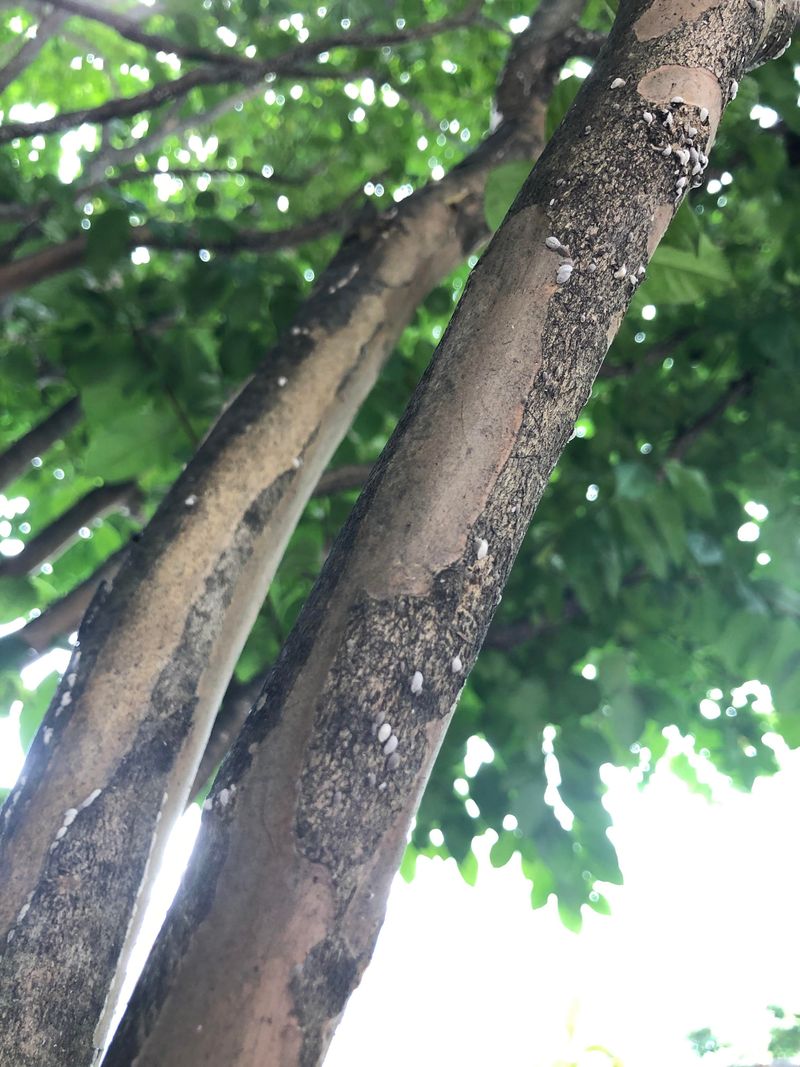
Grab a magnifying glass and get up close. Scale insects look like tiny armored bumps fused directly onto the bark of your crape myrtle.
Press your fingernail against one of those white or gray spots. If it scrapes off and leaves a pinkish smear underneath, that is crape myrtle bark scale.
Aphids are much easier to spot with the naked eye. Look for clusters of small, soft-bodied bugs on tender new stems or curled leaves near branch tips.
Aphids come in green, yellow, or even black depending on the species. They move slowly, but they are visible and tend to bunch together in tight groups.
Your Texas Garden Changes Every Week. Your Plan Should Too.
Gardening in Texas changes quickly throughout the season. Every Friday you’ll receive a simple weekly plan showing exactly what to plant, prune, fertilize, harvest, and protect so you never miss the right timing.
Scale insects do not move once they attach. They anchor themselves to bark and feed in the same spot for their entire adult life.
One easy trick is to check for ants. Both pests attract ants because ants actually farm honeydew-producing insects for their sweet secretions.
If you see a trail of ants marching up your crape myrtle trunk, something is producing honeydew up there. Follow the ants and you will find your pest.
Scale tends to appear on older wood and main branches. Aphids prefer soft, new growth and are more common near the top of the canopy.
Knowing the difference matters because the treatments are not identical. Correctly identifying your pest saves time, money, and unnecessary frustration in the garden.
Why This Happens More Often In Late Summer In Texas
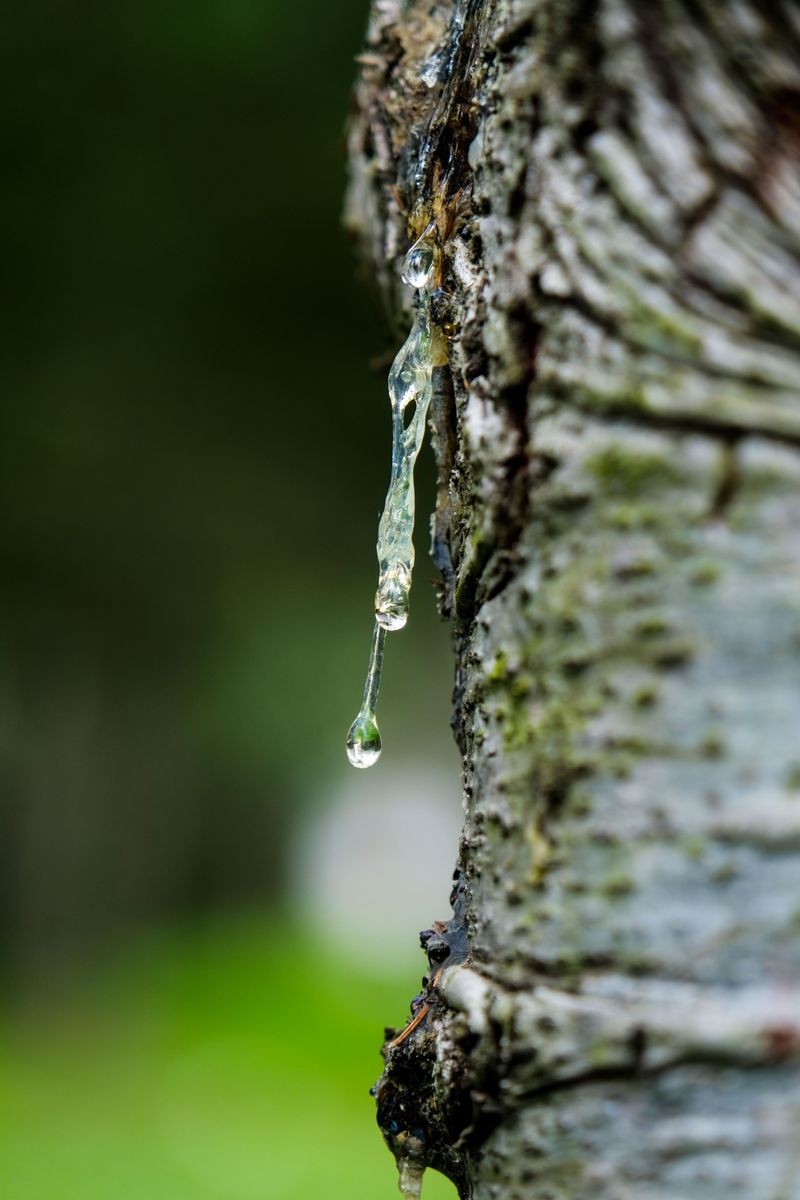
Late summer in Texas creates ideal conditions for sap-sucking insects. High heat, low rainfall, and stressed trees create conditions that allow pest populations to grow quickly.
When crape myrtles get heat-stressed, their defenses weaken. A tree fighting drought cannot fight insects as effectively as a well-watered, healthy one.
Crape myrtle bark scale populations peak in mid to late summer because warm temperatures speed up their reproduction cycle. More bugs mean more honeydew dripping from your tree.
Aphid populations also surge in late summer when natural predators like ladybugs and lacewings get overwhelmed. Broad pesticide use earlier in the season often wipes out those beneficial bugs.
Without natural predators keeping aphids in check, the population can grow rapidly within days.
Texas summers also mean longer stretches without rain to naturally wash insects off leaves. In wetter climates, rainfall helps knock pests loose and dilute honeydew buildup.
The combination of extreme heat, dry air, and weakened tree immunity makes August and September the peak months for sticky sap complaints. Gardeners across the South notice this pattern every year.
Watering your crape myrtle deeply during dry spells actually helps it resist pest damage. A well-watered tree generally resists pest damage better.
Late summer does not have to mean losing your trees to pests. Acting early gives you a real advantage before the problem snowballs.
What That Black Sooty Mold Coating Actually Means
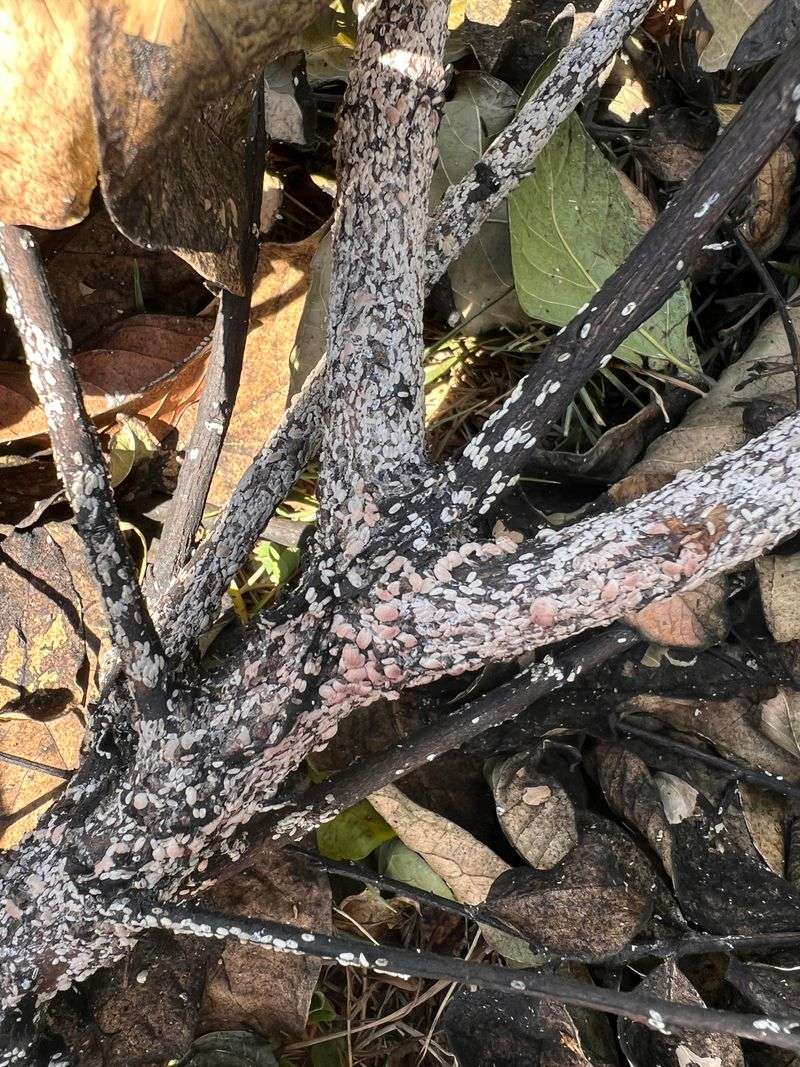
That black, powdery coating on your crape myrtle is not a disease from the soil. It is a fungus called sooty mold, and it grows on top of honeydew left behind by feeding insects.
Sooty mold itself does not infect the tree. It is an opportunist that feeds on the sticky sugar coating already sitting on your leaves and bark.
The mold spreads fast when honeydew is abundant. Within a few weeks, entire branches can appear darkened and unhealthy.
Here is what sooty mold actually does: it blocks sunlight from reaching the leaf surface. Leaves need sunlight for photosynthesis, and a thick mold coating interferes with that process.
A light coating of sooty mold causes minimal harm. Heavy infestations, though, can slow growth and reduce the tree’s overall energy production over time.
The mold will not go away on its own while insects are still feeding. You have to deal with the pest problem first, then tackle the mold afterward.
Once the honeydew source is gone, sooty mold gradually flakes off on its own. A gentle spray of water can speed up that process on accessible branches.
You can also mix a mild dish soap solution and spray it onto affected areas. Let it sit for a few minutes, then rinse thoroughly with a garden hose.
Sooty mold is a symptom, not the root cause. Fix the bugs, and the mold takes care of itself naturally.
Is The Sap Harmful To The Tree Or Just A Nuisance
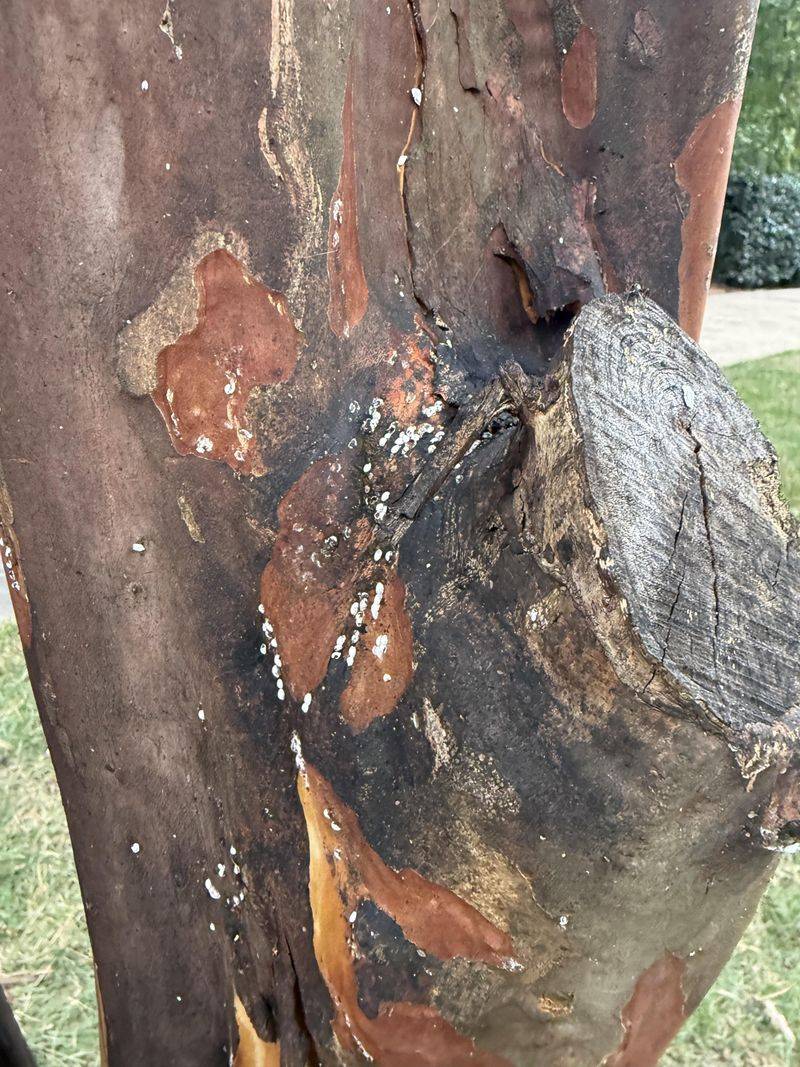
Most homeowners panic when they see sticky sap dripping from their crape myrtles. The honest answer is that it depends on how severe the infestation has become.
A mild aphid presence on an otherwise healthy tree is mostly a cosmetic problem. The tree can handle a small number of sap-sucking insects without sustaining serious damage.
Crape myrtle bark scale is a different situation. Heavy scale infestations weaken branches over time and can significantly reduce flowering if left untreated for multiple seasons.
Young trees and newly planted crape myrtles are more vulnerable than established ones. A pest load that a mature tree shrugs off can genuinely set back a younger specimen.
The sticky sap itself is not toxic to the tree. It is simply a byproduct of pest feeding, not a substance the tree produces as a distress signal.
However, the secondary effects of that sap add up fast. Sooty mold reduces photosynthesis, ant activity protects pests from predators, and chronic stress lowers the tree’s immune response.
Trees dealing with sticky sap falling from their canopy year after year without treatment do show signs of decline. Fewer blooms, smaller leaves, and thinner branch growth are common warning signs.
One or two seasons of light infestation will not end your crape myrtle. Repeated heavy infestations without intervention, though, do take a real toll on long-term health. Repeated infestations have a cumulative weakening effect on the tree over time.
How To Treat And Prevent It Next Season
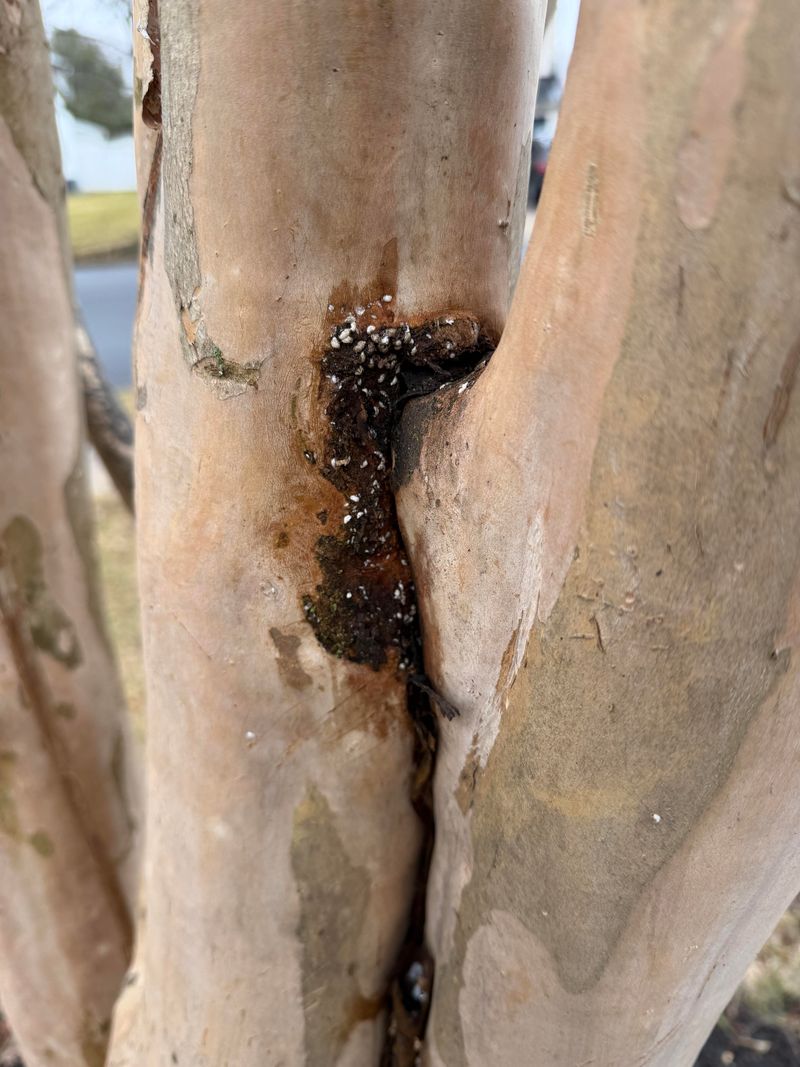
This problem is treatable with the right approach. Stopping sticky sap falling from your crape myrtles starts with choosing the right product for the right pest.
For aphids, a strong blast of water from your garden hose knocks them off and disrupts their feeding. Do this in the morning so leaves dry before evening and avoid fungal issues.
Neem oil is another solid option for aphids. Mix it with water and a few drops of dish soap, then spray it directly onto affected areas every seven to ten days.
For crape myrtle bark scale, a systemic insecticide works best. Products containing imidacloprid can be applied as a soil drench, letting the tree absorb the treatment through its roots.
Because imidacloprid can affect pollinators, apply it before bloom or avoid spraying open flowers directly.
Soil drenches are especially effective because the insecticide travels through the entire tree. Insects feeding anywhere on the plant ingest the treated sap and stop reproducing.
Apply systemic treatments in early spring before insects reach peak population. Timing matters enormously because catching the pest early prevents the honeydew cycle from starting.
Scrubbing visible scale off branches with a soft brush and soapy water also helps reduce populations. Physical removal combined with chemical treatment gives the best results.
Encourage natural predators by avoiding broad-spectrum pesticides that harm ladybugs and parasitic wasps. Those beneficial insects are free pest control if you let them do their job.
Prevention is always cheaper than treatment, and one proactive spring application can protect your crape myrtles all season long from sticky sap falling again.