Privacy Plants Texas Homeowners Are Using Instead Of Pampas Grass That Create The Same Drama Without The Fire Risk
Fire risk changes everything you thought you knew about privacy planting in Texas. Nobody warned you how fast that danger could spread along a property line.
Something faster and far less flammable has already replaced the plant you trusted for years. Height builds quickly when you choose the right replacement, climbing toward a solid screen within a single season.
Texas summers test every plant you put in the ground, yet these varieties keep pushing upward instead of drying out. You will notice the difference before anyone explains it, because the color and density read differently from across the street.
Nothing about this shift asks you to sacrifice the drama you wanted from your fence line in the first place. What separates the plants worth trusting from the ones quietly putting your property at risk comes down to details you have not considered yet.
1. Pink Muhly Grass
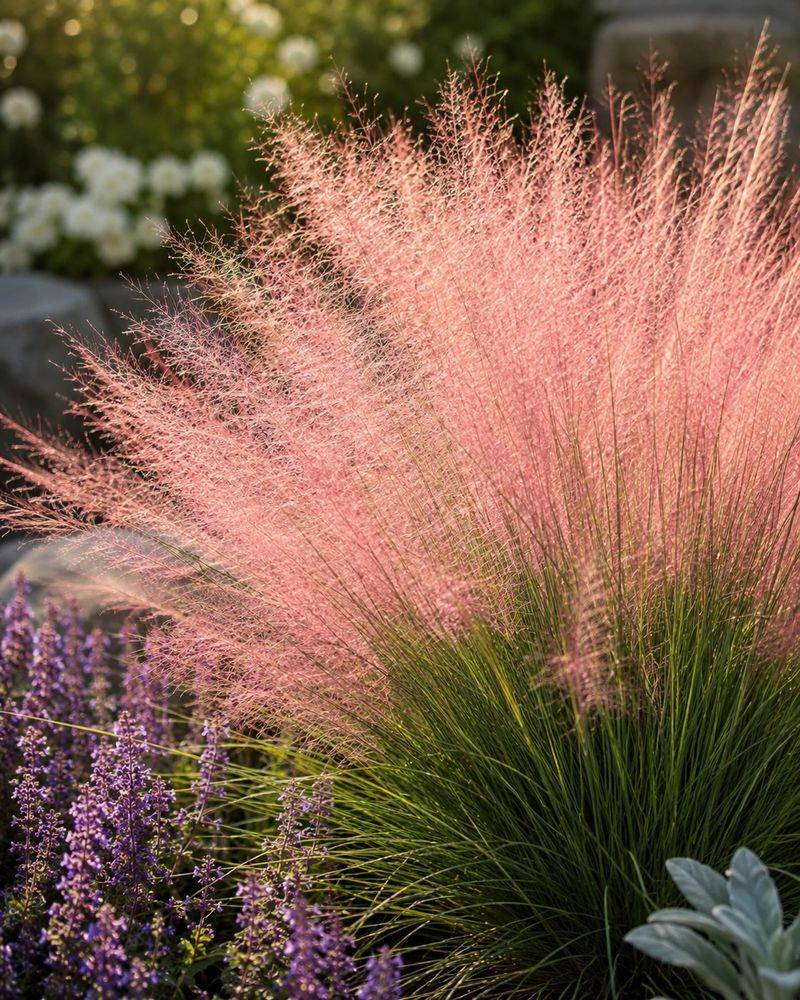
Picture a cotton candy cloud growing in your backyard. That is exactly what Pink Muhly Grass looks like every fall when it erupts into a haze of rosy pink plumes.
This native Texas grass is one of the best privacy plants for homeowners who want serious visual impact. It grows three to four feet tall and spreads into a full, airy clump that blocks sightlines beautifully.
Pink Muhly thrives in heat, drought, and poor soil. It asks for almost nothing and gives back everything in terms of color and texture.
Plant it in groups along a fence line for a soft, flowing screen that moves with the breeze. The effect is dramatic without feeling heavy or overgrown.
Pink Muhly carries far less fire risk than pampas grass because its fine blades stay thinner and lighter even as the clump matures. A yearly cutback in late winter keeps growth fresh and prevents any buildup from accumulating.
Give each clump three to four feet of breathing room so the plumes have space to arch without crowding their neighbors. Waterlogged spots are the one condition this grass will not tolerate, so skip low areas that collect runoff after storms.
Birds love the seed heads, so you get wildlife value too, especially through the colder months when food is scarce.
Gardeners across the state are swapping out their pampas for this showstopper. Once you see it backlit by afternoon sun, the appeal is obvious.
2. Switchgrass ‘Northwind’
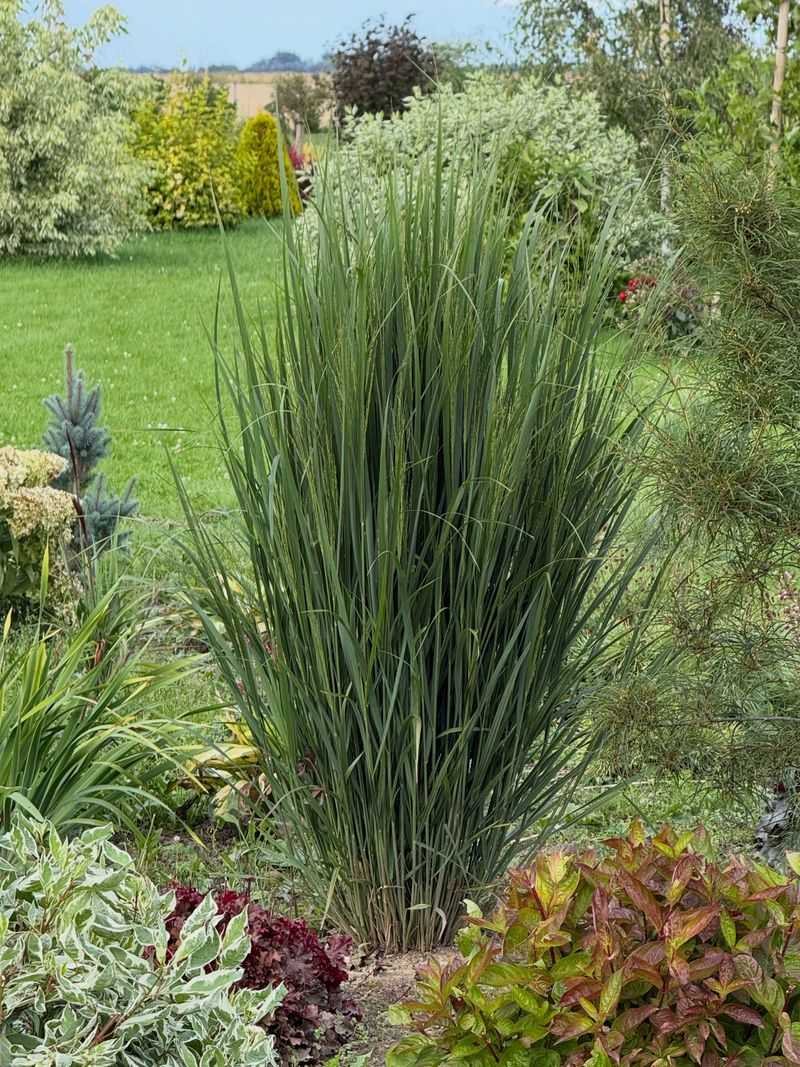
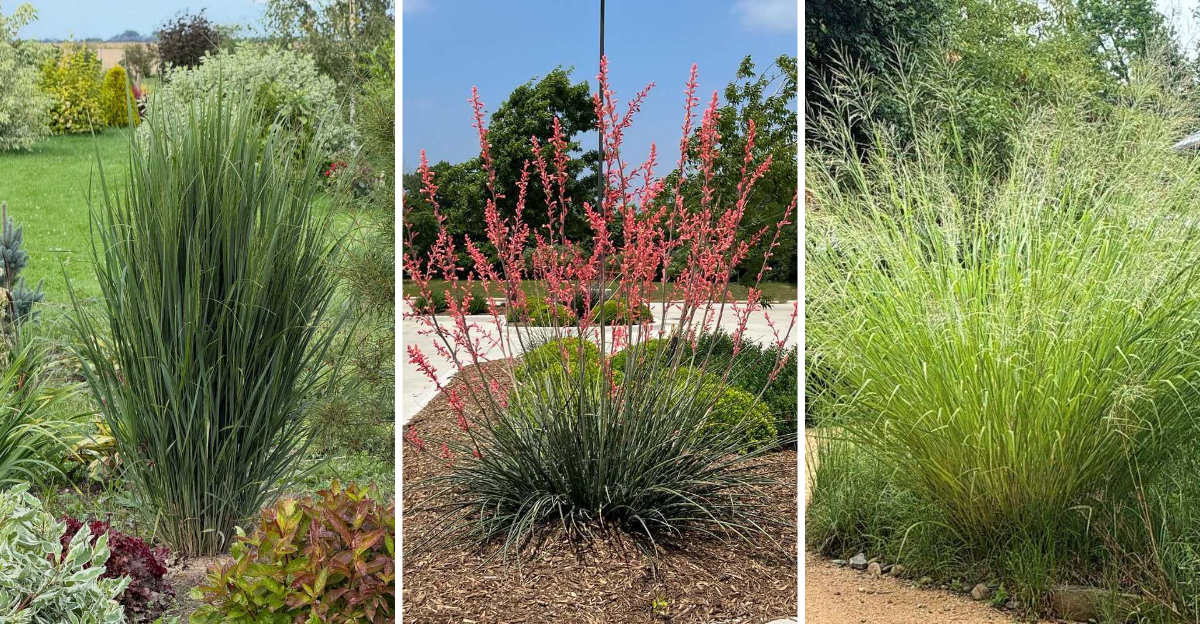
Northwind Switchgrass grows upright and rigid, holding its shape no matter how hard the Texas wind pushes against it.
This cultivar is a native prairie grass that reaches five to six feet tall without flopping over. That rigid posture makes it ideal for creating a living privacy screen along property lines.
Homeowners love it because it looks architectural and intentional. Compared to the wild species, Northwind stays clumped and spreads far more slowly, so it rarely turns up where you did not plant it.
Northwind handles heat, humidity, and clay soil with ease. It is one of those plants that actually prefers the tough conditions most Texas yards dish out.
Your Texas Garden Changes Every Week. Your Plan Should Too.
Gardening in Texas changes quickly throughout the season. Every Friday you’ll receive a simple weekly plan showing exactly what to plant, prune, fertilize, harvest, and protect so you never miss the right timing.
Come fall, the blades shift to warm golden tones and the airy seed heads catch the light beautifully. The seasonal color change keeps the landscape feeling fresh and alive through cooler months.
Switchgrass carries a real advantage over pampas grass when fire risk enters the conversation. Its blades hold more moisture and shed less dry material at the base, so there is simply less fuel sitting around your property.
A single trim in late winter is really all Northwind needs to reset for the next growing season. Leave the dried stalks standing through the cold months, since they add structure to an otherwise bare landscape.
Pair Northwind with boulders or dark mulch for a modern, low-maintenance look. Privacy plants like this one show that safety and style can coexist without much effort on your part.
3. Feather Reed Grass ‘Karl Foerster’
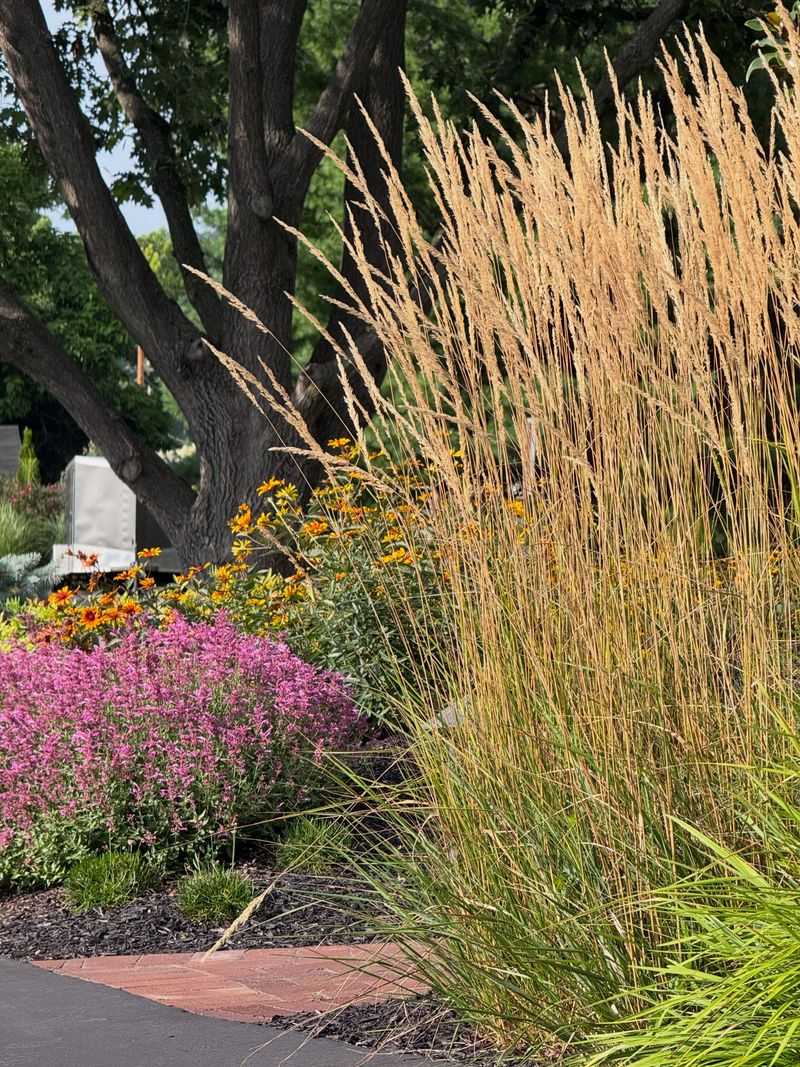
Karl Foerster is the overachiever of the ornamental grass world. It blooms earlier than almost any other grass and holds its elegant, feathery plumes well into winter.
Growing up to five feet tall, this grass creates a dense vertical screen that works beautifully along driveways, fences, and pool areas. The narrow clumping habit means you can plant it in tighter spaces without crowding.
One of the biggest selling points is its tidy growth pattern. Karl Foerster does not sprawl or send runners into your flower beds, which makes maintenance far more manageable.
The plumes start out pinkish-purple in early summer and fade to a warm golden wheat color by fall. That color progression keeps the planting visually interesting across multiple seasons.
This cultivar also produces noticeably less dry thatch than pampas grass ever does. Less thatch means a lower fire risk and less time spent clearing debris out of the bed each spring.
Space clumps about two feet apart if you want the screen to fill in without gaps by the second year. This grass also holds its shape in containers, which makes it useful for smaller patios that still want height.
Karl Foerster handles full sun and moderate drought well once established. It does appreciate occasional deep watering during extreme Texas heat waves, so keep that in mind during summer.
Karl Foerster looks intentional and polished from the day it goes into the ground. Neighbors will ask what it is, and you will enjoy telling them.
4. Red Yucca
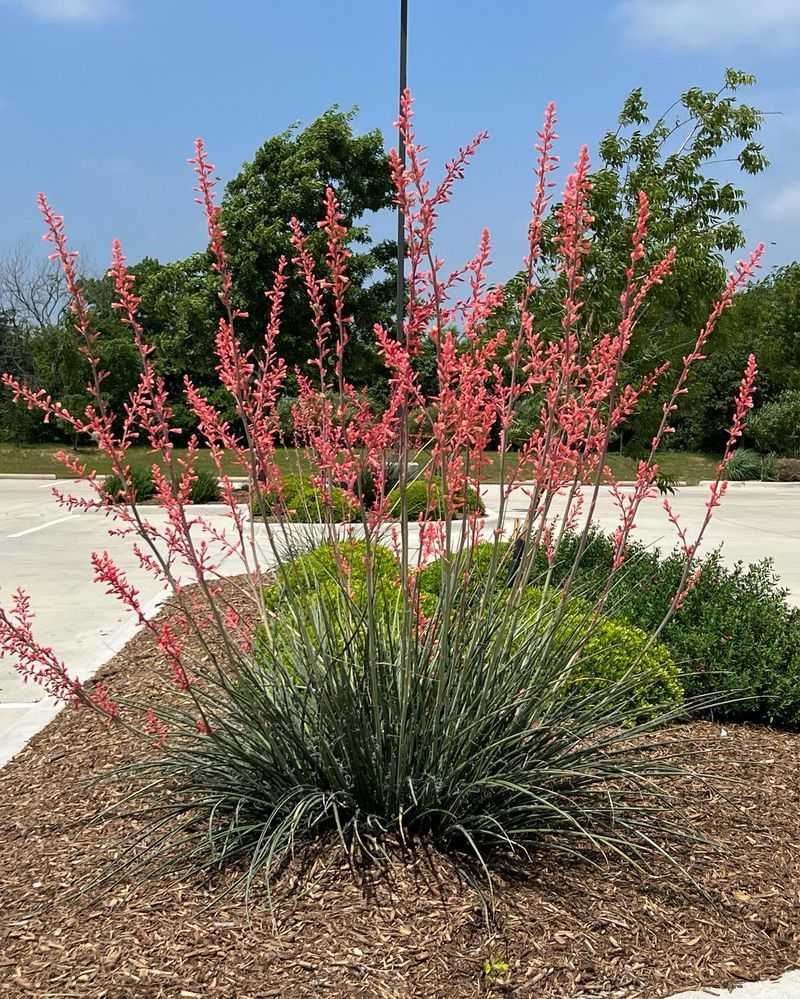
Nothing says bold quite like a Red Yucca in full bloom. Those coral-red flower spikes shoot four to five feet into the air and stop passersby in their tracks.
Despite the name, Red Yucca is actually a member of the agave family. It forms a graceful rosette of arching, grass-like leaves that stay evergreen all year long in most of the state.
Plant several together in a row and you get a layered, eye-catching screen that works on multiple levels. The foliage creates low coverage while the blooms add height and drama above.
Hummingbirds are drawn to those tubular flowers all summer long. Watching them hover around a blooming Red Yucca is one of the unexpected joys of growing this plant.
Red Yucca holds a clear edge over pampas grass when it comes to fire safety. Its fleshy, moisture-rich leaves simply do not dry into the kind of tinder that old grass clumps become.
This plant thrives on neglect, which is honestly refreshing. Give it full sun, well-drained soil, and almost zero supplemental water once established.
Drainage matters more than soil type for this plant, so raised beds or slightly sloped ground work in its favor. A row spaced two to three feet apart fills in fast enough to screen a patio within a couple of growing seasons.
It blooms from spring through summer and sometimes reblooms in fall. For Texas homeowners looking for privacy plants with year-round presence and minimal fire risk, Red Yucca is hard to beat.
5. Yaupon Holly
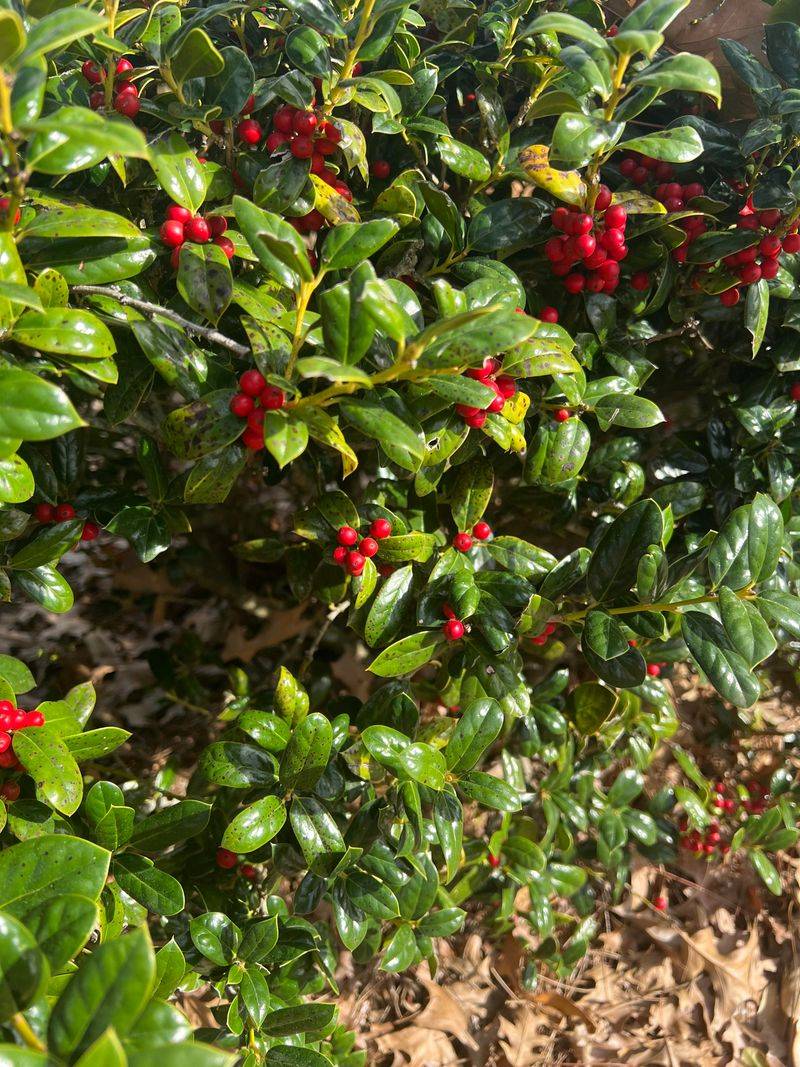
Yaupon Holly is the toughest plant you probably are not growing yet. It handles drought, flooding, poor soil, deer pressure, and brutal summer heat without missing a beat.
This native evergreen shrub can be grown as a dense hedge or allowed to take on a more natural, multi-stem form. Either way, it creates an effective year-round privacy screen that looks great in every season.
Female plants produce clusters of glossy red berries in fall and winter. Those berries bring cedar waxwings and mockingbirds into your yard, turning your hedge into a wildlife corridor.
Yaupon grows quickly enough to establish a solid screen within two to three years. Planted four feet apart, a row of them will knit together into a dense, solid wall of green.
Here is a fun fact most people do not know: Yaupon is the only caffeinated plant native to North America. Indigenous peoples brewed it as a ceremonial tea long before coffee arrived on the continent.
Yaupon also holds up well against fire compared with pampas grass. Its thick, moisture-retaining leaves resist the kind of rapid ignition that dry ornamental grass invites.
Left unpruned, Yaupon takes on a loose, multi-stem shape closer to a small tree than a hedge. Regular shearing keeps it dense and formal instead, so the look really depends on how much maintenance you want to put in.
Yaupon Holly stands out as a true workhorse among the toughest plants suited for Texas conditions. Plant it once and it will outlast most of what grows around it.
6. Southern Wax Myrtle
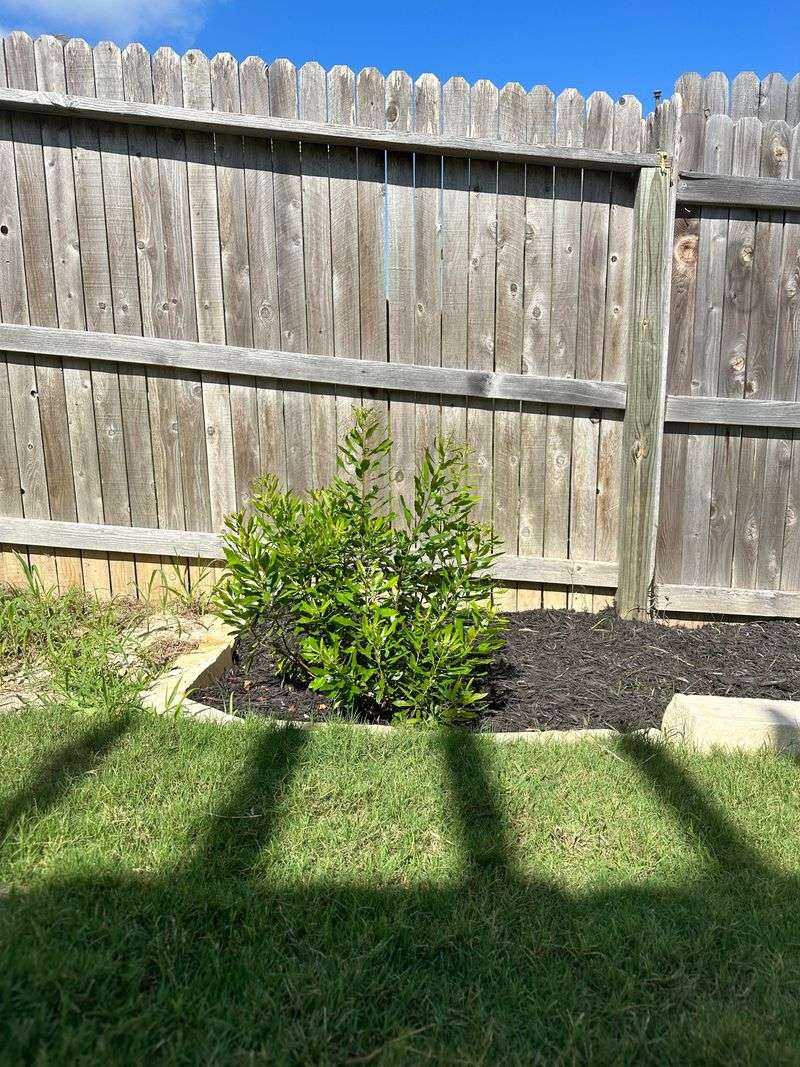
Southern Wax Myrtle grows fast, smells amazing, and stays green all year long. Crush a leaf between your fingers and you get a spicy, bayberry-like scent that is genuinely addictive.
This native shrub can reach ten to twenty feet tall if left unpruned, creating a substantial privacy screen almost as fast as any fence you could build. Most homeowners keep it trimmed to a manageable six to eight feet.
The waxy, blue-gray berries that appear in fall are a favorite food source for yellow-rumped warblers during migration. Planting a row of Wax Myrtle is basically rolling out a welcome mat for birds.
It tolerates wet soil, clay, sand, shade, and drought, which makes it one of the most adaptable shrubs available for this climate. Few plants can claim that kind of flexibility.
Wax Myrtle also compares favorably to pampas grass on fire risk. Its evergreen foliage holds more moisture year-round and does not shed into the kind of dry pile that fuels a fast-moving fire.
Mosquitoes reportedly dislike the aromatic compounds in the foliage, which is an added bonus in a state with serious mosquito seasons. Plant it near your patio for a fragrant, functional barrier.
Wax Myrtle can send up root suckers around the base, which some homeowners thin out and others let fill in for extra density. Either approach works, depending on whether you want a tidy hedge or a wilder thicket.
Southern Wax Myrtle works hard on multiple fronts, from screening to wildlife value to fragrance. It earns its place in a border faster than most shrubs its size.
7. Nellie Stevens Holly
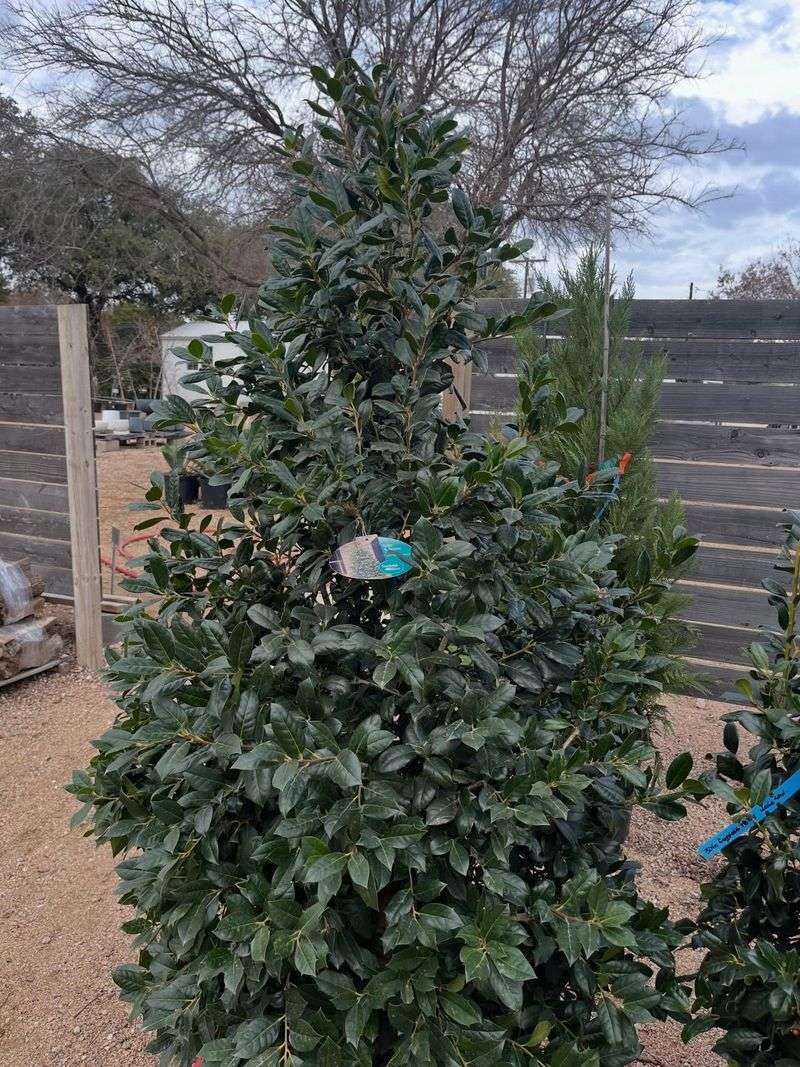
Nellie Stevens Holly is one of the most reliable fast-growing privacy screens across the southern United States. Homeowners plant it when they want results they can actually see within a season or two.
This hybrid holly grows two to three feet per year under good conditions. Within five years, a row of them becomes a solid, glossy green wall that blocks noise, wind, and nosy neighbors alike.
The dark, waxy leaves stay on the plant year-round, so you never get that awkward bare-hedge look in winter. Red berries appear in fall and add a seasonal pop of color that looks almost festive.
Nellie Stevens tolerates a wide range of soil types, including the heavy clay that plagues so many yards. It also handles moderate drought once the root system gets established after the first year.
This holly also compares well to pampas grass when fire safety comes up. Its thick, moisture-rich leaves resist ignition far better than the dry, papery thatch an old ornamental grass clump leaves behind.
Deer tend to leave it alone once it matures past the tender young growth stage. That is a huge advantage for homeowners in suburban-edge neighborhoods where deer pressure is constant.
This holly tolerates partial shade better than most fast-growing screens, though growth slows noticeably without at least six hours of direct sun. Full sun placement gives you the density and berry production most homeowners are after.
Nellie Stevens Holly consistently ranks among the top choices for Texas properties. It is dependable, gorgeous, and built to last for decades.
8. Cloud Nine Switchgrass
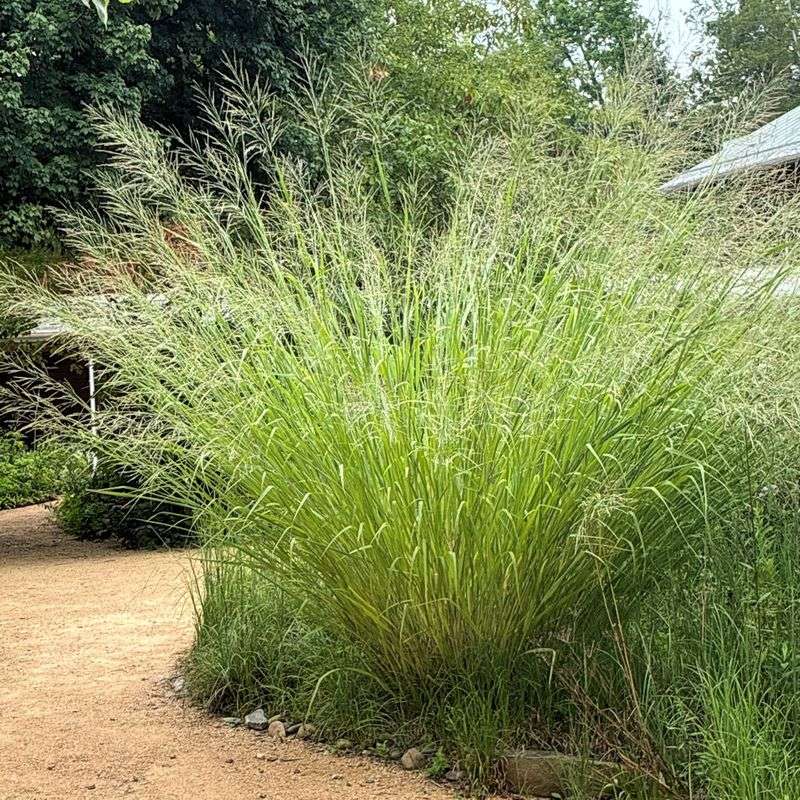
Cloud Nine Switchgrass lives up to its dreamy name. Its airy seed heads float above the foliage like a soft mist, creating a privacy screen that feels more like art than landscaping.
This cultivar grows six to seven feet tall, making it one of the tallest switchgrass varieties available. That height gives it serious screening power along fence lines, pool areas, and property borders.
The blue-green blades have a slightly powdery look that catches light in a striking way. By fall, the whole plant turns a warm apricot-gold that glows beautifully in the low afternoon sun.
Cloud Nine is native to North American prairies, which means it evolved to handle exactly the kind of heat, wind, and dry spells that define a Texas summer.
Switchgrass in general holds a real advantage over pampas grass on fire risk, and Cloud Nine is no exception. It does not build the dense, dry thatch at its base that turns old pampas clumps into a summer hazard.
Cut it back to about six inches in late winter and it returns fuller and stronger each spring. The maintenance routine could not be simpler for a plant that delivers this much visual payoff.
Pair it with lower, mounding plants in front to hide the bare lower stems that can show through by midsummer. That layered approach keeps the planting looking finished from every angle.
Cloud Nine Switchgrass replaces the drama of pampas grass without the safety trade-off. It earns the space it takes up in a border built to last.