The White Crust Spreading On Maryland Crape Myrtles Is A Pest, Not A Fungus
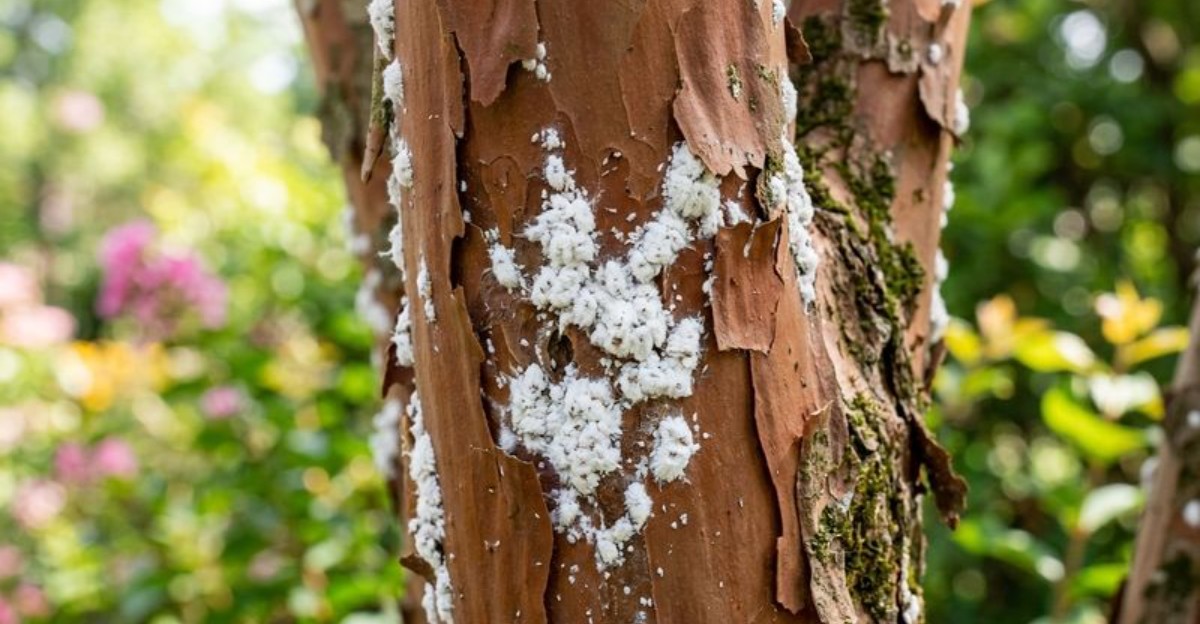
Squish one of those little white bumps on the trunk, and it bleeds pink. That reaction stopped me cold the first time I tried it. Mildew and mold do not ooze anything, so something else was clearly living under that crust.
I used to blame the fuzzy white patches on a fungus. Truth is, I wiped at them for weeks and expected rain to finish the job. The crust stayed put, and a black film started creeping down the bark below it.
The culprit arrived from Asia, reached the South first, and has since been confirmed in parts of Maryland. It hides in branch crotches and pruning scars, right where your eyes rarely linger. Gardeners often notice the sticky leaves and dark bark long before they spot the tiny source.
Your crape myrtle can bounce back from this, and once you know what is feeding on it, the fix starts with a soft brush and a bucket.
That Fuzzy White Crust On Crape Myrtle Bark Has A Secret Inside
Gardeners get fooled by this one all the time, and I was first in line. The white patches look soft and dusty, a lot like something a fungus would leave behind.
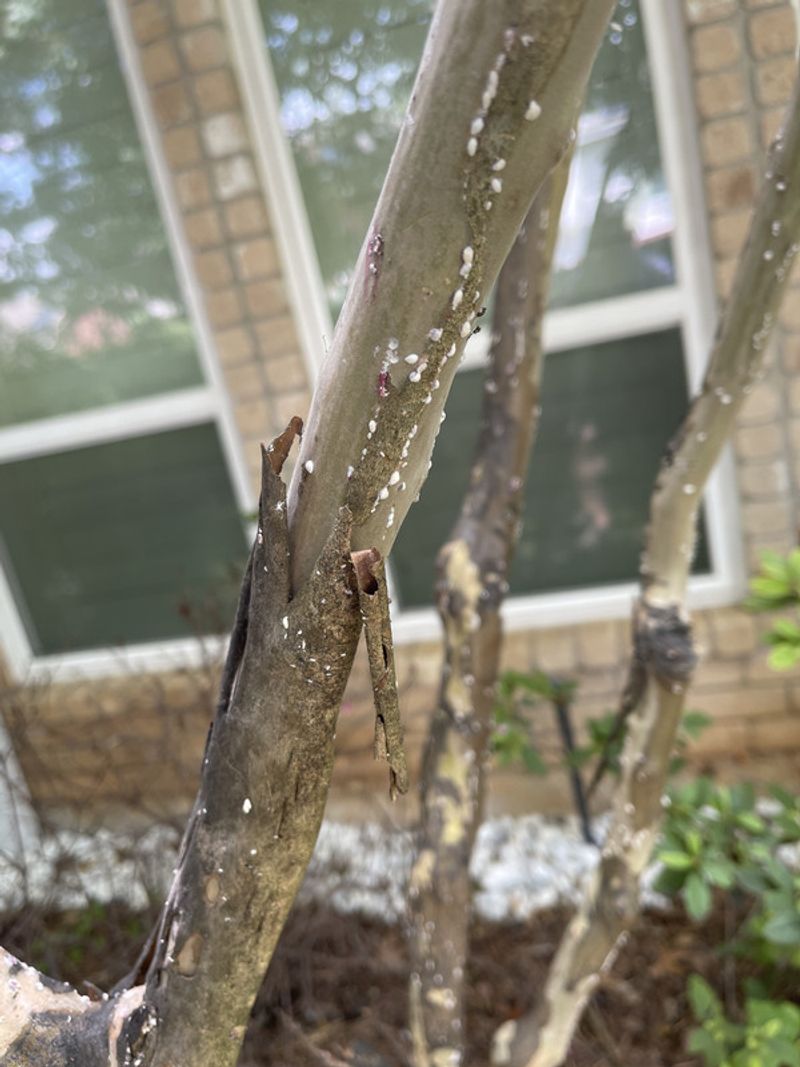
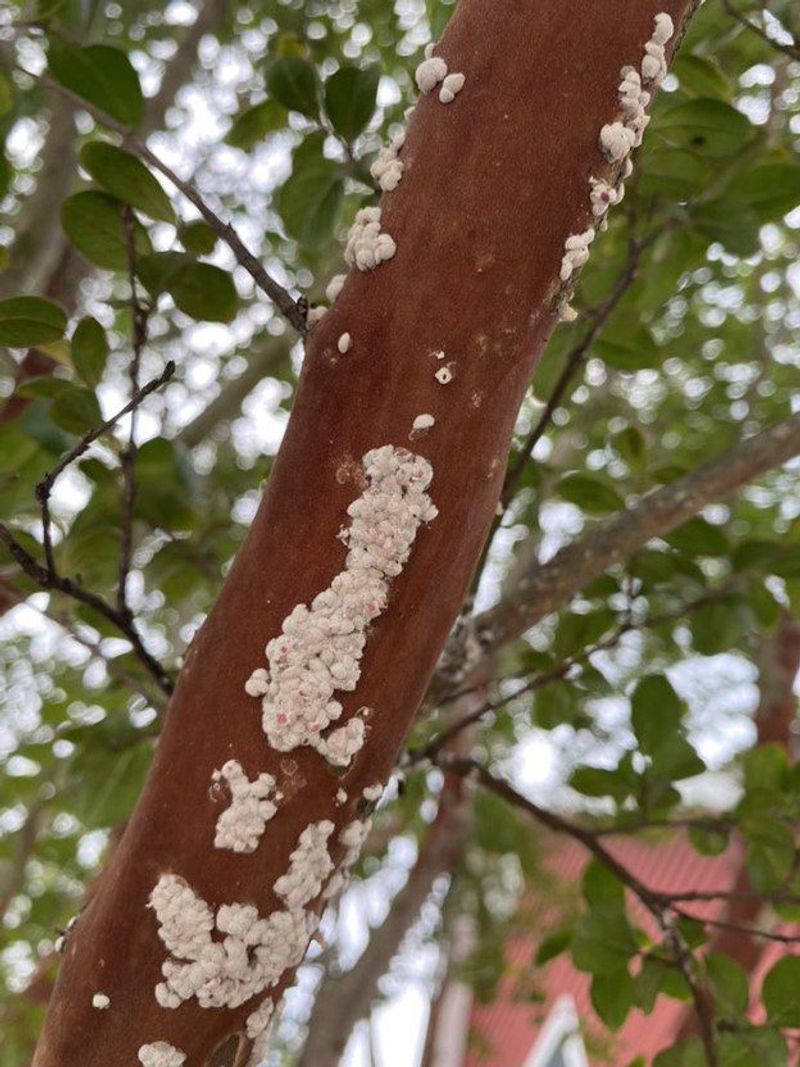
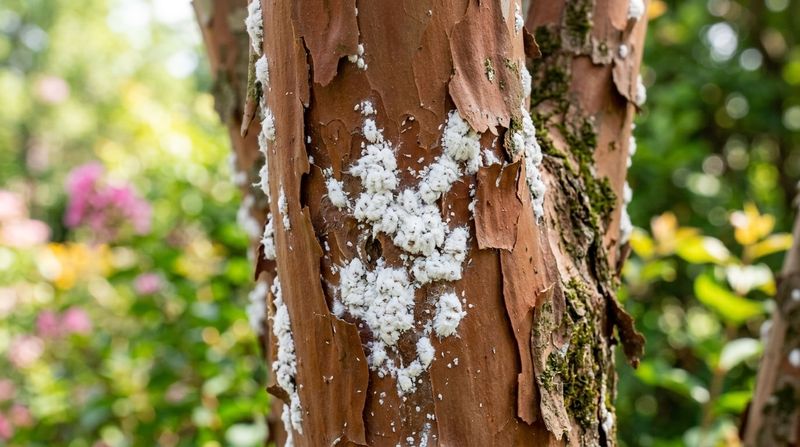
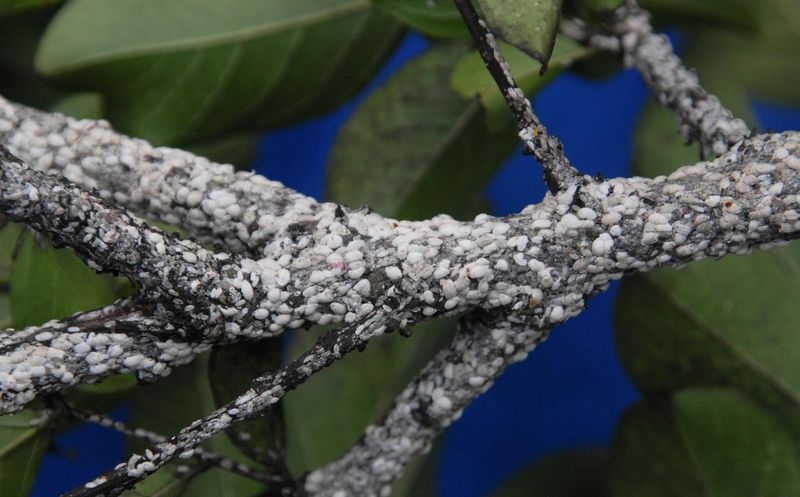
Look closer and you will see they are not a flat coating. Each patch is made of small, raised, felt-like bumps packed together on the trunk and stems. They gather in branch crotches, bark cracks, and old pruning wounds, where they stay protected from weather and curious hands.
Fungal problems on crape myrtles behave differently. Powdery mildew mostly coats leaves, buds, and tender new shoots, and it rarely forms thick crusty lumps on older bark. If the white stuff sits on woody trunks and stays there through rain and wind, a fungus is an unlikely suspect.
The bumps are actually the waxy covers of a tiny sap-feeding insect. Under each cover, a female lives, feeds, and eventually lays eggs. That explains why scrubbing seems to help for a moment, yet new patches pop up later in the season.
Once you know the pattern, you start seeing it on street trees, parking lot plantings, and maybe your own front yard. Fair warning, it is hard to unsee.
Crape Myrtle Bark Scale Is The Pink-Bleeding Culprit
Meet the real troublemaker in plain terms. Crape myrtle bark scale, known to scientists as Acanthococcus lagerstroemiae, is a felt scale insect native to East Asia.
It was first reported in the United States in Texas in 2004. Since then, it has moved through much of the South and up the East Coast, mostly by hitching rides on nursery plants. University of Maryland Extension has confirmed it in the state, and sightings keep showing up in new neighborhoods.
The easiest at-home test takes about two seconds. Press a white bump firmly with a fingernail or toothpick. A live scale releases a pink to reddish fluid, which is a signature clue for this pest.
If the bump crumbles and stays dry, the insect inside is likely no longer active. Empty covers can stick around for a long time, so a crusty trunk does not always mean a busy infestation. Check several spots before deciding how serious things are.
Snap a clear photo while you are at it. Your county Extension office or the Maryland Department of Agriculture can help confirm the identity, which matters because correct identification steers you toward treatments that actually work.
Black Sooty Mold On The Trunk Is A Giveaway Clue
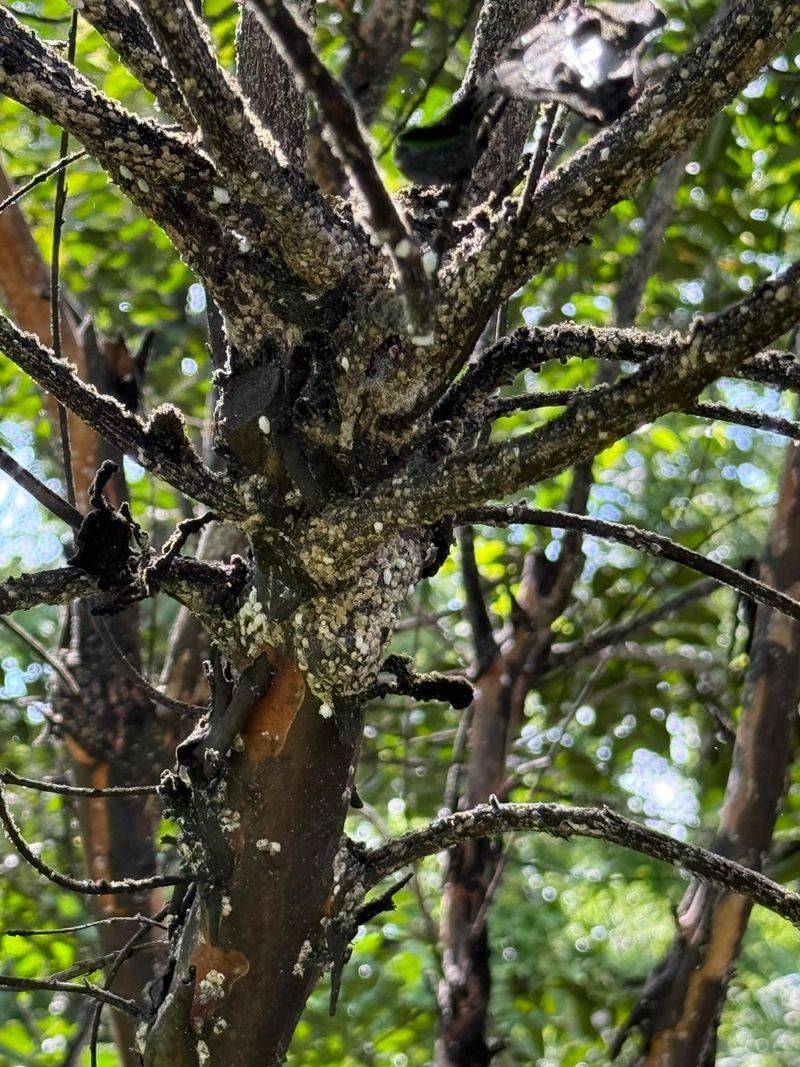
Funny thing, many folks notice the black stuff before the white stuff. Dark, sooty patches on smooth crape myrtle bark tend to jump out from across the yard.
That black film is sooty mold, and it grows thanks to the scale insects above it. As they feed on sap, they release a sugary liquid called honeydew. The honeydew drips onto bark, leaves, patio furniture, and even cars parked underneath.
Sooty mold fungi love that sweet coating. They do not invade the tree directly, but a thick layer blocks sunlight from reaching the leaves. Less light means less food production, so a heavily coated tree can slowly lose some of its oomph.
You may also see ants marching up and down the trunk. They collect honeydew like a free snack bar, and some protect scale insects from predators while they are at it.
So the black mold is a symptom, not the main problem. Washing it off makes the tree look better for a while. Real improvement comes from managing the scale, which cuts off the honeydew supply and lets the mold fade over time.
Scrub Those Crape Myrtle Trunks With Soapy Water
Here is my favorite low-cost fix, and it feels oddly satisfying. Grab a soft brush, a bucket, and some mild dish soap mixed into warm water.
Scrub the trunk and lower branches where you can reach, focusing on the crusty spots in crotches and cracks. This knocks off many scale insects and egg sacs, plus a good deal of sooty mold. Your trunk color will show through again, which is a nice bonus.
Go easy, though. Crape myrtle bark naturally peels in thin strips, and harsh scrubbing or power washing at close range can damage the tender layer underneath. Gentle pressure works fine.
Many Extension specialists suggest this step during the dormant season, from late fall through winter. Leaves are gone, so you can see every patch clearly. It also makes any later spray more effective, since there is less waxy armor in the way.
Small trees and light infestations may need little else. Larger trees can be tougher to reach, and that is okay. Clean what you can safely, and save ladders and tall branches for a professional if needed.
Pink Crawlers Are The Easiest Stage To Target
Timing is everything with scale insects. Adults hide under tough waxy covers, but their babies wander around in the open for a short while.
These babies are called crawlers, and they are tiny and pinkish. They hatch from eggs under the female’s white sac, then walk to a new spot on the bark to settle and feed. Once they settle and build their own covering, sprays have a much harder time reaching them.
Crape myrtle bark scale can produce more than one generation each year, so crawlers may appear several times during the warm months. In Maryland, the first wave often shows up in late spring.
To catch them, wrap a strip of double-sided tape around a branch near an infested area. Check it every few days with a magnifying glass. When you spot tiny pink specks stuck to the tape, crawlers are active.
That is your window for insecticidal soap or horticultural oil labeled for summer use. These products work on contact, so cover the bark thoroughly. Repeat according to the label, since hatches can be spread out over several weeks.
Dormant Oil On Bare Crape Myrtle Branches Can Help
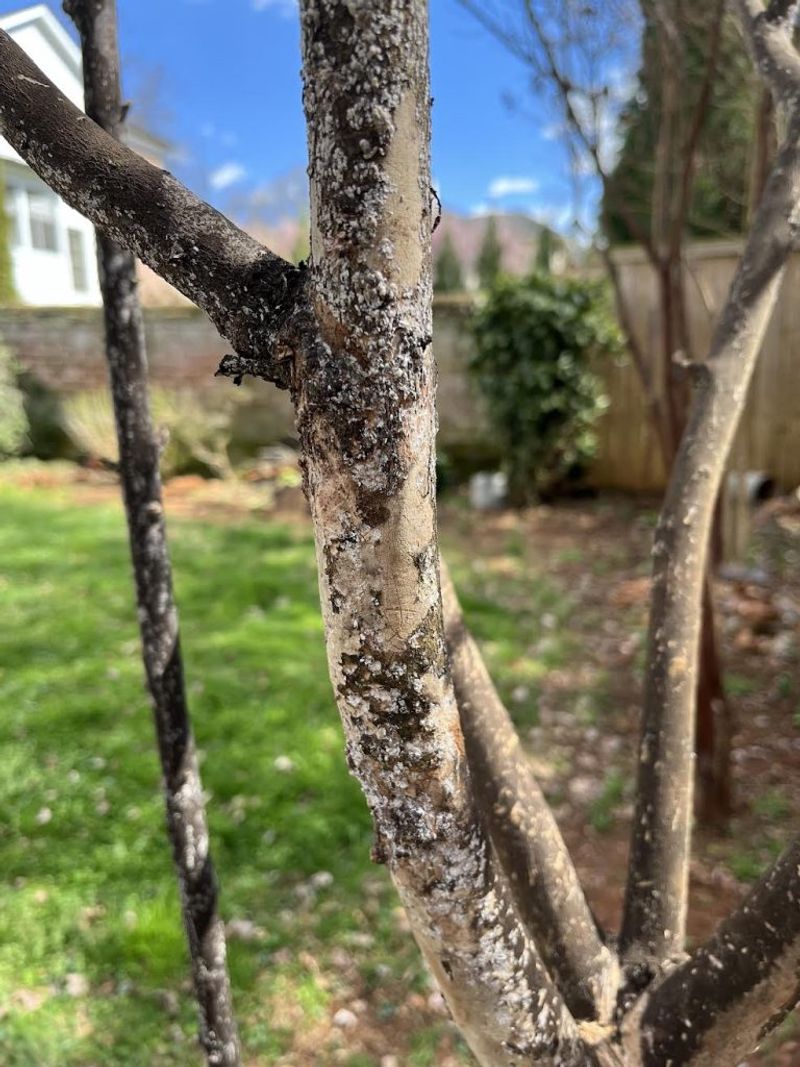
Winter feels quiet in the garden, but your crape myrtles still need a little attention. Scale insects spend the cold months on the bark, waiting for spring.
Horticultural oil applied while the tree is dormant can smother some of those overwintering insects and eggs. It works by coating them, so good coverage on trunks, branches, and crevices matters a lot. Results are often better after a gentle scrubbing removes some of the waxy crust.
Read the product label carefully before spraying. Most oils have temperature limits, and many labels advise against spraying when it is near freezing or very hot. Pick a calm, mild day so the oil goes where you want it.
Oil sprays are a solid choice for home gardeners because they leave little lasting residue. Beneficial insects that arrive later are less affected than with long-lasting chemicals.
One honest note here. Dormant oil alone rarely clears up a heavy infestation in a single season. It works best as one piece of a plan that also includes scrubbing, crawler-timed sprays, and keeping the tree strong. Patience pays off with this pest.
Lady Beetles And Smart Systemics Join The Fight
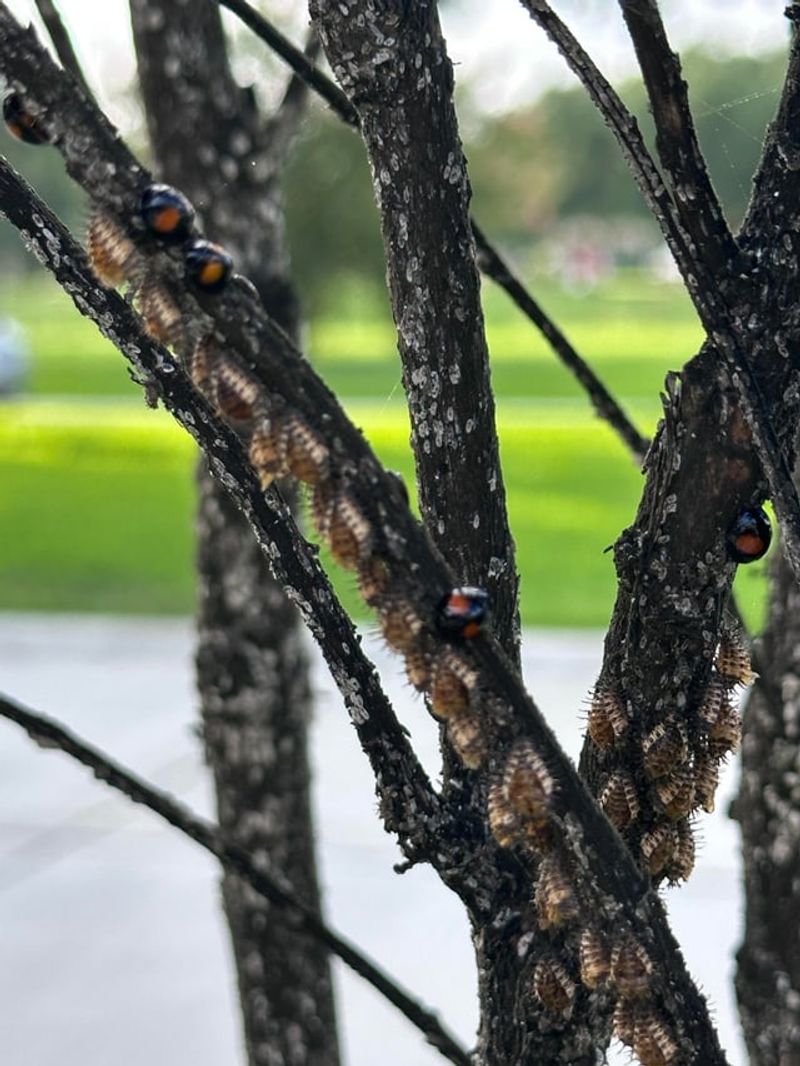
Nature sends some helpers, if you let it. Several lady beetles, including the twice-stabbed lady beetle, munch on crape myrtle bark scale.
Some lady beetle larvae can even look a bit like scale themselves, with white waxy fluff. Before you scrub everything in sight, peek for movement. Leaving a few predators in place gives them a chance to multiply.
Broad-spectrum sprays can harm these helpers, so use them sparingly or not at all. Soaps, oils, and spot treatments are much friendlier to beneficial insects.
For heavy infestations, Extension specialists often mention systemic products like dinotefuran or imidacloprid applied as a soil drench. The tree takes the product up and moves it into the sap the scale feeds on. These can give longer control than sprays.
Maryland restricts many neonicotinoid products for homeowner use, so certified applicators often handle them. Crape myrtles bloom heavily and attract bees, so label timing matters. Applying after bloom and following every instruction helps protect pollinators.
A licensed arborist can weigh these choices with you. Sometimes a careful mix of biological help and targeted treatment is the smartest route.
Check New Crape Myrtles Before They Reach Your Yard
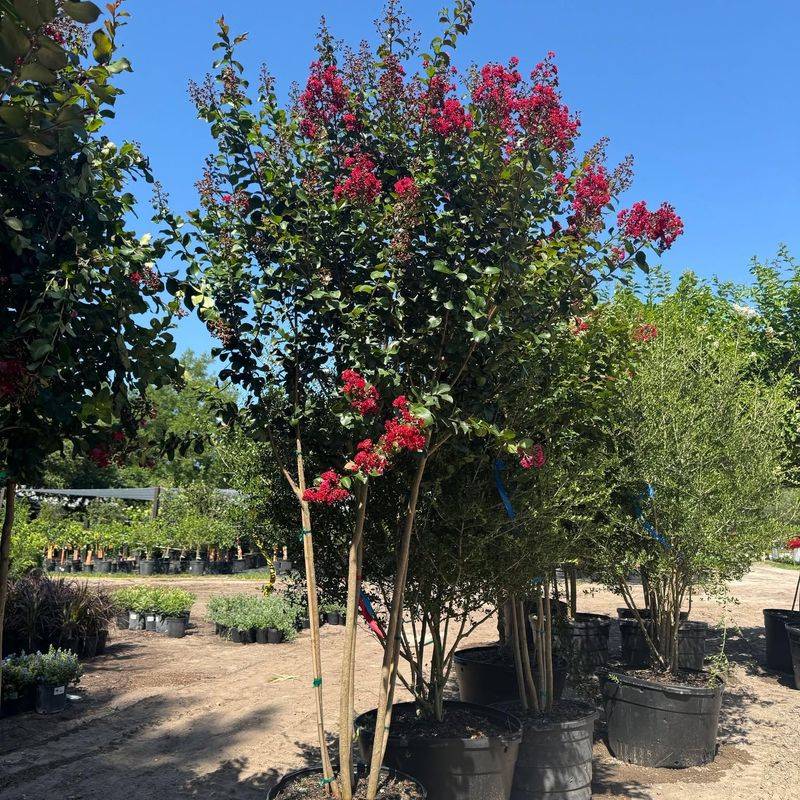
Prevention is the cheapest treatment around. Many infestations start with a brand new plant brought home from a sale or nursery.
Before buying a crape myrtle, look closely at the trunk, branch forks, and any pruning cuts. White felt bumps, black sooty film, or sticky leaves are warning signs. Walk away from that plant, even if the flowers are gorgeous.
Keep your existing trees healthy too. Water deeply during dry spells, add a few inches of mulch without piling it against the trunk, and skip extra fertilizer. Too much nitrogen fuels soft growth that sap feeders seem to enjoy.
Pruning also plays a role. Remove heavily infested branches and bag them instead of leaving them in the yard. Clean your pruners afterward so you do not carry crawlers to other plants.
Finally, share what you learn. Crape myrtles line many Maryland streets, and neighbors may be scratching their heads over the same crust. Reporting suspected cases to your local Extension office helps track how this pest is moving across the state. A quick look at your trunks each month can catch trouble early.