What Those Foamy Brown Egg Cases On Your California Shrubs Really Are
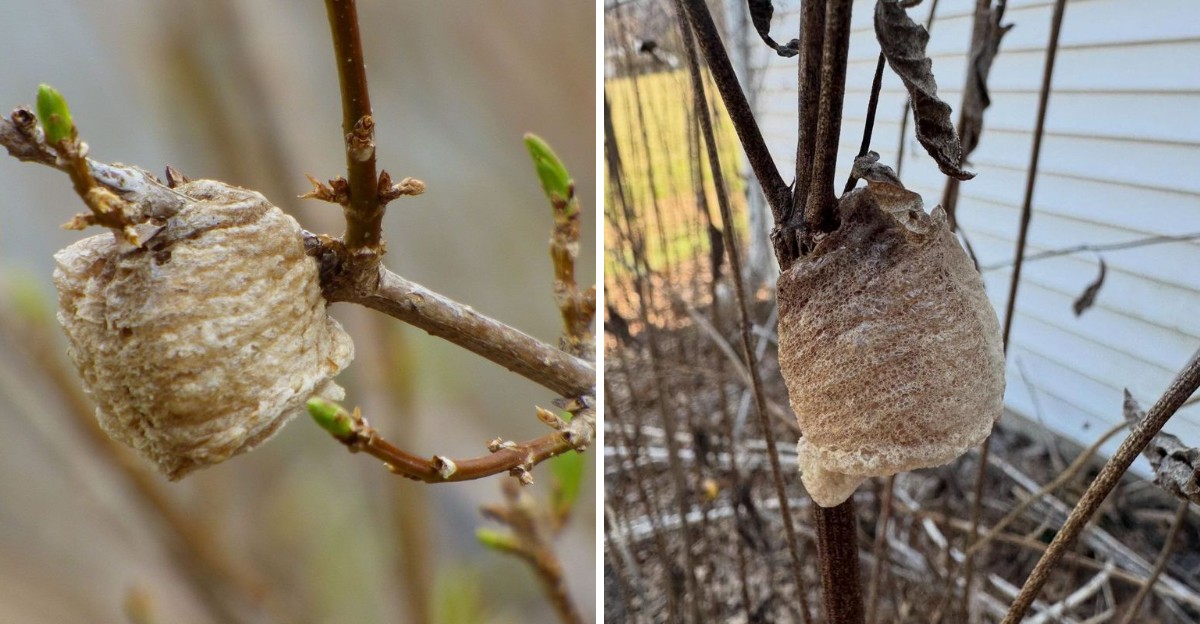
An empty foamy package on a shrub branch often looks almost identical to a full one, since the tiny hatchlings slip out through small slits without wrecking the shell. Little exit holes or shed skins on the surface reveal a hatch already happened.
The mother whips a frothy liquid into bubbles as she lays, and it hardens into an insulated shell. Many packages sold online come from a large introduced species that may eat native insects.
I was halfway through trimming the hedge when I spotted a tan lump glued to a branch and nearly tossed it. You might notice these bundles on rosemary, rose canes, and fence boards while pruning.
Plenty of families carry them indoors to show the children, only to find hundreds of tiny hunters on the curtains. Leaving each one where its mother placed it could give your garden’s next generation a fair start.
That Crusty Tan Lump On Your Shrub Branch Was Built By A Mother
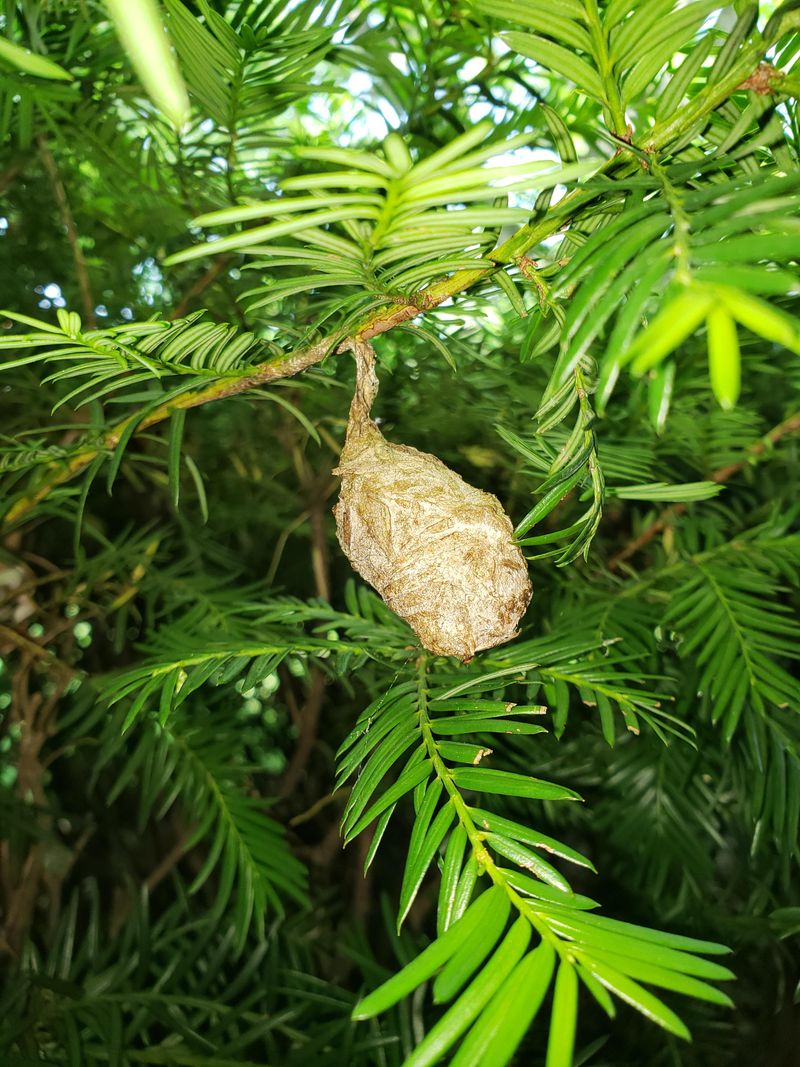
Squeeze it gently and you’ll notice it gives a little, like stale marshmallow. That foamy brown mass is a praying mantis egg case, and scientists call it an ootheca. It’s one of the most common surprises gardeners find while pruning in fall and winter.
Most cases are tan, light brown, or grayish. They’re often oval or slightly stretched out, roughly an inch or so long, though size and shape vary by species. Some look ridged down the middle, almost like a tiny loaf of bread.
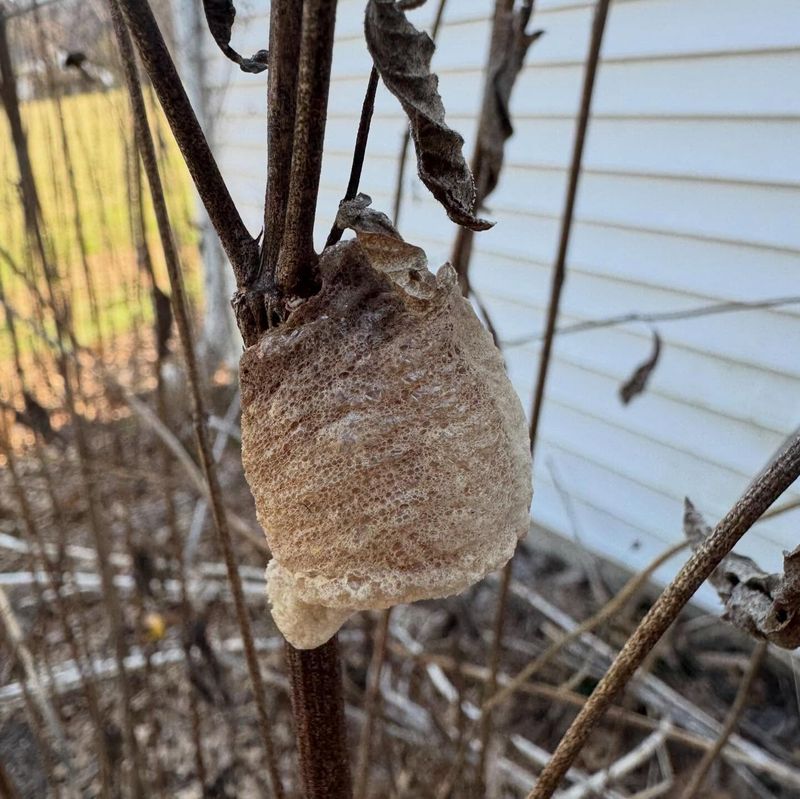
You’ll usually find them stuck tight to twigs, stems, fence boards, eaves, or even the side of a pot. The color blends right into bark, which is exactly the point. Birds and curious gardeners walk past them constantly.
A few other things can look similar, so a quick check helps. Spittlebug froth is wet and white, not stiff and brown. Some moths, like tussock moths, also leave fuzzy egg masses, but those look hairy rather than spongy.
If yours feels firm, dry, and bubbly in texture, you’ve almost certainly found mantis eggs. Congratulations, your yard has a hunter in the family tree.
Inside The Foam Sits A Whole Batch Of Mantis Eggs
Here’s a fun bit of insect engineering. When a female mantis lays her eggs, she releases a frothy liquid at the same time, whipping it into bubbles with the tip of her abdomen. Within hours, the foam hardens into a tough shell.
The eggs sit in neat rows inside that shell. Depending on the species, one case can hold a few dozen eggs or a couple hundred. The air pockets work a lot like the insulation in your attic.
That hardened foam helps protect the eggs from rain, chilly nights, and some hungry critters. It isn’t perfect, though. Certain tiny parasitic wasps can still lay their own eggs inside, and some birds will peck at the cases.
Most mantises in temperate areas spend winter in this egg stage. The adults usually don’t survive past late fall, so the case carries the whole next generation on its own.
I think of it as a packed lunchbox and sleeping bag rolled into one. The mother does all her work in a single evening, and then the case handles the rest for months.
Baby Mantises Pour Out When Spring Warms Up
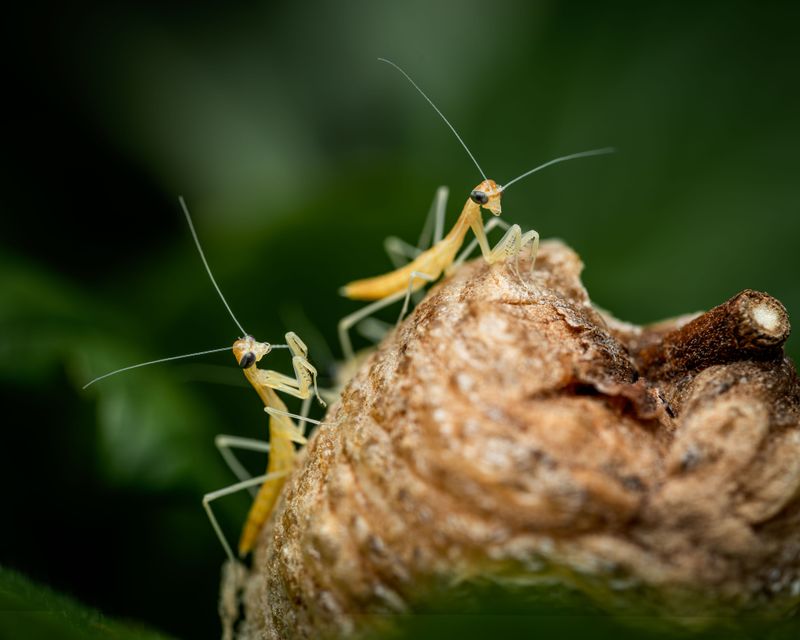
Watching a hatch is pure garden magic. On a warm spring morning, dozens of pale, thread-thin nymphs wriggle out of the case and dangle on silky strands before scattering.
The timing depends on steady warmth, not a calendar date. Across much of the state, hatching tends to happen in spring, but coastal gardens and hotter inland valleys can run on slightly different schedules. Once eggs start developing, it may take several weeks before anyone appears.
The babies look like miniature adults right away. Mantises go through what’s called incomplete metamorphosis, so there’s no caterpillar or pupa stage. They simply grow bigger and shed their skin several times through summer.
Here’s a sneaky detail. An empty case often looks almost the same as a full one, because the nymphs exit through small slits without wrecking the shell. You may have already missed a hatch without knowing it.
Look closely for tiny exit holes or shed skins clinging to the case surface. Most California mantises produce one generation per year, with nymphs and adults hanging around from spring into fall. Then the cycle starts over with fresh cases.
A Hungry Mantis Eats Pests And Helpful Bugs Alike
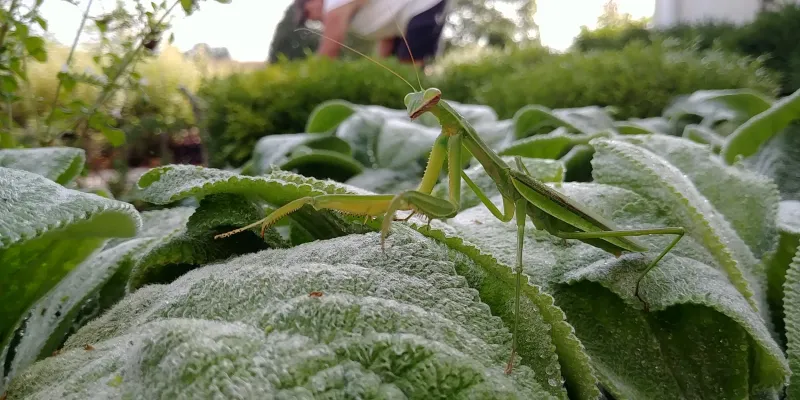
Mantises are the garden’s ambush artists, and they’re not fussy diners. They sit still, wait, and grab whatever wanders within reach.
Young nymphs start small, snacking on aphids, fruit flies, and other tiny insects. As they grow, the menu expands to caterpillars, crickets, grasshoppers, moths, and flies. That sounds wonderful for your tomatoes.
There’s a catch, though. Mantises also eat bees, butterflies, ladybugs, and even each other. UC Integrated Pest Management experts describe them as general predators that don’t target specific pests, so they won’t reliably control any one problem.
Mantis numbers are also naturally modest. Many nymphs get eaten by birds, spiders, lizards, and their own siblings, so only a small share reach adulthood. One egg case won’t clear a pest outbreak.
I still welcome them, just with realistic expectations. A mantis on your shrub is a sign of a lively food web, not a pest control service. Think of it as one helper among many, alongside lacewings, lady beetles, and the birds that visit your feeder.
Leave That Egg Case Right On The Shrub Where You Found It
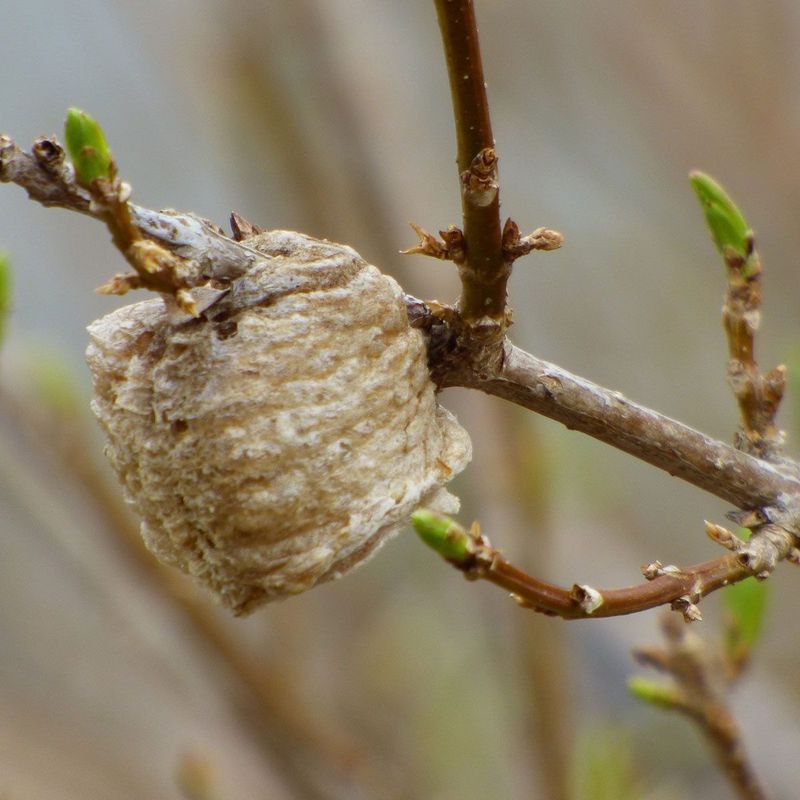
My best advice is also the easiest. Leave the case right where mom put it.
She chose that spot for a reason, often a sturdy stem with some shelter from wind and splashing water. The case is built to handle outdoor weather, and the eggs inside need natural temperature cues to hatch at the right time. Moving it rarely improves anything.
Winter pruning is when most people stumble onto them. Before you snip, take a quick scan of branches on roses, salvias, rosemary, and other woody shrubs. If you spot a case, prune around it or save that branch for later.
Accidents happen, of course. If you’ve already cut a stem with a case attached, don’t toss it in the green bin. Tie the cut piece onto a similar shrub with soft twine, keeping it upright and off the ground.
Cases that fell loose can be secured the same way. Position them a few feet up, in a protected spot, with the outer surface open so tiny nymphs can climb out easily. Then simply walk away and let spring do its job.
Bringing A Mantis Ootheca Indoors Causes Big Trouble
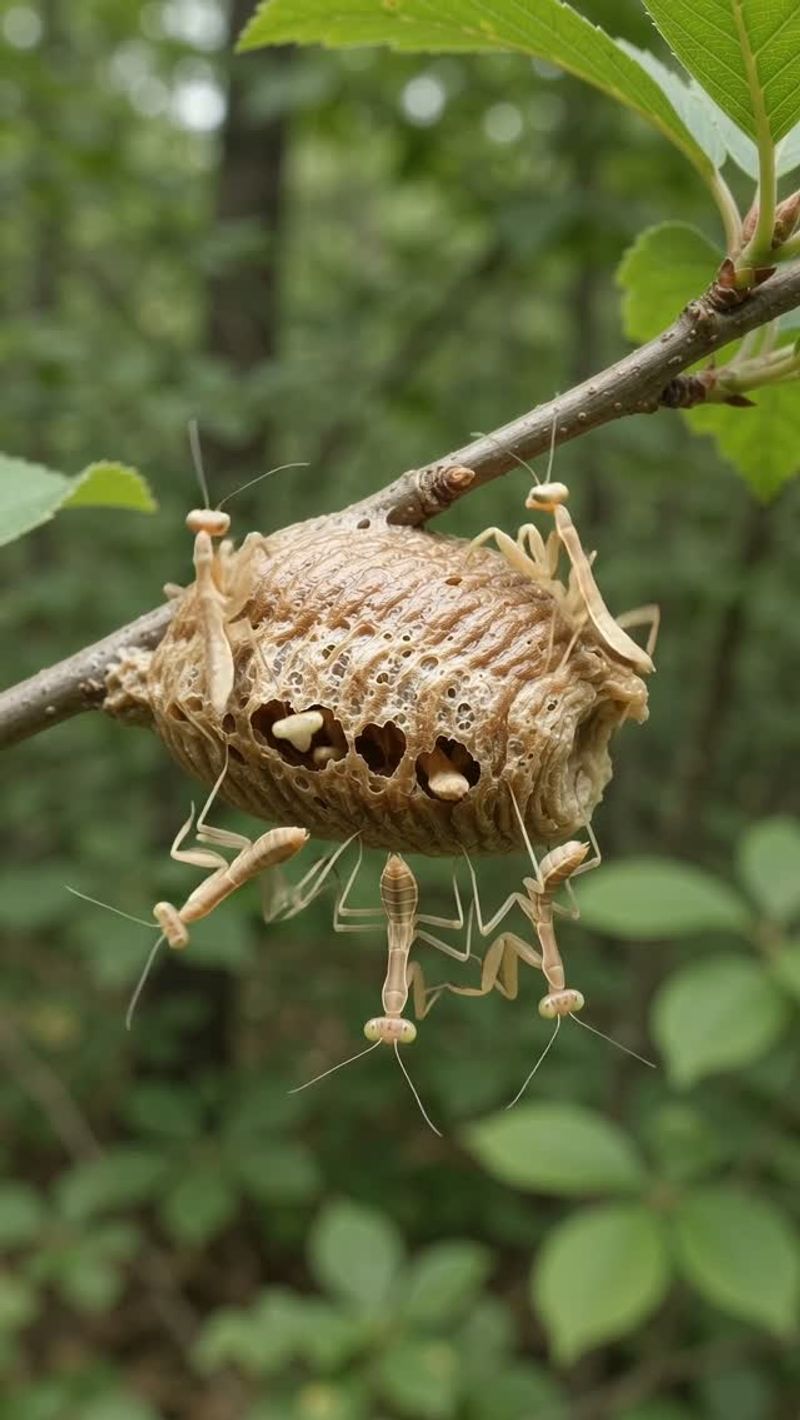
Plenty of curious gardeners have made this mistake. They bring a case inside to show the kids, set it on a warm shelf, and wake up weeks later to hundreds of tiny mantises on the curtains.
Indoor heat tricks the eggs into hatching early. Outside, there may be no small insects yet for the nymphs to eat, and the weather may still be chilly. Most early hatchlings struggle and don’t make it.
A few other habits cause problems too. Avoid ripping a case off a stem, since tearing can damage the eggs. Skip sealing it in an airtight jar, setting it on damp soil, or coating it with glue, paint, or spray.
Moisture is a sneaky enemy. A case sitting in wet mulch can grow mold, while one tucked in a stuffy container can overheat. Fresh air and normal outdoor conditions work best.
If your children want to watch a hatch, choose a case you can see from a window. Check it every few days in spring with a magnifying glass. Everyone gets the thrill, and the baby mantises get a fair start.
Some Garden Mantises In The Golden State Came From Far Away
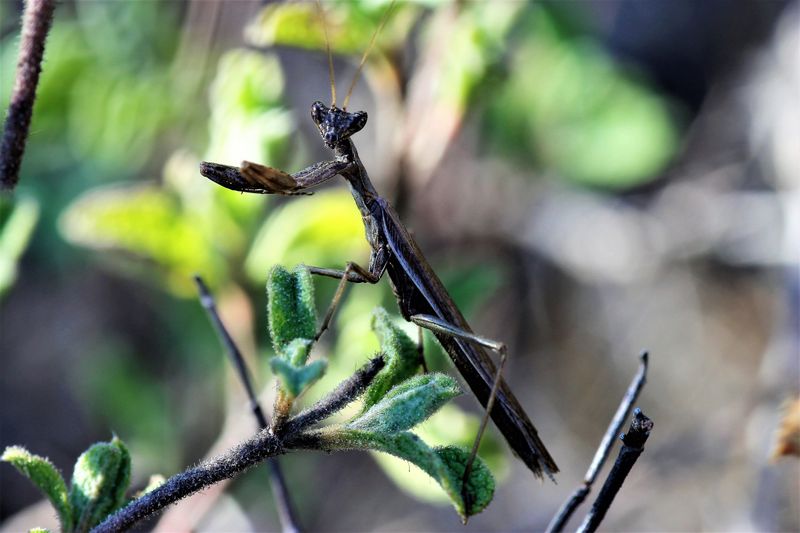
Did you know several mantises in Western backyards aren’t from here at all? The European mantis and the large Chinese mantis were introduced to North America over a century ago and now show up in many California gardens.
Native species exist too. The California mantis, Stagmomantis californica, is a local resident found across much of the West. Its egg cases are typically flatter and more compact than the big, rounded cases of the Chinese mantis.
Here’s why this matters. Egg cases sold online or at garden centers are commonly Chinese mantis cases. Those big predators can eat native insects, including smaller native mantises, and UC experts don’t specifically recommend releasing purchased cases for pest control.
That doesn’t mean you should remove cases you find. You can’t easily know which species built a wild case, and none of them harm people or plants. Just skip buying extra ones.
Also avoid carrying cases to faraway towns or new regions. Keeping them local helps your neighborhood’s insect community stay balanced. If you love a good identification puzzle, snap photos and post them to iNaturalist for help from local experts.