Why Sandhill Cranes Return to Southern Arizona Every Winter
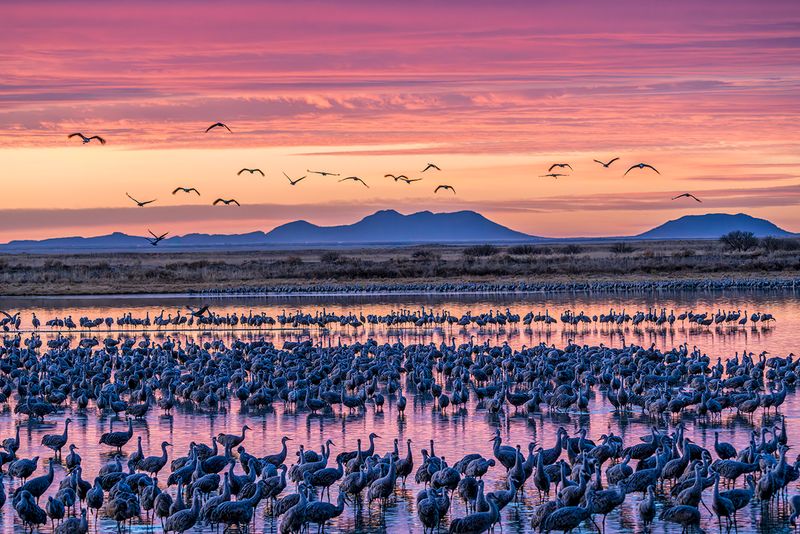
Sandhill cranes return to southern Arizona each winter because the region offers shallow wetlands for sleeping and farm fields close by for eating. Each year, flocks gather in a few valleys and along a river, filling the cold mornings with loud, rolling calls.
Not every crane uses the same spot, and the timing shifts with weather and conditions. Knowing how the pieces fit together makes a visit far more rewarding.
Why habitat matters more than warmth alone
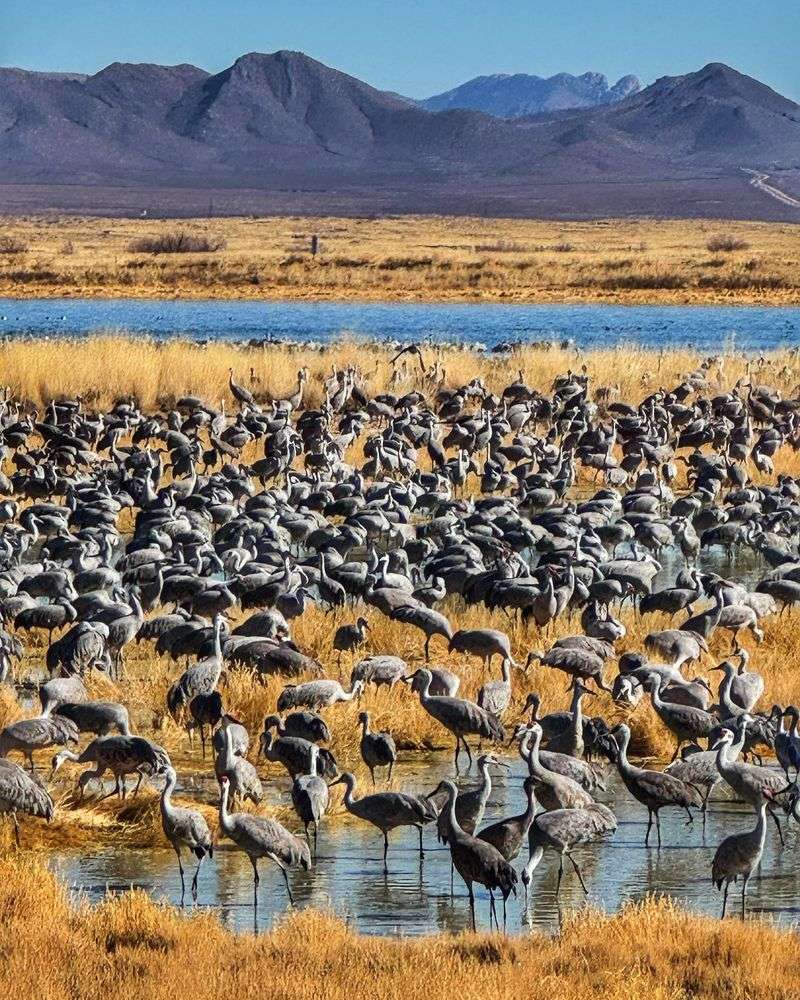
Sandhill cranes spend the winter in southern Arizona because the landscape gives them two things they need close together: a safe place to sleep and a reliable place to eat. Arizona Game and Fish Department notes that cranes favor roosts with shallow water and stay near harvested grain fields.
That pairing of wetland and farmland is the heart of the story.
It is tempting to say the birds come south simply for the warm weather. Warmth may help, but nothing in the sources I reviewed shows it is the proven or only reason.
What the sources do back up is habitat. Shallow wetlands and agricultural fields are described as winter habitat for the species by the U.S.
Think of it like a hotel next to a restaurant. When the room and the meal sit close together, a bird spends less energy traveling between them.
The next sections look at each piece, then at where the birds gather, when they arrive, and how to watch them kindly.
Shallow wetlands provide overnight roosts
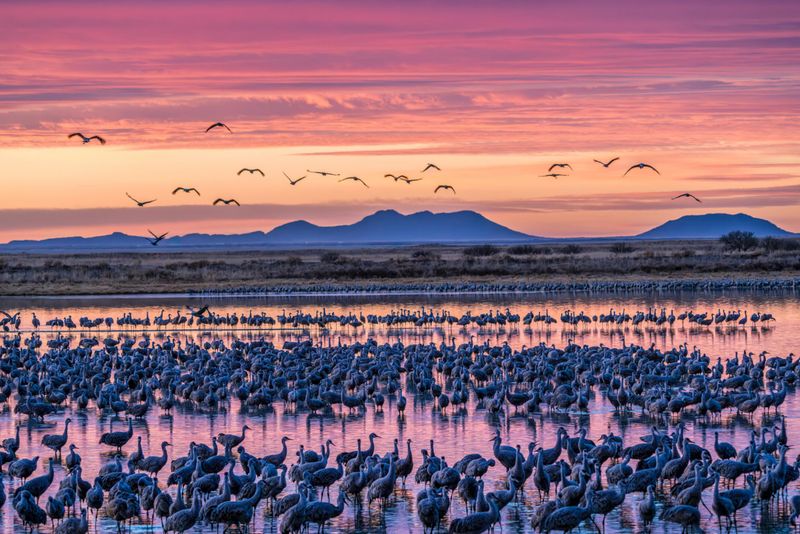
As evening settles, cranes drop out of the sky and wade into open, shallow water to spend the night. Arizona Game and Fish describes their preferred winter roosts as having shallow water and little vegetation.
That open setting lets a bird see across the water and stay alert while it rests.
A roost works as the anchor of the winter day. Birds return to it after feeding, and they leave it again at first light.
Because the same kind of wetland can serve many birds at once, large groups often stack up in one place, which is why a good roost can look crowded and sound lively.
Water is the catch. Wetlands change with rainfall, management, and season, so a pond that is perfect one winter may look different the next.
Cranes respond to those conditions, which helps explain why local sightings can shift from year to year even when the overall pattern holds.
If you visit, look for flat, open water edged by short ground cover rather than thick reeds. That is the kind of scene cranes tend to choose.
Nearby grain fields supply winter food
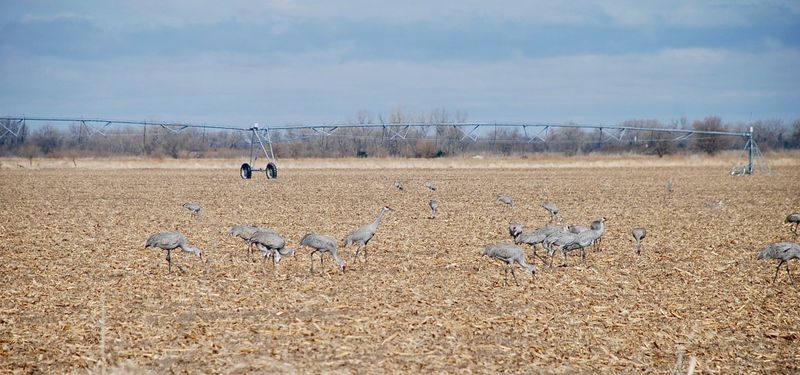
By day, the cranes head out to the fields. Sandhill cranes are omnivores, and over the year they eat a mix of plant and animal foods.
During migration and winter, though, the U.S. Fish and Wildlife Service says cultivated grains are their primary food.
In Arizona, that means farmland close to a roost matters a great deal. Arizona Game and Fish notes that corn is preferred near the state’s wintering areas.
Harvested fields leave behind waste grain, and the birds walk the rows picking it up.
That detail separates a winter diet from a year-round one. In other seasons, cranes may take a wider range of foods, but winter life in Arizona leans heavily on grain.
A flock in a stubble field is simply doing its main job of the day, refueling.
Cropping patterns can change from year to year, so the best fields to watch may move too. A practical tip is to scan the edges of harvested fields from a public road or viewing area, and let the birds feed without approaching them.
Arizona has several wintering crane regions
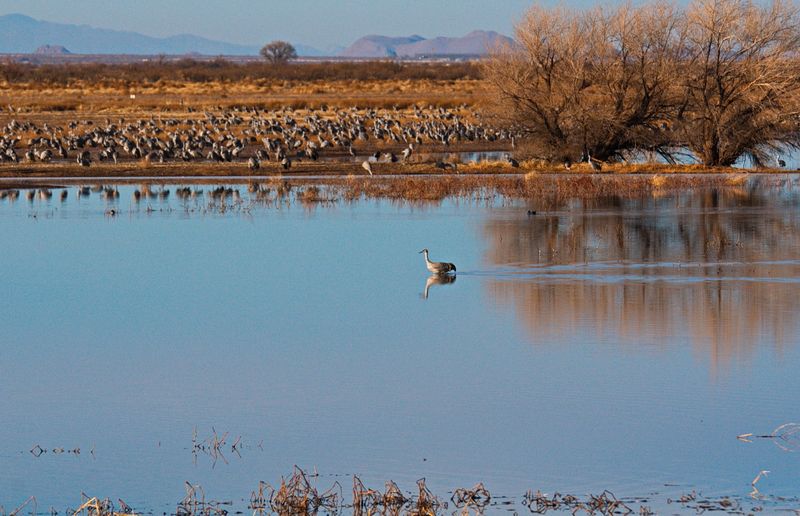
Southern Arizona is not a single crane destination. According to Arizona Game and Fish, the state hosts portions of three sandhill crane populations.
Two of them winter in the Sulphur Springs and Gila River valleys, while another winters along the lower Colorado River.
That means the birds you see depend on where you stand. The Willcox and Sulphur Springs Valley area, the Gila River areas, and the lower Colorado River each hold their own winter concentrations.
Each has its own mix of water and farmland.
Whitewater Draw, a wildlife area in the Sulphur Springs Valley, is a prominent roosting and viewing site within this bigger picture. It is a great place to see cranes, but it does not hold every crane in Arizona.
Picture a map with several bright dots rather than one. Birds may use more than one dot during a winter, and different visitors can report very different scenes depending on which valley they choose and when they go.
Do individual cranes return to the same place?
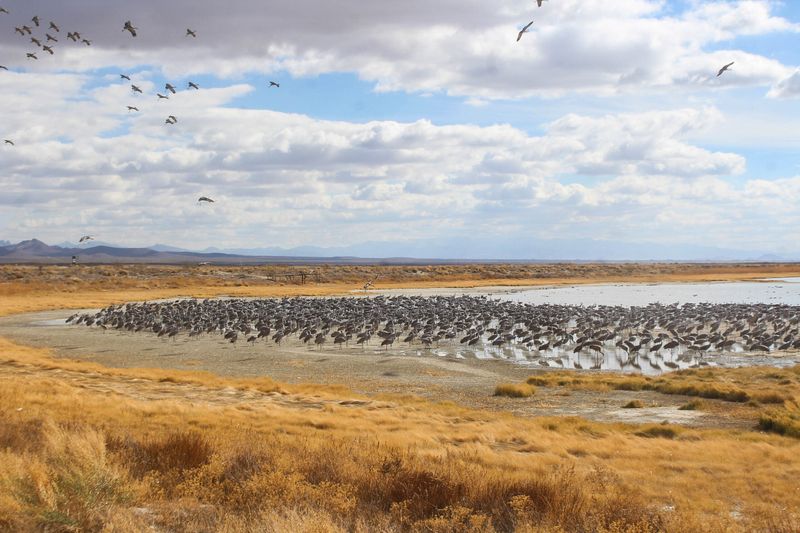
When people say cranes return every winter, they usually mean the pattern repeats at the population level. Flocks follow a seasonal migration and show up in the same general regions year after year.
That is different from saying each bird lands on the same roost every time.
Research helps show why that difference matters. A telemetry study in The Condor tracked cranes in California and found high return rates to its study area.
It also found differences between subspecies and some shifts in wintering regions.
Because that work took place in California, it cannot tell us Arizona return rates. It also cannot prove that the same birds use the same Arizona roost each winter.
It simply reminds us that some individuals stay faithful while others move.
Arizona’s several wintering regions, described by Arizona Game and Fish, give birds more than one option. So think of the return as a reliable seasonal rhythm for the group, with plenty of individual variety inside it.
When do cranes arrive and leave?
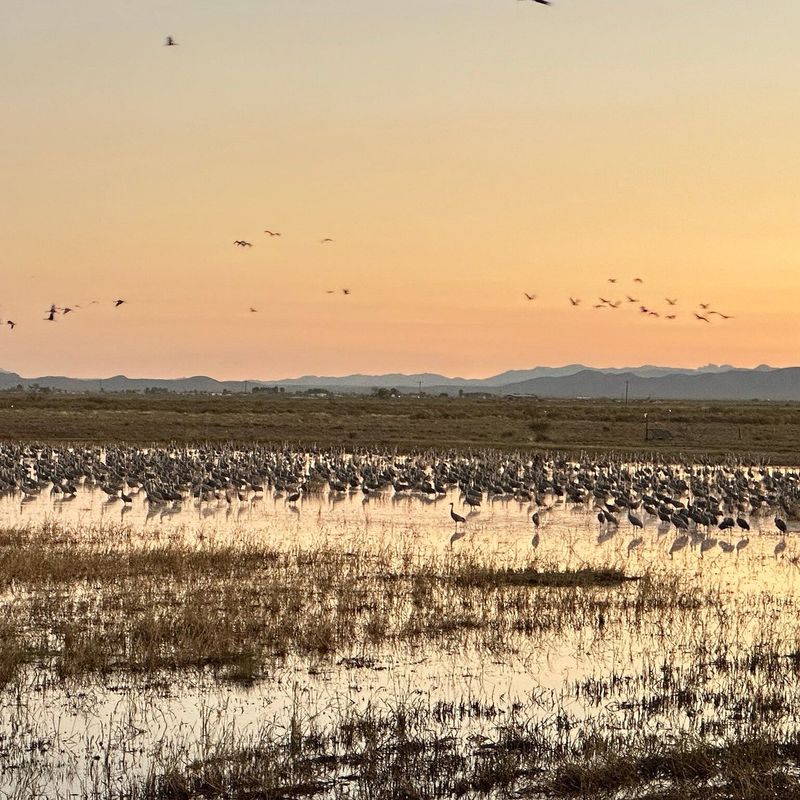
Crane season follows the calendar loosely. Arizona Game and Fish describes southbound migration as beginning in September, and return migration as starting in mid-to-late February.
Those are starting points for movement, not arrival and departure dates for any one place.
Local viewing seasons run wider. The department’s live crane camera page for Whitewater Draw points to a viewing season of about October through March or early April.
Timing varies by location and conditions.
Weather, water levels, and habitat can nudge birds earlier or later, so no date is guaranteed. Some years the first flocks show up sooner than expected, and in others they linger after the usual window closes.
The practical move is to treat the season as a range. Check current conditions from the wildlife area or the camera before you plan a trip, and be ready for the possibility that your chosen day is quieter or busier than a neighbor’s report.
A daily commute shapes crane sightings
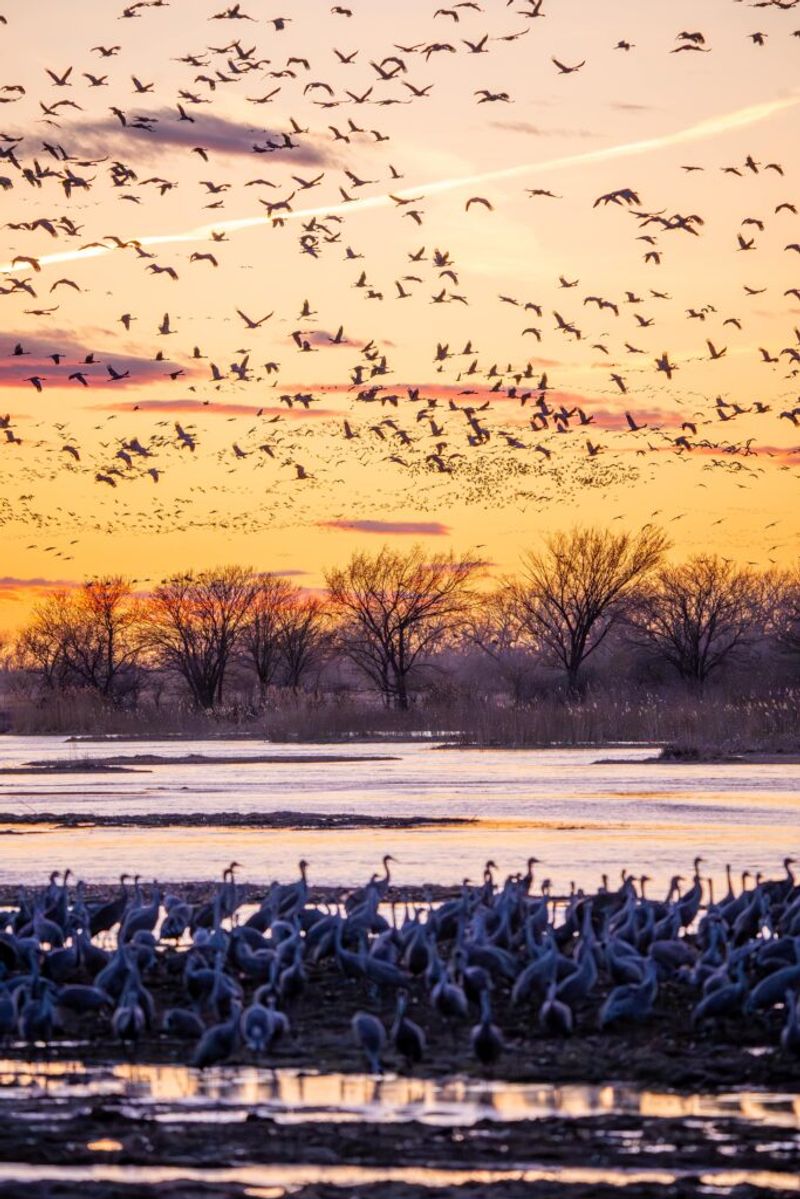
Cranes keep a daily commute. Arizona Game and Fish says they typically leave the roost around sunrise to feed for several hours.
Around midday they return to the roost or to nearby loafing habitat.
That rhythm gives you a good guide for planning. Early morning can bring the dramatic scene of many birds lifting off together, calling as they go.
Later in the morning, you may catch them settling back in.
Treat it as a pattern, not a timetable. Weather, food, and disturbance can change when a flock moves, and some days the departure feels spread out rather than all at once.
At Whitewater Draw, the department’s site page recommends viewing from sunrise to about an hour afterward, or when birds return in late morning. Arrive a little early, dress warmly for a cold start, and be patient if the show begins slowly.
Whitewater Draw offers one view of the winter gathering
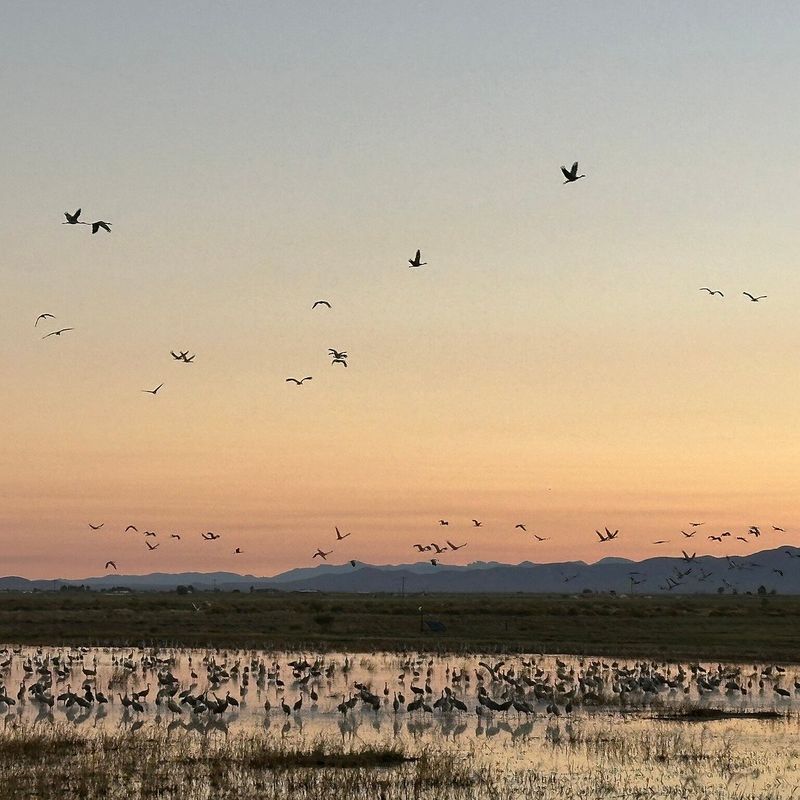
Whitewater Draw Wildlife Area is one of the best-known places to watch cranes in Arizona. It is a prominent roosting and viewing site, and many visitors make it their first stop.
Still, it is one window onto the winter gathering, not the whole show.
The Arizona Game and Fish site page gives practical timing advice. It suggests viewing from sunrise to about an hour afterward, or when birds return in late morning.
That matches the roost-and-feed routine of the cranes.
Numbers deserve care. A January 2026 estimate put more than 20,000 cranes in the broader Gila River and Sulphur Springs Valley area.
That was a dated regional count, not a Whitewater Draw count and not a typical annual total.
If you cannot visit, the department’s live crane cam offers a look from home. Conditions change, so the scene you see on a given day may be very different from a photo you remember.
Watch from a distance and let the cranes keep their routine
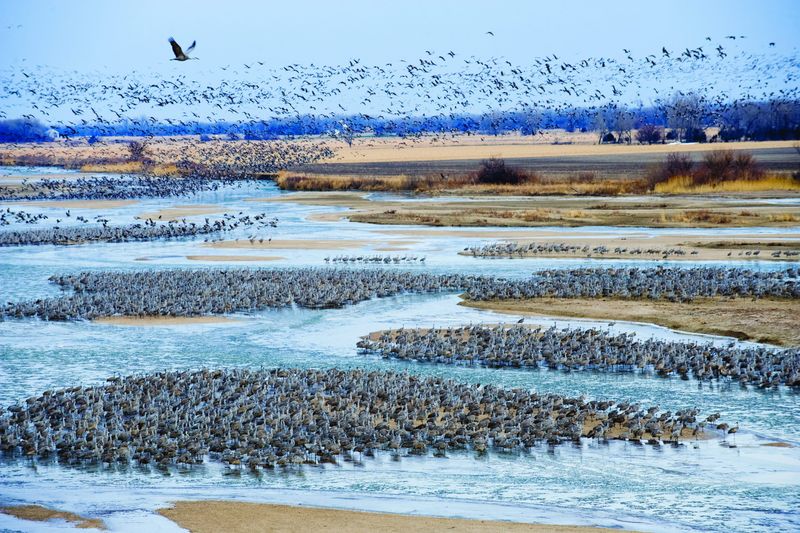
Good crane watching comes down to staying back and staying quiet. Arizona Game and Fish viewing tips advise observing from a distance, using binoculars or other optics, and avoiding harassment or pursuit.
They also say not to feed wildlife.
Those habits fit the way cranes live in winter. They rest on the water at night, then spend the morning feeding in nearby fields.
A visitor who walks toward a flock or tosses food can break that routine and send birds flying.
Bring binoculars or a spotting scope so you can see feathers, red crowns, and feeding behavior without moving closer. Keep voices low, stay on designated paths, and let the birds decide where to go.
When the flock lifts off at dawn, you will hear it before you understand it. Let them go, and let the rest of the day belong to them.