Plant One Celery Stalk In Your Arizona Garden And It Quietly Lowers Blood Pressure Better Than You’d Think
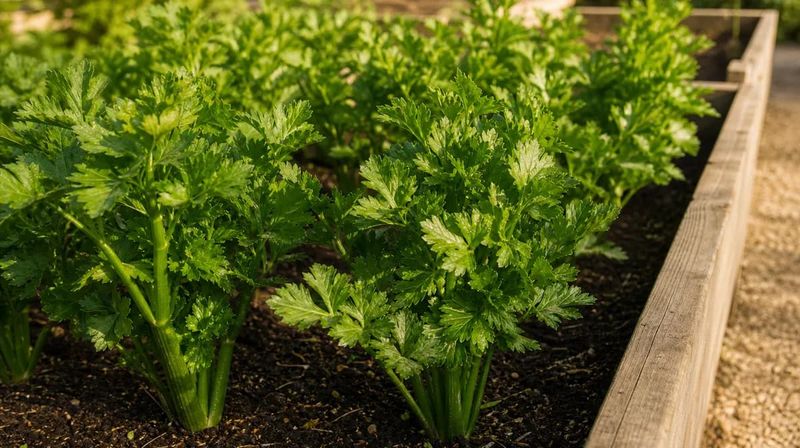
Celery has been quietly picking up a reputation as a natural blood pressure remedy, and the idea sounds almost too good to be true. The reality is more nuanced: researchers have studied concentrated celery-seed extracts, not grocery-store stalks, and the evidence is still early and inconsistent.
What Arizona homeowners can do is regrow a celery base as a cool-season container experiment while understanding exactly what the science does and does not say about blood pressure.
Regrow the celery base for the garden, not for a blood-pressure claim
Headlines about celery and blood pressure have a way of making a grocery staple sound like a prescription alternative. The truth is that planting or regrowing a celery base has no demonstrated direct effect on blood pressure, and the research that generated all this excitement studied concentrated celery-seed extracts, not a single stalk pulled from the produce aisle.
Two separate threads run through this article, and keeping them apart matters. The first is a gardening project: regrowing a grocery-store celery base as a modest cool-season container experiment for Phoenix or Tucson yards.
The second is a medical question: what does the science actually say about celery and blood pressure? A 2022 randomized clinical trial tested a concentrated celery-seed supplement in 52 adults over four weeks, and a 2025 systematic review pooled nine studies involving 473 participants.
Neither looked at someone regrowing a celery base in a backyard container.
Treating celery as a blood-pressure treatment is not what the research supports, and stopping or changing prescribed medication because of a food or supplement is something clinicians consistently advise against. The gardening experiment is worth trying for its own sake.
The blood-pressure story deserves a careful, honest read before anyone draws conclusions.
Celery’s chemistry explains the interest but not the outcome
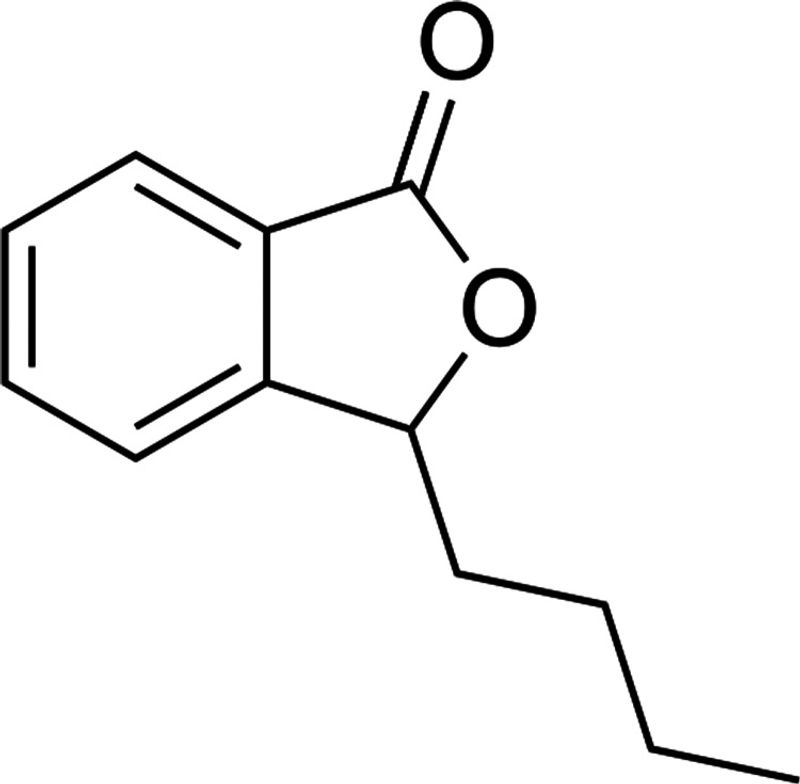
Celery contains compounds called phthalides, and the one that draws the most research attention is 3-n-butylphthalide. Laboratory studies have proposed that this compound may relax smooth muscle in blood vessel walls and possibly act as a mild diuretic, which is why the idea of celery influencing blood pressure has biological plausibility worth taking seriously.
Plausibility, though, is not proof. A mechanism identified in a lab dish or an animal model does not automatically translate into a meaningful clinical effect in a person eating a stalk with lunch.
The concentration of phthalides varies across celery plant parts, with seeds generally carrying higher concentrations than stalks or leaves. Preparation and dose matter enormously, and a raw stalk is a very different delivery system from a standardized extract capsule.
Researchers reviewing celery’s proposed antihypertensive properties have noted that the evidence base involves different plant parts, different preparation methods, and different dosing strategies, making it hard to draw a single clean conclusion. A physiological hypothesis, no matter how reasonable it sounds, cannot be converted into a guarantee that snacking on celery will move your blood pressure numbers.
The chemistry is genuinely interesting. The gap between interesting chemistry and a proven clinical outcome is where careful readers need to pause.
Your Arizona Garden Changes Every Week. Your Plan Should Too.
Gardening in Arizona changes quickly throughout the season. Every Friday you’ll receive a simple weekly plan showing exactly what to plant, prune, fertilize, harvest, and protect so you never miss the right timing.
The human evidence centers on concentrated celery-seed preparations
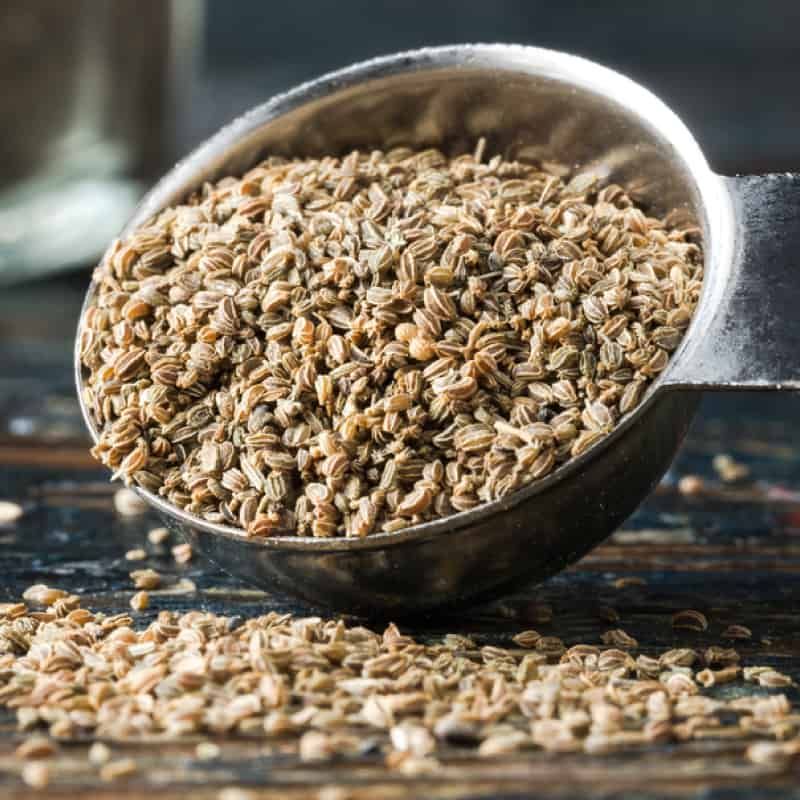
The strongest individual human trial located involved 52 adults who took four celery-seed-extract capsules daily, totaling 1.34 grams of extract per day, for four weeks. Average systolic blood pressure in the celery group fell from roughly 141 to 130 mmHg, and diastolic dropped from about 92 to 84 mmHg.
Those are meaningful-looking numbers, but the study was small, short, and tested a concentrated supplement, not ordinary celery stalks from the grocery store.
A 2025 systematic review and meta-analysis gathered nine studies involving 473 participants and found a statistically significant average reduction in systolic blood pressure across the group. The catch is that the results were highly inconsistent from study to study, with the heterogeneity measure for systolic blood pressure reported at an I-squared of 94.3%.
That level of variability is a signal that different studies were measuring different things under different conditions, which makes the pooled average harder to interpret as a reliable prediction for any individual.
A subgroup analysis in the 2025 review suggested that seed preparations showed a stronger pattern than preparations involving stalks or leaves, but the review’s authors rated some blood-pressure outcome evidence as low or moderate quality. This is a tentative signal from a heterogeneous set of studies, not confirmation that celery seeds reliably outperform stalks in a clinical sense.
None of the studies followed participants long enough to show whether blood-pressure changes translated into fewer heart attacks, strokes, or other outcomes that ultimately matter to long-term health.
Regrow a grocery-store celery base as a bounded experiment
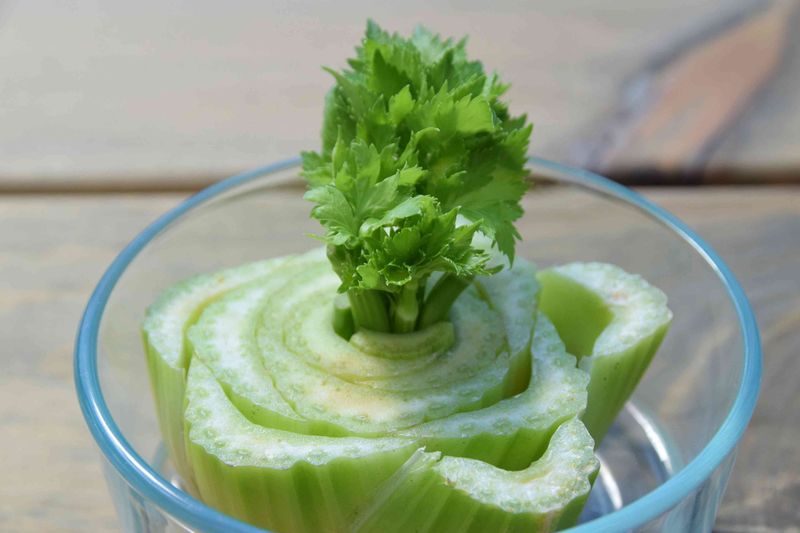
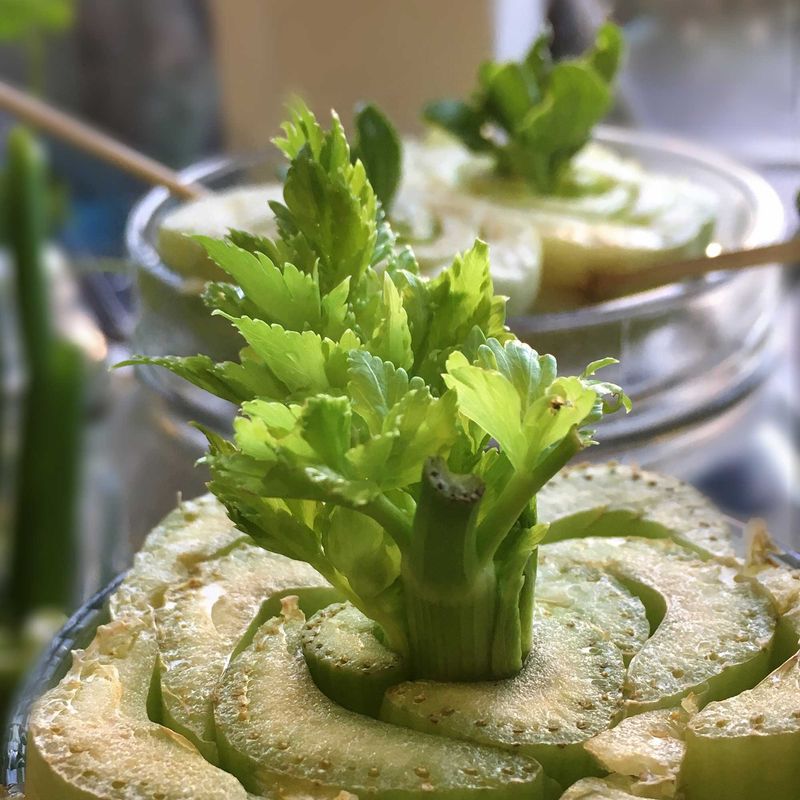
Regrowing a celery base from the grocery store is a satisfying low-stakes kitchen project, and the steps are straightforward. Cut the stalks away, leaving roughly two inches of the base intact.
Set that base cut-side up in a shallow dish with about one inch of water covering the bottom, and place it somewhere that gets decent light, such as a sunny windowsill.
Change the water daily to keep it fresh and reduce the chance of rot. After about two to three weeks, roots should begin forming along the bottom and new pale-green growth will emerge from the center.
At that point, according to Illinois Extension guidance on kitchen scrap gardening, the base can be transferred to a container filled with moist potting soil, with the base buried just deep enough to cover the roots while leaving the new shoots exposed to light.
Expect new leaves and possibly some tender inner stalks rather than a full commercial celery head. Extension sources describe this as a reuse experiment, and the results vary.
Some bases produce a generous flush of usable leaves; others stall or rot before roots develop. Treating it as a curiosity rather than a reliable crop keeps expectations grounded and makes any green growth feel like a bonus.
Keep this project entirely separate from any health goals, because the gardening experiment and the blood-pressure question belong in different conversations.
Use Arizona’s cool season and a protected container
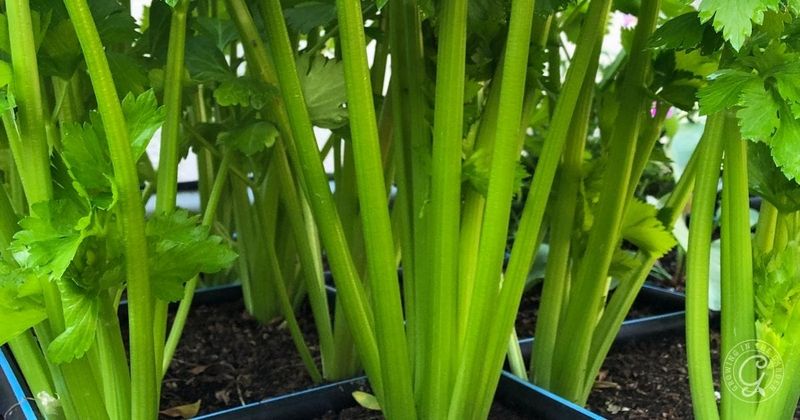
Arizona’s low desert does not forgive crops that need cool, moist conditions during the wrong time of year. Celery fits a cool-season window far better than it fits a Phoenix or Tucson summer, and the specific timing that works for you depends on your elevation and local microclimate.
A gardener in central Phoenix, one in higher-elevation Prescott, and one in Tucson’s foothills are working with meaningfully different conditions, so no single planting date applies statewide.
For low-desert areas, fall is generally the right direction to aim. University of Arizona Cooperative Extension resources on building a successful vegetable garden provide elevation-specific planting calendars that are more reliable than any one-size-fits-all recommendation.
Celery is listed as not well adapted at some Arizona elevations, so checking those local guides before committing is a practical first step.
Container growing makes more sense here than planting directly into compacted native desert soil, which can contain substantial clay and drain poorly. A clean container filled with quality potting mix drains more predictably and lets you move the plant to chase shade or shelter it from reflected heat off walls and pavement.
Consistent moisture is non-negotiable for celery, which is genuinely thirsty compared to desert-adapted plants. Containers also dry out faster than in-ground beds in Arizona heat, so plan to check soil moisture often.
Afternoon shade during warm spells and protection from intense reflected heat give a regrown celery base its best realistic chance of producing usable leaves before temperatures climb again.
Handle supplements and blood-pressure readings with clinical caution
Eating celery as part of a regular diet is a reasonable food choice with a long track record of safety for most people. Taking a concentrated celery-seed extract, powder, or capsule is a different matter, because supplements deliver compounds at concentrations that a food serving does not.
Anyone who is pregnant, managing kidney disease or another chronic condition, or already taking blood-pressure medications or diuretics should ask a clinician or pharmacist before adding a concentrated celery product to their routine. That is precautionary advice, not a claim that celery itself is uniquely dangerous for those groups, and it applies to concentrated products rather than ordinary food portions.
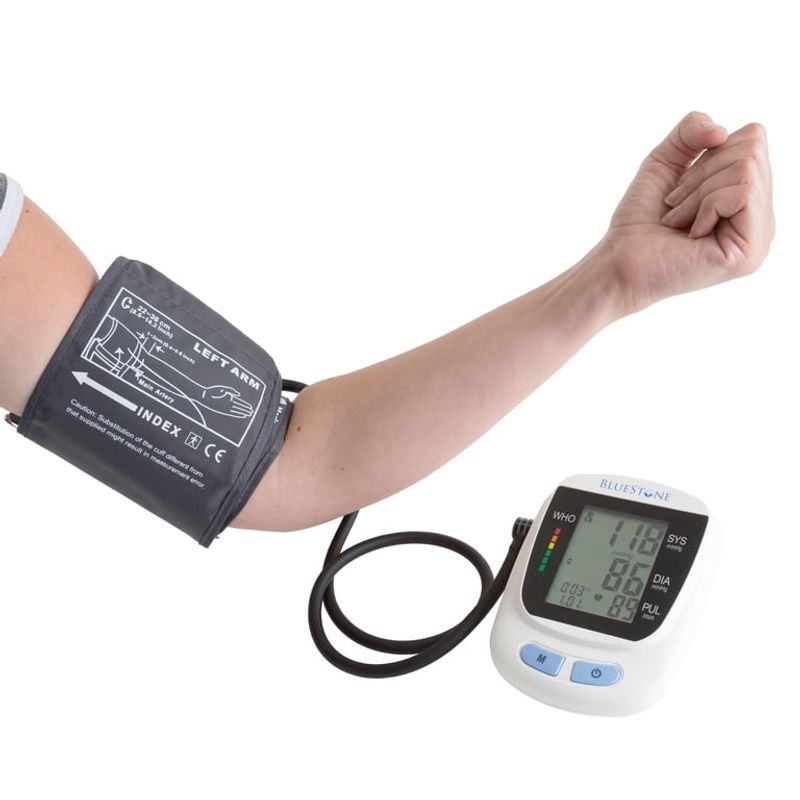
If you decide to track whether dietary changes seem to affect your blood pressure, use a validated upper-arm cuff rather than a wrist device, which tends to be less accurate. Record readings at the same time of day, seated and rested, and keep a written log.
The American Heart Association recommends discussing patterns with your doctor rather than acting on individual readings alone. Medication should never be stopped, reduced, or adjusted because home numbers look better or because you have added a food or supplement to your diet.
One additional note for gardeners handling celery plants in Arizona’s intense sun: celery juice on skin combined with strong ultraviolet exposure can occasionally cause a phytophotodermatitis reaction, a form of skin irritation documented in published case reports. Washing plant juices off skin before spending extended time outdoors is a simple precaution that removes the risk without requiring any alarm about eating celery normally.
Keep the takeaway modest and useful
The most useful framing for this whole topic is straightforward. Regrowing a grocery-store celery base is a low-cost, low-stakes cool-season experiment that is worth trying for the fun of it.
If it produces leaves you can use in cooking, that is a genuine small win. If it stalls, nothing was lost beyond a few weeks and a bit of attention.
The blood-pressure angle is a separate conversation, and the honest version of that conversation is less exciting than the headline suggests. The intriguing evidence comes from concentrated celery-seed preparations studied in small trials over short periods, with results that varied considerably from study to study.
A 2025 meta-analysis found a statistically significant pooled effect but also reported substantial inconsistency across studies, which means the finding is preliminary rather than settled. Eating ordinary celery as part of a balanced diet is perfectly reasonable, but one stalk, regrown or otherwise, has not been shown to move blood pressure numbers in a meaningful way.
Medical decisions about blood pressure belong with a qualified clinician who knows your full history, your current medications, and your cardiovascular risk. Celery is a vegetable, not a prescription, and the most grounded thing anyone can take away from this topic is that a cool-season container experiment and an honest conversation with your doctor are both worth having, just not confused with each other.