8 Evergreen Groundcovers That Keep Virginia Gardens Green All Winter
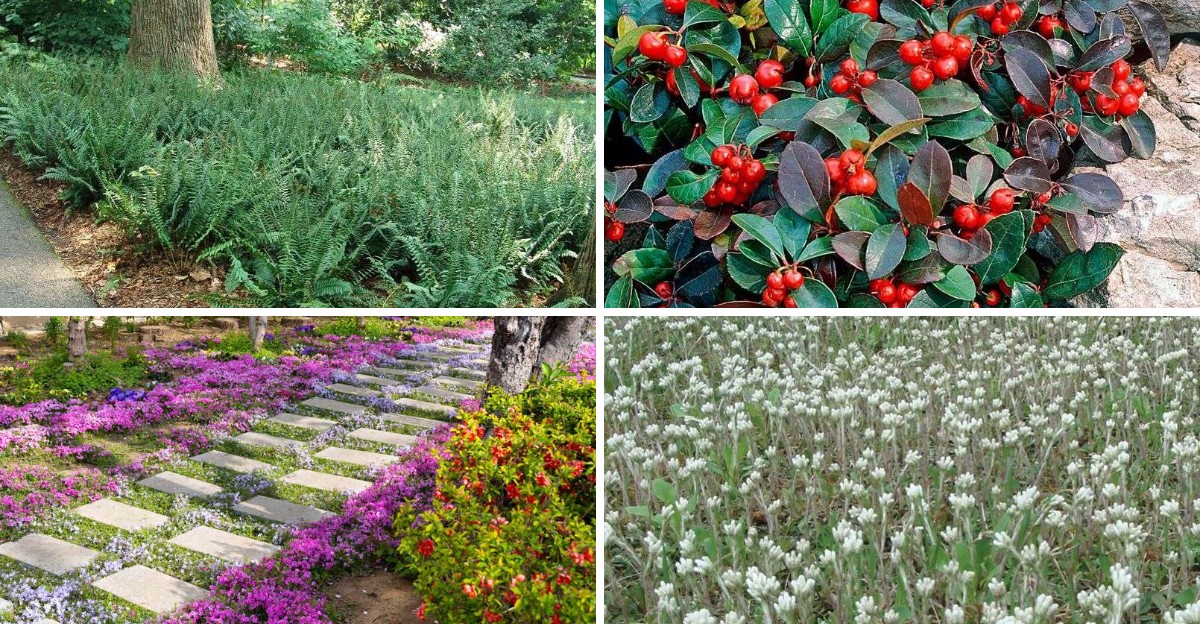
One small woodland berry in eastern forests forms from two flowers fused together, and each fruit shows two tiny dimples. That odd little detail sent me crawling across a cold Virginia hillside last January with my nose near the leaves.
Plenty of native groundcovers hold their leaves through hard frost and the long gray stretch before spring returns. Some even bloom in late winter or offer bright fruit that lasts well past the holidays.
Looking back, I should have planted more of them years ago instead of staring at bare mulch every winter. Between you and me, a patch of living green outside the kitchen window does wonders for a February mood.
Most of my favorites are natives that Virginia wildlife already knows, so they earn their keep in every season. So which tough little plants deserve a spot along your shady paths and sunny slopes this year?
1. Allegheny Pachysandra
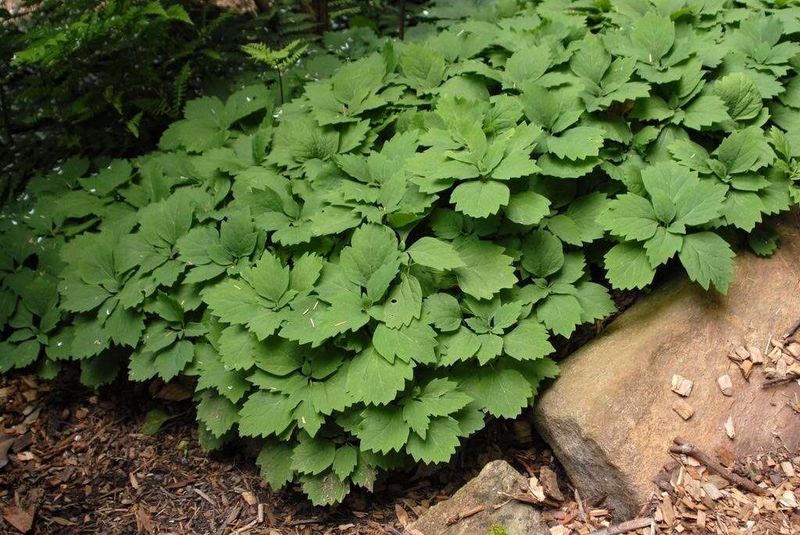
Fuzzy white flower spikes poke up from the soil in late winter, often before most gardens show any sign of life. Lean in close, and you will catch a sweet, soft fragrance that surprises nearly everyone who notices it.
Allegheny pachysandra, or Pachysandra procumbens, is the native cousin of the Japanese pachysandra found around so many older homes. Funny thing is, the native version has far prettier leaves, with silvery mottling that looks hand-painted in winter.
Japanese pachysandra can escape into nearby woods, so many native plant groups suggest swapping it out over time. Allegheny pachysandra spreads slowly by underground stems, which makes it a polite neighbor rather than a pushy one.
Expect plants roughly six to twelve inches tall, with clusters of scalloped leaves gathered near the tips of each stem. In colder winters, the older leaves may flop and look tired, while milder winters keep them upright and handsome.
Give it part shade to full shade and rich soil loaded with leaf litter or compost. It handles the dry shade under trees fairly well once roots settle, though a little extra water helps the first summer.
Plant small pots about a foot apart in early fall or early spring, while the soil stays cool and moist. Be patient, because a full carpet often takes three or more growing seasons to knit together nicely.
In early spring, trim off the older, battered leaves so the fresh new growth can shine. Deer rarely bother it, which makes this native a welcome choice for shady beds near the woods.
2. Christmas Fern
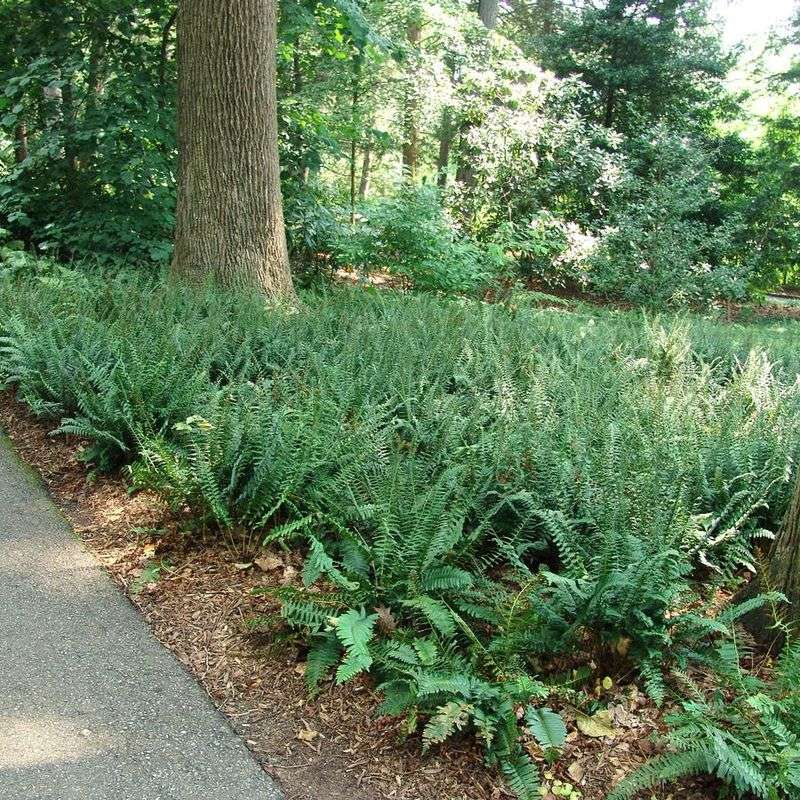
Hold a single leaflet up to the light, and you might spot a tiny Christmas stocking shape with a little toe. Many people say the name comes from that shape, while others credit fronds that stay green through December.
Polystichum acrostichoides is a native fern found across the eastern woods, and it handles winter better than most ferns. Its leathery, glossy fronds grow one to two feet long, forming tidy fountain-shaped clumps instead of spreading runners.
In my own yard, I’ve noticed the fronds slowly flatten against the ground once hard frost settles in. They stay green while lying down, which helps hold leaves in place and gives the soil a cozy blanket.
Shade suits this fern best, especially under oaks, maples, or along a north-facing wall near the house. It likes rich, well-drained soil and will tolerate dry spells once it has settled in for a season or two.
Plant it on a slope, and the clumps help hold soil in place during heavy summer storms. Grouping three plants together gives a fuller look, though a single clump still looks lovely beside a stone step.
When silvery fiddleheads appear in spring, snip away last year’s worn fronds at the base with clean shears. Fresh fronds unfurl quickly, so the clump rarely looks bare for more than a few short weeks.
Deer usually skip this fern, and it rarely needs feeding beyond the fallen leaves around it. For a shady corner that stays green in winter, few plants offer so much charm with so little effort.
3. Green And Gold
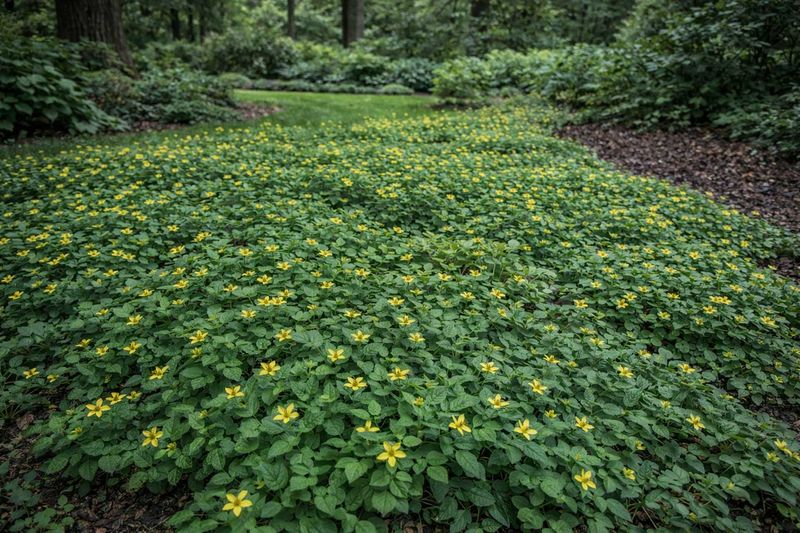
Its scientific name, Chrysogonum virginianum, gives away a proud bit of history about where botanists first described this cheerful native. The common name is simple and honest, since the plant offers fuzzy green leaves topped with sunny golden stars.
Green and gold forms low mats about four to eight inches tall, spreading by runners that root as they travel. Each flower has five bright yellow rays, and the main bloom show arrives in spring with scattered flowers later.
For what it’s worth, this plant stays semi-evergreen, so expect leaves to darken or thin a bit during harsh cold. In the milder eastern half of the state, the foliage often holds its color nicely until spring.
Part shade is the sweet spot, though it handles morning sun followed by afternoon shade quite happily. Rich, well-drained soil keeps it thriving, and soggy ground over winter can lead to crown rot and sulky plants.
Bees and other small pollinators visit the open flowers, which makes this plant more useful than its size suggests. I love tucking it along the front edge of a shady bed where those golden stars catch the eye.
Space plants about twelve inches apart, and they usually fill in within two seasons under decent conditions. A light layer of shredded leaves helps the runners root, though thick mulch can smother the low crowns.
Deer tend to leave it alone, and dividing crowded patches in early spring gives you free plants for friends. Few groundcovers bloom this long while asking so little from busy gardeners in return.
4. Pussytoes
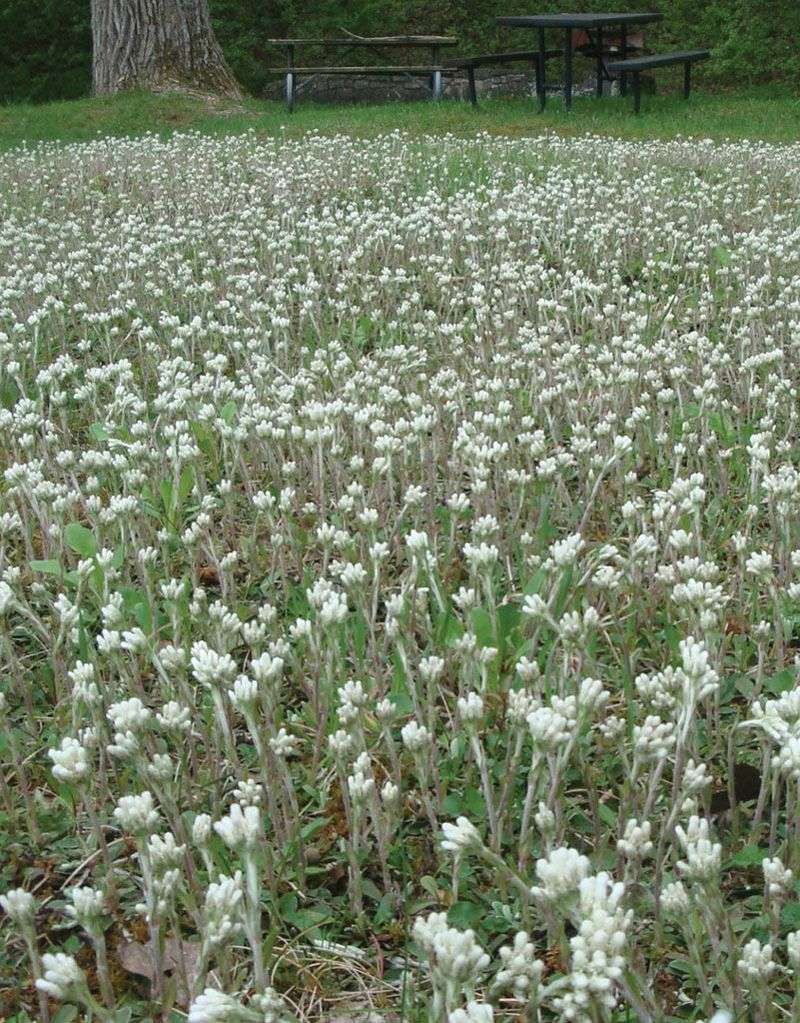
Run a fingertip across these leaves, and you will understand why kids love this plant on sight. The soft, silvery rosettes feel almost like felt, and the fuzzy flower clusters really do resemble tiny cat paws.
Plantain-leaved pussytoes, or Antennaria plantaginifolia, is a native groundcover that thrives where many plants struggle. Dry, thin soil and hot sun are exactly what it enjoys, which makes it a hero for tough spots.
Let’s just say my rocky front slope finally looks cared for since a patch of pussytoes moved in. The gray-green rosettes hug the ground at a few inches tall and keep their leaves through winter.
Fuzzy white flowers rise on short stems in April and May, adding a quirky texture to sunny spring beds. Male and female flowers grow on separate plants, so the patches can look slightly different from one another.
Butterfly fans should take note, because pussytoes serves as a host plant for American lady caterpillars. Seeing a few chewed leaves is a sign that you are feeding the next generation of lovely orange butterflies.
Plant it in full sun or light shade, and skip the fertilizer and heavy compost for this one. Rich soil and wet feet cause more trouble for pussytoes than any amount of drought or summer heat.
Spreading happens slowly by short stolons, creating a tight mat that works well between stepping stones. Deer usually ignore it, and a quick tidy of old flower stems keeps the patch looking neat.
5. Pennsylvania Sedge
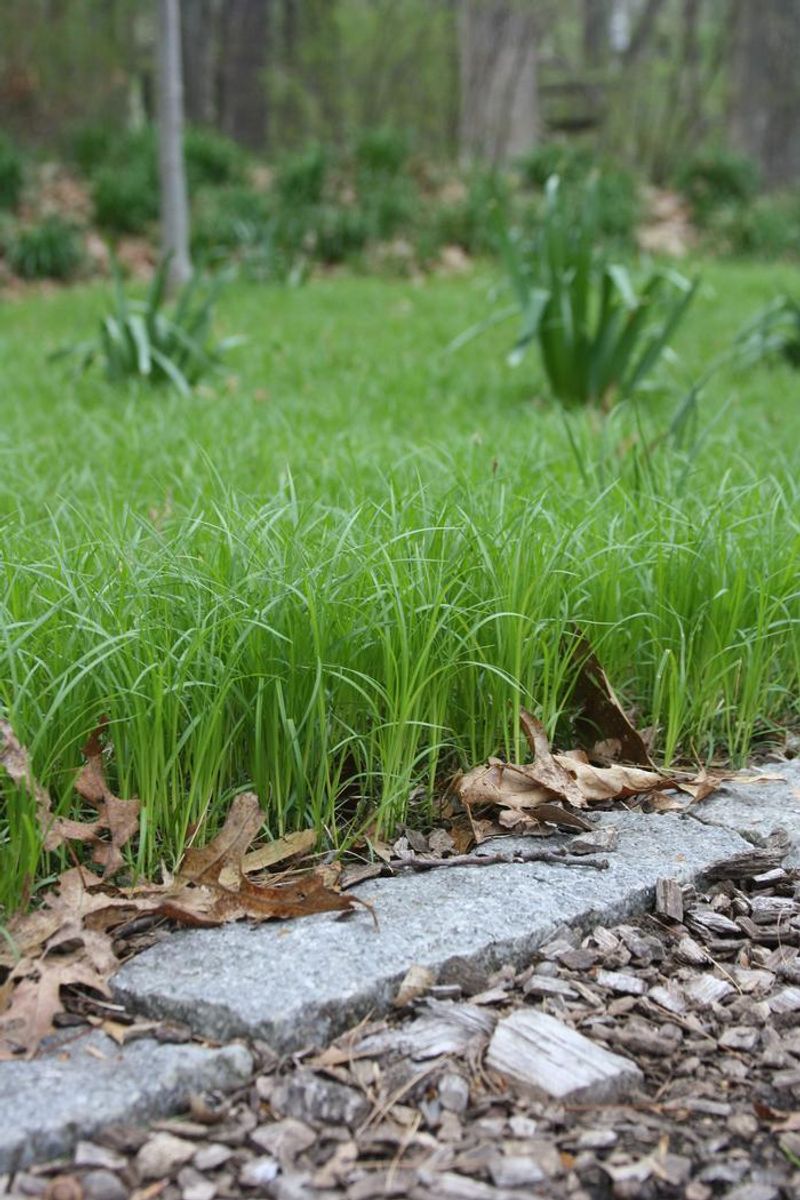
Grass refuses to grow under that big oak, and honestly, the tree is not going to compromise anytime soon. Pennsylvania sedge happily fills that exact spot with soft, fine leaves that sway like a tiny meadow.
Carex pensylvanica is a native sedge that grows about six to ten inches tall in loose, arching tufts. It spreads by underground rhizomes, gradually forming a soft carpet that looks like a shaggy, relaxed lawn.
Take it from someone who fought patchy turf for years under trees, this sedge feels like a peace treaty. It accepts dry shade and root competition with far more grace than any lawn grass I’ve tried.
Expect semi-evergreen behavior, since the blades often turn tan at the tips during the coldest stretch of winter. Green usually lingers near the base, and fresh growth pushes up quickly once spring warms the soil.
Small, creamy flower spikes appear in early spring, though most people notice them only when they look closely. Plant plugs about eight to twelve inches apart in fall or spring for a patch that fills reasonably fast.
Mowing is optional, and many gardeners trim it once in early spring to freshen the look. Light foot traffic is fine, though it will not handle soccer games or heavy dogs running laps every day.
Deer tend to pass it by, and it pairs beautifully with spring ephemerals and ferns under trees. If you want a calm, low-care lawn alternative in shade, this sedge deserves a serious look.
6. Partridgeberry
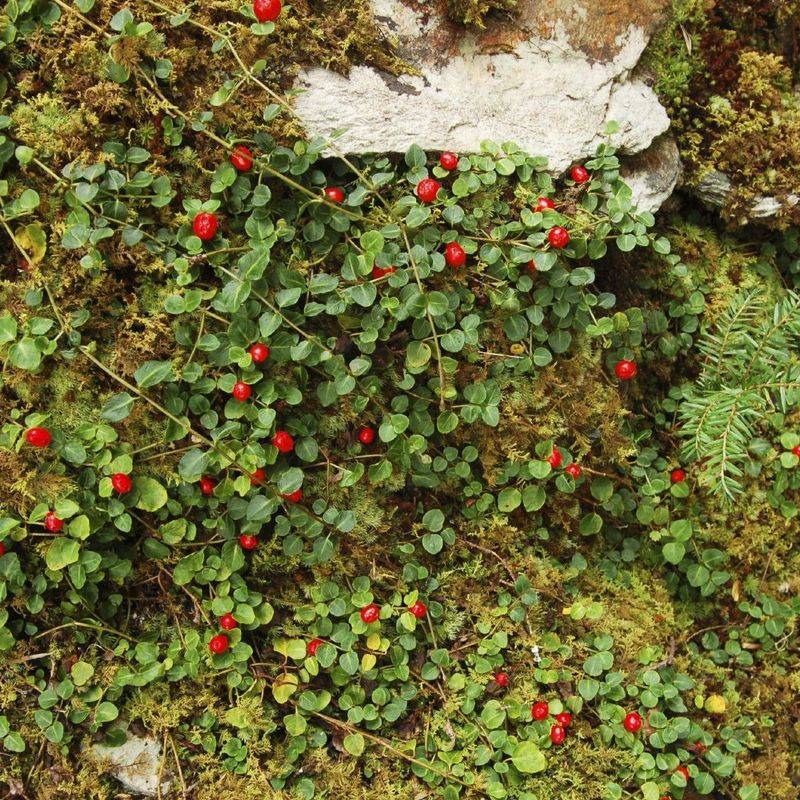
Each bright red berry starts as two fragrant white flowers that share a single base, then fuse into one fruit. Look closely, and you will see two small dimples on every berry, a sweet reminder of its double start.
Partridgeberry, or Mitchella repens, is a native trailing vine that rarely grows taller than two inches. Its small, round, glossy leaves often carry pale veins, and they stay green right through snow and ice.
Funny thing is, I walked past it for years before noticing those berries glowing among the brown oak leaves. Once you spot partridgeberry, you start seeing it along shady trails throughout the eastern woods.
Flowers appear in late spring and early summer, and the berries often hang on well into the following year. Wild turkeys and ruffed grouse are known to eat them, along with foxes and some small mammals.
Shade and acidic soil rich in humus make this plant happiest, especially where fallen leaves are left alone. It spreads slowly, rooting along its stems, so think of it as a quiet accent rather than fast coverage.
Buy nursery-grown plants rather than digging from the wild, since wild patches recover slowly and deserve protection. Tuck pieces near mossy rocks, tree roots, or along a shady path where you can enjoy them up close.
Keep the soil evenly moist the first season, and avoid smothering the vines with thick bark mulch. A light layer of shredded leaves feels more like home and helps the stems root naturally.
7. Wintergreen
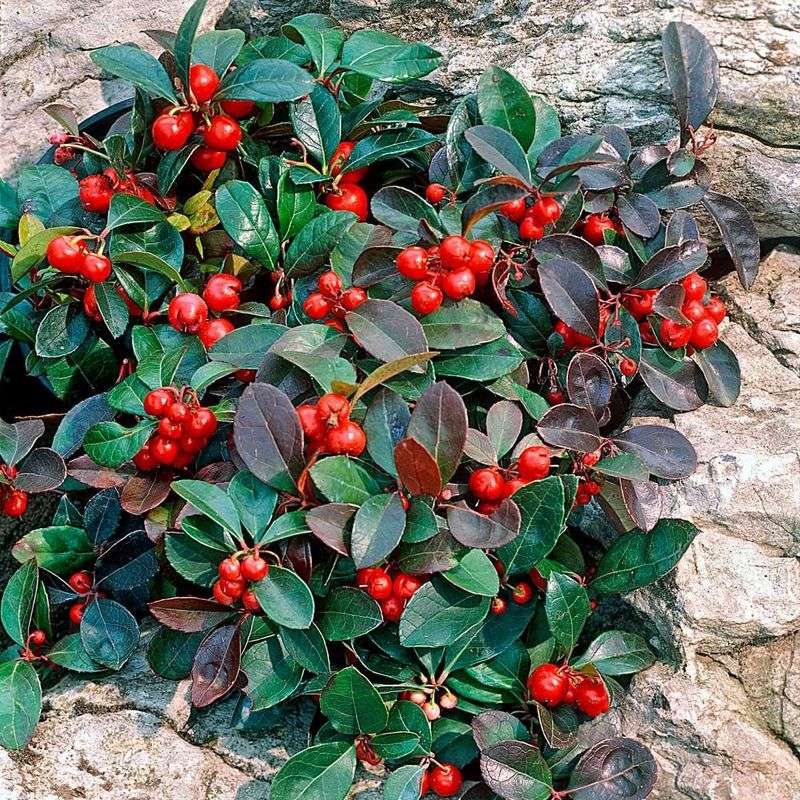
Crush one glossy leaf between your fingers, and a minty scent instantly fills the air around you. That familiar wintergreen aroma comes from a natural compound called methyl salicylate, which this plant produces in its leaves.
American wintergreen, or Gaultheria procumbens, is a small native shrub that only reaches about three to six inches tall. Leathery leaves often turn a rich burgundy in cold weather, giving shady beds a warm glow in winter.
Small, bell-shaped white flowers dangle beneath the leaves in summer, followed by bright red berries by fall. Those berries frequently persist through winter, offering a festive look and occasional food for wildlife.
If you ask me, this plant rewards gardeners who match its needs rather than fight them. It wants acidic, well-drained soil rich in organic matter, plus shade or dappled light under pines and oaks.
Hot, humid summers can be tough on wintergreen, so it often grows best in the cooler western mountains. Gardeners in the warmer east should give it extra shade and steady moisture during long summer stretches.
Purchase nursery-propagated plants, because wild plants have deep, tangled roots and transplant poorly from the forest. Space them about a foot apart and expect slow spreading by underground stems over several seasons.
Enjoy the scent, but treat the berries and leaves as ornamental rather than a snack for kids or pets. Concentrated wintergreen oil can be toxic, so it is wise to keep curious little hands supervised nearby.
8. Moss Phlox

Every April, certain roadside banks and rock walls seem to explode in pink, purple, and white almost overnight. Many of those bright cushions are moss phlox, a sun-loving native that stays green long after the flowers fade.
Phlox subulata grows only about four to six inches tall, with stiff, needle-like leaves packed tightly together. That dense foliage holds its color through winter, giving sunny slopes a fresh look while other plants sleep.
My garden taught me that this plant sulks in shade and soggy clay, no matter how much I fussed. Once I moved it to a sunny, well-drained bank, it spread happily and bloomed like a painted carpet.
Full sun brings the heaviest flowering, though light afternoon shade is fine in hot summer areas. Sandy or gravelly soil works beautifully, and amending heavy clay with grit helps prevent root problems in wet winters.
Early-flying bees and butterflies visit the blooms, giving pollinators a welcome snack when food can be scarce. Cascading over rock walls and container edges, moss phlox softens hard surfaces with very little help.
After flowering, shear the stems back by about half to keep plants compact and encourage fresh growth. Skip this step, and patches can grow woody in the center, leaving bare spots that look a bit tired.
Plant divisions or nursery pots in spring or early fall, spacing them about a foot apart. Deer sometimes nibble the flowers, but the evergreen mats usually recover quickly and keep slopes looking tidy.