How to Overwinter Dahlias and Elephant Ears in Virginia
A single tuber clump dug in fall can split into five or more new plants by spring. That means one lucky purchase can quietly turn into a whole border, all from lumps you stored in a cardboard box.
I still remember my first fall frost in Virginia. Overnight, the tall flowers I adored turned black and slumped, and those giant tropical leaves along the fence looked like soggy paper bags.
Personally, I panicked and almost tossed everything in the compost pile. A neighbor at the garden center laughed and told me the real treasure was hiding underground.
You need a shovel, a little patience, and a cool corner of the garage. The rest is mostly timing, plus a few tricks I wish someone had shared with me sooner.
So, are you ready to save those summer showstoppers for another year?
That First Frost on Your Dahlia Leaves Is a Signal, Not a Goodbye
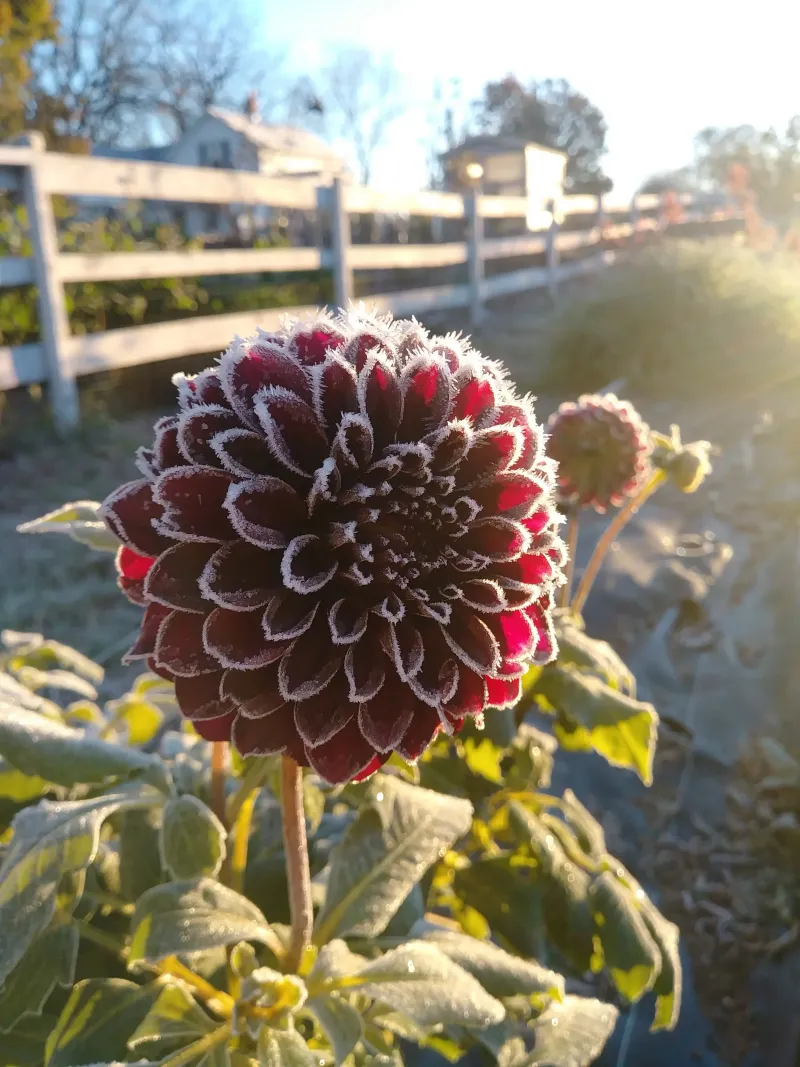
Blackened dahlia leaves on a chilly morning look alarming, but they are telling you something useful. Frost signals the plant to stop growing and send its energy down into the tubers.
In most of Virginia, that first frost arrives from mid-October in the mountains to early or mid-November near the coast. Gardeners in Hampton Roads often wait a few weeks longer than folks around Roanoke or Winchester.
Once frost hits, leave the clumps in the ground for about one to two weeks. That short wait helps the tuber skins toughen up, which makes them less likely to shrivel or rot in storage.
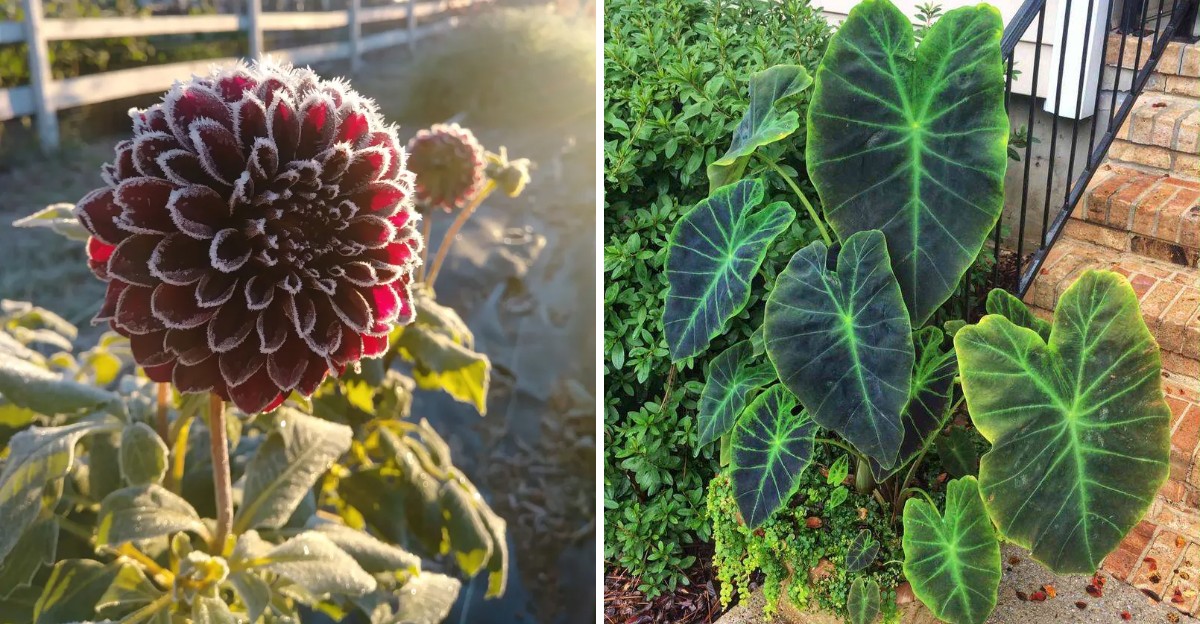
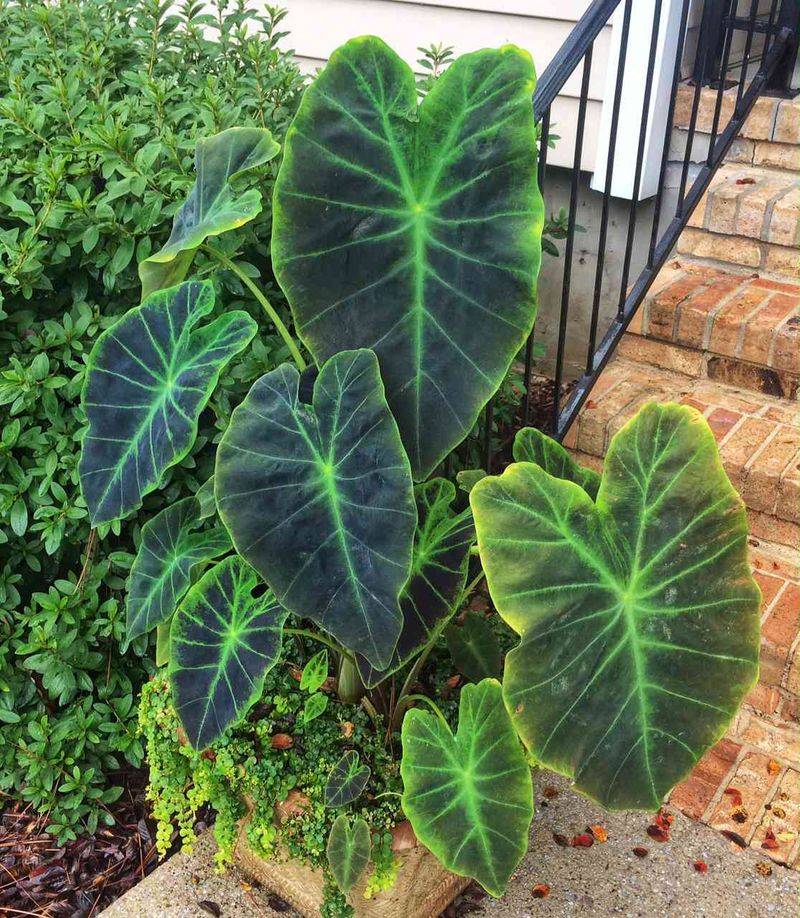
Elephant ears play by a slightly different clock. Their huge leaves turn yellow and floppy as nights cool, and frost turns them brown and mushy fast.
Aim to lift elephant ear corms soon after that first frost, and well before the ground freezes. Cold, soggy soil is rough on these tropical plants, so a speedy rescue pays off.
I keep a little note on my phone with the frost date each year. It helps me plan a free weekend for digging instead of scrambling.
Watch your local forecast, too. A sudden hard freeze in the twenties can sneak in, and you want those roots out before it does.
Lift Dahlia Tuber Clumps With a Garden Fork and a Gentle Hand
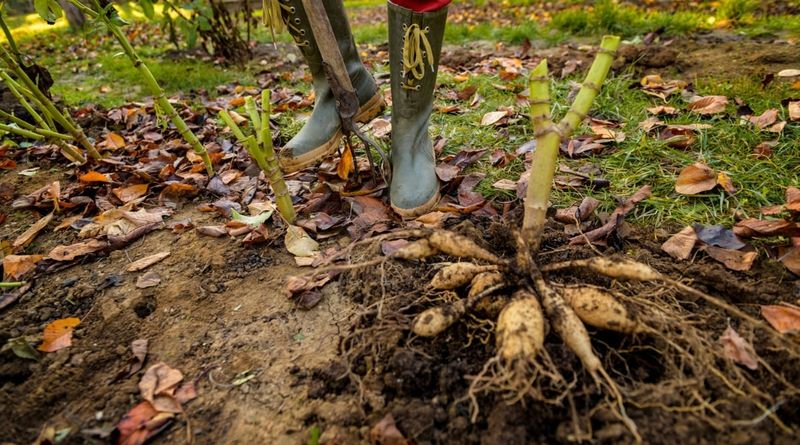
Dahlia tubers snap more easily than you might expect. The thin necks that connect each tuber to the old stem are the weak spot, and a broken neck usually means that tuber cannot sprout.
Start by cutting the stems down to about four to six inches. That stub gives you a handy handle and helps you remember where each plant sits.
Next, push a garden fork into the soil about a foot away from the stem. Work your way around the plant, loosening the dirt bit by bit.
Rock the fork gently instead of prying hard. Once the clump feels loose, slide the fork underneath and lift it up slowly.
Shake off loose soil, but skip the hose for now if your clay is crumbly. Some growers do rinse their clumps, which works fine as long as they dry well afterward.
Flip each clump upside down for a day or two in a dry, frost-free spot. Stems hold water, and turning them over lets it drain away.
Write the variety name right on a tuber with a permanent marker or slip on a plastic tag. Trust me, by spring every brown lump looks the same, and guessing colors gets old quickly.
Elephant Ear Corms Need a Good Long Drying Session
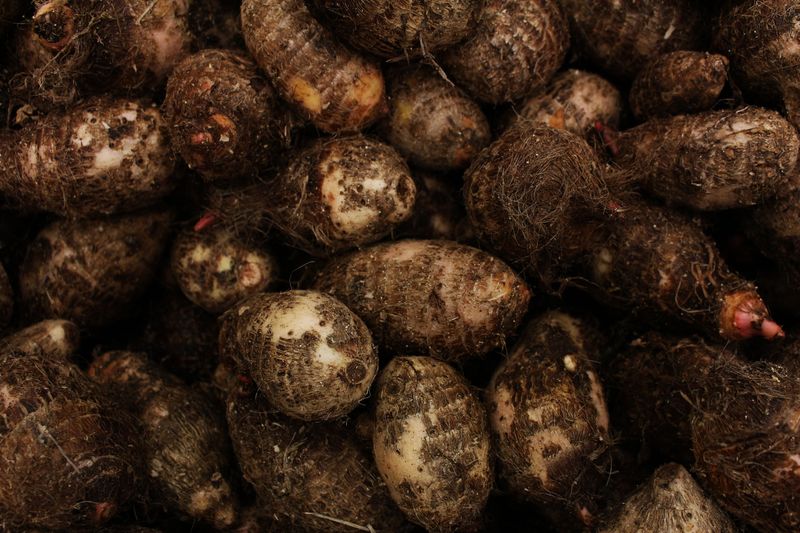
Lifting a big elephant ear corm feels a bit like pulling up a giant hairy potato. Some of them grow larger than a softball after one Virginia summer!
Cut the stalks back to about six inches before you dig. Then slide your shovel in wide and deep, so you do not slice into the corm by accident.
Brush away as much soil as you can with your hands. A little leftover dirt is fine, since it will crumble off once dry.
Now comes the step that matters most. Spread the corms out in a warm, airy, shady place for about one to two weeks.
A garage, shed, or covered porch works well, as long as nothing freezes. I like setting mine on old window screens so air can reach every side.
Drying, also called curing, helps the outer layer seal up. Moist corms packed away too soon are the number one reason gardeners open their boxes to find mush in January.
Fun fact: Colocasia, the most common elephant ear, is the same plant as taro. People in tropical regions have grown its starchy corms as food for thousands of years, though raw parts can irritate your mouth and skin, so wear gloves.
Cozy Boxes of Peat or Shavings Keep Dahlia Tubers Plump
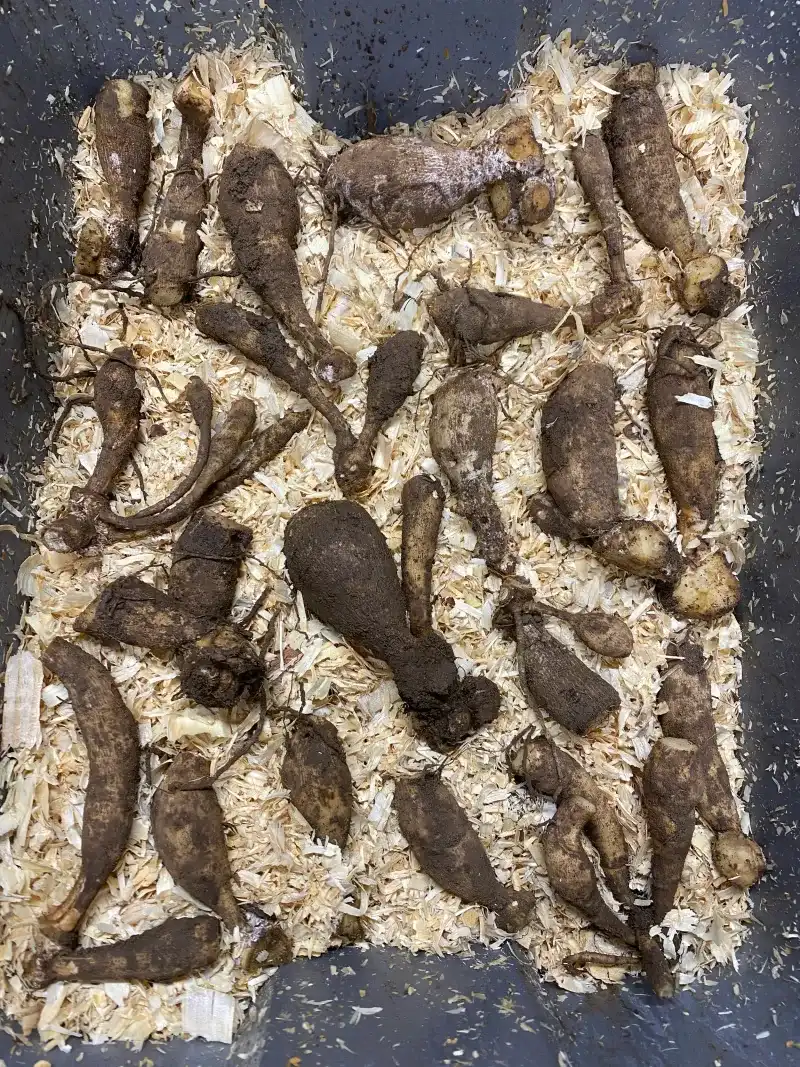
Ask ten dahlia lovers how they store tubers, and you might hear ten different answers. The goal behind every method, though, is the same: cool, steady, and not too wet or too dry.
Shoot for a storage spot that stays around 40 to 50 degrees Fahrenheit. An unheated basement, crawl space, or insulated garage often fits the bill in much of Virginia.
Below freezing, tubers turn soft and mushy. Above about 50 degrees, they may wake up early and sprout before spring.
Pick a breathable container like a cardboard box, a paper bag, or a plastic tub with a few air holes. Add a layer of slightly damp peat moss, vermiculite, or wood shavings.
Nestle the tubers in so they do not touch each other. Then cover them with more of the packing material.
Some growers wrap individual tubers in plastic wrap instead, which holds in moisture nicely. Either method works, so choose whatever fits your space and patience.
Keep a cheap thermometer near the boxes. I was shocked to learn my garage dipped near freezing during one January cold snap, so I moved everything to a closet against an inside wall.
Elephant Ears Prefer a Dry, Dark Hideaway All Winter
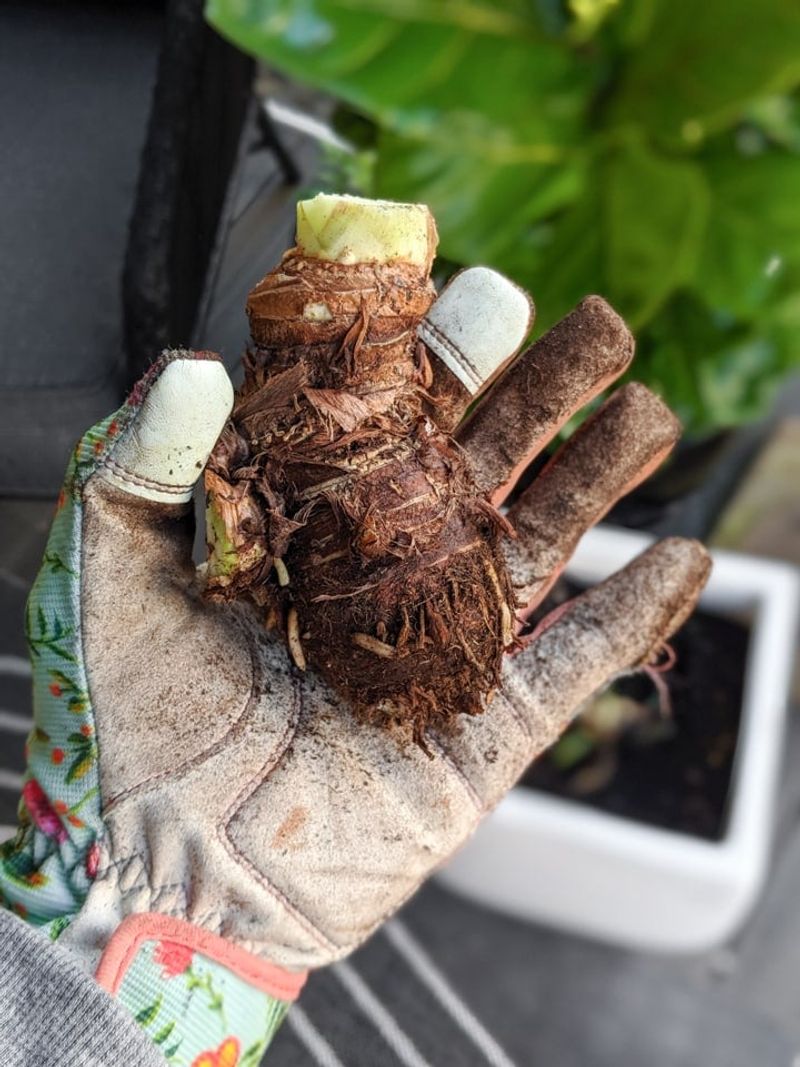
Unlike dahlias, elephant ear corms like their winter quarters on the dry side. Think of them as tiny tropical travelers waiting out the cold in a quiet closet.
Once fully cured, tuck the corms into dry peat moss, vermiculite, or sawdust inside a cardboard box or slatted crate. Leave the packing material dry, not damp.
Store them somewhere dark that stays above freezing. Many guides suggest 45 to 55 degrees, though Colocasia corms often handle normal room temperature just fine once cured.
Skip sealed plastic bags. They trap moisture, and trapped moisture invites rot faster than you can say spring.
Got a potted elephant ear instead? You can bring the whole container inside before frost.
Either grow it as a houseplant by a bright window, or let the leaves fade and store the pot in a cool spot with barely moist soil.
Gardeners in Virginia Beach and other coastal spots sometimes leave hardy types in the ground under thick mulch. Certain varieties can survive mild winters there, but results vary, so digging is the safer bet for prized plants.
A quick note: Colocasia esculenta spreads aggressively along waterways in parts of the Southeast. Keep yours in garden beds and pots, far from streams and ponds.
A Monthly Peek Saves Your Stored Tubers and Corms
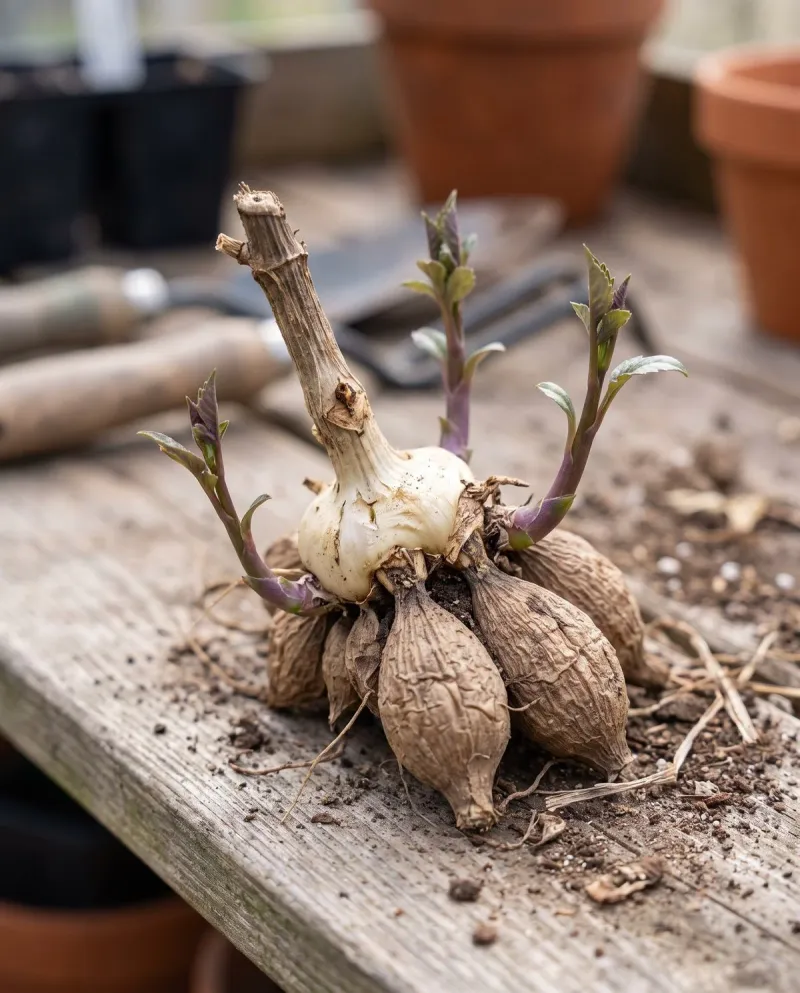
Out of sight should not mean out of mind. I set a reminder on the first of each month to check my boxes, and it has saved more plants than I can count.
Gently squeeze a few dahlia tubers. Healthy ones feel firm, a bit like a fresh potato.
Soft, mushy, or moldy spots are trouble. Cut away small patches with a clean knife and dust the area with powdered sulfur or cinnamon, or remove the whole tuber if rot runs deep.
Wrinkled, shriveled tubers mean things are too dry. Mist the packing material lightly with a spray bottle, then check again in a week or two.
For elephant ears, look mostly for mold or soft spots. A little surface wrinkling is common and usually harmless.
Notice any early sprouts? That usually means your storage area runs a bit warm.
Move the box to a cooler spot if you can.
Mice and voles love a free snack, too. If you see nibble marks, store boxes on high shelves or in lidded containers with small air holes.
These quick check-ins take about ten minutes. Honestly, they feel a little like visiting old friends while snow falls outside.
Spring Wake-Up Time for Dahlia Eyes and Elephant Ear Sprouts
Few garden moments beat spotting that first pink bump on a stored tuber. All your winter fussing suddenly feels worth it.
Many growers wait until spring to divide dahlia clumps, since the eyes show up better as they swell. Each division needs a tuber body, an intact neck, and at least one eye.
Use clean, sharp pruners and wipe them with rubbing alcohol between clumps. That simple habit helps stop disease from hopping between plants.
Plant dahlias outdoors after your last frost, once soil reaches about 60 degrees. That often means late April in southeastern Virginia and mid-May in the mountains.
Elephant ears enjoy an early start indoors. Pot the corms in moist soil about four to six weeks before your last frost and set them somewhere warm.
Move them outside once nights stay above 50 degrees. Cold soil slows them down, so patience pays off with bigger leaves.
Extra divisions make wonderful gifts for friends or a local plant swap. I gave away a dozen tubers last spring, and now half my street grows the same peachy dahlia.
Keep notes on what worked this winter. Next fall, you will feel like a pro.