The Ohio Owl You Can Watch Hunting In Daylight This Winter
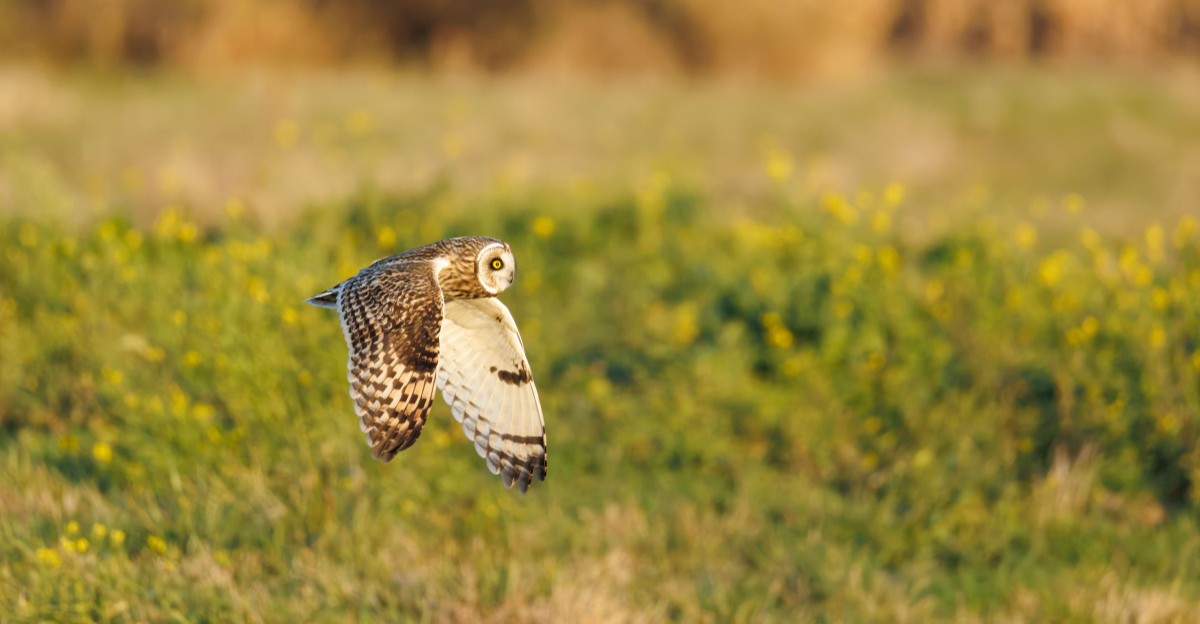
Some owls in Ohio fly like giant moths over snowy hayfields, and they do it while the sun is still up. I had to read that twice the first time.
This owl nests on the ground, not in trees. Its ear tufts are so tiny that you can barely see them.
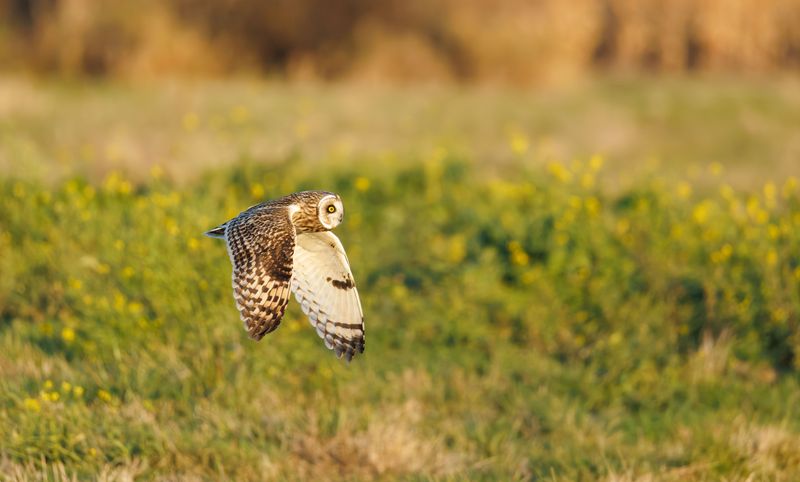
It flaps with soft, floppy wingbeats that look almost bouncy, like a kite with a mind of its own.
You don’t need a flashlight or a midnight alarm to see it. A warm coat, a pair of binoculars, and a quiet road beside a big grassy field are enough.
You can roll your eyes, but late afternoon in January beats any garden catalog for pure winter excitement.
Why would a night bird pick up the day shift? The answer comes down to a chubby little rodent hiding under the grass, and a hunting style unlike most owls you know.
A Buoyant Brown Owl Is Patrolling Ohio Grasslands Before Sunset
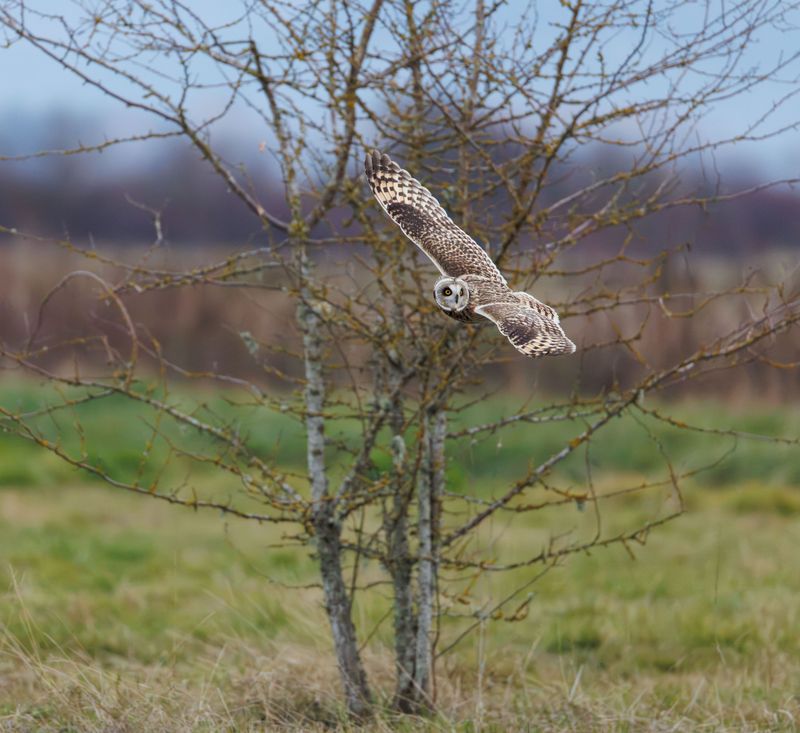
Meet the Short-eared Owl, the star of winter field watching. It is a medium-sized, tawny brown owl with streaky chest feathers and bright yellow eyes rimmed in black.
Its little ear tufts are so short that most people never notice them.
Most of the Short-eared Owls you see in winter arrive from farther north. Ohio has very few nesting pairs, so the state lists this bird as endangered.
Winter visitors fill the gap from roughly November through March, when they gather in big, open fields.
What makes them special is timing. They often start hunting in late afternoon and keep going into dusk, and on cloudy days they may fly even earlier.
That means you can watch them in real light, not just as a shadow in the dark.
I love how their flight looks lazy until it suddenly isn’t. They flap slowly, tilt, glide, and then drop into the grass in a flash.
Several owls may share one field, too, so one sighting often turns into four or five.
Get to know this bird by its shape and moves. Once you spot that floppy, moth-like flight, you will recognize it for years.
Meadow Voles Are the Reason This Owl Hunts While You Can Watch
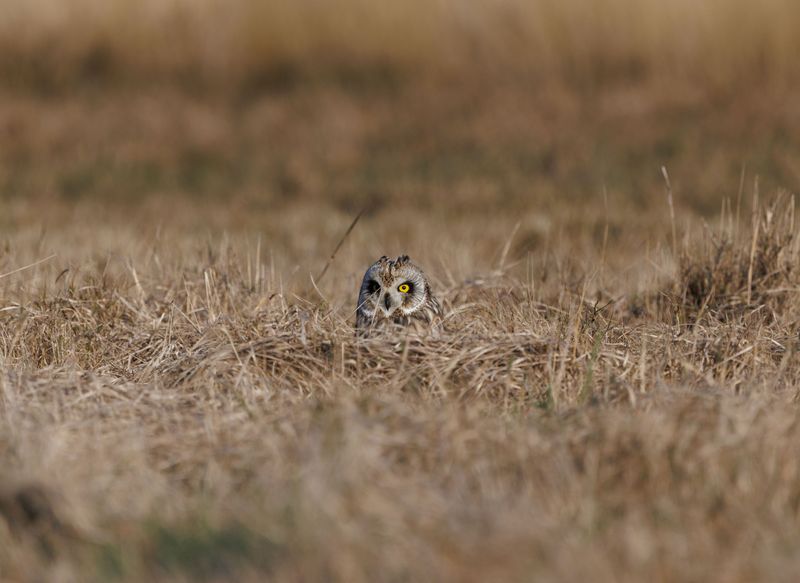
Follow the food, and the mystery falls apart fast. Short-eared Owls eat mostly small rodents, and the meadow vole sits right at the top of the menu.
Voles are busy little critters. They scurry through grass tunnels during the day as well as at night, so an owl that hunts in daylight still finds plenty to eat.
Researchers have found that where voles are plentiful, these owls tend to gather in larger groups.
The owl also has a different toolkit than many of its cousins. It hunts by flying low and scanning, using sharp eyes along with excellent hearing.
That method works well over open ground, where there are no trees to hide behind or perch in.
So the daytime habit is not strange behavior. It fits the prey, the habitat, and the bird’s body.
Here is a fun bonus for gardeners. A single owl can eat one or more voles a day, and voles are the same pests that chew bark on young fruit trees and tunnel through lawns.
Every owl working a nearby field is quietly helping keep those numbers down, at no charge to you.
Reclaimed Strip Mine Grasslands Are Owl Hot Spots
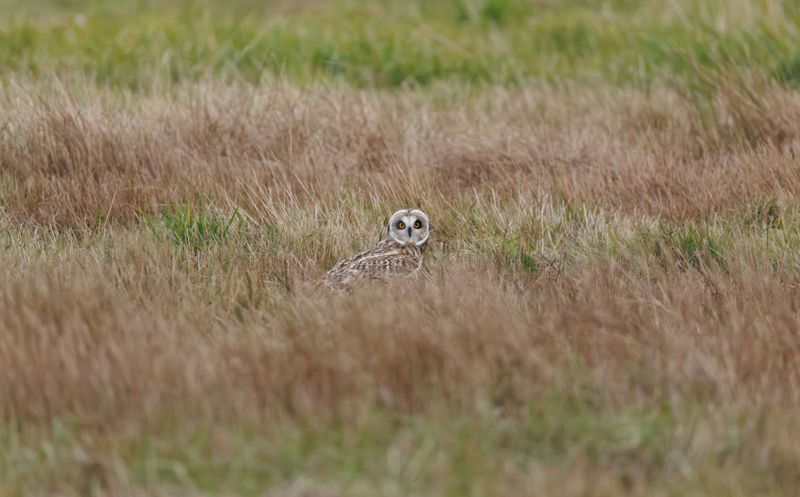
Some of the best owl viewing in the state happens on old coal mine land. After mining, many sites in southeastern Ohio were reshaped into huge rolling grasslands, and the owls love them.
The Wilds in Muskingum County is a famous example. Birders gather along nearby roads on winter afternoons to watch Short-eared Owls cruise over the hills.
Other reclaimed mine grasslands in the region can also produce sightings.
Not near the southeast? No problem.
Look for large hayfields, prairie restorations, airport edges, and wet meadows anywhere in the state. Killdeer Plains Wildlife Area in Wyandot County is another well-known winter spot, and some years brings strong numbers.
Size matters more than location. These owls want wide, treeless spaces with tall, dry grass where voles can thrive.
A small backyard lawn or a forest edge will not do the trick.
My advice is to check recent reports on eBird before you go. Local birders often share which fields are active this season.
That little bit of homework can save you a long, chilly drive with nothing but crows to show for it.
Fence Posts and Dusk Light Make Owl Spotting Easier
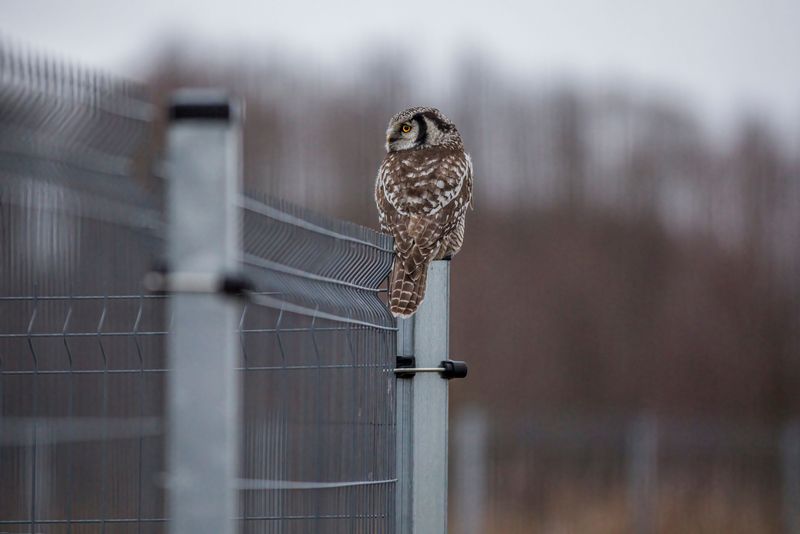
Timing is your best friend here. Plan to arrive about an hour before sunset, park safely, and settle in.
Overcast, still afternoons can bring owls out even earlier.
Watch the low air just above the grass first. Short-eared Owls fly a few feet over the field, rising and falling, sometimes hovering for a moment before they pounce.
Their wings show pale patches and dark wrist marks when they bank toward you.
Then scan fence posts, signposts, and small shrubs. Owls often rest on these between hunting flights.
A lumpy brown shape on a post that was empty ten minutes ago is worth a closer look.
Bring binoculars and dress warmer than you think you need. Standing still in an open field in January feels colder than any walk.
Here is a small trick I like. Watch for Northern Harriers, the gray and brown hawks that hunt the same fields by day.
As light fades, harriers head to roost and owls often take over. Sometimes the two even squabble over a vole in midair, which is one of the best shows winter has to offer.
A Big White Snowy Owl Might Steal the Spotlight
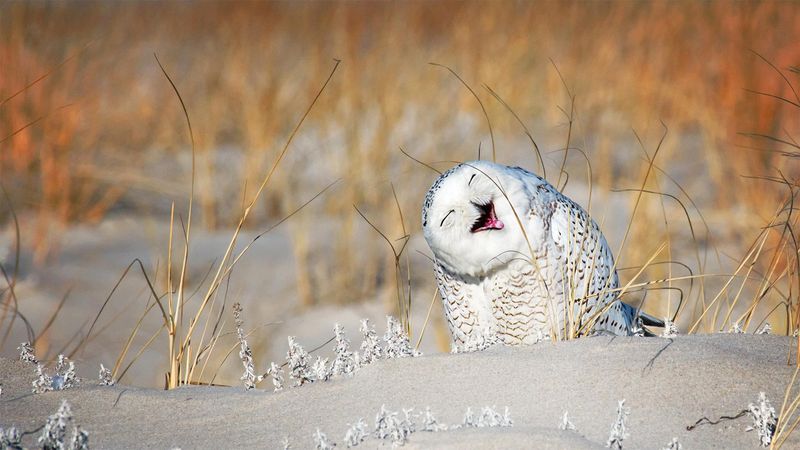
Every so often, Ohio gets a surprise guest from the Arctic tundra. Snowy Owls also hunt in daylight, and in some winters several show up in the state.
These big white owls do not visit every year. Larger movements, called irruptions, often follow a summer with lots of lemmings up north, when many young owls are raised and spread out.
So a great Snowy Owl winter is often a sign of a successful breeding season, not a hungry one.
Most sightings happen near Lake Erie, along breakwalls, beaches, and harbors. Some also land at airports and wide farm fields, which look a lot like home to a tundra bird.
Snowy Owls tend to sit still for long stretches. They perch on the ground, a rock, or a low post and simply watch.
In Ohio they may eat voles, rats, ducks, and other birds.
I can’t imagine a better winter thrill than a white owl glowing against gray lake ice. Just remember these sightings are a bonus, not a promise.
The Short-eared Owl remains the more dependable daytime hunter in most Ohio fields.
Give Roosting Owls in Tall Grass Plenty of Space
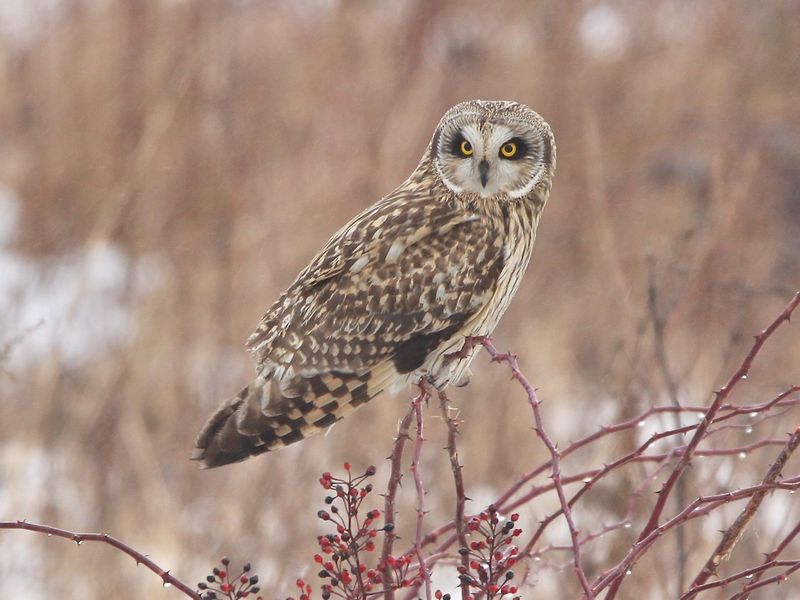
Patience pays off more than footsteps. Short-eared Owls roost on the ground in thick grass during the day, so walking into a field can flush them and waste the energy they need to stay warm.
Winter is tough on these birds. Every unplanned flight burns calories that could carry them through a cold night.
Staying back lets them rest and hunt normally, which is also when you get the best views.
Your car makes an excellent viewing blind. Owls often ignore a parked vehicle but react to a person standing in the open.
Pull fully off the road, keep doors closed when you can, and keep voices low.
Stay on public roads and respect private property. Many of these fields belong to farmers or protected areas with posted rules.
Photographers, skip the playback calls and baiting. Feeding mice to owls can draw them toward roads and cars, and many birding groups discourage it.
A longer lens and a calm afternoon do the job better. If an owl stares at you or shifts on its post, that is your cue to back off a little.
Your Rough Grassy Corners Can Help Owls and Your Garden
Most of us will not see a Short-eared Owl from the kitchen window. Still, the way we manage land adds up across the whole state.
Owls need big grasslands, and Ohio has lost a lot of them. If you own acreage, consider leaving some fields unmowed through winter.
Delaying mowing until spring keeps cover for voles and the owls that hunt them.
Native grasses like little bluestem, big bluestem, and Indiangrass make fine choices for prairie plantings. They stand up to snow and give wildlife shelter all winter long.
Your county Soil and Water Conservation District can share local programs and seed advice.
Go easy on rodent poisons, too. Owls and hawks can be harmed by eating poisoned rodents, so traps and natural predators are kinder choices.
Even a suburban gardener can help by supporting local parks, land trusts, and grassland restoration projects. Then take one winter afternoon this season and go see these owls in person.
Pack hot cocoa, find a quiet field, and wait for that floppy brown shape to rise over the grass. You’ll be planning your next trip before the drive home ends.