Ohio Robins Pick Their Worm Spots On Purpose And Your Lawn Is Giving Them Very Clear Signals
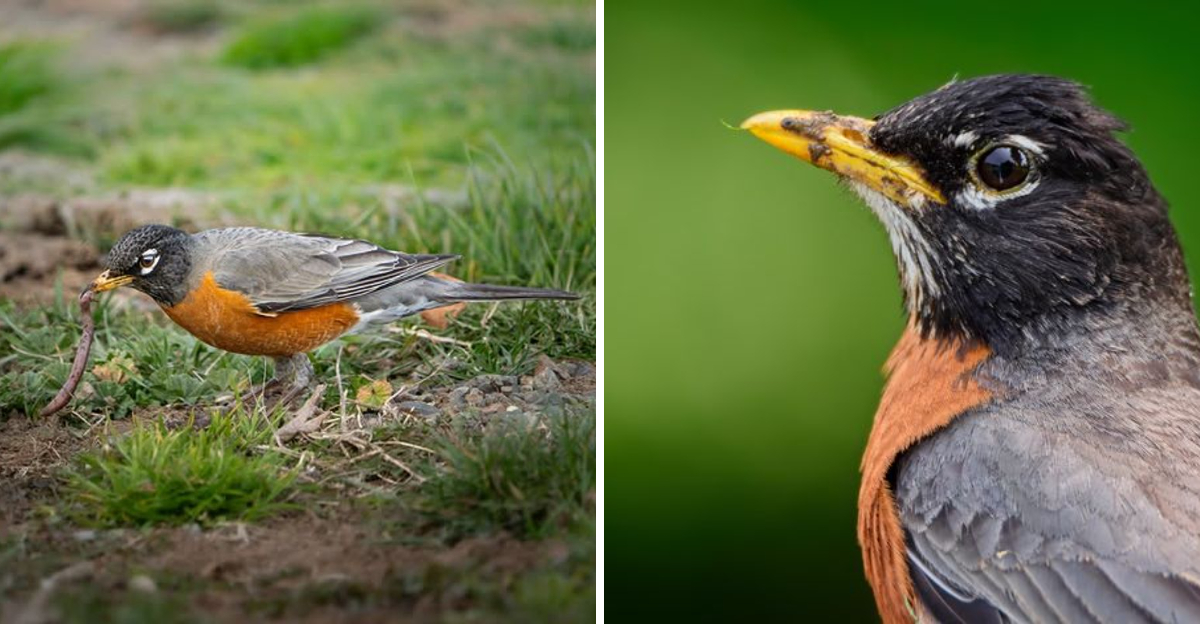
Every morning in Ohio, a robin hops across a lawn with a purpose that many homeowners never notice.
That bird is not wandering randomly. It is reading your yard like a map, picking up on signals you did not even know you were sending.
Robins are surprisingly sharp foragers, and research from ornithologists and soil scientists shows they return to the same productive patches over and over.
Your watering habits, your grass thickness, your shade trees, and even your soil type all play a role in where a robin decides to hunt.
Many people assume the bird is just doing what birds do.
What is actually happening is more interesting than that. The robin is making calculated decisions based on moisture levels, soil texture, organic matter, temperature, and spatial memory built up over multiple visits to your specific yard.
Understanding these signals gives you a front-row seat to one of nature’s most fascinating everyday dramas playing out right outside your window.
Your lawn is already talking to every robin in the neighborhood. Now you can finally understand what it is saying.
1. Moist Soil Brings Worms Closer

After a good rain, earthworms move toward the surface faster than you might expect.
That upward shift is not accidental. When soil fills with water, oxygen levels drop in the deeper layers, and worms climb to breathe. Ohio robins seem to know this better than most backyard watchers ever realize.
Damp soil does more than just push worms up.
It also softens the ground so robins can probe with their bills without hitting a wall of hard, dry earth. A lawn that holds moisture well is basically an open invitation for every robin in the neighborhood.
Ohio summers can be brutal, and during dry stretches, worm activity near the surface drops sharply.
Lawns that stay consistently moist through natural drainage or careful watering hold onto worm populations near the top layer far longer. That makes them the go-to spots for local robins when the competition for food gets serious.
If you notice a robin returning to the same soggy corner of your yard day after day, your drainage pattern is the reason.
Low spots, areas near downspouts, and patches beside garden beds tend to stay wetter longer. Robins clock these locations fast and revisit them with impressive regularity.
Moisture is the single most reliable signal your Ohio lawn sends to a hungry robin scanning your yard from a nearby branch each morning.
2. Organic Matter Feeds The Worm Zone
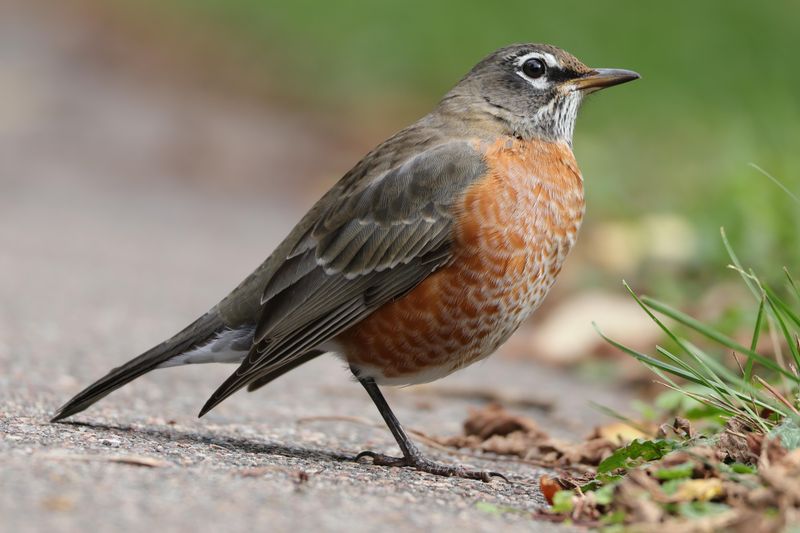
Earthworms are not picky eaters, but they do have strong preferences. They thrive in soil loaded with decomposing leaves, grass clippings, and organic debris.
That layer of breaking-down material near the soil surface is basically a five-star restaurant for worms, and robins know exactly which Ohio lawns have it.
Lawns where clippings are left after mowing add a steady supply of organic food right at the surface.
Over time, that material breaks down into rich humus that keeps worm populations dense and active. Your mower is accidentally catering a robin buffet every single week without you realizing it.
Your Ohio Garden Changes Every Week. Your Plan Should Too.
Gardening in Ohio changes quickly throughout the season. Every Friday you’ll receive a simple weekly plan showing exactly what to plant, prune, fertilize, harvest, and protect so you never miss the right timing.
Leaf litter left in garden borders and around trees adds another layer of worm-friendly material.
Ohio yards with mature trees often have a natural buildup of organic matter that supports far more earthworm activity than a heavily raked, spotless lawn. Robins make the comparison quickly and vote with their feet.
Compost spread lightly across turf is one of the best ways to boost worm numbers over a full season.
Soil biology researchers note that earthworm density can double in organically enriched soil compared to nutrient-poor turf.
A lawn that feeds its worms well feeds its robins well too, and the birds will keep coming back to collect on that investment all spring and summer long.
3. Shade Keeps One Patch Cooler
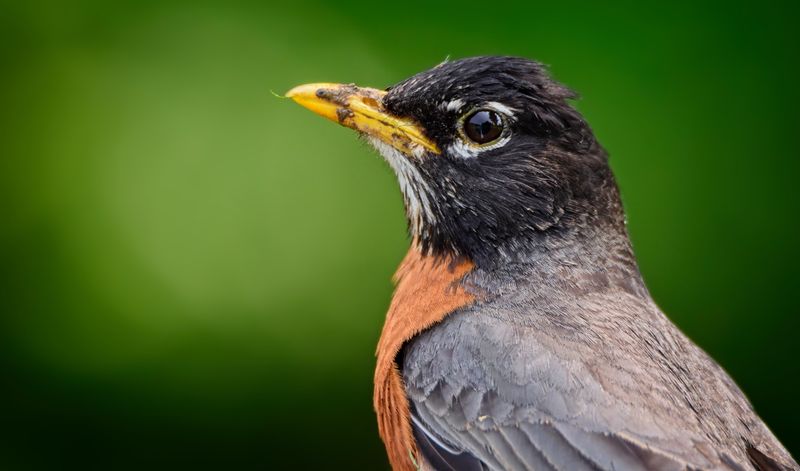
Not all parts of your Ohio lawn bake at the same rate on a hot July afternoon.
A patch under a maple or oak tree can stay several degrees cooler than the sunny center of your yard. That temperature difference matters enormously to earthworms, which dry out fast when soil gets too warm near the surface.
Cool, shaded soil holds moisture longer because direct sunlight cannot pull water out through evaporation at the same rate.
Worms in shaded zones stay active and near the surface well into the afternoon, long after worms in sunny spots have retreated deep into the ground to survive.
Robins have clearly figured out this shade-equals-snacks equation and they work it consistently.
Ohio summers regularly push temperatures past 85 degrees, and during those stretches, shaded lawn patches become the most productive foraging zones in the entire yard.
A robin working the shadow line of a fence or tree canopy is not being lazy. It is being smart, staying where the hunting stays good longest.
You can enhance this effect by planting shrubs or small ornamental trees in strategic spots.
More shade means more cool soil zones, which means longer periods of accessible worm activity. That shady corner of your Ohio yard is doing a lot more work than it looks like from the porch on a hot summer afternoon.
4. Sprinklers Create A Reliable Buffet
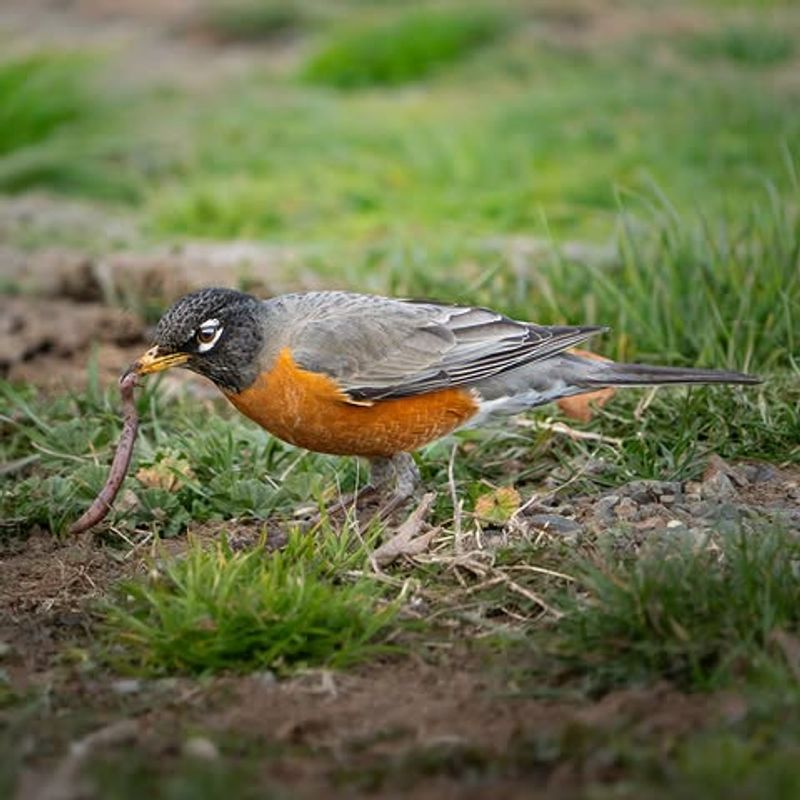
Irrigation patterns are one of the most consistent signals your Ohio lawn sends to local robins.
Sprinklers hit the same zones at the same time, day after day, and worms respond to that reliable moisture by staying near the surface in those areas. Robins pick up on the pattern faster than most homeowners expect.
A robin that watches your sprinklers run on Tuesday morning will be back on Wednesday morning, standing in the same wet patch, ready to work.
Birds have sharp spatial memory and can associate specific locations with reliable food sources after just a few successful visits. Your irrigation schedule is essentially a robin appointment book.
The edges of sprinkler coverage zones are particularly productive.
Water tends to concentrate at the overlap points between heads, creating extra-wet strips that bring worms up in higher numbers. Robins often pace these wet edges with a focused, deliberate stride that looks almost mechanical in its precision.
Watering in the early morning gives robins the best window to hunt.
Overnight moisture plus a fresh morning watering keeps the top inch of soil soft and worm-rich right during peak foraging hours.
If you want to support robin activity in your Ohio yard, a consistent early-morning watering schedule in the same zones is one of the most reliable things you can do to keep the birds returning throughout the season.
5. Robins Remember Productive Spots
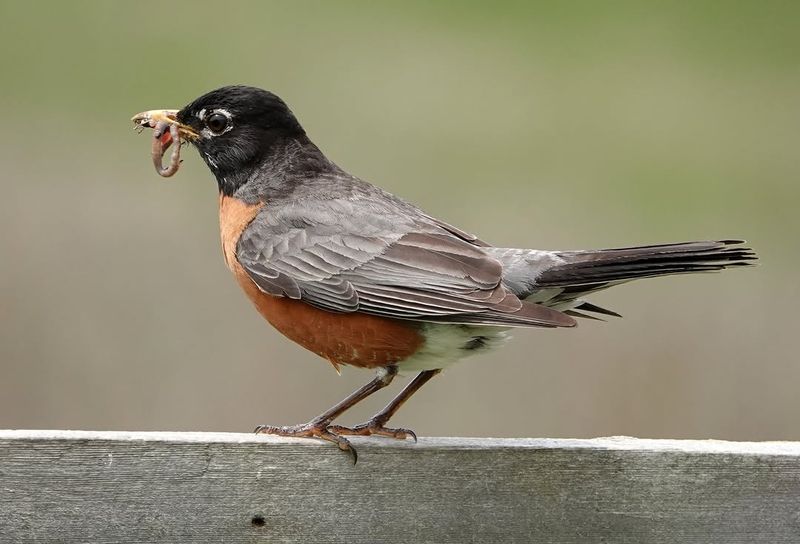
Bird behavior researchers have documented something that surprises many casual observers: robins do not just forage wherever they land.
They actively remember which spots produced food in the past and return to those locations with clear intention. A robin hopping across your lawn has a mental map of your yard that is more detailed than most people would guess.
Cornell Lab of Ornithology notes that American robins use a combination of visual landmarks and spatial memory to navigate familiar territories.
A successful worm pull from a specific corner of your yard gets logged in that bird’s memory. The next day, that spot is the first stop on the route.
Repeated foraging in the same spot also creates a feedback loop.
If the patch keeps producing, the robin keeps returning. If conditions change and the spot dries out or gets disturbed, the bird adjusts its mental map and shifts to the next reliable location.
This flexibility is part of what makes robins such effective foragers across Ohio neighborhoods.
Homeowners who regularly see a robin working the same strip of lawn near the garden hose or downspout are watching this memory behavior in action.
The bird is not following instinct blindly. It is making calculated decisions based on past experience and current conditions, and your yard is the classroom where it all plays out each morning.
6. Thin Turf Makes Hunting Easier
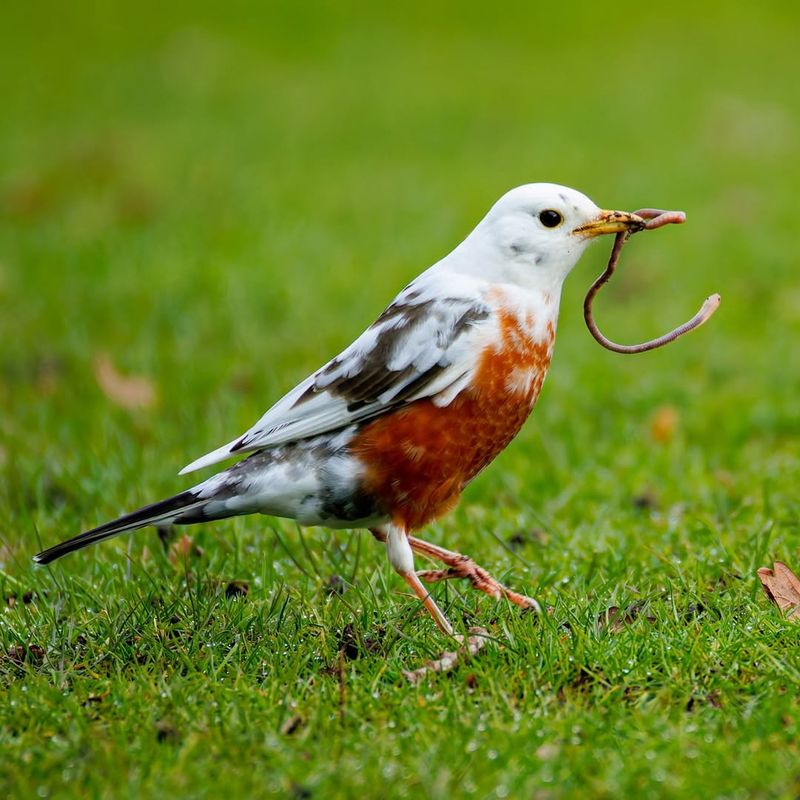
A thick, lush lawn looks beautiful from the sidewalk, but a robin sees something entirely different when it scans for hunting territory.
Dense, deep turf actually makes it harder for a robin to reach the soil and probe for worms. Thin grass, on the other hand, is wide open territory for a bird with a sharp bill and a focused appetite.
Sparse turf lets a robin’s bill reach the soil surface without fighting through a dense mat of roots and grass blades.
Exposed soil patches are even better from the bird’s point of view, offering direct access to the top layer where earthworms spend their most active hours.
Ohio lawns often develop thin spots under heavy shade, in high-traffic areas, or where soil compaction limits grass growth.
These stressed patches are exactly where robins concentrate their foraging efforts. You will notice the pattern quickly once you start watching: robins skip the thick center grass and head straight for the worn edges and bare spots.
If lawn health is a priority, overseeding thin areas and aerating compacted zones reduces robin access over time.
However, a yard with a few thin patches near garden beds or tree roots creates a natural foraging habitat that supports local bird populations.
Balancing a healthy lawn with some natural variation gives both your grass and your local Ohio robins a fair deal throughout the growing season.
7. Soil Texture Helps Worms Move
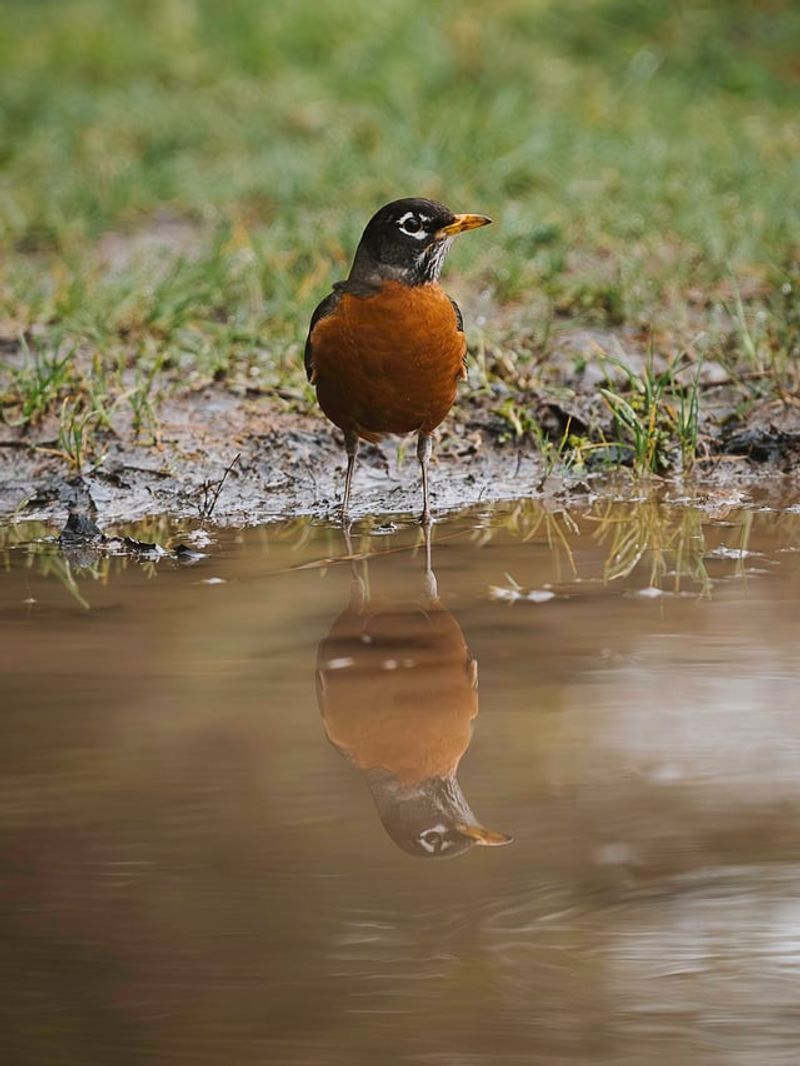
Soil texture is one of the most underrated factors in understanding where robins hunt in Ohio yards.
Loamy soil, the kind that crumbles easily and holds just enough moisture without turning to muck, supports far more earthworm movement than hard, compacted clay.
Worms travel through loose soil with ease, staying near the surface and making themselves available to foraging birds.
In compact, dense soil, worms have to work much harder to move upward.
They stay deeper, away from the surface zone where robins can reach them. A lawn with heavily packed soil from foot traffic, heavy equipment, or years without aeration essentially puts up a no-entry sign for both worms and the birds that want them.
Ohio has a wide range of soil types across the state.
Northern Ohio tends toward heavier clay, while central and southern areas often have more loam and silt.
Yards in loamier zones naturally support higher worm density near the surface, which is one reason robin activity can vary noticeably from one neighborhood to the next just a few miles apart.
Aerating your lawn every one to two years breaks up compaction and opens the soil structure for better worm movement.
Adding organic matter after aeration speeds up the improvement significantly. Every improvement you make to your soil texture is a direct upgrade to the foraging quality your yard offers to Ohio robins all season long.
8. Earthworm Smell Guides The Final Search
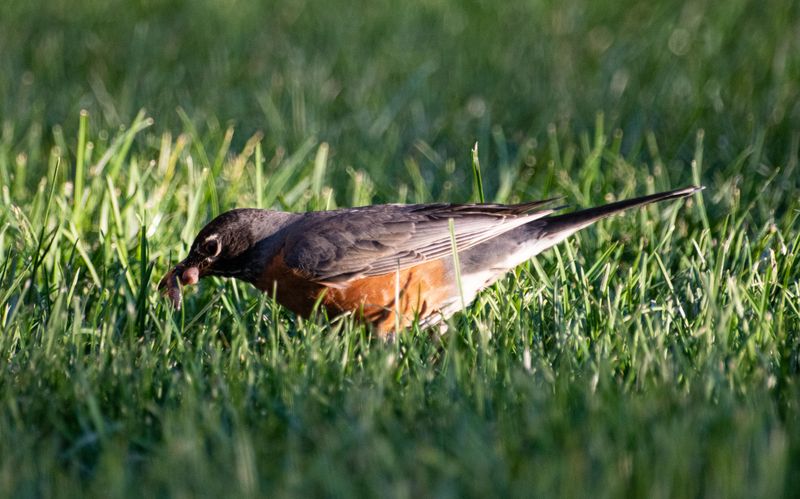
Robins find worms by sight and sound, but recent research has added a third sense to that list that surprises most people.
Studies published in ornithology journals have found evidence that American robins may also use olfactory cues, essentially smell, to locate earthworms in soil.
Earthworms produce a distinctive compound called geosmin, the same chemical responsible for that rich, earthy smell that rises from soil after rain. Robins appear to respond to concentrations of that scent when other cues are less reliable.
This finding changes how researchers think about robin foraging behavior.
The bird is not just tilting its head to listen, which has long been the popular explanation for that characteristic sideways pose.
It may also be sampling the air near the soil surface for chemical signals that indicate worm activity below. Ohio yards with high organic matter and active worm populations produce more of this scent, particularly after irrigation or rainfall.
What this means practically is that a biologically active lawn smells different to a robin than a sterile, chemically treated one.
Lawns maintained with synthetic pesticides and herbicides that reduce soil biology produce less geosmin because the worm population is smaller and less active.
Robins in Ohio neighborhoods with heavy chemical lawn programs have been observed spending less time foraging in treated areas, though the full picture of why involves multiple factors beyond smell alone.
Building a lawn with rich, active soil biology pays off in ways that go well beyond what you can see from the surface.
A yard that smells right to a robin, meaning one full of decomposing organic matter and actively moving earthworms, becomes a reliable stop on the local foraging circuit.
It is one more way your lawn communicates with the birds sharing your Ohio neighborhood every single morning.