Boxwood Blight Has Met Its Match In These Hardy, Low-Fuss Evergreen Shrubs
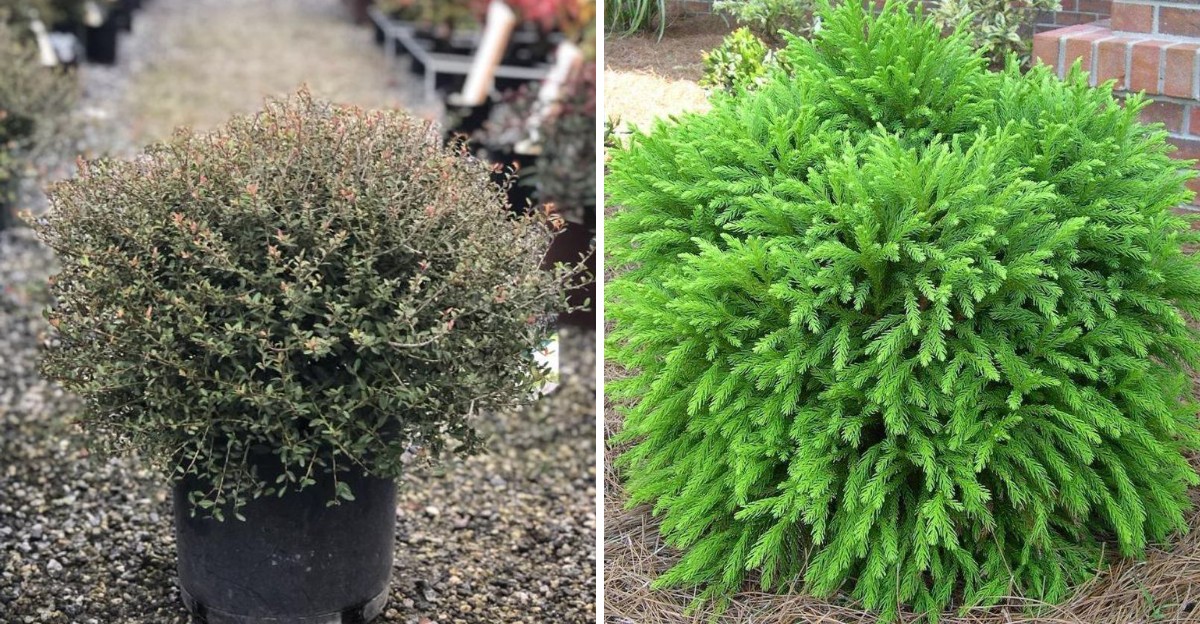
Boxwood blight is a fungus that spreads on splashing rain and pruning tools, and it can strip a hedge bare fast. Its spores are sticky, so they travel more by contact than by wind, according to plant disease researchers.
Once blight shows up in a neighborhood, replanting the same shrub in that soil becomes a risky bet.
I watched two tidy hedges on my street turn brown and patchy in a single wet summer. You may notice the same sad gaps along front walks all over your own neighborhood these days.
Plenty of tough evergreens can fill those gaps without the constant spraying and springtime fretting. These shrubs are quietly earning their place beside the front door.
1. Inkberry Holly
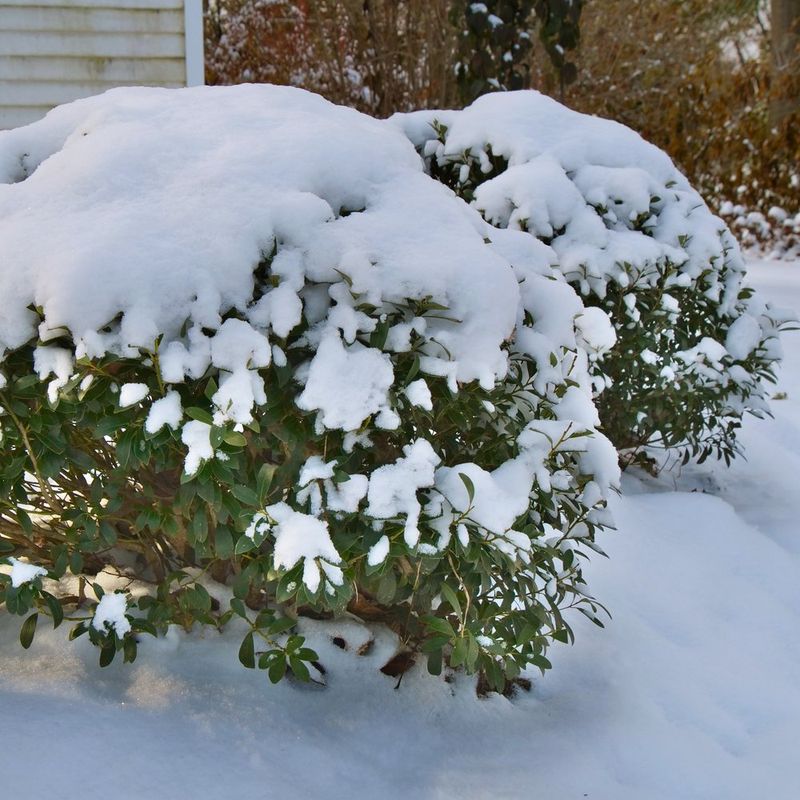
From the curb, inkberry looks so much like a boxwood that most visitors walk right past the swap. Its glossy little leaves stay dark green all winter, and the plant is native right here in the Southeast.
The wild species can reach five to ten feet tall, so smaller cultivars make more sense near windows. ‘Shamrock’ stays around four feet tall and wide, which fits nicely under most low front porch railings.
I love how forgiving it is about soggy spots where many other shrubs sulk and rot. It handles moist, acidic soil happily, yet it shrugs off dry spells once the roots settle in.
Alkaline soil is its weak point, and yellowing leaves usually signal that the pH is creeping too high. A simple soil test through your county Extension office costs little and clears up the guesswork fast.
Female plants produce small black berries in fall, but only when a male plant grows somewhere nearby. Birds pick at those berries through winter, and spring flowers bring in honeybees looking for an early meal.
Water it regularly during the first growing season, then only during long, hot stretches without steady rain. Pruning is optional unless you want a crisp formal hedge, which it honestly tolerates surprisingly well.
One caution from NC State Extension deserves real attention, since inkberry carries a high flammability rating. Keep it a few feet from the house, especially in wooded areas where wildfire risk runs higher.
2. Dwarf Wax Myrtle
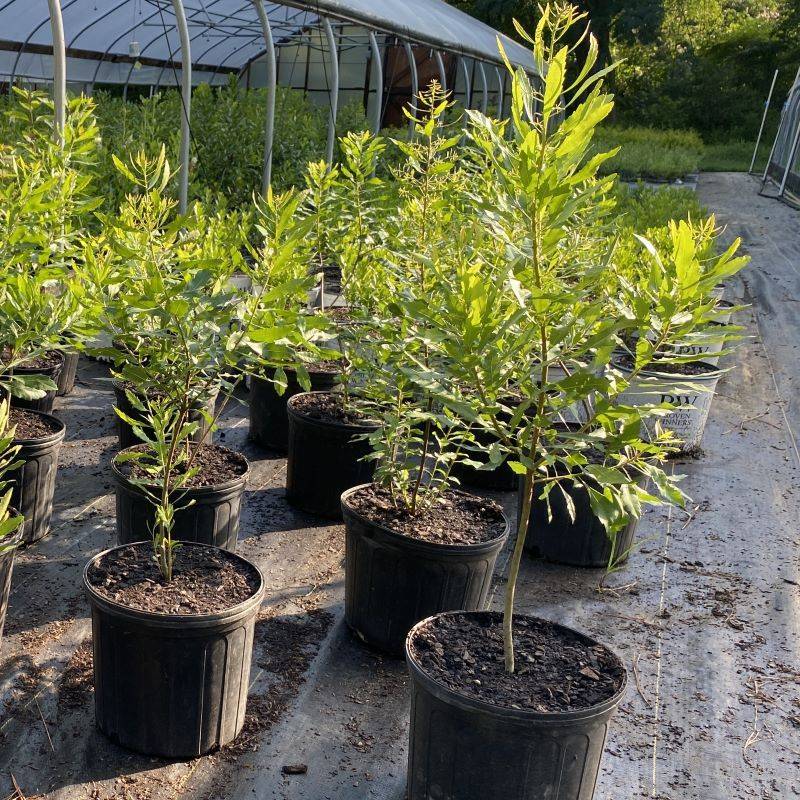
Crush a wax myrtle leaf between your fingers and you get a spicy, clean scent that lingers on your skin. That fragrance is a bonus perk from a native evergreen that grows wild along much of the Southeast coast.
The full-size species can tower over a roofline, so dwarf forms are the ones to hunt for at nurseries. Dwarf wax myrtle, sold as Morella cerifera var. pumila, usually stays around three to four feet tall.
It spreads slowly by underground runners, which makes it great for filling a wide bed with one plant. I would skip it for formal hedges, though, since its loose habit prefers a relaxed, natural look.
Soggy low spots and salty coastal breezes rarely bother this tough little shrub once it settles in. It also fixes its own nitrogen through root partners, so heavy feeding is rarely needed at all.
Female plants carry small grayish berries coated in wax, the same wax colonists once boiled down for bayberry candles. Yellow-rumped warblers and tree swallows happily feast on those waxy berries through the colder winter months.
Full sun to part shade suits it best, and established plants handle dry spells with little fuss. Mountain gardeners should be cautious, since hard freezes in the coldest zones can burn the foliage.
In the Coastal Plain and Piedmont of North Carolina, though, it behaves like a dependable low-maintenance neighbor. Trim any wayward runners in late winter, and that is about all the work it asks.
3. Dwarf Yaupon Holly
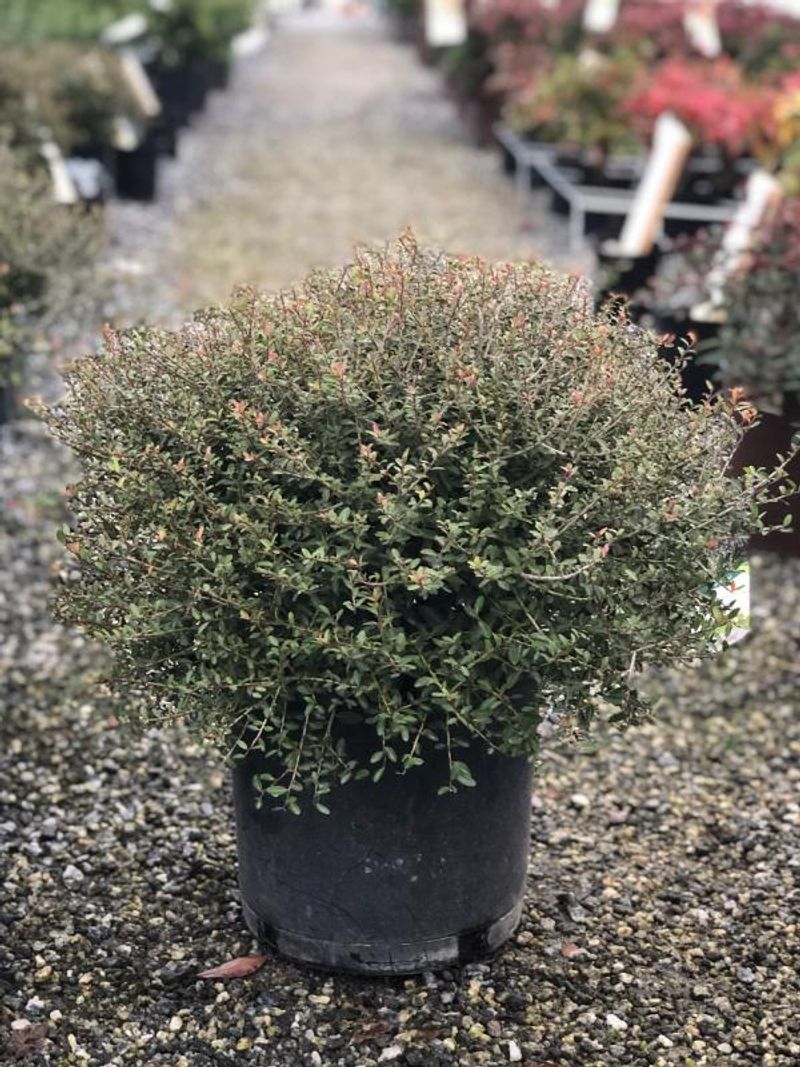
Few shrubs can claim a scientific name as wild as Ilex vomitoria, yet this dwarf form behaves like a polite houseguest. It grows into a tight, rounded mound that often holds its shape with barely a snip.
The name came from a mistaken belief that its leaves caused vomiting, though the plant actually contains caffeine. Native people across the Southeast brewed a ceremonial tea from the leaves long before European settlers arrived.
Mature plants usually settle at three to five feet tall and spread a bit wider over time. That size slips neatly under low windows or along a walkway leading up to the front steps.
I have seen dwarf yaupon handle sandy coastal soil and salty breezes without a hint of complaint. Deer mostly leave it alone too, which makes life a lot easier for anyone gardening near the woods.
Once established, it handles drought better than almost any boxwood I have grown over the past years. Give it steady water the first summer, then let the rain mostly handle the job in most years.
Unlike the species, ‘Nana’ rarely sets red berries, so it will not attract crowds of fruit-hungry birds. Small greenish-white spring flowers still draw bees, which feels like a fair trade for tidy sidewalks.
Any light shaping is best done in late winter, just before the fresh yellow-green growth appears. It shares inkberry’s high flammability rating, so leave some breathing room between the shrub and your siding.
4. Ever Red Loropetalum
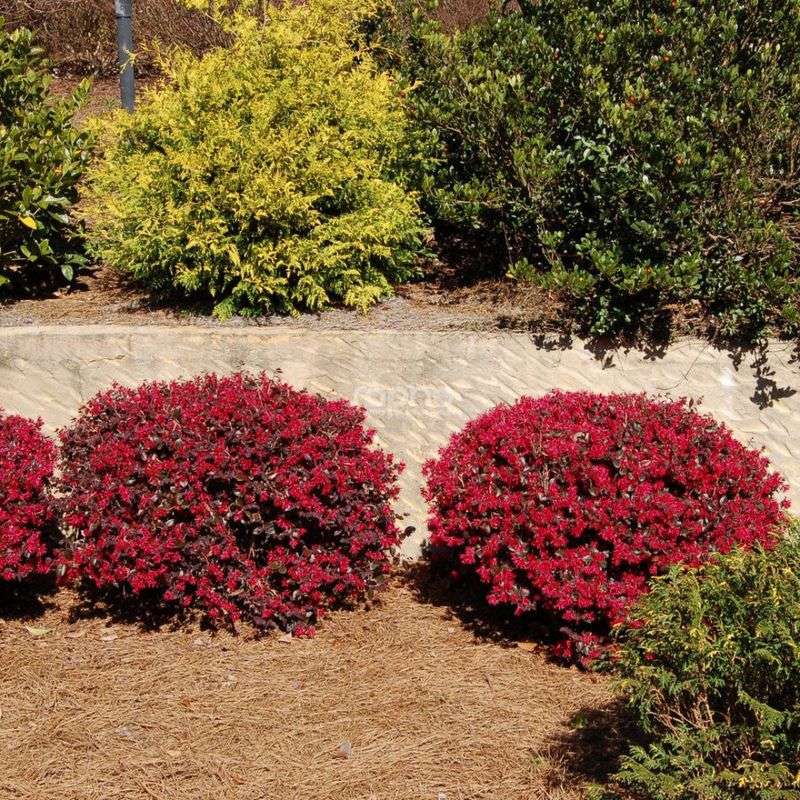
Burgundy leaves so dark they almost read as black make this shrub the moody rebel of the front yard. Every boxwood I ever owned stayed politely green, so the deep color contrast here feels downright thrilling.
Ever Red is the trade name for Loropetalum chinense ‘Chang Nian Hong,’ and it holds that rich color year-round. Many older purple loropetalums fade toward green in summer heat, which makes this one stand out.
Deep red fringe flowers arrive in late winter and spring, looking like tiny strips of crinkled ribbon. Scattered repeat blooms often pop up later in the season, giving you a little surprise now and then.
Size matters with this one, since it can reach five to eight feet tall and just as wide. Plant it where it has room, or plan on a light trim after flowering each spring.
I learned that lesson after squeezing one beneath a bedroom window, then pruning it far more than I wanted. Corners of the house and the ends of foundation beds give its arching branches space to stretch.
Rich, well-drained soil that leans neutral to slightly acidic keeps the foliage looking its glossy best. Once rooted, it handles drought impressively, and deer usually wander past it toward much tastier snacks.
Loropetalum is not considered invasive in the Southeast, which really matters when you are choosing non-native shrubs. Pair it with bright green neighbors, and the whole front bed suddenly looks like a professional designed it.
5. Rose Creek Abelia
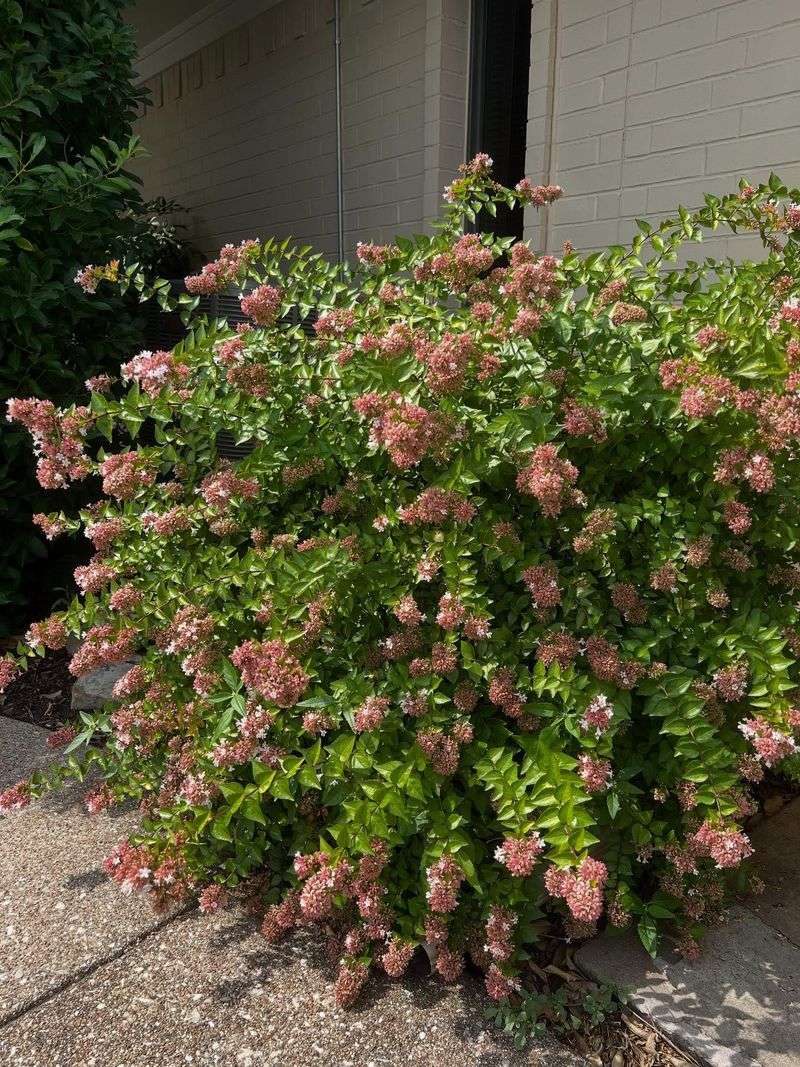
Butterflies found my Rose Creek abelia during its very first summer, and they kept coming back until frost. Small white tubular flowers cover the plant from May onward, giving off a light, sweet scent on warm evenings.
This compact cultivar came from the University of Georgia, and it stays roughly two to four feet tall. That low profile makes it a natural fit along walkways where taller shrubs would crowd your legs.
Spring leaves open with a pinkish blush before settling into a lustrous dark green for summer. Cooler fall weather brings purple-green tones, so the plant quietly changes outfits as the year moves along.
Bees and hummingbirds visit those blooms too, so your front walk turns into a busy little pollinator stop. I love sitting on the steps with coffee and watching the winged traffic come and go each morning.
Expect it to act evergreen in milder winters and semi-evergreen when winter temperatures dip especially hard. Some leaf drop after a cold snap is normal, and fresh growth usually fills in by late spring.
Full sun brings the heaviest bloom, though part shade works fine in hotter parts of North Carolina. Well-drained, moderately fertile soil keeps it happy, and established plants often handle summer drought surprisingly well.
Deer usually leave it alone, which earns extra points in suburban neighborhoods with regular nightly visitors. If you want tidier edges, a light trim in late winter keeps the mound neat without sacrificing many flowers.
6. Dwarf Japanese Cedar
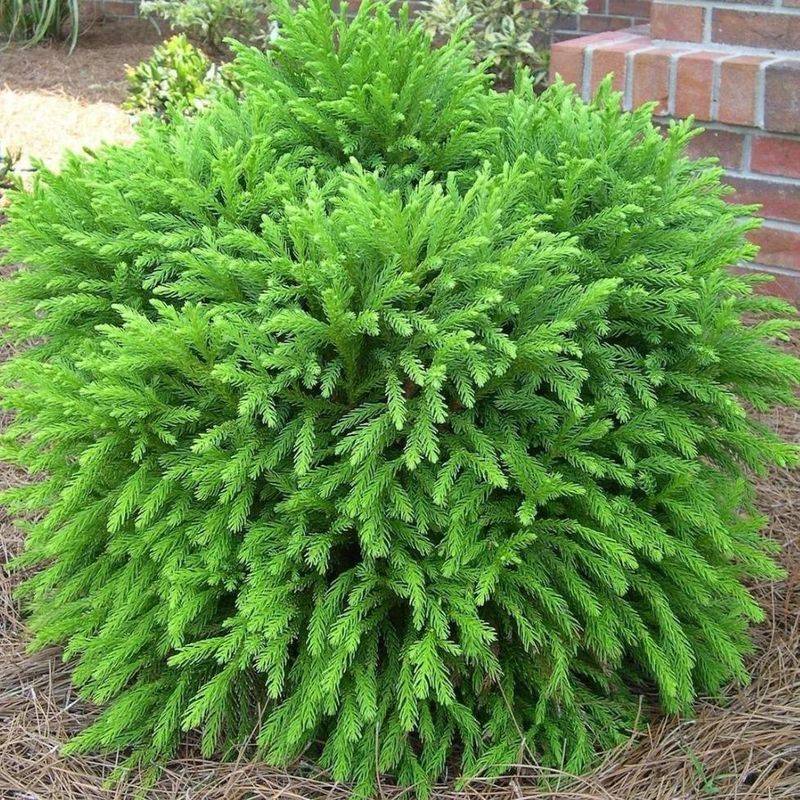
Soft, bluish-green needles give this little conifer the look of a plush pincushion you want to pat. Cold weather often tints it rusty bronze, which surprised me the first winter until I learned it was normal.
The plant is Cryptomeria japonica ‘Globosa Nana,’ a dwarf form of a tree that towers in Japanese forests. This version grows slowly into a dense, rounded mound that rarely needs any shaping at all.
Expect it to reach a few feet tall and wide over many years, depending on growing conditions. That slow pace means you can plant it near steps without worrying about a monster in five years.
Its needles bring a fresh texture to a bed full of broad leaves, and the contrast looks intentional. I like tucking one beside a burgundy shrub, because the blue tones seem to glow against the darker color.
Moist, well-drained, slightly acidic soil suits it best, along with full sun or light afternoon shade. Heavy clay that stays soggy can cause root trouble, so raise the planting area a little if needed.
Good air circulation matters, since crowded plants in humid weather are more prone to needle blight. Give it space from walls and neighboring shrubs so breezes can move freely through the branches.
Once rooted, it tolerates heat and dry spells reasonably well, and deer tend to ignore it. A light spring feeding helps only if growth looks sluggish, so feel free to skip the fertilizer habit otherwise.
7. Blue Cascade Distylium
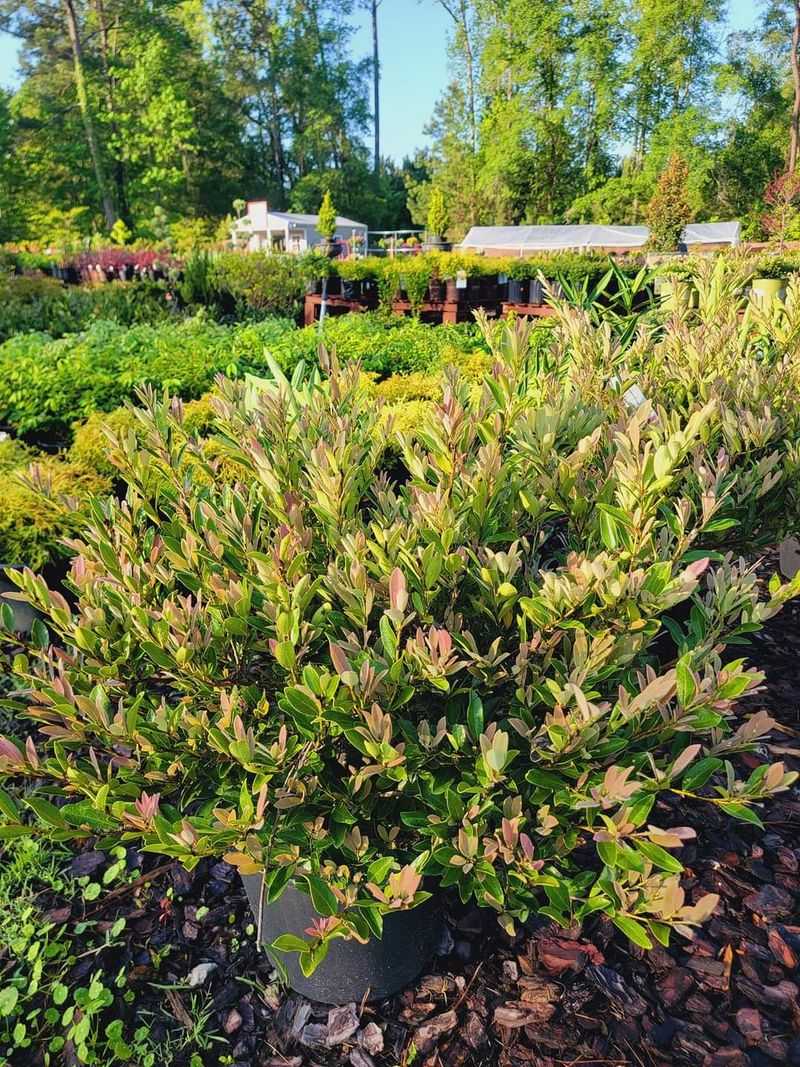
Distylium hybrids were barely known in American gardens twenty years ago, and now they show up across the South. Blue Cascade earns its spot with layered, cascading branches that give it a calm, almost sculpted look.
Its oval leaves carry a cool bluish-green tint that holds steady through winter instead of fading. Mature plants reach roughly three to four feet tall and wide, a size that suits most foundation beds.
Tiny burgundy flowers appear along the stems from late winter into spring, looking a bit like small spiders. They are easy to miss from the street, but up close they feel like a secret reward.
Distylium belongs to the witch hazel family, which explains the nickname evergreen witch hazel you may see on tags. Unlike most of its deciduous cousins, though, it keeps a full coat of leaves when winter arrives.
Summer heat and dry spells rarely trouble it once the roots settle firmly into the ground. Deer generally pass it by, and serious insect or disease problems are uncommon according to most growers and nurseries.
Full sun to part shade works, and average soil is fine as long as water drains away. I water new plants weekly through their first summer, then mostly let rainfall carry the load.
Pruning is optional, since the natural tiered shape usually looks better than anything shears can create. For a front yard you want to enjoy rather than babysit, it is hard to beat this one.
8. Autumn Bonfire Encore Azalea
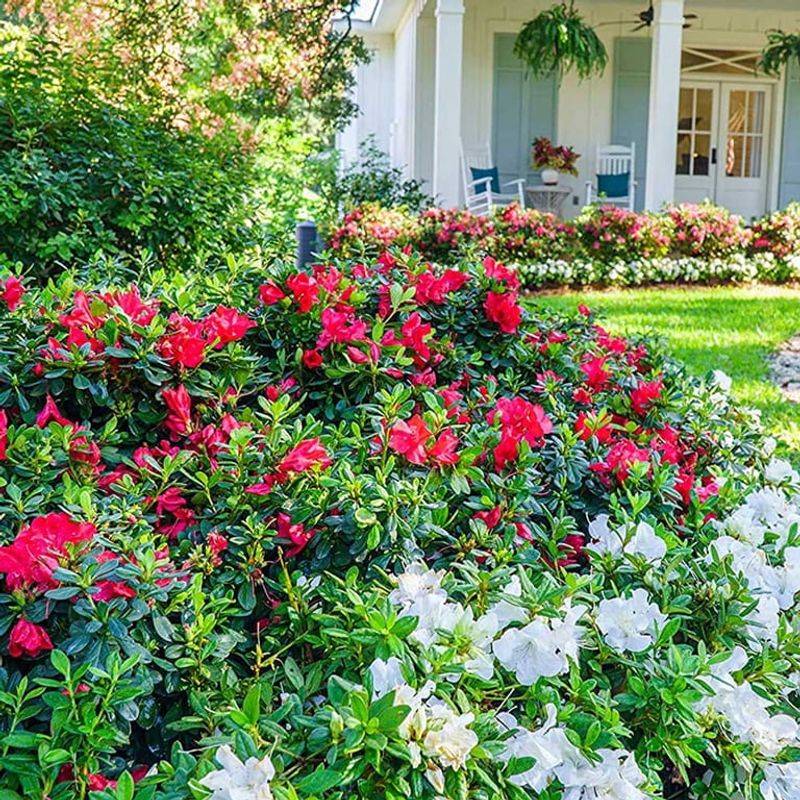
Red azalea blooms in October feel a little like finding a spring surprise tucked into fall. Autumn Bonfire belongs to the Encore series, bred to flower in spring and again later in the year.
Its blossoms are a bright, cheerful red that shows up clearly from the street, even on cloudy days. Small dark green leaves stay on all winter, so the shrub keeps its structure between flower shows.
Plants mature around three to four feet tall and wide, forming a rounded shape similar to a classic boxwood ball. That makes it an easy swap when you need to fill a gap left by a struggling hedge.
Azaleas love acidic soil, and plenty of yards across North Carolina already lean that way naturally. Mix in compost at planting time, and set the root ball slightly high so water drains away from the crown.
Encores handle more sun than older azaleas, though afternoon shade helps them through the hottest summer stretches. I give mine morning sun, and the bloom count has been impressive for three seasons running.
Shallow roots dry out fast, so steady moisture matters, especially during that first year after planting. A layer of pine straw mulch helps hold water in while keeping the shallow roots cool in summer.
Prune lightly right after the spring flush fades, since later cuts can remove the buds for fall flowers. Skip soggy spots too, because azalea roots tend to struggle and rot in heavy, poorly drained ground.