The Native New York Shrub That Looks Better Next to Your Foundation
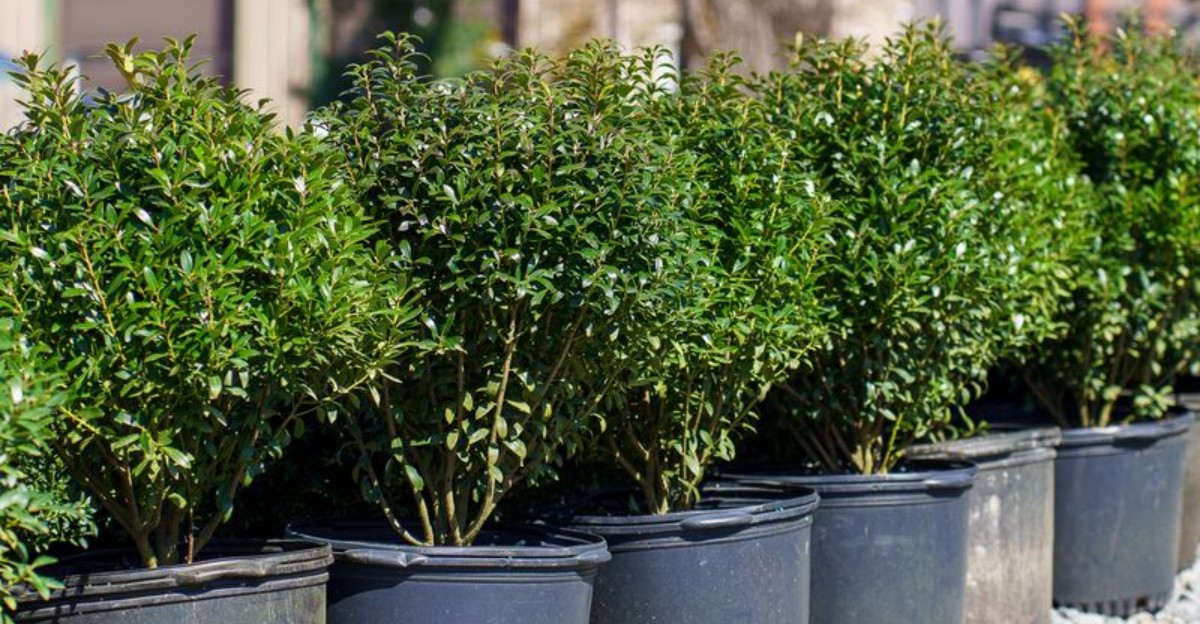
Beekeepers in the South sell a light, buttery honey made from a scruffy little evergreen that also grows wild on Long Island, New York. I learned that fact while staring at a row of tired boxwoods and wondering why I bothered.
The plant keeps glossy green leaves all winter. It shrugs off wet soil, shady corners, and the salty breeze along the coast. Native bees crowd its tiny spring flowers, and birds pick at its dark berries long after frost.
You might notice the internet loves to call a different shrub the go-to local native for foundations. A little digging gave me a surprise, because that famous pick actually hails from much farther south.
Inkberry is the shrub that belongs beside a New York house: evergreen, unfussy, and forged in a coastal pine barren.
A Glossy Little Evergreen From the Long Island Pine Barrens Earns the Spot
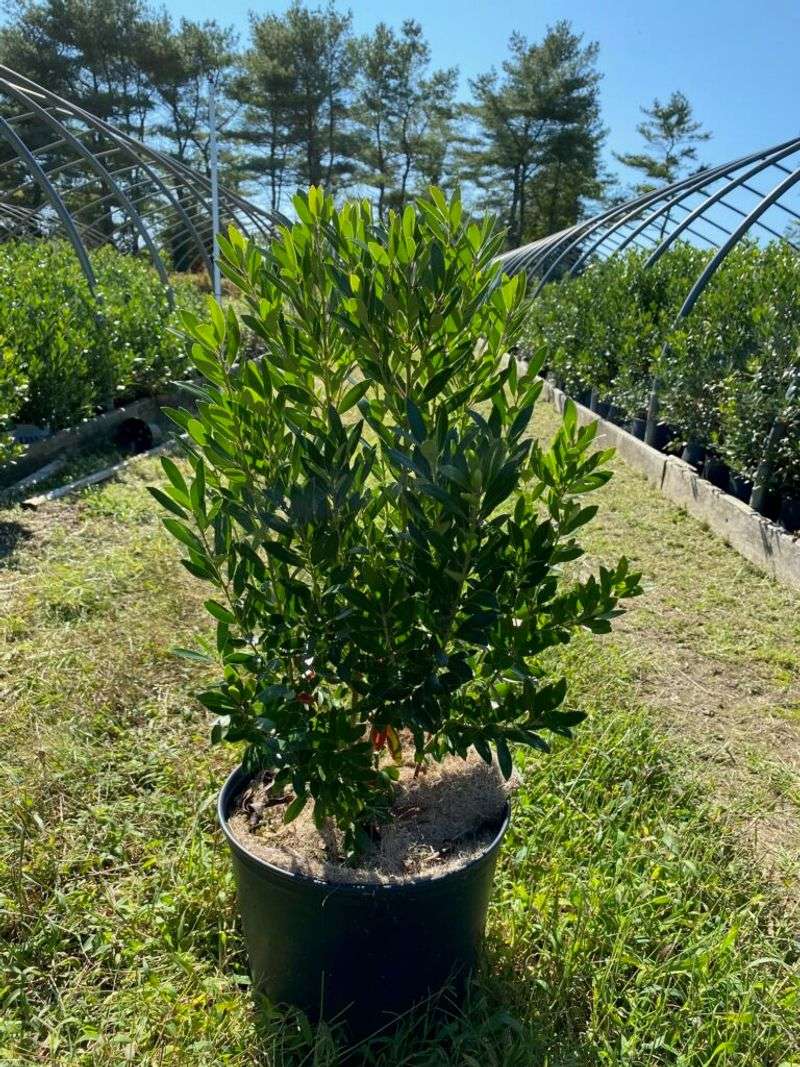
Walk a sandy trail in the Long Island Pine Barrens and you will spot it tucked under pitch pines. The shrub is inkberry holly, known to botanists as Ilex glabra, and it is a true native of coastal New York.
Unlike the prickly hollies on holiday cards, inkberry has smooth, narrow leaves about an inch or two long. They stay shiny and green through snow, ice, and gray January days.
That year-round color is exactly what a front foundation needs when everything else in the yard goes bare.
The name comes from its small, round black berries. Early settlers reportedly tried them as a source of ink, which gives this humble shrub a fun bit of history.
In the wild, inkberry grows in damp, acidic spots like bog edges, swamp margins, and pine woods. It spreads slowly by underground shoots into loose colonies.
That habit is helpful in a planting bed, because it can fill gaps near the ground, though older plants may still thin out at the base.
I love that this plant looks polished without fuss. It has the neat, formal feel people want from boxwood, yet it carries a wild local story that boxwood simply cannot match.
Inkberry Holly Stays Green and Tidy Right Against the House
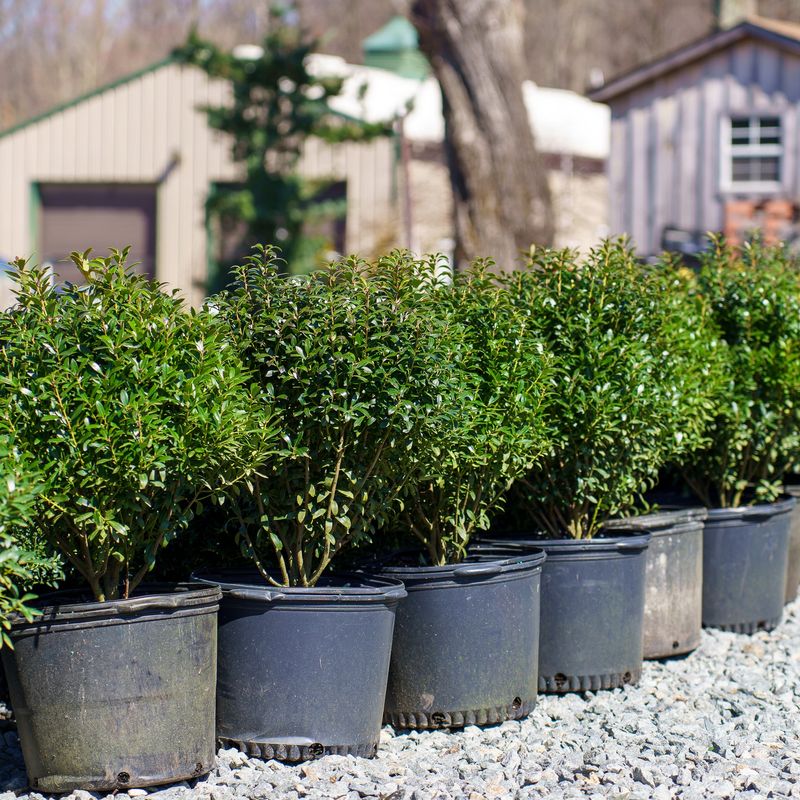
Foundation beds ask a lot from a shrub. They sit in rain shadows under eaves, catch snow sliding off the roof, and get blasted by reflected heat in summer.
Inkberry handles that rough job with surprising grace. It grows in full sun or fairly heavy shade, which matters on the north side of a house where most flowering shrubs sulk. It also tolerates wet soil, so a low spot near a downspout is not a deal breaker.
Winter is where this evergreen really shines. Your front walk still looks finished in February, with soft green mounds framing the steps instead of empty mulch.
Deer tend to leave inkberry alone more than they do yews and arborvitae, although no shrub is fully deer proof. In hungry winters, you may see a little nibbling, but heavy browsing is uncommon.
Its fine texture also plays nicely with almost any house style. Brick, vinyl siding, stone, and painted clapboard all look sharper with a row of small, dark leaves at their base.
Give it a gentle trim when needed and it keeps a soft, rounded outline. For busy homeowners, that kind of easy reliability feels like a small gift every season.
Fothergilla Blooms Are Gorgeous but Hail From Farther South
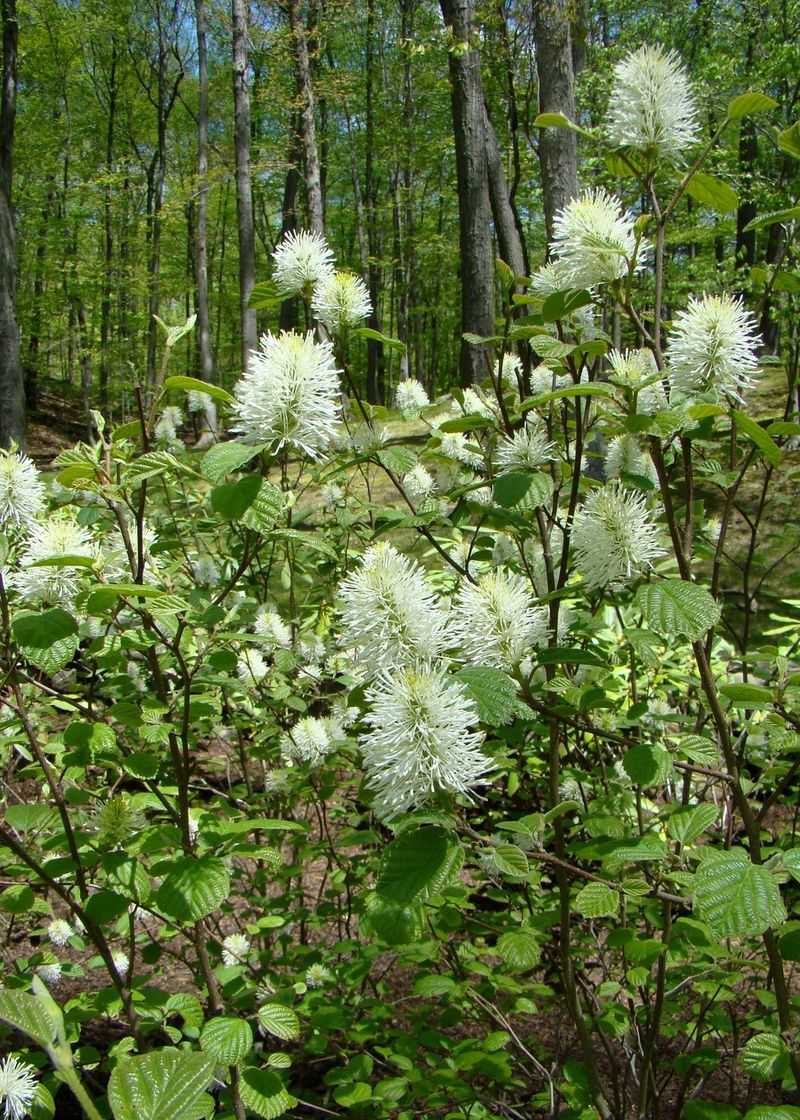
Plenty of garden posts crown dwarf fothergilla as the native star for New York foundations. I understand the crush, since those white bottlebrush blooms smell like honey and the fall leaves glow yellow, orange, and red.
The catch is geography. Dwarf fothergilla, Fothergilla gardenii, grows wild on the southeastern coastal plain, roughly from North Carolina down to Alabama and Florida.
Its taller cousin, Fothergilla major, comes from the southern Appalachians. Neither is native to the Empire State.
That does not make fothergilla a bad choice. It is a well-behaved, noninvasive American shrub that grows fine in much of the state, often hardy to about zone 5. Early bees visit its spring flowers, and it rarely spreads beyond where you plant it.
Still, words matter if your goal is supporting local wildlife and plant communities. Shrubs that evolved here tend to host more of the native caterpillars that songbirds feed their babies.
So enjoy fothergilla as a lovely regional native of the eastern United States. Just know that if you want a plant with true local roots beside your front door, inkberry earns that title honestly. Mixing both in one bed works beautifully, too.
Acidic Soil Keeps Inkberry Leaves From Turning Yellow
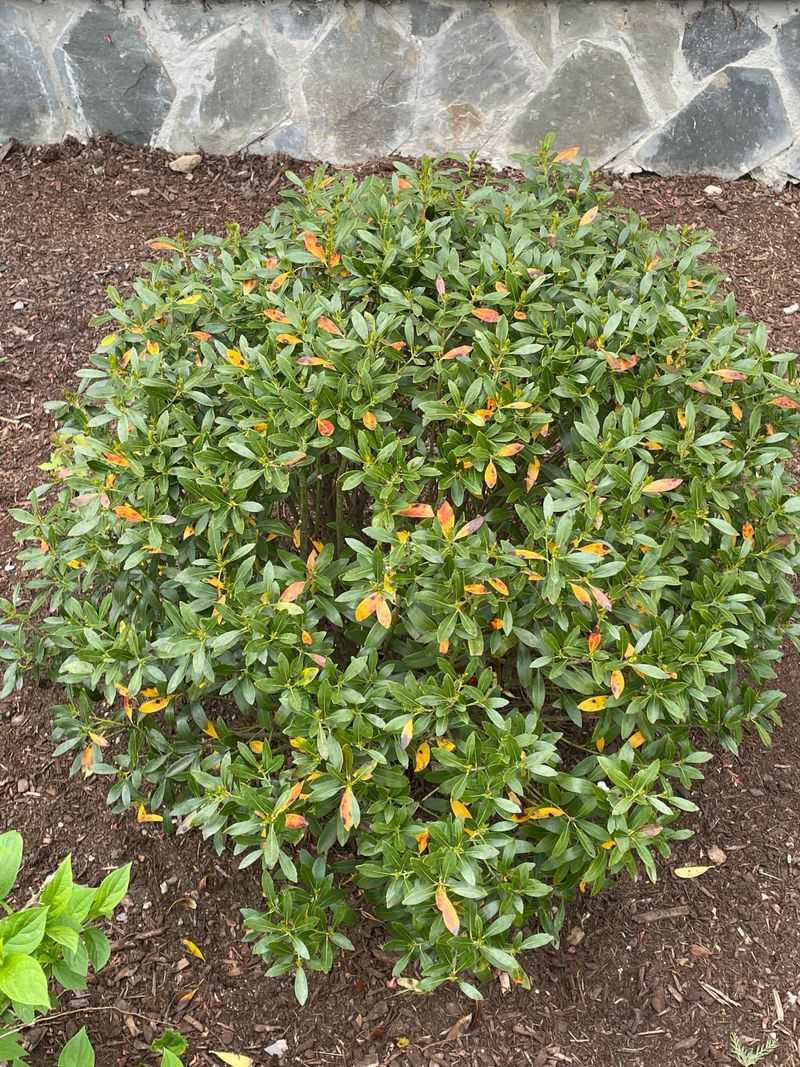
Concrete has a sneaky side. Foundations, walkways, and leftover construction rubble can slowly leach lime into nearby soil, nudging the pH upward right where you want to plant.
Inkberry likes acidic ground, roughly between pH 4.5 and 6.5, just like its pine barren home. In soil that runs too sweet, the plant struggles to pull up iron. You will see pale yellow leaves with green veins, a condition called chlorosis.
A simple soil test answers the question before you spend money on shrubs. Cornell Cooperative Extension offices across the state can point you toward affordable testing, and home kits give a quick rough idea.
If your reading comes back high, work in compost and use an acidifying fertilizer made for hollies and azaleas. Elemental sulfur can lower pH gradually, but follow the label rates and test again after a season.
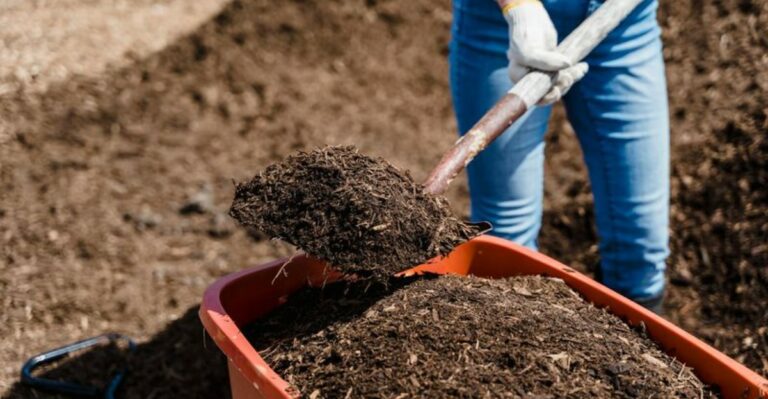
Pine needle or shredded bark mulch helps too, mostly by building healthy organic matter over time. Keep it two to three inches deep and pull it back a few inches from the stems.
Fix the soil first and inkberry rewards you with that deep, glossy green color. Skip this step and even a tough native may look tired.
Give Those Inkberry Roots About Three Feet From the Foundation Wall
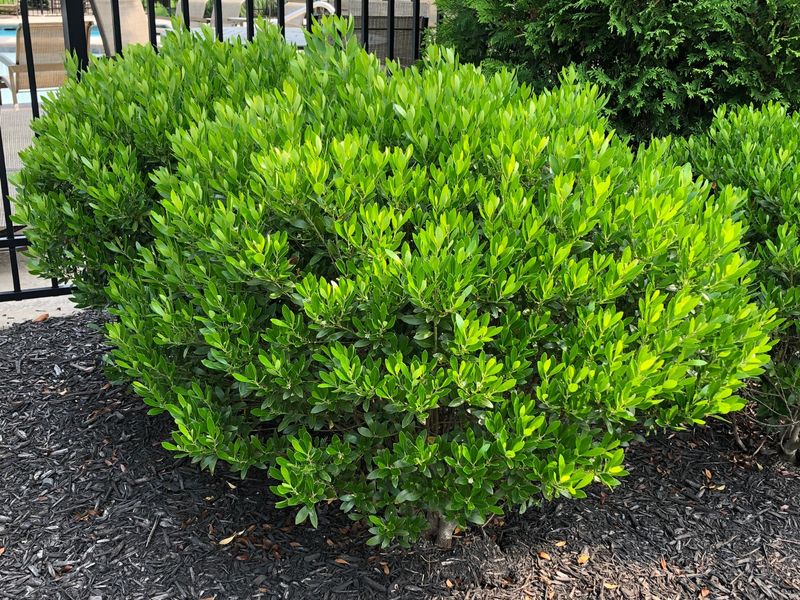
My first foundation planting sat so close to the siding that the shrubs leaned out like they wanted to escape. Lesson learned.
Plant inkberry with its center at least three feet from the wall, and a bit more for larger varieties. That space gives roots room to spread, lets air move through the branches, and keeps leaves away from rough siding.
It also leaves you a path for painting, gutter work, or washing windows. Check the drip line from your roof, too. Shrubs placed right under the eaves often miss rainfall and get pounded by falling snow.
Across most of the state, early spring and early fall are the best planting windows. Cool air and steady moisture help roots settle before summer heat or hard frost arrives.
Dig a hole two to three times as wide as the root ball but no deeper. Set the top of the root ball even with the ground or slightly above, then backfill with native soil mixed with a little compost.
Water deeply once or twice a week during the first season. Inkberry has fairly shallow roots, so a dry spell in year one can set it back quickly.
Compact Inkberry Varieties Keep Your Windows Clear
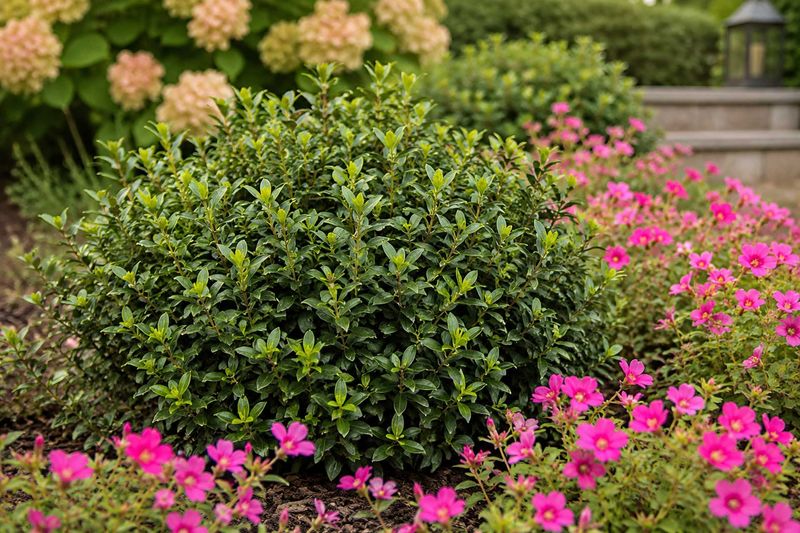
Here is a quirky truth about wild inkberry. Left alone, the straight species can reach five to eight feet tall and wander sideways, which is a little much under a picture window.
Plant breeders solved that problem with compact selections. ‘Gem Box’ stays roughly two to three feet tall with a dense, boxwood-like shape. ‘Strongbox’ grows a bit larger, around three to four feet, and keeps its lower leaves well.
‘Shamrock’ is a classic choice that often lands in the three to five foot range. It has bright green new growth, though older plants can thin out near the base. ‘Compacta’ grows a little bigger and works well for broader beds or corner spots.
Read the tag for mature size, not the size in the pot. A shrub that fits now may block your view in five years.
Cold matters too. Most inkberry selections are rated for zones 5 through 9, and some handle zone 4.
Gardeners in the colder Adirondack and northern regions should look for hardier picks and a spot sheltered from harsh winter wind.
Choosing the right size up front means less pruning later. Your back and your windows will both appreciate it.
Native Bees Buzz Around Inkberry Flowers and Birds Grab the Berries
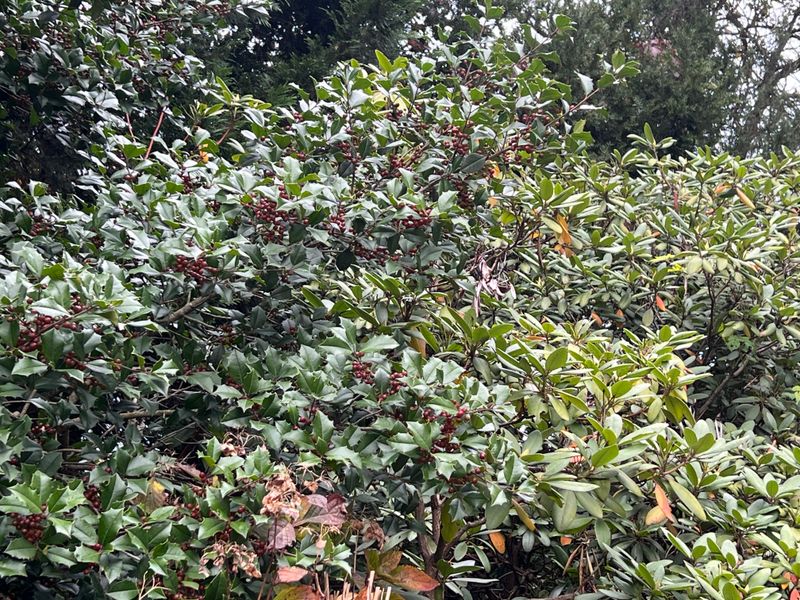
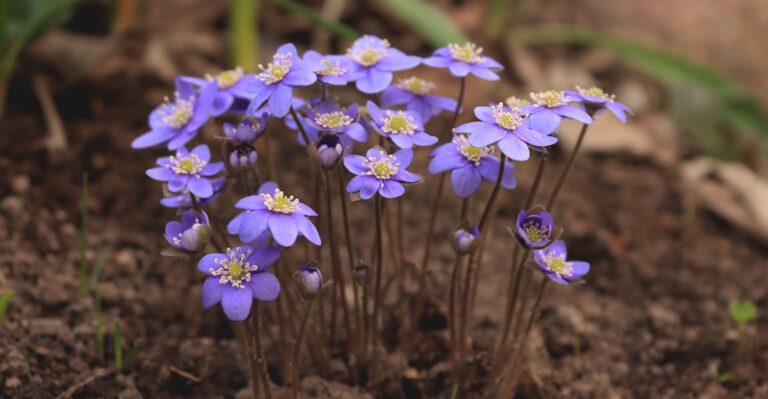
Lean in close around late spring and you will hear a soft hum. Inkberry flowers are tiny, white, and easy to miss, yet bees find them fast.
Honeybees and many native bees gather nectar from the blooms. In the Southeast, beekeepers bottle a prized product called gallberry honey, made largely from this very shrub. Your foundation bed becomes a small snack bar for local pollinators.
Berries come later and hang on into winter. Birds such as mockingbirds and other fruit eaters may pick at them when food runs low, giving you a little wildlife show from the kitchen window.
Inkberry has one quirk worth knowing. Male and female flowers grow on separate plants, so only females make berries, and they need a male nearby for pollination.
If berries matter to you, ask the nursery which plants are female and add a male within the area. Many compact varieties, including ‘Gem Box’, are female selections.
Fruitless plants are still pretty and still feed bees. Either way, you are swapping a lifeless strip of green for a hardworking native habitat right outside your door.
Swap That Japanese Barberry and Tired Boxwood for Inkberry Holly
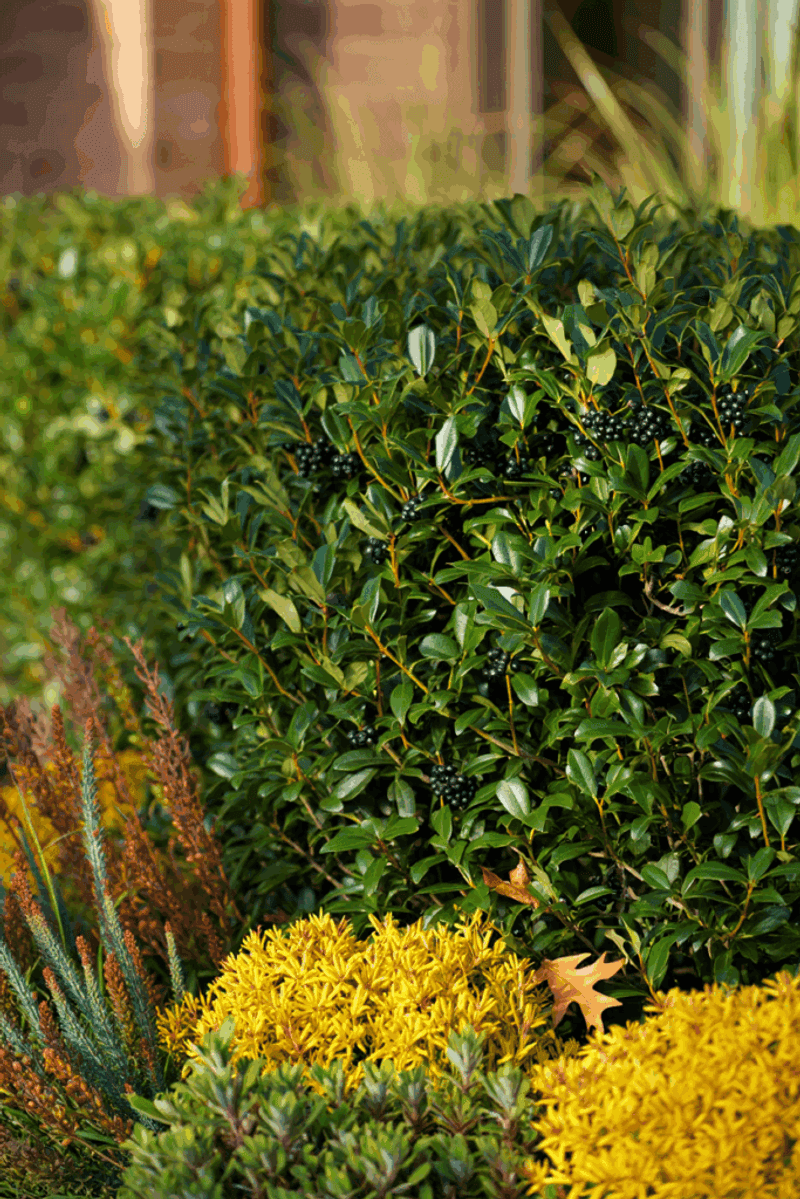
Ready for a fresh start out front? Many older foundation beds in the state are stuffed with Japanese barberry, burning bush, and boxwood.
Japanese barberry is now a prohibited invasive species in New York, which means it cannot be sold or newly planted. Burning bush is regulated as invasive as well.
Both escape into woods, where barberry thickets have even been linked to higher tick numbers.
Boxwood faces its own troubles. Boxwood blight spreads in damp weather, and the box tree moth has been detected in parts of western New York.
Replacing ailing boxwoods with inkberry gives you a similar evergreen look with fewer worries.
Work in stages if a full makeover feels overwhelming. Pull one invasive shrub at a time, bag barberry berries, and plant inkberry in early spring or fall. Once established, care is simple. Trim lightly in early spring to shape.
If an older plant gets leggy, cut a few of the oldest stems near the ground and new shoots will fill in.
Pair inkberry with native perennials like wild geranium or foamflower for added color. Before long, your foundation bed will look rooted in place, because it truly is.