The Perfect Holiday Plant For Cool Pennsylvania Rooms
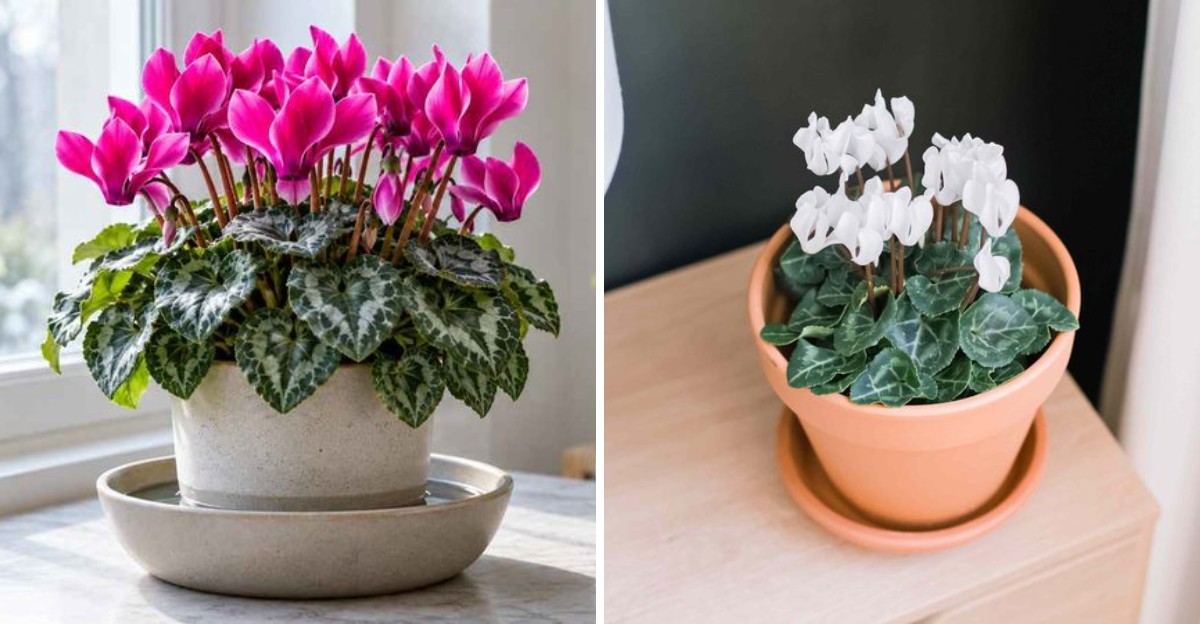
One of the prettiest winter bloomers sold at the grocery store grows from a lumpy underground tuber that looks a lot like a small potato. Its wild ancestors come from rocky hillsides around the Mediterranean, where winters are cool and summers bake.
I used to walk right past it every December. I figured anything that pretty must be fussy, and my drafty old house seemed like a bad match.
To my surprise, that chilly house was exactly what it wanted. Cooler rooms keep the flowers coming for weeks, while warm, dry air pushes the plant toward an early rest.
If you live in Pennsylvania, you probably have a spare bedroom or bright mudroom that feels a little nippy in January. So what if that cold corner you avoid is secretly the best plant spot in your whole home?
1. Those Upswept Cyclamen Petals Have A Secret Temperature Wish
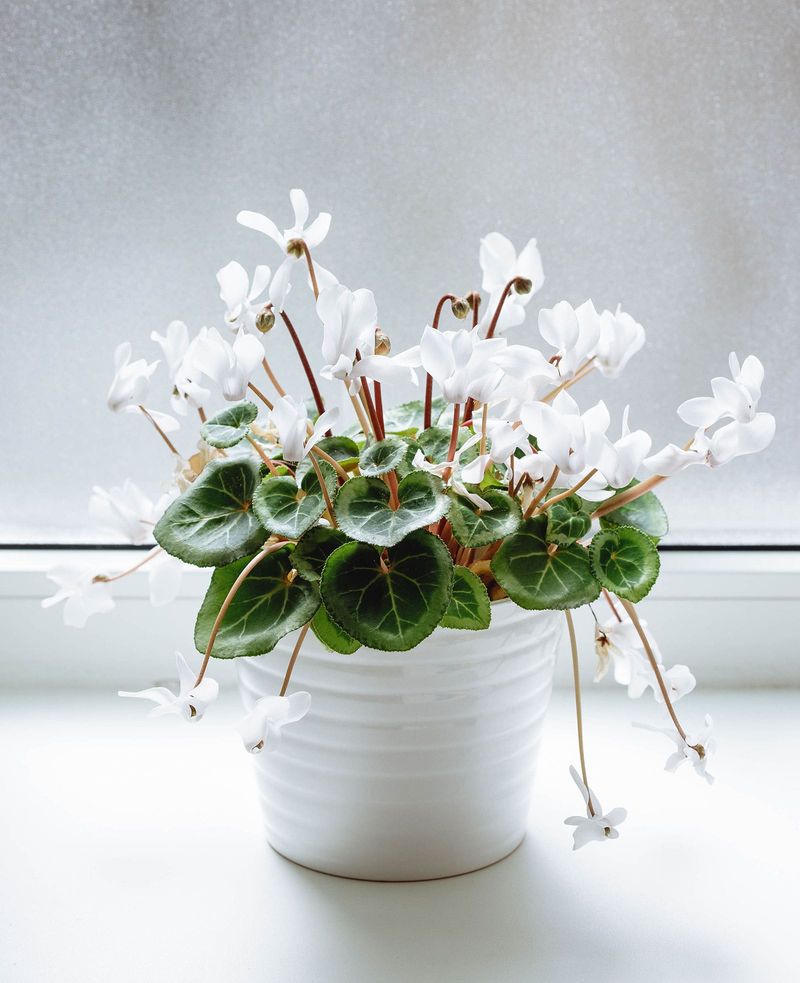
Most holiday plants want you to crank up the heat. Florist’s cyclamen, known to botanists as Cyclamen persicum, would rather you leave the thermostat alone.
University extension experts often suggest daytime temperatures around 60 to 65 degrees and nights closer to 50 to 55 degrees.
That preference goes back to its roots. Wild cyclamen grow in places like Turkey, Lebanon, and Israel, where they leaf out and bloom during the cool, rainy winter. Hot weather is their cue to slow down and rest.
So when your living room sits at 72 degrees with the furnace humming, the plant gets confused. It may think summer has arrived. Leaves can yellow, buds can stall, and the flowers fade much sooner than they should.
I find this oddly comforting. Many older homes have that one room that never quite warms up, like an enclosed porch, a back bedroom, or a front hallway near the door.
Those spots feel too chilly for people to linger in. For a cyclamen, they feel like a Mediterranean winter.
Move your plant there and you may get blooms lasting two or three months instead of two or three weeks. Just keep it safely above freezing.
2. A Chilly Pennsylvania Spare Room Can Be Cyclamen Heaven
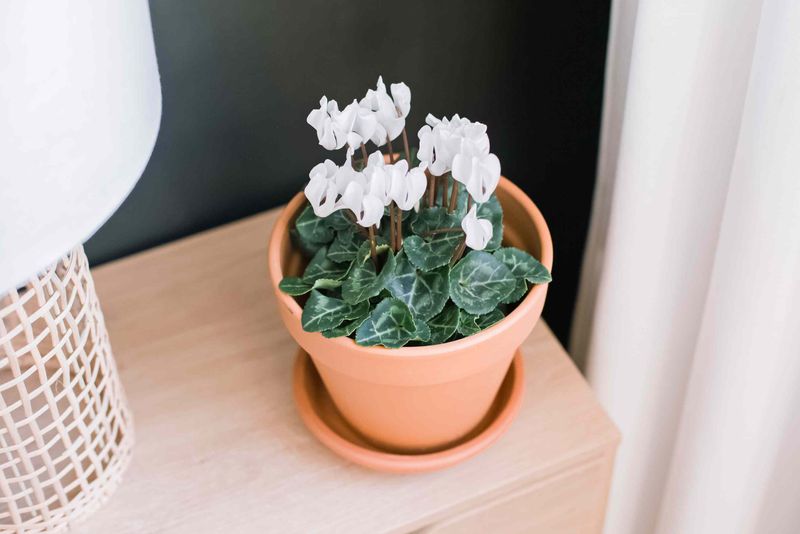
Winter in Pennsylvania brings plenty of gray skies and cold snaps, from the snowbelt near Erie to the milder Philadelphia suburbs. Indoors, though, forced-air heat makes many rooms warm and bone dry. That combination is rough on lots of houseplants.
Cyclamen flips the problem into an advantage. Homeowners often close vents in guest rooms or keep sunrooms cooler to save on heating bills. Those slightly cold spaces suit this plant beautifully.
Walk around your house with a cheap thermometer one evening. You might be surprised how much rooms differ. A hallway by the front door could read 58 degrees, while the kitchen sits near 70.
Good candidates include: A bright mudroom or entryway that stays above freezing. A guest bedroom with the vent partly closed. An enclosed porch that holds steady above roughly 40 degrees at night.
Be careful with porches during deep cold. Single-digit nights can push unheated rooms below freezing, and frost will damage the leaves and flowers.
Keep the pot away from radiators, heat registers, fireplaces, and the top of the refrigerator. Even a cool room can have a hot spot. Steady cool air works much better than swings between chilly and toasty.
3. Bright Window Light Keeps Cyclamen Flowers Coming
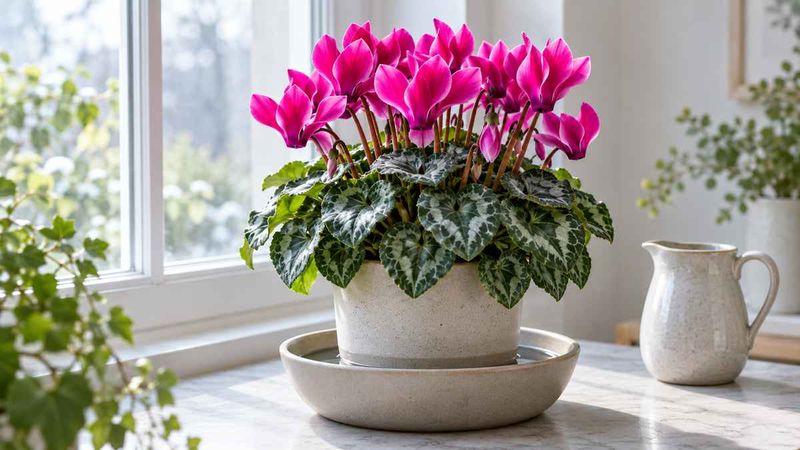
Cool air alone will not do the job. A cyclamen tucked into a dark corner usually gives you stretched stems, floppy leaves, and fewer flowers. Light is the other half of the recipe.
Aim for bright, indirect light. An east-facing window with gentle morning sun is lovely. A north window can work too, especially during short winter days when light is limited anyway.
Southern and western windows are trickier. Set the pot a few feet back so harsh afternoon sun does not scorch the blooms or overheat the plant. A sheer curtain helps soften strong rays.
Here is a little trick I picked up. Turn the pot a quarter turn every few days. Cyclamen leaves lean toward the light, and rotating keeps the plant full and even instead of lopsided.
Watch the window glass, though. On frigid nights, leaves pressed against a cold pane can get damaged. Leaving a few inches of space prevents that problem.
Short Pennsylvania days in December mean your plant appreciates every bit of brightness it gets. Pull back heavy drapes in the morning. You will likely notice new buds rising from the center like tiny folded umbrellas.
4. Bottom Watering Protects That Hidden Cyclamen Tuber
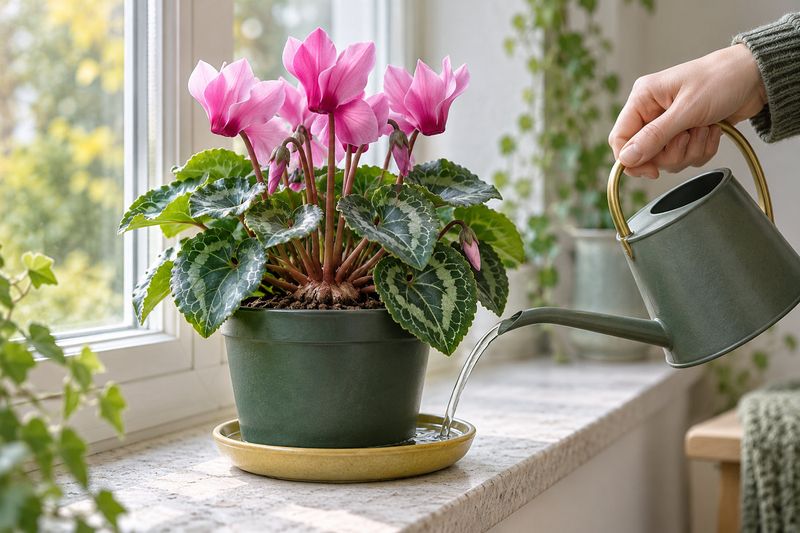
Soggy crowns are the number one reason store-bought cyclamen fall apart. Underneath those leaves sits a rounded tuber, and its top does not like staying wet. Water pooling there can lead to rot.
Bottom watering solves that neatly. Set the pot in a bowl or saucer with a couple inches of room-temperature water. Let it soak for about 15 to 20 minutes, then lift it out and let the extra drain away.
How do you know when to water? Poke a finger into the soil. If the top inch feels dry, it is time. If it still feels damp, wait another day or two.
Cool rooms slow down how fast soil dries. You may water less often than you expect, sometimes only once a week or so.
Do not let the plant sit in a puddle afterward. Also avoid letting it go bone dry for long, because the whole plant can flop dramatically.
A quick fix for that flop is a good soak. Often the leaves perk back up within hours. Gentle, steady moisture keeps the flowers fresh and the tuber firm and healthy.
5. Silver-Marbled Leaves Love A Little Extra Humidity
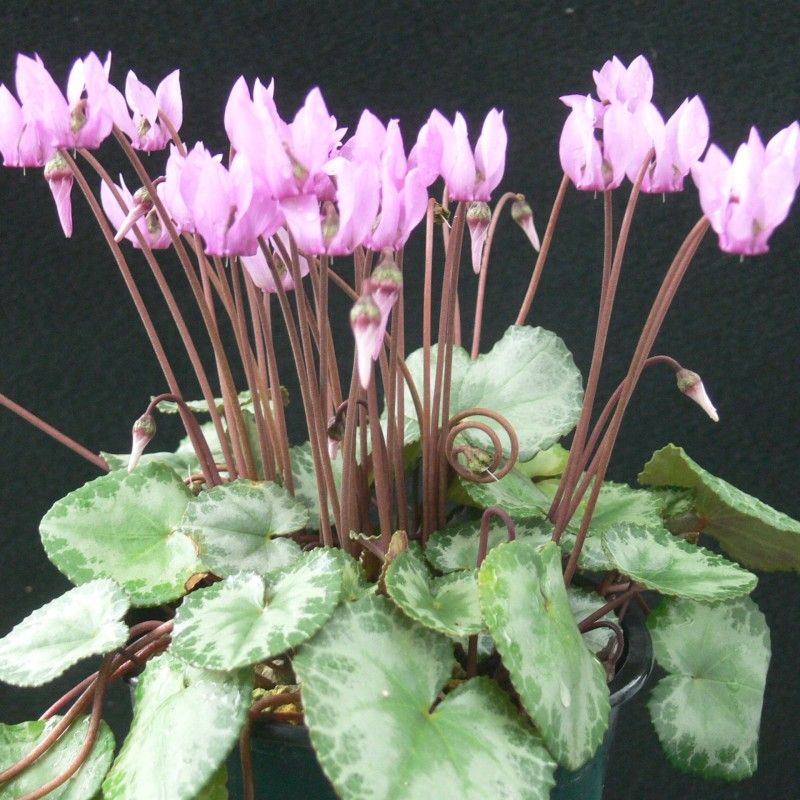
Furnaces are wonderful for people and pretty tough on plants. Heated winter air often drops below 30 percent humidity. Cyclamen leaves and petal edges can turn crispy in that dry environment.
A pebble tray is one of my favorite low-effort fixes. Fill a shallow tray with pebbles, add water just below the tops of the stones, and set the pot on top. As water evaporates, it adds moisture right around the leaves.
Grouping plants helps too. Several houseplants clustered together create their own slightly moist pocket of air. A small room humidifier works even better if you already have one.
Skip heavy misting directly on the flowers. Wet petals and crowded, damp foliage can invite gray mold, a fuzzy fungus called botrytis.
Good airflow matters as much as moisture. A gently ventilated room keeps mold away while the tray handles the dryness.
Fun fact for your next family gathering. No two cyclamen leaves look exactly alike. Many carry swirling silver patterns, and growers breed some varieties just for their fancy foliage.
Even after the blooms fade, those marbled hearts make a pretty show on a holiday table.
6. Drooping Or Yellow Cyclamen Leaves Are Trying To Tell You Something
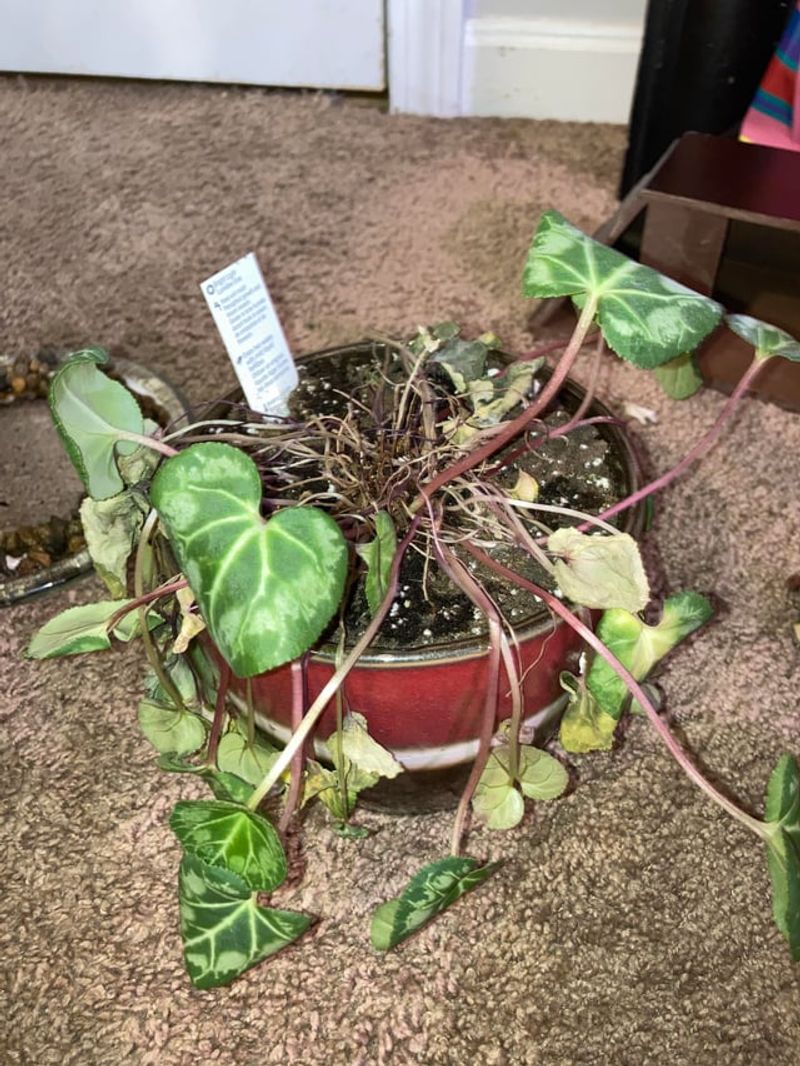
Plants cannot talk, but cyclamen come close. Their leaves and stems react fast, which makes problems easy to spot if you know the clues.
Yellow leaves often point to a room that is too warm. They can also signal watering trouble, either too much or too little. Check the thermometer first, then check the soil.
Sudden drooping usually means thirst. However, a mushy tuber combined with drooping suggests rot from overwatering. Gently press the top of the tuber. Firm is fine, while soft spots are bad news.
No new flowers? The plant probably needs more light or cooler temperatures. Move it and give it a couple of weeks.
Pull off spent flowers and yellow leaves with a twist and tug right at the base. Cutting leaves stubs that can rot.
Keep an eye out for cyclamen mites and aphids too. Mites cause twisted, stunted new growth that is hard to fix, so isolate any suspect plant from your others.
Feed lightly with a balanced houseplant fertilizer at half strength every few weeks while blooming. One more reminder: cyclamen tubers are toxic to cats and dogs, so keep curious pets away.
7. Your Cyclamen Tuber Can Rest All Summer And Bloom Again
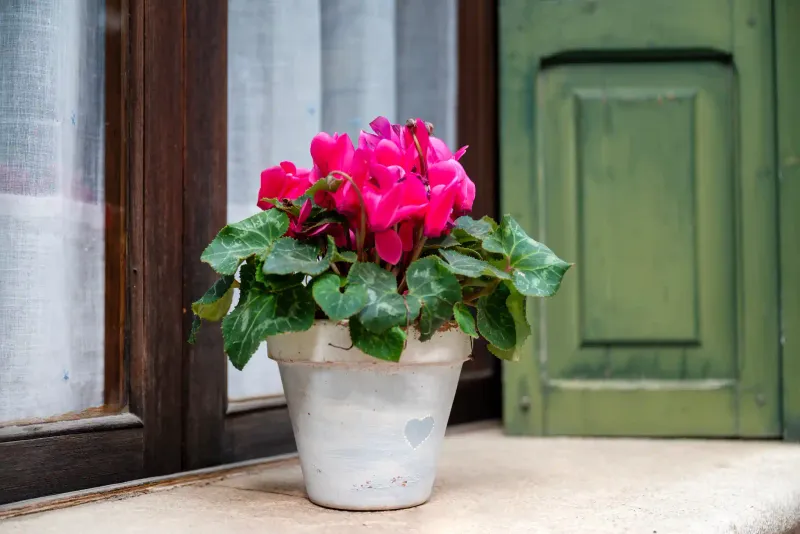
Spring often brings a sad-looking cyclamen, and many folks toss it in the trash. Hold off. That yellowing is usually normal summer dormancy, not failure.
As the weather warms, gradually water less and stop fertilizing. Let the foliage fade on its own. Then set the pot in a cool, shady spot, checking now and then so the soil does not stay soaking wet or turn to dust.
Some gardeners lay the pot on its side to keep rain or stray water off the tuber. A shady corner of a basement or a protected porch can work through summer.
Around late summer or early fall, tiny new leaves appear. Repot in fresh, well-draining potting mix, keeping the top of the tuber at or slightly above the soil line. Resume watering and bright light.
Honestly, reblooming takes patience. The second display may be smaller than the greenhouse-grown first round, but watching it return feels like a small victory.
Outdoors, florist’s cyclamen is not winter hardy in Pennsylvania. Hardy relatives like Cyclamen hederifolium can grow in shady beds, though. Start with one indoor plant this season, and you may find a new holiday tradition.