A Ten-Minute Fall Job Keeps Mice And Rabbits Off Your Minnesota Trees
Under a deep snowpack in Minnesota, a meadow vole can chew a ring of bark off an apple tree without ever showing its face.
Nobody sees the feast happen. The proof shows up in April as a pale, gnawed band near the soil line, and Minnesota orchards and backyards see it every spring.
I found my first ring on a young crabapple after a snowy winter. It looked like someone had peeled it with tiny chisels. The tree leafed out that spring, then slowly gave up by summer.
Rabbits work the upper story of the same tree. Snow lifts them higher with every storm, so a branch that seemed safe in October can become a midwinter snack in February.
Here in Minnesota, our long snow season gives both critters months of cover and plenty of reach.
The fix took me about ten minutes per tree, plus a cup of coffee. So why do so many of us wait until spring to look?
Those Gnawed Rings On Tree Bark Start Under The Snow
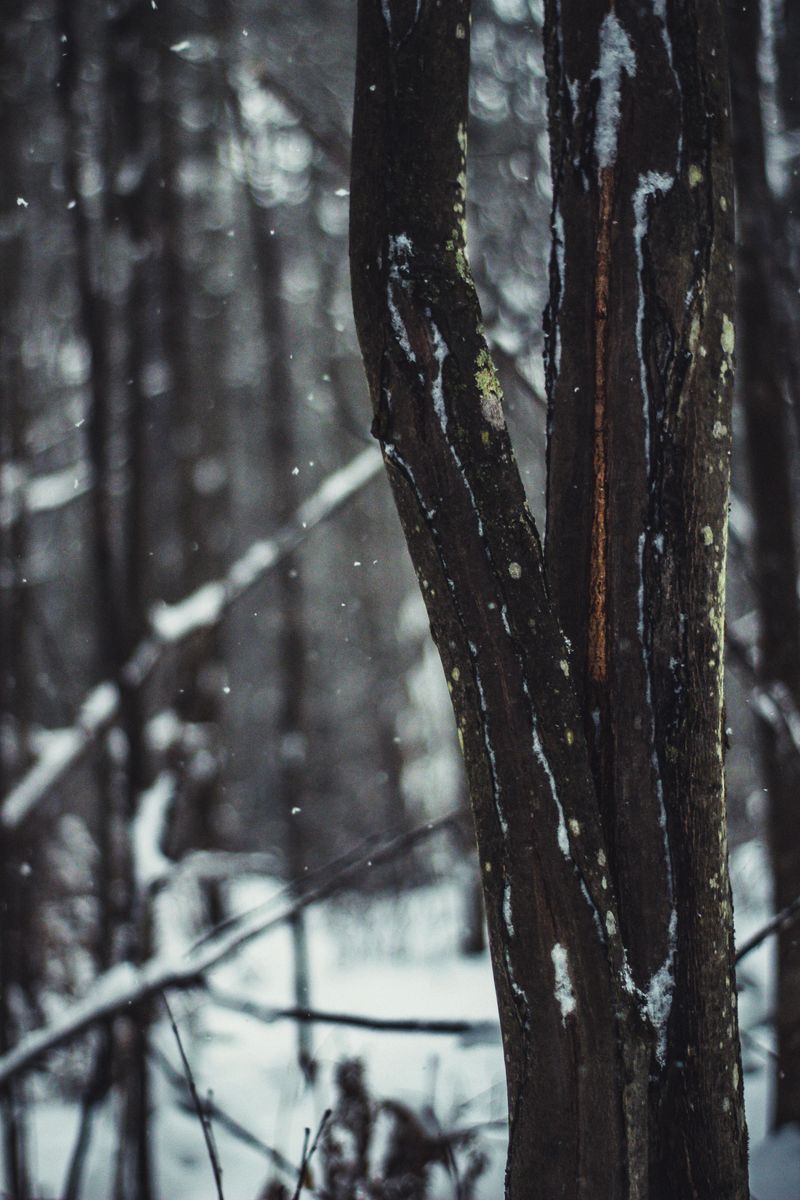
Snow feels like a cozy blanket for your yard. For voles and mice, it works more like a secret hallway.
They tunnel beneath it all winter, safe from hawks and owls, and they look for food right where the trunk meets the ground.
Bark itself is not the big prize. The real treat sits just underneath, in the green inner layer that carries sugars from the leaves down to the roots.
Once that layer gets chewed all the way around the trunk, the tree is girdled, and the roots can no longer receive the energy they need.
Rabbits leave a different calling card. Their teeth make clean, angled cuts on twigs, like someone used pruners at a slant. They also strip bark higher up, often well above where you would expect.
Young trees with thin, smooth bark are the most tempting. Apples, crabapples, plums, cherries, honeylocusts, maples, and many shrubs land on the menu.
University of Minnesota Extension notes that damage often goes unnoticed until the snow melts. By then, the harm is done. A partly chewed trunk may recover, but a full ring is a serious problem for a small tree.
A Hardware Cloth Cylinder Around The Trunk Does The Heavy Lifting
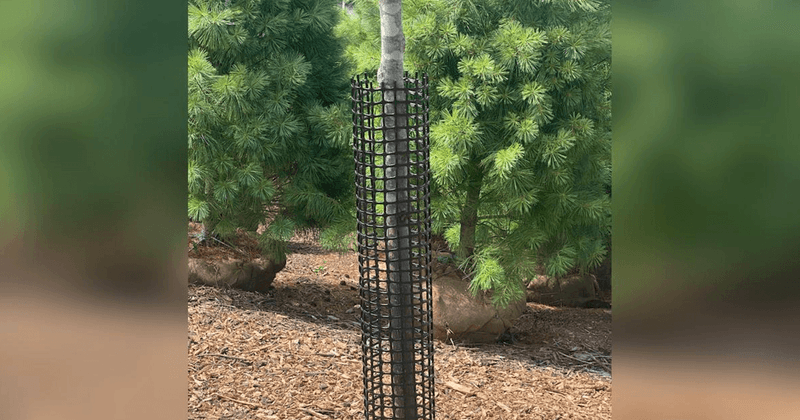
Here comes the ten-minute hero of this whole Minnesota story. A loose tube of hardware cloth around the trunk stops both mice and rabbits better than nearly anything else you can buy, and it holds up through the kind of winters Minnesota is known for.
Hardware cloth is a stiff metal mesh sold in rolls at any farm or hardware store. Choose the quarter-inch size.
Voles can squeeze through surprisingly small gaps, and wider mesh like chicken wire lets them slip right in.
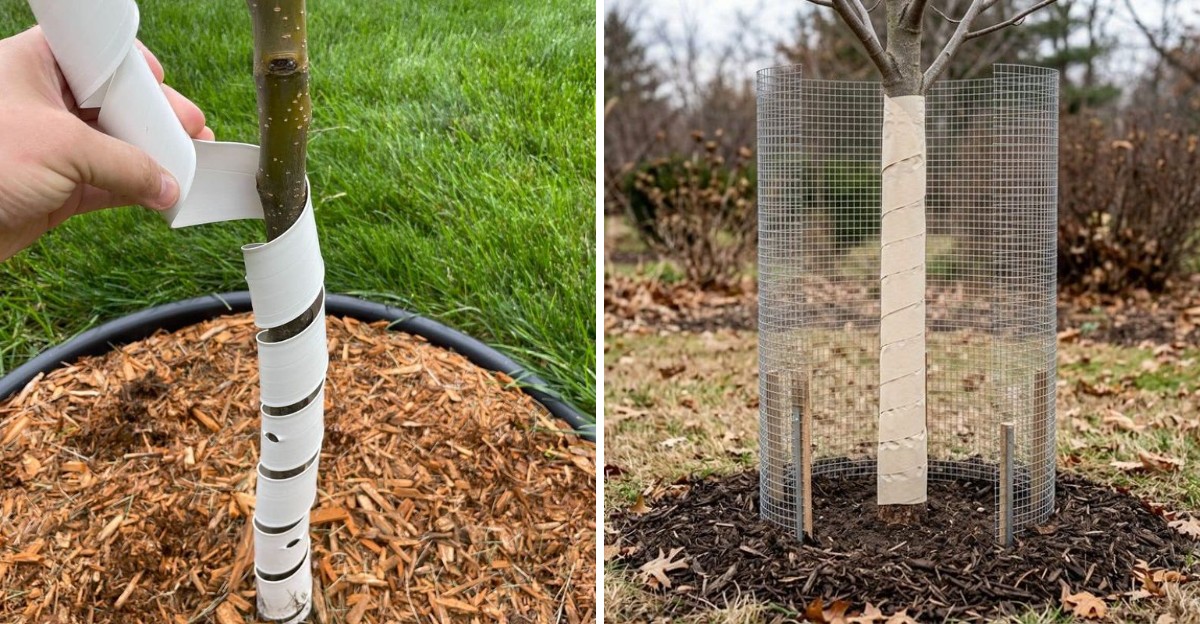
The job goes fast once you try it. Measure a piece long enough to wrap the trunk with room to spare, roll it into a tube, and fasten the overlapping edge with wire or zip ties. Slide it over the tree, nudge the bottom into the soil, and you are done.
I like that one roll covers several trees. Galvanized mesh also lasts for years, so the same tubes come back out every autumn without much fuss.
Wear sturdy gloves while cutting, since the snipped ends are sharp. Tin snips or heavy wire cutters make clean work of it.
Bend any pointy edges inward or outward so they do not scratch the bark or your arms during installation and removal.
Bury The Mesh Bottom And Build It Taller Than Snow
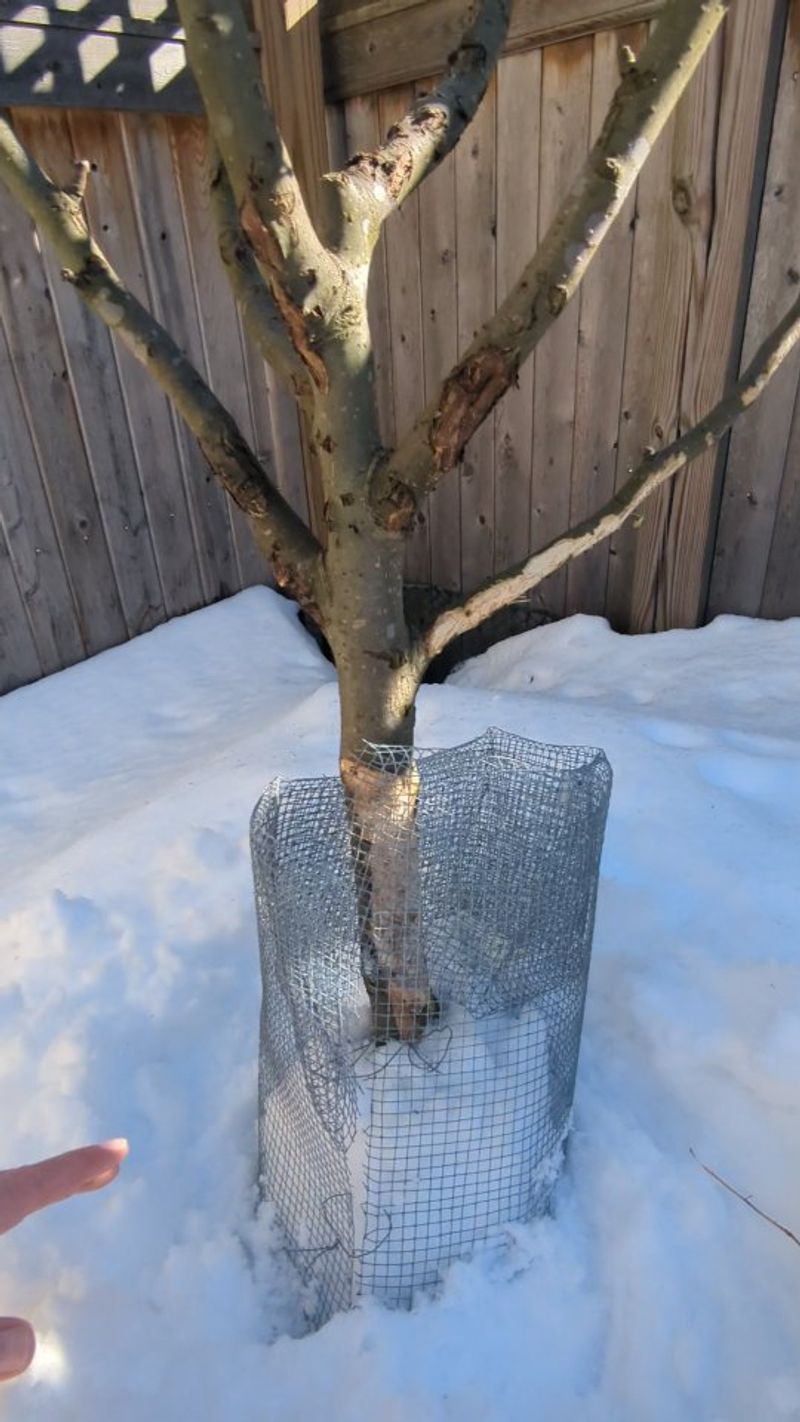
Height and depth make or break a tree guard. Getting the size wrong is the most common reason a barrier fails, and I learned that the hard way.
Start at the bottom. Push or bury the mesh about two to three inches into the soil so voles cannot tunnel underneath.
A few garden staples or short stakes keep the tube from shifting during freeze and thaw cycles.
Now look up. Rabbits stand on packed snow, so the guard should reach roughly 18 to 24 inches above your expected snow depth.
In areas with little snow, that may mean a tube about two to three feet tall, but you will need a taller guard wherever snow runs deep, such as the Arrowhead.
Give the trunk breathing room too. A gap of a few inches between the mesh and the bark lets the tree grow and keeps the metal from rubbing.
One quick tip saves headaches later. Check that the overlapping seam is tightly fastened from top to bottom.
A loose seam is an open door for a determined mouse, and those tiny visitors will find it before you do.
White Plastic Spiral Tree Wraps Pull Double Duty
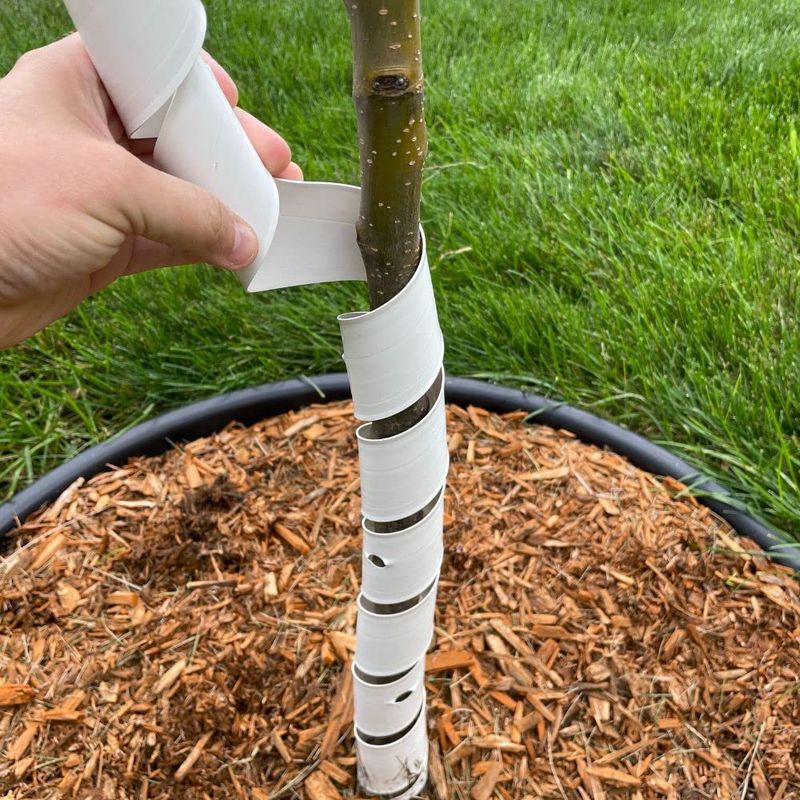
Spiral guards look like a giant white phone cord, and they go on in about thirty seconds. For slender young trees, they are a handy option.
These wraps coil around the trunk and expand as the tree grows. They stop rabbit teeth and some rodent gnawing on the lower trunk.
White ones also reflect sunlight, which helps reduce sunscald, those long cracks that form on the south or southwest side of thin-barked trees during bright winter days.
Color matters here. Dark guards soak up heat and can make sunscald worse, so stick with white or light shades.
Plastic does have limits. Mice may slip under the bottom edge, so pull some soil or gravel snugly around the base.
Spirals also tend to be shorter than a mesh tube, which leaves upper bark exposed when snow piles up.
Moisture can collect underneath during warm weather, inviting insects and bark problems. Treat these wraps as a winter coat, not a year-round outfit.
Many gardeners pair a spiral wrap against sunscald with a hardware cloth tube outside it for maximum protection.
Mow The Tall Grass Where Voles Love To Hide
Voles are homebodies. They like thick grass, weedy patches, and heavy mulch, because cover means fewer run-ins with foxes and owls.
Take that cover away and they often move on. Before winter, mow or trim tall grass and weeds in a circle of at least two feet around each young tree. Clear brush piles and fallen debris nearby too.
Mulch deserves a careful look. A layer of two to four inches helps roots, but piling it against the trunk creates a perfect nest site. Pull it back several inches from the bark so it looks like a donut, not a volcano.
I once found a whole vole runway system hiding under a lazy mulch heap. The trunk beside it had fresh tooth marks. That spring I raked everything back, and the trouble stopped.
Fallen apples and dropped birdseed also attract hungry rodents. Pick up fruit in autumn and keep feeders away from young trees.
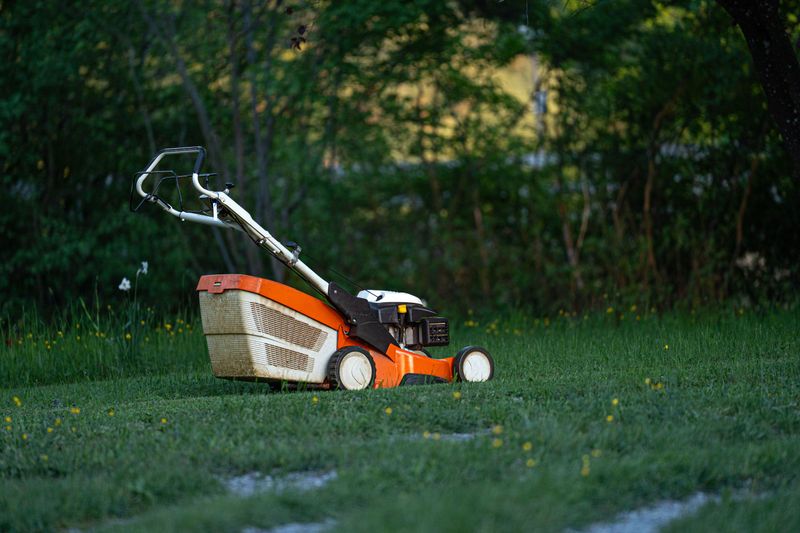
This chore pairs nicely with your last mowing of the season. While the mower is out, give each little tree a clean, open circle.
Get Tree Guards On Before The Ground Freezes Hard
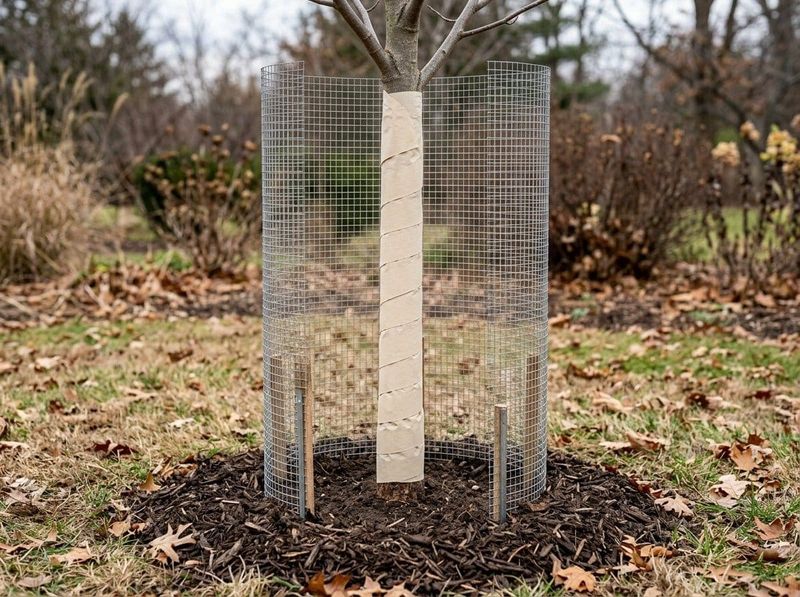
Timing is half the trick. Install guards in late fall, once trees drop their leaves but before soil freezes solid.
Across much of Minnesota, that window lands from October into early November. Northern gardeners may need to act a bit sooner, while southern yards often have a few extra weeks.
Frozen ground makes burying mesh nearly impossible, so do not put this off for a warm-weather weekend that never comes.
Rabbits feed on bark through winter, and voles get busy once snow builds up. A guard installed in October is ready long before the first big storm.
Spring matters just as much. Remove plastic wraps once the snow melts and the weather settles, often around April.
Fresh green growth gives critters better meals then, and the bark needs air and light to stay healthy.
Hardware cloth tubes can stay up longer if they sit loosely, but check them each spring. Loosen or widen them as trunks thicken.
I mark my calendar twice, once for putting guards on and once for checking them. It keeps the routine simple and easy to remember.
Rabbit Repellent Sprays Help But Need Backup
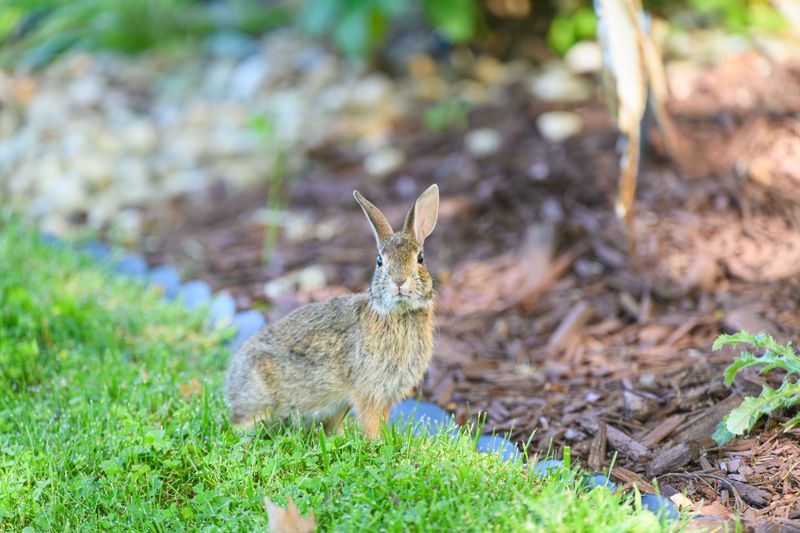
Sprays sound easy, and sometimes they help. Repellents work by taste or smell, making bark less appealing to rabbits and, to a lesser degree, rodents.
Common products use ingredients like putrescent egg, capsaicin, or thiram. Follow the label closely, especially around fruit trees you plan to harvest from.
Winter is tough on repellents. Rain, melting snow, and new growth reduce their effect, so reapplying is part of the deal.
Many products also do not work well in freezing temperatures, so apply them on a mild, dry day.
Hunger can win out too. During a long, harsh winter, a starving cottontail may chew treated bark anyway.
Extension specialists generally list repellents as a supplement, not a replacement for a physical barrier.
Voles are harder still. They feed under snow, out of reach of fresh sprays, which is why mesh beats bottles for trunk protection.
Where repellents shine is on shrubs and branches that guards cannot easily cover. I use them on my lower arborvitae branches and hedges, then let mesh handle the trunks.
Check Your Tree Guards After Every Big Snowstorm
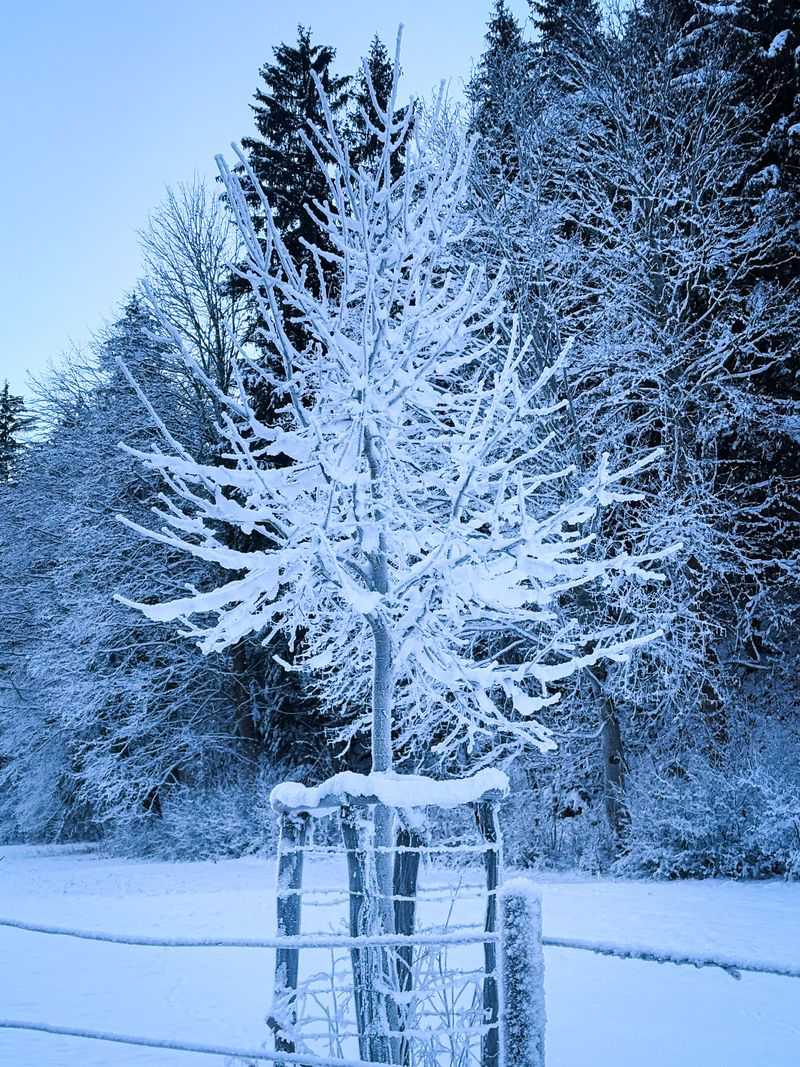
A guard is a set-and-check tool, not set-and-forget. A quick stroll after heavy snow keeps your hard work paying off.
Look at the snow level first. If drifts climb near the top of the mesh, rabbits can step right over it.
Brush or shovel snow back from small trees, and tamp down packed paths that give critters an easy ladder.
Next, peek for tracks and droppings. Rabbit pellets look like small round peas, and fresh cuts on twigs mean someone has been snacking. Spring brings the real report card. Once snow melts, inspect each trunk near the soil.
If you find partial gnawing, keep the tree watered and healthy through summer. A full ring around a young trunk often means replacing the tree, though valuable specimens sometimes get a bridge graft from an arborist.
Trees usually need protection for several winters, until bark thickens and grows rough. For many species, that takes about five years or more, while fruit trees may need guards longer.
Ten minutes in fall, a few quick checks in winter, and your young trees greet spring with their bark intact. That trade feels worth it.