Does A Banana Really Help Arizona Chili Peppers Produce More? Here Is What The Evidence Shows
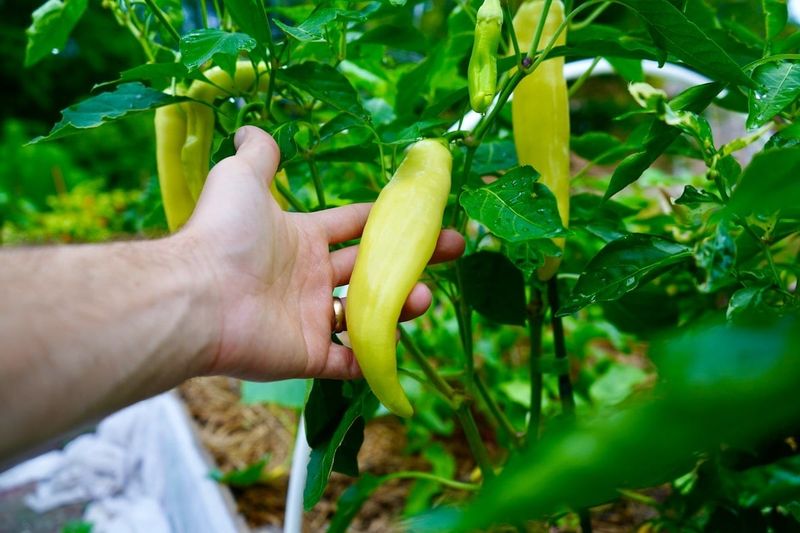
A video or post promising that one banana will give you endless chili peppers sounds almost too good to ignore, especially when Arizona summers push well past 110 degrees and your plants look like they have given up. The idea taps into something real: banana peels do contain nutrients, and gardeners have always looked for low-cost ways to feed their plants.
But the promise of endless harvests and heat resistance does not hold up when you look at what a banana can actually do for a pepper plant growing in Phoenix or Tucson. This article breaks down the claim, shows you the safer way to reuse that kitchen scrap, and covers the practices that genuinely support a chili pepper harvest in the low desert.
The banana harvest promise does not hold up
Social media makes it easy to believe that one banana buried near a chili pepper plant will trigger an explosion of fruit that lasts all summer. There is no reliable evidence that a single banana increases pepper yield, extends production indefinitely, makes plants drought-tolerant, or helps them overcome Arizona heat.
The useful question is not whether the hack works as advertised, but whether there is a safe way to reuse a banana and what actually supports a real harvest in the low desert.
A banana peel does contain nutrients, including potassium. The problem is that those nutrients are locked inside organic tissue, not dissolved and ready for a plant to absorb.
University of Maryland Extension guidance on banana peel water makes clear that there is no research showing that soaking a peel produces fertilizer-strength liquid, and that potassium from a kitchen scrap will not make a pepper plant drought-tolerant. A labeled fertilizer delivers a measured, predictable dose; a banana does not.
Low-desert Arizona adds another layer of difficulty. Chili peppers in Phoenix and Tucson face nighttime temperatures that can climb above 86 degrees Fahrenheit during peak summer, and
University of Arizona pepper production guidance confirms that fruit will not set when nights stay that hot.No amount of banana can change that biological reality. The rest of this article covers what you can do with the scrap and which practices genuinely move the needle for Arizona peppers.
Why banana peels are not a measured fertilizer
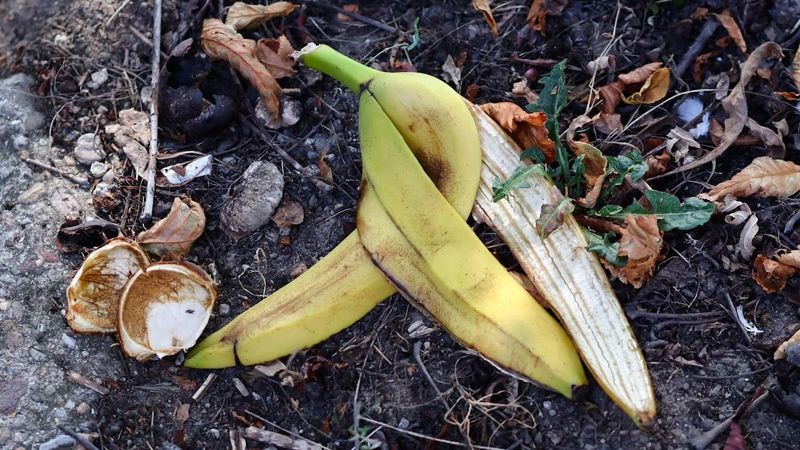
Potassium is a real and essential plant nutrient, and banana peels do contain it. That fact is where the fertilizer comparison begins and ends.
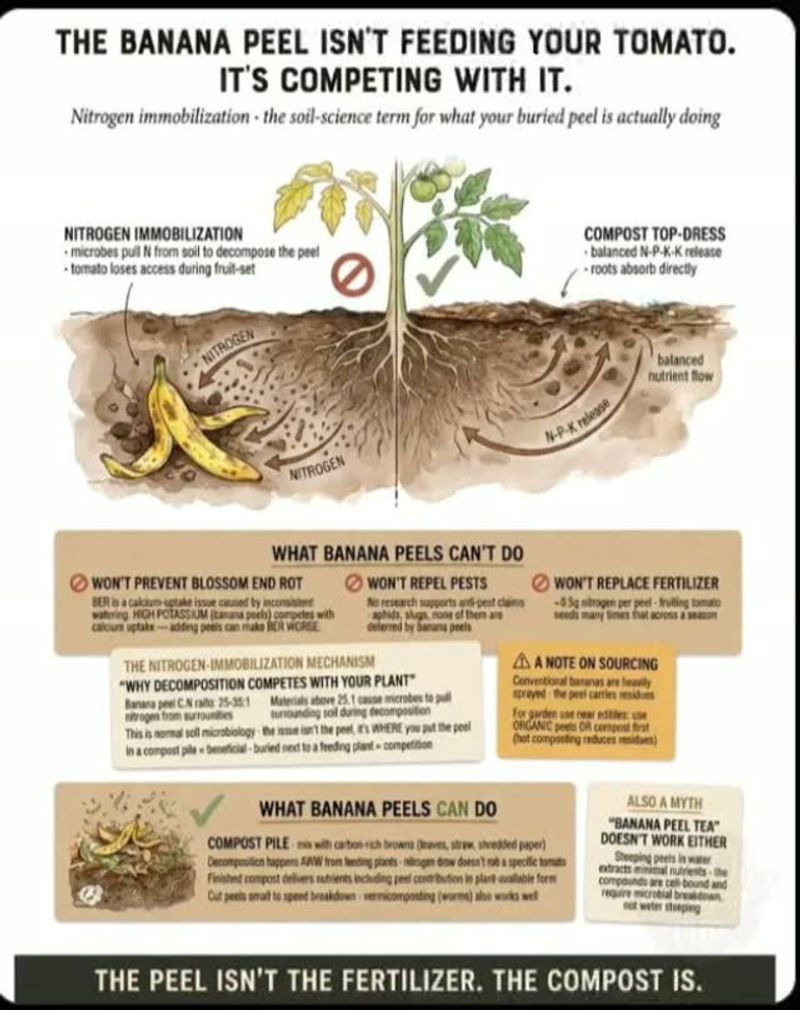
Nutrients inside a peel are bound up in organic tissue. Until microbes break down that tissue through decomposition, the potassium is not in a form that plant roots can pull from the soil.
Burying a fresh peel beside a pepper plant does not deliver a timed nutrient dose. The peel will eventually decompose, but how long that takes, how much potassium reaches the root zone, and how much is lost to leaching or microbial activity are all unknowns.
Soaking a peel in water, sometimes called banana water or banana tea, does not solve the measurement problem. Extension experts note there is no evidence that a passive soak produces fertilizer-strength liquid, and the nutrient concentration in homemade banana water is not measured or standardized in any way that makes it comparable to a labeled product.
Your Arizona Garden Changes Every Week. Your Plan Should Too.
Gardening in Arizona changes quickly throughout the season. Every Friday you’ll receive a simple weekly plan showing exactly what to plant, prune, fertilize, harvest, and protect so you never miss the right timing.
A whole banana buried near a plant is primarily decomposing food waste, not a controlled amendment. There is no established dosage, no verified concentration, and no research-backed application rate that supports treating a banana as a substitute for a fertilizer formulated for peppers.
The potassium-to-drought-tolerance leap is equally unsupported. Water management drives heat survival in Arizona gardens, not the presence of a kitchen scrap in the soil.
Treating a peel as a fertilizer shortcut can give gardeners false confidence while the real factors, irrigation, timing, and soil health, go unaddressed.
Compost the banana instead of burying it beside the plant
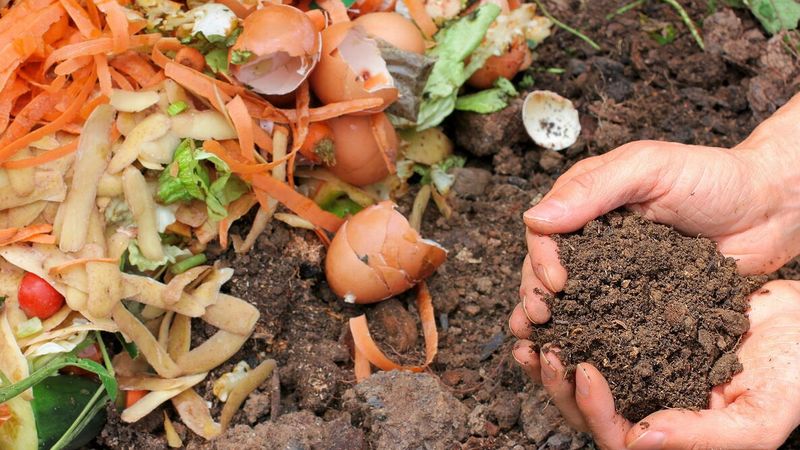
Reusing a banana peel is a reasonable goal, and composting is the right way to do it. Finished compost, made from a balanced mix of kitchen scraps and carbon-rich materials like dry leaves or cardboard, can improve soil structure and help desert soil hold moisture longer.
That is a genuine benefit for low-desert gardens where sandy or caliche-heavy ground drains fast and loses water quickly.
Dropping a fresh peel into the soil beside a living pepper plant skips the step that makes organic matter useful. Raw peel decomposes slowly in dry Arizona soil, and while it sits there, several problems can develop.
Decomposing fruit scraps attract rodents, insects, and other pests that you do not want near an edible garden. Mold can establish on wet organic matter.
Soil microbes that break down the peel also consume nitrogen from the surrounding soil, temporarily reducing the nitrogen available to your pepper plant. The smell can become noticeable, especially in warm weather.
Composting stabilizes organic material before it goes into the garden bed. According to USDA composting guidance, a well-managed pile breaks down kitchen scraps into a stable amendment that supports soil biology without the pest, odor, or nitrogen-competition risks of fresh burial.
For edible gardens, keeping the pile plant-based and properly managed reduces the risk of contamination that can come from animal-derived materials. Finished compost is not a precisely formulated fertilizer, but it is a practical, low-cost way to build better soil over time.
Planting time determines whether Arizona peppers can set fruit
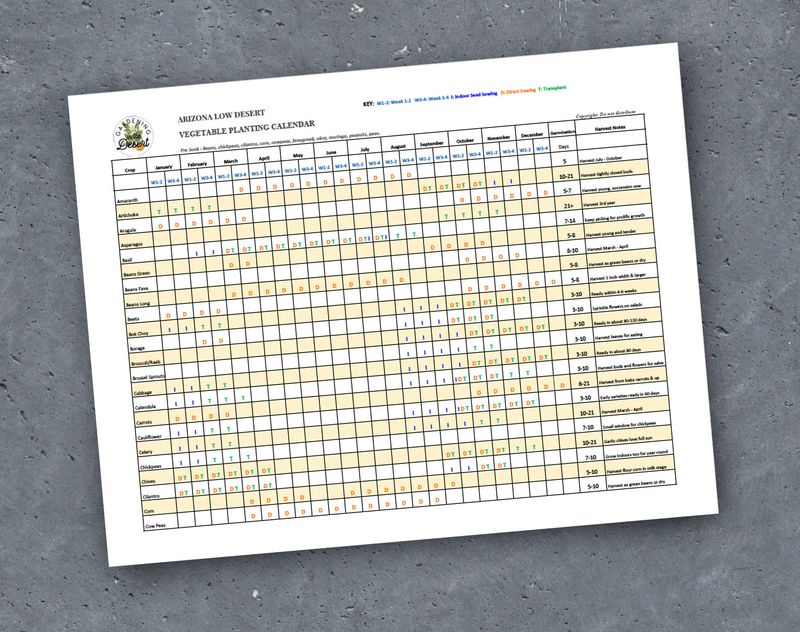
Forget the banana for a moment and focus on the single factor that shapes an Arizona pepper harvest more than anything else: when you plant. Low-desert gardeners in Phoenix and Tucson follow a very different calendar than gardeners in cooler states, and using generic national advice often means planting at the wrong time entirely.
Chili peppers set fruit most reliably when daytime temperatures sit around 65 to 80 degrees Fahrenheit and nighttime temperatures stay above 55 degrees. Once nighttime lows climb above 86 degrees, fruit set stops, regardless of how healthy the plant looks or how much you water it.
A pepper plant can survive triple-digit days while producing almost nothing, because survival and production are not the same thing. Arizona Cooperative Extension pepper guidance confirms that the strongest harvests in the low desert often arrive in late summer and fall, after peak heat breaks, rather than during the hottest stretch of July and August.
Choosing varieties suited to your specific location also matters. Phoenix, Tucson, higher-elevation communities, and northern Arizona all have different frost dates, heat windows, and planting ranges.
The Maricopa County planting calendar is a practical starting point for the Phoenix metro, and similar local resources exist for Pima County. Varieties selected for heat tolerance in the low desert give you a realistic chance at fruit during the shoulder seasons.
A banana cannot substitute for that foundational timing decision.
Consistent deep irrigation does more than banana potassium
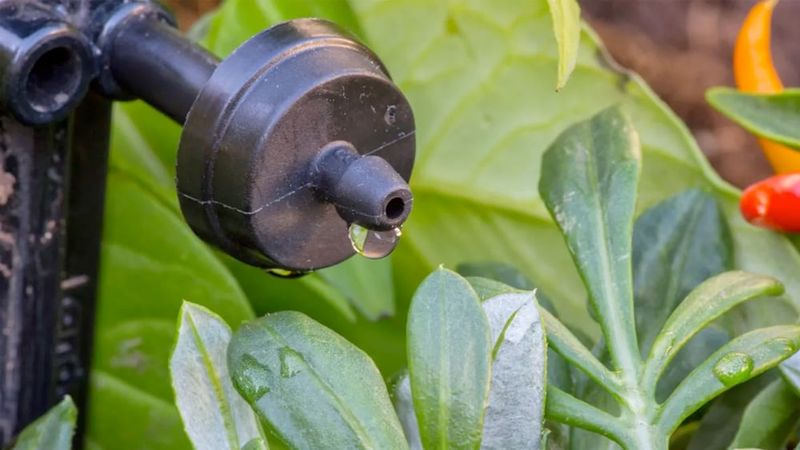
Water management is the most controllable variable in a low-desert pepper garden, and getting it right matters far more than any kitchen-scrap amendment. Chili plants need consistent, even moisture at the root zone.
Letting the soil dry out completely between waterings stresses the plant and can cause blossom drop, while overwatering pushes oxygen out of the soil and damages roots just as effectively as drought.
Deep watering means letting water soak well below the surface so roots can follow moisture downward rather than staying shallow and vulnerable to surface heat. Shallow, frequent watering trains roots to stay near the top of the soil where temperatures are most extreme.
Arizona Extension guidance on drought and extreme heat identifies even soil moisture as critical for helping plants manage heat stress, and notes that both drought stress and waterlogging cause damage in different but equally serious ways.
Drip irrigation or another system that delivers water directly to the root zone reduces evaporation, which matters enormously in Phoenix and Tucson summers. Check emitters regularly during heat waves because a single clogged dripper can leave one side of a plant’s root zone completely dry while the other side floods.
Even a well-designed system needs inspection when temperatures spike. Better irrigation will not force fruit set when nighttime temperatures are above 86 degrees, but it keeps the plant alive, healthy, and ready to produce when temperatures drop into the productive range again.
Use shade and mulch to moderate the root zone
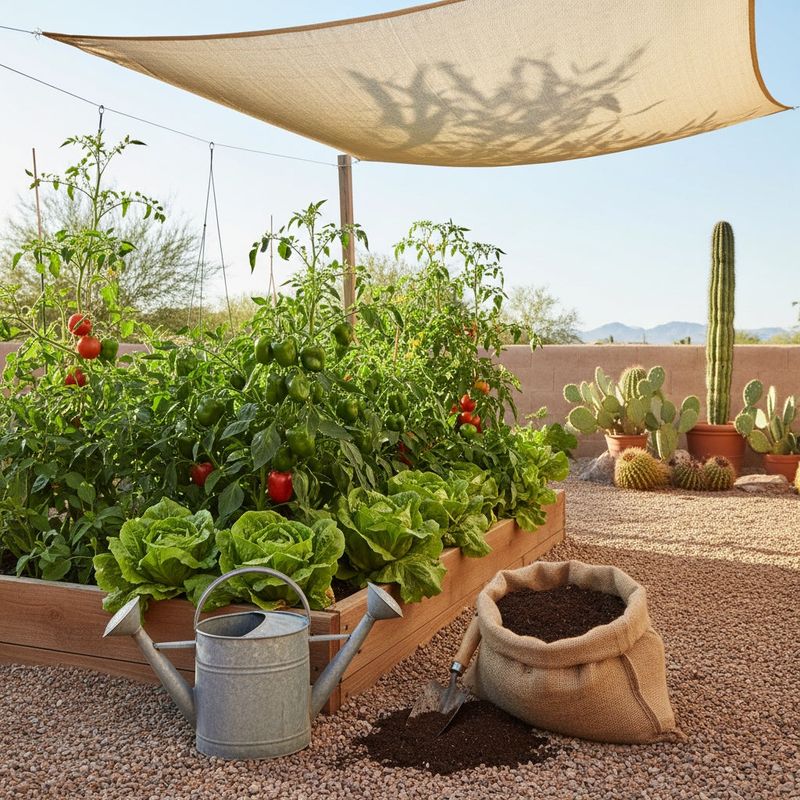
Physical protection from afternoon sun can reduce the heat load on pepper plants significantly, and it costs far less than replacing plants that cook in direct exposure. A shade cloth rated at 30 to 50 percent placed over pepper plants during the hottest afternoon hours, typically from about 1 p.m. to 5 p.m., can lower leaf temperature and reduce the water demand on the plant at the same time.
This does not guarantee fruit set during a brutal heat wave, but it keeps plants from declining to a point where recovery takes weeks.
Mulch serves a complementary role by slowing evaporation from the soil surface and buffering root-zone temperature. A two to three inch layer of straw, wood chips, or shredded material laid around the base of the plant holds moisture in the soil longer after each irrigation.
According to Arizona Extension pepper care guidance, mulching supports water retention and helps moderate soil conditions around pepper roots during warm months.
Two practical cautions apply. Keep mulch pulled back an inch or two from the stem itself, because contact with the stem can trap moisture and invite rot or fungal problems.
Also, very thick mulch applied early in spring can keep soil cooler than young pepper roots prefer, slowing establishment. Apply mulch after the soil has warmed and the plant is actively growing.
Shade and mulch work together with consistent irrigation, and together they address the real sources of summer stress rather than masking them with an unverified kitchen remedy.
Test Arizona soil before adding nutrients
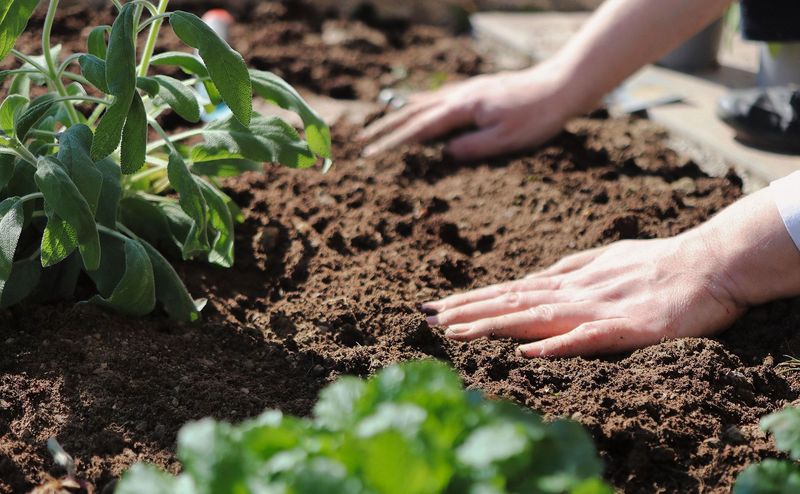
One reason the banana fertilizer idea spreads so easily is that gardeners often notice their pepper plants looking stressed and reach for the nearest available fix. A struggling plant might need water, shade, a different planting time, or a specific nutrient, but there is no way to know which one without looking more closely at the soil.
Adding an unknown quantity of nutrients from a kitchen scrap to soil that may already be unbalanced is not a diagnosis; it is a guess.
Arizona soils, particularly in the Phoenix and Tucson areas, tend to be alkaline and can accumulate salts over time, especially where rainfall is limited and irrigation water carries dissolved minerals. Arizona Extension soil guidance notes that excess fertilizer or organic amendments can worsen salt accumulation and injure plant roots.
Repeatedly adding banana peels, compost, or any other amendment without knowing the starting nutrient levels risks making an existing imbalance worse rather than correcting it.
A basic soil test evaluates pH, electrical conductivity, and nutrient levels. Arizona Cooperative Extension offers soil testing resources that can identify what your garden actually needs before you add anything to it.
If a test reveals a real potassium deficiency, a labeled fertilizer with a known concentration is the appropriate response, not banana water with an unknown nutrient load. Matching fertilizer type and rate to your specific soil and crop conditions protects both the plant and the long-term health of your garden bed.
The banana may feel like a free fix, but an untested amendment in Arizona soil can create problems that cost more to correct than a soil test would have cost upfront.
Treat pepper symptoms by their causes, not with a banana
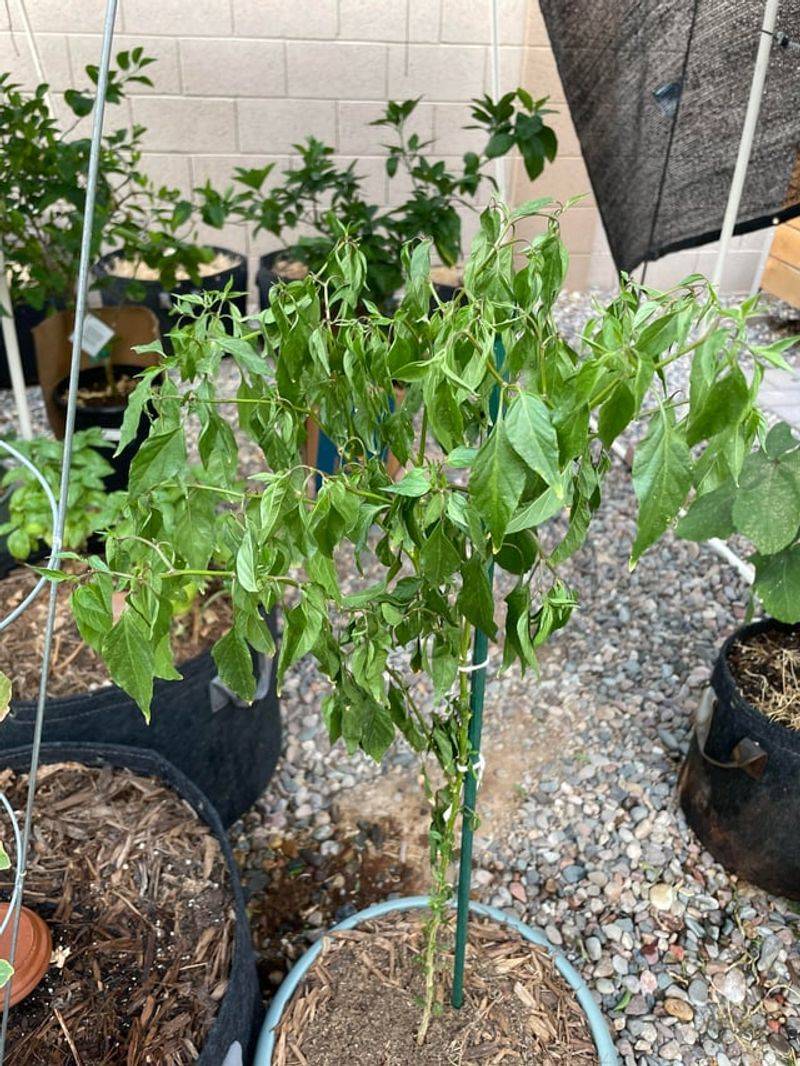
When pepper plants show problems, the temptation is to add something, and a banana is easy to grab. But matching the fix to the actual cause is what separates a recovery from a wasted effort.
Blossom drop, for example, is most often triggered by temperatures outside the fruit-set range, by water stress, or by broader plant decline. Adding a banana peel to the soil does not lower nighttime temperatures or correct the irrigation schedule that caused the problem.
Blossom-end rot is a different issue that sometimes gets lumped into the same fix-it basket. Arizona Extension monthly gardening guidance identifies blossom-end rot primarily as a calcium-uptake problem connected to inconsistent watering, not a nutrient deficiency that a banana could address.
Wilting, yellowing leaves, and stunted growth each point to different causes, including heat, root damage from overwatering, soil salinity, or pH that locks out nutrients. A banana cannot sort through those possibilities.
Reading plant stress correctly means looking at the whole picture: when the symptoms appeared, what the irrigation schedule has been, what the overnight temperatures have been, and what the soil conditions are. Compost the banana if you want to reduce food waste and build soil over time, but rely on local planting timing, consistent deep irrigation, afternoon shade, suitable varieties, and a tested soil amendment plan for the harvest that Arizona conditions realistically allow.
A good pepper season here is earned through the right practices at the right time, not through a single kitchen shortcut.