What Those Small Holes Appearing Across Your Texas Lawn Could Actually Mean
Small holes in a Texas lawn send many homeowners straight to the worst explanation available.
Snakes. Rats. Something tunneling under the roots and destroying everything from below. The pest control number gets dialed before anyone has looked closely at a single hole.
Texas yards produce holes and mounds from a surprisingly long list of causes, and most of them are either harmless, temporary, or actively useful.
Fire ants, crawfish, earthworms, gophers, moles, June beetles, ground-nesting bees, ground-nesting wasps, and mole crickets all leave evidence in turf, and the evidence looks different enough to tell them apart once you know what to look for.
Hole shape matters. The pattern of scattered soil matters. Time of year matters. Whether the opening is a clean vertical shaft or a torn-up divot changes the diagnosis entirely.
Most of the creatures making these holes need nothing from you. A few do. Knowing which is which keeps money in the wallet and helpful wildlife in the yard where it belongs.
1. Cicada Hawk Dig Solitary Burrows
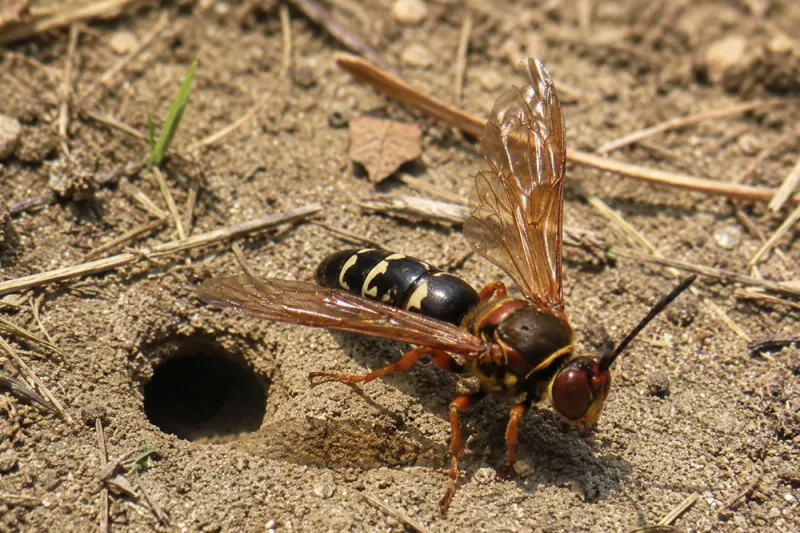
A half-inch opening with a curved fan of loose soil beside it is one of the most recognizable hole signatures in a Texas yard, and the insect behind it is one of the most misidentified.
Cicada hawks are among the largest wasps in the state, measuring up to two inches long with rusty wings and bold yellow markings.
They look genuinely alarming on first encounter. They are, in practice, extraordinarily indifferent to people.
Females dig vertical shafts in sandy or well-drained soil, favoring sidewalk edges, bare slopes, and thin turf where the ground is dry and easy to excavate. The displaced dirt gets pushed out into a distinctive U-shaped mound at the entrance.
Underground, each female stocks individual cells with a paralyzed cicada, lays a single egg on it, and seals the chamber. That is the entire operation. She is running a one-insect household, not a colony.
There is no hive to defend, no swarm response, no shared aggression. Males patrol and occasionally dive-bomb curious passersby, but males cannot sting at all, which makes those aerial displays considerably more theatrical than dangerous.
Treatment is rarely warranted. Cicada hawks keep cicada populations down and their tunnels aerate compacted soil, which most Texas lawns benefit from considerably.
The exception is a nest in a location where someone with a sting allergy walks barefoot every day, or directly under a playground structure. Those situations are worth addressing.
For everyone else, the most effective long-term response is thickening the turf. Cicada hawks specifically target bare, dry, sun-baked ground.
Dense, well-watered grass simply is not appealing real estate for a wasp that needs to dig, and the problem typically resolves itself when the lawn stops offering ideal conditions.
2. Ground Nesting Bees Cluster In Bare Patches
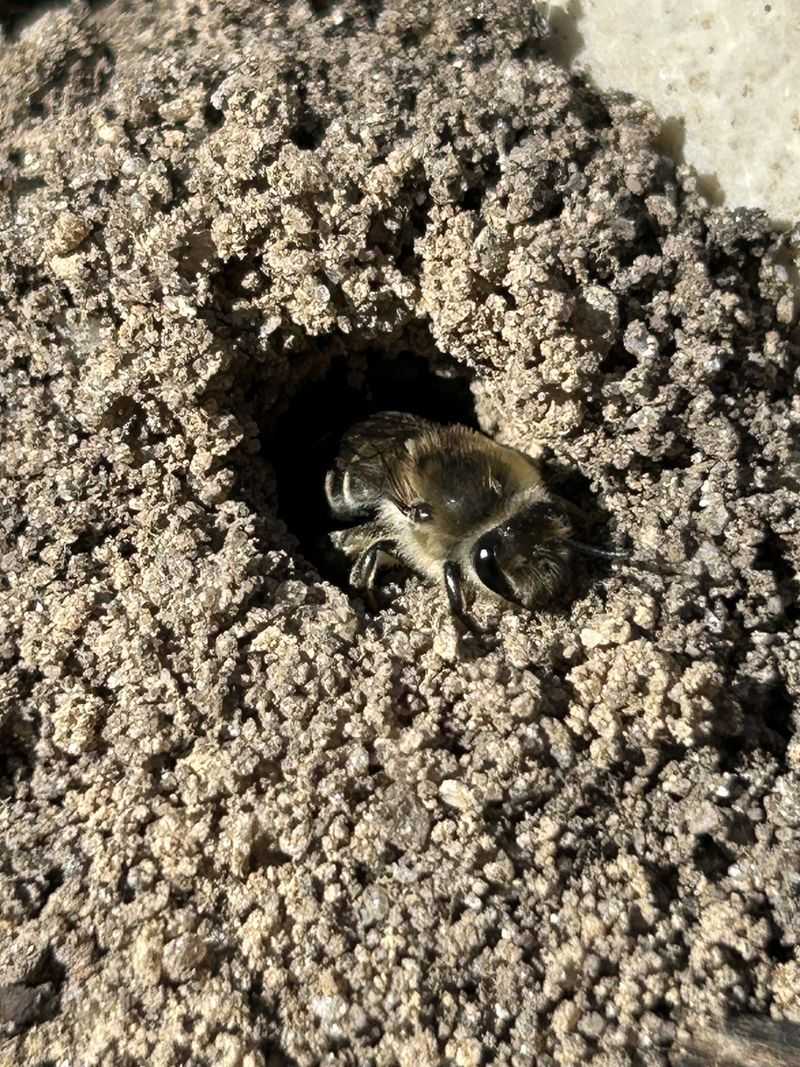
Spring brings these out, and they arrive in numbers. Dozens of pencil-thin holes appear in a bare patch, each with a faint ring of granular soil. Small fuzzy bees zip in and out on warm mornings, then vanish by afternoon.
Your Texas Garden Changes Every Week. Your Plan Should Too.
Gardening in Texas changes quickly throughout the season. Every Friday you’ll receive a simple weekly plan showing exactly what to plant, prune, fertilize, harvest, and protect so you never miss the right timing.
Mining bees, digger bees, and sweat bees all nest this way. Despite clustering near one another, they’re solitary insects. Every female builds and stocks her own tunnel, with no shared hive and no guards standing watch.
That setup makes defensive behavior nearly nonexistent. Most species can’t sting hard enough to matter, and plenty will land on a hand without any reaction at all.
Kids can play nearby with little concern, though anyone sensitive should keep some distance.
Their value in the yard is real. Native ground nesters pollinate blackberries, squash, peppers, wildflowers, and countless Texas natives more efficiently than honey bees manage on certain crops. Spraying them out is a genuine loss for a garden.
Activity typically wraps up within four to six weeks. Holes fill in, grass grows over, and the bees stay dormant underground until next season rolls around.
If the same bare spot keeps drawing them back, address the cause rather than the bees themselves. Compaction, deep shade, or spotty irrigation left that soil exposed in the first place. Fix the turf, and the nesting sites take care of themselves.
3. Earthworms Leave Tiny Castings Behind
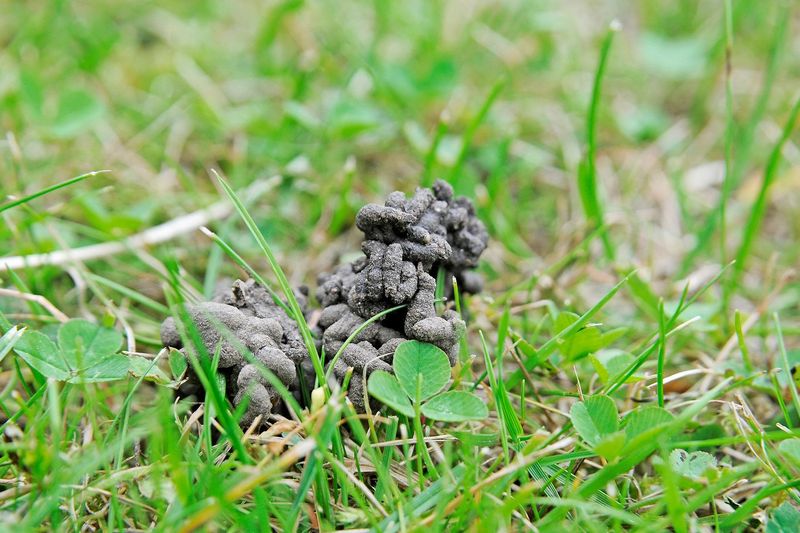
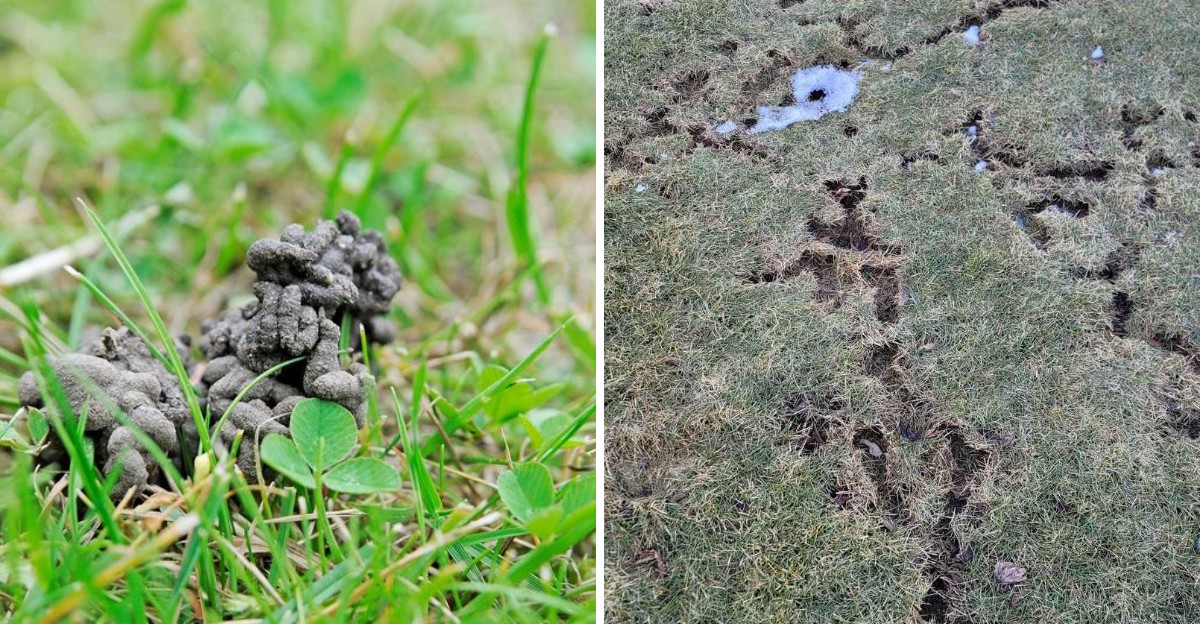
Rain changes everything overnight. Walk out the morning after a good soaking and the lawn might be dotted with small crumbly piles of dark soil, each sitting beside a hole barely wider than a shoelace.
Squishy, granular, almost like coffee grounds scattered across the grass.
Those piles are castings, the processed soil earthworms push up as they tunnel. Texas A&M AgriLife lists earthworms among the most common and most misdiagnosed causes of lawn mounds.
Homeowners routinely mistake the mess for an insect problem that isn’t actually there.
Nothing about them harms the grass. Worms shred organic matter, move nutrients downward, and open channels that let water and air reach the roots. Their tunnels reduce compaction better than most mechanical aeration passes ever could.
The bumpy texture is really the only complaint, and it shows up mostly on closely mowed lawns or putting-green-style turf.
A light drag mat or the back of a rake scatters castings flat once the surface dries out. Mowing usually breaks them down too, without any extra effort.
Chemical control isn’t recommended, and honestly it would work against you.
A yard with a healthy worm population already has decent moisture, organic matter, and biological activity, exactly the conditions expensive soil amendments are sold to create in the first place.
4. Crawfish Build Chimneys In Soggy Spots
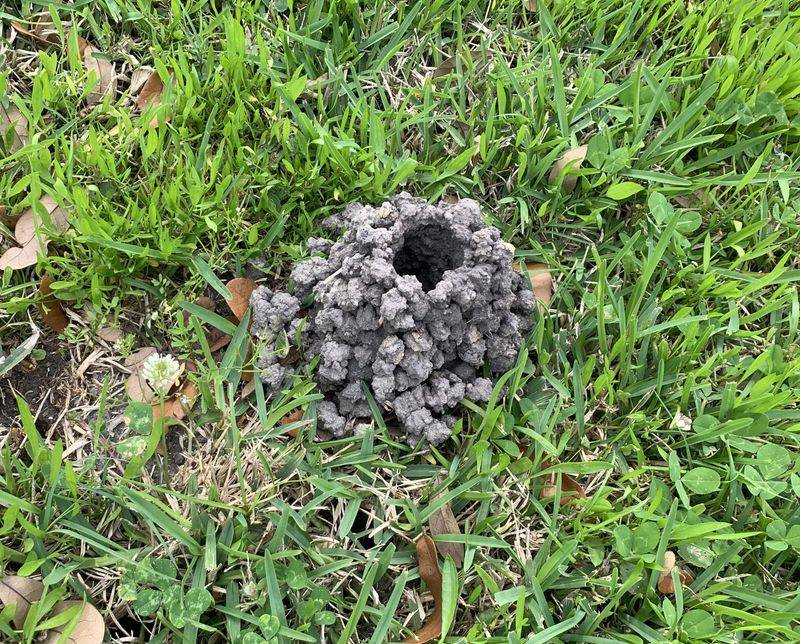
Odd little mud towers, stacked like clay pellets and roughly two inches across, are unmistakable once you’ve spotted one.
They rise an inch or more above the turf and always sit in the same kind of place: the low, wet corner of the yard nobody’s fixed yet.
Crawfish are behind them. Sometimes called crawdads or mudbugs, these crustaceans burrow down to reach the water table, packing excavated mud into a chimney around the opening.
Gulf Coast and East Texas yards see them most often, though any consistently saturated soil qualifies.
Here’s the useful part of the diagnosis. Their presence is a drainage report, not a pest report. Crawfish can’t survive where soil dries out, so a chimney marks a spot holding water far longer than grass roots actually prefer.
Treating the animal accomplishes little. New crawfish move in as long as conditions stay swampy, and pesticide options for them are limited and mostly ineffective in turf anyway. Extension guidance points toward fixing the water problem instead.
Regrade shallow depressions where they show up. Check for a broken irrigation line, a downspout dumping in one spot, or a hardpan layer blocking percolation underneath. French drains and dry creek beds work well on stubborn areas.
Knock the chimneys down with a shovel if the look bothers you. Just know they’ll rebuild until the ground finally drains the way it should.
5. Cicada Emergence Holes Appear Once A Season
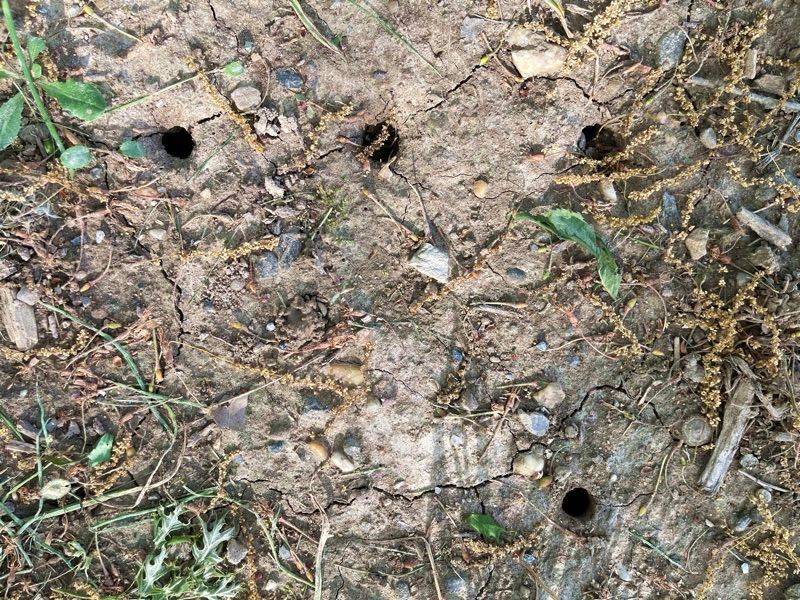
Late spring brings the buzzing chorus down from the oaks, and it also brings holes. Look at the soil under mature trees and you might find neat round openings about the width of a pencil, clean-edged, with almost no dirt pushed out around them.
Cicada nymphs made those on their way up. After years spent underground feeding on tree roots, they tunnel to the surface, climb the nearest trunk or fence post, and split out of their shells as adults ready to sing.
Papery tan husks stuck to bark are the confirming clue. Find those, and the mystery solves itself without any further digging around.
Timing is the reassuring part. Emergence happens in a short window, usually a few weeks, and then it’s over. The insects that left those holes are up in the canopy now, not down in the soil causing more trouble.
Nothing here needs treatment. Cicadas don’t harm turfgrass, and their root feeding as nymphs rarely bothers established trees. Young or newly planted trees can pick up minor twig damage from egg-laying slits, easily pruned away afterward.
The holes close up naturally as soil settles and rain compacts the surface again. A quick pass with a rake speeds the process along nicely.
Neighborhood dogs and grackles will happily handle cleanup on the adults. Consider it free protein delivery, courtesy of the Texas soil underfoot.
6. Armadillos And Skunks Dig For Grubs
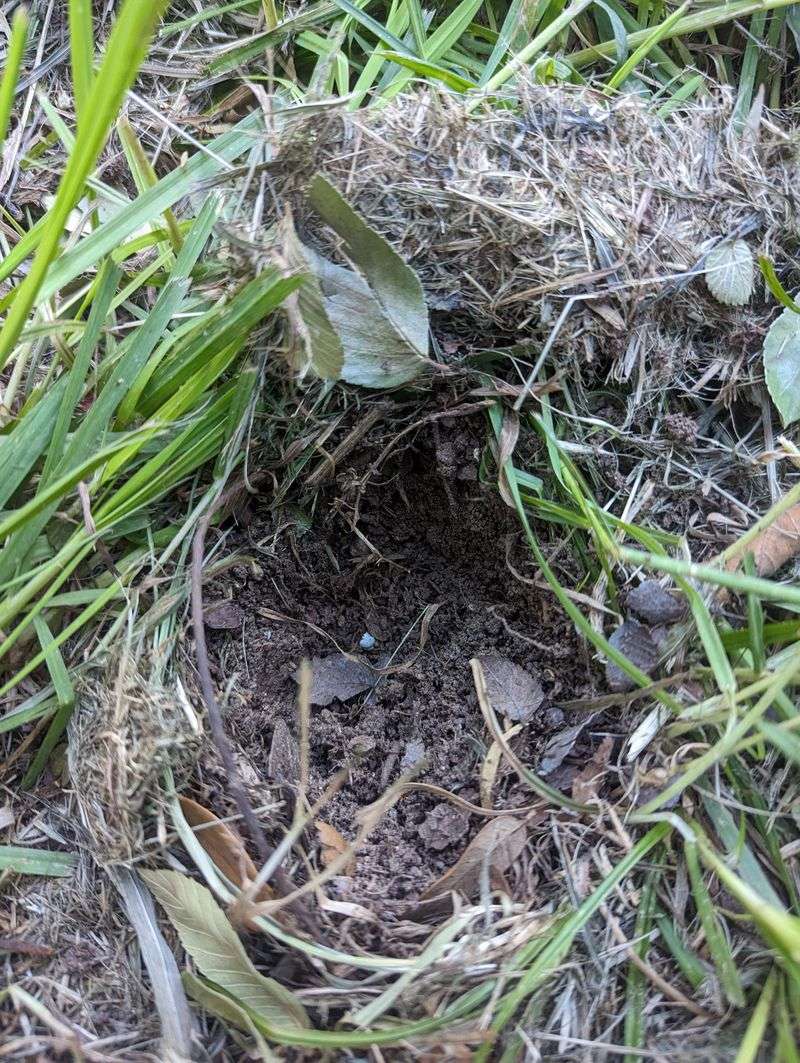
Torn turf tells a completely different story than a tidy round shaft.
Foraging animals leave shallow cone-shaped divots, three to six inches wide, with grass flipped up and roots exposed. Ragged, messy, and often scattered across a whole section overnight.
Nine-banded armadillos are the usual suspects across Texas, working by scent with their snouts. Skunks contribute too, punching smaller, neater plugs into the sod.
Both are hunting the same buffet: white grubs, earthworms, and other soft-bodied insects living in the top few inches.
Note the key distinction from insect holes. Insects excavate downward, leaving a defined vertical opening behind.
Animals excavate sideways and upward, tearing the surface apart instead. Damage shows up in clusters wherever prey is concentrated.
Heavy, repeated digging often signals a grub population worth checking. Peel back a square foot of sod and look.
Finding more than five or six white C-shaped larvae per square foot suggests treatment might be justified, and late summer is the window when young grubs are most vulnerable to it.
Low grub counts mean the animal is just browsing through. Reduce the appeal instead of reaching for chemicals right away. Water deeply but less often, pick up fallen fruit and pet food, and secure any open compost.
Armadillos wander widely and rarely stay put for long. Most yards see a few nights of activity, then nothing. Tamp the divots back down, water them in, and the grass usually knits itself back together on its own.
7. Voles Tunnel Just Below The Surface
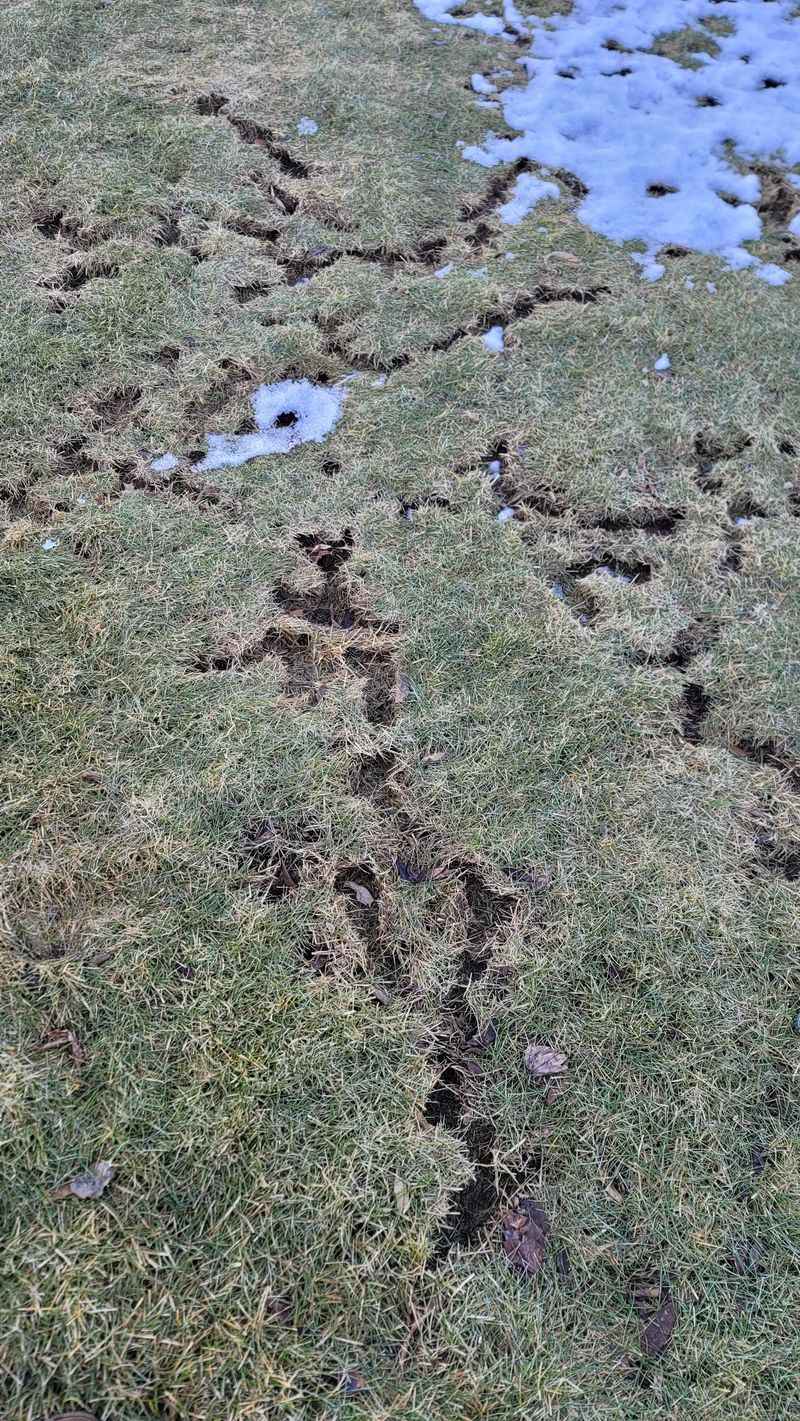
Winding trails of flattened, matted grass crisscrossing the lawn are the giveaway here. Follow one and it usually leads to a small hole about the width of a quarter, clean-edged, with no mound of soil sitting beside it.
Voles, sometimes called meadow mice, built that network. Stocky brown rodents with short tails and tiny ears, they feed on grass stems, roots, bulbs, and tender bark rather than insects or grubs.
Their runways stay right at the soil surface, hidden under thatch, tall grass, groundcover, or heavy mulch. Damage often becomes obvious after a winter of protective cover, when spring finally reveals a maze nobody noticed forming underneath.
Bark chewing at the base of young shrubs and fruit trees is the costlier concern here. Girdled trunks struggle badly, so check the crown of any plant sitting near an active runway.
Habitat changes work better than anything else available.
Mow regularly, pull mulch back three to four inches from trunks, thin dense groundcover, and clear brush piles along fences. Voles avoid open ground where hawks and owls can spot them easily.
Snap traps set flat in the runway, baited with peanut butter or apple, handle small populations effectively enough. Place them under an overturned bucket or bin to protect pets and songbirds from getting into them too.
Don’t confuse vole holes with pocket gopher work nearby. Gophers push up fan-shaped mounds of loose soil and plug their openings completely. Voles leave theirs wide open instead.
8. A Few Simple Clues Tell Them Apart
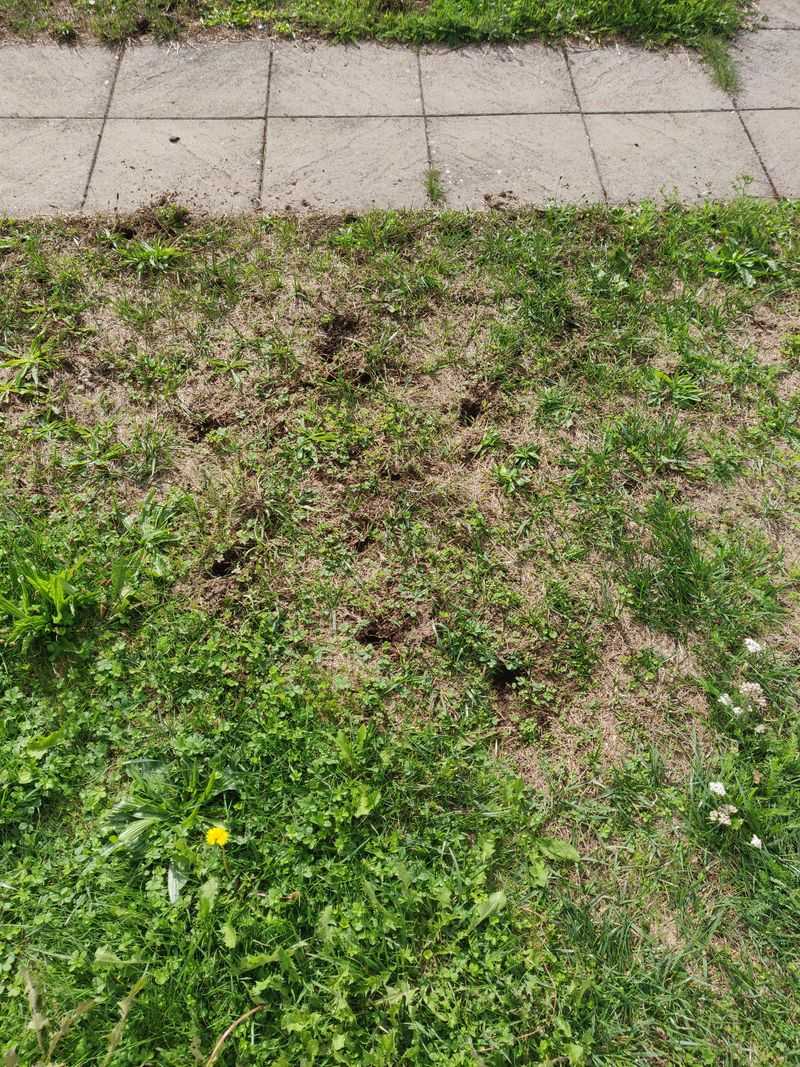
Grab a flashlight, kneel down, and run through four quick questions. Identification gets easy fast once you stop guessing and start actually observing what’s in front of you.
Start with shape. Clean, round, vertical shafts point to insects. Ragged, cone-shaped divots with flipped sod point to a foraging animal. Stacked mud pellets point to crawfish and standing water somewhere nearby.
Check the soil next. A fan or U-shaped mound to one side points to a digging wasp or bee. A fully plugged fan-shaped mound suggests pocket gophers instead.
No soil at all, just an open hole along a matted trail, points to voles. Loose, pelleted crumbs on the surface mean earthworm castings, nothing more.
Season narrows things further still. Ground nesting bees peak in early spring. Cicada hawks work through July and August.
Cicada emergence holes appear in one short burst and never repeat that year. Armadillo digging spikes right after rain softens the ground up.
Finally, watch for traffic around the hole itself. Sit at a distance for ten minutes on a warm afternoon. Insects flying in and out settle the question immediately, and empty holes with no activity usually mean whatever made them has already moved on.
One more principle worth keeping in mind: most of these causes need no treatment at all. Bees pollinate. Wasps hunt cicadas. Worms build soil. Crawfish report a drainage flaw worth fixing.
Reaching for a spray before identifying the culprit costs money and often removes something genuinely beneficial from the yard.