Arizona Gardeners Should Watch For These Salt Buildup Signs Before Plants Stall
Arizona water leaves clues long before plants slow down.
A white crust on soil. Brown tips on leaves. A shrub that looks thirsty right after irrigation. None of it feels fair, because the hose runs and the garden still acts like it wants a lawyer.
Desert gardens come with a hidden passenger: dissolved salts. Each water cycle can leave a little behind, and summer heat makes that buildup more obvious.
The tricky part is how easily the symptoms pretend to be heat stress, dry soil, or a fertilizer problem.
Add more food, add more quick water, and the root zone may get even crankier. So how can you tell when salt is the real troublemaker under the surface?
The answer sits in small signs many gardeners walk past at first.
Once you learn to read them, your next move gets clearer, calmer, and much better for the plants that want to keep their cool.
That matters because one wrong fix can turn quiet buildup into a season-long garden headache fast.
1. White Crust Forms On Soil
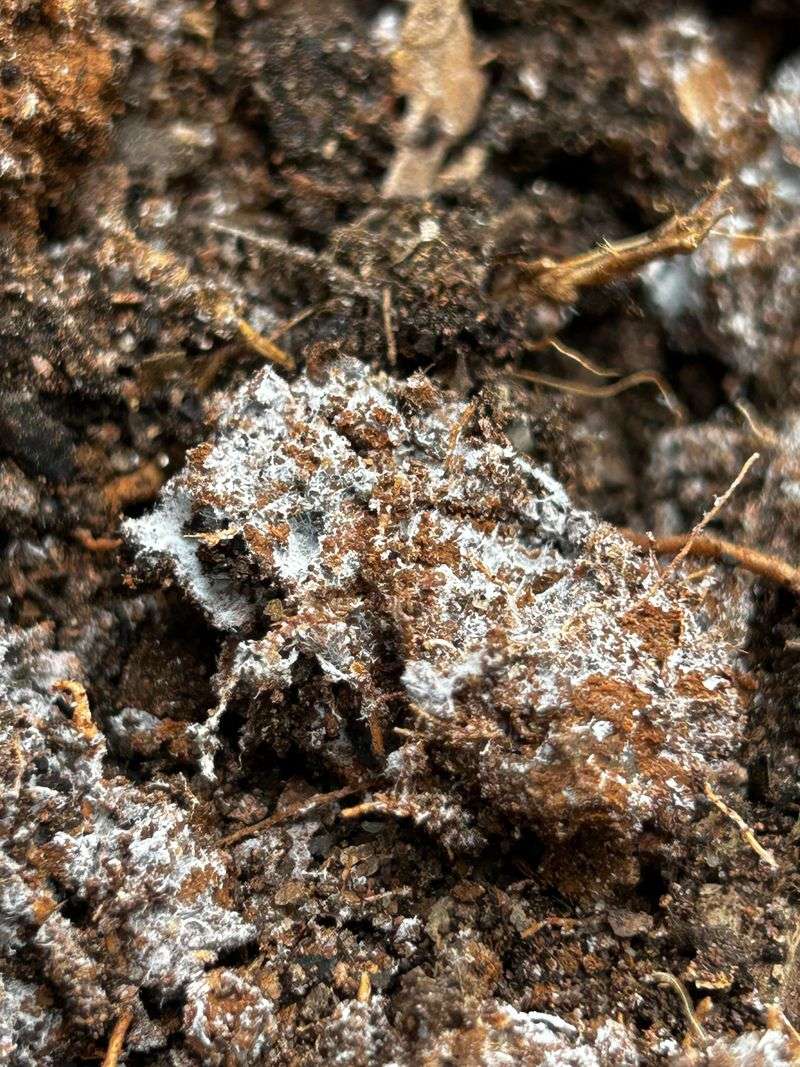
A chalky white layer sitting on top of your garden soil is one of the most obvious clues that salts are accumulating where your plants live.
That pale, powdery crust is made up of minerals left behind when irrigation water evaporates in the desert heat. Arizona tap water and well water both carry dissolved salts, and every watering cycle deposits a little more.
You might notice the crust forming around drip emitters, along the edges of raised beds, or across the top of mulched areas.
In pots, it often creeps up the inside walls and coats the soil surface like a thin layer of dried paint. The color ranges from bright white to a faint yellowish tint depending on which minerals are most concentrated.
The crust itself is not just a cosmetic problem.
It can actually seal the soil surface and slow down how quickly water soaks in during your next irrigation cycle. When water cannot penetrate well, it runs off instead of reaching roots.
University of Arizona Extension notes that soil crusting from salts reduces infiltration and can stress plants even when you are watering on schedule.
Breaking up the crust gently and improving drainage are good first steps before trying any leaching strategy to move those salts deeper into the soil profile.
2. Leaf Tips Turn Brown First
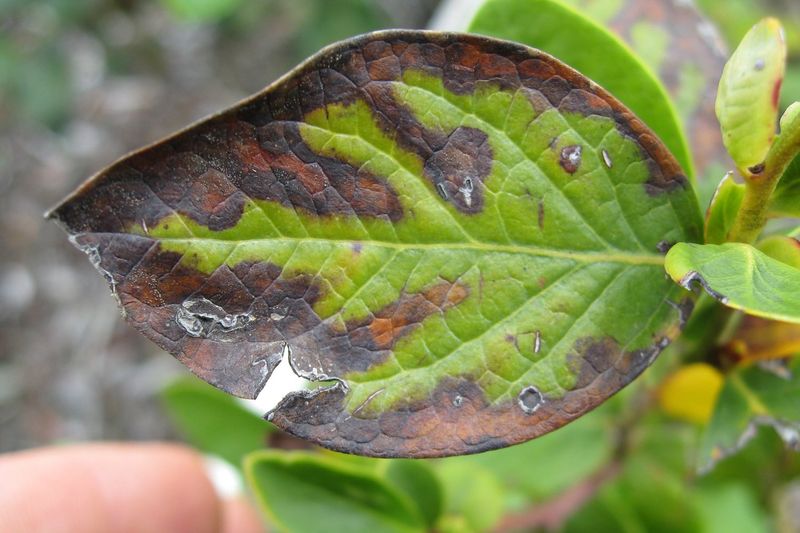
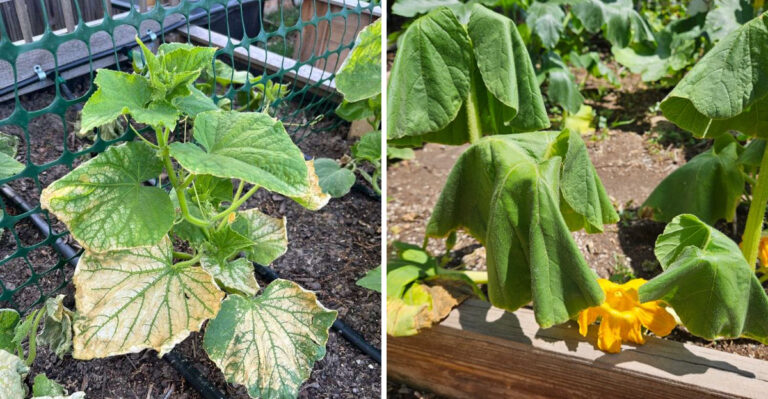
Brown leaf tips showing up on otherwise green plants are a classic early signal of salt stress.
Roots absorb water along with whatever is dissolved in it, and when salt concentrations get too high, the plant cannot move water efficiently from roots to leaf tips.
The tips are the farthest point from the water supply, so they feel the shortage first.
Gardeners often mistake this symptom for underwatering and respond by adding more water.
That can actually make the problem worse if the extra irrigation keeps depositing more salts without flushing them out. It is worth checking your soil before assuming the plant just needs more to drink.
Your Arizona Garden Changes Every Week. Your Plan Should Too.
Gardening in Arizona changes quickly throughout the season. Every Friday you’ll receive a simple weekly plan showing exactly what to plant, prune, fertilize, harvest, and protect so you never miss the right timing.
Salt-stressed leaf tips tend to look dry and papery rather than yellowed or mushy, which helps separate this symptom from overwatering or fungal issues.
The browning usually starts at the very tip and works its way back along the leaf edges in a clean, defined line.
Succulents, citrus, and vegetable crops are especially sensitive to this kind of damage in Arizona summers.
If you see tip burn on multiple plants across your yard, salinity is a strong candidate worth investigating. A simple soil test can confirm whether salt levels are high enough to explain the symptoms.
3. Edges Look Scorched In Summer
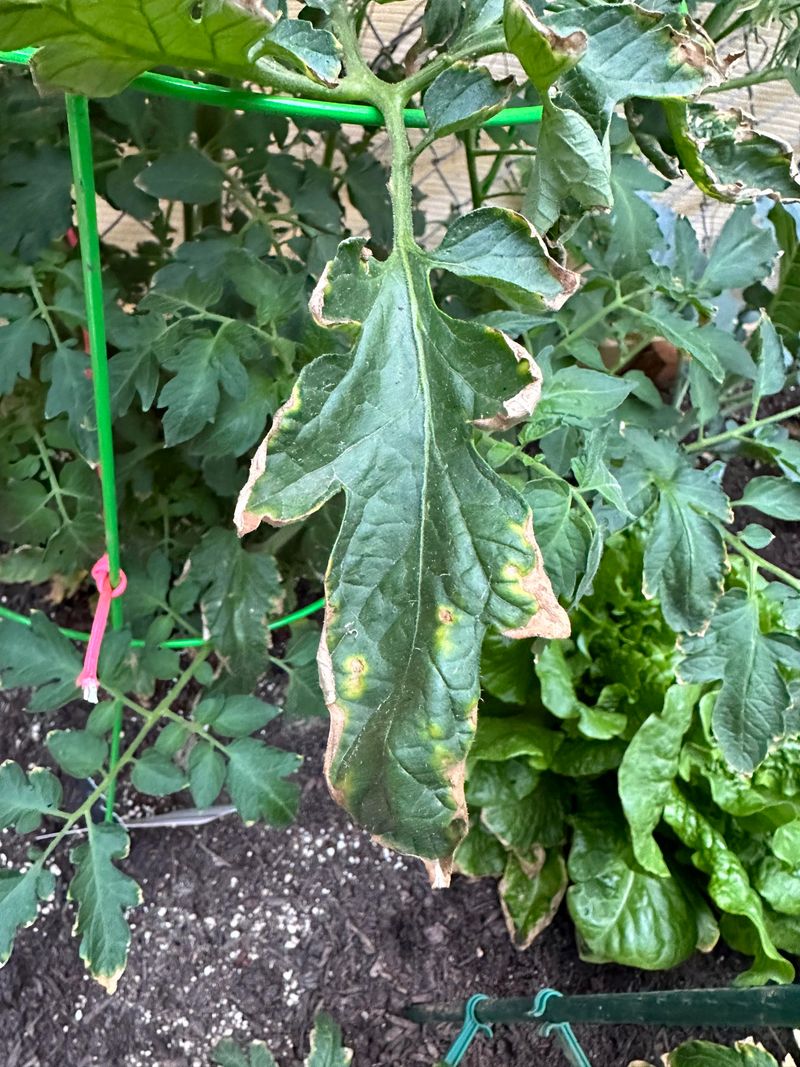
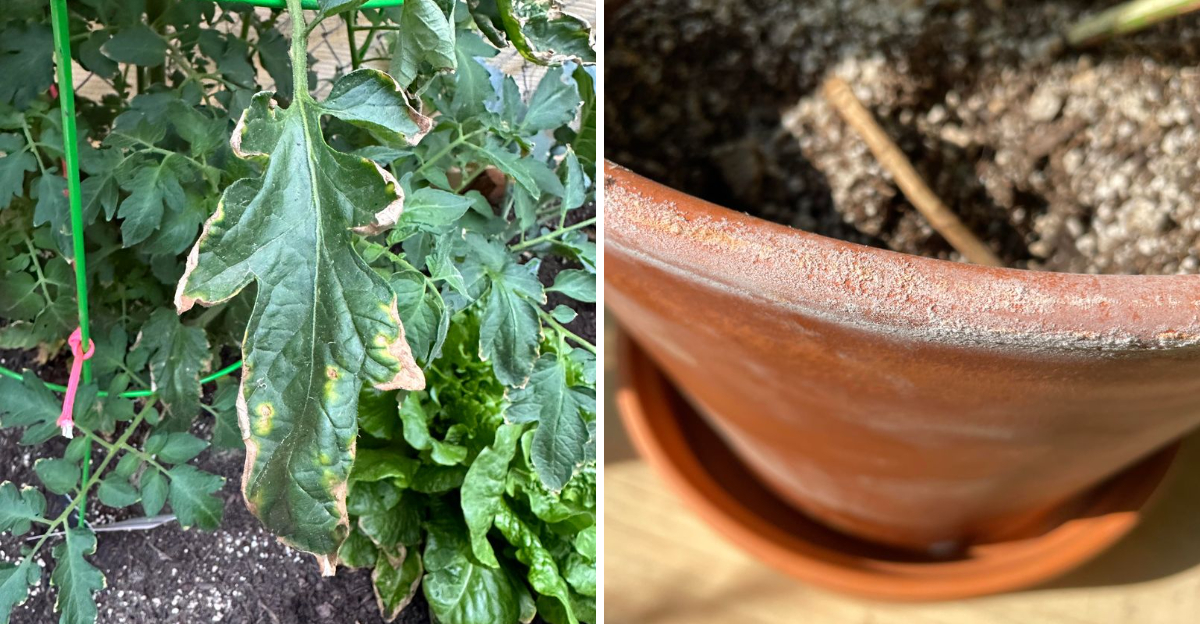
A tomato plant in July with leaves that look like someone held a lighter to the edges is a familiar sight in Arizona gardens.
That scorched look along leaf margins is a telltale sign that salts and summer heat are working together against your plants.
When soil salinity is high, roots struggle to pull in water even when the soil is moist, and the leaf edges dry out fast under triple-digit temperatures.
This symptom is sometimes called leaf scorch, and it can look a lot like sunburn or wind damage.
The key difference is that salt-related scorch tends to affect many leaves at once and shows up in a consistent pattern around the leaf border rather than just on one exposed side.
It can appear on plants that are shaded part of the day as well as those in full sun.
Arizona summers create a double challenge because high temperatures increase water demand at the same time that evaporation concentrates salts in the upper soil layer.
Plants that seemed fine in spring may suddenly show edge scorch once the heat really sets in.
Reducing salt stress through deep, infrequent watering helps more than frequent shallow irrigation, which keeps salts near the surface.
4. Growth Slows Despite Regular Water
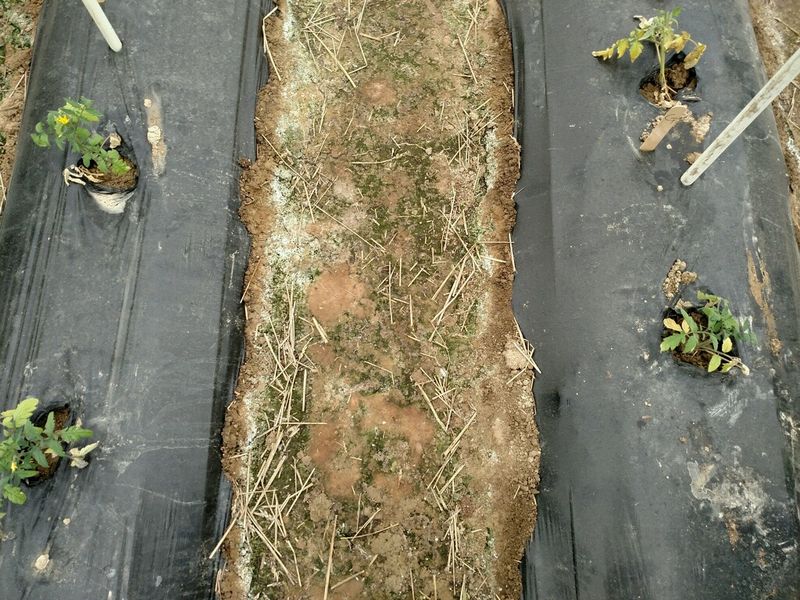
One of the most puzzling moments in desert gardening is watching a plant sit completely still for weeks even though you are watering it faithfully on schedule.
No new leaves, no fresh growth, no sign of energy. This kind of stall is frustrating, but it has a clear scientific explanation tied to how roots actually absorb water.
Plants pull water into their roots through a process called osmosis, which depends on the concentration difference between the water in the soil and the water inside the plant.
When salt levels in the soil get high enough, that concentration difference shrinks or even reverses, making it physically harder for the plant to absorb moisture. The plant is essentially working against itself every time it tries to drink.
This is why growth can stall even when the soil feels damp and your irrigation timer is running perfectly.
University of Arizona Extension researchers describe this effect as physiological drought, where the plant behaves as if it is dry even when surrounded by water.
Vegetable gardens and annual flowers are especially vulnerable because they need consistent, rapid growth to produce well.
Addressing soil salinity through proper leaching and drainage is the most effective way to get growth moving again rather than simply adding fertilizer or adjusting your watering schedule without fixing the root cause.
5. Water Sits Instead Of Soaking
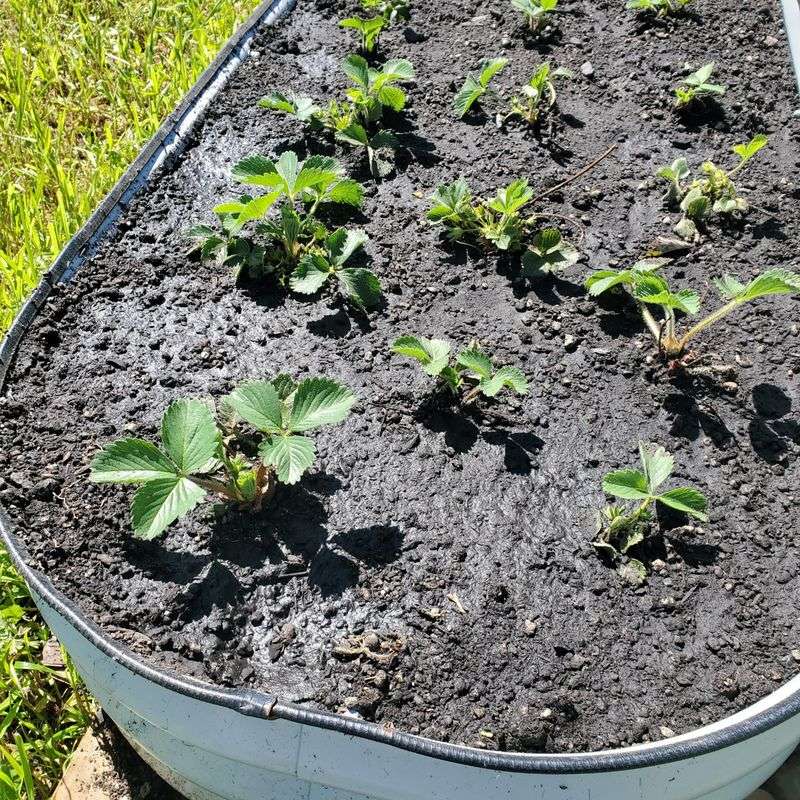
After running your drip system or hand watering, the water should soak into the soil within a few minutes.
When you start noticing puddles hanging around on the surface for much longer than that, it is a sign that something is blocking normal infiltration.
Salt buildup is one of the main culprits in Arizona landscapes, and it often works alongside soil compaction to make the problem worse.
Sodium in particular causes soil particles to stick together and swell, which closes off the tiny pores that normally let water move downward.
Over time, an irrigated patch of Arizona clay or caliche-heavy soil can become nearly waterproof at the surface despite being completely dry just a few inches below.
Poor infiltration also means that leaching, the process of flushing salts downward with deep water, cannot work properly until drainage is improved first.
Gypsum is sometimes recommended for sodium-affected soils in the Southwest because it can help open up soil structure without raising pH.
Before attempting any leaching program, make sure water can actually move through your soil profile.
A simple check is to pour a small amount of water onto the soil and time how long it takes to disappear completely.
6. Potted Plants Show Salt Rings
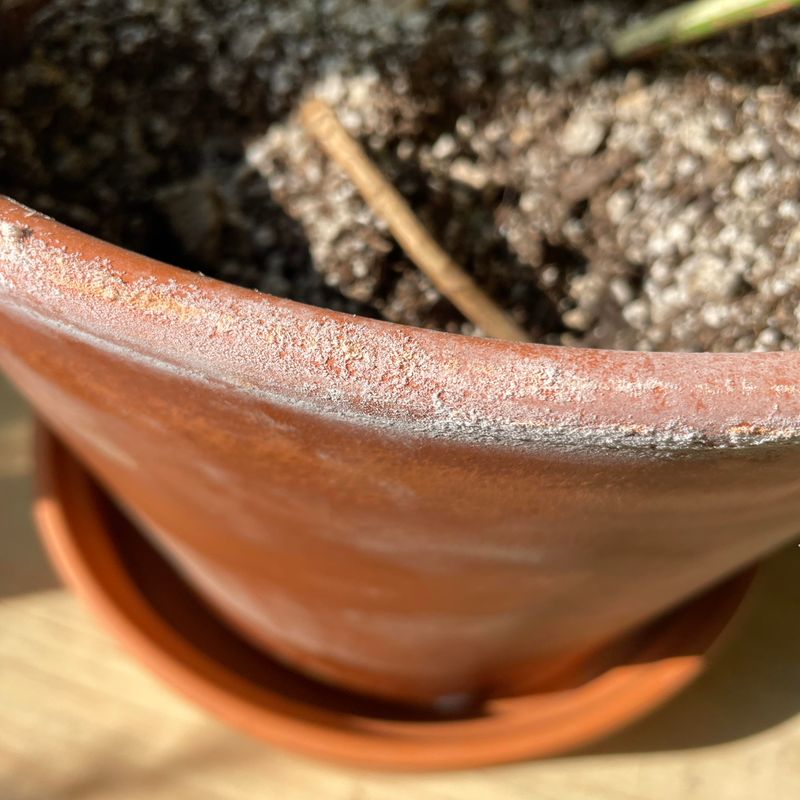
Containers are like tiny laboratories for salt buildup.
Everything that happens slowly in a garden bed happens much faster in a pot because the soil volume is small and there is nowhere for salts to go except up.
A white ring creeping around the inside rim of a terracotta pot is almost always a salt deposit, and it is one of the clearest signals that your potted plants are living in increasingly salty conditions.
Terracotta pots are especially prone to showing these rings because the clay is porous and water wicks through it, leaving mineral deposits on the outer surface too.
Glazed ceramic and plastic pots hold salts inside the soil instead, making it harder to spot the buildup visually until it becomes severe.
Drainage holes are another hotspot.
Salts tend to concentrate around the bottom of the pot and can crust over the drainage opening, reducing the pot’s ability to drain properly. This creates a cycle where poor drainage prevents leaching, which allows more salts to accumulate.
Flushing potted plants thoroughly every few weeks during the growing season helps reset salt levels.
Run water slowly through the pot until it flows freely from the drainage holes for several minutes. Repotting with fresh soil at the start of each season is also a practical reset for heavily affected containers.
7. Soil Feels Hard After Irrigation
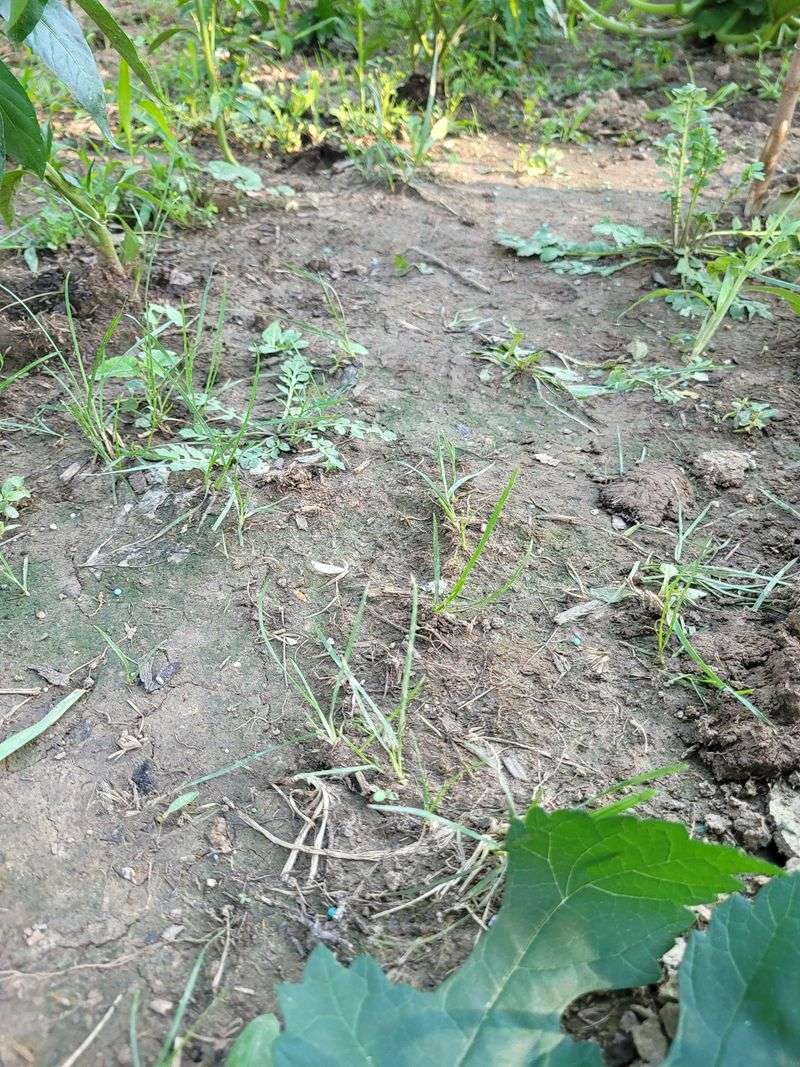
Healthy garden soil should feel somewhat loose and crumbly after a good irrigation, almost like a damp sponge that holds its shape without being stiff.
When soil feels hard, dense, or almost cement-like shortly after watering, that texture change is a warning sign worth paying attention to.
In Arizona, this kind of hardening often points to a combination of salt deposits, sodium accumulation, and the natural tendency of desert soils to form surface crusts.
Salts left behind by evaporating water can bind soil particles together, and sodium in particular reduces the natural structure that keeps soil loose and workable.
Over repeated irrigation cycles, the soil becomes progressively more compacted at the surface even without any foot traffic.
This makes it harder for roots to expand, harder for air to circulate, and harder for water to move through during the next watering.
Gardeners sometimes try to solve this by tilling or breaking up the crust, which helps temporarily but does not address the underlying salt issue.
A better long-term approach combines improving drainage, using gypsum where sodium is the main problem, and incorporating organic matter to rebuild soil structure over time.
Arizona Cooperative Extension recommends getting a soil test before adding amendments so you know exactly which minerals are causing the problem.
8. Deep Leaching Becomes The Reset Step
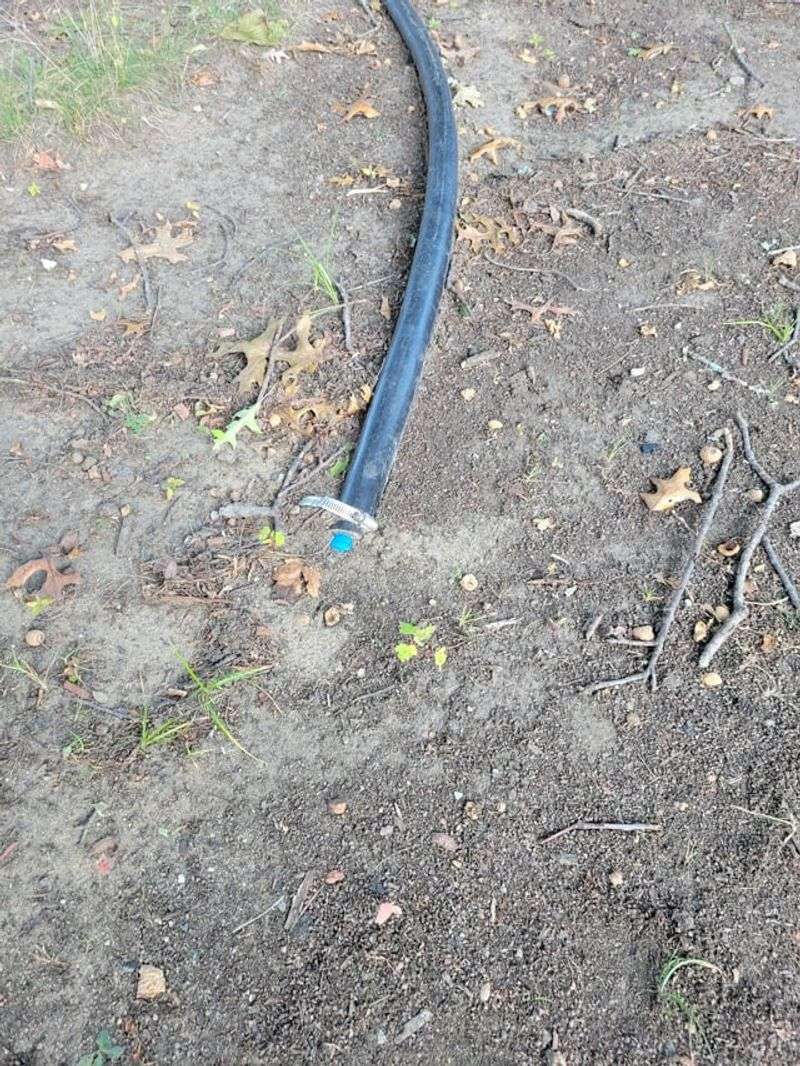
When salt signs start showing up across your garden, deep leaching is the most effective tool for pushing those minerals below the root zone where they cannot stress your plants.
Leaching means applying enough water to move salts downward through the soil profile rather than just wetting the surface. In Arizona, this usually requires significantly more water than a standard irrigation cycle.
Good drainage is the essential first condition.
If your soil does not drain well, extra water will sit in the root zone and make salinity worse rather than better.
Fix any drainage problems, including compacted layers, caliche hardpan, or poorly draining container mix, before attempting a deep leach.
University of Arizona Extension recommends soil testing as a smart first step because it tells you exactly how high your salt levels are and which specific minerals are involved.
Some situations respond well to leaching alone, while others need soil amendments like gypsum to improve structure before water can move properly.
Leaching works best in late winter or early spring before the heat arrives, giving soil time to recover before peak growing season.
Watching for early signs, improving drainage consistently, and watering deeply and infrequently are the habits that keep Arizona gardens productive season after season without letting salt quietly take over the root zone.