Why Spurge Keeps Appearing in Arizona Gravel and How to Reduce It
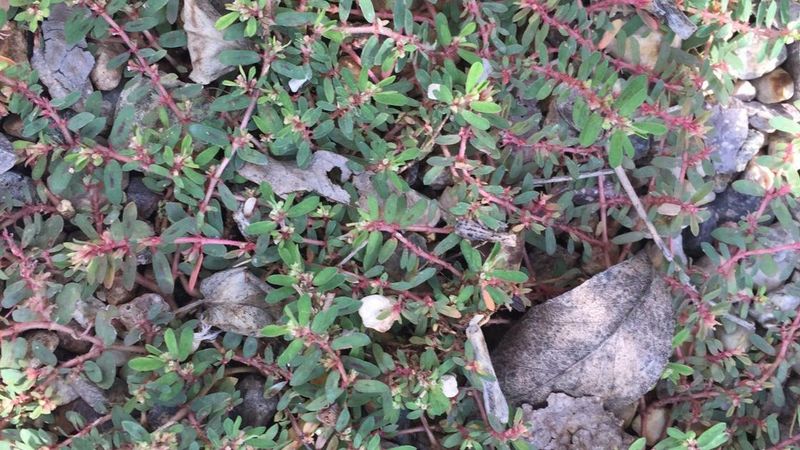
You rake the gravel clean, and a few weeks later little green mats are back. It feels like the weeds are winning, and it is easy to blame the rocks.
The real story is more useful, because it points to habits that can cut down on spurge. Here is what is likely going on in low-desert yards and what you can do about it.
Does gravel actually make spurge grow faster?
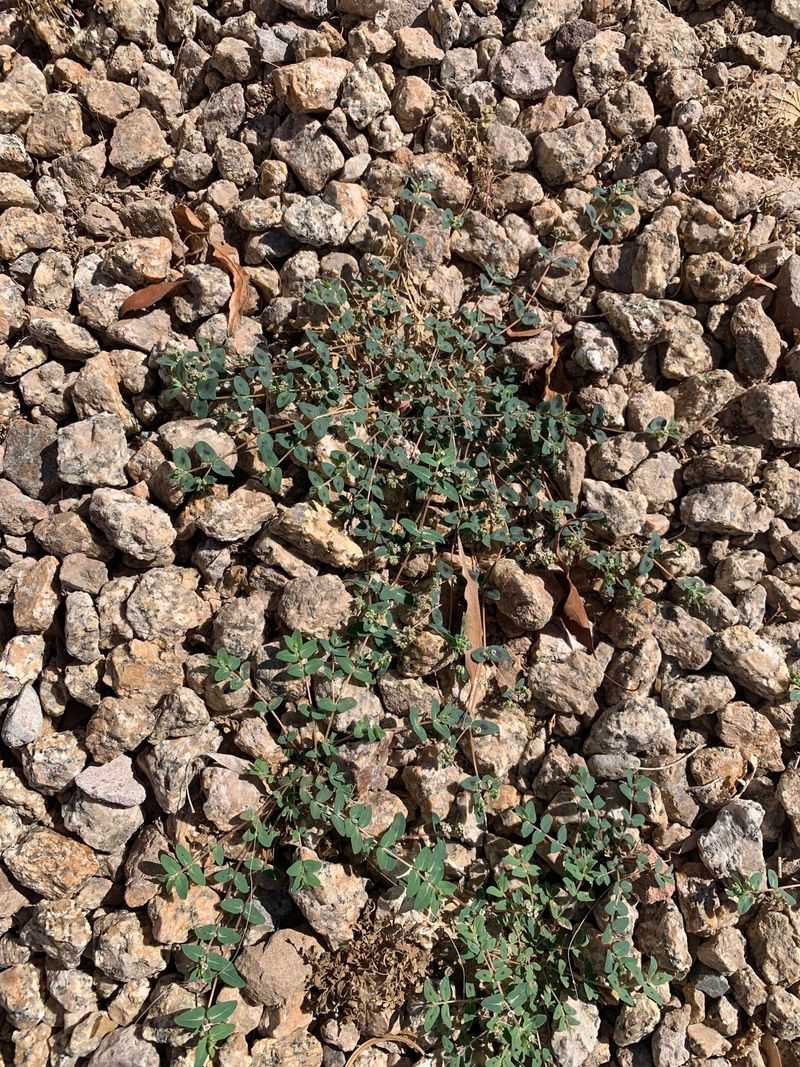
Nothing shows that Arizona gravel speeds up spurge growth. What the sources do say is that gravel helps cut down weeds but is hard to keep completely weed-free, as UC weed guidance explains.
Over time, dust, leaves, and bits of soil settle between the stones. That thin layer gives seeds a place to root, and a sunny bed with a little moisture does the rest.
So the problem is usually repeated sprouting, not faster growth. Spurge is a quick grower that spreads easily in low-desert sun, which makes each new wave look like a speedy comeback.
Gravel is still a good choice, but it works best as a weed reducer, not a weed blocker.
A returning plant may not be the same plant
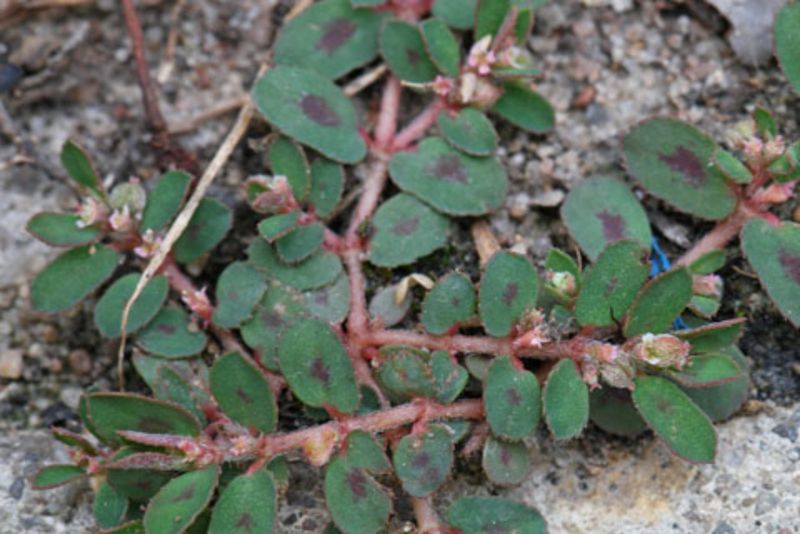
Plenty of us assume the weed we pulled simply grew back. Often it did not.
The plant you see now may be a fresh seedling from seed already sitting in the bed.
“Spurge” covers several weeds. Spotted spurge is an annual, so new plants usually come from seed.
White-margin spurge is a perennial, and its stems can root where they touch soil, so leftover pieces may regrow, according to Arizona Extension’s spurge bulletin.
Telling them apart can be tricky, and a plant showing up again does not prove which kind you have. Lift a stem and look for small roots along it.
That clue can tell you whether you are dealing with seedlings or rooted regrowth.
Warmth and moisture bring new opportunities to germinate
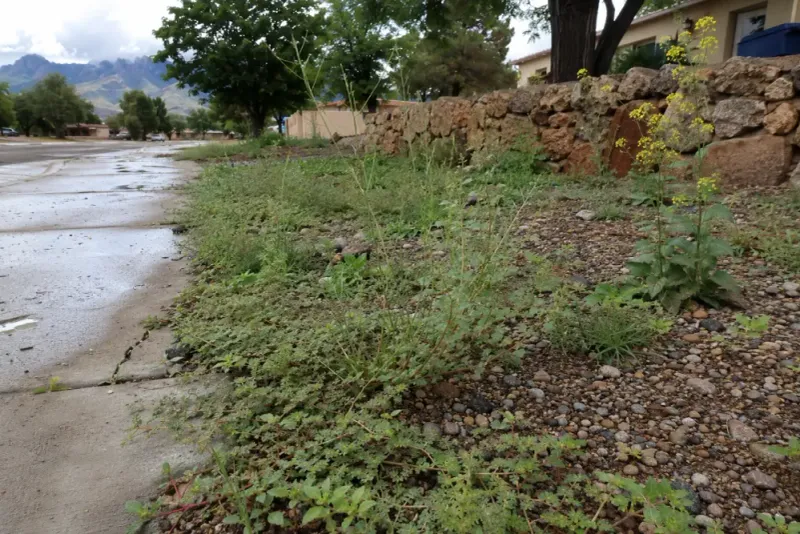
Monsoon storms and irrigation cycles are a signal for weeds. In desert areas, UC summer weed notes point out that spurges can sprout wherever soil is warm and moist.
A bed that looked clean last week can show a green haze a few days after a storm. Spots near drip lines, downspouts, and sunny edges tend to fill in first.
Seeds also travel. They can hitchhike on shoes, tools, and ants, so a few plants in one corner can seed other areas.
Make a habit of walking your beds after rain or watering through the warm months. Catching seedlings early is far easier than dealing with a full mat.
Remove young plants before they set seed
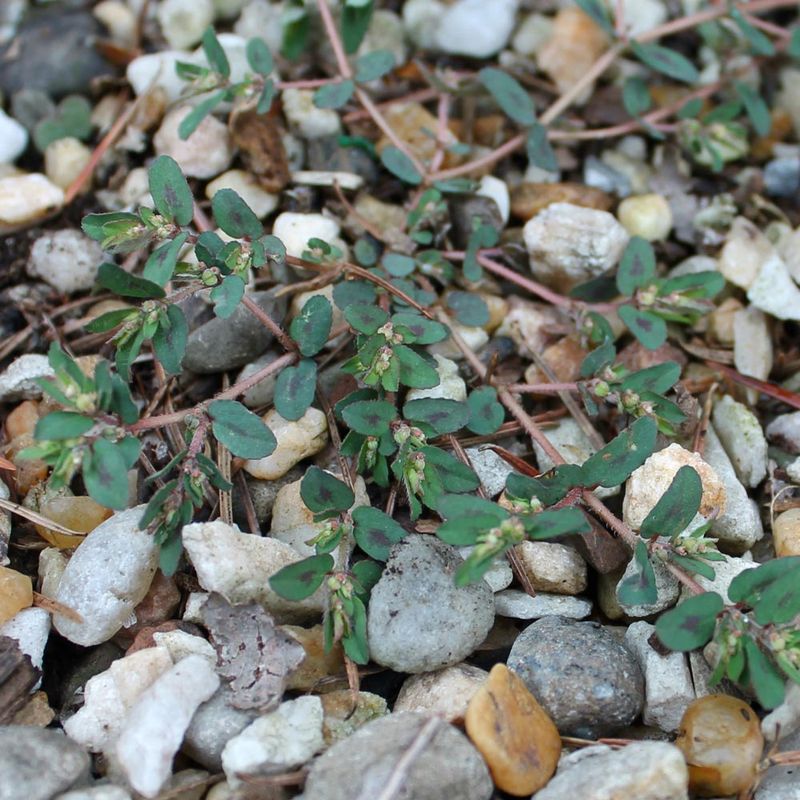
Pull small plants early. Spurge can begin making seed roughly five weeks after it sprouts, according to UC pest guidance.
Pulling it before then stops the next round of seed.
Use a hand tool or your fingers to lift the plant along with any rooted parts. Drop it into a bucket rather than dragging mature plants across the bed, since seeds can spread on wind, ants, shoes, and tools, as Arizona Extension notes.
Your Arizona Garden Changes Every Week. Your Plan Should Too.
Gardening in Arizona changes quickly throughout the season. Every Friday you’ll receive a simple weekly plan showing exactly what to plant, prune, fertilize, harvest, and protect so you never miss the right timing.
Wear gloves and eye protection, because the milky sap can irritate skin and eyes. Poison Control advises washing skin with soap and water and rinsing an eye with water for 15 to 20 minutes.
Bag the pulled plants and throw them out instead of leaving them on the gravel.
Apply pre-emergent before germination
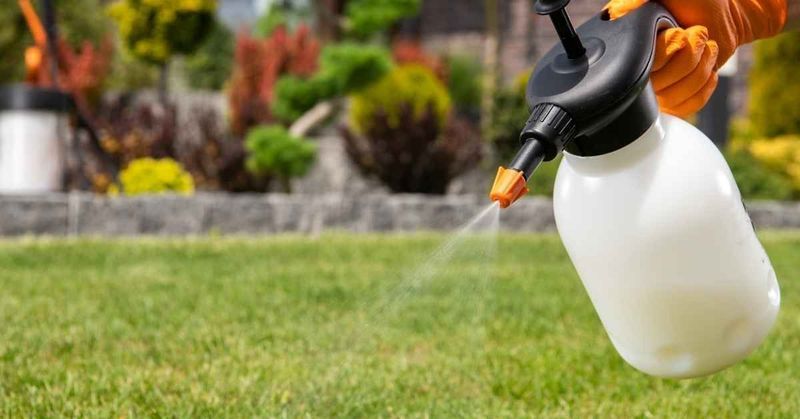
A pre-emergent works on seeds that have not sprouted yet. It will not control plants already poking through the gravel, and the label tells you how to water it in, as Arizona Extension explains.
Timing is the tricky part. A 2018 lawn article places spring timing near 50 to 55 degree soil, usually around the end of February or early March in Phoenix and Tucson, and early to mid February in Yuma.
Treat those dates as regional reference points, not a calendar built for gravel beds. Local soil temperatures and the product label should guide you.
One application also will not end the story. Heat, moisture, and time wear down protection, and later rain or irrigation can still bring new sprouts.
Match any herbicide to the bed and its label

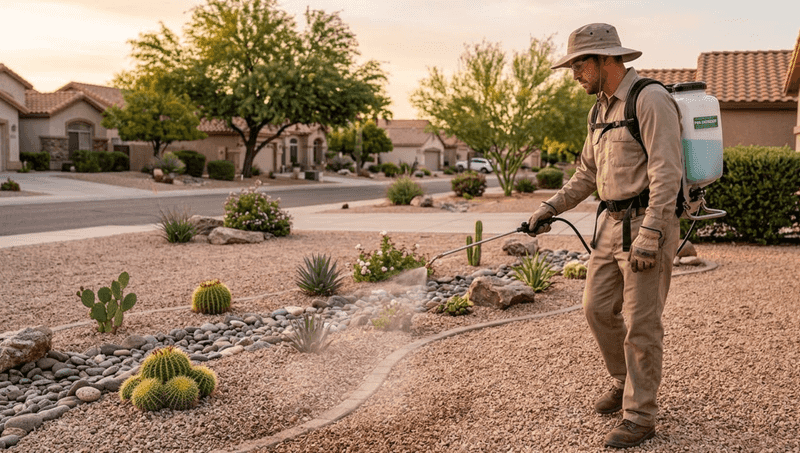
Chemical control only makes sense when the product fits the job. Before buying anything, read the label to confirm it allows your type of landscape site, lists the weed you have, and permits your method of application.
Arizona Extension herbicide guidance stresses following label directions.
Wear the protective gear the label lists, and watch for drift. Broad-spectrum products can injure nearby shrubs, cacti, and trees.
If you plan to scatter seed for wildflowers or other plantings, skip pre-emergent treatment there, since it can interfere with germination of desired seeds, as UC guidance notes.
No product is safe for every bed, and none replaces pulling emerged plants and checking the bed regularly. Think of it as one tool, used only where the label says it fits.
Plan for repeat checks, not a weed-free promise
A realistic routine beats a perfect one. Keep the gravel layer topped up, since Cornell’s gravel notes show how debris and soil collecting between stones gives weeds a foothold.
Walk the bed every week or two in warm weather. Pull small plants, and take another look a few days after irrigation or monsoon rain.
Use a pre-emergent only if the timing and label fit your bed.
These habits can reduce recurrence, but nothing promises that no spurge will ever sprout again.
A gravel bed is less a finished project than a small garden that happens to be made of rock.