Asters And Goldenrod Are About To Become The Busiest Plants In Ohio Gardens
A late September flower bed in Ohio can look almost finished.
Brown coneflower heads slouch over. Floppy bee balm stems flop sideways. Everything reads tired, like the season already wrapped up weeks ago and nobody bothered telling the plants.
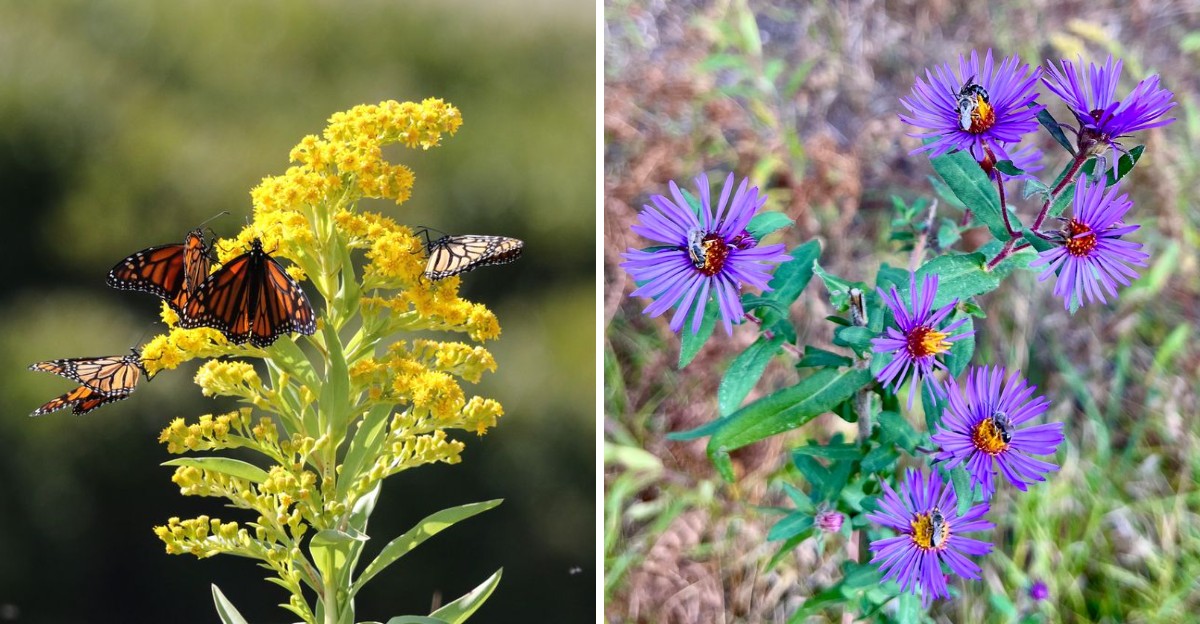
Then one corner lights up. Goldenrod glowing yellow, asters opening purple, and suddenly that quiet bed is humming louder than it ever did back in July.
Bees pile on. Wasps show up. Hoverflies and butterflies crowd in too, all working the same handful of blooms at once, like word got around fast.
That crowd is not random, and it is not really about beauty either. Something specific about this exact stretch of fall turns two ordinary native plants into the busiest real estate in the whole garden, right when almost nothing else is offering a meal.
Stick around, because the reason behind that rush might change how you look at your own fall beds entirely.
1. Late Season Nectar Becomes Increasingly Scarce
By mid-September, most Ohio gardens have quietly run out of groceries. Coneflowers have gone to seed. Bee balm looks crispy. Milkweed pods are splitting open and emptying out.
What is still standing matters more now than it did back in June.
Nectar was everywhere in early summer, and insects had dozens of choices scattered across every bed. Fall flips that whole equation completely.
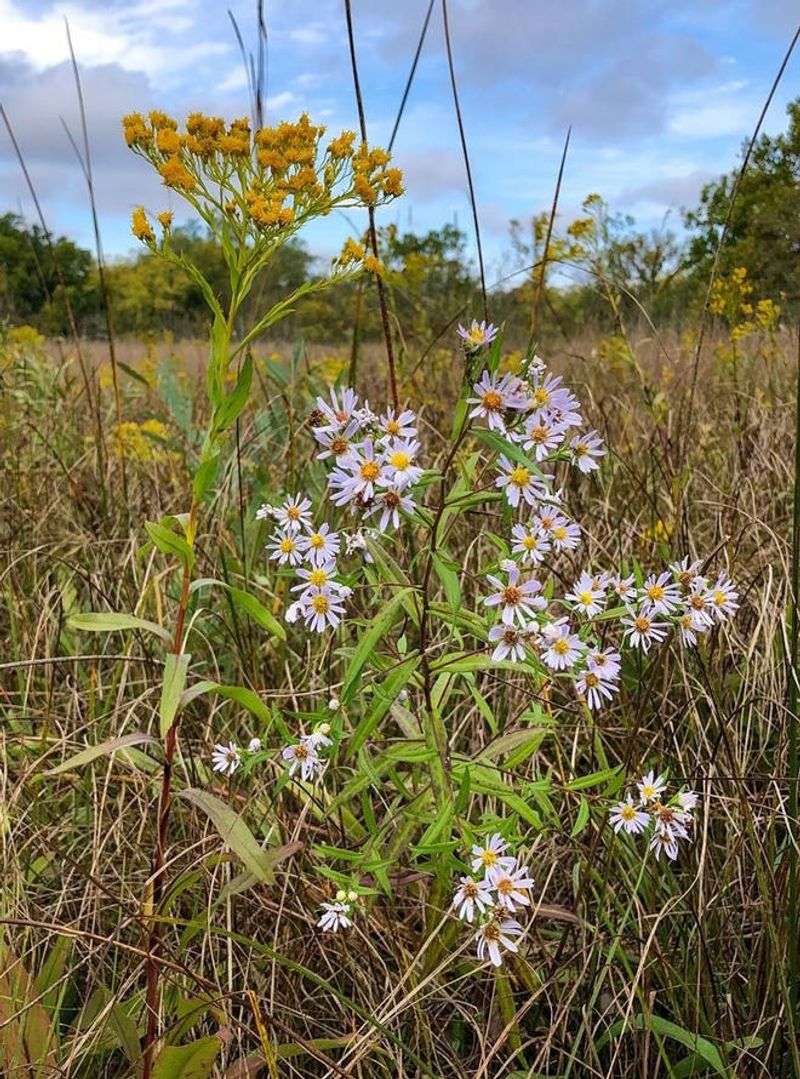
Ohio State University Extension points to goldenrod and aster as key late-season resources precisely because so little else is blooming when they open up.
One clump of goldenrod in early October might be the only reliable nectar stop for a wide stretch around your yard.
That scarcity explains all the crowding you see. Insects are not picking these flowers because they look fancier than summer blooms. They are picking them because the menu has shrunk down to almost nothing else.
Here is a useful goal for Ohio gardeners. Aim for overlapping bloom instead of one big June show that fades fast.
Spring ephemerals, then summer perennials, then goldenrod and asters carrying things into October, gives pollinators a supply line that actually lasts the whole season.
Planting in groups helps a lot too. Insects find larger patches faster than one lonely stem hiding behind a shrub, so three or five plants clustered together pull in noticeably more traffic than scattered singles ever will.
2. Bees Stock Up Before Winter Arrives
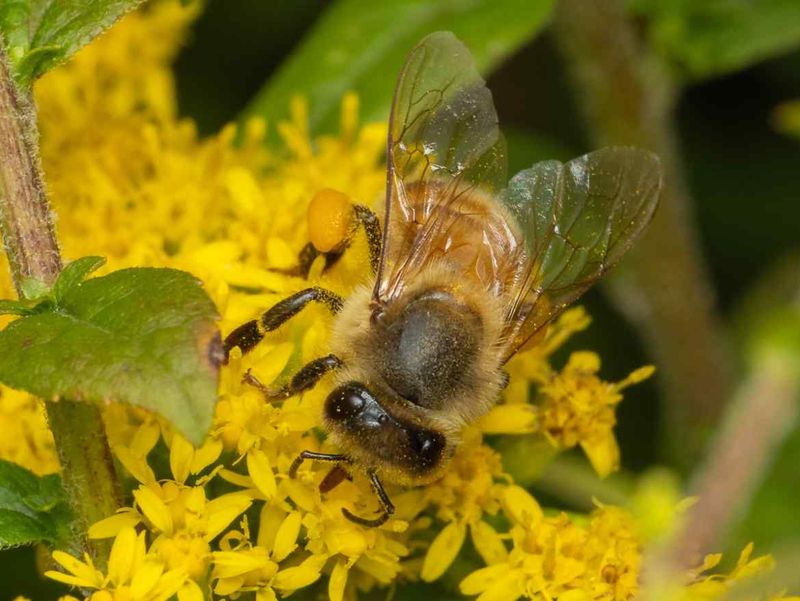
Watch a goldenrod plume in early October, and you will spot bees that look dusted in yellow flour. They are not being messy. They are hauling cargo home.
Honey bee colonies get through Ohio winters on stored honey, and fall nectar flows help top off those reserves before cold weather shuts foraging down completely.
Goldenrod has a strong reputation among Ohio beekeepers for producing a heavy late flow, sometimes carrying a distinctly musky smell straight from the hives.
Bumble bees run a totally different game. Their colonies do not make it through winter, and only newly mated queens carry the whole line forward into next year.
Your Ohio Garden Changes Every Week. Your Plan Should Too.
Gardening in Ohio changes quickly throughout the season. Every Friday you’ll receive a simple weekly plan showing exactly what to plant, prune, fertilize, harvest, and protect so you never miss the right timing.
Those queens need a serious diet of fall nectar and pollen to build up fat reserves before tucking into loose soil or leaf litter for the cold months ahead.
A queen going into October without enough fat often means one less bumble bee colony showing up in your neighborhood come spring.
Ohio is also home to specialist native bees that depend specifically on goldenrod and aster pollen. A yard skipping both plants simply cannot support them, no matter what else grows there.
A few small habits help enormously here. Skip insecticide sprays on anything blooming in fall, since that is exactly when bees are working their hardest shift of the year.
Leave a bare soil patch or some unraked leaves in a back corner for queens looking for winter shelter.
And resist trimming these two plants the moment blooms start fading. Scruffy late flowers are still delivering real calories that decide whether next year’s bee population shows up strong or thin.
3. Butterflies Fuel Up For Migration
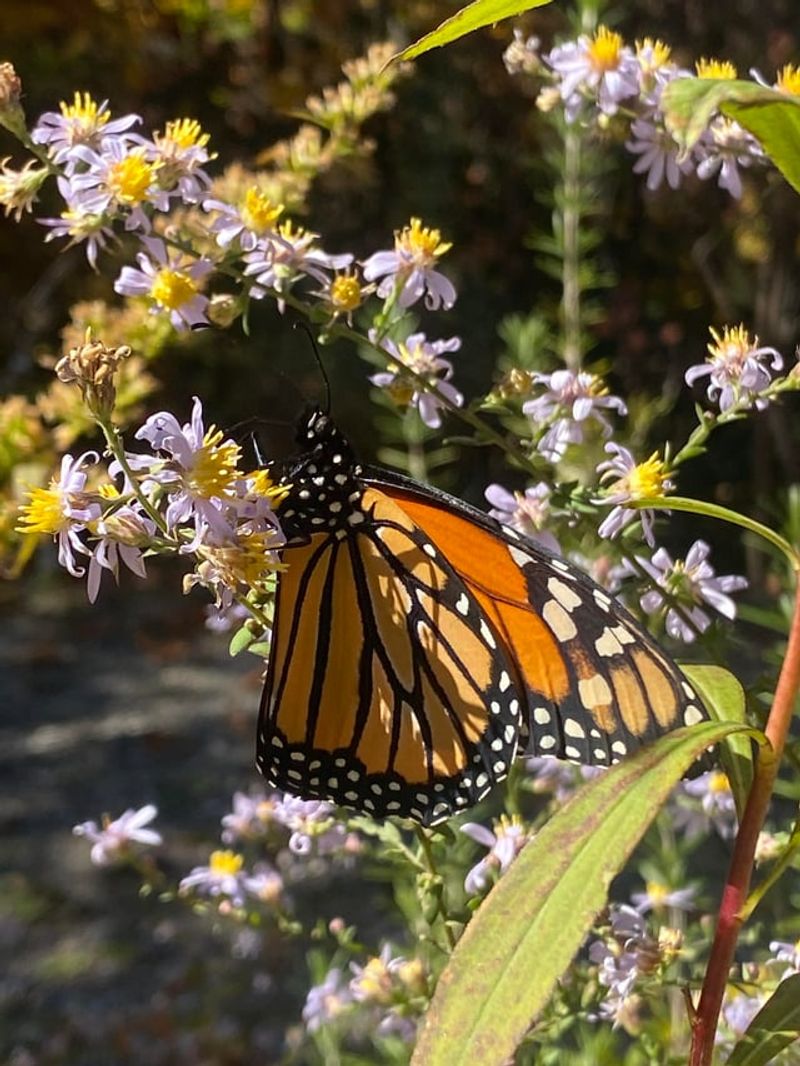
Few sights beat a monarch resting on goldenrod with sunlight coming through its wings.
That single butterfly may be headed roughly two thousand miles toward central Mexico, and your garden is basically a gas station somewhere along that route.
Monarchs move through Ohio from roughly late August into early October, shifting a bit year to year depending on weather.
Unlike summer generations, these particular migrating butterflies are not breeding along the way.
Their whole job is flying south with enough stored fat to survive winter in mountain roosts. Nectar builds that fat reserve, and goldenrod along with asters rank among the richest sources available right when monarchs pass through.
Monarchs are not traveling alone either. Painted ladies, red admirals, and common buckeyes also head south in fall, landing on those same flowers alongside sulphurs and late-season skippers.
Gardeners can pitch in here by planting nectar sources in sunny, somewhat sheltered spots, since butterflies feed more actively out of strong wind gusts. New England aster and stiff goldenrod are dependable, easy picks for Ohio yards specifically.
A flat rock placed nearby gives butterflies a warm spot to bask on cool mornings before they start feeding for the day.
One detail worth remembering. Milkweed feeds monarch caterpillars, but adult migrants need nectar instead, not milkweed itself.
A garden offering both covers the whole life cycle, which is exactly the kind of habitat that makes a real difference for the entire migration.
4. Goldenrod Rarely Deserves Its Allergy Reputation
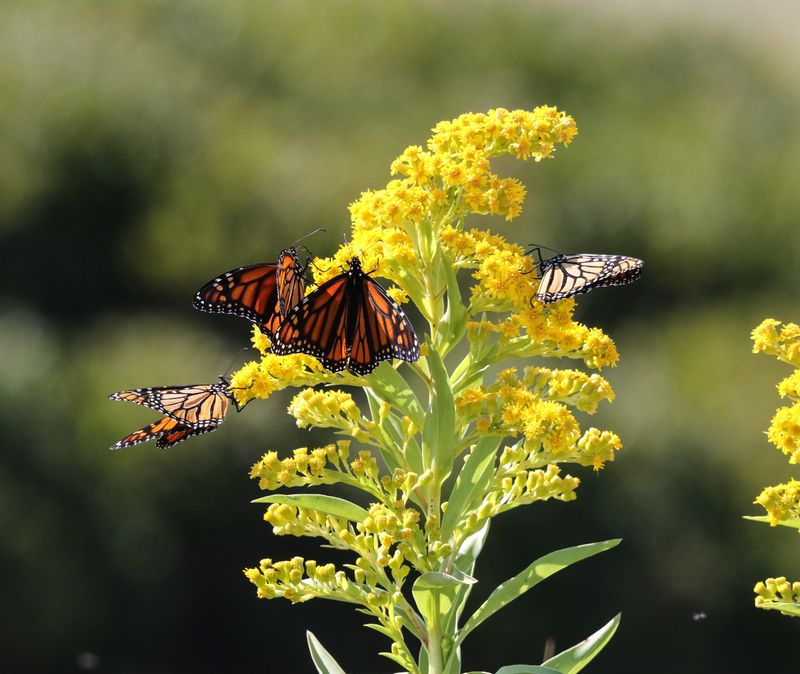
Here is a misunderstanding that has followed goldenrod around for generations.
People sneeze in September, spot the brightest yellow plant nearby, and blame it on the spot.
The real offender is usually standing right next to it, looking like an unremarkable weedy green nobody bothers to notice.
Ohio State University Extension has repeatedly pointed out that goldenrod is not behind most fall hay fever. Its pollen is heavy and sticky, built to cling onto bees, flies, and beetles rather than drift around on the breeze.
Pollen riding on insects simply does not travel far enough through open air to reach very many noses.
Ragweed is the actual culprit here. It blooms at the same time, in the same ditches and field edges, and it is wind-pollinated, releasing huge amounts of tiny, lightweight pollen that can drift for miles without much trouble.
Ragweed flowers stay small, greenish, and easy to overlook, which is exactly why the far showier goldenrod keeps taking the blame instead.
Spotting the difference gets simple once you know what to look for. Goldenrod carries bright golden plumes or flat-topped yellow clusters. Ragweed shows skinny green spikes above deeply cut, almost fern-like leaves.
If fall allergies genuinely bother you, pulling ragweed before it flowers does far more good than removing goldenrod ever would.
Keeping goldenrod around costs you nothing in extra sneezes, while giving Ohio’s bees and butterflies a major food source right when they need it most.
5. Asters Extend Color Into Cooler Weeks
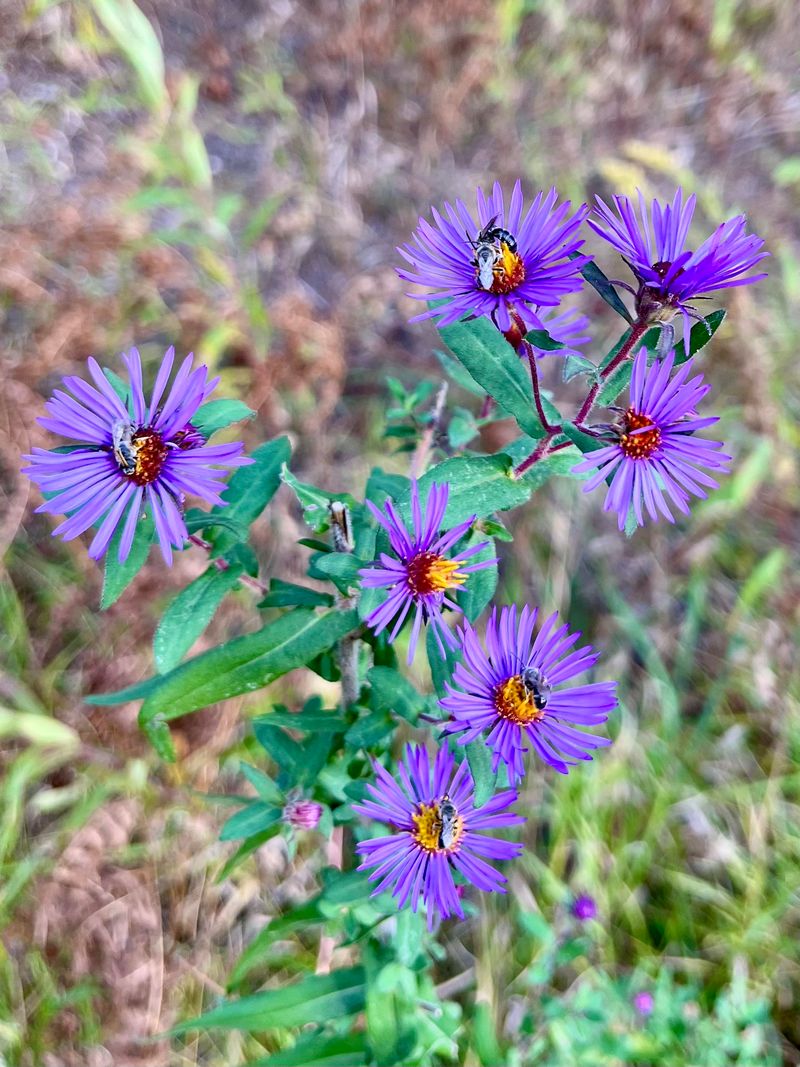
Purple in October feels like a bonus round nobody expected.
While most perennials have already checked out for the season, New England aster is just hitting its full stride, covered in violet petals with little golden eyes glowing at the center.
Ohio hosts a long list of native asters, including New England aster, smooth blue aster, aromatic aster, and the shade-tolerant white wood aster.
Their bloom windows stagger out from late August into serious October cold, stretching a garden’s color season by weeks longer than most people expect.
Aromatic aster is often the very last one standing, sometimes flowering even after a light frost has knocked everything else flat.
Growing these plants stays refreshingly low drama. Most want full sun and average soil, and they actually flop less in lean ground than in rich, heavily fertilized beds fussed over too much.
Here is a trick plenty of Ohio gardeners swear by. Cut stems back by about a third in early June. That keeps plants shorter, bushier, and far less likely to sprawl across the sidewalk come October, without pushing bloom time back much at all.
Pair asters with goldenrod on purpose whenever you can. Purple and gold sitting side by side is one of the best color combinations nature ever put together, and that same pair happens to feed the exact same crowd of insects at once.
Add little bluestem or switchgrass behind them, and the whole bed keeps looking good long after blooms fade, with seed heads and warm bronze grass carrying the scene right into November.
6. Pollinator Traffic Peaks Right Before Frost
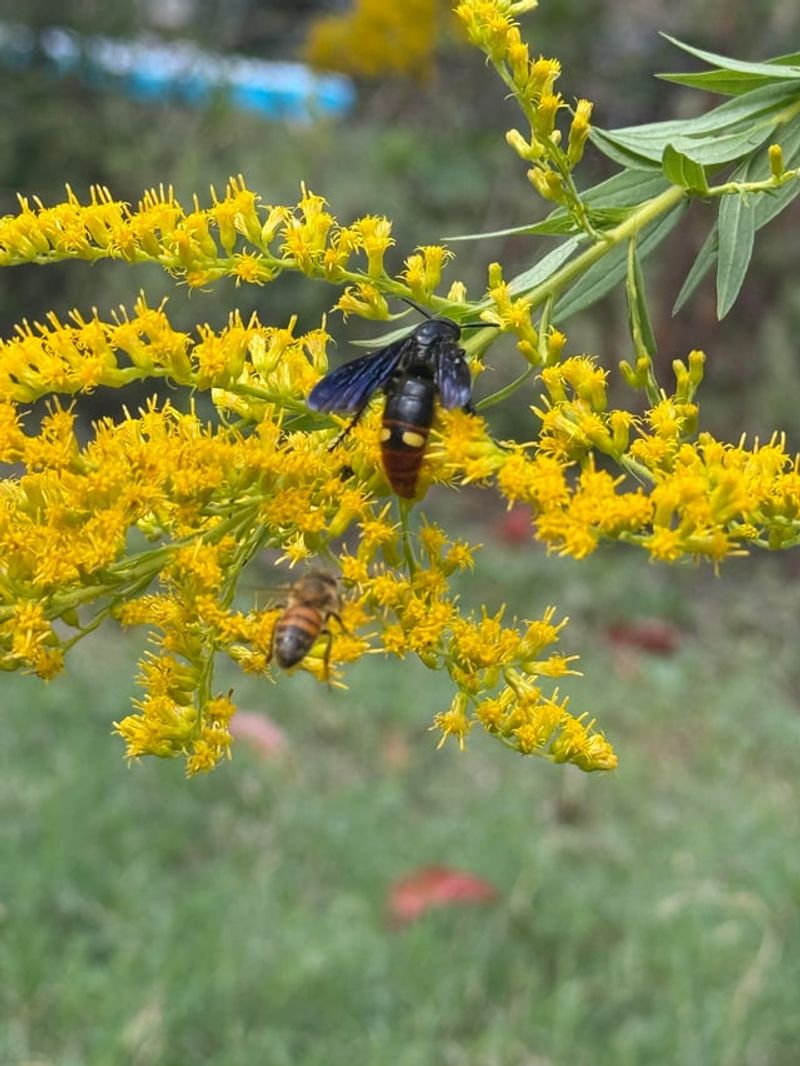
Ask anyone who grows these plants, and they will tell you the same thing.
The loudest week in the garden is not July. It is that stretch of warm afternoons right before the first hard freeze settles in.
Ohio’s average first frost typically lands somewhere between early and late October, depending on how far north you are sitting.
In the two or three weeks leading up to it, insects seem to sense the clock is running out fast.
Goldenrod plumes can host bumble bees, honey bees, sweat bees, hover flies, soldier beetles, paper wasps, and butterflies, all working the same cluster of blooms at once.
Timing matters if you want to actually watch this happen. Insects warm up slowly on cool mornings, so the busiest window usually runs late morning through mid-afternoon, once temperatures climb into the sixties or higher.
Stand still for five minutes near a big clump and count species. It makes for a genuinely fun activity for kids, and the variety is often surprising even for adults who think they know their yard well.
Predators show up for the show too. Crab spiders tuck into aster flowers waiting to ambush visitors, and praying mantises stake out goldenrod stems nearby.
Watching that whole food chain play out in a backyard bed is one of the quiet rewards of growing native fall bloomers in the first place.
If you want to help during this final rush, hold off on any spraying, mowing, or tidying during those last warm weeks. The plants are doing their single most valuable work of the entire year at exactly that moment.
7. Leave Both Standing Through Fall
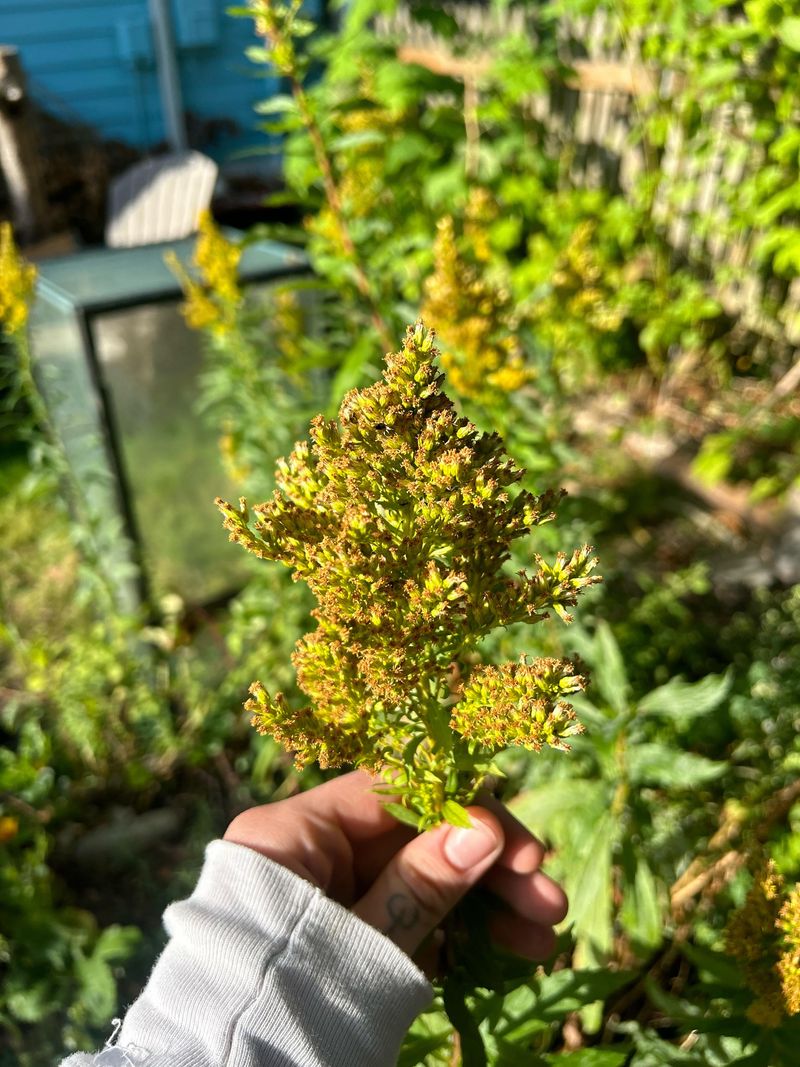
The urge to tidy up hits hard once the weather finally turns cooler. Resist it, at least anywhere these two plants are growing.
Cutting goldenrod and asters back in September or early October removes food during the exact window pollinators depend on most. A bed that looks neat by mid-October is really a bed that stopped feeding bees two weeks too early.
Waiting pays off well past bloom time too. Hollow, pithy stems left standing become winter shelter for small native bees and other beneficial insects, while goldenrod and aster seed heads feed goldfinches, juncos, and sparrows straight through the cold months ahead.
Snow settling on those dried flower heads gives a winter garden real structure that bare mulch never quite manages on its own.
A reasonable schedule for Ohio looks something like this. Leave everything standing until spring, then cut stems back in April once temperatures turn consistently mild and any overwintering insects have already emerged.
Leaving stubble roughly twelve to eighteen inches tall gives cavity-nesting bees a place to move into for the following season.
If a front bed needs to look a bit more presentable, compromise works fine here. Tidy up the visible edge, and let the back half stay wild and useful.
Plenty of Ohio gardeners find that once they let the fall garden finish on its own terms, October stems stop looking messy and start looking like proof the yard is doing something genuinely worthwhile.
That shift alone is half the fun of growing natives in the first place.