Better Native Alternatives To Forsythia That Pennsylvania Gardeners Are Switching To
Forsythia has had an incredibly long run, and look, nobody is arguing it does not put on a show. That blast of yellow in early spring is genuinely exciting, especially after a long winter that overstayed its welcome by about six weeks.
But more gardeners are starting to wonder if that bright spring moment is really all a shrub should bring to the table.
Native alternatives can deliver just as much early season drama while also feeding wildlife, supporting pollinators, and actually belonging in the landscape in a way forsythia simply does not.
Some of them even outperform forsythia on visual interest across multiple seasons, which forsythia honestly cannot claim.
If your hedge is getting tired or you just want something with more going on, Pennsylvania has some genuinely exciting native options worth considering.
1. Spicebush Brings Early Native Beauty
Before most Pennsylvania yards show any sign of spring, spicebush is already doing something quietly spectacular.
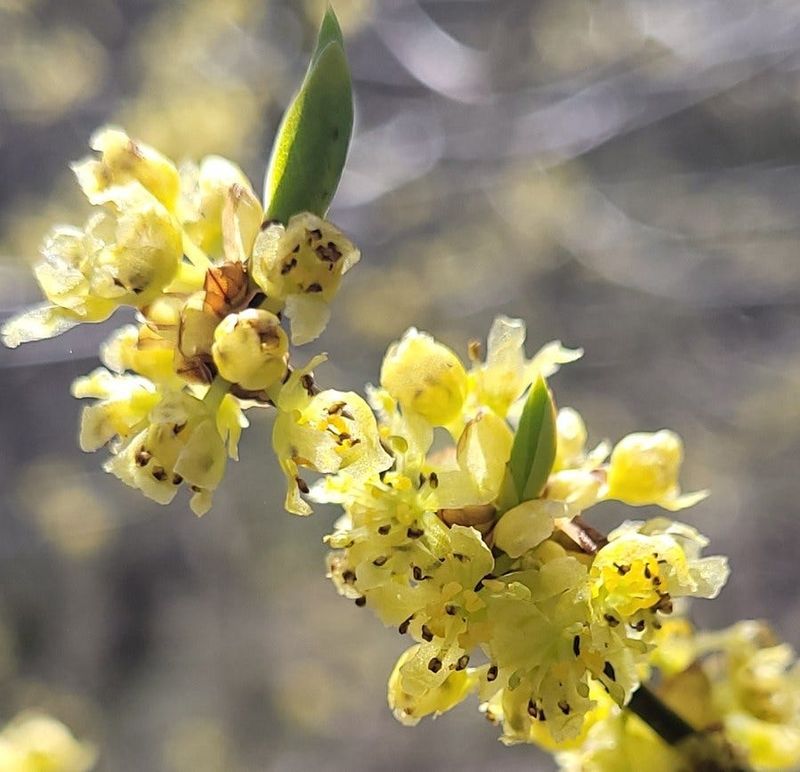
Lindera benzoin, commonly called spicebush, pushes out tiny clusters of soft yellow flowers along its bare branches in early March or April, depending on where you are in Pennsylvania.
The bloom is subtle compared to forsythia, but it carries a warmth and charm that feels genuinely connected to the local woodland landscape.
Spicebush grows naturally along stream banks, woodland edges, and moist forest floors throughout Pennsylvania, which means it tends to perform well in yards that have partial shade and reasonably moist soil.
It can reach around 6 to 12 feet tall and wide at maturity, making it a solid candidate for shrub borders, naturalized areas, or spots where a larger, informal shrub would look at home.
It does not need a lot of pruning or extra care once it settles in.
One of the best reasons gardeners are choosing spicebush is its wildlife value. Female plants produce bright red berries in late summer that are a favorite food source for migratory birds, including wood thrushes.
The plant also serves as a host for spicebush swallowtail butterfly caterpillars, adding an entirely new layer of seasonal interest. The foliage turns a clear, buttery yellow in fall, giving the shrub a second moment of seasonal color.
For gardeners who want early spring interest, wildlife habitat, and fall color all from one plant, spicebush is a strong and underappreciated choice in home landscapes.
2. Allegheny Serviceberry Adds Graceful Spring Color
Walking past an Allegheny serviceberry in full bloom feels like catching a quiet secret about early spring.
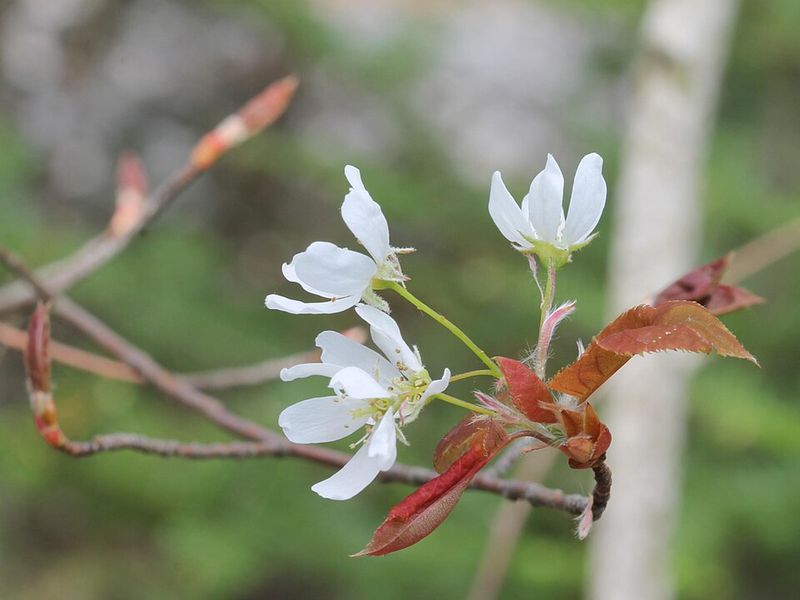
Amelanchier laevis bursts into clouds of white flowers in April, often just as forsythia is fading, and the contrast of its delicate petals against emerging reddish-bronze foliage is one of the more striking combinations any Pennsylvania yard can offer in spring.
It does not shout for attention the way forsythia does, but it earns a long second look.
Allegheny serviceberry typically grows as a multi-stemmed large shrub or small tree reaching 15 to 25 feet tall, which makes it a good candidate for a lawn focal point, a corner planting, or a shrub border where height and structure are welcome.
Your Pennsylvania Garden Changes Every Week. Your Plan Should Too.
Gardening in Pennsylvania changes quickly throughout the season. Every Friday you’ll receive a simple weekly plan showing exactly what to plant, prune, fertilize, harvest, and protect so you never miss the right timing.
It tends to prefer well-drained, slightly acidic soil and does reasonably well in full sun to partial shade, conditions that are fairly common across many Pennsylvania home landscapes.
The smooth gray bark adds visual interest even in winter.
Beyond its spring flowers, this plant offers a full season of interest. The edible blue-purple berries that ripen in June are loved by robins, cedar waxwings, and other birds.
Fall foliage turns shades of orange and red that can rival the best autumn color in any yard. For gardeners who want a refined, multi-season native plant that brings elegance rather than a wall of yellow, Allegheny serviceberry fits that role beautifully.
It rewards patience and works especially well in front-yard plantings where something graceful and seasonally interesting is the goal.
3. Downy Serviceberry Brings Soft Flowers And Charm
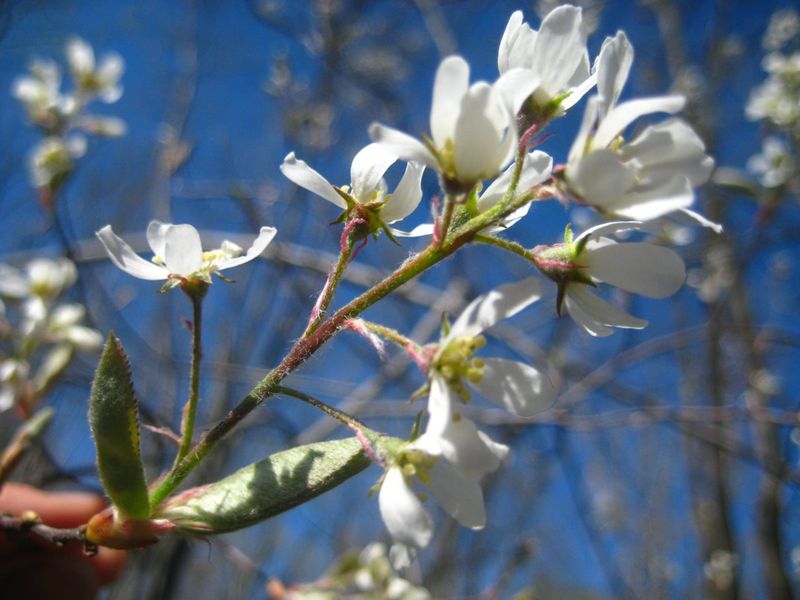
Some spring plants earn their place in garden not through bold color but through a kind of soft, honest beauty that never feels out of place.
Downy serviceberry, known botanically as Amelanchier arborea, blooms with loose clusters of white flowers in early spring, often appearing before its fuzzy, silvery-green leaves fully open.
The overall effect is airy and light, the kind of thing that makes a front yard feel fresh and alive without demanding attention.
Compared to Allegheny serviceberry, the downy serviceberry tends to be a bit more adaptable to drier soils, though it still performs best with decent drainage and moderate moisture.
It can grow as a multi-stemmed shrub or a small single-trunk tree reaching 15 to 25 feet, and it is native to much of Pennsylvania, including both the ridge and valley region and the Piedmont.
It handles a range of light conditions from full sun to light shade, which gives it flexibility in most residential settings.
Gardeners who plant downy serviceberry often mention how quickly birds find the small dark berries that follow the spring flowers. Bluebirds, catbirds, and orioles are among the species that visit Pennsylvania yards for those fruits in early summer.
The foliage tends to color nicely in fall with warm orange and red tones that extend the plant’s seasonal value well beyond spring.
For a gardener looking for a native plant that offers spring flowers, summer fruit, fall color, and a naturally graceful form, downy serviceberry checks most of those boxes without a lot of extra effort.
4. Pinxterbloom Azalea Adds Bright Spring Beauty
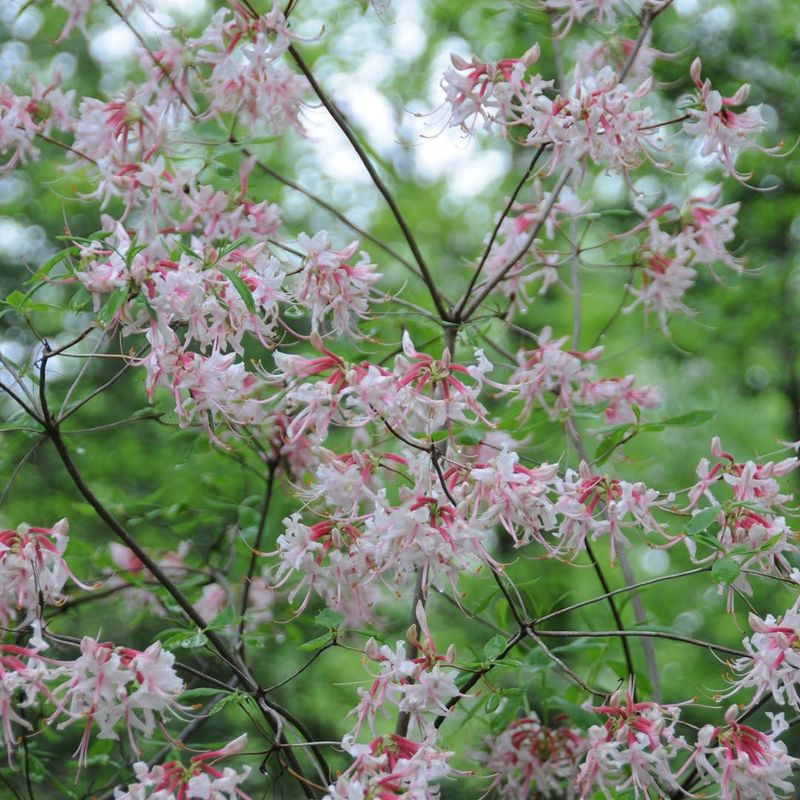
If yellow is not the only color you have in mind for spring, pinxterbloom azalea might be exactly what your Pennsylvania yard has been waiting for.
Rhododendron periclymenoides is a native deciduous azalea that produces clusters of soft pink to lavender-pink tubular flowers in April and May, typically just before or as the leaves emerge.
The flowers are delicate and fragrant, with long stamens that give each bloom a wispy, almost wild appearance that looks completely at home in a naturalized garden.
Pinxterbloom azalea grows naturally in acidic, well-drained woodland soils across much of Pennsylvania, often found along forest edges and stream banks in the wild.
In a home garden, it tends to do best in partial shade with soil that has been amended with organic matter and is kept on the acidic side.
It typically reaches 4 to 6 feet tall and wide, making it a manageable size for shrub borders, foundation beds, or woodland-style gardens where something colorful and informal is welcome.
One of the things that makes pinxterbloom stand out from forsythia is its pollinator value. The long tubular flowers are well suited for ruby-throated hummingbirds and native bumblebees, both of which visit gardens in spring.
Unlike many non-native azaleas sold at garden centers, this species has evolved alongside local pollinators and wildlife, giving it a functional role beyond just looking attractive.
For gardeners who want a spring-blooming native shrub with real color and fragrance, pinxterbloom azalea is a rewarding and seasonally interesting option across much of Pennsylvania.
5. Eastern Redbud Brings Bold Color Before Leaf Out
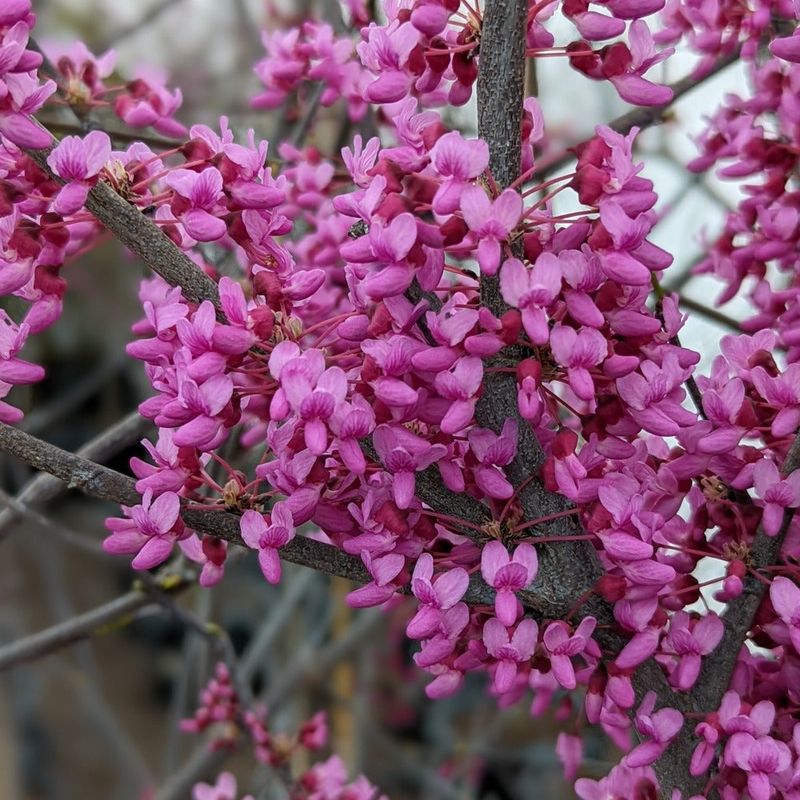
Few spring-flowering plants in Pennsylvania make as immediate and dramatic an impression as eastern redbud.
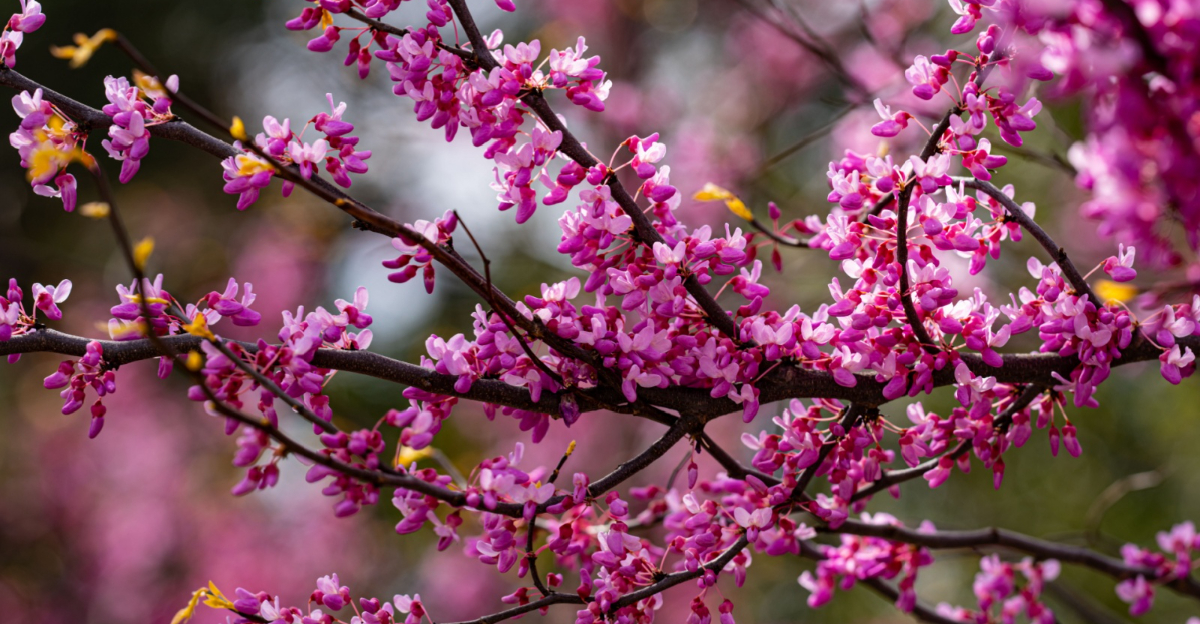
Cercis canadensis covers its bare branches in clusters of bright rosy-pink to magenta flowers in April, often before a single leaf appears on the tree.
The effect is striking from a distance and even more interesting up close, where you can see the small pea-shaped flowers clinging directly to the bark of older branches and the trunk itself. It is one of those plants that makes passersby stop and stare.
Eastern redbud is native to much of Pennsylvania, particularly in the southern and central parts of the state, and it tends to thrive in well-drained soils with full sun to light shade.
It typically grows as a small tree or large multi-stemmed shrub reaching 20 to 30 feet, which gives it a different scale than forsythia but a similar role as a bold spring accent in a residential landscape.
The heart-shaped leaves that follow the flowers are attractive through summer, and the foliage turns yellow in fall.
Beyond its spring color, eastern redbud has real value for Pennsylvania wildlife. Bees, including native mining bees and bumblebees, visit the flowers eagerly in early spring when food sources are still limited.
The seed pods that follow attract birds and small mammals later in the season.
For a front yard or backyard planting where you want something with genuine presence, strong spring color, and native credentials that support local ecology, eastern redbud is one of the most satisfying choices available to gardeners.
6. Bladdernut Adds Unusual Spring Interest
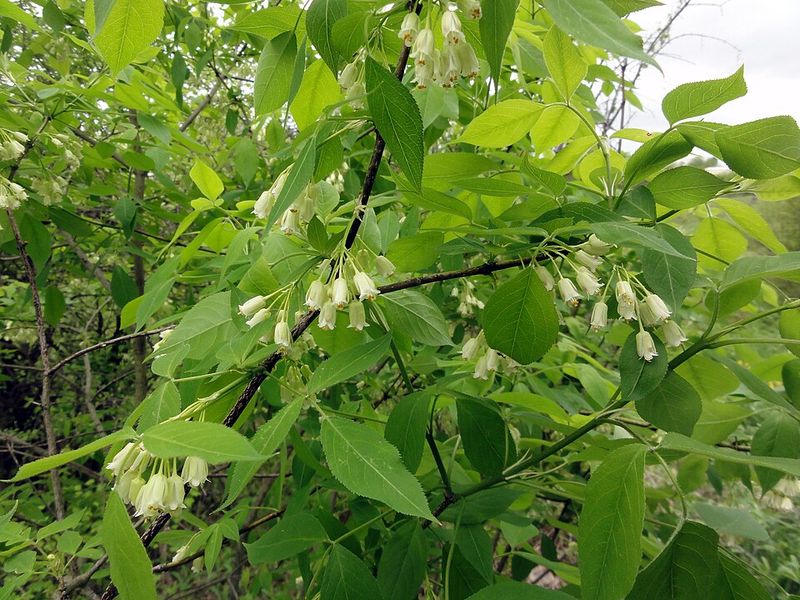
Not every spring shrub needs to lead with a wall of color to earn a spot in a Pennsylvania garden.
Bladdernut, or Staphylea trifolia, takes a more understated approach, offering drooping clusters of small white bell-shaped flowers in April and May that have a quiet, refined appeal.
The flowers hang like tiny lanterns beneath the emerging green foliage, and if you look closely, they have a delicate, almost translucent quality that rewards attention.
It is the kind of plant that gardeners tend to discover slowly and then wonder why they had not grown it sooner.
Bladdernut is native to moist, shaded woodland edges and stream banks throughout Pennsylvania, and it adapts reasonably well to garden conditions that mimic those environments.
It prefers partial to full shade with moist, well-drained soil, making it a practical option for spots under large trees or along the shaded side of a house where many other shrubs struggle.
It typically reaches 10 to 15 feet tall and can spread into a multi-stemmed colony over time if conditions suit it.
The inflated, papery seed pods that develop after flowering are one of the most distinctive features of this plant. They ripen to a tan color in late summer and persist into fall, rattling gently in the breeze and adding texture to the late-season garden.
Bladdernut also provides cover and food for birds and small wildlife.
For gardeners with a shaded yard who want something native, structurally interesting, and genuinely different from the typical spring-flowering shrub lineup, bladdernut is well worth trying.