Bitten By A Cottonmouth While Raking Leaves In East Texas? Do This Right Away
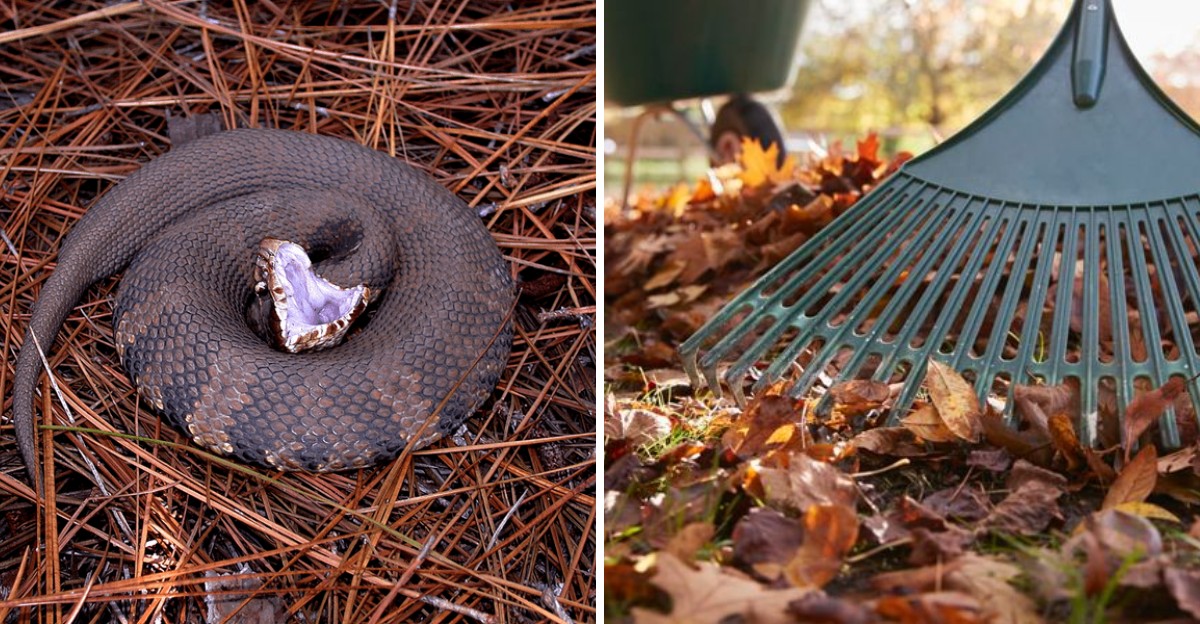
A baby version of this snake wiggles a bright yellow-green tail tip like a worm to lure in frogs. Cute trick, right? Less cute when the grown-up version is tucked under the oak leaves you just piled up.
In East Texas, fall brings a quiet migration most of us never notice. Certain snakes leave soggy lowlands and head for higher ground to find a winter hideout. Your leafy flower beds can look like a five-star hotel along the way
I used to rake with bare hands and flip-flops, feeling invincible. Then I learned how many bites happen simply because someone reached or stepped without looking. Now my boots stay by the back door from October on.
The first few minutes after a bite matter more than almost anything else. So what should you do, and what popular old tricks could make things worse?
That Fang Mark On Your Hand Calls For A 911 Call First

Your phone is the most important tool in the yard right now, not the rake. If a snake bit you, call 911 or get to an emergency room right away. Do this even if you are not sure the snake was venomous.
Doctors would much rather check a harmless bite than miss a serious one. Cottonmouth venom can cause strong pain, swelling, and tissue damage, and symptoms sometimes build slowly. Waiting to see how you feel wastes precious time.
Antivenom is the main treatment for a serious bite. It works best when given early, ideally within about an hour. That is why speed matters more than anything else on this list.
Poison Help is also available at 1-800-222-1222. The team there can guide you while help is on the way, and they can alert the hospital. Keep the number saved in your phone during raking season.
If someone else is nearby, let them make the calls and do the driving. You should not drive yourself if you can avoid it.
Pain, dizziness, or nausea can show up on the road, and nobody wants a second emergency. Quick action is the single best move you can make.
Step Away From The Leaf Pile Before Anything Else
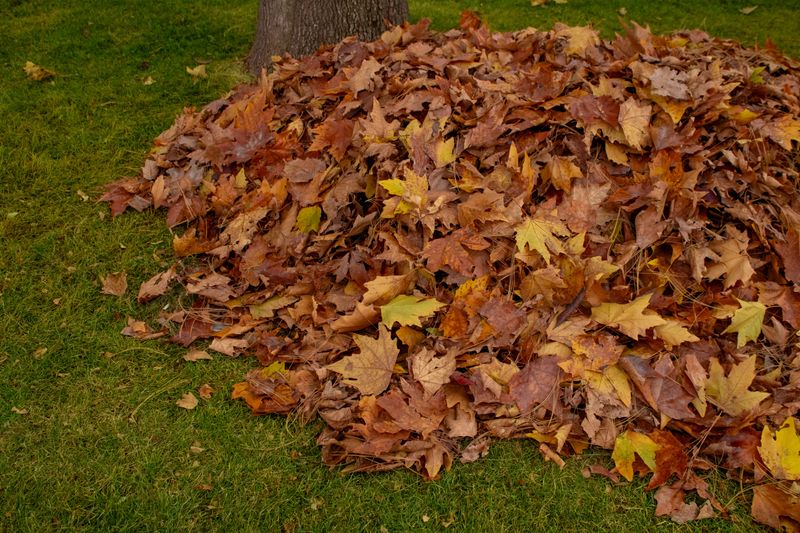
Snakes do not usually chase people, but a startled one can strike again if you stay within reach. Back away slowly from the spot where you were bitten. A few big steps put you safely out of range.
Leave the snake alone. Plenty of folks feel the urge to grab a shovel and go after it, and that is how second bites happen. Hospitals do not need the snake to treat you.
A quick photo from a safe distance is fine if it takes only seconds. Otherwise, skip it and focus on getting help. Medical teams treat cottonmouth, copperhead, and rattlesnake bites with the same type of antivenom in most cases.
Once you are clear of the pile, sit down somewhere calm. Moving around a lot raises your heart rate, and staying still is better for you. Ask a family member to keep kids and pets indoors too.
Honestly, the snake was probably just as surprised as you were. It likely was resting under those leaves on its way to a winter den. Give it space, and let it slip off on its own.
Rings And A Snug Sleeve Need To Come Off Fast

Swelling after a cottonmouth bite can be dramatic, and it often starts fast. Take off rings, watches, bracelets, and anything tight near the bite. A ring that slides off easily now may need to be cut off later.
Loosen tight sleeves, socks, or boots too. If the bite is on your ankle, unlace that boot right away. Your skin needs room to puff up without anything squeezing it.
Next, keep the bitten arm or leg still. Try to hold it roughly level with your heart, as many medical sources recommend.
If you have clean water and soap handy, gently wash the area. Cover it loosely with a clean, dry cloth or bandage. Do not scrub hard or rub anything into the wound.
Many people find it useful to note the time of the bite. Some also mark the edge of the swelling with a pen every so often. That small record helps doctors see how quickly things are changing.
Simple steps like these feel minor, yet they make treatment smoother once you reach the hospital.
Old Snakebite Tricks Like Tourniquets And Ice Do More Harm
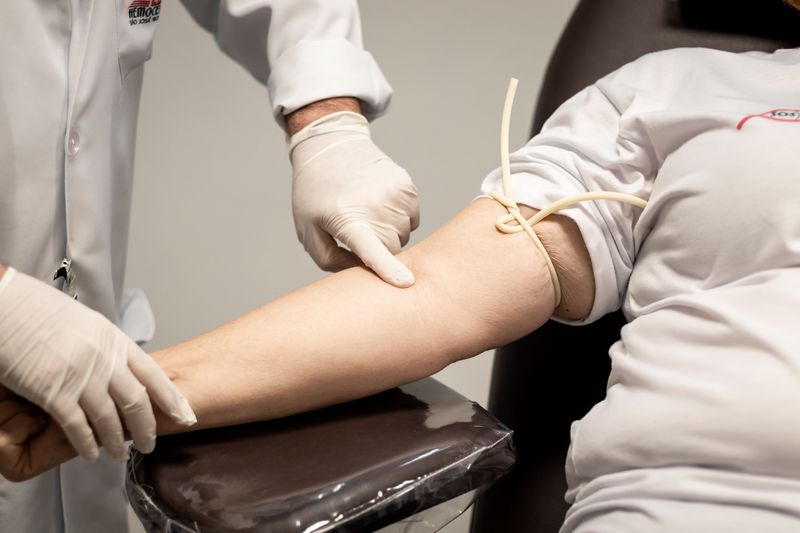
Grandpa might swear by the cut-and-suck method from old Western movies. Please skip it. Cutting the wound and trying to suck out venom does not work and can cause infection and extra damage.
Tourniquets are another bad idea for this kind of bite. Trapping venom in one spot can make local tissue damage worse. Medical experts warn against them for pit viper bites like cottonmouths.
Ice packs feel soothing, but they can harm tissue that is already under attack. Electric shock is also on the do-not-try list, even though it pops up online now and then. None of these remedies help.
Hold off on pain relievers too, unless a doctor tells you otherwise. Some, like aspirin and ibuprofen, can affect bleeding. Alcohol is also a firm no.
Those old suction kits sold in camping stores have not held up in research either. They remove very little venom and can delay real treatment. If you have one in a drawer, consider tossing it.
The fastest way to help yourself is boring but effective. Stay calm, stay still, and let trained professionals handle the rest.
Cottonmouths Head Uphill For Winter Dens In October And November
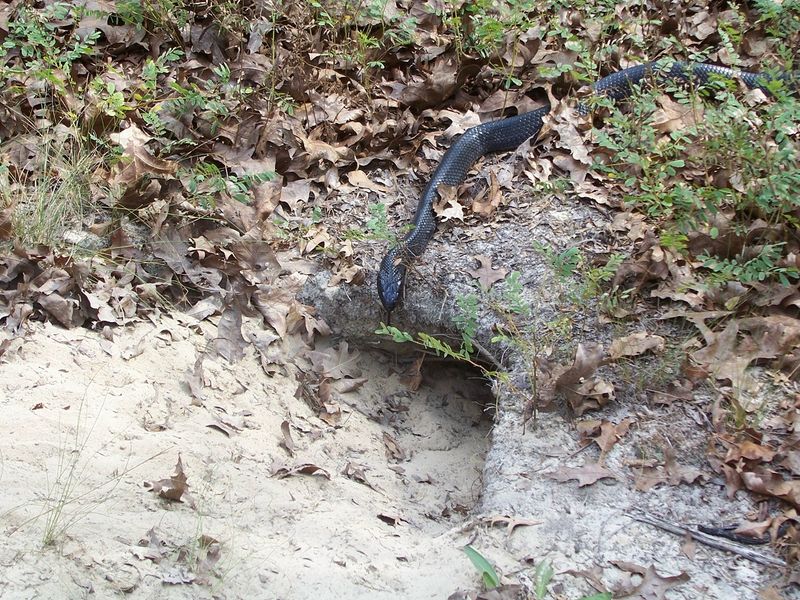
Most people link cottonmouths with swamps and bayous, and that is fair. These semi-aquatic snakes love lakes, rivers, ditches, and woodland ponds across the eastern half of the state. Fall, though, shakes up their routine.
In October and November, many cottonmouths travel from wet lowlands toward higher wooded ground.
They look for rock crevices and sheltered spots to spend the winter in a resting state called brumation. Some even share dens with copperheads and rattlesnakes.
That trip can take them right through yards near creeks and ponds. Thick leaf litter makes a handy pit stop. Cooler weather also shifts them toward daytime activity, which means more chances to meet gardeners.
Young snakes add to the mix. Babies are born from August through October, and they are ready to hunt right away. Their bright yellow-green tail tips work like fishing lures for frogs.
Copperheads deserve a mention here too. They blend into fallen leaves even better than cottonmouths and are common in East Texas yards.
Knowing this timing helps you plan. Your fall cleanup happens during their busy travel season, so a little extra caution pays off.
A White Mouth And A Chunky Triangle Head Give This Snake Away
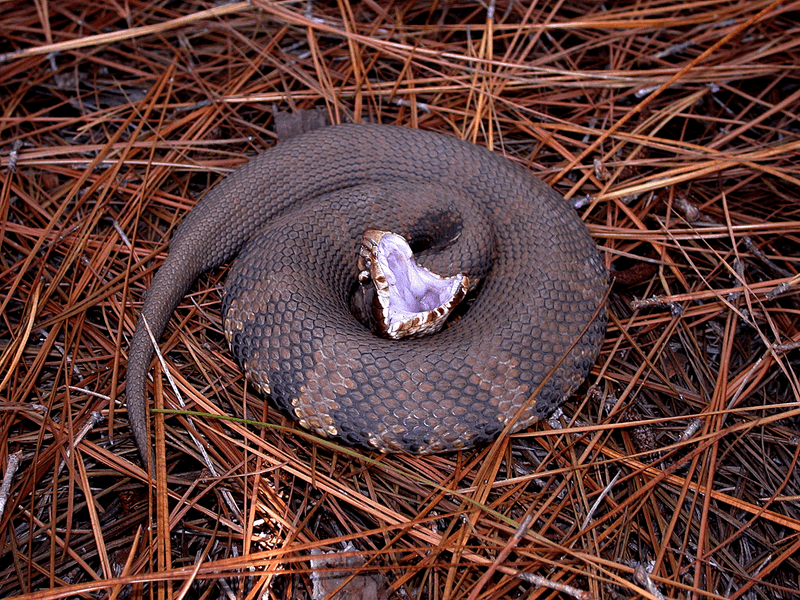
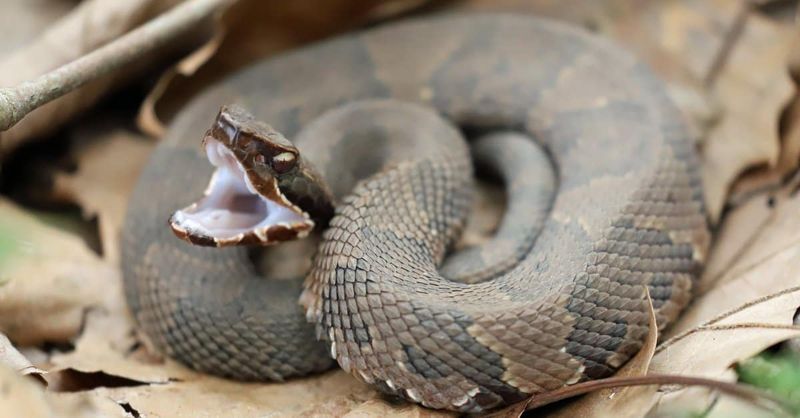
Believe it or not, the name comes from a party trick. When a cottonmouth feels threatened, it may coil up, shake its tail, and open its mouth wide. The inside looks bright white, like cotton.
Adults are thick-bodied and usually dark brown, olive, or nearly black. Their crossbands can fade so much you barely see them. Most grow around 30 to 43 inches long, though some top 60 inches.
The head is blocky and triangular, clearly wider than the neck. Babies look different, with reddish bands on a tan body and that glowing yellow-green tail tip. Plenty of folks mistake them for copperheads.
Harmless water snakes often get blamed as cottonmouths too. Many get removed for no reason, even though they help control pests. Identification from photos alone can be tricky, even for experienced people.
Here is the honest truth. You do not need to identify the snake after a bite. Treatment starts the same way, with a fast trip for medical care.
Learning the look is still useful for everyday yard work. It helps you respect real threats while leaving harmless neighbors in peace.
Boots And A Long-Handled Rake Are Your Best Garden Buddies
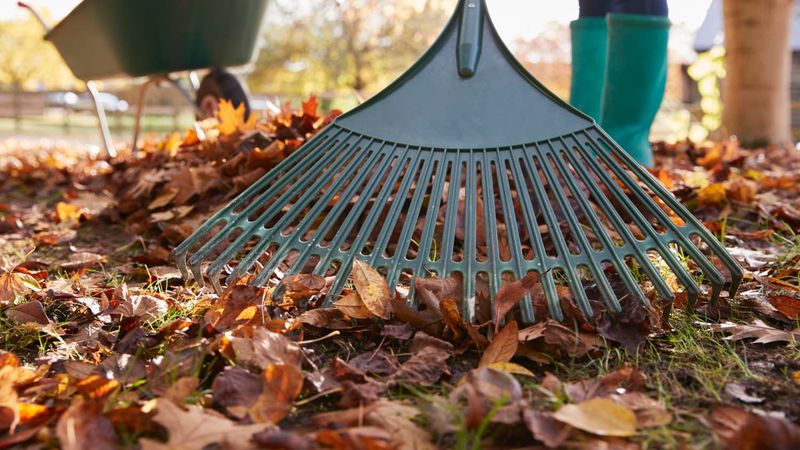
My fall uniform has changed a lot over the years. Sturdy boots, thick jeans, and leather gloves now come out before the first big leaf drop. Snake gaiters or snake-proof leggings add even more protection.
Use your rake as a scout. Gently stir a leaf pile or brush pile before you reach in. A long stick works for flipping logs and boards so your hands stay well back.
Look before you step or reach, especially around shrubs, woodpiles, and dark corners. Many bites happen when someone accidentally steps on or grabs a resting snake. Slowing down costs only a few seconds.
Spot a snake? Freeze, then back away slowly. Cottonmouths are not naturally aggressive and usually prefer to escape or bluff with that open-mouth display.
Evenings deserve care too. Carry a flashlight if you are out after dark on a warm fall night. Snakes can still be moving when temperatures stay mild.
Bag or compost leaves soon after raking instead of leaving tall piles overnight. A tidy routine means fewer surprise hiding spots, and that makes the whole job feel a lot more relaxed.
A Tidier Yard Gives Water Moccasins Fewer Reasons To Stay
Snakes visit yards for two reasons, shelter and snacks. Take those away, and they tend to move along. That simple idea guides every step here.
Clear brush piles, fallen branches, old boards, and rock heaps. Stack firewood off the ground and away from the house. Keep grass mowed short, especially near ponds, ditches, or creeks.
Next, look at the food supply. Rodents, frogs, and insects draw hungry snakes. Secure trash cans, bring pet food indoors, and clean up spilled birdseed under feeders.
Walk around your house, garage, and shed. Seal gaps, cracks, and openings where a snake could slip in for winter. A small crack near a foundation can look like a cozy den.
If you live near water in East Texas, expect an occasional visitor no matter what. Snakes play a real role in controlling rodents. The goal is peaceful distance, not a war on wildlife.
Finally, make a plan with your household. Save the Poison Help number, know your nearest hospital, and keep boots handy. Prepared gardeners can enjoy crisp fall days with a lot more confidence and a lot less worry.