Brown Florida St. Augustine Grass In September? Check The Blades Before You Add More Water
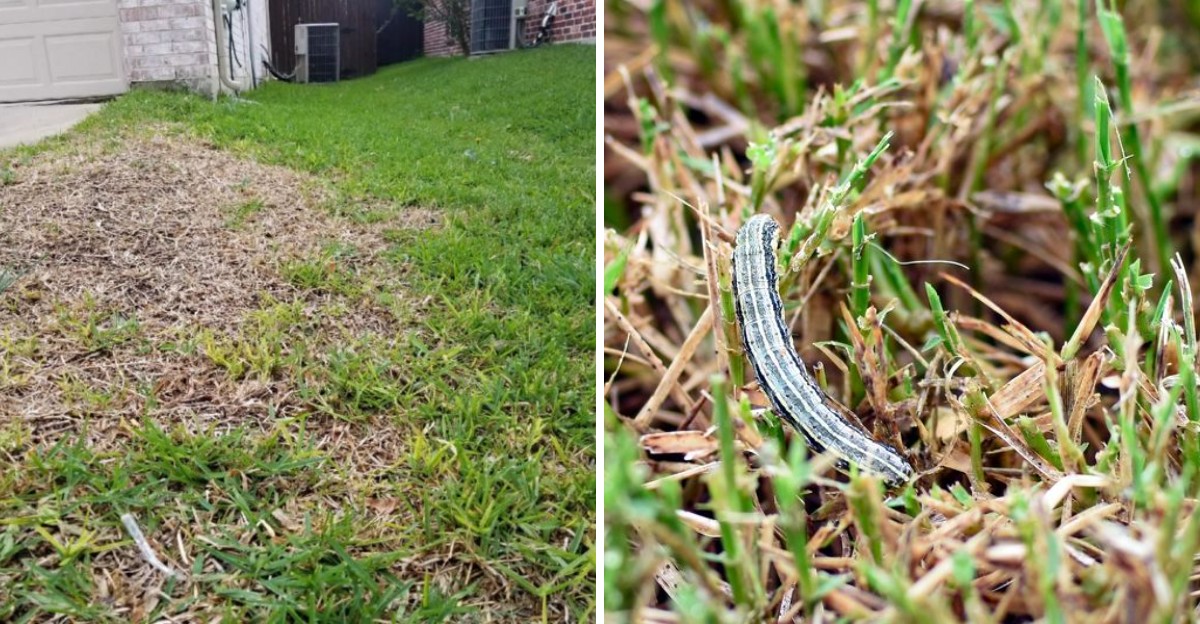
Your St. Augustine grass has gone patchy and brown, and the instinct is obvious: grab the hose and soak it. More water seems like the fix for a lawn that looks thirsty and stressed.
Check the blades first. Brown St. Augustine in September doesn’t always mean drought stress, and dumping more water on the problem can actually make things worse if something else is going on underneath.
Certain issues thrive in exactly the wet, humid conditions extra watering creates, spreading faster the more moisture you add. Get the diagnosis wrong and you’re not fixing the lawn.
You’re feeding whatever’s actually causing the damage. Florida’s late summer humidity makes this mix-up especially common, and September tends to be when the confusion peaks.
Before you touch the hose again, here’s what those blades are actually trying to tell you.
1. Chinch Bugs Working The Hot Edges
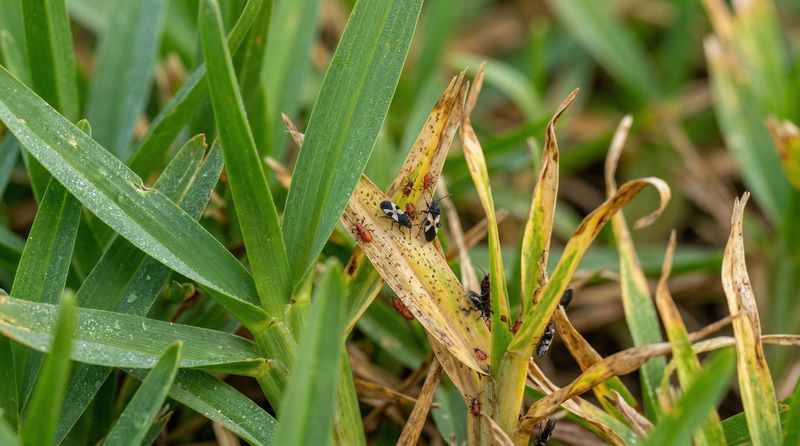
Follow the heat and you will often find the culprit. Chinch bugs love the strip of lawn baking beside a sidewalk, driveway, or south-facing wall, and that is where their damage shows up first.
Watch for grass that fades to yellow, then straw tan, with a faint purple or reddish tint right where the hurt turf meets the healthy turf. That colored border is a handy fingerprint that separates bug damage from simple thirst.
To confirm, part the grass with your fingers on a warm afternoon and stare at the thatch for thirty seconds. The insects are about the size of a pencil eraser, black with folded white wings, and they scatter fast once light hits them.
Another old trick works well: push a bottomless coffee can into the soil at the patch edge and fill it with water. The insects may float to the surface within a few minutes, giving you a clue that chinch bugs are present.
Watering more will not fix this, since the damage is happening above the roots, where chinch bugs feed on grass tissue and disrupt the plant’s ability to recover.
Treat the affected zone plus a buffer ring of green grass around it, because the population is already moving outward.
Chinch bugs often become more noticeable in stressed Florida turf, and heavy thatch can make infestations harder to detect and manage.
2. Gray Leaf Spot Speckling The Blades
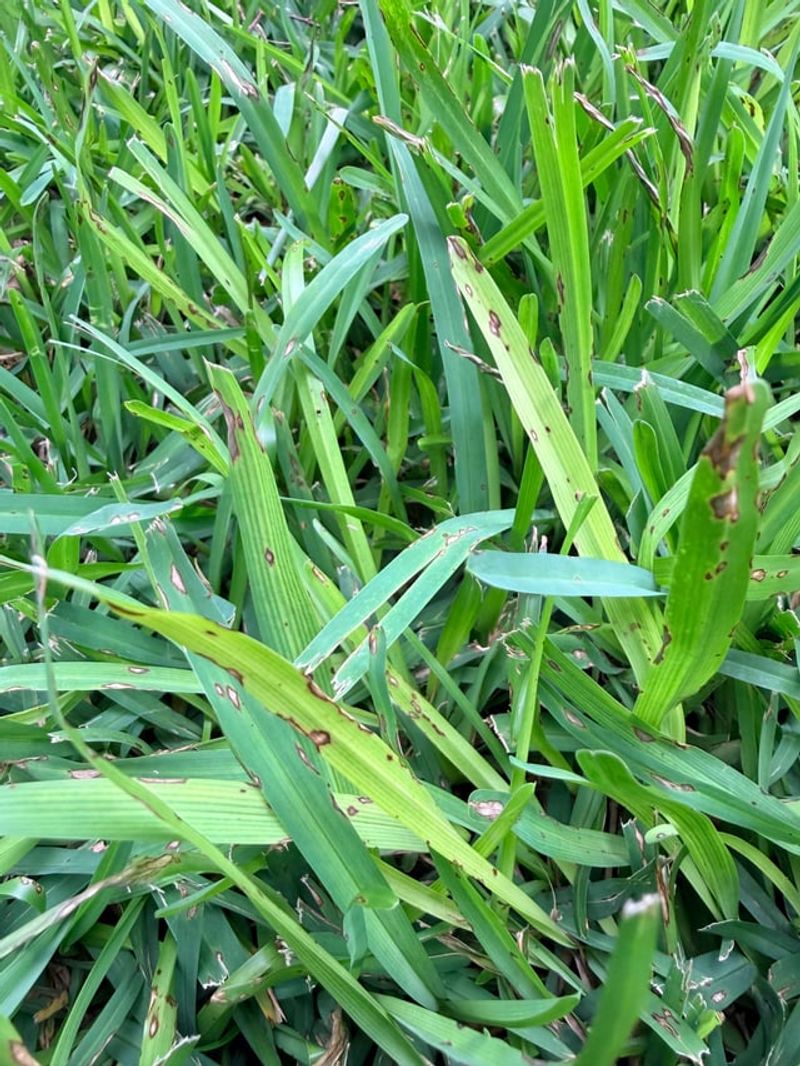
Here is where checking individual blades pays off in a big way. Gray leaf spot writes its signature directly on the leaf, so a single blade held up to the light tells you plenty.
Look for small oval or stretched-out lesions in ash gray to tan, each ringed by a darker brown or purplish border. Under a hand lens they can look almost like tiny eyes staring back at you.
As spots multiply they run together, the blade collapses, and the lawn takes on a scorched, thinning look that people often mistake for drought. September humidity, warm nights, and afternoon storms are exactly the conditions this fungus enjoys.
Your Florida Garden Changes Every Week. Your Plan Should Too.
Gardening in Florida changes quickly throughout the season. Every Friday you’ll receive a simple weekly plan showing exactly what to plant, prune, fertilize, harvest, and protect so you never miss the right timing.
Excess nitrogen during warm, humid periods can encourage lush growth that is more vulnerable to gray leaf spot. Ease off the fertilizer and the outbreak usually calms down.
Shift your irrigation to early morning so blades dry within a few hours instead of staying damp overnight. Cleaning equipment after mowing diseased areas is a good hygiene practice that can reduce accidental spread.
Shady, poorly drained corners tend to hold the disease longest, so pruning back nearby shrubs to boost airflow can quietly do more good than any spray bottle.
3. Take-All Root Rot Hiding Underground
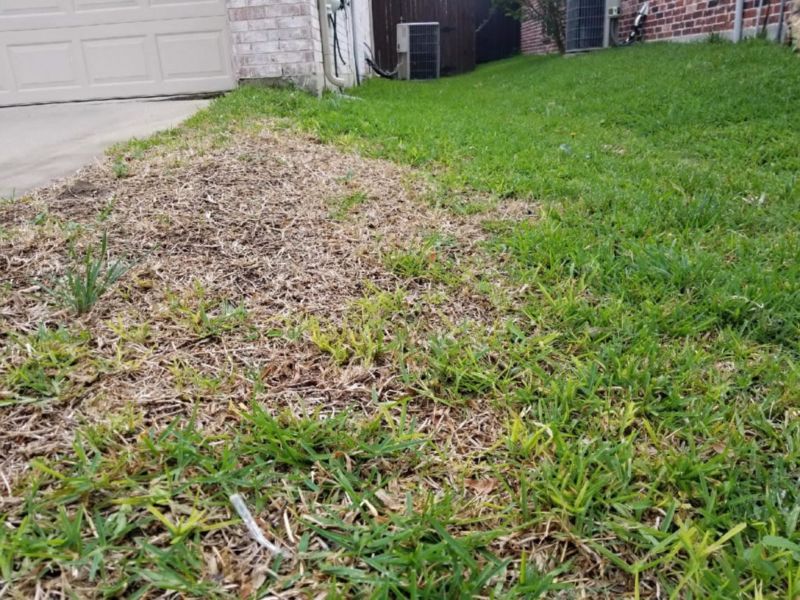
Some troubles start where you cannot see them. Take-all root rot attacks roots first, so the blades look puzzlingly pale long before anyone suspects a soil issue.
Early on you get light green or yellow patches that seem random, not neatly circular. Over several weeks the turf thins in odd shapes and refuses to fill back in, no matter how much you water.
The giveaway is in your hands. Grab a runner and tug gently: if it lifts away with almost no resistance, and the roots underneath are stubby, dark, and mushy rather than white and stringy, this fungus is a strong suspect.
Heavy September rain, compacted soil, and high pH all give the pathogen an edge. Stressed Florida lawns recovering from other damage are especially easy targets.
Recovery leans on root health, not fungicide alone. Improving soil conditions, correcting pH when needed, and encouraging healthy roots are usually more important than relying on one amendment.
Cut back watering frequency while soaking deeply when you do water, raise your mowing height, and hold off on heavy nitrogen. Patience matters here, because roots rebuild slowly and the green usually returns in stages rather than overnight.
4. Brown Patch Rings With Orange Halos
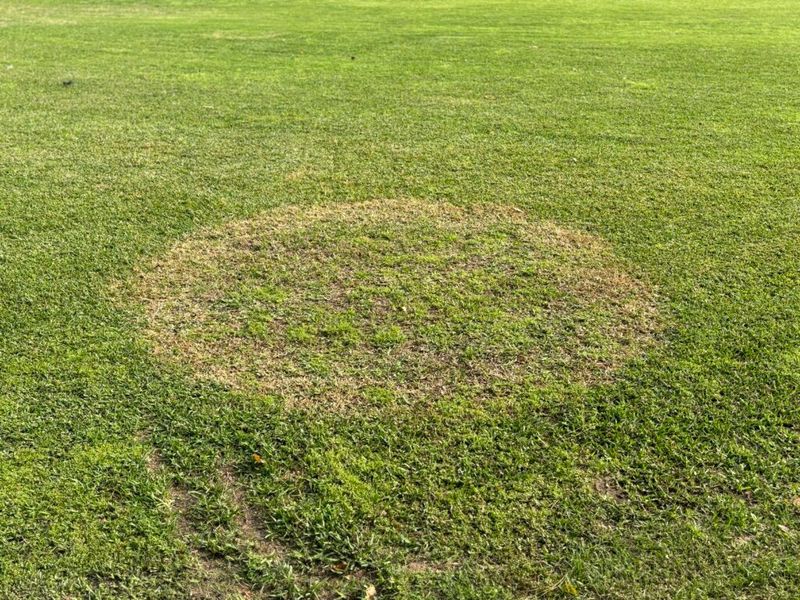
Circles in the lawn always grab attention. Large patch, a disease often confused with brown patch, can create expanding circular areas in St. Augustine lawns.
The border is the tell. Along the outer edge you will usually spot a yellow to orange band where the fungus is actively moving into healthy tissue, almost like a smoke ring in the turf.
Do the pull test on a few blades inside the ring. If leaves slip out of the sheath with a soft, slightly rotten base while the stolon underneath stays green and firm, you are looking at a leaf sheath infection rather than a root problem.
Low spots that stay wet, shady zones, and lawns watered in the evening are the usual hot spots. Anything that keeps the base of the plant damp for long hours feeds the cycle.
Improve drainage where you can, water before sunrise, and resist the urge to add nitrogen during an active outbreak. Maintaining adequate potassium levels through proper fertilization can help turf handle stress.
Good news: because the runners often survive, these patches frequently green up again once conditions dry. Mark the ring edges with small flags so you can tell later whether it is still expanding or holding steady.
5. Thirsty Turf Folding Its Blades
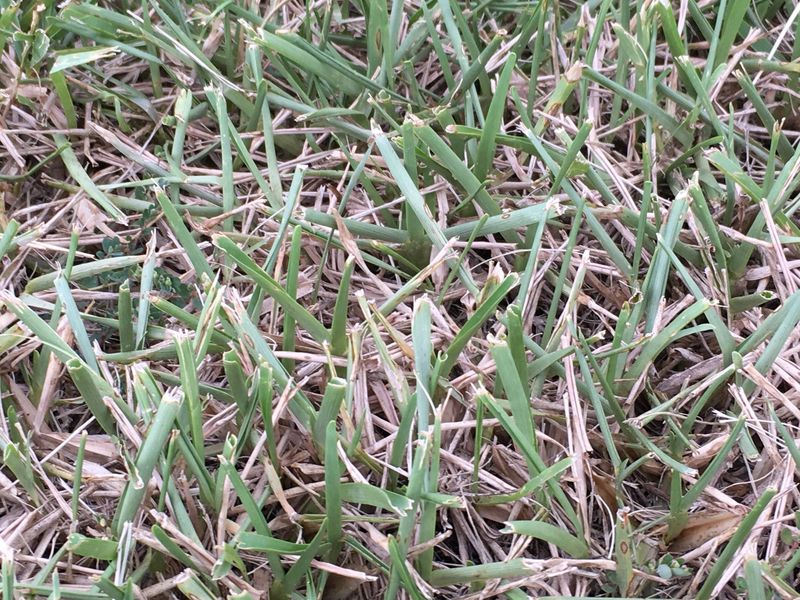
Grass has body language, and folding is its way of saying it needs a drink. When soil moisture drops, St. Augustine blades curl inward along the middle vein to cut down on water loss.
Color changes too. Before turning tan, the lawn takes on a dull bluish-gray cast that looks almost dusty from a distance.
Try the footprint test late in the afternoon. Walk across a suspect area, then look back: if your prints stay pressed into the turf instead of springing up, the blades have lost the internal pressure that keeps them stiff.
September can be sneaky. Even in a rainy month, sandy Florida soil drains fast, and spots blocked from sprinkler coverage by a shrub or a slope dry out while everything else looks fine.
Check your zones by setting out a few flat containers and running the system for fifteen minutes. Uneven water levels point to clogged heads or bad spacing, which explains those mystery patches near the same spot every year.
Aim for a deep watering that moistens the root zone, adjusting the amount based on rainfall, soil, and irrigation coverage. And remember, if the blades are flat and open rather than folded, thirst is probably not your answer.
6. Too Much Water Smothering The Roots
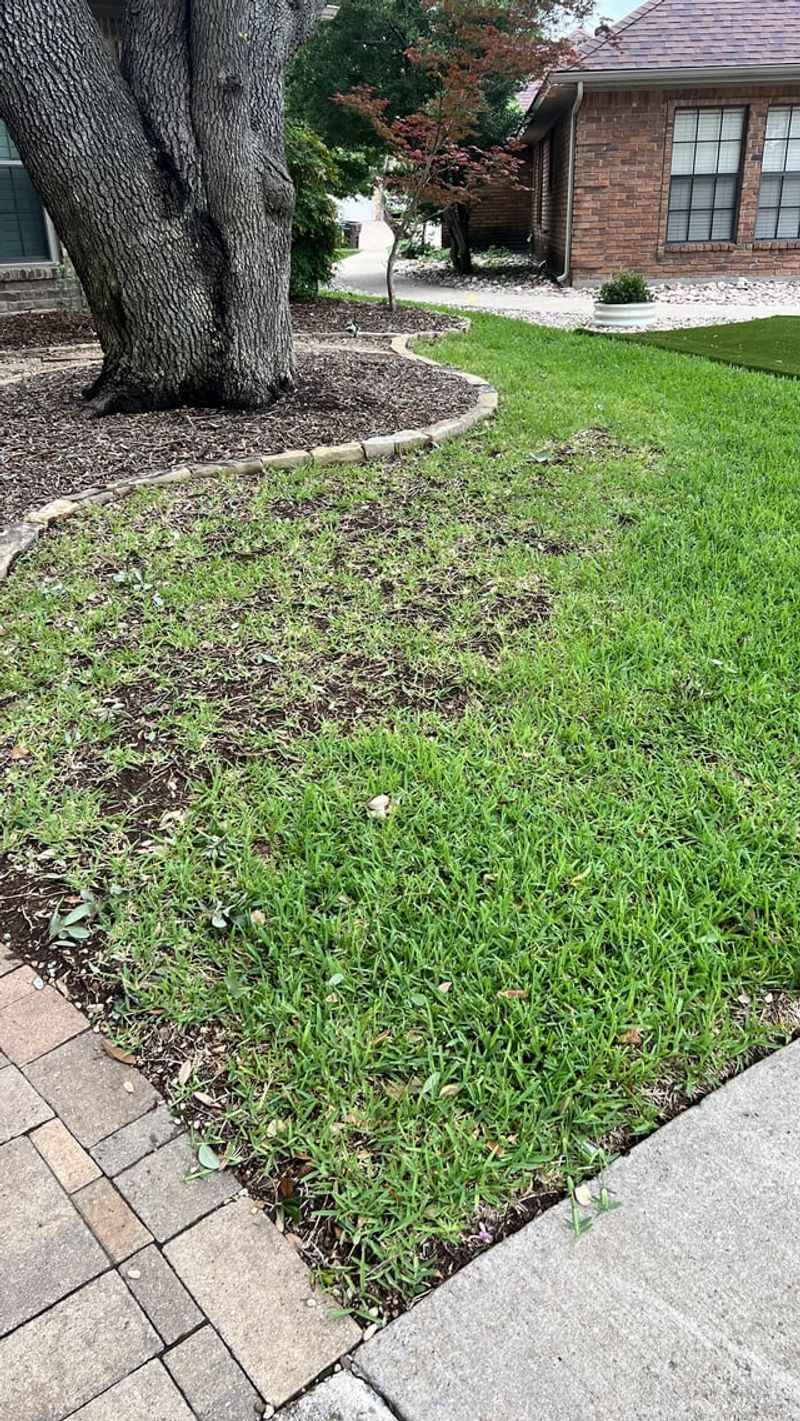
Kindness with the hose can backfire. Roots need air pockets in the soil, and constant saturation crowds that oxygen out, leaving roots stressed and less able to take up water and nutrients properly.
The symptoms mimic thirst, which is why so many homeowners water even more. Blades yellow, take on a grayish-blue tone, and the whole area feels spongy or squishy underfoot.
Push a screwdriver into the soil before you ever turn on a sprinkler. If it slides in with no effort and comes out muddy, the ground is already holding plenty.
Waterlogged turf also rolls out the welcome mat for fungal trouble, since spores thrive in that damp, airless environment. Many September fungus cases trace back to an irrigation timer nobody adjusted after the rainy season began.
Fix it by switching to fewer, longer cycles and installing a rain sensor if you do not have one. Skipping a scheduled run after a storm costs nothing and helps a lot.
Compacted or clay-heavy areas may need core aeration to open up channels for air and drainage.
Look at the low spots first, because water collects there and browns out while the higher ground stays healthy, a pattern that points straight at excess moisture rather than a shortage.
7. Caterpillar Crew: Sod Webworms, Armyworms, Cutworms
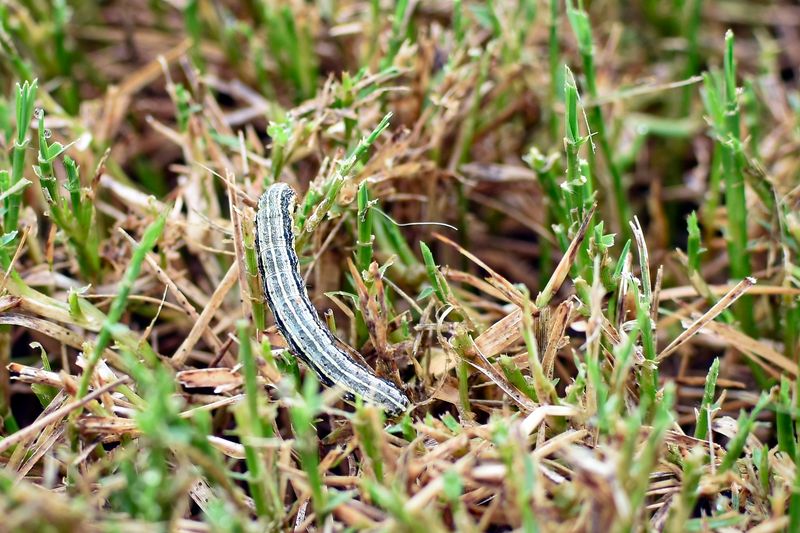
If the lawn looks like someone gave it a bad haircut, caterpillars are probably to blame. Sod webworms, armyworms, and cutworms chew the blades themselves, leaving notched, scraped, or ragged edges.
Damage often starts as thinning that looks like the mower scalped a patch. Within days it turns into irregular tan areas with visible bite marks along the leaf tips.
Sod webworm larvae are gray-green and feed at night, hiding in the thatch by day inside silky tunnels. Armyworm outbreaks can appear suddenly and cause rapid feeding damage across sections of turf.
Other clues are easy to spot: small green pellets of frass in the thatch, and moths that flutter up in a zigzag when you walk the lawn at dusk. Birds pecking hard at one area is another tip-off.
A mild soapy water flush can help reveal caterpillars, but avoid strong mixtures that may stress the turf..
The upside is real. Because roots and runners stay intact, treated lawns usually push out fresh green growth quickly once the feeding stops, especially with light, balanced nutrition.
8. Grubs Chewing Beneath The Surface
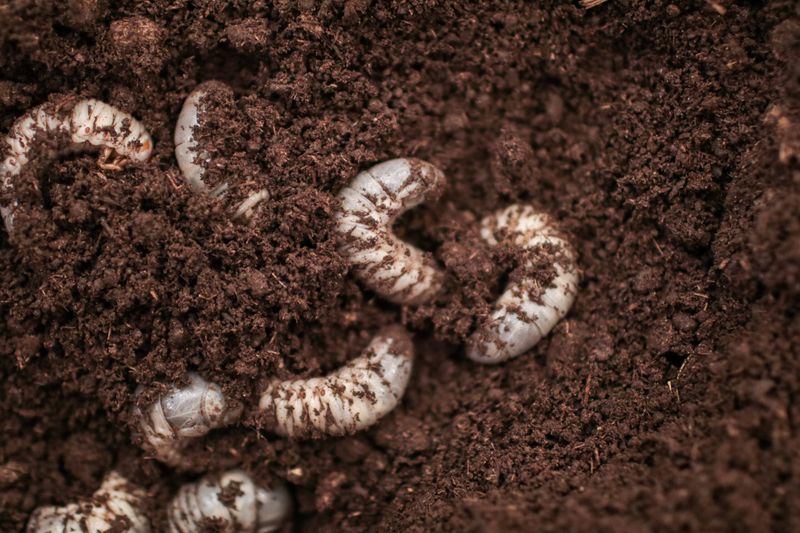
Ever peel back turf and have it lift like an old rug? That is the classic grub signature, and late summer into early fall is peak season for it.
These plump, cream-colored larvae curl into a C shape and feed on roots just below the surface. With the anchor system gone, the grass browns out and separates from the soil with a light tug.
Cut a one-foot square flap about three inches deep and fold it over. A high number of grubs in a small area can indicate a population large enough to damage turf, especially when roots are already stressed..
Brown zones tend to look large and blotchy, sometimes softening or sinking underfoot. Increased raccoon, armadillo, or bird digging is nature’s way of telling you dinner is being served down there.
Watering harder will not help, because there are few working roots left to absorb the moisture. Focus instead on treating the soil and then encouraging new rooting with light, steady care.
Many grub problems become noticeable in late summer and early fall as larvae feed near the surface, although timing varies by beetle species. Trimming back that summer irrigation habit is one of the simplest long-term defenses you have.
9. Fertilizer Missteps And Nutrient Imbalance
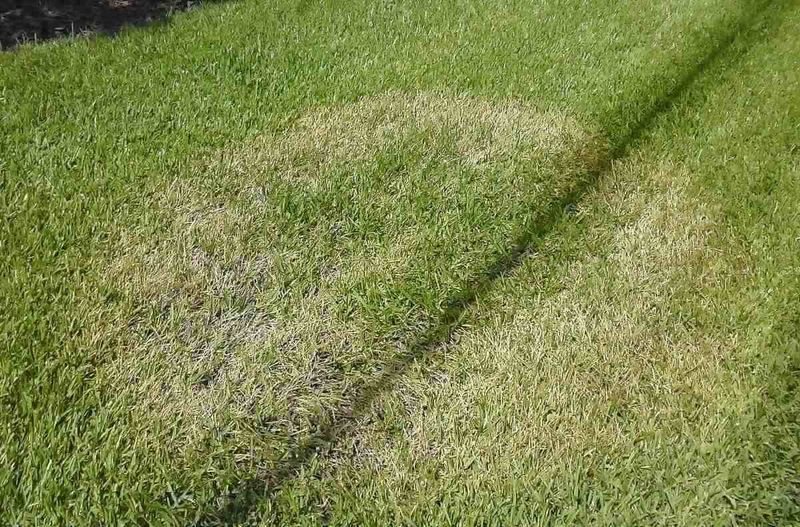
Feeding a struggling lawn feels productive, yet timing and balance matter more than quantity. Too much nitrogen in September pushes soft, fast growth that fungi find easy to invade.
Watch the pattern of the yellowing. Overall pale color across the whole lawn hints at nutrition, while sharply defined patches usually point toward pests or disease.
Iron shortage is common in Florida’s alkaline, sandy soils and shows as yellow blades with green veins, mostly on newer growth. A chelated iron application often greens things up without triggering a growth spurt.
Potassium deserves more credit than it gets, since it strengthens cell walls and helps turf shrug off stress. Many bagged blends are heavy on nitrogen and light on potassium, which leaves lawns pretty but fragile.
Streaky brown lines that match your spreader path usually mean fertilizer burn from overlap or granules left sitting on wet blades. Rinsing lightly after application prevents that.
A soil test through your county extension office costs little and removes the guesswork about pH and what is missing.
Save the heavier feedings for late spring and early summer, keep late-season applications modest, and your grass heads into cooler months tougher, denser, and far less likely to hand you another tan surprise.