Can Potted Boxwoods Survive Winter on a Virginia Porch?
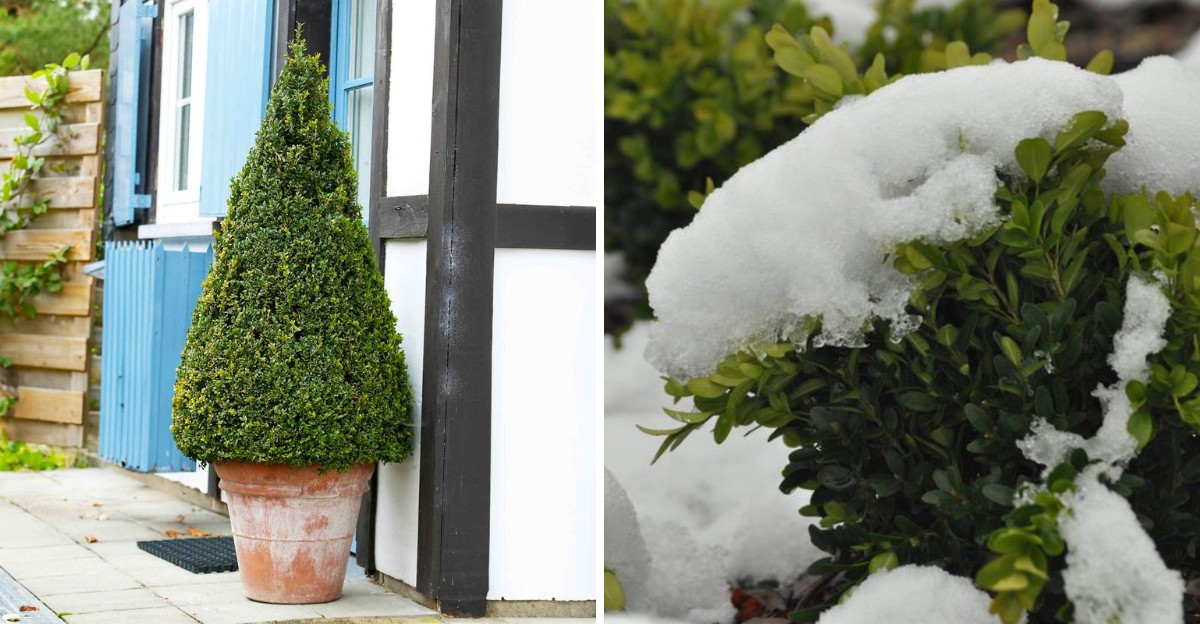
Roots in a pot can feel winter cold about one or two hardiness zones harsher than roots tucked safely in the ground. That surprised me the first time I read it in extension guidance. The leaves get the headlines, but the roots quietly take the biggest hit.
Virginia winters are famously moody. A sunny 60-degree afternoon can flip into a teens-level night with a stiff wind before you finish your coffee. My porch planters learned that lesson before I did.
Let me be straight with you. I lost a gorgeous pair of evergreen shrubs flanking my front door one February, and I blamed the snow. The real trouble was thirst and frozen soil, which nobody warned me about.
So can those tidy green globes by your door make it to spring? I believe the answer depends on a handful of small choices you make this fall.
Those Boxwood Roots in Pots Feel a Colder Winter Than You Do
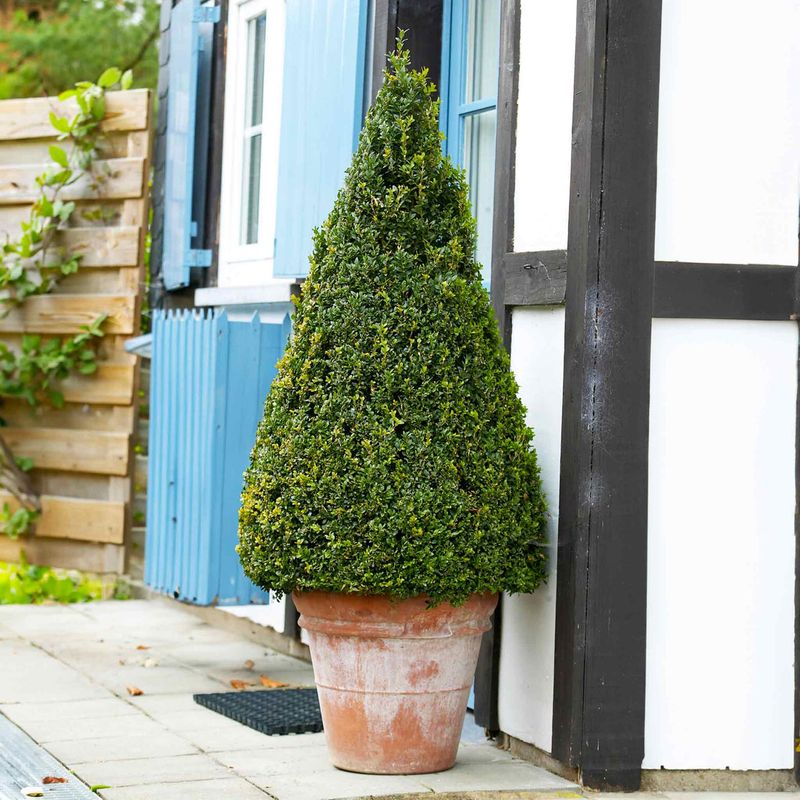
Most gardeners check the leaves first, but the real story sits below the rim. Boxwood roots are far less cold hardy than the branches above them.
In the ground, soil holds warmth and shields roots from sudden swings.
A container offers almost none of that comfort. Cold air hits the pot on every side, so the root ball can freeze solid during a hard snap.
University extension experts often suggest treating potted plants as if they live one or two zones colder than your actual zone.
Virginia ranges from about Zone 5b in the western mountains to 8b near the coast, with most of the state sitting in Zone 7. Common boxwoods are rated for Zones 5 through 8 or 9 in the ground.
In a pot, a Zone 7 porch may act like Zone 5 or 6 for those roots.
So yes, potted boxwoods can make it through a winter. Many do every year with no fuss at all.
The catch is that roots need a bit more help than the shrub looks like it needs.
Once I understood that, my whole approach changed. I stopped fussing over the foliage and started focusing on soil temperature and moisture.
That simple shift made the biggest difference on my own porch.
A Deep Drink Before the Freeze Keeps Boxwood Leaves Green
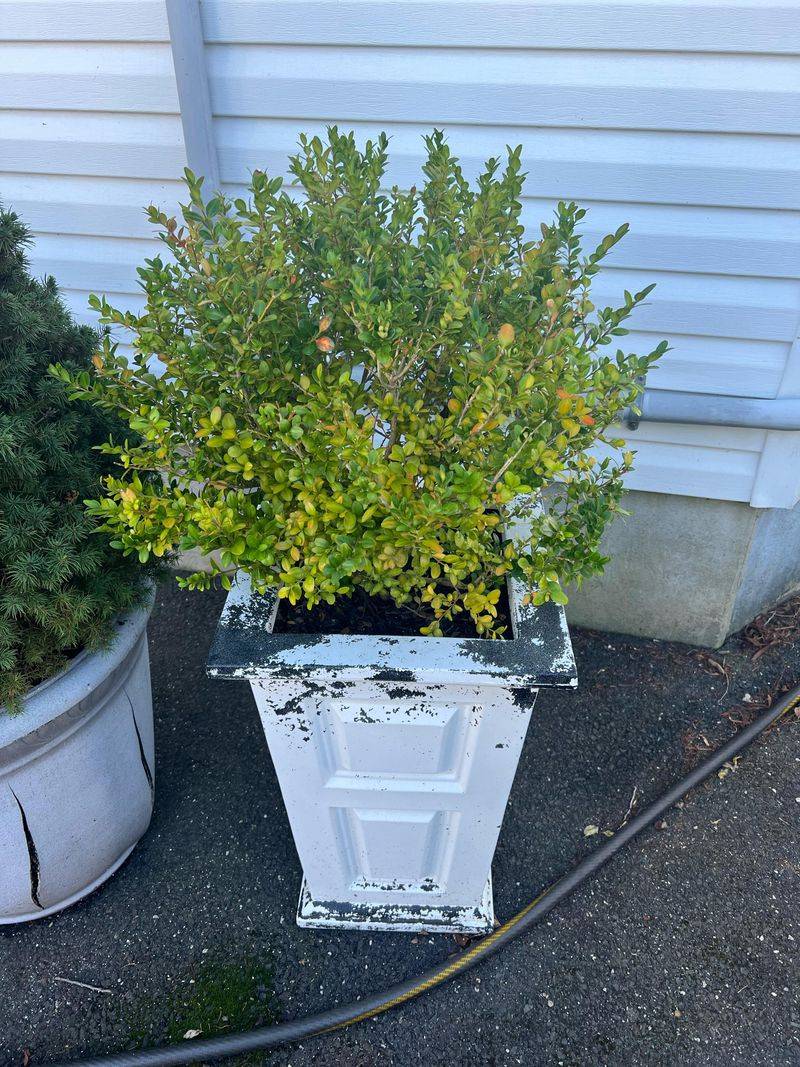
Thirst causes more winter trouble for boxwoods than snow ever will. Evergreens keep losing water through their leaves all winter long.
If the roots are dry or frozen, they cannot replace that moisture.
The result is winter burn, which shows up as bronze, orange, or tan leaves by late winter. Wind and bright sun make it worse.
A well-watered plant handles those stresses much better.
As a rule, I water my porch boxwoods deeply through October and November until the soil starts freezing. I give the pot a slow soak until water runs from the drainage holes.
Moist soil also holds heat better than dry soil, which is a nice bonus.
Winter care does not stop there. Virginia often gets mild stretches in January and February.
When the air climbs above 40 degrees and the soil feels dry an inch or two down, water again.
Aim for midday so water soaks in before the night turns cold. Skip watering when the pot is frozen solid, since water just runs off.
Keep an eye on pots tucked under a porch roof, too.
Those covered spots stay dry because rain and snow never reach them. My sheltered planters need water far more often than the ones out in the open.
Wrap That Boxwood Container Like It Is Heading Out in a Snowstorm
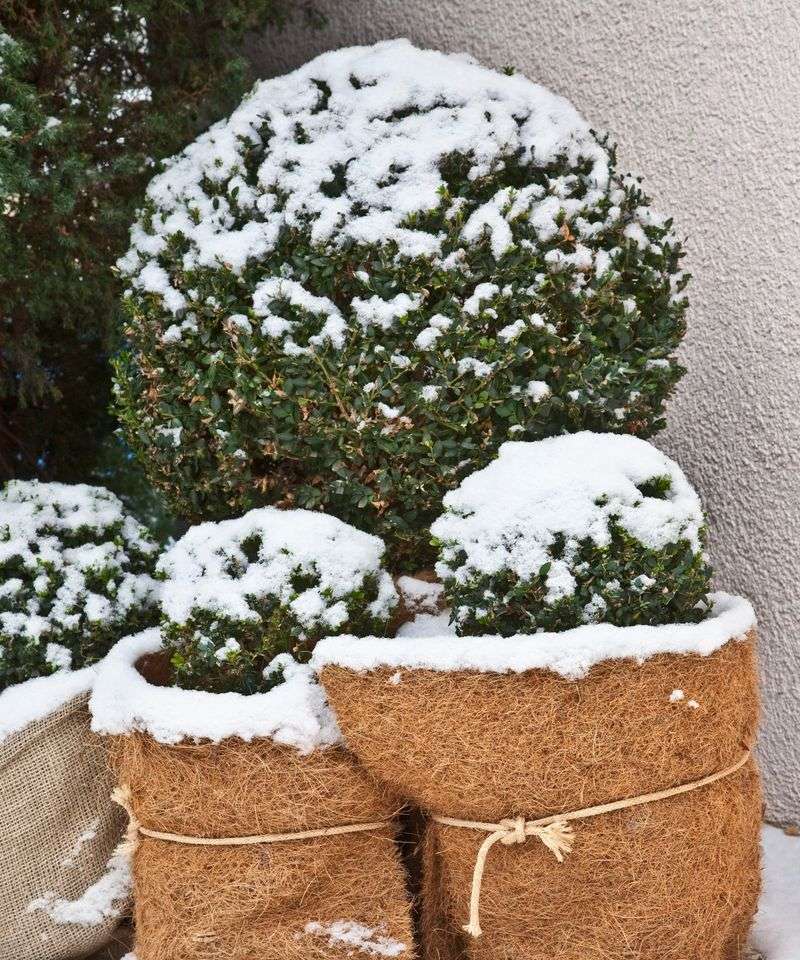
Bubble wrap is not just for moving boxes. Wrapped around a planter, it acts like a cozy winter coat for boxwood roots.
Burlap, old blankets, or foam insulation sheets work well too.
Wrap the outside of the pot from the base to the rim. You can tuck burlap over the bubble wrap so it looks tidy and natural on your porch.
Nobody needs to know your fancy urn is wearing packing material underneath.
Another trick is grouping. Cluster several potted plants close together, ideally against the house wall.
The shared mass holds warmth and blocks wind from hitting every side of each pot.
A layer of mulch on top of the soil helps as well. Two inches of shredded bark keeps moisture in and evens out temperature swings.
Keep it a little away from the stems.
Pot material matters more than many folks realize. Terra cotta and some ceramic pots can crack when wet soil freezes and thaws over and over.
Fiberglass, resin, concrete, and thick frost-proof pots handle winter much better.
One mistake I won’t repeat is leaving a pricey glazed pot unprotected. It split right down the side in late January.
Now my good ceramics either get wrapped or slip a plastic liner pot inside them.
Wind and Afternoon Sun Can Bronze Porch Boxwoods Fast
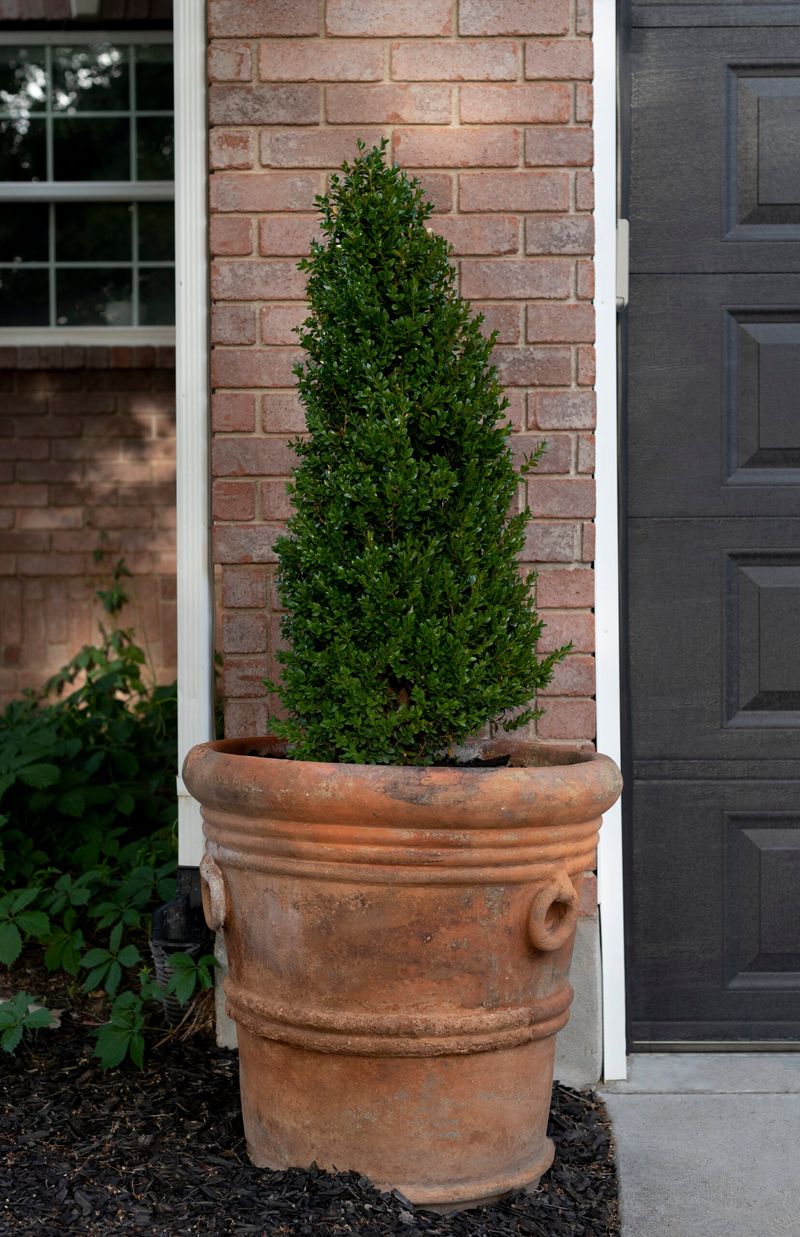
Location sounds boring until you watch one boxwood stay green while its twin turns brown. I learned that on my own front steps.
The difference was a few feet and a gusty corner.
Winter wind pulls moisture from leaves quickly. Bright afternoon sun warms the foliage, so it loses even more water while the roots stay frozen.
That combo causes most of the bronzing gardeners notice in March.
The sweet spot is a sheltered area with some shade during the coldest months. North or east-facing porches often work nicely.
A corner against the house blocks wind and soaks up a little warmth from the walls.
Watch out for spots near open driveways or the end of a long porch where wind funnels through. Those areas can be harsh even on mild days.
Moving pots just a few feet can help a lot.
If your porch sits wide open, a simple burlap screen on the windy side makes a real difference. You can also slide pots behind railings, benches, or larger planters.
Heavy pots move easily on a plant caddy with wheels.
Avoid wrapping the shrub itself in plastic. Plastic traps heat on sunny days and can harm the leaves.
Breathable burlap is the safer choice.
Some Boxwood Varieties Shrug Off Cold Better Than Others
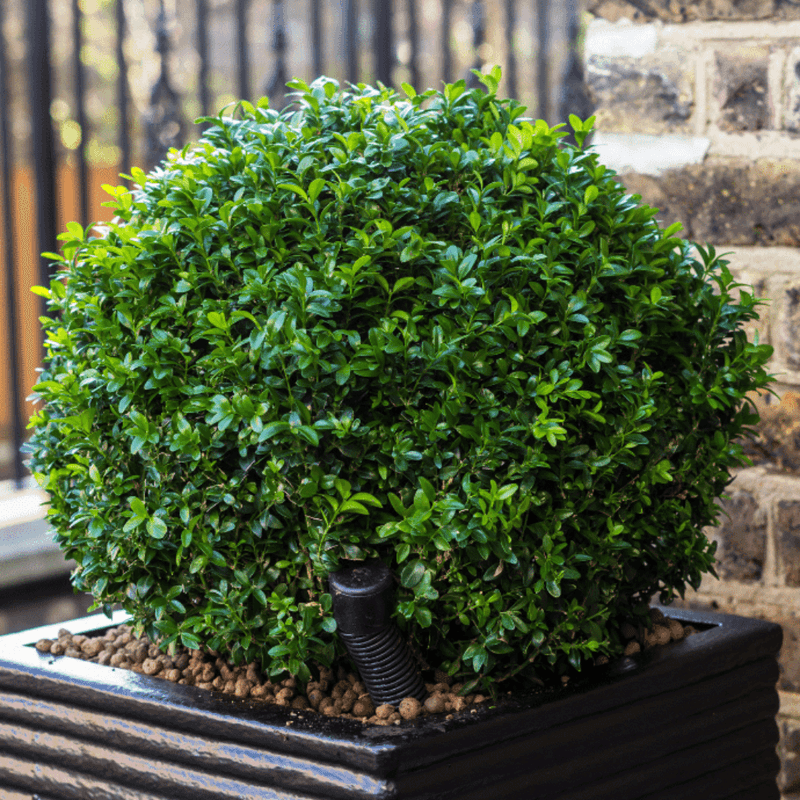
Not every boxwood handles a frosty porch the same way. Picking the right variety saves a lot of worry later.
If you ask me, this step matters most for gardeners in colder parts of the state.
Hybrids from the Sheridan series, like ‘Green Velvet’, ‘Green Mountain’, and ‘Green Gem’, were bred in Canada for tough winters. They are generally rated to Zone 4 or 5.
That extra cushion helps a lot in a container.
Korean boxwood (Buxus sinica var. insularis) is another hardy pick. Some selections, like ‘Wintergreen’, handle very cold temperatures well.
Its leaves may take on a bronze tint in winter, which is normal and fades in spring.
English boxwood is the classic charmer of old Virginia gardens, from Mount Vernon to Colonial Williamsburg. It is less cold tolerant, though, and slow growing.
In a pot, it can struggle in the Shenandoah Valley or higher mountain areas.
A smart rule is to choose a plant rated at least one zone colder than your area. In Zone 7, look for Zone 5 or 6 hardiness.
In the mountains, go even tougher.
Check plant tags carefully, and ask local nursery staff. They know which varieties perform well in your corner of the state.
Put Away the Pruners and Fertilizer Until Spring
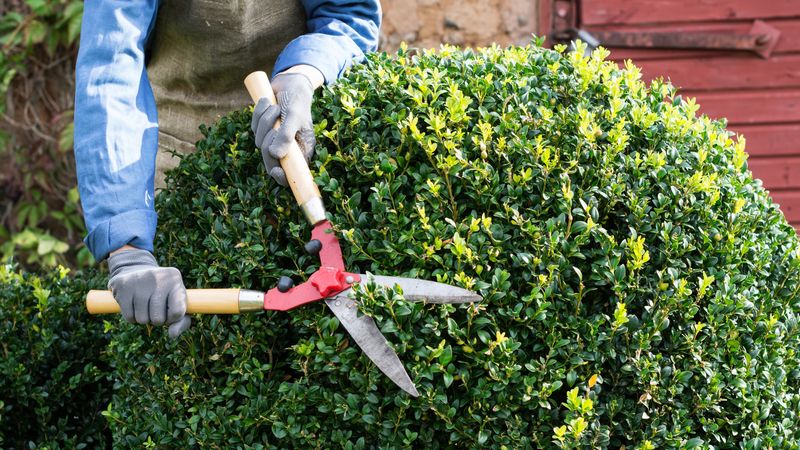
Late fall shaping is tempting, especially before holiday decorating. I get it, those little globes look sharper with a fresh trim.
Still, timing really matters with boxwoods.
Pruning in late summer or fall can push out tender new growth. Those soft shoots lack time to harden before freezing weather arrives.
They often brown or suffer damage when temperatures plunge.
Most extension specialists suggest pruning boxwoods in late winter or early spring, just before new growth begins. A light touch-up in early summer is fine too.
Snipping a few sprigs for holiday greenery is okay since it removes very little.
Fertilizer follows the same logic. Feeding after midsummer can trigger fresh growth at the wrong time.
Save it for spring, when the plant is ready to put that energy to good use.
Container plants do lose nutrients faster because watering washes them out. A slow-release fertilizer in early spring covers most of the season.
Follow the label rate, since too much can burn roots in a pot.
Patience pays off here. A boxwood that rests quietly through fall heads into winter tougher and better prepared.
Then you can grab the shears in March and shape it with a happy heart.
Snow on Boxwood Branches Needs a Gentle Brush, Not a Whack
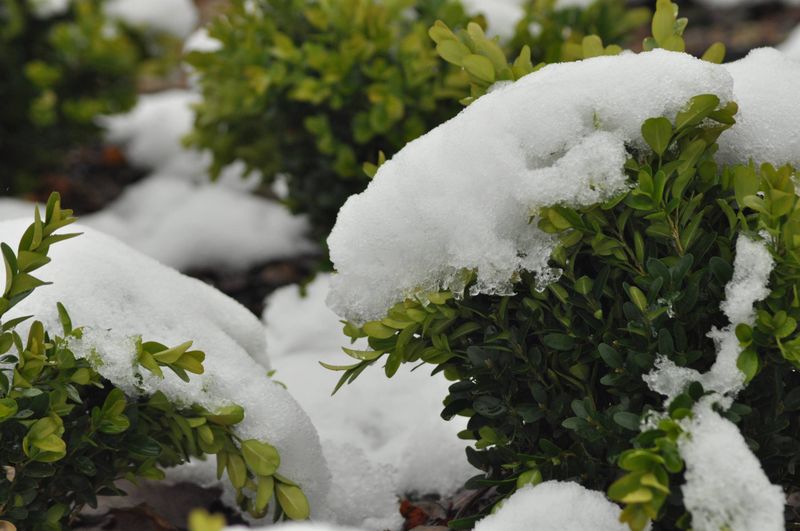
Fresh snow on a round boxwood looks like a frosted cupcake. A light dusting is harmless and even adds a little insulation.
Heavy, wet snow tells a different story.
Virginia storms often bring dense, wet snow and sometimes ice. That weight can splay branches open or snap them.
Boxwoods have brittle wood, so damage can happen fast.
Use a soft broom and brush upward, lifting the snow off branches. Do it while the snow is fresh and fluffy.
Avoid shaking or whacking the shrub, which causes more breakage.
Ice is trickier. Let ice-coated branches thaw naturally rather than trying to knock the ice loose.
Forcing it usually breaks stems.
Here is a tip I picked up from an old gardening friend. Tying soft twine loosely around taller boxwoods in fall helps them keep their shape under snow.
Remove the twine in spring.
Also think about what lands on your porch steps. Deicing salt can splash into planters and harm boxwood roots and leaves.
Calcium magnesium acetate or sand are gentler choices near plants.
Snow sliding off a porch roof can also crush pots below. If your roof drips or dumps snow onto one spot, move planters a few feet away.
Bronzed Boxwood Leaves in March Deserve a Second Look
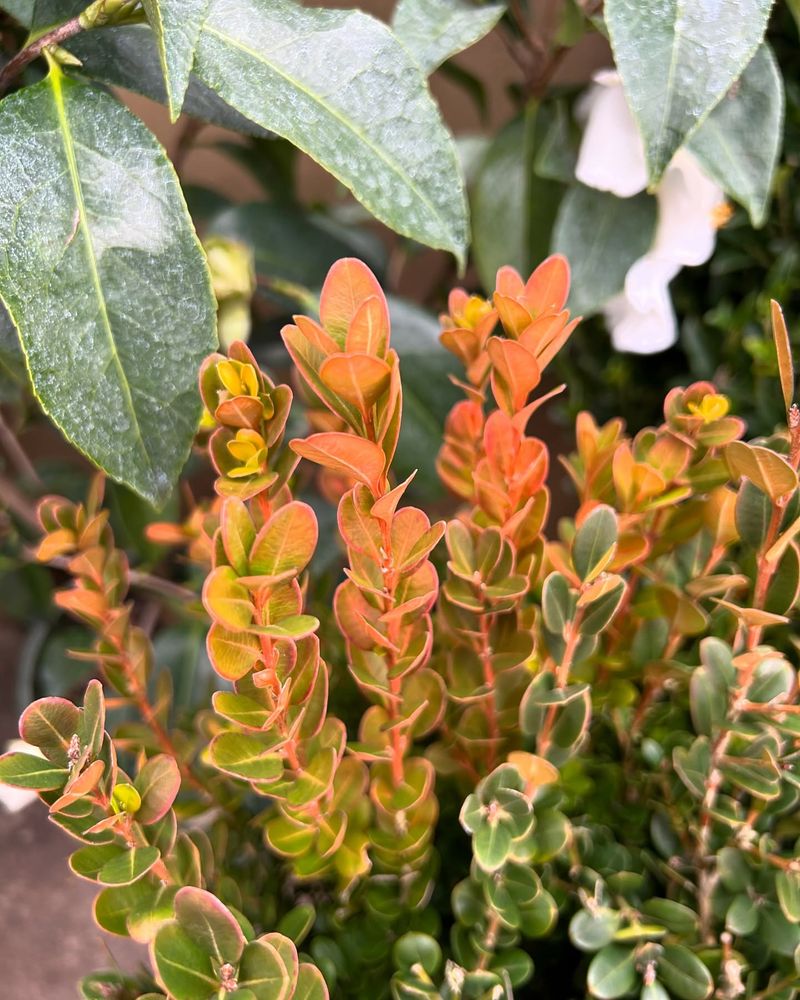
Spring is when you find out how winter really went. A few bronze or tan patches can look alarming at first.
Don’t panic and yank the plant just yet.
Scratch a stem gently with your thumbnail. Green tissue underneath means the branch is still alive and can push new leaves.
Brown, brittle stems can be trimmed back in spring.
Give the plant until May before making big decisions. New growth often hides winter damage within a few weeks.
I nearly tossed a sad-looking boxwood once, and it bounced back beautifully by June.
Watch for signs that point to other problems, though. Spreading leaf spots and sudden leaf drop may signal boxwood blight, which has been found across Virginia.
Virginia Cooperative Extension can help identify it, so contact your local office if you are unsure.
Spring is also a good time to check whether the plant has outgrown its pot. Roots circling the bottom mean it is time for a larger container.
A bigger pot holds more soil, which also means better winter protection later.
My garden taught me that boxwoods in pots are tougher than they look. With water, a sheltered spot, a warm wrap, and the right variety, your porch can stay green from fall through spring.