What It Means When A Black Rat Snake Shows Up In Your Virginia Yard
A snake in my neighbor’s barn once climbed a flat brick wall like it had a ladder hidden somewhere. No ladder, no rope, just ridged belly scales gripping tiny cracks in the mortar.
That visitor can stretch past six feet long, which makes it one of the longest snakes found in Virginia. It eats mice, rats, voles, and the occasional bird egg. Personally, I find that menu more helpful than scary.
You’ve probably seen one and jumped a little. I did too, the first time a shiny black body slid out from under my compost bin. My heart raced, and my garden gloves went flying.
Once you learn what that long, dark visitor is really doing out there, your view of it may shift. Could the snake you fear be one of the hardest workers in your whole yard?
That Long Black Snake In Your Garden Has A Good Reason To Be There
Food is the big draw. A black rat snake rarely wanders into a yard by accident, and it usually stays because something tasty lives nearby.
Biologists now call this species the eastern rat snake, though most Virginians still say black rat snake or simply black snake. It is not venomous, and it is one of the most common snakes across the state, from the coast to the mountains.
Seeing one is normal, not a sign of anything strange.
So what does its visit actually tell you? Mostly, it means your yard offers three things the snake wants.
Those are prey, places to hide, and spots to warm up in the sun.
Rodents top the list. If mice are nibbling spilled birdseed, nesting under a woodpile, or tunneling near your shed, a rat snake will find them by scent.
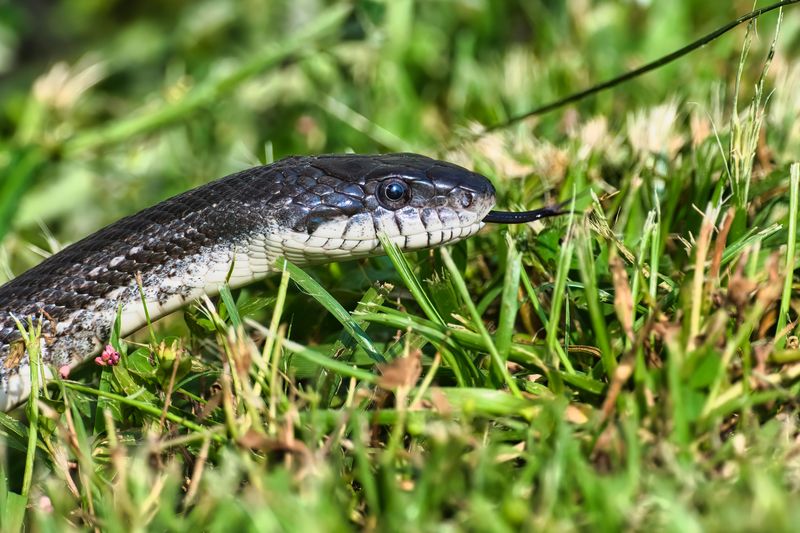
It flicks its tongue to pick up chemical trails, then follows them like a bloodhound.
Bird nests and eggs also attract these snakes, which is why you may spot one near a birdhouse in spring. That can be hard to watch, but it is part of a natural food web.
I like to treat a sighting as free information. The snake is quietly pointing at a rodent buffet you may not have noticed yet.
Rodent Patrol Is The Black Rat Snake’s Favorite Job
Mice beware. A single adult rat snake can eat many rodents over a warm season, and it hunts in places your cat or traps cannot reach.
These snakes are constrictors. They grab prey with their mouths, then wrap their bodies around it and squeeze until its blood flow stops.
No venom is involved, so the process is quick and simple.
Farmers have welcomed black snakes in barns for generations. Grain attracts rats, and rats attract snakes, so the barn stays cleaner without poison.
That same trade works in a suburban garage or garden shed.
Poison baits can harm owls, hawks, foxes, and even pets that eat a sickened rodent. A rat snake offers rodent control with none of that risk.
It also slips into tight burrows and wall gaps where mice raise their young.
Rat snakes eat other things too. Chipmunks, voles, squirrels, birds, and eggs are all on the menu, and young snakes often start with frogs and lizards.
You might lose a few eggs from a backyard henhouse, which is worth knowing if you keep chickens. Sturdy hardware cloth and nightly egg collection usually solve that.
For most gardeners, though, the snake earns its keep by trimming down the critters that chew bulbs, roots, and seed packets.
A Black Rat Snake Bite Is Rare And Not Dangerous
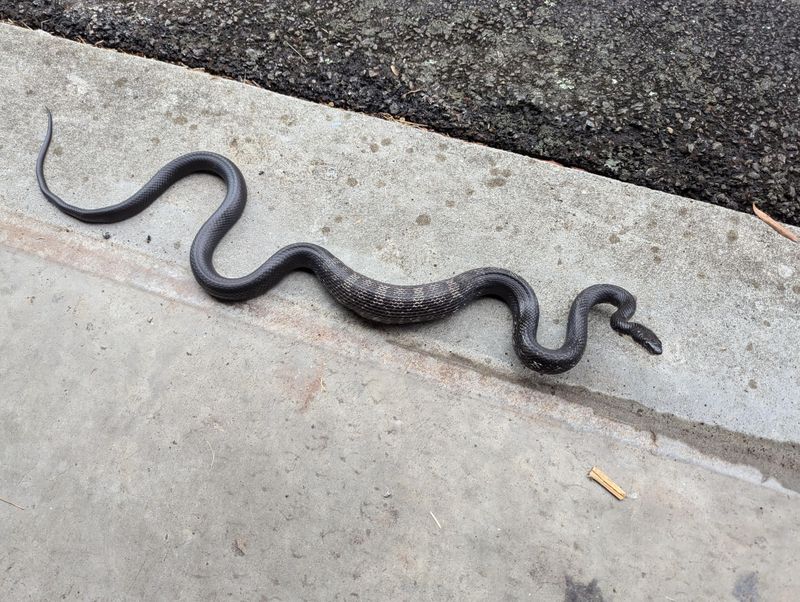
Let me ease your mind right away. A black rat snake has no venom, and it poses no poison threat to you, your kids, or your dog.
Like any wild animal, it can bite if it is grabbed, cornered, or stepped on. The bite feels like a row of small scratches and may bleed a little.
Wash it with soap and water, and watch for signs of infection as you would with any scrape.
Most of the time, the snake would much rather leave. It may freeze in place, hoping you will not notice it, or slide off into brush.
Pets usually come out fine too. A curious dog might get a nip on the nose, but it will not face the serious trouble a copperhead bite can cause.
Still, call your vet if swelling appears.
I always tell friends that calm distance is the best safety tool. Stand back about six feet, keep children and pets away, and let the snake move along.
One common myth says black snakes mate with copperheads. That is false, since the two species cannot breed.
Another myth claims they chase people. A snake heading your way is usually just trying to reach cover behind you.
How To Tell A Black Rat Snake From A Copperhead Or Black Racer
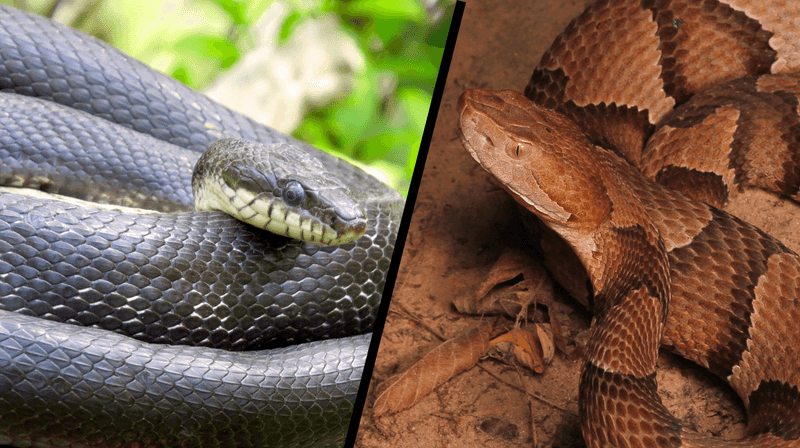
Shape is the first clue. A black rat snake has a body shaped a bit like a loaf of bread, flat on the bottom with sides that angle up.
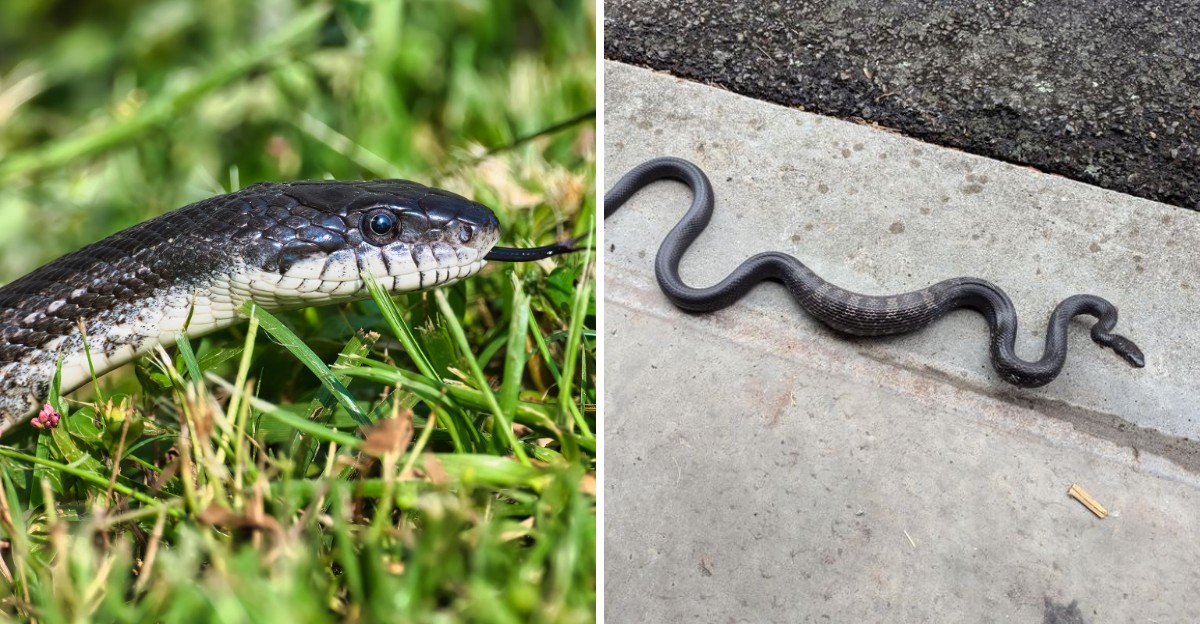
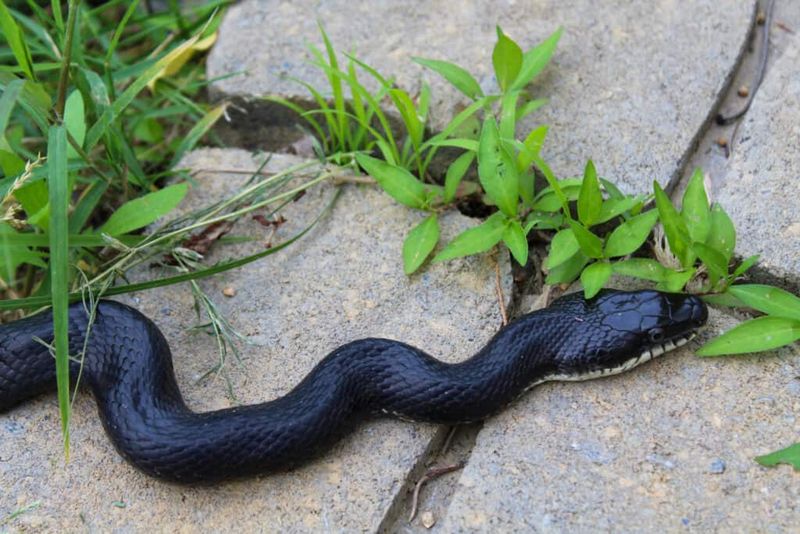
Adults are shiny black, sometimes with faint white flecks between scales. The chin and throat are white, and the belly shows a checkerboard of black and white near the front.
Older snakes can top six feet.
Young rat snakes look surprisingly different. They are gray with dark brown blotches down the back, and many people mistake them for copperheads.
The pattern slowly darkens over the first few years.
Copperheads have hourglass bands that look wide on the sides and narrow on top. Their coloring is coppery tan, and their heads are wide and triangular.
A baby copperhead also has a bright yellow tail tip.
The northern black racer is the other common black snake in the state. It has smooth, satiny scales, a round body, and a mostly gray or dark belly.
Racers move fast and tend to stay on the ground.
Rat snakes climb. If you see a black snake gripping tree bark or sliding up a porch post, odds are good it is a rat snake.
Snap a photo from a distance, and compare it with the Virginia Herpetological Society website.
Watch That Black Snake Climb Your Trees, Walls, And Gutters
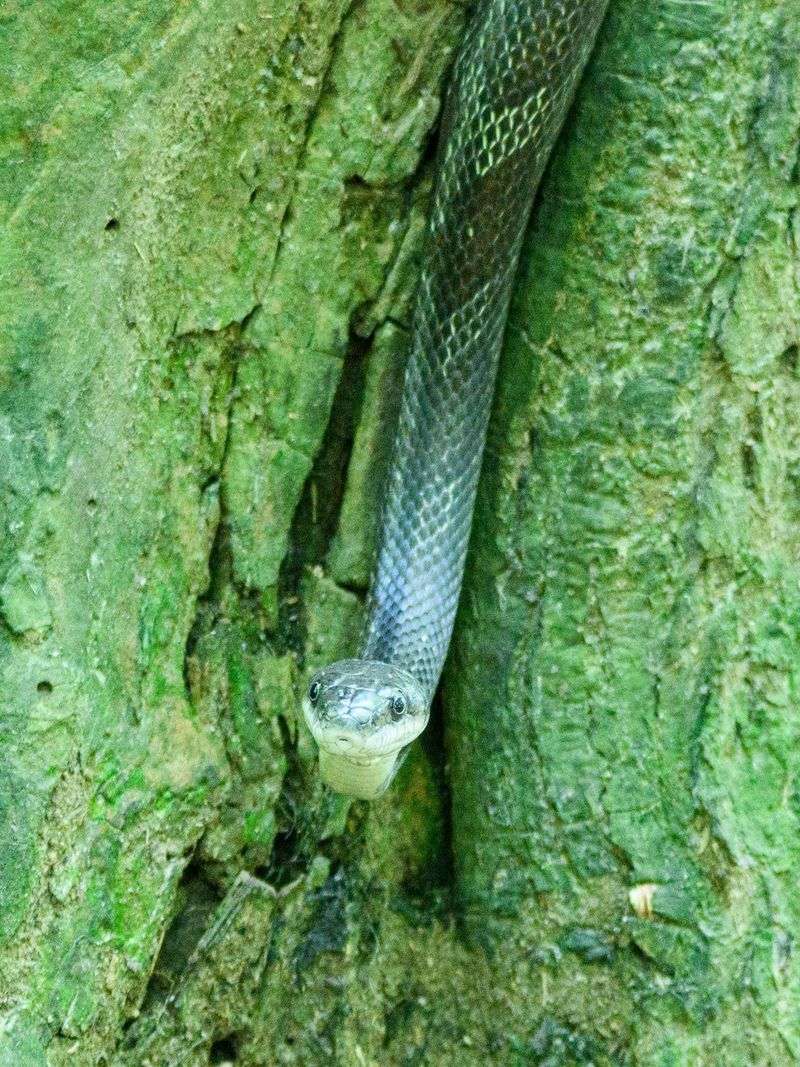
Few sights surprise homeowners more than a black snake halfway up a brick wall. Rat snakes are some of the best climbers in North America.
Their secret is in the belly scales. Each wide scale has a ridge along the edge that catches bark, mortar lines, and siding seams.
The snake bends its body into a stair-step shape, then pushes upward one kink at a time.
This skill explains plenty of odd sightings. You may find one in a gutter, on a porch rafter, inside a birdhouse, or draped over a tree limb.
Some even turn up in attics while following mice.
Height also helps the snake hunt. Bird nests and tree cavities hold eggs and nestlings, and squirrels make tempting targets too.
If you want to protect a bluebird box, mount it on a smooth metal pole. Add a cone or stovepipe baffle below the box so the snake cannot get a grip.
Many bird clubs recommend this setup.
Honestly, watching one climb is a bit of a show. The movement is slow, steady, and oddly graceful.
I once spent ten minutes admiring one scale a dogwood, coffee cooling in my hand. Grab a photo if you can, then let the acrobat finish its route.
Spring Through Fall Is Prime Black Rat Snake Season In Virginia
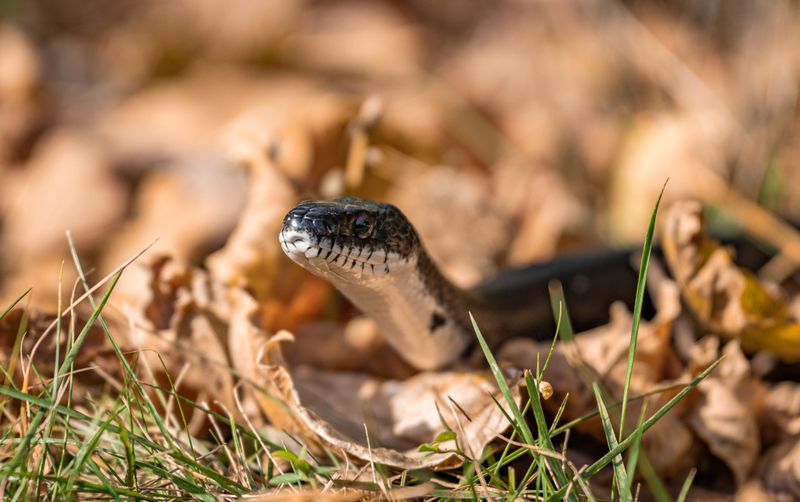
Timing tells a story. Rat snakes in Virginia are most active from about April through October, when temperatures stay warm enough for hunting.
Spring brings the first big wave of sightings. Snakes leave winter shelters, bask on rocks and sidewalks, and start looking for mates.
Males may travel farther than usual in May and June, so you might see a snake you have never noticed before.
Females lay eggs in early summer. They pick warm, moist spots like rotting logs, compost piles, mulch heaps, and sawdust.
The eggs often hatch from late summer into early fall, which is why small gray-blotched babies show up around September.
During the hottest weeks, rat snakes may hunt more at dusk and night. That shift helps them avoid overheating in midday sun.
Fall sends them looking for cozy winter quarters. Rock crevices, old stumps, crawl spaces, and foundation gaps all work.
Rat snakes sometimes share winter dens with other snake species.
Region matters a little too. Snakes in Tidewater and southern Virginia may stay active a bit longer than those in the cooler Blue Ridge.
A sunny winter day can even coax one out briefly, so a January sighting is unusual but possible.
Leave The Black Snake Alone Because Virginia Law Protects It
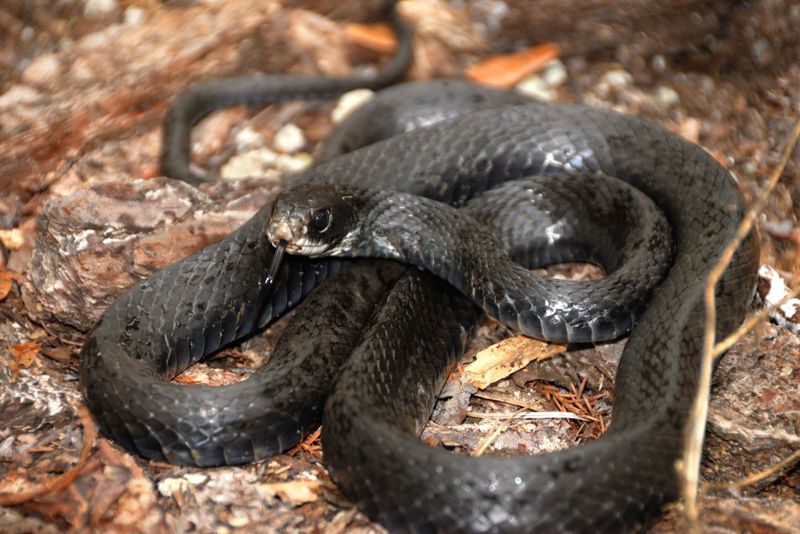
Here is something many folks never learn. Under the state’s regulations, native nongame snakes generally may not be harmed or collected without legal cause, and the black rat snake falls into that group.
State wildlife rules do allow action when a snake poses a real, immediate threat to a person. A rat snake calmly crossing your patio does not meet that standard.
Check the Virginia Department of Wildlife Resources for current details.
So what should you do instead? Give it space and patience.
Most snakes move on within minutes or hours.
When a snake ends up inside your house or garage, stay calm. Prop open a nearby door and gently guide it out with a long broom.
You can also call a licensed wildlife removal company or the Wildlife Center of Virginia hotline for advice.
Expect some defensive drama if the snake feels trapped. It might rattle its tail in dry leaves, coil up, puff its body, or release a smelly musk.
Rat snakes can also freeze in a kinked position that looks odd but is perfectly normal.
I find it helps to remember the snake is scared too. It sees you as a giant predator.
A quiet, slow approach keeps both of you safer and lets it get back to rodent duty.
A Tidy Yard Sends Black Rat Snakes Looking Elsewhere
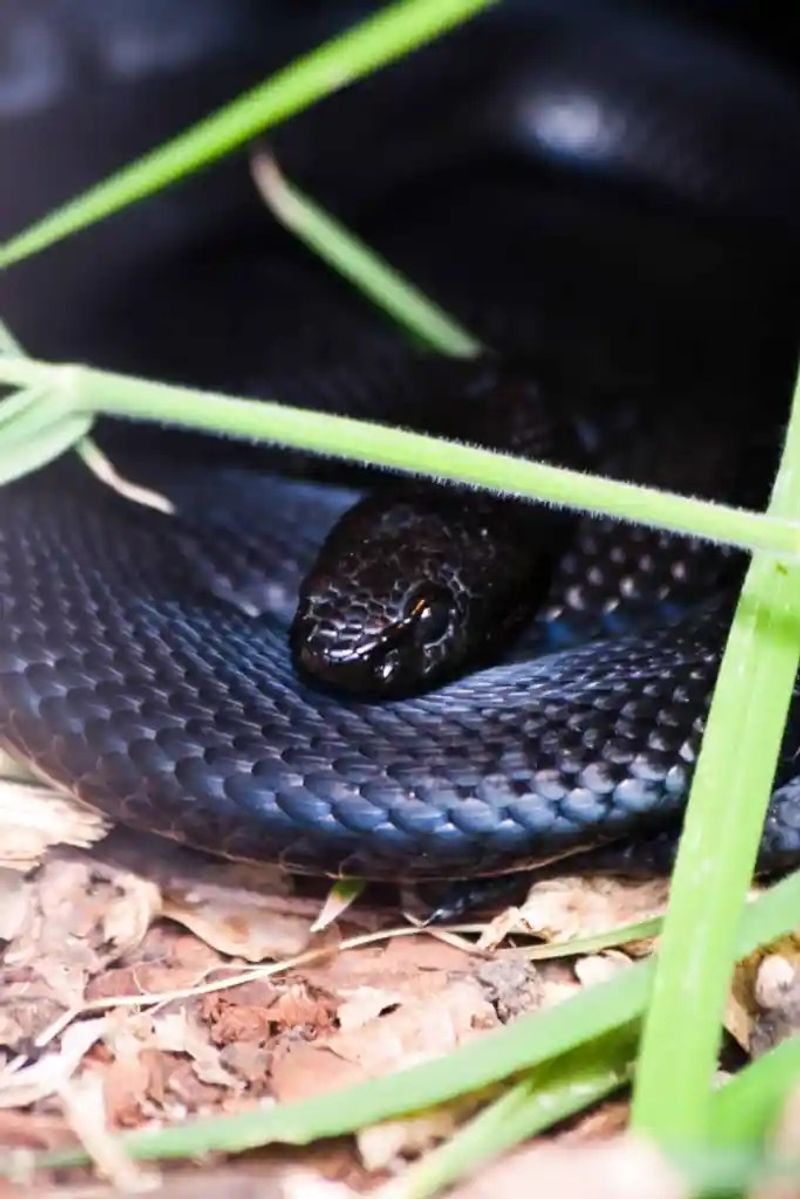
Maybe you love the rodent control but still prefer fewer surprises near the back steps. That is fair, and you have easy, humane options.
Start with food. Clean up spilled birdseed under feeders, store pet food in sealed bins, and keep trash cans tightly closed.
Fewer mice means fewer reasons for a snake to linger.
Next, look at hiding places. Move woodpiles away from the house and raise them off the ground.
Clear brush piles, scrap lumber, and stacks of old pots, and keep grass mowed near patios and play areas.
Seal gaps around foundations, crawl space vents, doors, and utility lines. Rat snakes can squeeze through surprisingly small openings, so use hardware cloth or sturdy caulk.
Fixing these gaps also keeps mice out.
Skip mothballs and most store-bought snake repellents. Research has shown they rarely work, and mothballs are not labeled for snakes, so using them that way breaks pesticide label law.
Leave a wild corner if you can spare one. A patch of native plants at the far edge of the yard gives wildlife a home away from your door.
That small trade lets you keep a helpful neighbor without close encounters.
Next time that shiny black body appears, take a breath and enjoy the visit. Your garden just got a free mouse catcher.