Can you legally pick the plums dangling over from your neighbor’s tree in Oregon? Here’s the rule
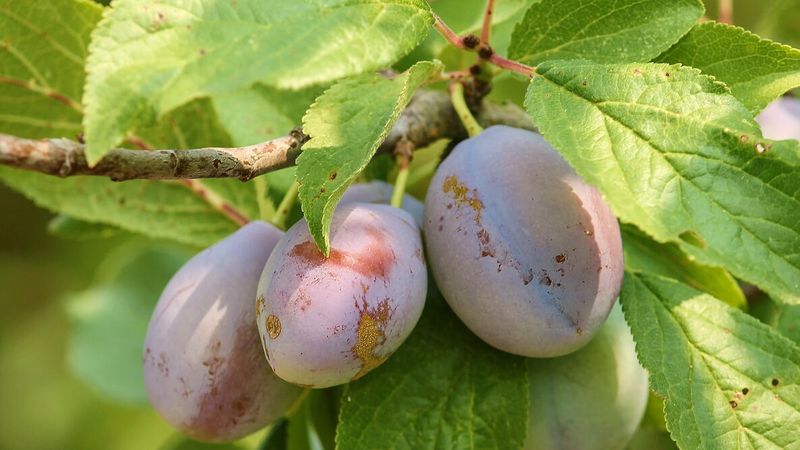
Those plums hanging just over your fence look perfectly ripe, and your hand is already halfway there. Before you grab one, though, it helps to know what Oregon guidance actually says about who owns fruit on an overhanging branch.
The answer might surprise you, and getting it right can save a good neighborly relationship. Here is a clear, friendly look at the cautious legal approach Oregon guidance points toward.
The safest answer: ask before picking
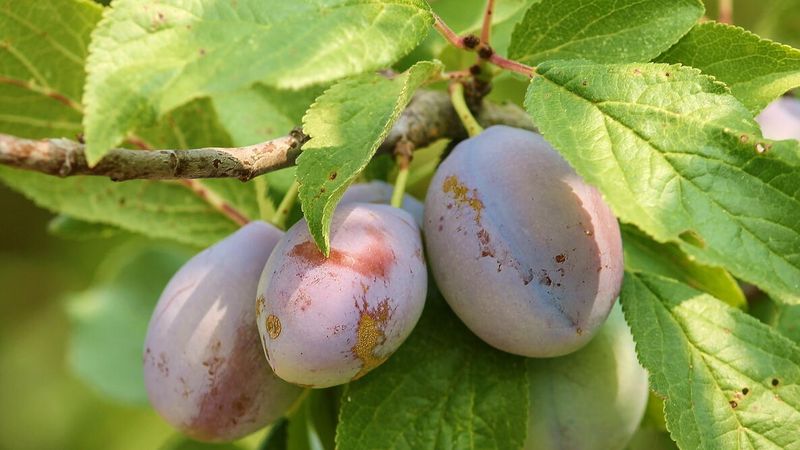
Those glossy purple plums swaying just past your fence line are genuinely tempting, and the impulse to grab one feels almost logical: the branch is over your yard, so why not? Oregon guidance, however, generally points in the opposite direction.
Portland’s official tree-and-neighbors guidance says plainly that fruit hanging over a property line should not be picked without the tree owner’s permission, and that principle reflects the broader Oregon approach to tree ownership.
The cautious legal answer is: do not pick plums that are still attached to a neighbor’s tree without asking first, even when the branch extends into your airspace. Ownership of the tree generally travels with the trunk, not the canopy.
That means the attached fruit goes with the tree, regardless of which side of the fence it is dangling above.
It is worth being clear about what this guidance is and is not. No Oregon appellate court has issued a decision squarely deciding who owns an ordinary plum hanging over a residential property line.
Oregon State University Extension’s tree-law overview also cautions that its guidance is general, not individualized legal advice. So the right framing here is “the safest, legally cautious approach” rather than a settled, absolute rule carved in stone somewhere in the Oregon Revised Statutes.
The branch crossing your property line is real. The fruit is real.
The temptation is completely understandable. But the safest move, both legally and neighborly, is a quick conversation before the picking starts.
Start with the trunk, not the canopy
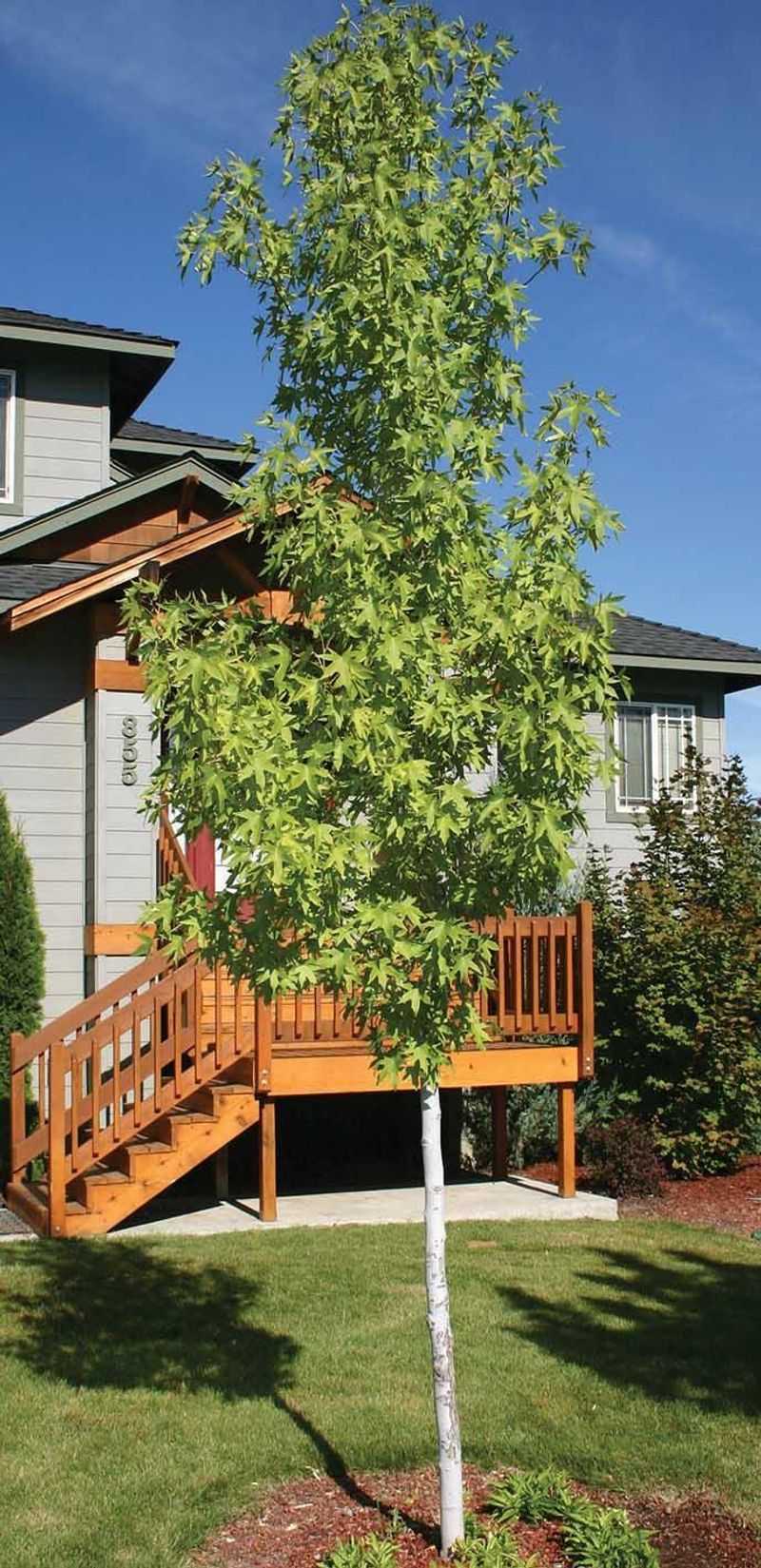
The reason this question feels counterintuitive is that our eyes follow the fruit, not the roots. A branch drooping into your yard looks like your branch, and a plum within arm’s reach looks like your plum.
Oregon property principles, though, generally anchor tree ownership at the trunk, not at the outermost leaf.
If your neighbor’s trunk sits clearly on their side of the property line, the tree is generally theirs. That ownership typically includes every branch, every leaf and every piece of attached fruit, even when the canopy arches dramatically into your yard.
An Oregon Court of Appeals decision on encroaching trees reinforces this framework, treating the adjoining owner’s rights as limited to cutting back intruding branches and roots, not claiming the tree or its produce.
The picture changes a little when the trunk actually straddles the property line. A boundary tree, one whose trunk genuinely sits on the line itself, can involve shared ownership and shared control.
Your Oregon Garden Changes Every Week. Your Plan Should Too.
Gardening in Oregon changes quickly throughout the season. Every Friday you’ll receive a simple weekly plan showing exactly what to plant, prune, fertilize, harvest, and protect so you never miss the right timing.
In that situation, both neighbors may need to agree before pruning, removing or harvesting. Oregon State Extension’s neighbor-tree guidance flags this distinction and recommends checking carefully before acting on a tree near any boundary.
One more thing worth knowing: the fence in your backyard is not necessarily the legal property line. Fences get built in approximate spots, sometimes a foot or two off the actual boundary.
Oregon Realtors’ tree-law guidance notes that pruning rights generally extend only to the actual property line, and if there is any dispute about where that line falls, a survey is the reliable way to find out. Assuming the fence is the boundary could put you on the wrong side of the line, literally and legally.
Picking and pruning are different acts
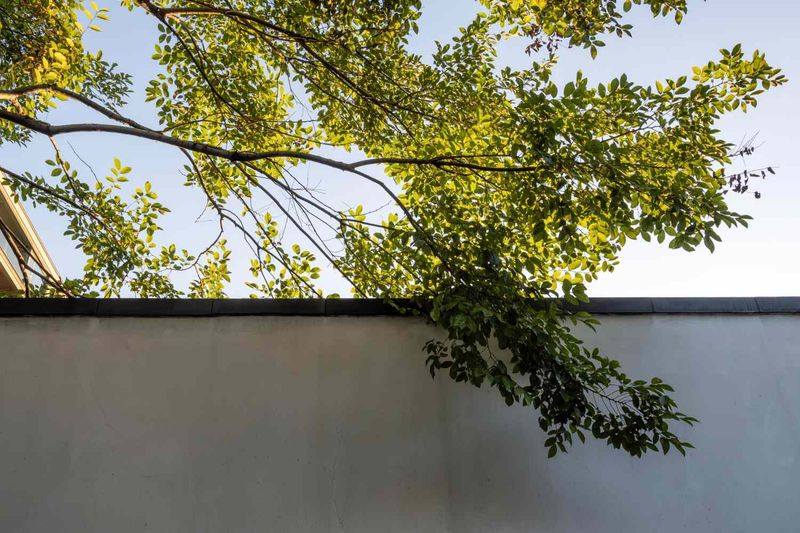
Pruning rights and harvest rights are not the same thing, and mixing them up is one of the easiest ways to stumble into a dispute. Oregon property law generally gives an adjoining landowner the ability to cut back branches or roots that cross into their property, up to the actual boundary line.
That is a recognized, limited right. It does not carry a bonus right to collect the fruit attached to those branches.
The Oregon Court of Appeals decision on encroaching branches and roots describes the adjoining owner’s right as one of cutting back the intruding parts of the tree, nothing more. You may trim what crosses the line.
You may not treat the trim as a harvest.
Portland’s tree-and-neighbors guidance spells out the accompanying limits clearly. Any pruning work must stay on your side of the property line.
You may not enter the neighbor’s yard to do the work without their permission. You may not cut beyond the actual boundary.
And you may not prune in a way that damages the tree’s health or structural stability. Hacking off a major limb because it hangs over your fence, and harming the tree in the process, goes beyond the recognized right and could create liability.
Oregon State Extension’s tree-law overview echoes the same caution: overhanging limbs may generally be removed to the property line if the work does not harm the tree’s health or stability, and local ordinances can add further requirements on top of that general rule.
Think of it this way: trimming the branch is a maintenance right. Plucking the fruit is a harvest, and that belongs to the tree’s owner.
Keeping those two acts separate helps you stay on solid ground, neighborly and legal.
Entering the neighbor’s yard changes the question
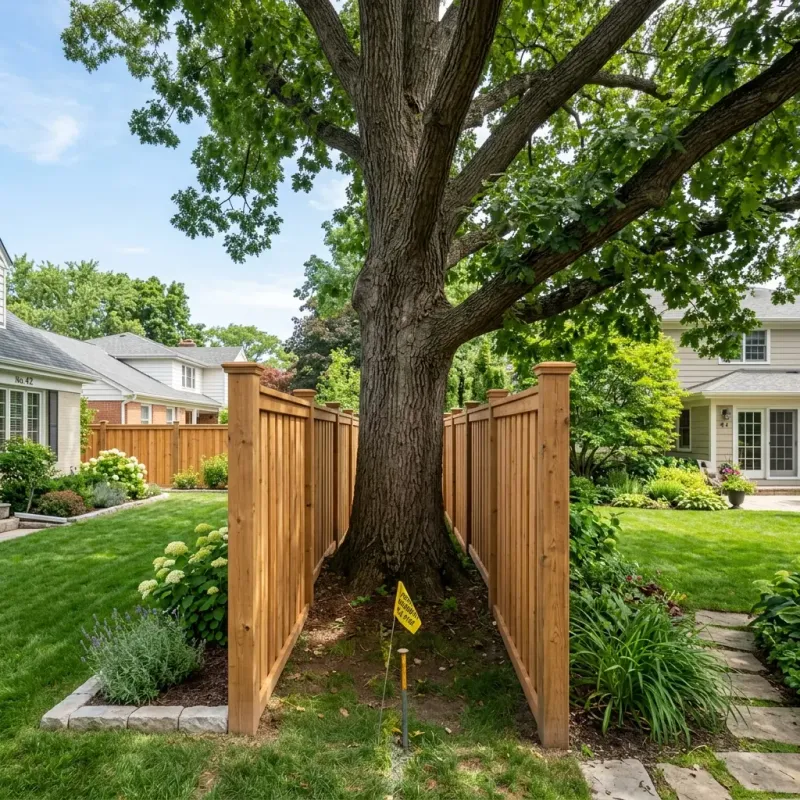
Reaching across the property line from your own yard and plucking a plum is one thing. Stepping through the gate, climbing the fence or otherwise entering your neighbor’s yard to collect fruit is a meaningfully different situation, and it raises a separate concern: trespass.
Oregon property rules treat unauthorized entry onto private property as its own issue, apart from the question of who owns the fruit. Portland’s tree-and-neighbors guidance is direct: do not enter a neighbor’s property without permission.
That applies whether you are trimming a branch or picking a plum.
Reaching across the boundary while standing on your own property is a different act. That conduct is not automatically trespass in the same way, but it can still create a property dispute.
Picking or interfering with fruit that belongs to the neighbor, even without stepping foot on their land, may be treated as unauthorized harvesting or interference with another person’s property. The distinction matters legally, but neither version is a safe move without permission.
Oregon statutes also include enhanced-damages provisions that can apply in certain situations involving willful injury to or severing of trees, shrubs or produce. ORS Chapter 105 and related case law address these remedies.
A 2021 Oregon Court of Appeals decision illustrates how courts have applied those provisions in tree-damage disputes. Those enhanced remedies are real, but they should not be read as a guarantee that one backyard plum automatically triggers multiplied damages.
Context, intent and the specific facts all matter.
The practical takeaway is simple: stay on your side of the line, and ask before picking.
Fallen fruit remains the gray zone
Once a plum drops off the branch, you might expect the rules to simplify. They do not, quite.
Fallen fruit occupies a genuine gray zone, and the available Oregon guidance does not hand you a clean statewide rule saying a plum that lands on your lawn automatically becomes yours.
Portland’s tree-and-neighbors guidance says directly that rules for fallen fruit vary by jurisdiction. That is a meaningful caution.
It means you should not assume that the fruit sitting in your grass belongs to you simply because it landed there. For most casual situations between friendly neighbors, this probably never becomes an issue.
But when the relationship is tense, the fruit is valuable or the neighbor has posted any kind of restriction, asking first remains the wisest move.
Fruit that lands on a sidewalk or in a public right-of-way raises a separate set of questions. Portland’s city code addresses the maintenance responsibilities that come with trees near sidewalks.
Portland City Code section 11.80.020 outlines duties related to trees in the right-of-way, and section 11.60.060 addresses maintenance obligations that can include managing organic matter like fallen fruit that obstructs a sidewalk. Those maintenance duties exist to keep paths clear and safe.
They do not create a general public right to harvest whatever falls from a nearby tree.
The cleaner picture looks like this: attached fruit has the clearest guidance pointing toward the tree owner. Fallen fruit has murkier rules that vary locally.
Sidewalk fruit involves additional code layers. Across all three situations, a quick, friendly question to the neighbor is the most reliable way to avoid any dispute and, frankly, the most likely way to end up with a bowl of plums on your counter.
Local rules can limit ordinary pruning
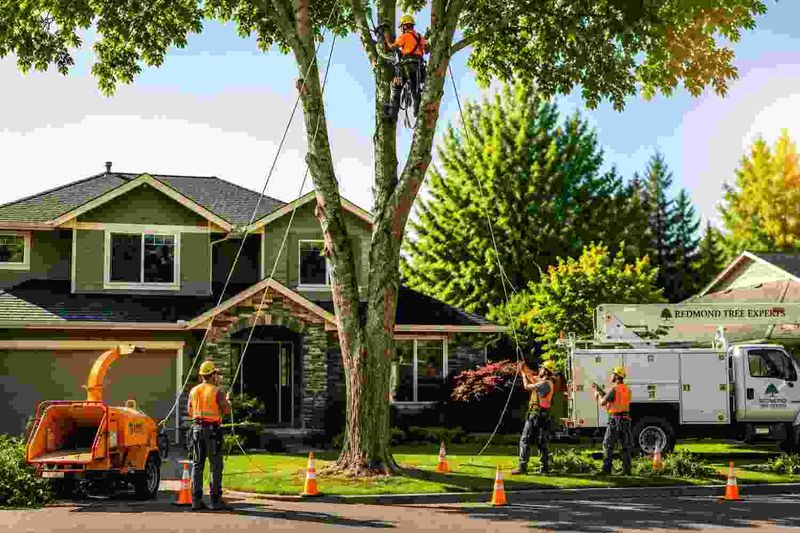
General Oregon property principles give you a baseline, but they do not override what your city says about trees. Local tree codes can add requirements that go well beyond the common-law trimming right, and ignoring them can turn a simple yard task into a permit problem.
Portland is the most detailed example. The city distinguishes between private trees on residential lots and street trees in the public right-of-way, and it regulates both.
Before trimming any branch on a street tree, Portland generally requires a permit. Portland’s street-tree pruning permit FAQ explains what work requires a permit, what qualifications a contractor must have and what is prohibited without city approval.
Skipping the permit is not a minor oversight in Portland; it can result in fines and required remediation.
Heritage trees add another layer. Portland designates certain trees as heritage trees based on size, age, species or historic significance, and those trees carry special protections under
Portland’s full tree code.Trimming a heritage tree without the right authorization can carry real consequences, even if the branch genuinely crosses your property line.
Other Oregon cities have their own rules. Lake Oswego, for example, maintains a code interpretation log through its city attorney’s office.
Lake Oswego’s code interpretation log is worth checking if you are in that city and have a tree question, because local interpretations can affect what is and is not allowed. The practical step before cutting any branch near a property line is to check your city’s tree code, not just the general Oregon rule.
Permission makes the harvest simple
All the legal nuance in the world simplifies down to one practical move: ask your neighbor before picking. A short, friendly conversation does more to resolve the attached-fruit question than any amount of squinting at the fence line or wondering about property principles.
A simple agreement can cover everything that matters. You might ask whether you are welcome to pick from the overhanging branch, whether the neighbor would like to split the harvest or whether they plan to collect the fruit themselves.
You can also sort out who will deal with fallen fruit before it becomes a slipping hazard or a point of contention. Portland’s tree-and-neighbors guidance specifically recommends this kind of neighborly agreement as the most reliable way to handle overhanging-fruit situations.
There is one more question worth adding to that conversation: food safety. Before eating fruit from a tree you do not own, ask whether the tree has been treated with pesticides or other chemicals.
Oregon maintains resources for checking registered pesticide products and produce-safety information through the Oregon Department of Agriculture’s produce safety program. Those programs do not give you a harvesting right, but they point to why the chemical question matters before you eat anything from a tree you do not tend yourself.
Permission is not just the legally safe move. It is genuinely the neighborly one.
A shared bowl of plums and a good conversation over the fence is a much better outcome than a property dispute, and it is surprisingly easy to get there.
When in doubt, leave the plum hanging
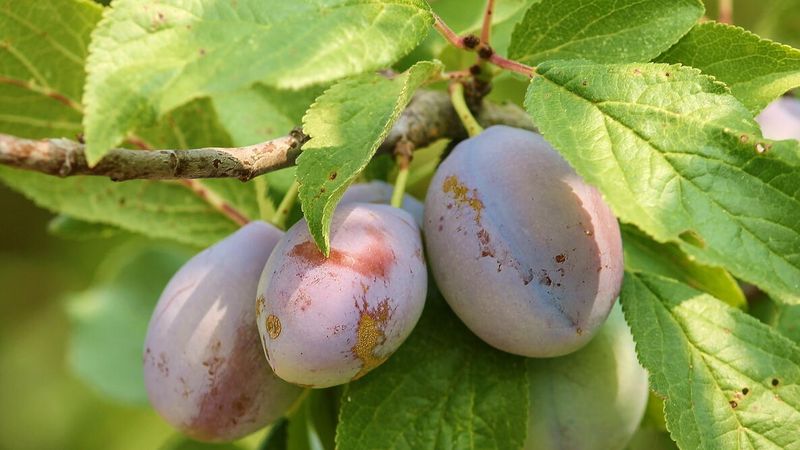
A branch crossing the property line does not generally make its attached plums free for the picking. That is the core takeaway, and it holds whether the branch hangs one foot or six feet into your yard.
Before acting, locate the trunk and confirm which side of the actual boundary it stands on. Avoid entering the neighbor’s yard.
Keep pruning and harvesting as separate decisions. Check local tree codes before cutting anything, especially in cities like Portland where street trees and heritage trees carry permit requirements.
And when the fruit looks ripe and the temptation peaks, ask permission first.
Portland’s tree-and-neighbors guidance and Oregon Court of Appeals precedent on encroaching trees both support this cautious approach. The plum is not going anywhere, and a friendly knock on the neighbor’s door almost always gets you further than a reach over the fence.