7 Carnivorous Plants That Make Perfect Halloween Houseplants In Texas
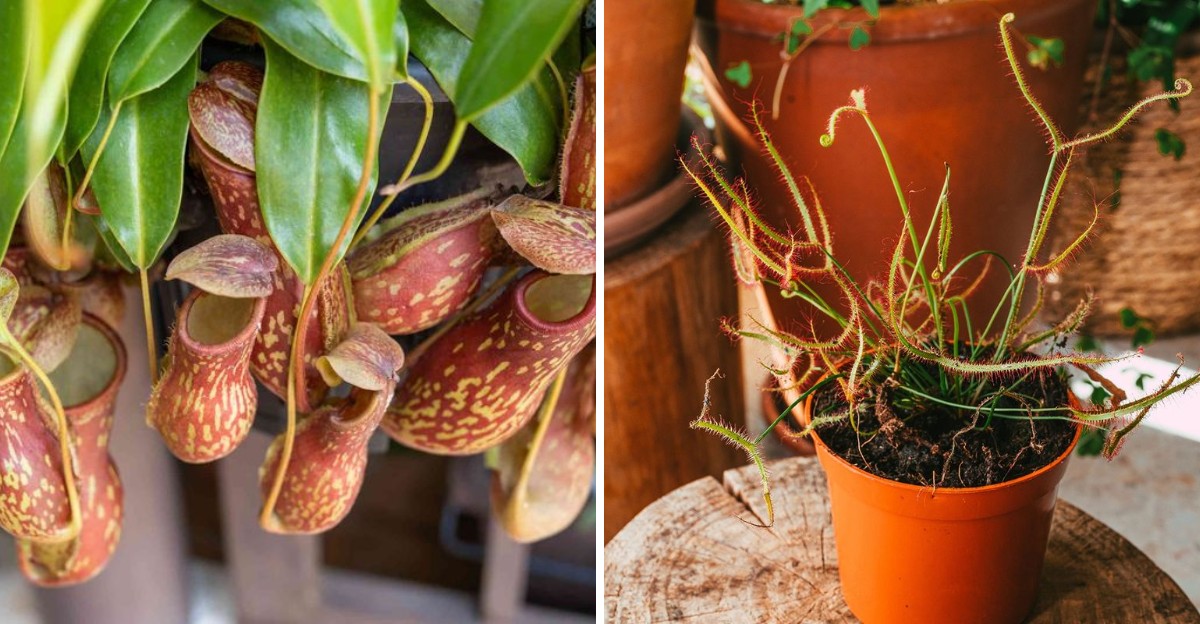
Not every Texas plant is content with sunshine and water. Deep in the Big Thicket of East Texas, some of them catch their own dinner.
Carnivorous plants have been fascinating people for centuries, and it’s easy to see why. Some snap shut on unsuspecting flies.
Others lure insects into slippery, tube-shaped traps they can’t climb out of. A few glisten with sticky droplets that hold prey in place like glue. They look strange, a little sinister, and absolutely perfect for spooky season.
Even better, several of them can thrive indoors with the right setup. A bright window, the right kind of water, and a little attention can keep them healthy long after the jack-o’-lanterns are gone.
If you want a Halloween decoration that’s alive, eerie, and genuinely useful against pesky gnats, these bug-eating beauties fit the bill.
1. Venus Flytrap
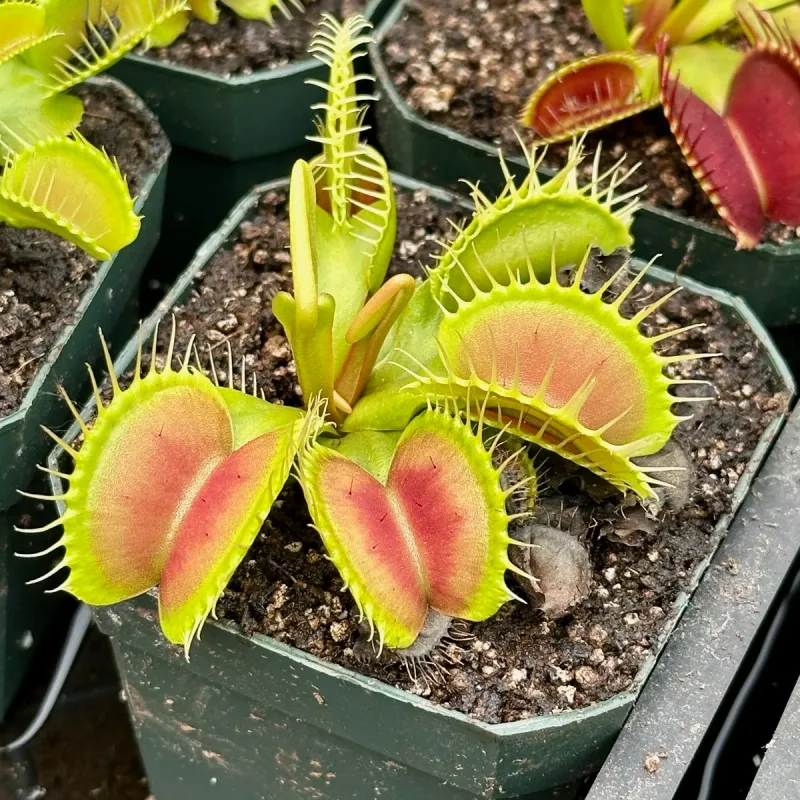
Snap! That tiny sound is the reason the Venus flytrap is the most famous bug-eating plant in the world. Its traps look like little green jaws with red insides and spiky teeth around the edges.
When a fly touches the tiny trigger hairs inside twice, the trap slams shut in less than a second.
You can find flytraps at most Texas garden centers, especially around Halloween. They make a perfect spooky display on a desk or kitchen counter. Still, they need a little planning to stay healthy for years.
Bright light is the biggest need. A sunny south or west window works well, and some growers add a small grow light. Without enough sun, the traps turn floppy and pale instead of bold red.
Water is the next key. Use distilled water or rainwater only, since tap water has minerals that harm the roots.
Keep the pot sitting in a shallow tray of water so the soil stays damp. Plant it in a mix of peat moss and perlite, never regular potting soil.
Winter is where Texas gets tricky. Flytraps need a cool rest from about November to February, with temperatures between 35 and 50 degrees.
Warm Texas homes rarely get that cold, so many growers move the plant to an unheated garage with a window, a cool bright room, or a protected porch.
During this rest, the plant may look sleepy and lose some traps. Don’t worry, because that is normal. It will bounce back in spring with fresh growth.
One more tip is to resist triggering the traps for fun. Each trap can only close a few times before it wears out, so let the bugs do the work.
2. Tropical Pitcher Plant
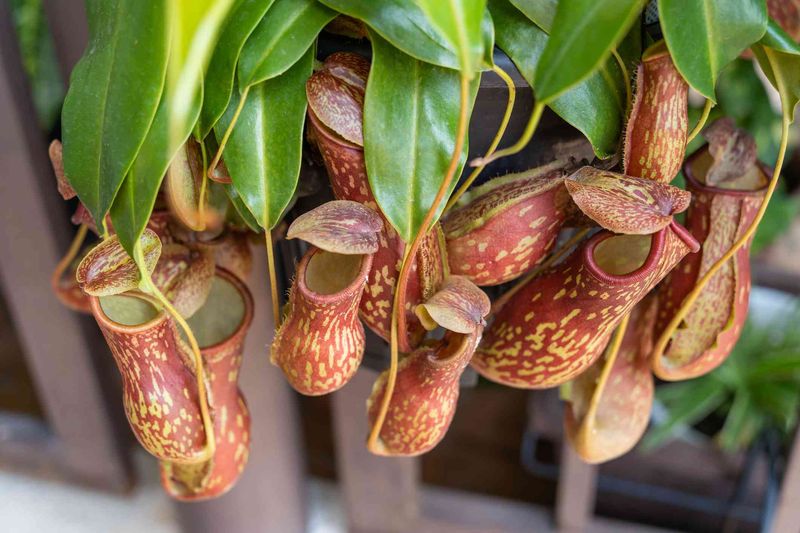
Hanging from long vines like tiny green lanterns, tropical pitcher plants look like something a witch would keep in her cottage.
Each pitcher is a cup that grows from the tip of a leaf. Inside is a pool of digestive juice that turns insects into plant food.
Bugs are lured in by sweet nectar around the rim. The edge is slippery, so they slide right in and can’t climb out. It’s creepy, clever, and fun to watch.
Your Texas Garden Changes Every Week. Your Plan Should Too.
Gardening in Texas changes quickly throughout the season. Every Friday you’ll receive a simple weekly plan showing exactly what to plant, prune, fertilize, harvest, and protect so you never miss the right timing.
Known by the science name Nepenthes, these plants come from warm, rainy places in Southeast Asia.
That makes them a better match for Texas heat than many other carnivores. They don’t need a cold winter rest at all.
A hanging basket near a bright east or west window is a great home. The pitchers dangle over the edge and make a dramatic Halloween display. Bright, indirect light keeps them colorful without scorching the leaves.
Dry air is their biggest enemy. Texas homes run the air conditioner for months, and that pulls moisture from the air. When the air gets too dry, new pitchers may turn brown and shrivel before they open.
A small humidifier nearby helps a lot. You can also set the plant over a pebble tray filled with water, as long as the pot sits above the water line. Grouping plants together raises the moisture too.
Unlike flytraps, these plants like soil that is moist but not soggy. Use distilled or rainwater, and pick a loose mix with sphagnum moss and orchid bark.
Fun fact: some giant pitcher species in the wild are big enough to catch small frogs and even mice!
3. Cape Sundew
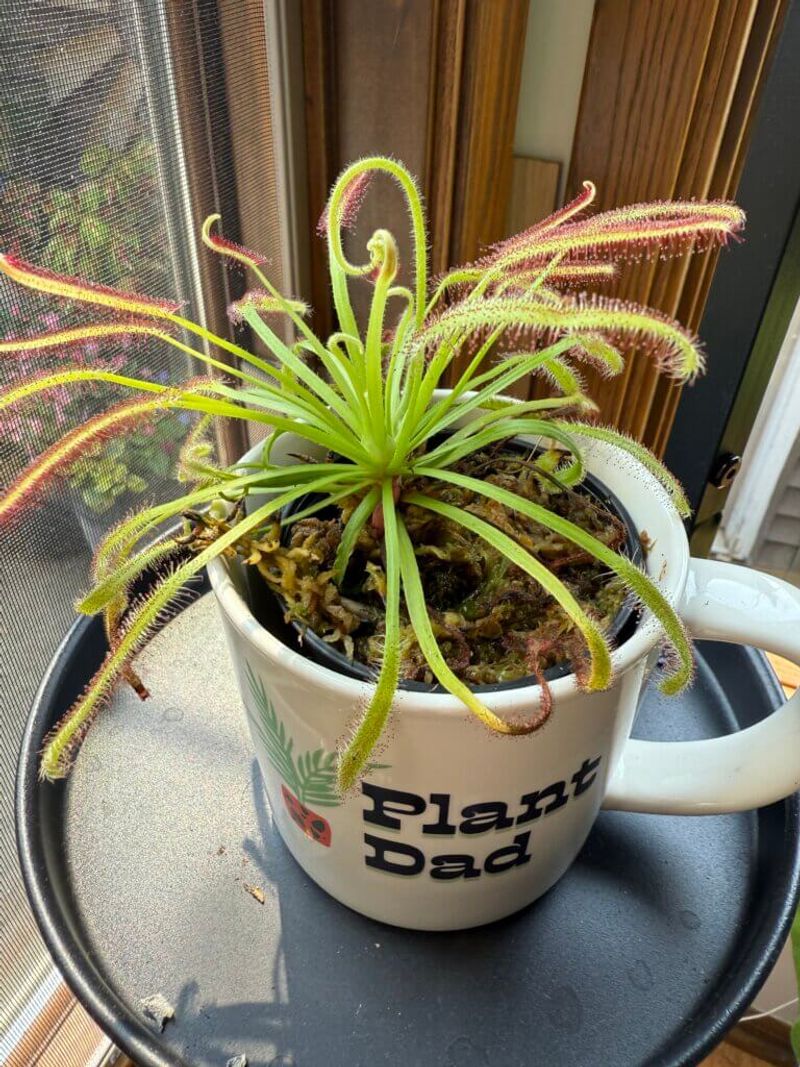
Want a houseplant that sparkles like it’s covered in jewels? The Cape sundew delivers. Its long, thin leaves are lined with tiny red tentacles, and each one holds a shiny drop of sticky goo.
Those drops look like morning dew, but they are really a trap. When a gnat lands, it gets stuck. Then the leaf slowly curls around the bug over a few hours, almost like it’s giving it a hug it can’t escape.
Honestly, this might be the friendliest carnivorous plant for beginners. It comes from South Africa and handles warm indoor temperatures with ease. That’s great news for Texas growers who don’t have a cool spot for winter.
A sunny windowsill is all it really needs. More sun means more sparkle and redder tentacles. If the leaves look green and the goo dries up, the plant probably wants more light.
Keep the pot standing in a tray of distilled water or rainwater. The soil should stay wet most of the time. A simple mix of peat moss and perlite works perfectly.
Cape sundews also make lots of baby plants. They bloom with small pink flowers on tall stems, and the seeds drop into nearby pots. Before long, you may have a whole spooky army sprouting up.
Here’s a neat bonus. These sundews are great at catching fungus gnats, which are those tiny flies that buzz around houseplant soil. Setting one near your other plants can help keep gnats under control.
For Halloween, try placing a few in small black pots with plastic spiders. Guests will lean in close, and the shiny goo always gets a reaction.
4. Spoon-Leaf Sundew
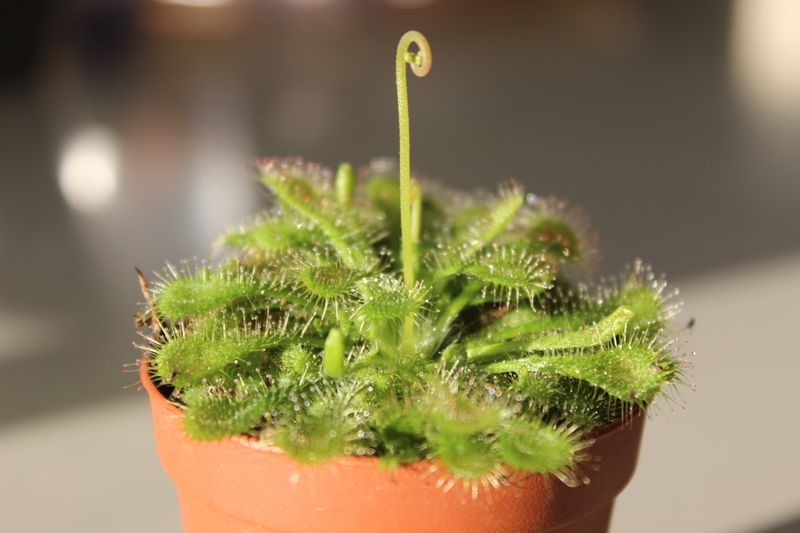
Good things come in small packages, and the spoon-leaf sundew proves it. This little plant is often no bigger than a quarter. Yet it’s covered in red-tipped tentacles that shine like dew in the sunlight.
The leaves grow in a flat, round shape called a rosette. Each leaf looks like a tiny spoon. Up close, the sticky drops make the whole plant glitter, which looks amazing in a sunny window.
Many shoppers find this sundew by accident. It is often sold in the same section as Venus flytraps, sometimes even sharing a pot with them. If you spot a tiny red star in your flytrap’s soil, you may already own one.
Care is simple. Give it a bright windowsill with a few hours of sun. Keep the soil wet with distilled or rainwater, and let the pot sit in a shallow saucer of water.
Because it stays so small, it fits almost anywhere. Try a teacup, a mini cauldron, or a tiny glass jar with a drainage hole. Tucked into a Halloween display, it becomes a sneaky surprise for guests who look closely.
Most spoon-leaf sundews don’t need a cold winter rest. That makes them a smart pick for warm Texas homes. They also grow fast and send up little flower stalks with white or pink blooms.
Did you know? Spoon-leaf sundews grow wild in places like Australia, Japan, and Southeast Asia. They can even make new plants from fallen leaves.
If you want to try that, lay a leaf on wet peat moss. In a few weeks, tiny baby plants may pop up.
5. Fork-Leaf Sundew
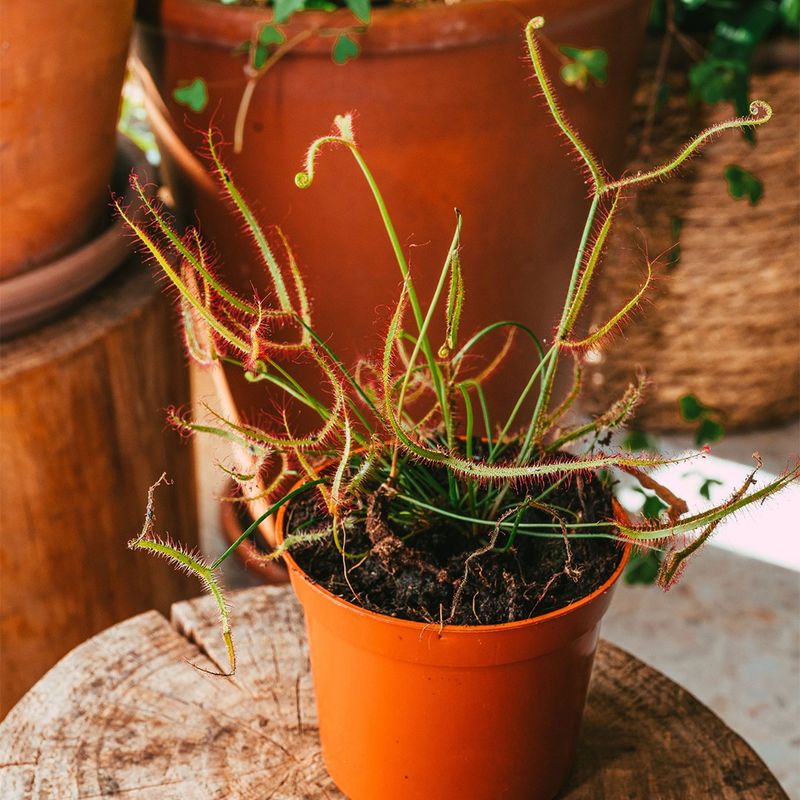
Some plants look cute. The fork-leaf sundew looks like it crawled out of a haunted swamp. Its long, skinny leaves split into a Y shape, and some types branch again and again, like spooky antlers.
Every inch is covered in glistening tentacles. Sticky drops sparkle along the leaves, waiting for flies and gnats to land. When the light hits them just right, the whole plant seems to glow.
Of all the plants on this list, this one may give your guests the biggest chills. Its tangled, reaching leaves look alive in a strange way. Put it beside a carved pumpkin, and you have an instant Halloween scene.
Fork-leaf sundews come from Australia and New Zealand. They grow quickly and can reach about a foot tall. Some forms stay smaller, while others spread wide and wild.
Good news, Texas growers. This sundew handles indoor life well. It wants bright light, like a sunny window or a grow light, and soil that never dries out.
Use a deep pot, since the roots like room to grow. Fill it with peat moss and perlite, and keep it standing in distilled water or rainwater. Tap water can slowly build up minerals that hurt the roots.
In cooler months, some leaves may brown and fade. Simply trim them away. New growth usually pops up from the roots, sometimes from spots you didn’t expect.
Here’s a cool trick. You can grow new plants from root cuttings. Snip a piece of thick root, lay it on wet soil, and cover it lightly. With patience, a fresh fork-leaf sundew will sprout and join your creepy collection.
6. Mexican Butterwort
Fungus gnats are the worst. Those tiny flies buzz around houseplants and drive plant lovers crazy. Luckily, the Mexican butterwort is here to help, and it looks pretty cool doing it.
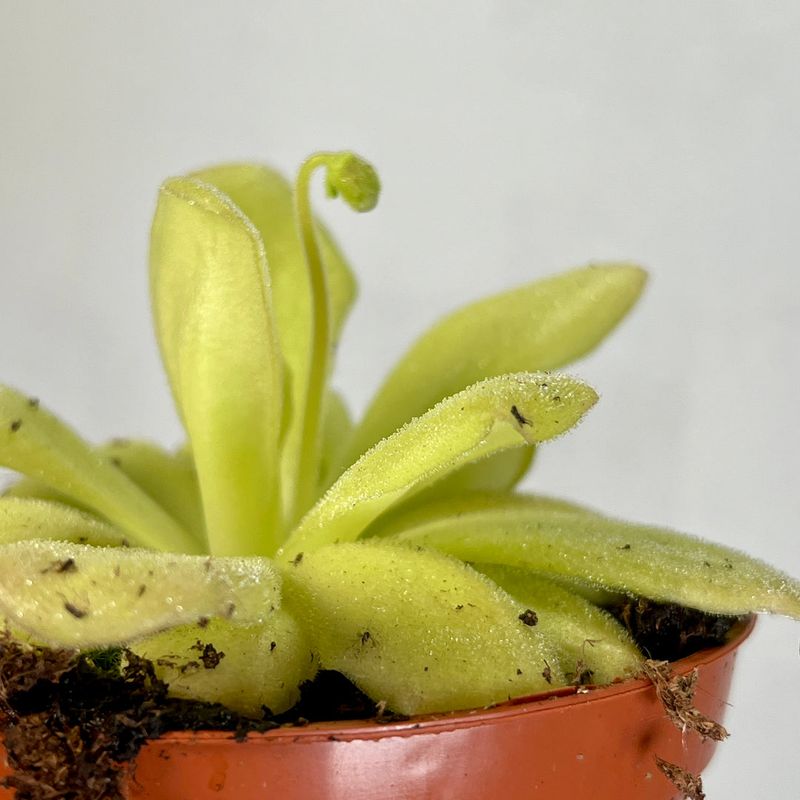
Butterworts have flat, shiny leaves that look greasy, almost like they were rubbed with butter. That’s how they got their name. The surface is actually covered with tiny sticky glands that act like natural flypaper.
When a gnat lands, it gets glued in place. The leaf then slowly digests it. You’ll often see little black specks on the leaves, which is proof your plant is hard at work.
Mexican species are some of the easiest carnivorous plants to grow indoors. They come from rocky hills in Mexico, so warm Texas homes feel pretty normal to them. They also don’t need sitting water all the time like sundews do.
Plant them in a gritty mix, such as peat with sand, perlite, or pumice. Water with distilled or rainwater when the soil starts to dry a bit. In winter, many types form a tight, succulent-like rosette and need even less water.
Bright light from an east or west window works great. Too much harsh sun can bleach the leaves. Healthy plants often show a lovely pink blush on the edges.
Then come the flowers. Mexican butterworts often bloom with delicate pink, purple, or lavender flowers on thin stems. They look a bit like violets and add a soft touch to your spooky lineup.
Place a few near your other houseplants, especially ones with gnat problems. You’ll enjoy fewer bugs and a cute, creepy plant at the same time.
7. Pale Pitcher Plant
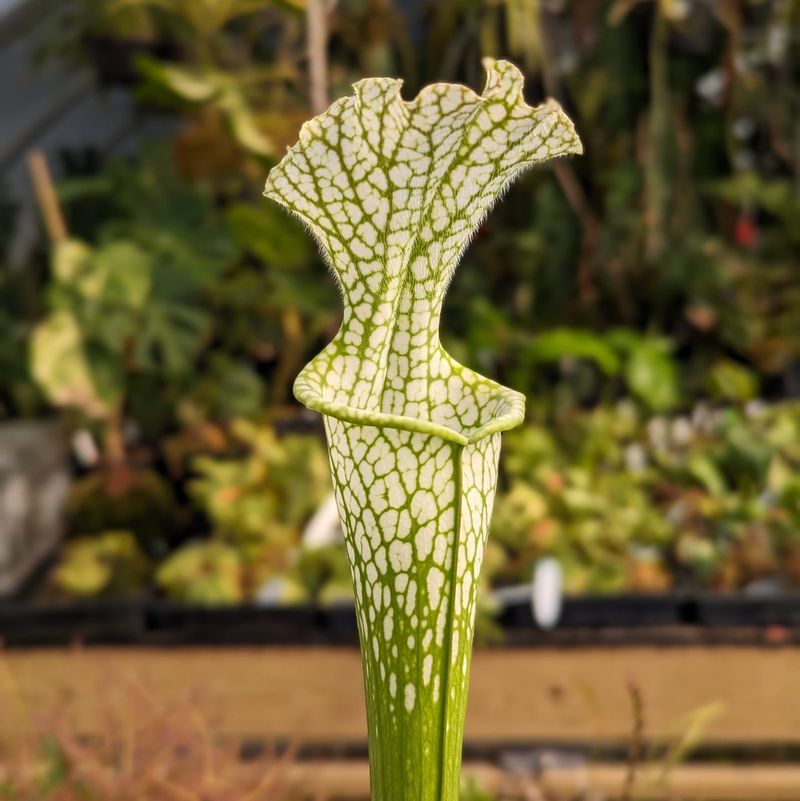
Deep in the Big Thicket of East Texas, tall green trumpets rise from soggy bogs under the pine trees.
They are pale pitcher plants, and they’ve been catching bugs in Texas long before anyone thought of them as houseplants. Yes, Texas has its very own carnivorous plant!
The science name is Sarracenia alata. Its pitchers are long, upright tubes with a little lid on top. Some have pale yellow-green color, while others show red veins that look extra spooky in fall.
Insects are drawn in by nectar near the opening. They slip down the waxy tube and get trapped at the bottom. Tiny downward hairs make sure there’s no climbing back out.
You can sometimes buy this plant at nurseries, especially native plant sales. Always choose plants grown by a nursery. Wild bogs are rare and protected, so never dig plants from nature.
Indoors, this pitcher plant is a challenge. It needs lots of direct sun, at least six hours a day. Only a very sunny south window or strong grow light will keep it standing tall.
It also needs a cool winter dormancy, much like the Venus flytrap. Many Texas growers keep it outside for most of the year in a pot sitting in water. They only bring it in for a Halloween display or during a hard freeze.
Use peat and perlite soil, and water only with distilled or rainwater. The soil should stay wet like a real bog.
Growing a pale pitcher plant is a fun way to show off Texas nature. It’s spooky, local, and a great story to share with Halloween guests.