Cat’s-Claw Vine in Arizona: A Possible Concern for Trees, and What to Check First
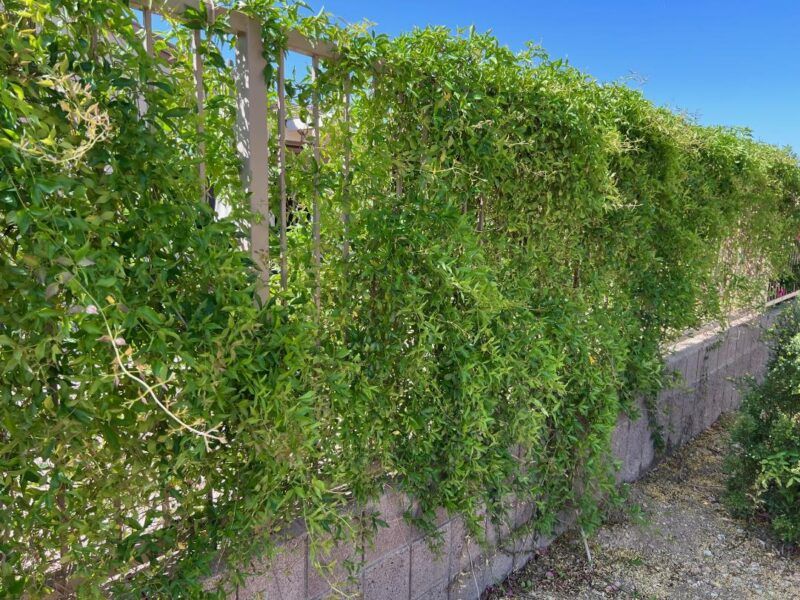
A fast yellow-flowered vine climbing a fence or tree can look cheerful in a desert yard. Some gardeners worry it may be a problem plant.
Cat’s-claw vine is the likely suspect, and it has a reputation for aggressive growth. Here is how to identify it, judge the real risk to your tree, and pick a safe next step.
Confirm the plant before deciding what to do
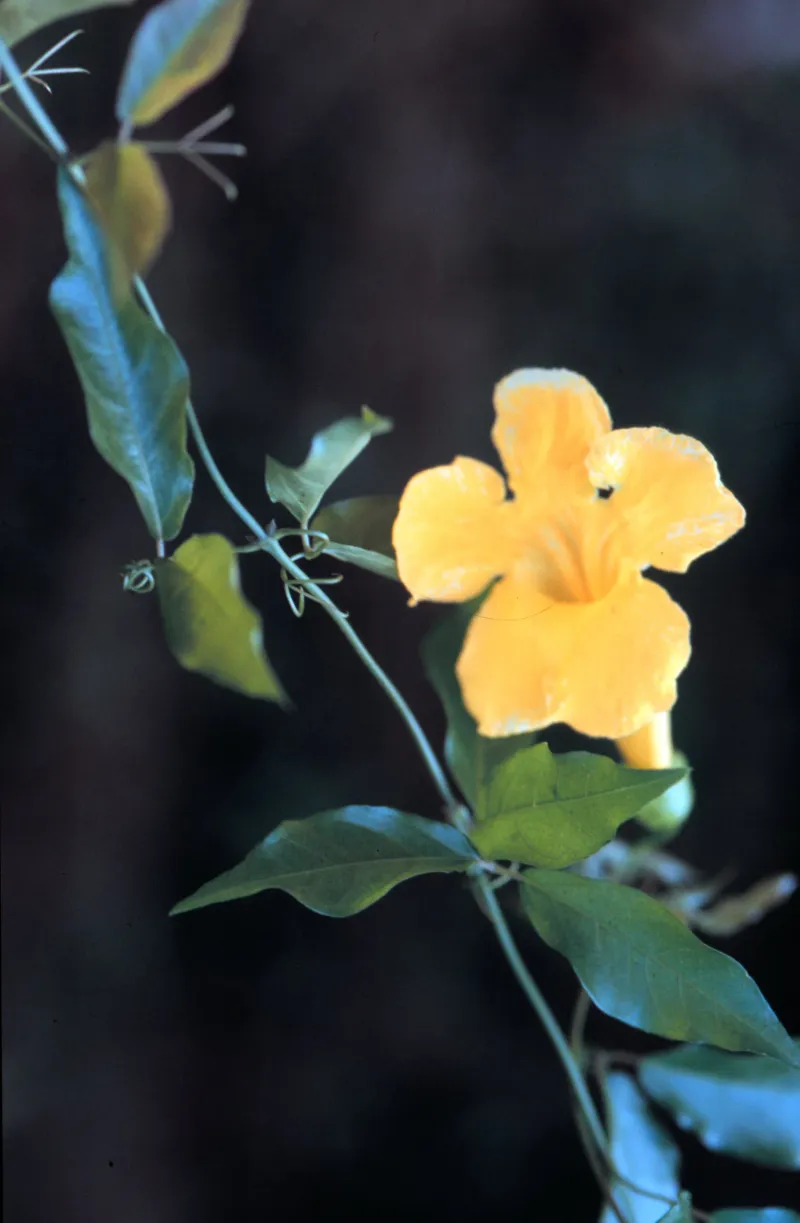
Start with a good look at the plant. The likely culprit is cat’s-claw vine (Dolichandra unguis-cati), which older references list as Macfadyena unguis-cati.
The University of Arizona Campus Arboretum entry covers the plant under its current name.
Clues to check: yellow trumpet-shaped flowers, leaves made of paired leaflets, and tendrils that end in three small hooks like a cat’s claw. If your plant lacks those features, it may be something else entirely.
Do not mix it up with catclaw acacia (Senegalia greggii). Yavapai County plant notes describe that native as a shrub or small tree with hooked spines, not a climbing vine.
A native plant deserves a different decision, so confirm the identity first.
Arizona guidance warns about aggressive growth, not a statewide tree crisis
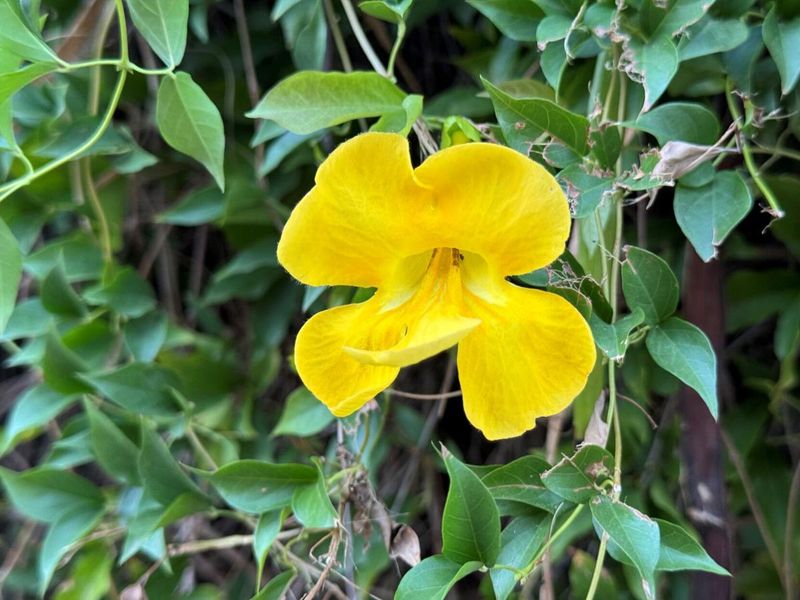
Local landscape advice treats this vine as an ornamental with a catch. The Southern Arizona landscape vine guide calls it very aggressive and cautions against planting it where it could outcompete other plants or damage nearby structures.
That is a warning about growth habits. It does not show that the vine is damaging trees across Arizona, and it is not an officially listed Arizona noxious weed.
Nothing here suggests it is widespread in the state either.
Still, a plant missing from a state list can slip out of a yard. Arizona’s official
noxious weed list is a useful reference, but absence from it does not prove a vine never spreads beyond where it was planted.Treat it as a plant to watch, not a plant to panic over.
Canopy coverage is the documented concern for trees
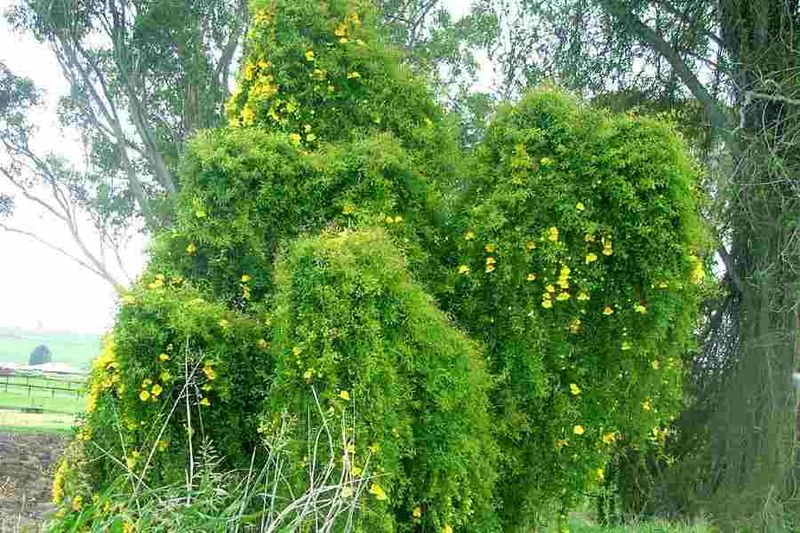
“Strangling” is shorthand. The clearest documented problem is shade.
Florida extension guidance reports that the vine can climb into tree canopies, form a dense blanket, and block sunlight from trees and plants below.
That description comes from Florida, where the vine is considered invasive. Conditions in the low desert are different, with extreme heat, little rain, and alkaline soil.
So what does this mean for you? It gives good reason to look closely at a vine that is well established on a tree.
It does not prove the same smothering happens across Arizona, and it does not mean the vine tightens around trunks. Dense leaf cover in the crown is the thing to look for.
A vine near a tree is not automatically harming it
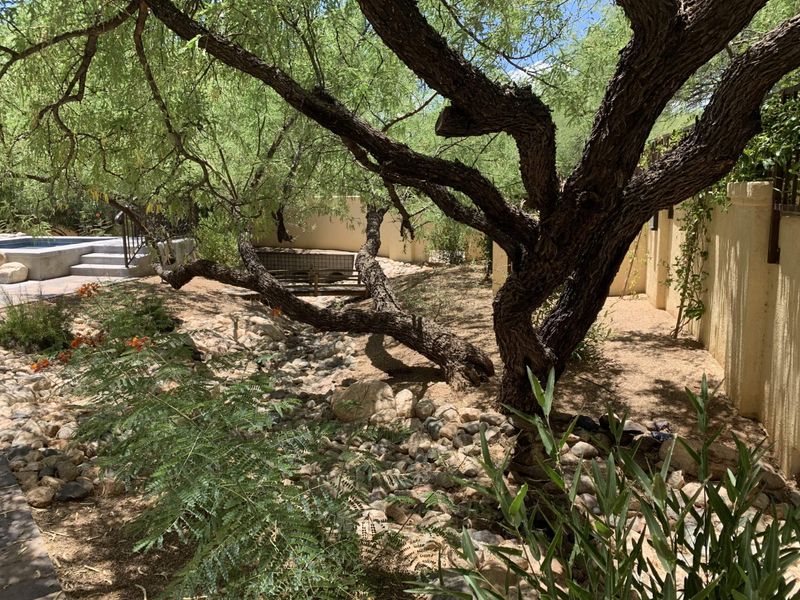
Picture two yards. In one, the vine climbs a fence a few feet from a mesquite.
In the other, it has crept up the trunk and spread through the branches. Only the second looks like the canopy problem described in Florida.
Your Arizona Garden Changes Every Week. Your Plan Should Too.
Gardening in Arizona changes quickly throughout the season. Every Friday you’ll receive a simple weekly plan showing exactly what to plant, prune, fertilize, harvest, and protect so you never miss the right timing.
Walk around the tree and check a few things. Is the vine on the tree or just near it?
Are leaves from the vine covering the tree’s own leaves? Does the tree look thin, pale, or stressed?
Texas A&M Forest Service offers a helpful look at vines on trees.
Remember that the Arizona vine guide describes the plant as one that grows well on structures, so a trellis or fence is a normal home for it. A vine on a trellis is a different case from one that has taken over a tree.
If a tree is already struggling, the cause may be water, heat, or roots rather than the vine.
Remove an unwanted vine without pulling it from the canopy
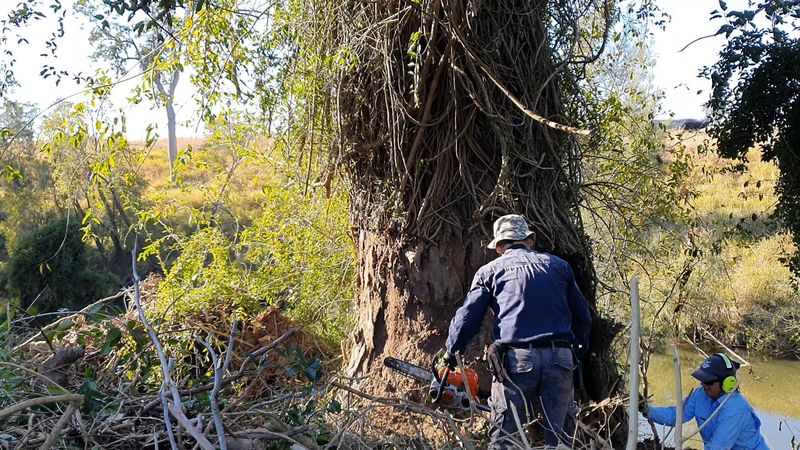
If you have confirmed the plant and want it gone, cut the vine near ground level. Expect it to try again.
Check the spot often for new shoots or seedlings and trim them early.
Resist the urge to yank growth down from the branches. Texas A&M Forest Service warns that pulling vines out of a canopy can damage branches.
Let the cut vines dry on the tree, which loosens them and makes later removal gentler.
A large or long-established vine is a different job. Roots near the base of a tree can make digging hard and may injure the tree, and Florida management guidance notes that herbicides can also harm nearby plants.
For a vine growing through a valuable tree, talk with a local arborist or qualified plant professional before digging or using any herbicide. If a product is used, follow the label closely and protect neighboring plants.
Let the evidence guide the response
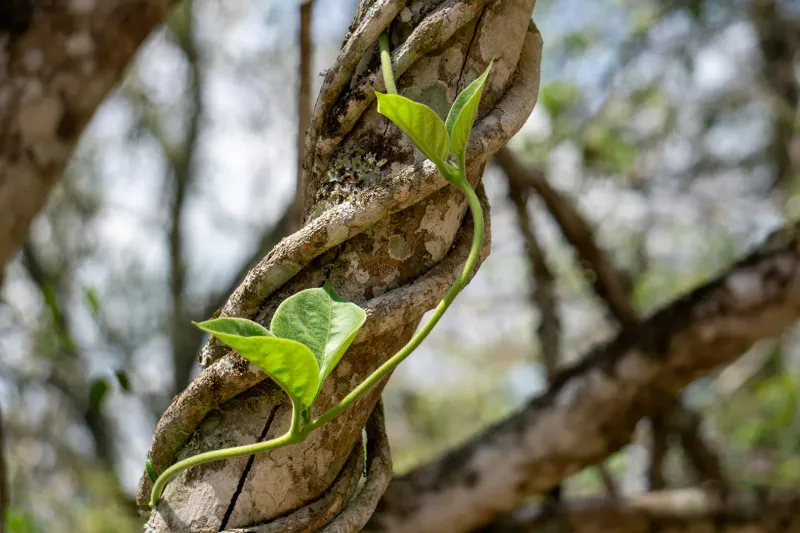
Confirm the plant, look at what it is actually doing to the tree, and match your response to the size of the problem. Arizona guidance treats it as an aggressive ornamental worth managing, and Florida’s smothering stories are a reason for attention rather than alarm.
A pretty vine can still deserve a boundary.