Do This To Oregon Hydrangeas Before July And They Will Reward You With More Blooms Next Year
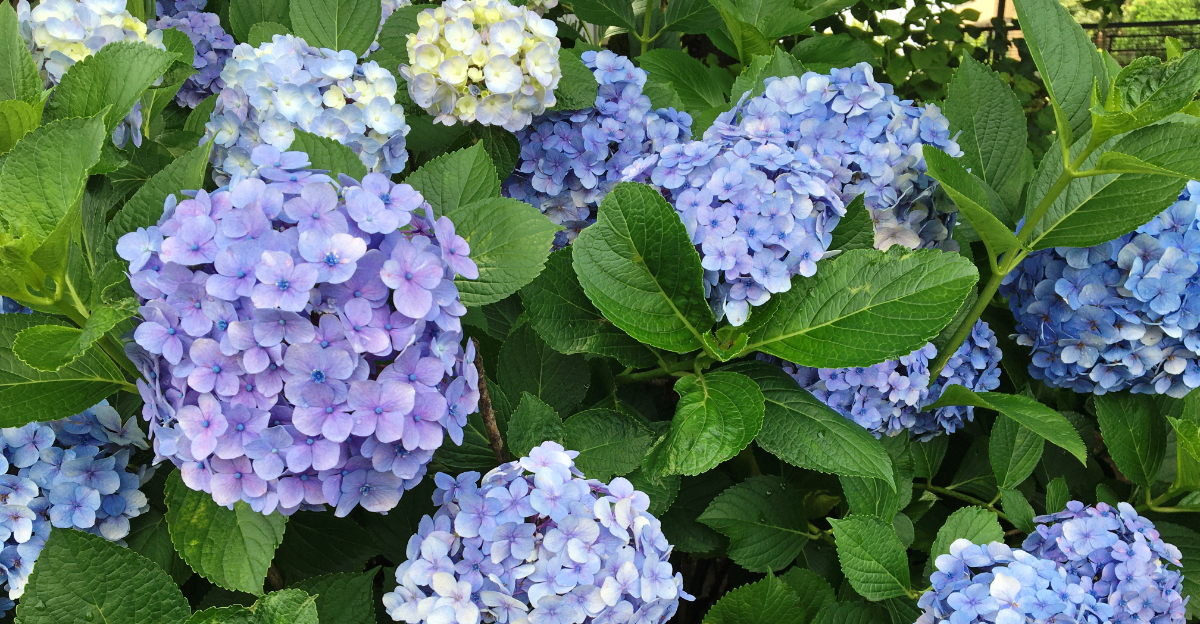
Hydrangeas can steal the show in an Oregon garden, but next year’s flowers often depend on what you do now.
Late June is a key moment because many plants are shifting out of their first big bloom push.
A little care before July can help the shrub save energy and set up stronger growth for the seasons ahead. The important part is knowing what your hydrangea needs before you start cutting.
Not every type blooms the same way, and one wrong trim can cost you flowers later. This is why timing matters so much.
A smart summer cleanup can keep the plant looking tidy without taking away the buds you want next year.
Give your hydrangeas the right attention now, and they may return the favor with a bigger, brighter show.
1. Prune Right After The Flowers Fade
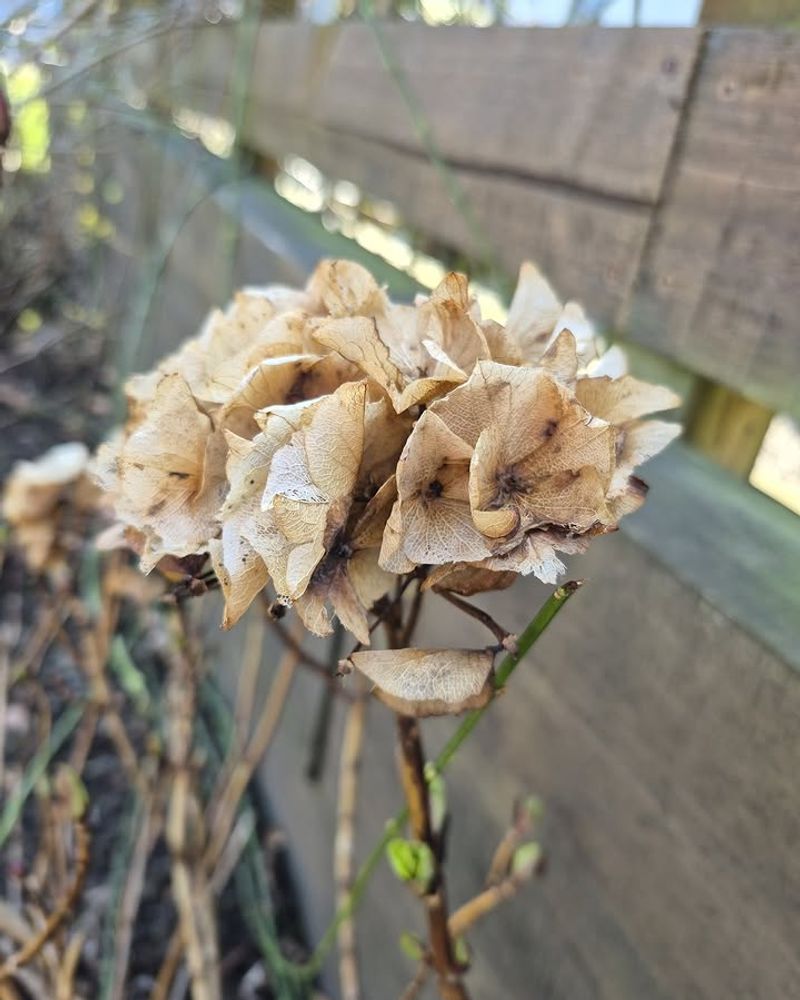
Timing is everything when it comes to pruning hydrangeas, and most gardeners wait too long. The best window is right after the flowers start to fade, usually in late summer or early fall.
Cutting at this point gives the plant plenty of time to set new buds for next year.
In our state, summers can be dry and warm, which means flowers may fade faster than you expect. Watch your plants closely once the blooms start to turn brown or papery.
That is your signal to grab your pruning shears and get to work. Pruning too late in the season is one of the most common reasons hydrangeas skip a year of blooming.
If you wait until fall is fully underway, you risk cutting off the new buds that are already forming on the stems. Those buds are what will become next year’s flowers.
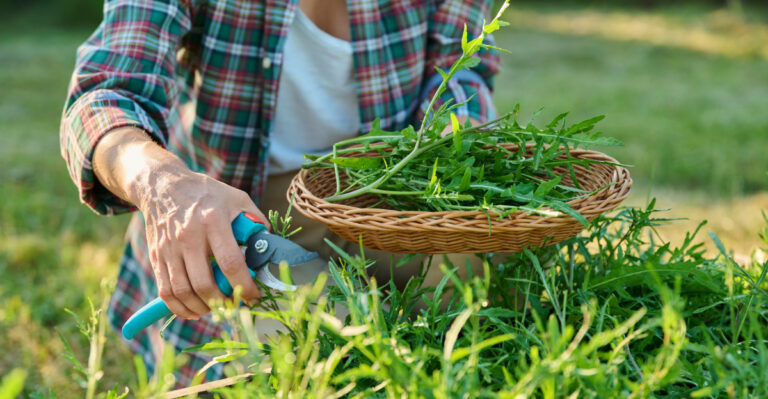
A clean cut just below a faded flower head is usually all you need. You do not have to remove a lot of stem.
Just enough to clean up the plant and encourage it to put its energy into building strong new growth before winter arrives.
Sharp, clean tools also matter because rough cuts can stress the plant and invite problems. Keep your shears clean and make smooth, precise cuts every time for the best results.
2. Know If Yours Blooms On Old Wood
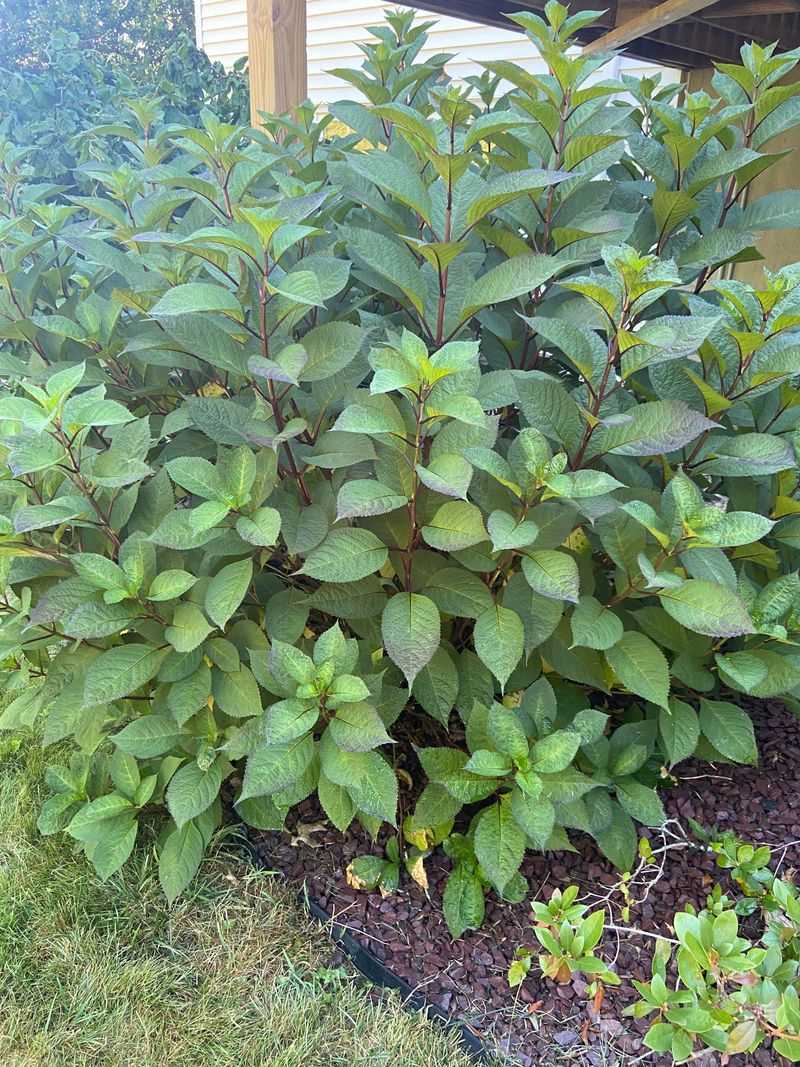
Not all hydrangeas are the same, and one of the most important things to figure out is whether yours blooms on old wood or new wood.
Old wood means the plant sets its flower buds on stems that grew the previous year. New wood means it blooms on stems that grow in the current season.
Bigleaf and oakleaf hydrangeas are common in our region, and both bloom on old wood. That means if you cut those stems back hard in fall or spring, you are removing the very buds that would have become flowers.
Many Oregon gardeners do this by accident and then wonder why nothing bloomed.
Panicle and smooth hydrangeas, on the other hand, bloom on new wood. You can prune those more freely in late winter or early spring without worrying about losing blooms.
Your Oregon Garden Changes Every Week. Your Plan Should Too.
Gardening in Oregon changes quickly throughout the season. Every Friday you’ll receive a simple weekly plan showing exactly what to plant, prune, fertilize, harvest, and protect so you never miss the right timing.
Knowing which type you have changes everything about how you care for it.
A quick way to figure this out is to look at where the flower buds appear. If you see small buds along last year’s brown stems in early spring, you have an old-wood bloomer.
Take a photo of your plant at different times of year to track where new growth appears. Once you know your type, you can prune with confidence and stop guessing every season.
Getting this right is the foundation of better blooming every year.
3. Bigleaf Hydrangeas Need Careful Summer Cuts
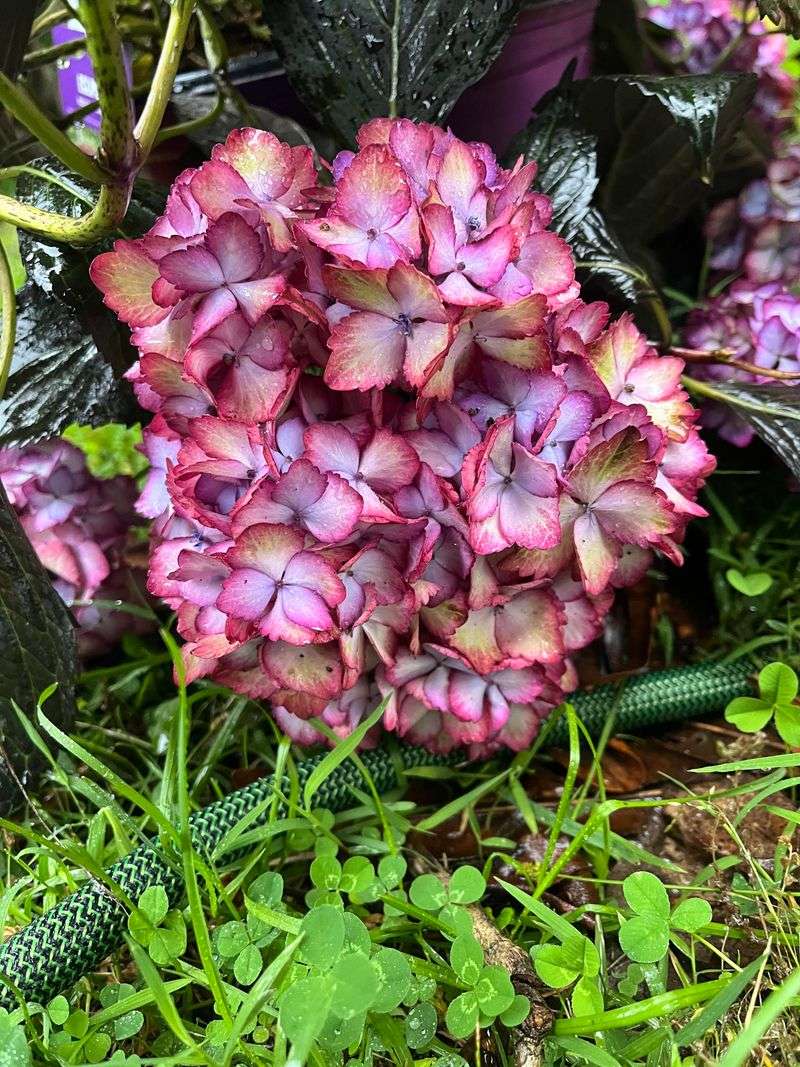
Bigleaf hydrangeas are probably the most popular type grown across our state, and they are also the trickiest to prune.
Their big, colorful blooms are hard to resist, but those blooms come from buds that formed on last year’s stems.
Cut those stems at the wrong time and you will be staring at a green shrub with no flowers next summer.
The safest time to prune bigleafs is right after they finish blooming, which is usually sometime between late June and early August depending on where you live in the state.
Once the flowers fade, trim just the stems that carried blooms this year. Leave the rest alone.
Do not remove more than one-third of the plant at a time. Taking off too much at once can stress the shrub and reduce its ability to store energy for winter.
Gentle, selective cuts work much better than aggressive shaping when it comes to this type.
Some gardeners are surprised to learn that bigleafs can actually form two sets of buds. The main buds sit at the tips of stems, but backup buds form lower down along the cane.
If the tip buds get damaged by frost, those lower buds can still produce flowers.
That is why it is so important to avoid cutting stems all the way to the ground unless they are truly damaged or completely hollow inside. Protect those backup buds and your summer display will thank you.
4. Cut Damaged Stems Before They Crowd New Growth
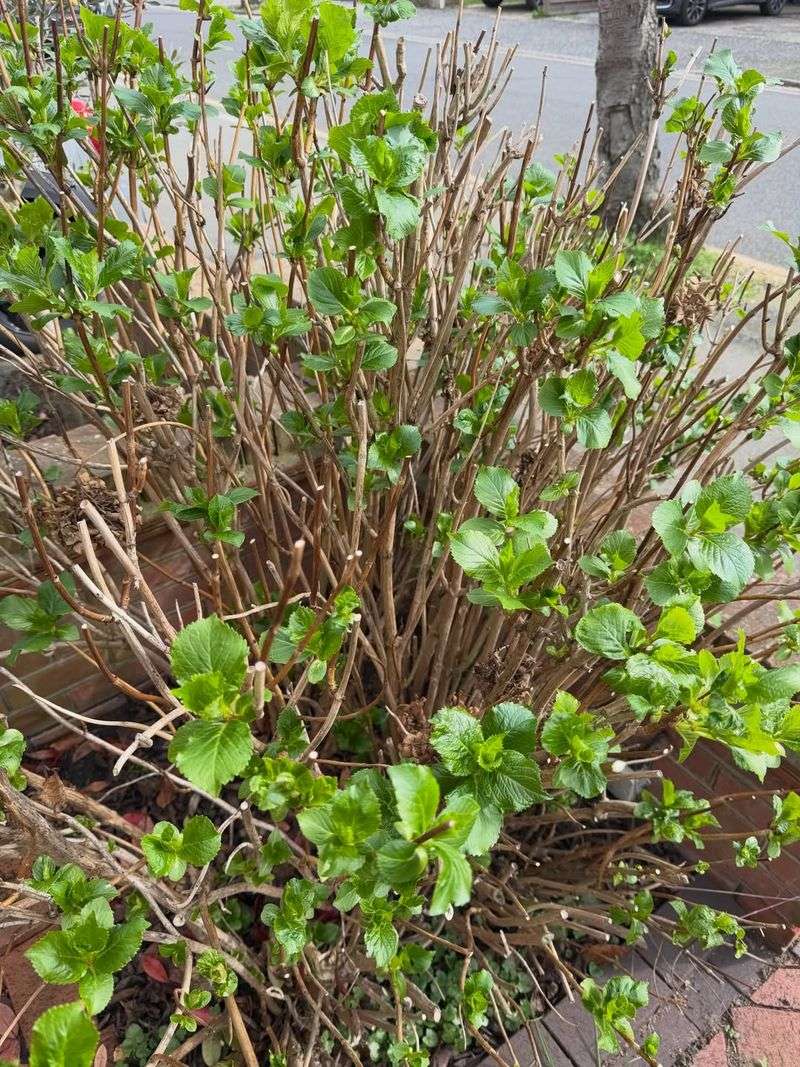
Every season, some stems on a hydrangea will come through winter looking rough. They may be cracked, hollow, discolored, or just plain damaged from the tips down.
Leaving those stems on the plant is not doing it any favors. Damaged stems take up space and use up energy that the plant could be putting into healthy new growth.
When they crowd the inside of the shrub, they also block airflow and light from reaching the stems that are actually doing something useful.
That creates the perfect environment for mildew and other issues to take hold.
Before July, go through your shrub and look at each stem carefully. Scratch the surface lightly with your fingernail.
If you see green underneath, the stem is alive. If it is brown or tan all the way through, it is not coming back and should be removed.
Cut it all the way down to the base or to the nearest healthy side shoot.
Getting rid of these damaged canes early in the season gives the healthy stems room to grow outward and upward without competition. You will notice the plant looks neater and more open after a cleanup like this.
More importantly, the energy that was being wasted on those struggling stems now goes directly into building the buds that will become next year’s blooms.
It is one of the simplest and most rewarding things you can do for your hydrangea before summer really gets going.
5. Remove Weak Canes At The Base
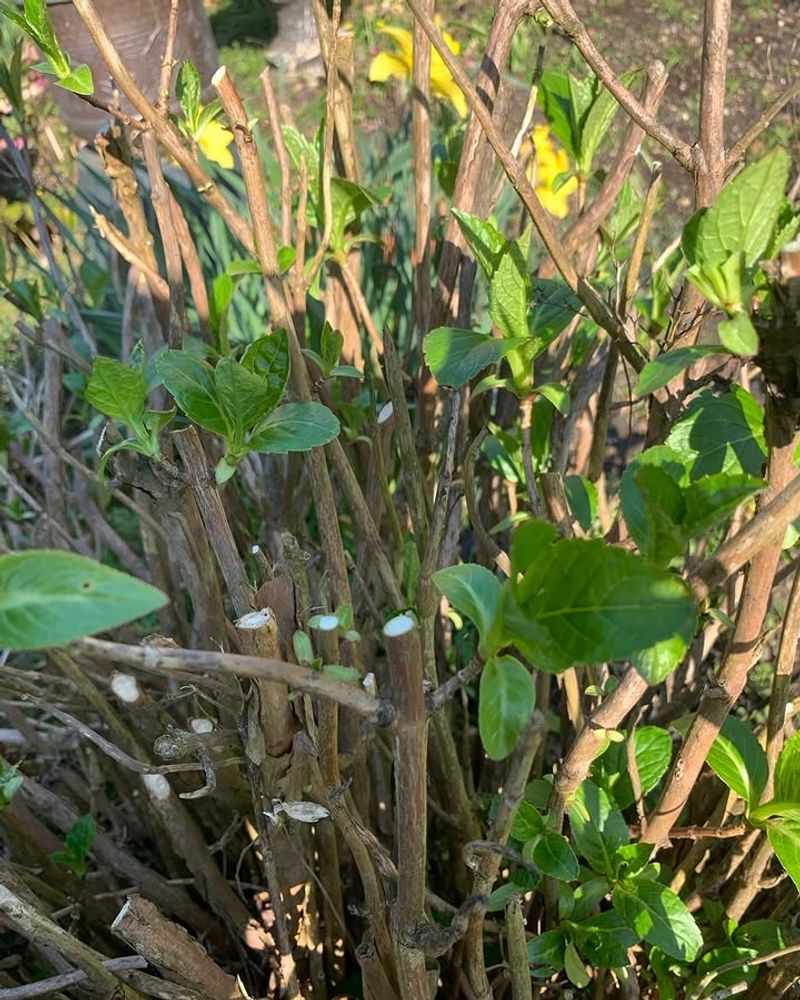
Strong canes produce strong blooms. Weak, spindly canes that are thinner than a pencil rarely have enough energy to carry a full flower head.
Removing them at the base is one of the smartest things you can do before July arrives.
Look at the base of your hydrangea and you will probably see a mix of thick, sturdy canes and some thin, floppy ones.
The thin ones are often shaded out by the bigger stems and never get enough light to develop properly.
They might push out a few small leaves, but they are unlikely to bloom well.
Cutting those weak canes all the way to the ground redirects the plant’s energy toward the stems that can actually perform. Think of it like thinning out a garden bed.
When plants are not competing with each other for resources, they grow bigger and stronger.
A good rule of thumb is to keep between five and twelve of the strongest canes on a mature shrub, depending on its size. Remove anything that looks thin, bent, or crowded against a stronger cane.
Do this selectively rather than all at once to avoid shocking the plant. After a season or two of removing weak canes each year, you will start to notice a clear improvement in both the size and number of blooms.
Your shrub will look more structured, and the flowers will stand taller and last longer through the heat of summer.
6. Don’t Shear The Whole Shrub Flat
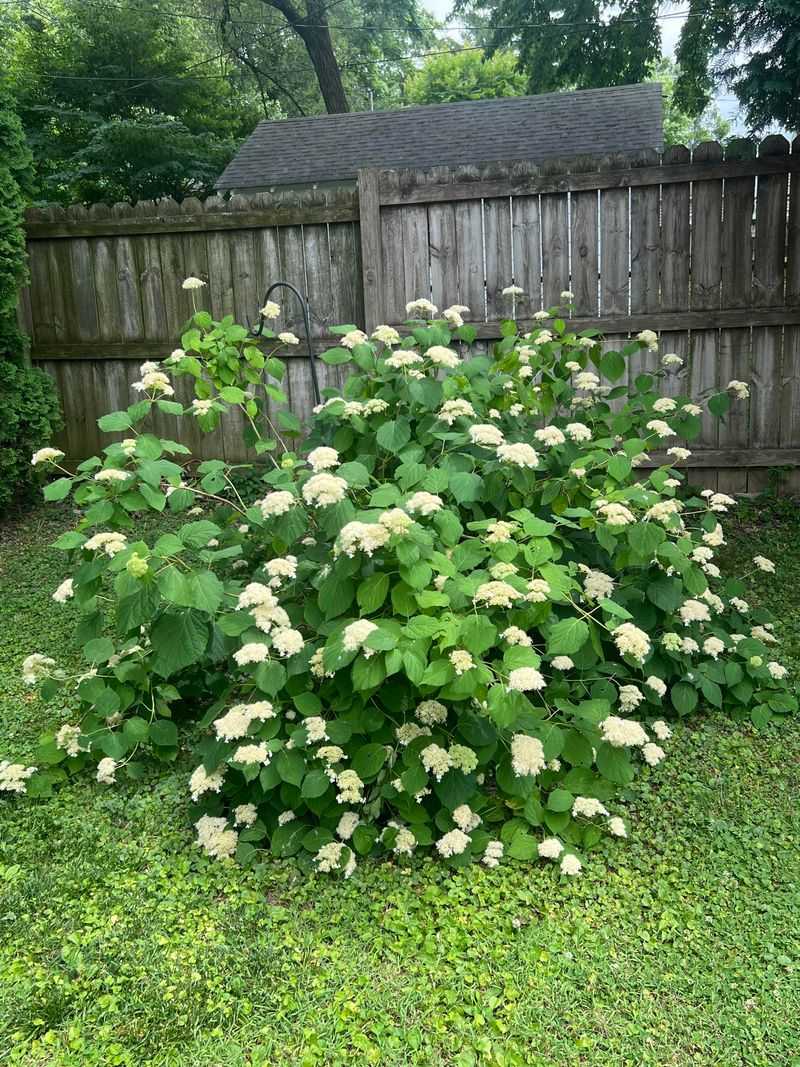
It is tempting to grab the hedge trimmers and give your hydrangea a neat, rounded shape. It looks tidy right away, and it feels productive.
But shearing a hydrangea flat is one of the fastest ways to end up with a shrub that refuses to bloom.
When you shear the whole plant, you cut off every single stem tip. Those tips are exactly where the flower buds are forming or will form.
You are essentially removing next year’s blooms in one quick pass. The plant will respond by pushing out lots of leafy new growth, but very few flowers.
Hydrangeas are not meant to be shaped like boxwood hedges. They have a natural, arching form that actually looks better when it is allowed to grow the way it wants to.
Fighting against that shape with flat cuts creates more work and fewer rewards every season.
Instead of shearing, use hand pruners to make selective cuts. Remove individual stems that are too long or out of place.
Step back often to look at the overall shape as you work. This approach takes a little more time, but it preserves the buds that matter most.
Your neighbors might think a lightly pruned hydrangea looks a bit wild at first. But by mid-summer when it is covered in blooms and the sheared shrub next door has none, the difference will speak for itself.
Natural is better when it comes to hydrangeas every single time.
7. Leave Strong Green Stems For Next Year
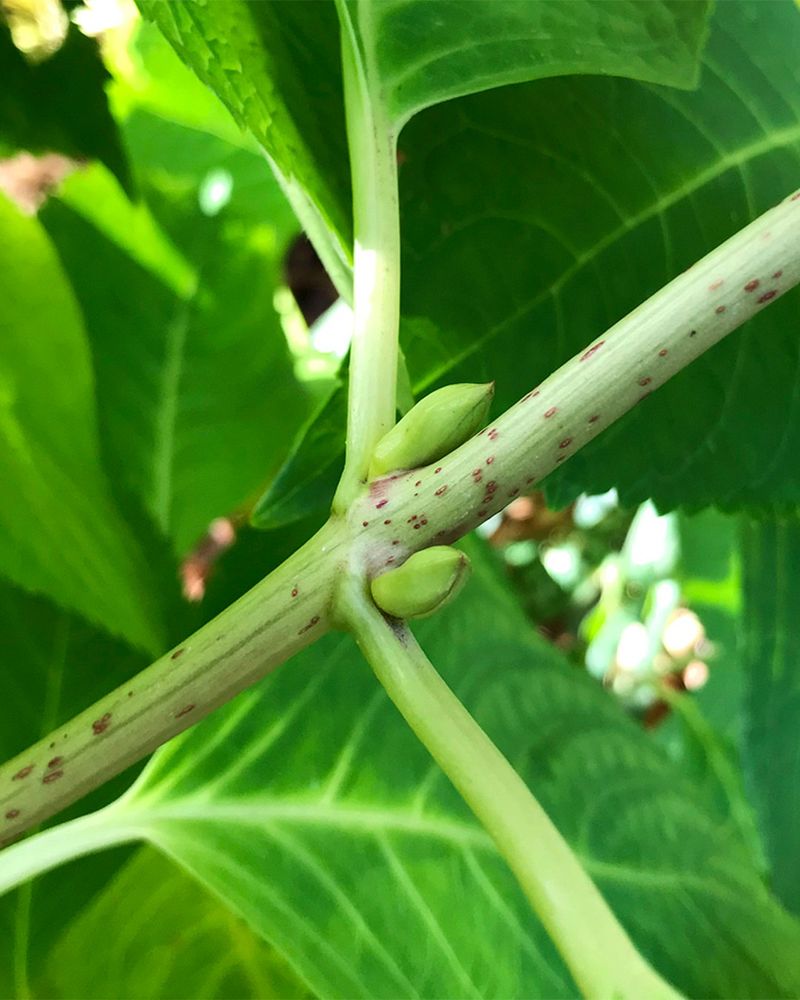
After you have removed the damaged, weak, and crowded stems, take a good look at what is left.
The strong, green, upright canes that remain are your most valuable asset going into next year. Guard them carefully.
These healthy green stems are already in the process of setting buds for next season. Every cut you make to one of these canes is a potential bloom you will not see next summer.
Unless a stem is truly causing a problem, leave it exactly where it is and let it do its job.
In our region, green stems that survive the winter are a real gift. Frosts can sometimes damage stem tips, especially in the northern and higher-elevation parts of the state.
The more healthy stem tissue you preserve going into fall, the better your chances of having plenty of blooms even if some tips get nipped by cold weather.
A simple way to tell a strong stem from a weak one is to look at its color and thickness. Healthy stems are firm, bright green or greenish-brown, and at least as thick as a standard pencil.
They stand upright on their own and do not flop over when you let go. If a stem passes all of those tests, it earns its place on the shrub.
Protect it, support it with a little mulch at the base, and let it grow. By next July, it will be loaded with exactly the kind of blooms you were hoping for.
8. Deadhead Without Cutting Future Buds
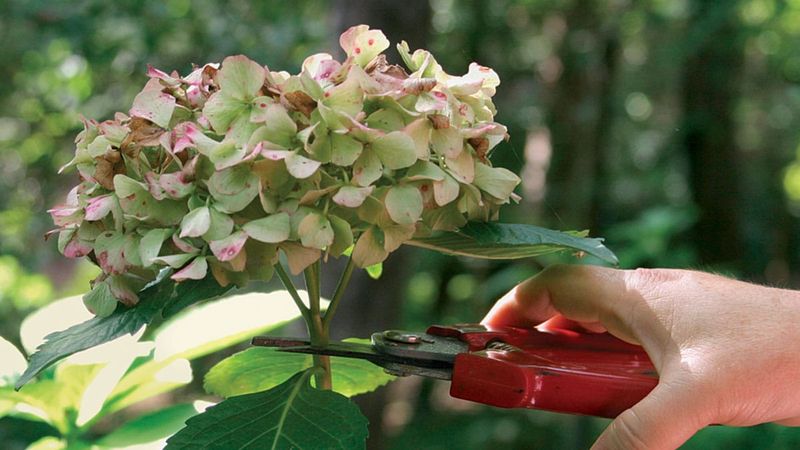
Deadheading sounds simple, but it is surprisingly easy to go too far. The goal is to remove the old, faded flower head without cutting into the stem below it where new buds are waiting.
Done right, deadheading tidies up the plant and may even encourage a few extra blooms late in the season.
Look closely just below the spent flower head before you make any cut. You will often see a pair of small, plump buds sitting right below where the flower stem meets the main cane.
Those are the buds you absolutely want to keep. Make your cut just above them, not below.
Many gardeners accidentally cut through these buds without realizing it because they are small and easy to miss. Getting in the habit of looking before you cut will save you a lot of frustration.
A magnifying glass can actually help if your eyesight makes small buds hard to spot.
One more thing worth knowing: some gardeners choose to leave the dried flower heads on their hydrangeas through fall and winter. The papery blooms actually provide some protection to the buds below them during cold snaps.
If your area tends to get hard frosts in late fall, consider leaving a few old flower heads in place and only removing them in early spring. It is a small thing, but it can make a real difference in how many buds survive to become blooms the following summer season.
9. Stop Heavy Pruning Before Buds Form
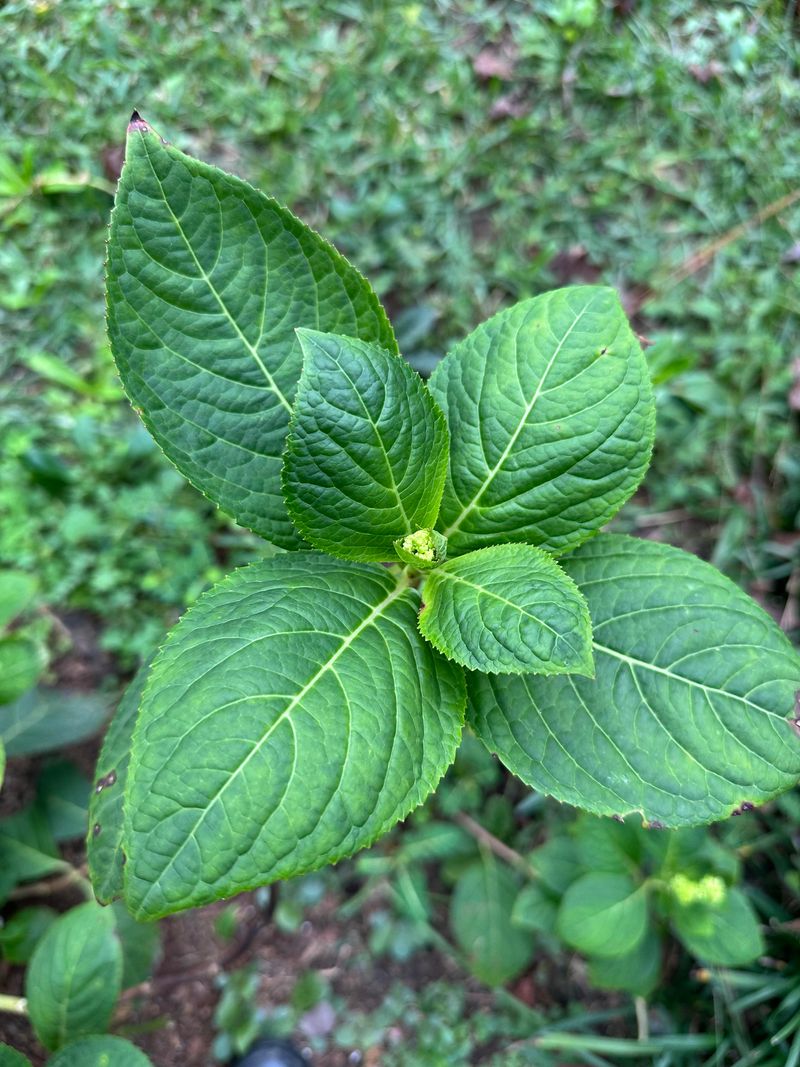
There is a hard due date every hydrangea gardener in Oregon should keep in mind: once buds start forming, heavy pruning needs to stop.
For most types that bloom on old wood, that bud-setting process begins earlier than people expect, often by midsummer.
Once July arrives, the window for safe, heavy pruning is essentially closed for old-wood bloomers. Any major cuts made after this point risk removing the very buds that are quietly developing along the stems.
You will not be able to see them clearly yet, but they are there.
A good habit is to do all your major pruning work in the weeks right after flowering ends and then step back. Let the plant rest and focus on building its buds without any more disruption.
Light deadheading is fine, but avoid cutting into healthy, established stems from this point forward.
Gardeners who are new to hydrangeas often make the mistake of treating them like other shrubs that can handle a hard cut at almost any time of year. Hydrangeas that bloom on old wood are different.
They need a specific pruning window and they are not forgiving when that window is missed.
Mark your calendar, set a reminder on your phone, do whatever it takes to remember that heavy pruning must happen before July or not at all.
Your future self standing in a yard full of blooms next summer will be very glad you planned ahead and respected that due date.
10. Mulch And Water After Pruning
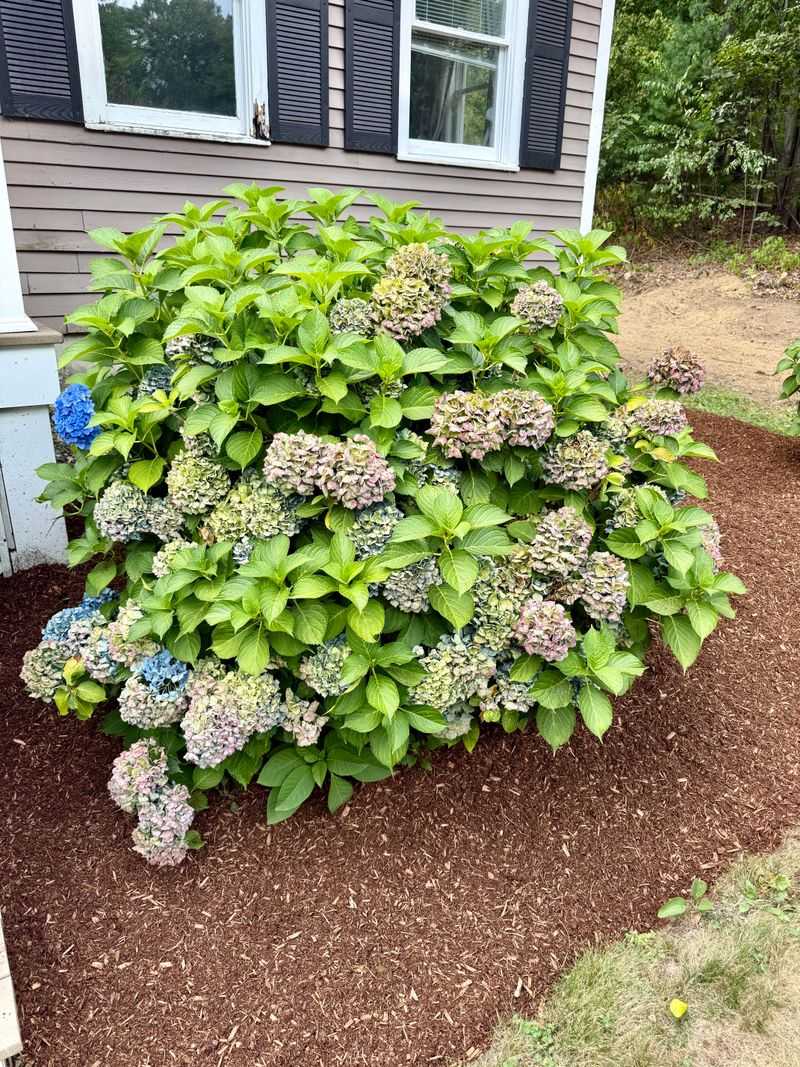
Pruning is only half of the equation. What you do right after you make those cuts matters just as much as the cuts themselves.
Two of the most important follow-up steps are mulching and watering, and both make a big difference in how well your hydrangea recovers and prepares for next year.
A fresh layer of mulch around the base of the shrub helps lock in soil moisture, regulate soil temperature, and protect the roots during the dry summers that are common across this state. Use a natural mulch like wood chips, bark, or shredded leaves.
Spread it about two to three inches deep, but keep it a few inches away from the base of the stems to prevent rot.
Watering deeply after pruning helps the plant recover quickly and pushes moisture down to the roots where it is needed most.
Shallow, frequent watering is not as effective as one long, slow soak that reaches down several inches into the soil.
Early morning is the best time to water so the leaves can dry out before evening.
Together, mulch and deep watering create the ideal conditions for your hydrangea to bounce back from pruning and spend the rest of summer building strong, healthy buds.
Skipping these steps after pruning leaves the plant stressed and working harder than it should.
A little extra care right after you prune goes a long way toward guaranteeing a stunning bloom display when next summer rolls around in your garden.