8 Easy Ways To Help A Struggling Michigan Clematis Bounce Back
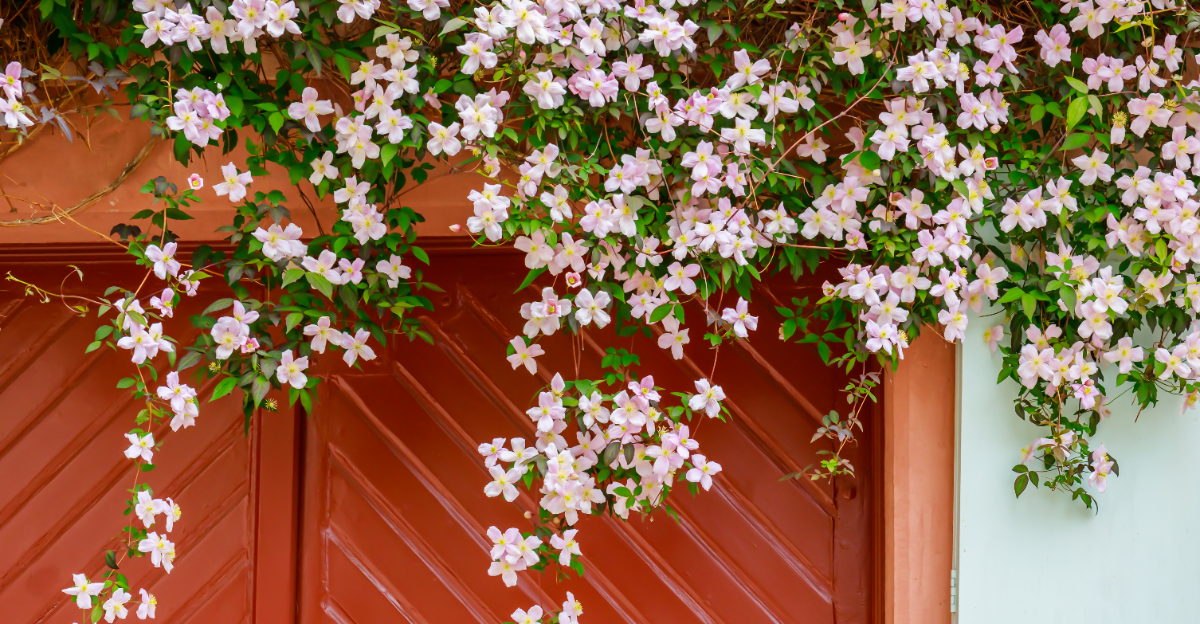
A clematis that stops climbing or barely blooms can feel like a mystery wrapped in tangled vines.
Michigan gardeners deal with this more than they might think, especially after harsh winters, dry summers, or a pruning cut made at the wrong time.
The good news is that most struggling clematis plants are not beyond saving. With a few targeted fixes and some patience, your vine can regain its energy, push out fresh growth, and reward you with the blooms it was always meant to deliver.
Before grabbing pruners or dragging out the hose, it helps to understand what your clematis actually needs right now.
Each of the eight steps below targets a specific reason why vines struggle in Michigan gardens. Some fixes take five minutes, while others require a small shift in your seasonal routine.
Start with the one that sounds most familiar, and you may be surprised how quickly a struggling clematis can turn things around.
1. The Pruning Group Explains The Next Cut
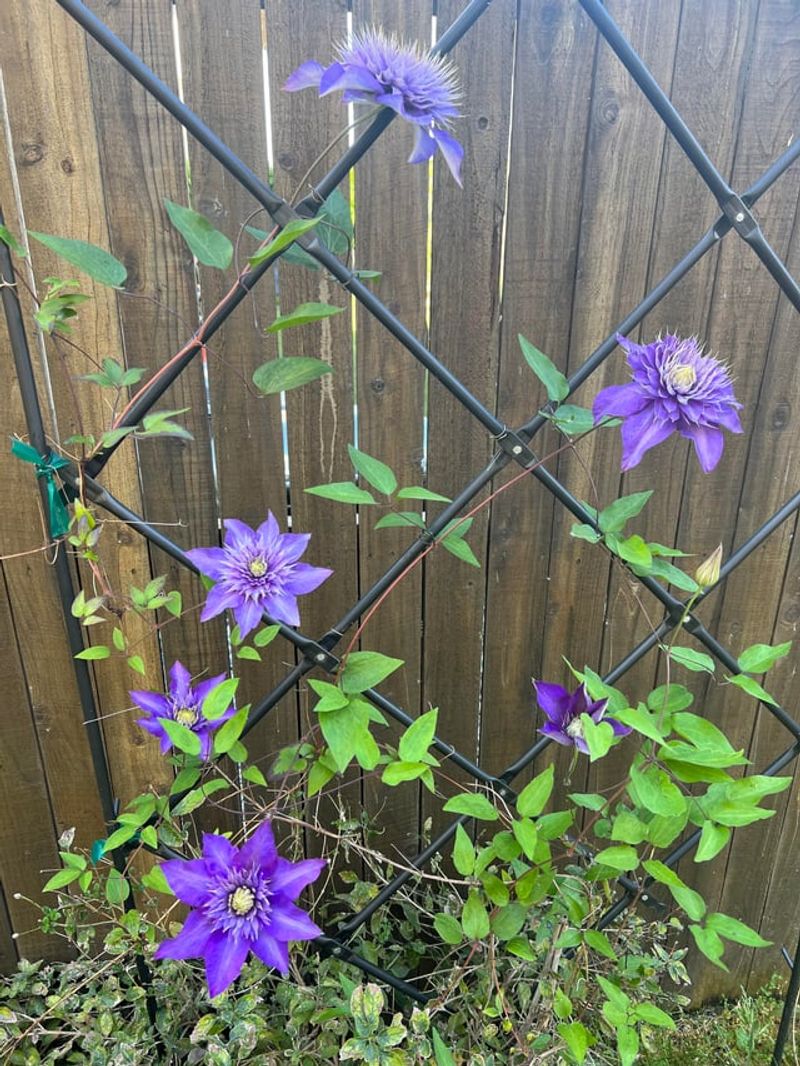
A gardener standing in front of a wall of clematis stems with shears in hand and absolutely no idea where to start cutting.
That moment of hesitation is incredibly common, and it matters more than many people realize. Clematis plants belong to one of three pruning groups, and cutting at the wrong time or in the wrong place can wipe out an entire season of blooms before they ever get started.
Group 1 clematis bloom on old wood, meaning stems that grew last year carry this season’s flower buds.
Cutting those stems back hard in late winter removes every bud and leaves you with nothing but green leaves all summer. Group 2 varieties bloom on both old and new wood, so a light trim in early spring followed by deadheading keeps them producing.
Group 3 clematis bloom entirely on new growth, making them the easiest to manage since a hard cut close to the ground each spring is exactly what they need.
If you have lost the plant tag, watch the vine for one full season before pruning. Notice when it blooms and whether the flowers appear on last year’s stems or fresh new growth. That observation alone tells you which group you are working with.
Once you match the cut to the group, the plant stops struggling and starts performing the way it was bred to.
A single season of watching and waiting is a much better investment than years of cutting at the wrong moment and wondering why the flowers never show up.
2. A Buried Crown Can Slow Recovery
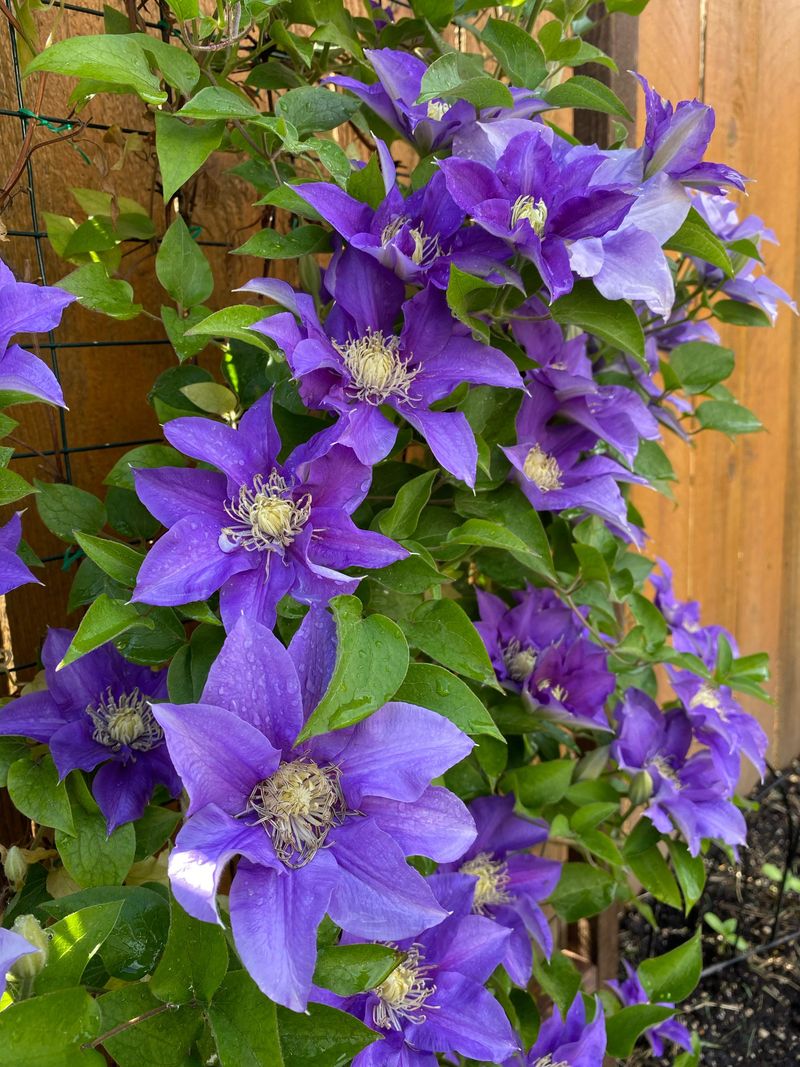
Soil settles over time, mulch gets piled on year after year, and before long the crown of a clematis ends up buried too deep.
That buried crown is one of the quietest reasons a vine loses its drive. The crown is the point where roots meet stems, and it needs to sit at a specific depth to keep the plant healthy and resilient through Michigan winters.
Most clematis experts recommend planting the crown two to three inches below the soil surface. That small amount of depth protects it from freeze-thaw cycles in winter while encouraging the plant to push out multiple shoots from below ground.
Your Michigan Garden Changes Every Week. Your Plan Should Too.
Gardening in Michigan changes quickly throughout the season. Every Friday you’ll receive a simple weekly plan showing exactly what to plant, prune, fertilize, harvest, and protect so you never miss the right timing.
More shoots mean more stems, more buds, and a fuller vine overall. When the crown is buried too deeply, the plant struggles to move energy efficiently and new growth becomes weak or sparse.
Check the planting depth by gently moving soil away from the base of the vine with your fingers. If the crown is buried more than three inches down, carefully lift the plant in early spring or fall and replant it at the correct level.
Work slowly to avoid snapping roots. After repositioning, water the area thoroughly and give the plant a few weeks to settle in.
Correcting crown depth is one of those quiet fixes that pays off steadily over the next one or two growing seasons rather than overnight.
It is not dramatic, but it addresses one of the most overlooked reasons Michigan clematis underperforms year after year.
3. Deep Watering Helps During Dry Weeks
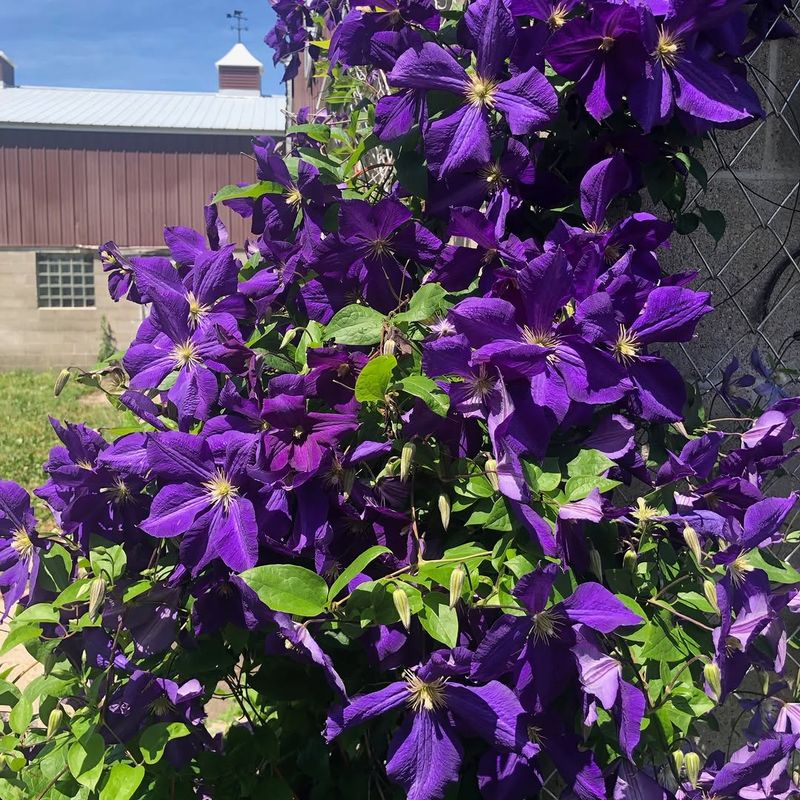
Michigan summers can fool gardeners into a false sense of security.
A few cloudy days or a light overnight rain might look like enough moisture, but the soil a foot below the surface can stay bone dry while the top inch feels damp to the touch.
Clematis roots run deep, and shallow watering never reaches the zone where the plant actually drinks.
During dry stretches that last more than a week, a struggling clematis needs slow, deep watering rather than a quick spray from a hose.
Letting water run at a trickle near the base of the plant for twenty to thirty minutes gives moisture time to soak down to the root zone rather than running off or evaporating from the surface.
A soaker hose set on a timer works especially well for gardeners who want consistent moisture without standing outside every evening.
Watch the vine for early signs of drought stress. Leaves that curl inward, stems that feel limp in the morning, or flowers that drop before fully opening are all quiet signals that the plant is not getting enough water.
Michigan typically sees the driest weeks in July and August, so ramp up the watering routine before the plant shows obvious distress rather than waiting for it to wilt.
Consistent moisture during those critical weeks keeps the root system active and supports the strong stem growth that carries next season’s flowers.
A well-hydrated clematis recovers faster from almost every other kind of stress, which makes watering properly one of the highest-return habits in the whole list.
4. Mulch Keeps The Root Zone Cooler
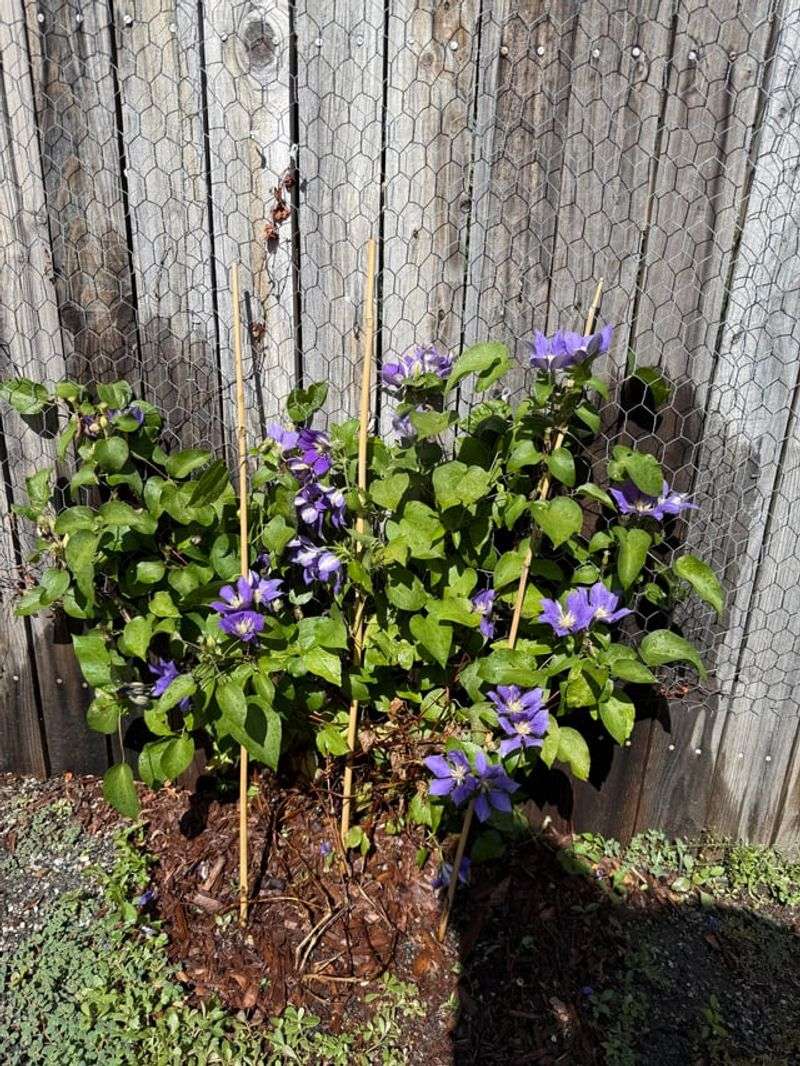
Roots that bake in hot summer soil have a hard time keeping up with a vine that is trying to climb, bloom, and store energy all at the same time.
Clematis roots prefer cool, moist conditions even when the tops of the plants are soaking up full Michigan sun. A good layer of mulch creates that underground comfort zone without requiring any extra watering or shade structures.
Spread two to three inches of organic mulch around the base of the vine, starting a few inches away from the crown and extending outward about twelve to eighteen inches.
Wood chips, shredded bark, or straw all work well. The mulch slows evaporation, moderates soil temperature, and breaks down slowly to improve soil structure over time.
Keeping the mulch away from the crown itself is important because piling it directly against the base traps moisture against the stems and can invite rot or fungal issues.
Michigan gardeners often apply mulch in late spring after the soil has warmed slightly, then refresh the layer again in fall before the ground freezes.
That fall layer adds an extra buffer against the freeze-thaw cycles that can heave shallow roots out of the ground during unpredictable Michigan winters.
If your clematis has been struggling and you have never mulched around it, this single step can produce a noticeable improvement in stem strength and leaf color within one season.
It is one of the simplest, lowest-cost ways to support a vine that needs a little extra help, and it keeps working for months after you spread it.
5. Early Training Prevents Tangled Stems
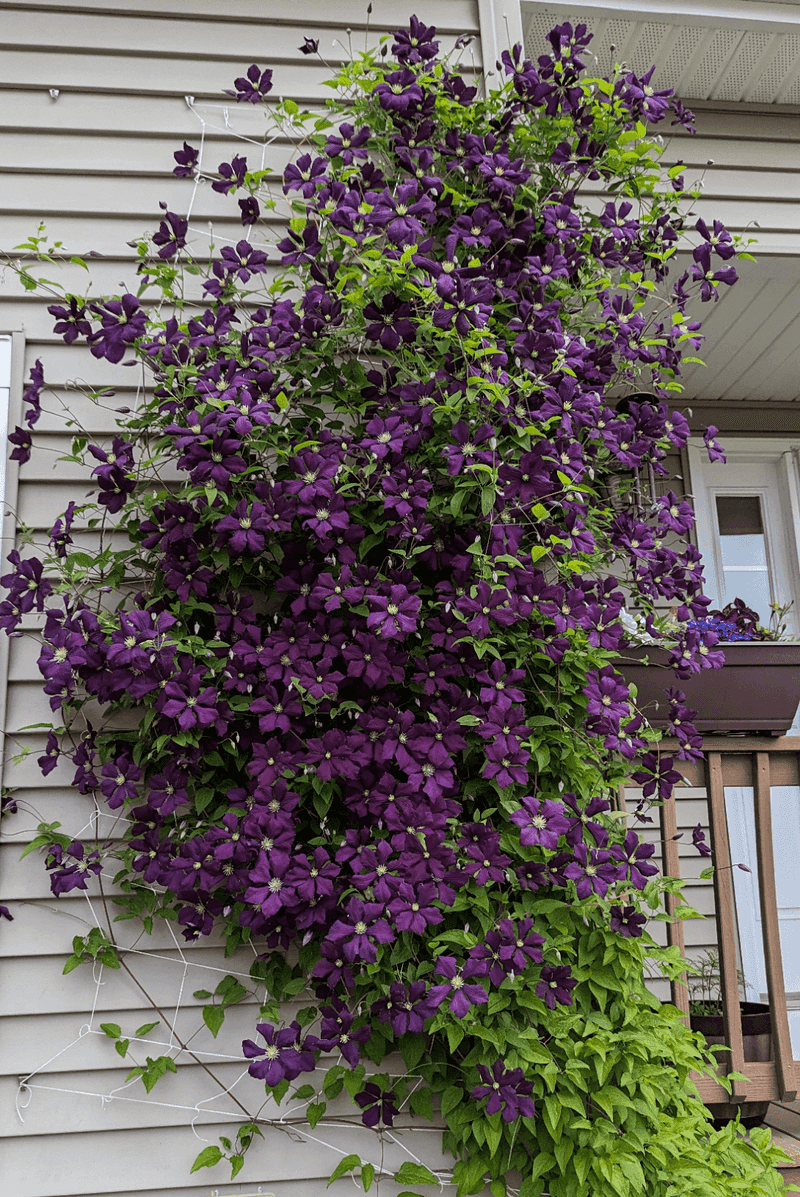
Young clematis stems are surprisingly flexible and easy to guide when they are just a few inches long.
Wait too long, and those same stems wrap around each other, grab the nearest support at odd angles, and form a knotted mass that blocks light and airflow from reaching the center of the plant.
Early training is the difference between a vine that climbs gracefully and one that collapses into a tangled pile by midsummer.
Start guiding new growth as soon as stems reach six to eight inches. Use soft garden ties, strips of old pantyhose, or flexible plant clips to fasten stems loosely to the trellis or support structure.
Spread the stems outward and upward so each one has its own space rather than crossing over others. Fanning the stems across the support allows sunlight to reach every part of the plant and encourages more even flowering across the entire vine instead of a cluster at the very top.
Michigan gardeners often find that clematis pushes out several new shoots very quickly after a warm spring rain.
Checking the vine every few days during that burst of growth makes training easy and keeps the job manageable rather than overwhelming.
A vine spread evenly across its support also handles Michigan wind better than one bunched in the middle.
Proper early training reduces the need for heavy cleanup later in the season and gives the plant a stronger, more open framework that supports better blooms year after year.
Five minutes every few days in spring is worth an hour of untangling in July.
6. Weak Tangled Growth Drains Energy
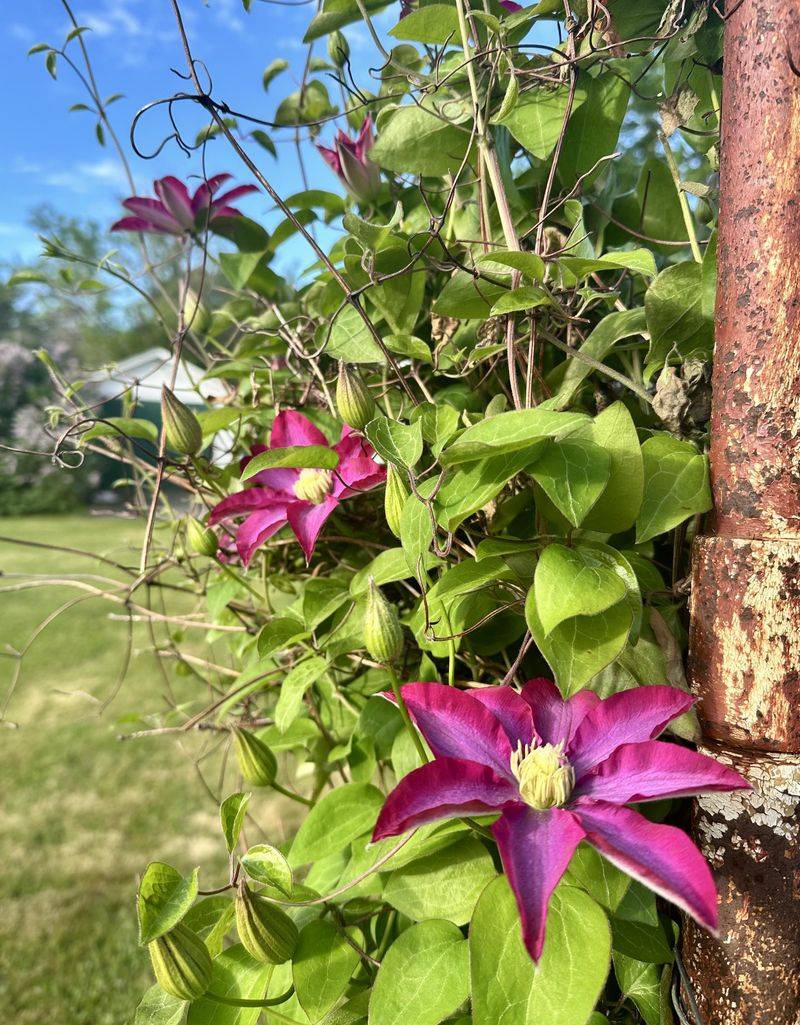
Not every stem on a struggling clematis is worth saving.
Some shoots come up thin and pale, barely thicker than a piece of string, and they cross over stronger stems in ways that create friction, block airflow, and steal resources from the vines that actually have the strength to bloom.
Removing that weak, tangled growth is not about being harsh with the plant. It is about helping the vine focus its limited energy where it can do the most good.
Look for stems that are thinner than a pencil, discolored, or growing horizontally across other stems without any upward momentum. These are the ones to remove.
Use clean, sharp scissors or bypass pruners and cut them back to a healthy junction or all the way to the base.
Cleaning up this crossing growth also opens the center of the plant to better airflow, which helps reduce the chance of powdery mildew, a fungal issue that shows up frequently on Michigan clematis during humid summer weeks.
Do this light cleanup in late spring after the plant has leafed out enough to show you which stems are thriving and which ones are just taking up space. Avoid removing more than one-third of the total growth at one time.
After a good cleanup session, many gardeners notice that the remaining stems grow noticeably thicker and more vigorous within just a few weeks.
Less competition for resources, more energy going to the stems that matter. It is one of the more satisfying garden tasks because the results show up so quickly after you finish.
7. Light Spring Feeding Supports New Growth
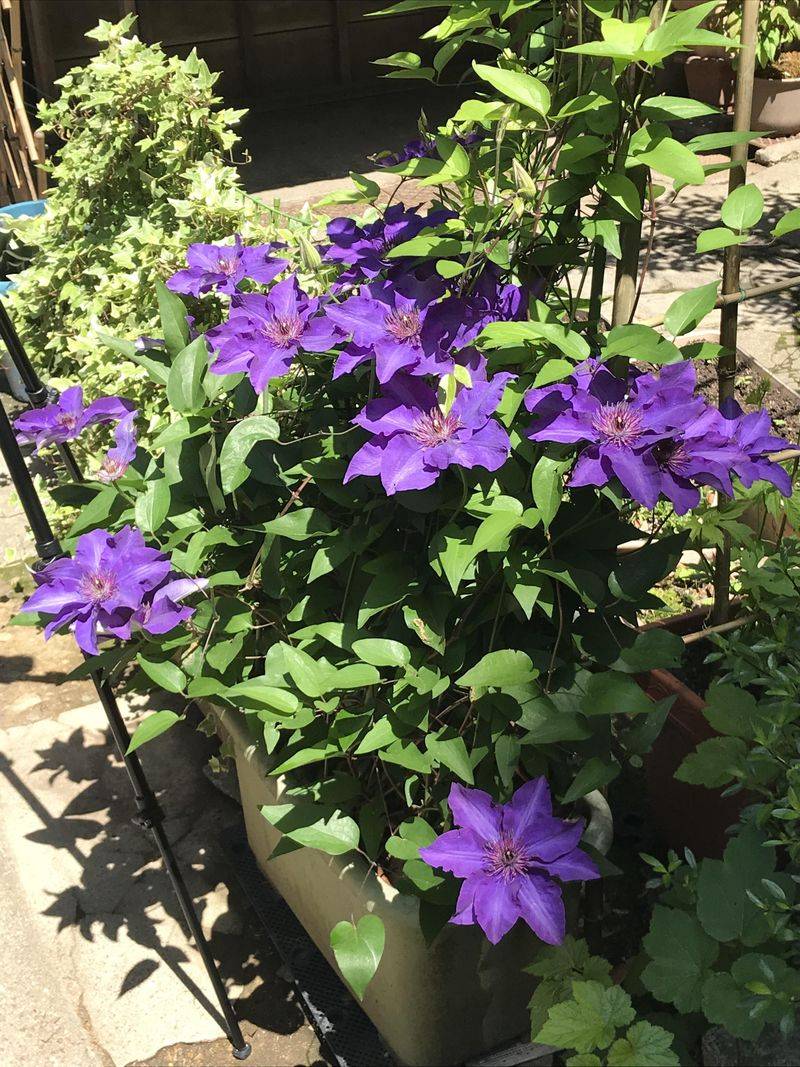
A clematis pushing out fresh green shoots in spring is working hard, and a small boost of nutrition at the right moment can make a real difference in how strong and productive that new growth turns out to be.
The key word is small. Overfeeding a struggling clematis with high-nitrogen fertilizer is one of the most common mistakes gardeners make, and it leads to lush, leafy growth with very few flowers to show for it.
Choose a balanced fertilizer with roughly equal amounts of nitrogen, phosphorus, and potassium, something in the range of a 10-10-10 or a low-nitrogen formula designed for flowering vines.
Apply it once in early spring when new shoots are just starting to emerge, following the package directions carefully.
A second light feeding in early summer, right after the first flush of blooms, can encourage repeat-blooming varieties to push out another round of flowers.
Avoid feeding after midsummer since late-season feeding pushes soft growth that does not harden off properly before Michigan winters arrive, which creates a new set of problems just as the season is winding down.
Compost works beautifully as a gentler alternative. A two-inch layer of finished compost worked lightly into the soil around the base of the vine releases nutrients slowly and also improves soil structure over time.
Gardeners who use compost consistently often find their clematis develops a stronger root system and more vigorous stem growth without the boom-and-bust cycle that comes from heavy synthetic feeding. Less is genuinely more when the goal is flowers.
8. Wind Protection Keeps Vines From Snapping
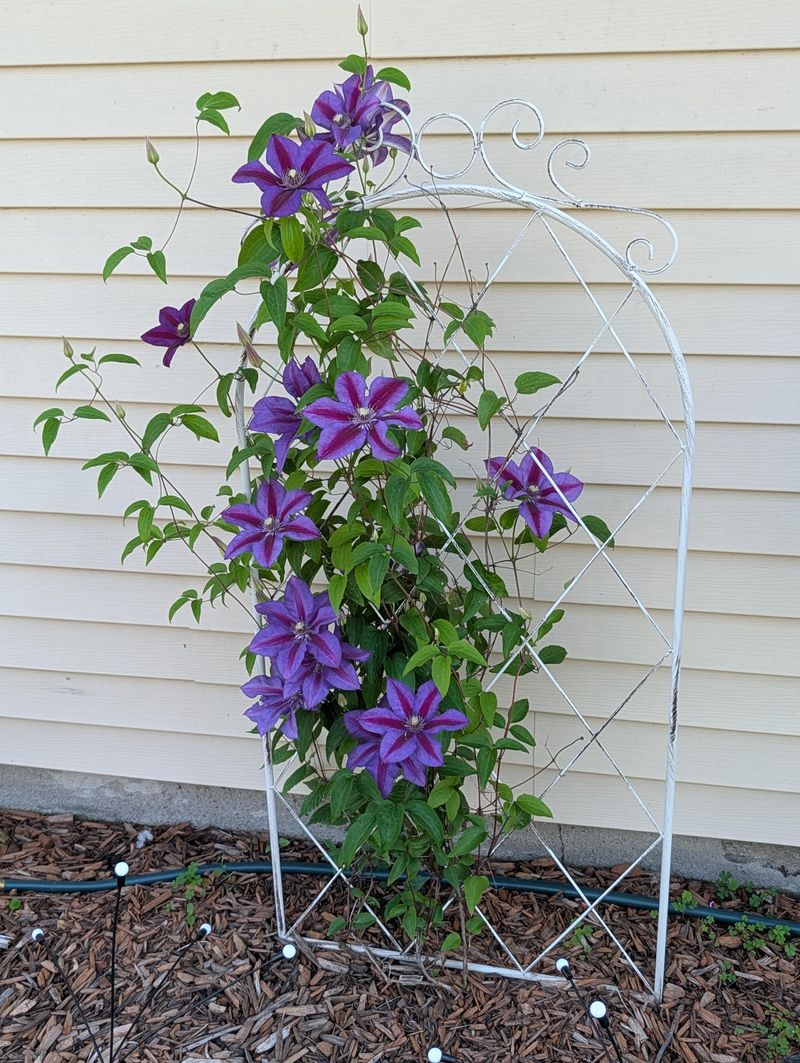
Michigan wind does not give clematis much warning.
A calm morning can turn into a gusting afternoon that whips long stems back and forth until they snap at a leaf node or pull free from the trellis entirely.
Stems that break or tear near the base often struggle to recover, and repeated wind damage over a season leaves the plant looking ragged and exhausted before summer is even halfway through.
A sturdy support structure is the first line of defense. Trellises, obelisks, and fence panels all work well, but they need to be anchored firmly enough to handle Michigan wind loads without shifting or leaning.
Check supports each spring before new growth gets heavy. Loose posts or wobbly panels should be reset or replaced before the vine puts real weight on them.
Tying stems to the support at regular intervals, roughly every eight to twelve inches, keeps the vine from flapping freely in the wind.
Natural windbreaks also help more than most gardeners expect. Planting a clematis on the sheltered side of a fence, hedge, or garden structure reduces the force of prevailing winds significantly without shading the vine.
If the clematis grows in an exposed spot, a temporary windbreak made from burlap or frost cloth during the most blustery weeks of spring and fall adds meaningful protection.
A supported vine is a confident vine, and confidence shows in the flowers.
Protecting it from physical stress gives it the stability to put energy into roots and blooms rather than constantly repairing damage from a wind that had no idea it was being so inconsiderate.