Fall Tree Planting in Arizona: A Conditional Guide for Low-Desert Homeowners
Planting a shade tree in the Arizona low desert takes more planning than picking a species and grabbing a shovel. Fall can be a favorable time to get a tree in the ground, but that window opens earlier than most people expect, and it is not the right move for every yard.
If your site has the space, the soil, and the water access to support a large native tree, reading through this guide before the holiday season arrives could save you a costly mistake.
Fall is a planting window, not a Thanksgiving deadline
Cooler air and still-warm soil make fall one of the better times to plant a tree in the low desert. Roots can grow and settle in before summer heat returns, giving a new tree a head start that spring planting simply cannot match.
The catch is that “fall” in this context does not mean late November. Waiting until the last week of November is not necessarily wrong if temperatures are cooperating, but it is not the target window either.
Timing also depends on your specific location within Arizona. Elevation, frost exposure, and yard microclimate all affect when planting conditions are safe and productive.
University of Arizona planting guidance advises choosing a time when temperatures are above freezing and conditions are neither too hot nor too dry, which is a site-specific call, not a calendar date every homeowner can apply equally.
Let the yard decide whether a mesquite fits
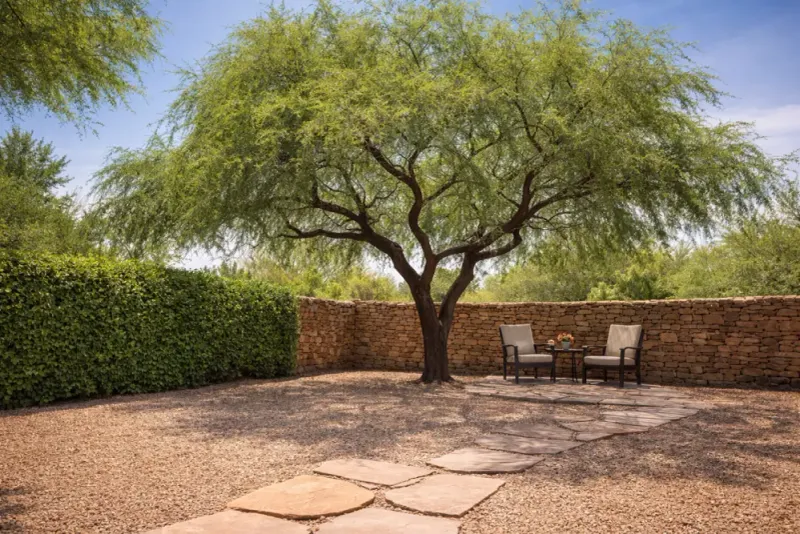
Arizona is not one gardening climate. A homeowner in the Phoenix metro, a property near Tucson, and a yard at higher elevation in Prescott face different frost risks, soil types, and rainfall patterns.
Matching a tree to your specific climate zone and microclimate matters as much as picking a species that sounds appealing online.
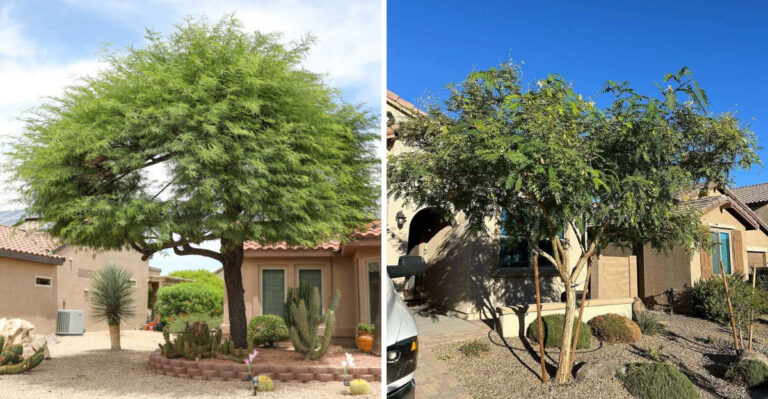
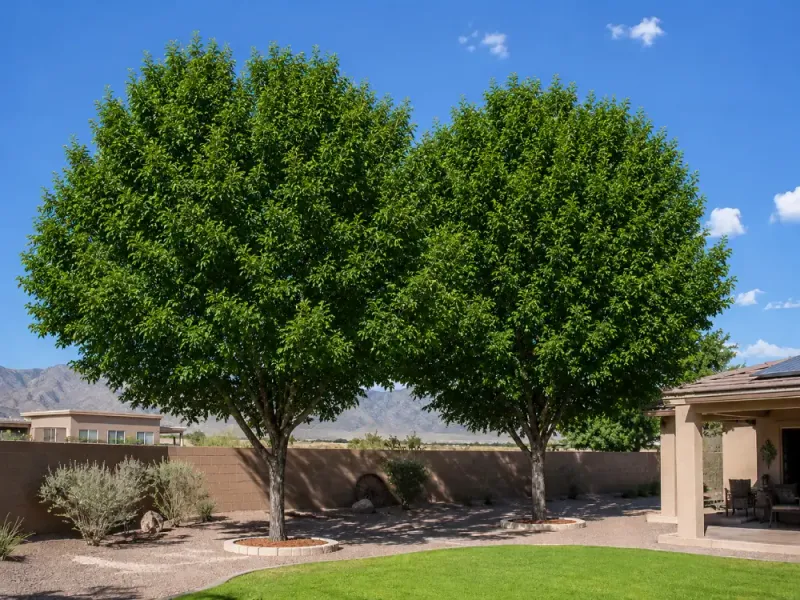
Velvet mesquite can be a strong fit for a spacious low-desert yard with deep, well-draining soil and room to grow. With adequate water and good conditions, it can eventually reach roughly 30 to 50 feet in both height and canopy spread.
That is a large tree, and it needs corresponding above-ground clearance from structures, power lines, and neighboring property, as well as unobstructed below-ground space for its root system.
Soil and drainage deserve a close look before you commit. Caliche or hardpan layers can block drainage and restrict root development, so checking what lies beneath the surface is a practical first step.
Some mesquite forms also carry thorns, which matters if the tree will be near a walkway, a play area, or a wall. A tree that does not fit the site will create problems no amount of care can fully correct.
Velvet mesquite offers eventual shade and habitat
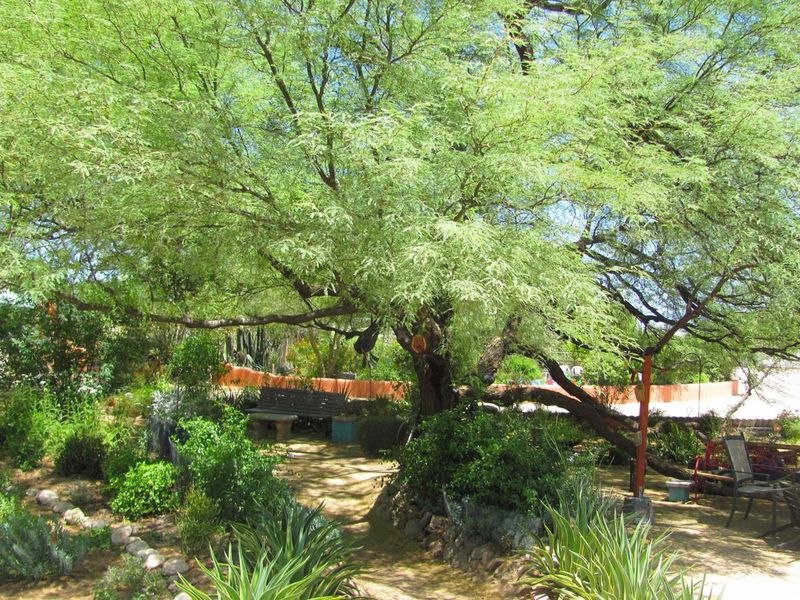
Velvet mesquite is native to central and southern Arizona, which means it evolved to handle the alkaline soils, intense heat, and dry spells that challenge most trees in the low desert. It tolerates conditions that would stress many other species, and it does not need amended soil or intensive fertilizing to survive once established.
Your Arizona Garden Changes Every Week. Your Plan Should Too.
Gardening in Arizona changes quickly throughout the season. Every Friday you’ll receive a simple weekly plan showing exactly what to plant, prune, fertilize, harvest, and protect so you never miss the right timing.
Its habitat value is real. University of Arizona Campus Arboretum documentation describes velvet mesquite as supporting native bees and other pollinators, and its seed pods and canopy structure provide food sources and cover that wildlife can use.
That does not mean planting one guarantees visits from any particular species, but a well-established mesquite in a suitable yard does contribute to the broader urban ecosystem over time.
Shade is the benefit most homeowners are after, and a mature mesquite can deliver meaningful canopy. The honest qualification is that “eventual” is the operative word.
A young tree planted this fall will not shade a roofline or a patio next summer. Size depends on water availability, soil depth, and growing conditions, and meaningful canopy takes several years to develop.
Planting now is the right move if you are thinking about the yard you want in five to ten years, not the yard you want next July.
Give the root ball a sound start
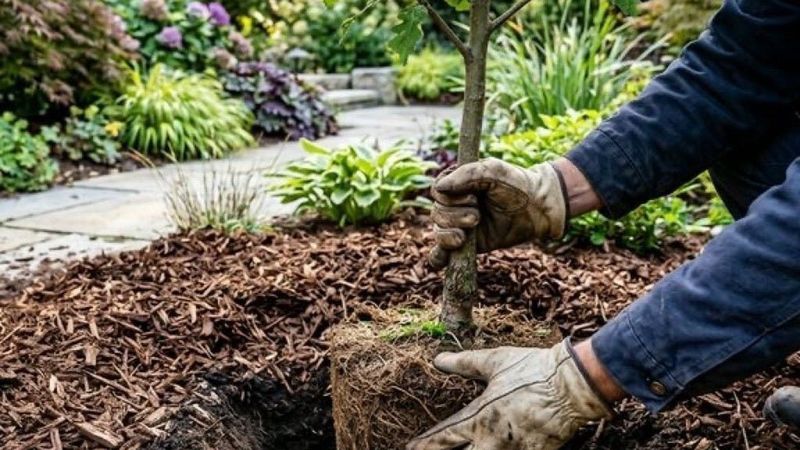
How you put the tree in the ground matters as much as when you plant it. The hole should be no deeper than the root ball itself, which prevents the tree from sinking and suffocating the root collar over time.
Dig wide rather than deep: a broad, shallowly loosened area lets new roots spread outward more easily than a narrow, deep pit.
Set the root ball so it sits level with the surrounding grade or very slightly above it. Low-desert soils can drain slowly or pool water in wet years, and planting slightly high gives the root collar a buffer against prolonged moisture.
Use the native soil you dug out as your backfill material rather than amended or imported mixes, which can create drainage discontinuities at the edge of the planting hole.
After the tree is positioned, water the root ball and the loosened soil around it thoroughly. Check how the water moves: if it pools and does not drain within a few hours, you may have a caliche layer or compaction issue that needs to be addressed before the tree can establish well.
Keep mulch pulled back a few inches from the trunk to avoid trapping moisture against the bark, which can invite rot and pest problems.
A drought-adapted tree still needs establishment water
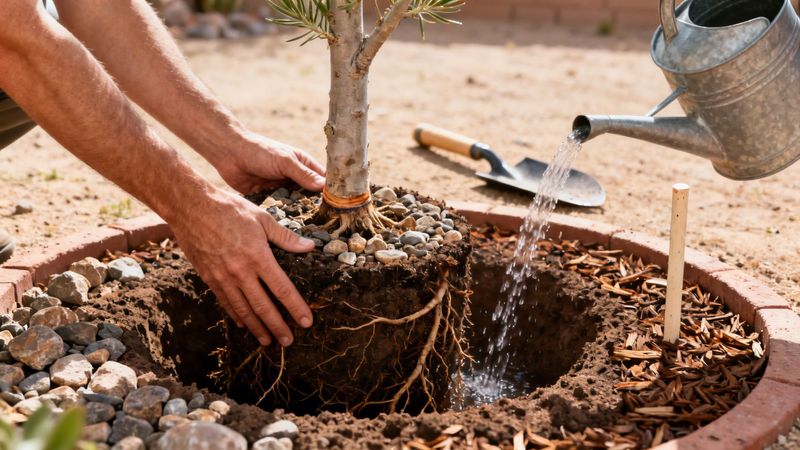
“Drought tolerant” describes what a mature velvet mesquite can handle after years of establishment. It does not describe what a tree needs in its first one to two years in the ground.
Treating a newly planted tree as though it can fend for itself right away is one of the most common reasons desert trees fail to thrive.
University of Arizona planting guidance recommends keeping the root ball moist in the period immediately after planting, then gradually extending the interval between waterings as the tree grows and conditions change. Weather drives the schedule more than a fixed calendar: a warm, dry November calls for more frequent irrigation than a cool, overcast one.
The goal is to encourage roots to grow outward into the surrounding soil, which is what eventually gives the tree the reach it needs to access moisture on its own.
A practical approach is to water deeply and less often rather than shallowly and frequently. Deep watering pushes moisture down to where roots are trying to go, while shallow watering keeps roots near the surface where they are more vulnerable to heat and drought.
Check the soil a few inches down before each watering session rather than running on a fixed timer, and adjust as the season and weather shift.
A tree is not a scorpion-repellent planting
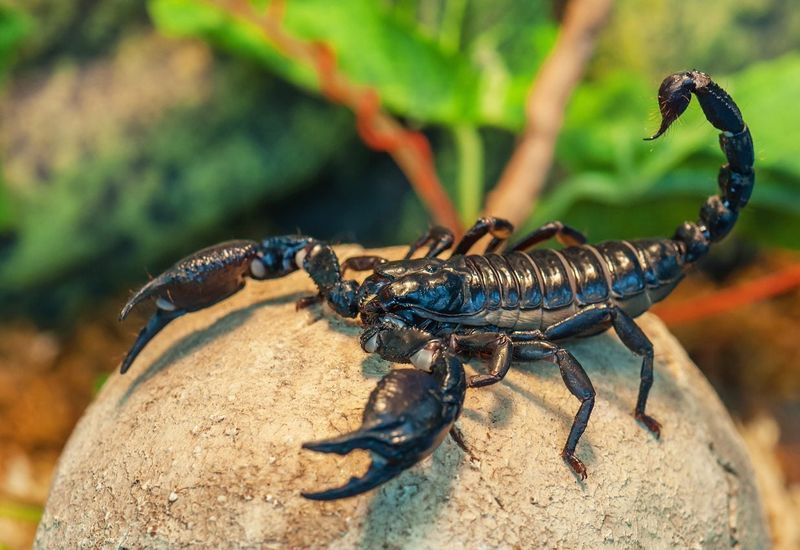
A well-placed shade tree offers real long-term benefits: canopy, cooler surfaces, and habitat value for native pollinators and other wildlife. What it does not offer is reliable pest control.
No tree species has been shown to repel scorpions, and framing a planting decision around that idea sets up unrealistic expectations.
Scorpion management in a yard is about reducing places where scorpions can hide near the house. University of Arizona pest guidance recommends removing vegetation, debris, and clutter that could serve as harborage close to the structure, and keeping trees and shrubs at least 24 inches away from walls.
That clearance rule applies to any tree or shrub you plant, including a mesquite, so factor it into your siting decision before you dig.
Plant for site fit and long-term shade, and let the tree’s habitat value be a secondary benefit rather than the primary reason to plant. A tree chosen for the right reasons, placed in the right spot, and watered through establishment will still be growing and providing canopy long after any seasonal pest concern has faded.