Fiddle Leaf Fig Dropping Leaves Again This Michigan Winter? Here’s What’s Going On
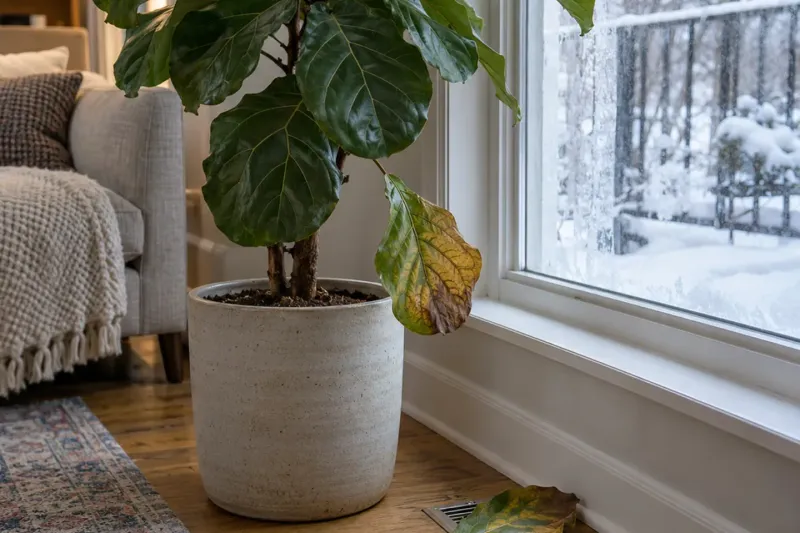
A single furnace-warmed living room in January can be drier than parts of the Sahara. My tropical houseplant noticed that long before I did.
One giant leaf hit the floor with a papery thud last winter. Then another one followed a week later. I checked for bugs, poked the soil, and even apologized to it out loud.
There’s actually a good reason why this happens in so many Michigan homes once the snow settles in. Short gray days, dry heated air, and sneaky window drafts all pile up at once.
For a plant born in the warm, humid lowland forests of West Africa, that combination feels like a whole new planet.
The real question is whether your plant is in trouble or simply adjusting. Some leaf loss is normal, but a bare trunk tells a different story.
1. Those Falling Fiddle Leaves Are Responding to More Than One Winter Change
Most of the time, there is no single villain behind a winter leaf drop. A fiddle leaf fig reacts to stress that builds up slowly, week after week. By the time a leaf falls, the trouble often started a month earlier.
In Michigan, several stresses arrive together around November. Daylight shrinks, furnaces kick on, indoor air dries out, and cold drafts sneak around windows. Each one alone might only slow the plant down. Stacked together, they push it to cut back.
Shedding leaves is the plant’s way of balancing its budget. When less light comes in, it simply cannot support as many big leaves. So it lets go of the ones that cost the most, often the oldest leaves near the bottom.
Losing one or two lower leaves over a whole winter is usually normal. Losing many leaves quickly, from all over the plant, points to a sharper problem worth fixing.
A simple habit helps here. Jot down the date each time a leaf drops, plus where it came from on the plant. That little log makes patterns easy to spot, and it shows you which of the causes below deserves your attention first.
2. Short Gray Days Leave Your Fiddle Leaf Fig Running Low on Light
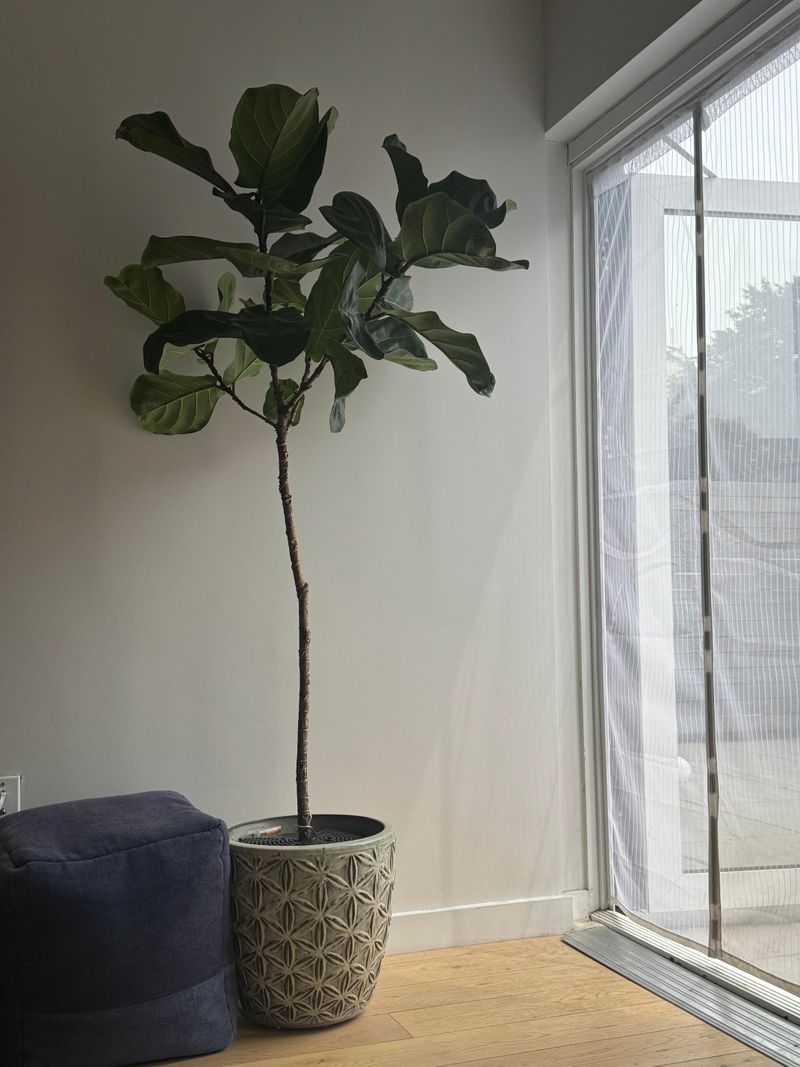
Light is the big one. In late December, much of Michigan gets around nine hours of daylight, and plenty of those hours are cloudy. For a sun-loving fig, that is a thin diet.
Fiddle leaf figs need about six hours of bright, indirect light to stay comfortable. A spot that worked great in July can feel like a cave by January. The sun sits lower in the sky, and its light reaches less of the room.
When light runs short, the plant drops the leaves it can no longer feed. Lower leaves usually go first because they get the least light anyway. You may also notice the plant leaning hard toward the window.
Moving the pot closer to a south or west window is often the easiest fix. Winter sun is weak, so most homes can skip the curtain until spring. Just keep the leaves from touching cold glass.
If your windows face north or are shaded by trees, a full-spectrum LED grow light makes a real difference. Set it on a timer for 10 to 12 hours a day. Turning the pot a quarter turn every couple of weeks also keeps growth even.
3. Chilly Drafts Near Doors and Windows Shock Fiddle Leaf Figs Fast
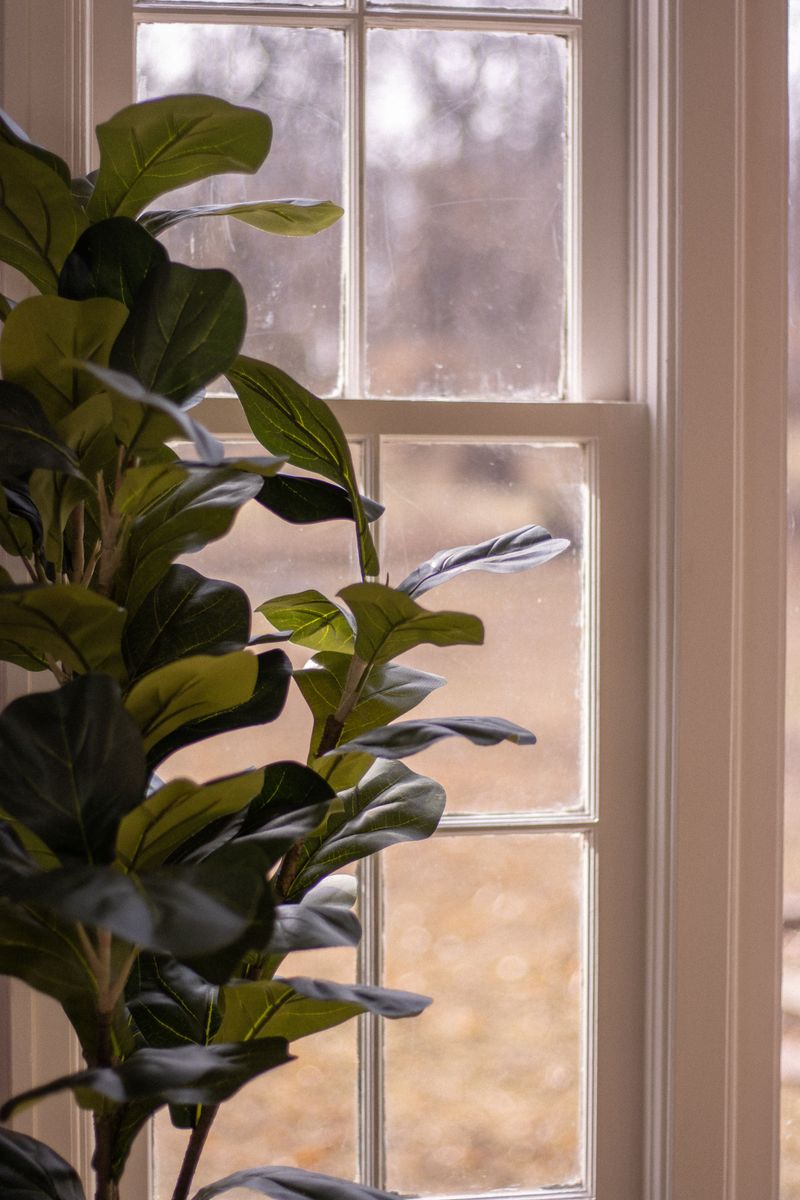
Ever stood next to a window on a January morning and felt the cold radiating off the glass? Your fig feels it too, and it complains loudly.
These plants like steady temperatures between about 60 and 75 degrees. Nights below roughly 55 degrees start causing stress. A spot inches from single-pane glass or a busy front door can dip well below that, even when the thermostat reads 68.
Cold damage often shows up quickly. Leaves may develop dark brown or black patches that look water-soaked, then drop within days. That speed is a good clue that a draft, not watering, is to blame.
Hot air causes trouble as well. A heating vent blowing straight onto the leaves dries them fast and creates big swings between warm and cool. Fig leaves handle steady conditions far better than ups and downs.
Try this quick test. Hold your hand near the plant’s leaves at night and again during the day. If you feel cold air or a warm blast, shift the pot a few feet away.
Keeping it about a foot or two from windows and well clear of vents and doors usually solves the problem.
4. Soggy Winter Soil Can Quietly Rot Fiddle Leaf Fig Roots
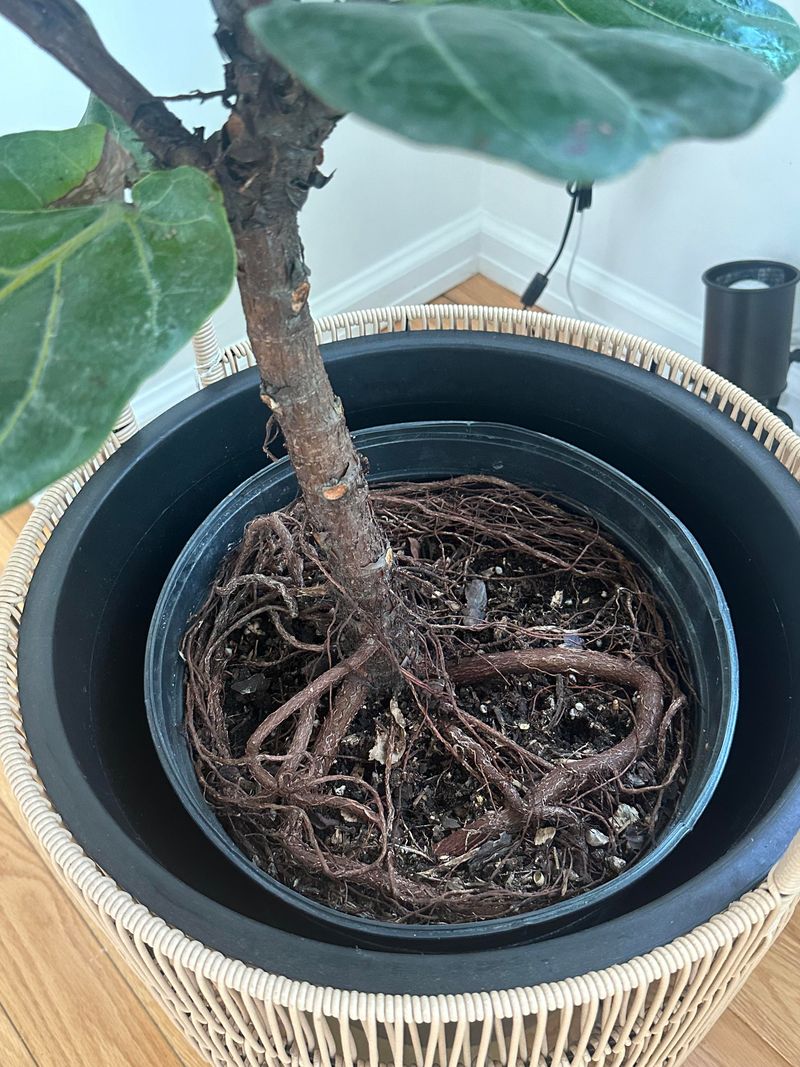
Here is a confession. My worst fig winter came from love, not neglect. I kept watering on my summer schedule, and the plant paid for it.
Growth slows way down in winter, so the roots drink much less. Water that would vanish in a week in July can sit for weeks in January. Soggy soil starves roots of air, and root rot can follow.
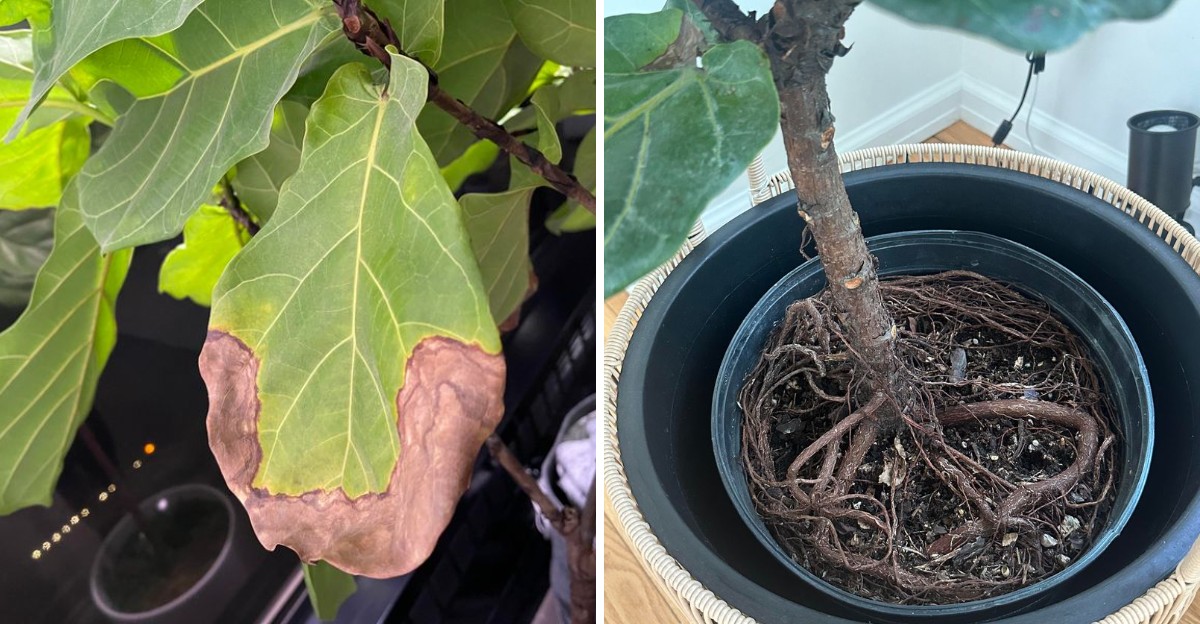
Overwatering is one of the most common reasons these figs drop leaves. Watch for brown spots that start in the middle of the leaf, yellowing lower leaves, and soil that smells musty.
Thirsty plants look different, with crispy edges, drooping leaves, and bone-dry soil pulling away from the pot.
The simplest rule is to check before you pour. Push a finger or wooden chopstick two to three inches into the soil. Water only when it comes out dry, then soak the pot until water runs from the bottom.
Empty the saucer afterward so roots do not sit in a puddle. A pot with a drainage hole is a must. If you suspect rot, gently slide the plant out and look for mushy, dark roots. Healthy ones are firm and pale.
5. Furnace Air Leaves Fiddle Leaf Fig Edges Brown and Crispy
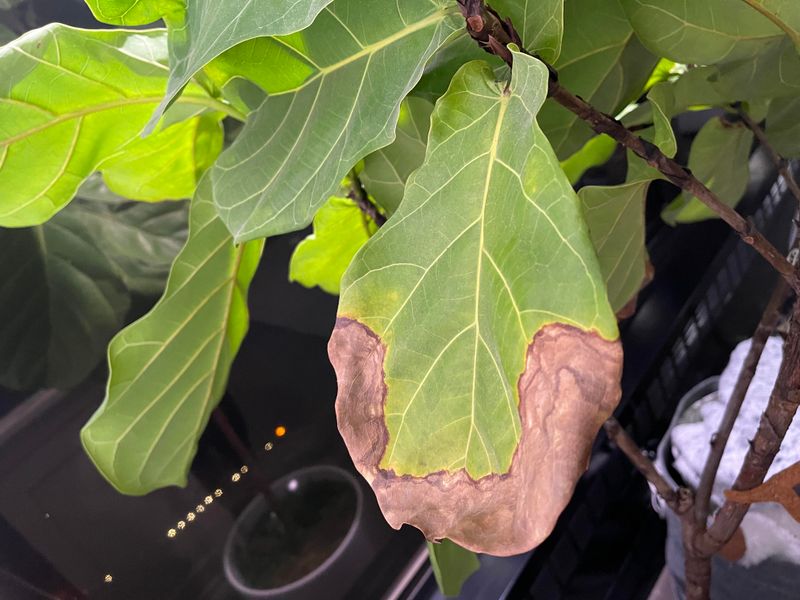
Forced-air heat is wonderful for people and pretty rough on tropical leaves. As cold outdoor air warms up inside, its relative humidity plunges. Many Michigan homes sit around 20 to 30 percent humidity during the coldest weeks.
Fiddle leaf figs come from humid forests and prefer roughly 40 to 60 percent. Dry air pulls moisture from the leaves faster than roots can replace it. The result is browning, crispy edges, and sometimes leaves that drop.
A small digital hygrometer costs only a few dollars and takes the guessing away. Once you see the number, you can decide how much help your plant needs.
A cool-mist humidifier near the plant works best. Grouping houseplants together also raises humidity a little, since they release moisture as a group. Misting looks nice but only helps for a few minutes, so skip relying on it.
Keep home humidity reasonable, though. Pushing a whole Michigan house above 40 or 45 percent in deep winter can cause condensation on windows and mold risk.
Aim for a comfortable middle, around 40 percent near the plant, and let a room humidifier focus on that one corner.
6. Moving Your Fiddle Leaf Fig Indoors Can Trigger a Sulky Spell
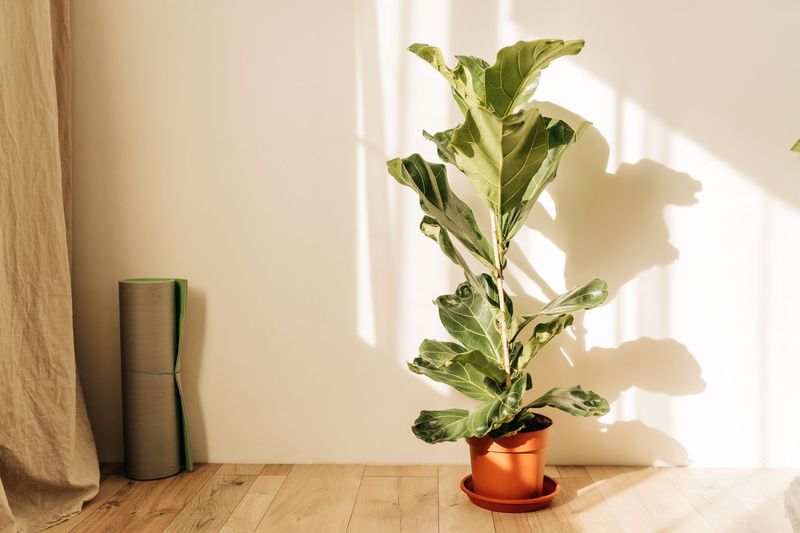
Fiddle leaf figs have a reputation as homebodies, and it is earned. Change their spot, and they may sulk by dropping a few leaves.
The big move happens in fall for many Michigan gardeners. A fig that spent summer on a bright porch suddenly lands in a dimmer living room. The light drop is huge, even if the room feels sunny to you.
Bring outdoor plants inside before nights fall below about 50 degrees, which in much of the state means early to mid September.
Waiting for the first frost warning is cutting it close. Give the plant a week or two in a shadier outdoor spot first so the change feels gentler.
Check for hitchhikers before it comes in. Look under leaves for spider mites, scale, and mealybugs, since dry indoor air helps these pests spread. A gentle shower rinses most of them off.
Once inside, pick the brightest spot you have and leave it there. Expect a leaf or two to fall in the first few weeks. That is adjustment, not failure.
Resist the urge to keep relocating it, because every new move restarts the settling-in process.
7. Dusty Fiddle Leaves Catch Less of That Precious Winter Sun
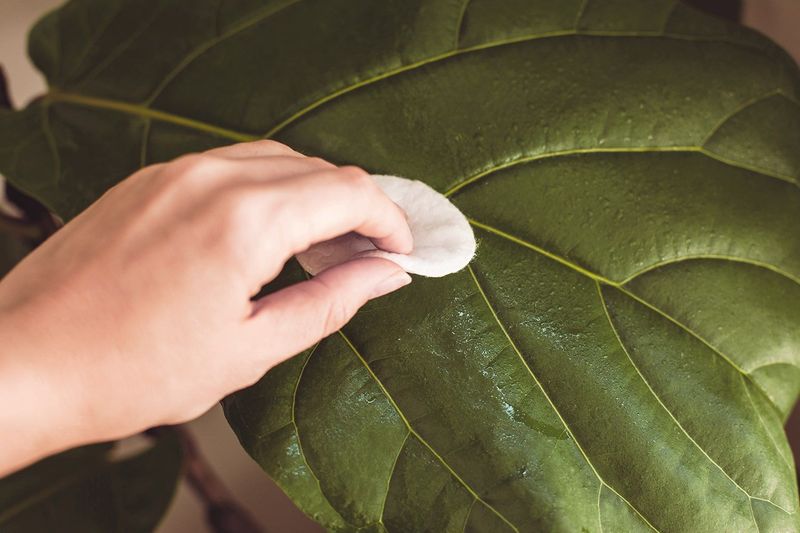
Run a finger across a fig leaf in February. Chances are you will find a gray film that was not there in fall. Those huge leaves collect dust like a coffee table.
That layer matters more than it looks. Dust blocks some of the light that reaches the leaf surface. In a season when light is already scarce, every bit counts.
Cleaning is easy and oddly relaxing. Support each leaf from below with one hand. Wipe the top gently with a soft cloth dampened with plain lukewarm water. Do the undersides too, since that is where pests like to hide.
Skip leaf shine sprays and oils. They can clog the tiny pores leaves use to breathe, and the plant does not need extra gloss. Clean leaves shine plenty on their own.
Every two to four weeks is a good rhythm through winter. While you wipe, take a close look. Tiny webbing, sticky spots, or brown bumps can mean spider mites or scale.
Catching them early keeps a small problem small, and the inspection turns a chore into a quick checkup.
8. Put Away the Fertilizer and Let Your Fig Rest Until Spring
Feeding a resting plant is a bit like serving dinner to someone who is asleep. The fig cannot use it, and leftovers cause problems.
With slow winter growth, unused fertilizer salts build up in the soil. Those salts can burn roots and lead to brown leaf edges and more dropped leaves. Most growers stop feeding from late fall until new growth appears in spring.
If you see white crust on the soil or pot rim, flush the pot. Slowly run plain water through the soil until plenty drains out the bottom, then let it dry properly.
Hold off on repotting and heavy pruning, too. Those jobs go best in spring, when longer days help the plant recover quickly. Light trimming of a damaged leaf is fine anytime.
Here is the takeaway. A few lost leaves each Michigan winter are normal, and the plant usually rebounds. Steady warmth, the brightest window you have, careful watering, and decent humidity cover most of what it needs.
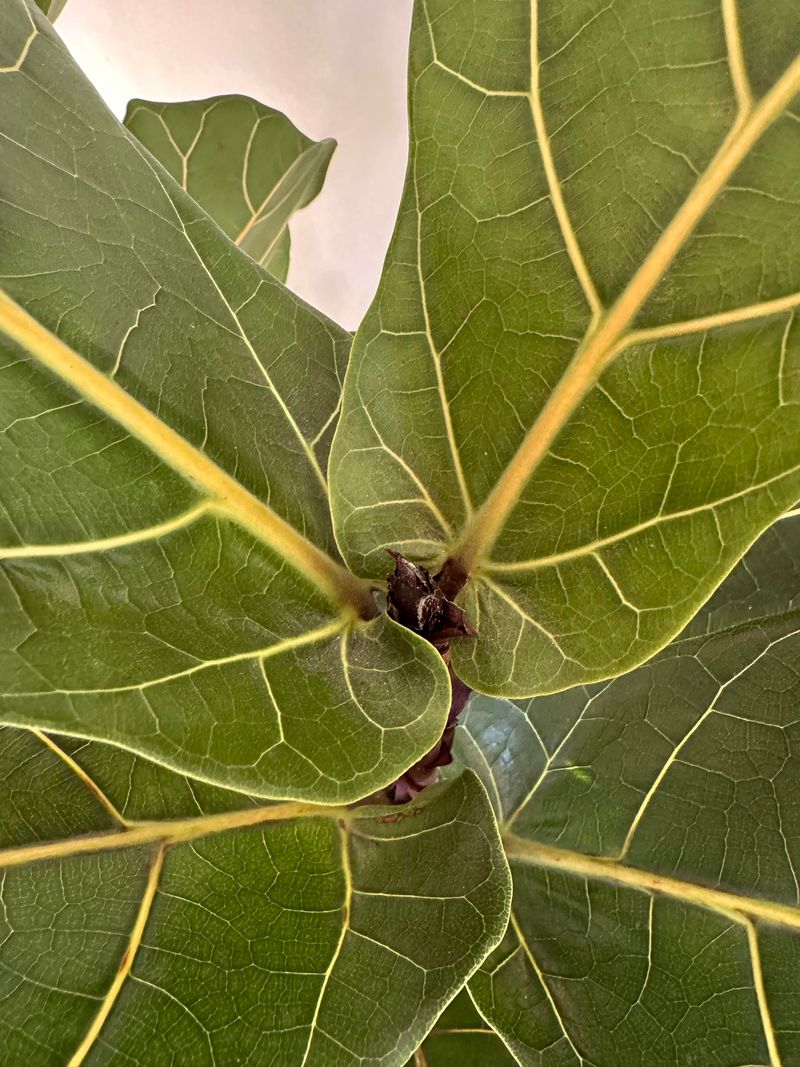
Around March or April, watch the top of the stem. A fresh new leaf unfurling there is your sign the plant made it through and is ready for a little food again.