Florida Flowering Trees That Outperform Hibiscus As A Garden Focal Point
Every gardener reaches a point where they look at their yard and realize it needs something more. The hibiscus is lovely, the shrub borders are tidy, but the landscape is missing a true centerpiece.
Something with height, structure, and the kind of presence that makes the whole yard feel pulled together.
Florida’s warm climate and long growing season open up some genuinely exciting options when it comes to flowering trees, plants that can rise above everything else and anchor the landscape with color, canopy, fragrance, or dramatic year-round form.
The options suited to Florida are more varied and impressive than most homeowners expect.
The key is taking the time to match tree size, sun exposure, moisture needs, and regional suitability to your specific yard before making a choice you will be living with for a very long time.
1. Jacaranda Creates A Purple Spring Show
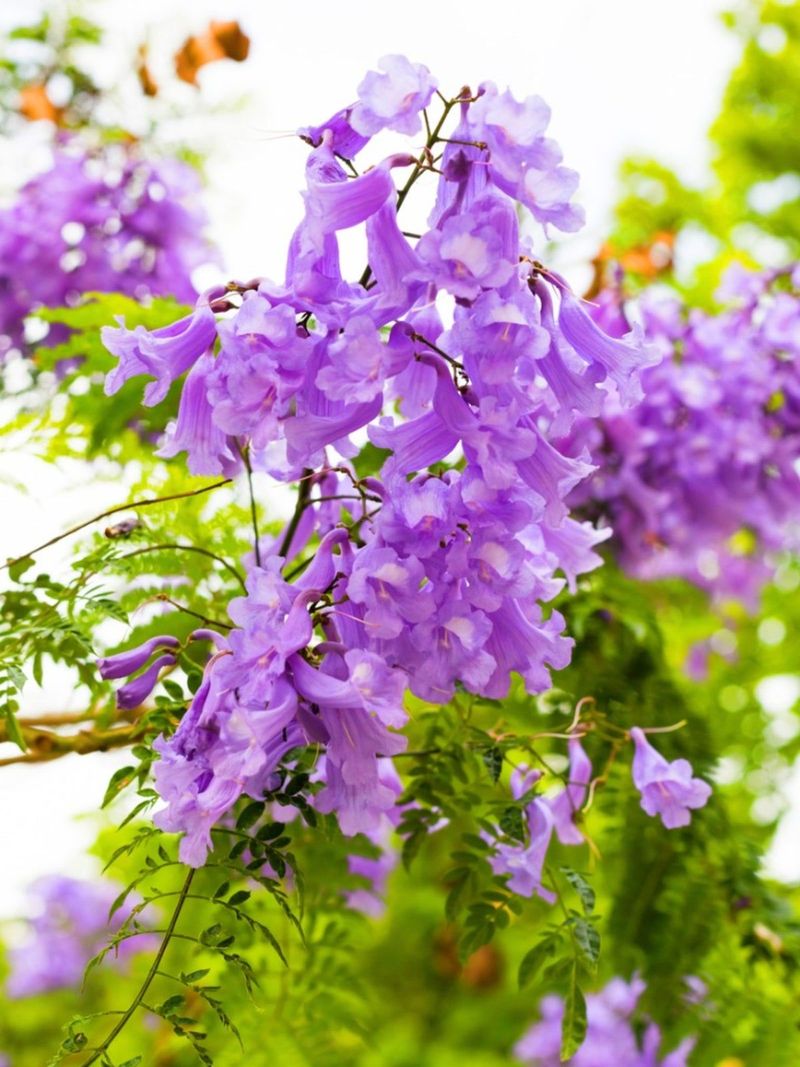
Few spring sights in Florida stop people in their tracks quite like a jacaranda tree covered in clusters of purple-lavender blooms.
The flowers appear in abundance before or alongside the soft, fern-like foliage, giving the whole canopy a dreamy, cloud-like look that hibiscus simply cannot match at that scale.
For homeowners in Central and South Florida, jacaranda can become the undisputed star of the yard during bloom season.
The tree tends to perform best in well-drained, sandy soils with full sun exposure, which suits many Florida landscapes well.
It grows into a broad, arching shape over time, so it needs enough open space to develop its natural form without crowding structures or neighboring plants.
Placing it where the canopy can spread freely will reward you with the most impressive display.
Mature jacaranda trees can reach considerable heights and widths, so this is not a tree for tight spaces or small urban lots. Homeowners should think carefully about overhead utility lines and nearby structures before planting.
The fallen flowers can create a colorful but slippery carpet beneath the canopy, so placement near patios or walkways deserves some thought.
When sited properly in a yard with enough room to grow, jacaranda offers a spring focal point that feels almost theatrical in its beauty and scale.
2. Royal Poinciana Commands A Large Yard
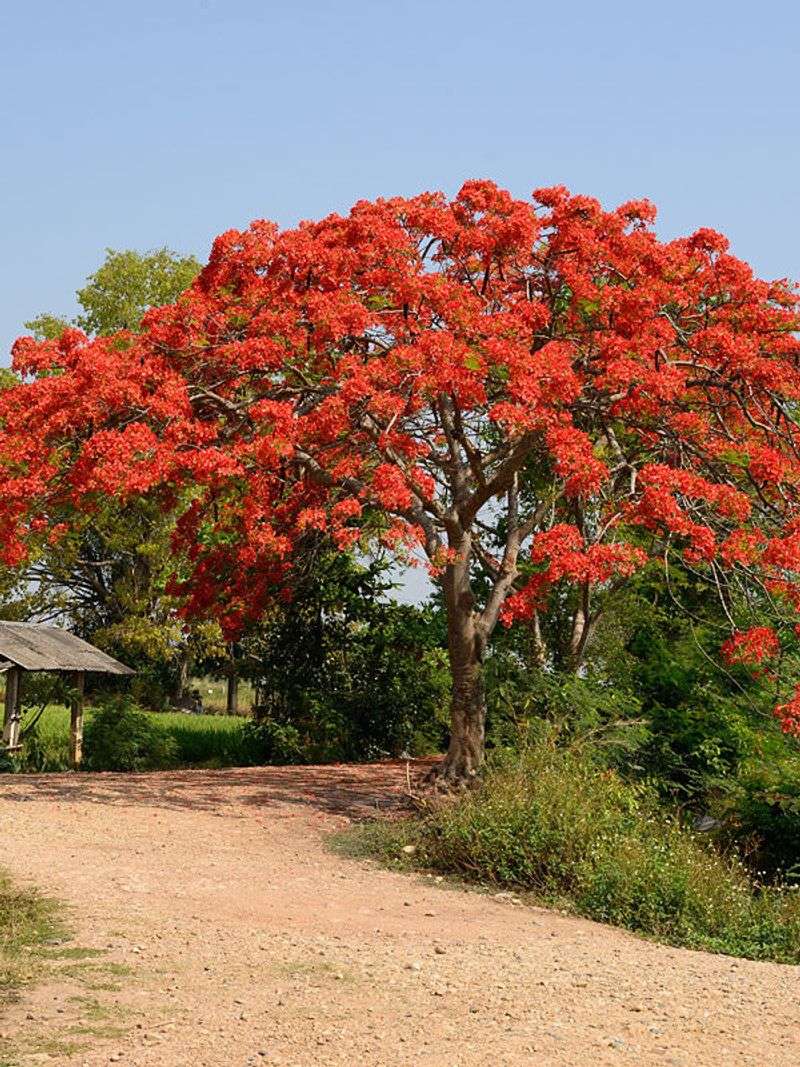
Walking past a royal poinciana in full summer bloom is an experience that stays with you. The broad, umbrella-shaped canopy ignites with brilliant red to orange flowers that cover the tree so densely that the foliage nearly disappears beneath the color.
In South Florida, this tree has become a landmark species, and for good reason – it brings a level of drama to a landscape that few other flowering trees can approach.
Royal poinciana is best suited to South Florida’s warmer temperatures and is not reliably cold-hardy in North Florida. It thrives in full sun and well-drained soil, and once established, it shows reasonable drought tolerance.
The tree grows quickly and spreads widely, so it truly belongs in large yards where its expansive canopy has room to develop without crowding the house, fences, or utility lines.
Your Florida Garden Changes Every Week. Your Plan Should Too.
Gardening in Florida changes quickly throughout the season. Every Friday you’ll receive a simple weekly plan showing exactly what to plant, prune, fertilize, harvest, and protect so you never miss the right timing.
Homeowners with smaller lots should consider this tree carefully before planting, since its mature spread can be substantial. Root systems can also be aggressive near pavement or structures, so placement planning matters a great deal.
Summer blooms can drop and require cleanup, but most gardeners who grow royal poinciana find that the spectacle is well worth the maintenance.
As a garden focal point, it commands attention from an impressive distance and anchors even large South Florida landscapes with unmistakable seasonal presence.
3. Crapemyrtle Brings Color Through Summer
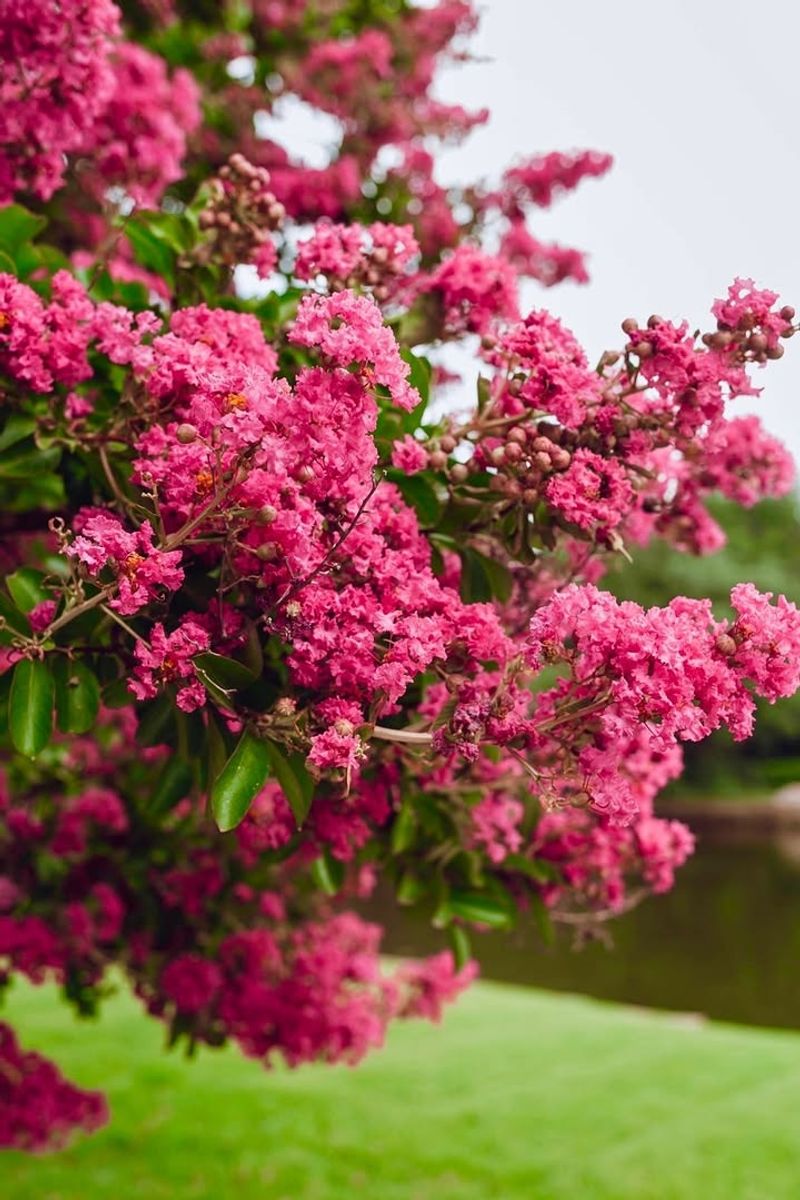
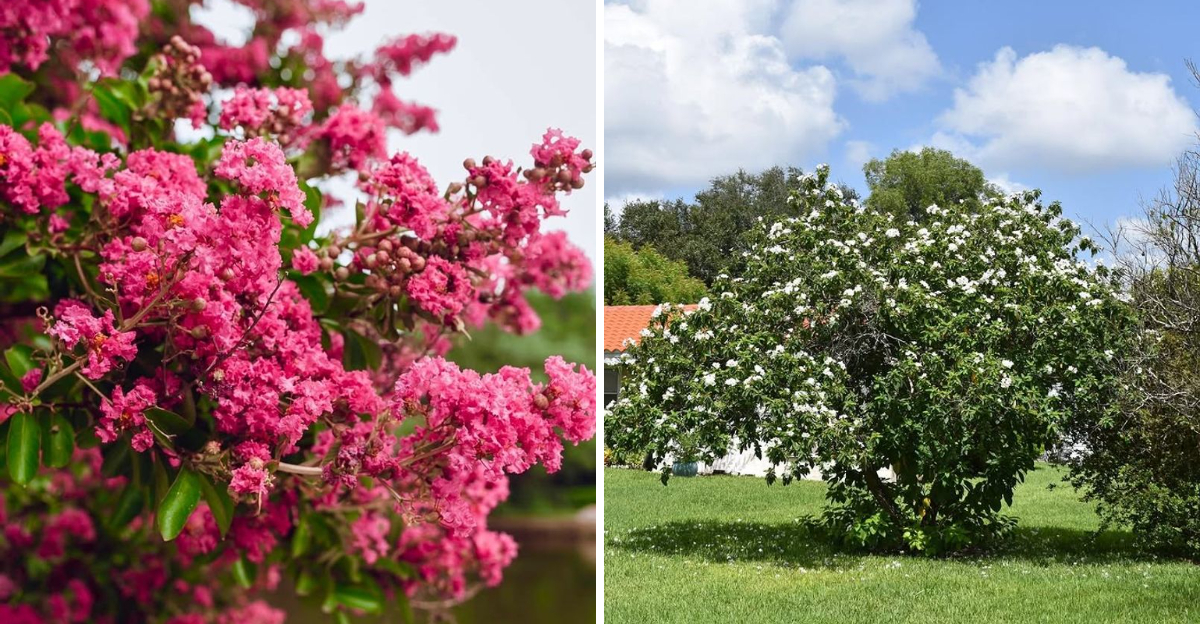
Summer can feel relentless, but crapemyrtle seems to thrive on the heat rather than wilt under it.
While hibiscus blooms steadily through the warm months, crapemyrtle delivers flower clusters in shades of pink, red, lavender, and white along with attractive peeling bark that adds textural interest even when the tree is not in bloom.
That combination of seasonal color and year-round structure gives it a strong case as a focal-point tree.
Crapemyrtle is widely planted across Florida and cultivar selection plays a major role in how well it fits a particular yard.
Sizes range from compact shrub forms to trees that reach twenty or more feet, so choosing the right cultivar for your space before planting saves a lot of trouble later.
Placing a large-growing cultivar in a small front yard often leads to overcrowding and repeated heavy pruning, which can damage the tree’s natural shape.
Sun exposure is important for the best bloom performance, so a site with at least six hours of direct sunlight tends to produce the most flowers.
Crapemyrtle also has a reputation for good drought tolerance once established, which suits Florida’s variable rainfall patterns.
The combination of long summer bloom season, attractive bark, and range of sizes makes crapemyrtle one of the most flexible flowering tree choices for Florida home landscapes looking for something beyond a hibiscus border.
4. Southern Magnolia Adds Big Evergreen Drama
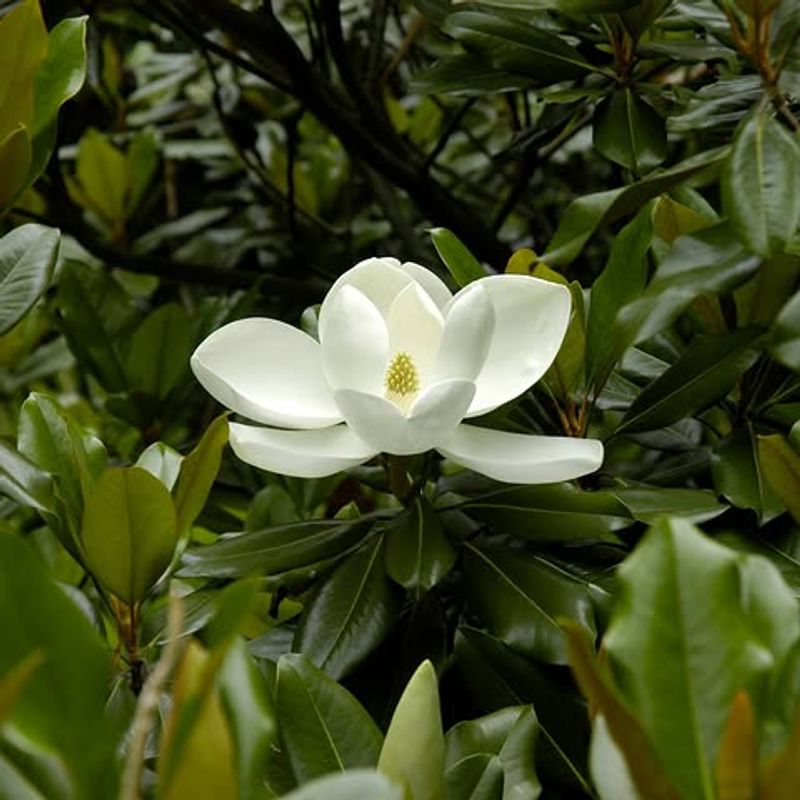
There is something undeniably grand about a southern magnolia standing in a Florida yard.
The large, glossy leaves hold their deep green color year-round, and the creamy white flowers carry a rich fragrance that drifts across the garden on warm days.
The overall form of the tree projects a sense of permanence and elegance that seasonal bloomers rarely achieve.
As an evergreen focal point, southern magnolia offers structure even when it is not in flower.
Southern magnolia grows throughout Florida and can adapt to a range of soil conditions, though it tends to perform best with adequate moisture and good drainage.
The tree can eventually reach significant height and width, so it suits larger home landscapes better than compact yards.
Cultivars vary in mature size and flower production, and selecting a named cultivar that fits your available space is one of the most practical decisions you can make before planting.
Leaf litter is a consideration worth mentioning, since southern magnolia drops its older leaves throughout the year rather than all at once in autumn.
Placing the tree away from pools, gutters, or areas where cleanup is difficult can make ownership more enjoyable.
The fragrant flowers typically appear in late spring through early summer and can be quite large.
For homeowners who want a bold, evergreen focal point that delivers both floral beauty and strong year-round structure, southern magnolia remains a compelling and well-proven choice.
5. Sweetbay Magnolia Suits Moist Garden Spots
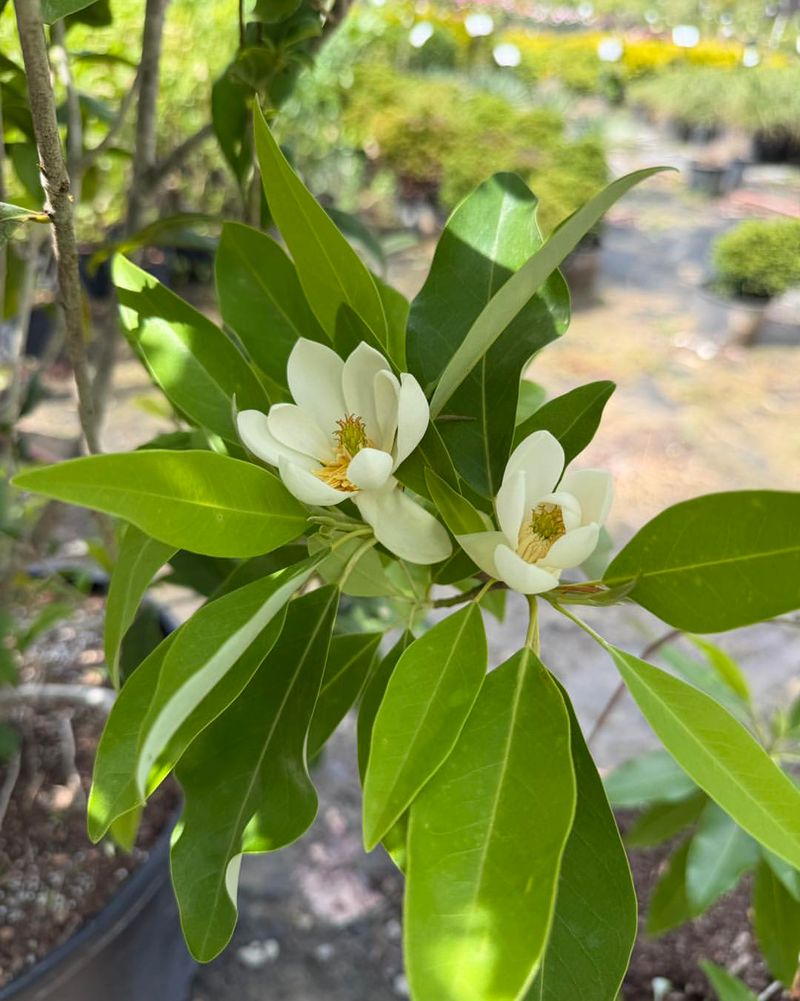
Not every Florida yard is dry and sandy – some spots stay consistently moist near downspouts, low-lying areas, or natural drainage paths.
Sweetbay magnolia is a native tree that handles those wetter conditions well, making it a practical and beautiful choice for garden spots that challenge many other flowering trees.
Its creamy white, lemon-scented flowers appear in late spring and can continue blooming into summer, offering a softer and more delicate display than the large blossoms of southern magnolia.
The leaves of sweetbay magnolia have a silvery-white underside that catches the breeze and adds subtle movement and shimmer to the canopy.
In North and Central Florida, sweetbay may behave as a semi-evergreen or briefly deciduous tree depending on winter temperatures, while in South Florida it tends to hold its leaves more consistently.
This regional variation is worth knowing before you plant, since the tree’s year-round appearance can differ based on where you garden in the state.
Sweetbay magnolia generally stays smaller than southern magnolia, which makes it a more manageable focal-point option for yards with limited space or lower canopy clearance needs.
It tends to grow as a multi-stemmed small tree or large shrub, and that layered form can add interesting structure to a moist garden corner or naturalistic planting area.
For gardeners working with wet or periodically flooded spots, sweetbay magnolia offers a native, fragrant, and visually appealing alternative to hibiscus as a garden anchor.
6. Fringetree Offers A Soft Spring Display
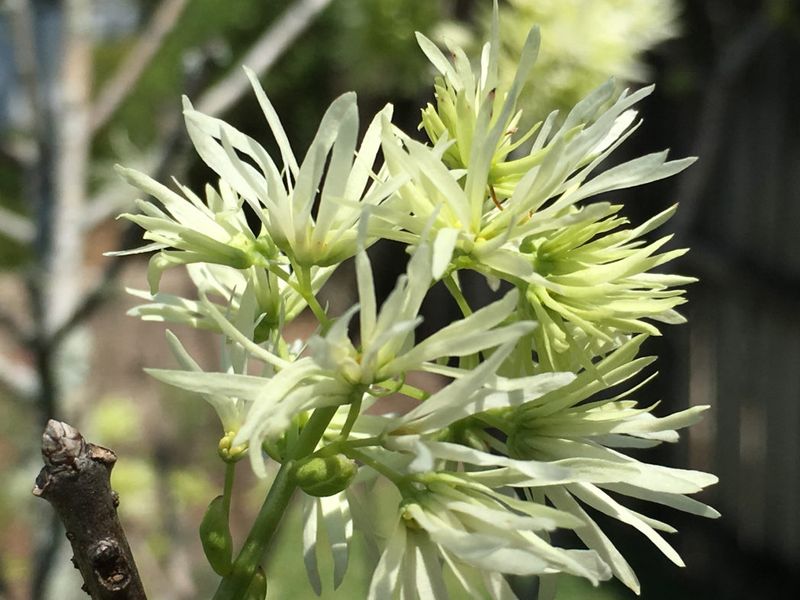
Spring in North Florida arrives with a kind of quiet magic, and fringetree is one of the trees that captures that feeling better than almost anything else in the landscape.
The branches become draped in soft, cloud-like clusters of white, slightly fragrant flowers before the leaves fully emerge, creating a wispy and ethereal display that earns real attention from neighbors and passersby.
It is a tree that makes people stop and ask what it is.
Fringetree is best suited to North and Central Florida, where winters are cool enough to support its natural bloom cycle. It tends to prefer well-drained soils and full to partial sun, though it can tolerate a bit of shade in the right conditions.
The bloom period is relatively short compared to summer-blooming trees, but the spring flower display is memorable enough that most gardeners who grow fringetree consider the brief season entirely worthwhile.
Mature fringetree stays on the smaller side for a flowering tree, which makes it a reasonable choice for front yards, entry gardens, or spaces where a large canopy tree would feel overwhelming.
Male trees typically produce a more abundant flower display, so paying attention to plant selection when purchasing can influence the result.
Blue-black fruit clusters appear on female trees in late summer and can attract birds to the garden.
For homeowners in the northern part of the state who want a refined, native-friendly spring focal point, fringetree offers genuine charm and a scale that feels approachable.
7. Golden Trumpet Tree Lights Up Sunny Spaces
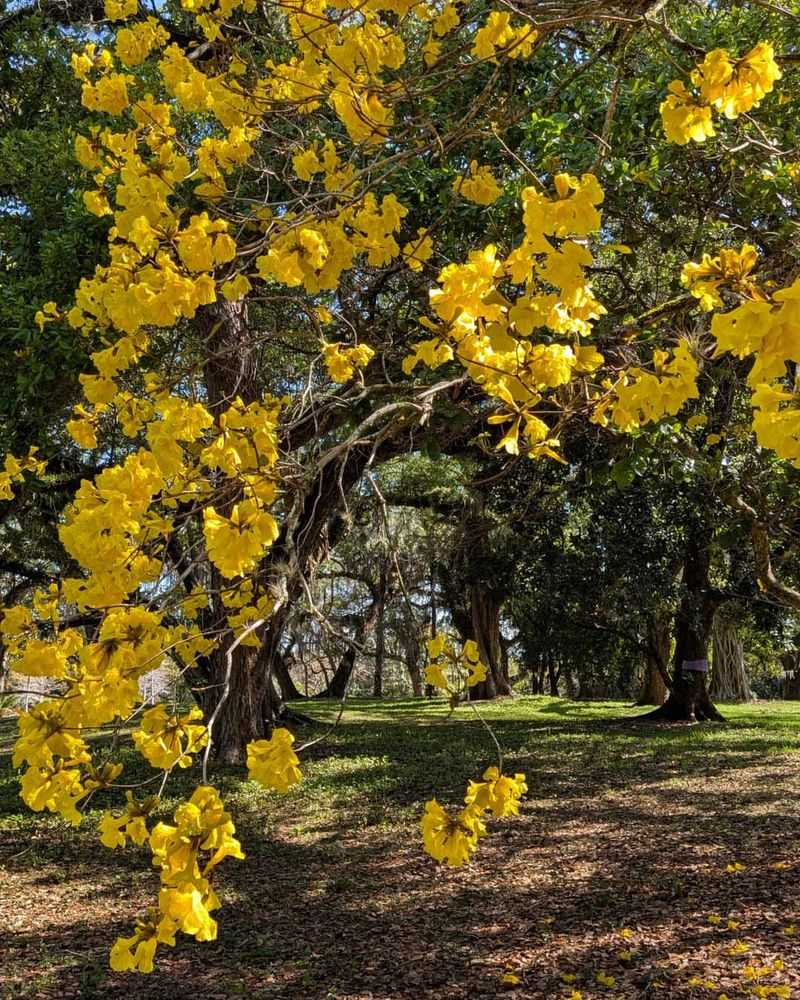
Bright yellow flowers covering an entire tree canopy create one of the most eye-catching focal points possible in a Florida yard, and golden trumpet tree delivers exactly that kind of bold seasonal statement.
The flowers appear in clusters of rich, saturated yellow before or during the brief leaf-drop period, which means the color hits even harder against a nearly bare canopy.
In Central and South Florida, this tree can become a true showstopper during its bloom season.
Golden trumpet tree thrives in full sun and well-drained soil, and it genuinely appreciates the warm temperatures that define Florida’s climate in the central and southern parts of the state.
Cold temperatures can damage or set back the tree, so gardeners in North Florida should approach it with caution and understand the regional risk before committing to a planting.
Choosing a sheltered, south-facing site can offer some additional warmth protection in borderline areas.
The tree grows to a moderate size that suits many home landscapes, and its open, somewhat irregular branching structure adds visual interest even when it is not in flower.
Bloom timing can vary, but the flower display typically arrives in late winter to early spring, which makes golden trumpet tree a welcome burst of color at a time when many other plants are just beginning to wake up.
For gardeners who want a sunny, warm-climate focal point with genuine wow factor, golden trumpet tree is a strong and visually rewarding choice.
8. White Geiger Tree Fits Warm Small Gardens
Compact yards in South Florida often present a real challenge when it comes to finding a flowering tree that makes an impact without outgrowing its space in just a few seasons.
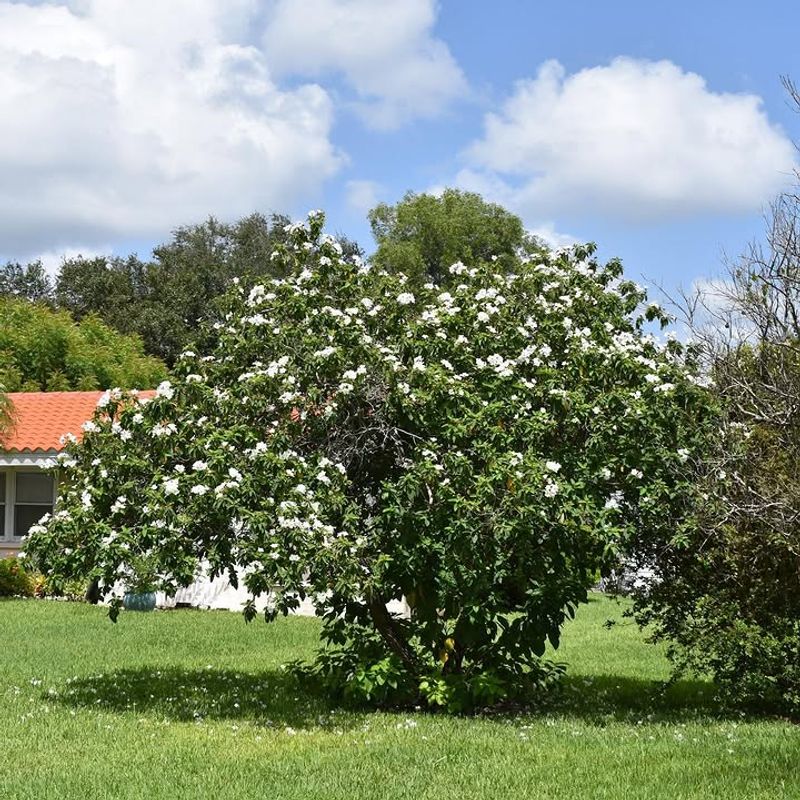
White Geiger tree is a warm-climate option that tends to stay on the smaller side, making it a more manageable focal-point choice for entries, patios, and garden beds where scale matters.
The clusters of white, tubular flowers stand out beautifully against the large, rough-textured leaves.
White Geiger tree is best suited to the warmest parts of Florida, particularly South Florida and coastal areas where freezing temperatures are rare or brief.
Cold sensitivity is a real consideration, and gardeners in Central Florida should understand that a hard freeze can cause significant damage.
Planting in a sheltered microclimate, such as near a south-facing wall or within a protected courtyard, can help reduce cold exposure in borderline locations.
The tree tends to prefer full sun and well-drained soil, and it shows reasonable salt tolerance, which makes it a practical choice for coastal gardens where salt spray is a regular factor.
Mature size varies but generally stays within a range that suits smaller residential lots without requiring aggressive pruning to keep it contained.
As a specimen planting near an entry or along a garden path, white Geiger tree brings a tropical warmth and floral charm that feels at home in Florida’s southernmost landscapes.
It offers a sense of place that hibiscus, for all its appeal, cannot quite replicate at tree scale.