What To Do When Bagworms Show Up On Your Georgia Trees And Shrubs This Summer
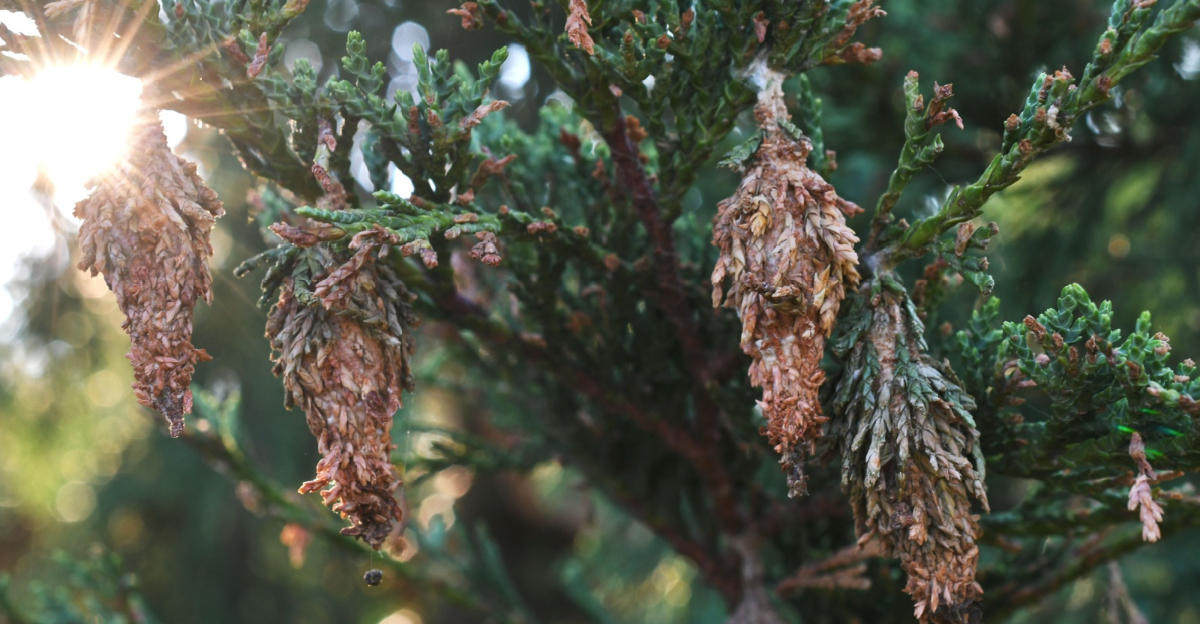
Bagworms are not exactly subtle once you know what to look for, but they are remarkably good at staying hidden until they’ve already made themselves very comfortable.
Those small spindle-shaped bags hanging in the branches of junipers, arborvitae, cedars, and Leyland cypress blend into the foliage in a way that makes them easy to miss during a quick walk around the yard.
Georgia’s warm summer heat speeds up their development, which means by the time most homeowners notice something is off, the caterpillars inside are well into their feeding routine.
Catching bagworms early and responding correctly can make a real difference in how well your trees and shrubs come through the season.
Knowing what you’re dealing with, and when to bring in a certified arborist, is genuinely half the battle.
1. Confirm The Bags Are Bagworms
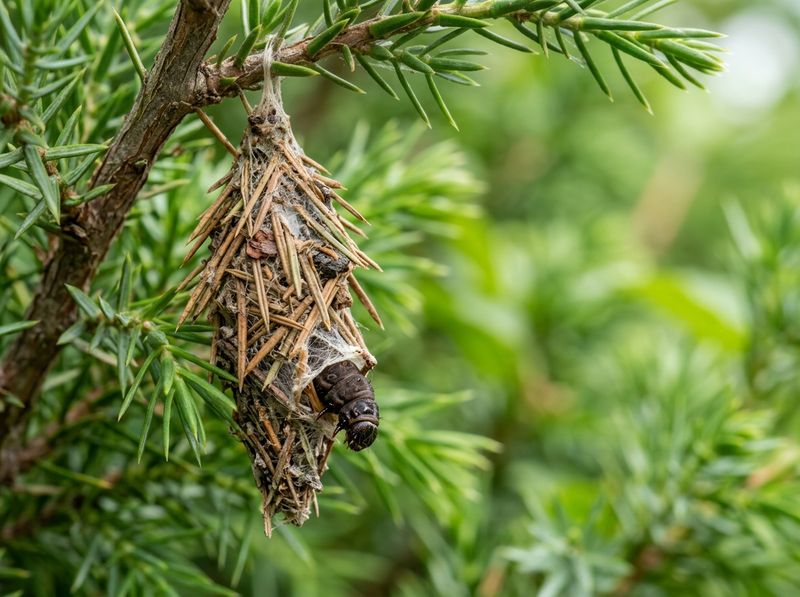
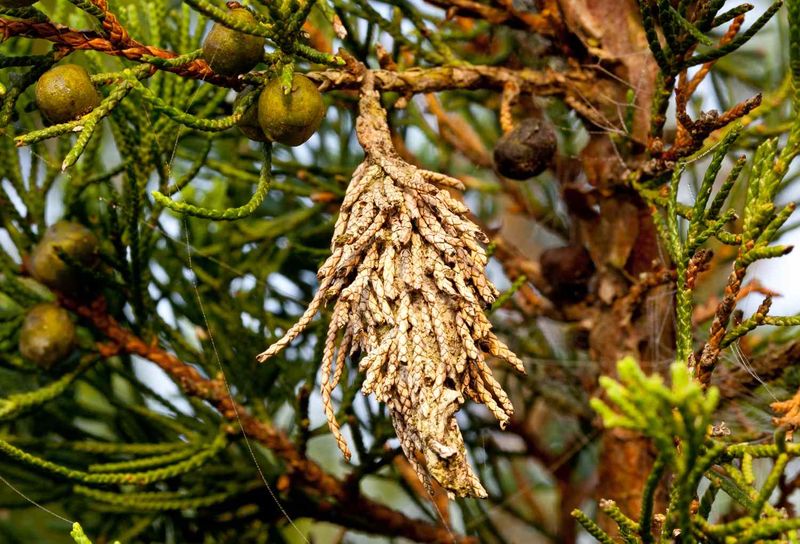
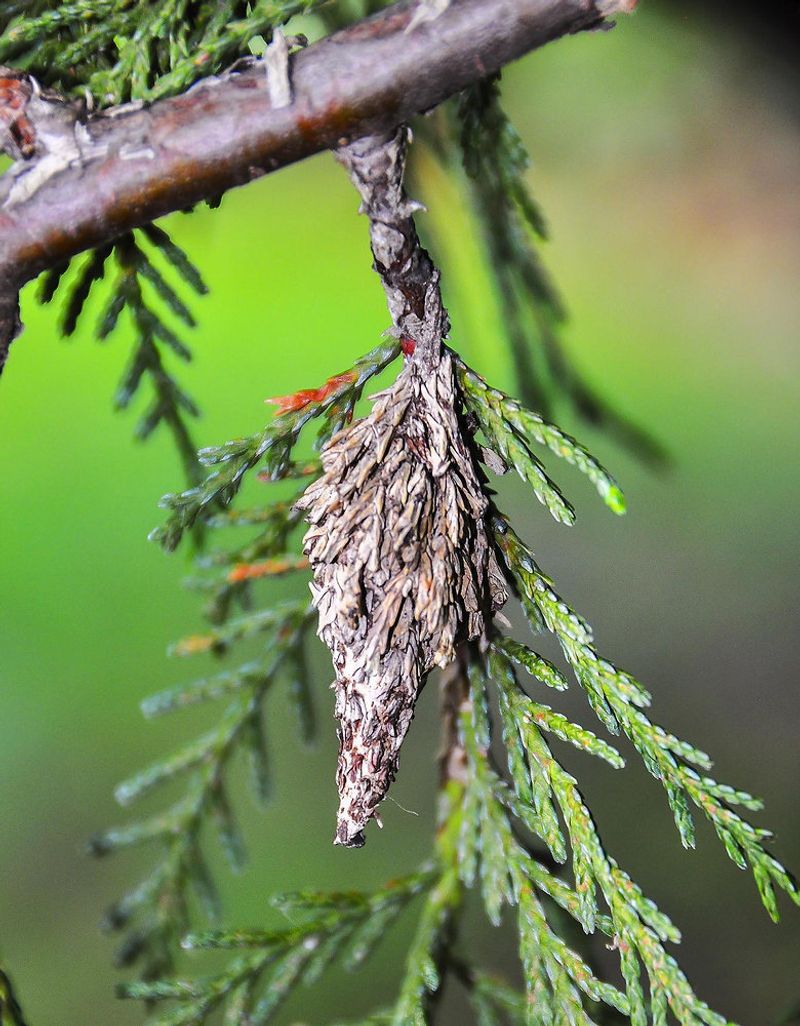
Those small spindle-shaped cases hanging from your evergreen branches might look like pine cones or dried plant debris at first glance, but a closer look tells a very different story.
Bagworms are actually caterpillars that build portable cases out of silk and plant material, pulling bits of leaves, twigs, and needles into the bag as they grow.
The bag moves with them because the larva lives inside it and carries it everywhere it feeds.
Before you do anything else, make sure what you are seeing is actually bagworms and not something harmless. Bagworm cases are typically one to two inches long, tapered at both ends, and covered with plant fragments that match the host shrub.
On a juniper, the bag looks greenish and scaly. On arborvitae, it may appear brown and textured.
Gently squeeze the bag to see if there is resistance inside. An active bag will feel firm because the caterpillar is still living in it.
Empty or old bags from last season feel hollow and papery. Confirming the pest before taking action saves time and helps you choose the right control method.
Misidentifying the problem in your Georgia garden can lead to treatments that do nothing useful at all.
2. Inspect Junipers, Arborvitae, Cedars, And Leyland Cypress First
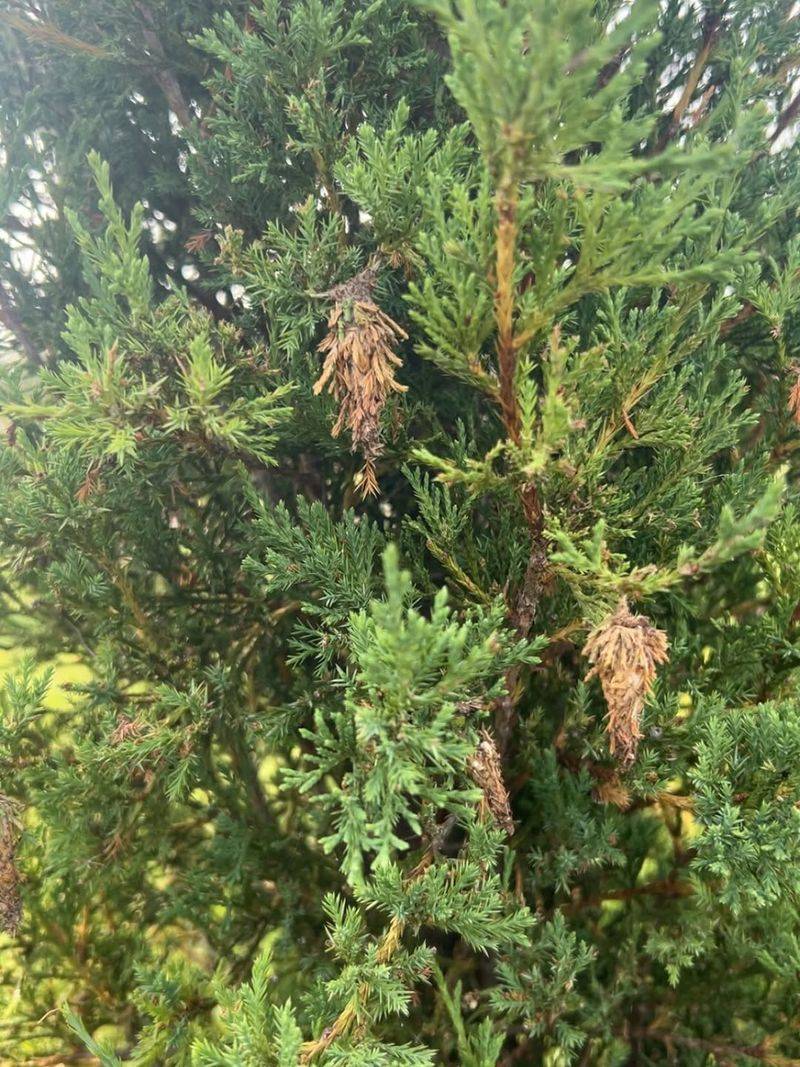
Browning tips on your juniper or a few bare patches on your arborvitae hedge are often the first signs that something is quietly feeding on your plants.
Bagworms in Georgia show a strong preference for certain evergreen species, and junipers, arborvitae, cedars, and Leyland cypress tend to be hit hardest each summer.
If you have any of these plants on your property, they deserve a careful look as soon as summer gets going.
Walk slowly along each plant and check both the outer tips of branches and the interior where bags are easy to miss. Bagworms often start feeding near the top of a plant and work their way down, so check upper branches carefully even if the lower sections look fine.
In Georgia’s warm climate, the larvae can move through a shrub surprisingly fast during peak summer feeding.
Leyland cypress rows planted along property lines are especially vulnerable because the dense foliage makes it easy for populations to build up unnoticed. Arborvitae hedges used as privacy screens around Georgia homes face similar risks.
Your Georgia Garden Changes Every Week. Your Plan Should Too.
Gardening in Georgia changes quickly throughout the season. Every Friday you’ll receive a simple weekly plan showing exactly what to plant, prune, fertilize, harvest, and protect so you never miss the right timing.
Checking these plants every week or two in June and July gives you the best chance of catching bagworms early, when they are small and far easier to manage with hand removal or targeted treatment.
3. Remove Small Numbers By Hand
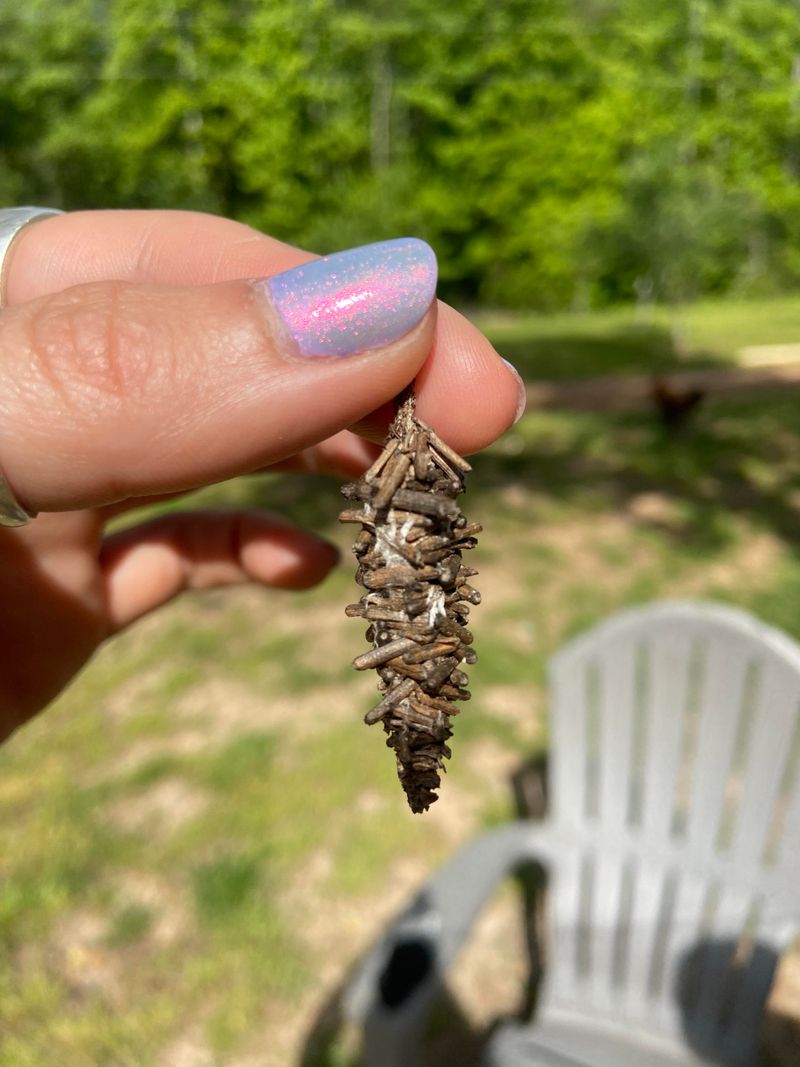
Finding just a handful of bags on a reachable shrub is actually good news, because hand removal is one of the most straightforward and effective options available to Georgia homeowners dealing with a light infestation.
No sprayer, no mixing, no waiting for a treatment window.
You simply put on a pair of garden gloves and start pulling the bags off the branches one by one.
The bags attach to branches with a tough band of silk that the caterpillar wraps around the stem. You may need to twist or tug firmly to break the silk without snapping the branch.
Work carefully and methodically from the top of the plant downward so you do not miss bags hidden behind ones you have already removed.
Hand removal works best when the infestation is small and the plants are short enough to reach safely from the ground or a step ladder. Foundation shrubs, low juniper beds, and young arborvitae in Georgia landscape beds are good candidates for this approach.
Trying to hand-pick bags from a tall cedar or a mature Leyland cypress row is not practical and could lead to a fall. For those situations, a different approach is a much smarter choice.
Always remove every bag you can find, since even a few missed cases can lead to a larger problem the following season.
4. Drop Removed Bags Into Soapy Water
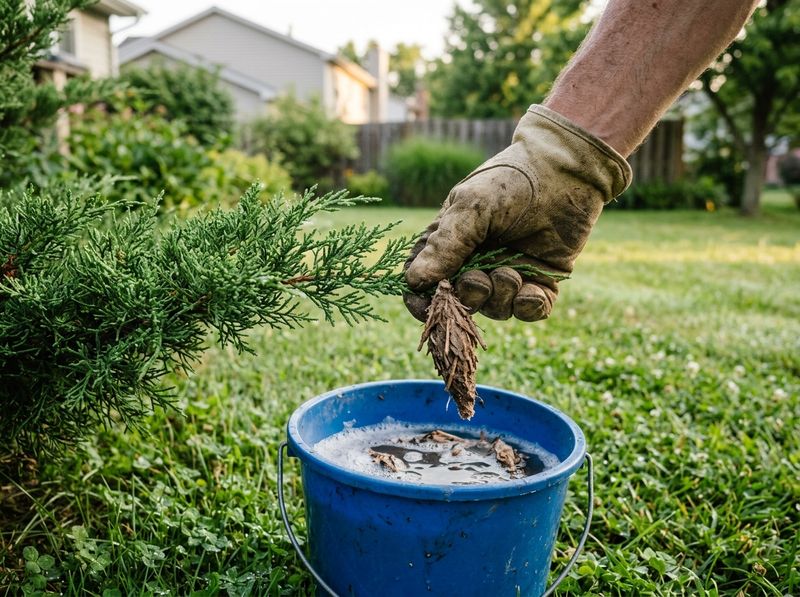
Pulling the bags off the plant is only half the job. What you do with them afterward matters just as much.
Many Georgia gardeners make the mistake of tossing removed bags onto the ground nearby, not realizing that the caterpillars can crawl right back out and return to the plant within hours.
Dropping each bag into a bucket of warm, soapy water as you work is a simple and reliable way to prevent that from happening. The soapy water eliminates the larvae quickly and keeps them from escaping back to your shrubs.
Any standard dish soap mixed into a bucket of water works fine for this purpose. You do not need anything special or expensive.
Keep the bucket close to you as you move around the plant so you can drop each bag in immediately after removal. Once you have finished working on a plant, let the bags soak for several minutes before disposing of them.
You can pour the water out in an area away from your garden beds and then bag the soggy cases in a sealed trash bag for disposal. This two-step process, removing the bag and then soaking it, makes hand removal far more effective in Georgia home landscapes.
Skipping the soapy water step can leave you with the same problem all over again within a few days.
5. Treat Young Bagworms Early In The Season
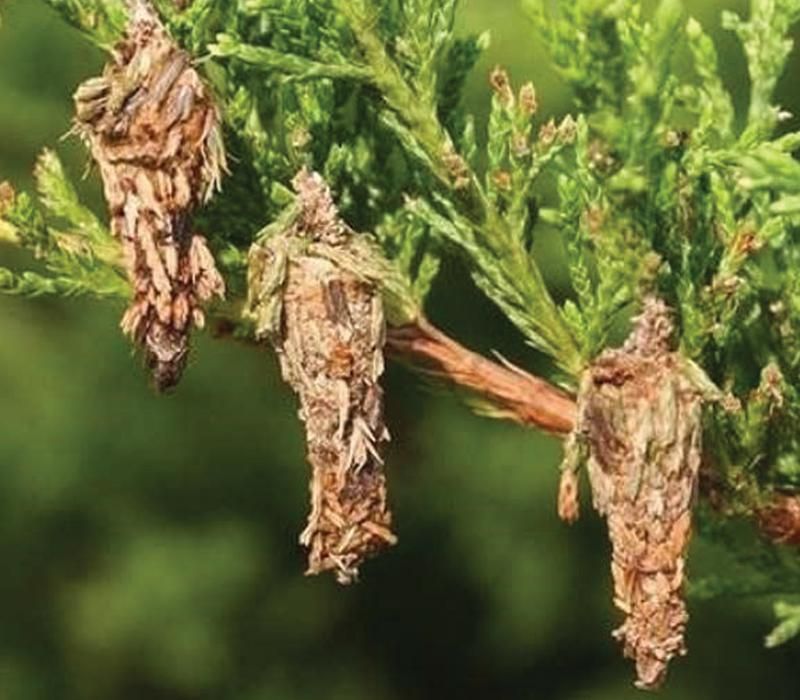
Timing is probably the single most important factor in bagworm control. In Georgia, bagworm eggs hatch in late spring and the tiny larvae begin feeding almost immediately.
Catching them during those first few weeks of activity, when the caterpillars are still very small and the bags are barely visible, gives any treatment the best possible chance of working.
Young bagworms are much more vulnerable to insecticides than older, larger ones. As the season moves into midsummer and the bags grow longer and thicker, the larvae become more protected inside their cases and harder to reach with a spray.
Treatments applied to large, mature bagworms in late summer are far less reliable and often produce disappointing results.
Most Georgia extension resources suggest targeting bagworms from late May through mid-June when larvae are in their earliest stages. If you spot the tiny bags early and act quickly, you have a much wider range of effective options available to you.
Waiting too long, even by just a few weeks, can push you past the window where most treatments work well.
Checking your junipers, arborvitae, cedars, and Leyland cypress regularly from late spring onward puts you in the best position to respond at the right moment and protect your Georgia landscape before feeding damage becomes visible and widespread.
6. Use Bt Only While Larvae Are Small And Feeding
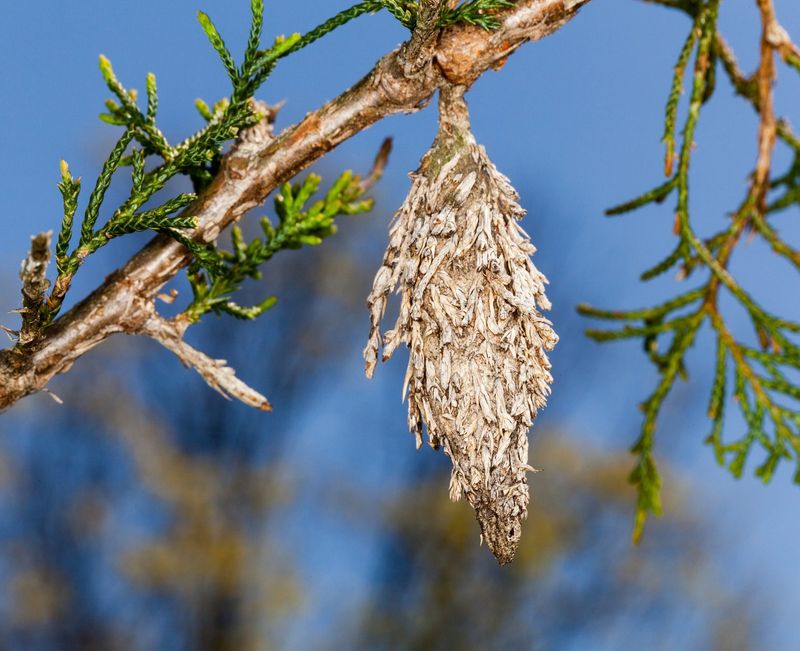
Bacillus thuringiensis, commonly known as Bt, is a naturally occurring soil bacterium that has become one of the most widely recommended options for young bagworm larvae.
It works by producing proteins that disrupt the digestive system of certain caterpillars, making it specific enough to target bagworms without posing risks to birds, beneficial insects, or people.
For Georgia gardeners who prefer a more targeted approach, Bt is worth knowing about.
The catch is that Bt has a very specific window of effectiveness. It works well on small, actively feeding larvae, typically in their first and second instars.
Once the caterpillars grow larger and begin spending more time inside their bags, Bt becomes far less reliable because the larvae need to ingest it while actively chewing foliage. Larger bagworms simply do not feed as openly or as frequently.
Applying Bt in late May or early June in Georgia, when newly hatched larvae are tiny and hungry, lines up well with the treatment window.
Follow the label directions carefully and aim for thorough coverage of all foliage where feeding is occurring.
Repeat applications may be needed since Bt breaks down fairly quickly in sunlight and rain. Bt is not a last-minute rescue option, but when used at the right time on small larvae, it can be a genuinely useful tool in a Georgia bagworm management plan.
7. Spray Thoroughly If Treatment Is Needed
When the infestation is too large for hand removal and the bagworms are still small enough to respond to treatment, a thorough spray application is often the most practical path forward.
Several insecticide options are labeled for bagworm control in ornamental landscapes, including spinosad, acephate, and permethrin, among others.
The right choice depends on the plant, the setting, and your comfort level with different product types.
Thorough coverage is what separates an effective application from a wasted one. Bagworms feed throughout the plant, including deep inside the canopy where sprays can be easy to miss.
Applying product only to the outer tips while the interior remains untreated leaves a large portion of the population unaffected. Take your time and work the sprayer nozzle into the plant from multiple angles.
In Georgia’s summer heat, spray applications are best done in the early morning or late afternoon to reduce evaporation and minimize stress to the plant.
Read the product label from start to finish before mixing or applying anything, and wear appropriate protective gear during application.
Spraying during windy conditions can reduce effectiveness and cause unintended drift.
If the plants are very tall or the infestation is widespread across multiple large shrubs, a single homeowner spray application may not be enough to reach all the feeding areas, which is when calling a professional becomes a much more sensible option.
8. Call A Certified Arborist For Tall Or Heavily Infested Plants
Mature Leyland cypress rows, tall cedar trees, and large arborvitae hedges present a real challenge for Georgia homeowners trying to manage bagworm infestations on their own.
When the bags are out of reach, the population is large, or the plants are showing significant browning, a certified arborist brings the equipment, training, and product access to handle the situation more effectively than a standard garden sprayer ever could.
Certified arborists in Georgia are trained in integrated pest management practices and can assess the extent of an infestation, recommend the most appropriate treatment timing, and apply materials with commercial-grade equipment that reaches all parts of a tall plant.
They can also help you evaluate whether a heavily stressed plant is likely to recover and what follow-up care might be needed after treatment.
Trying to spray a 20-foot Leyland cypress from a ladder with a residential pump sprayer is not just ineffective, it can be genuinely unsafe.
For large-scale infestations across multiple plants, the cost of professional treatment is often far more reasonable than losing an established privacy screen or ornamental tree that took years to grow.
Reaching out to a local Georgia arborist or licensed pest management professional as soon as you notice a serious infestation gives your plants the strongest possible chance of recovering and returning to healthy growth by the following season.