Here Are 8 Things You Can Do About Japanese Beetles Spreading In Kentucky
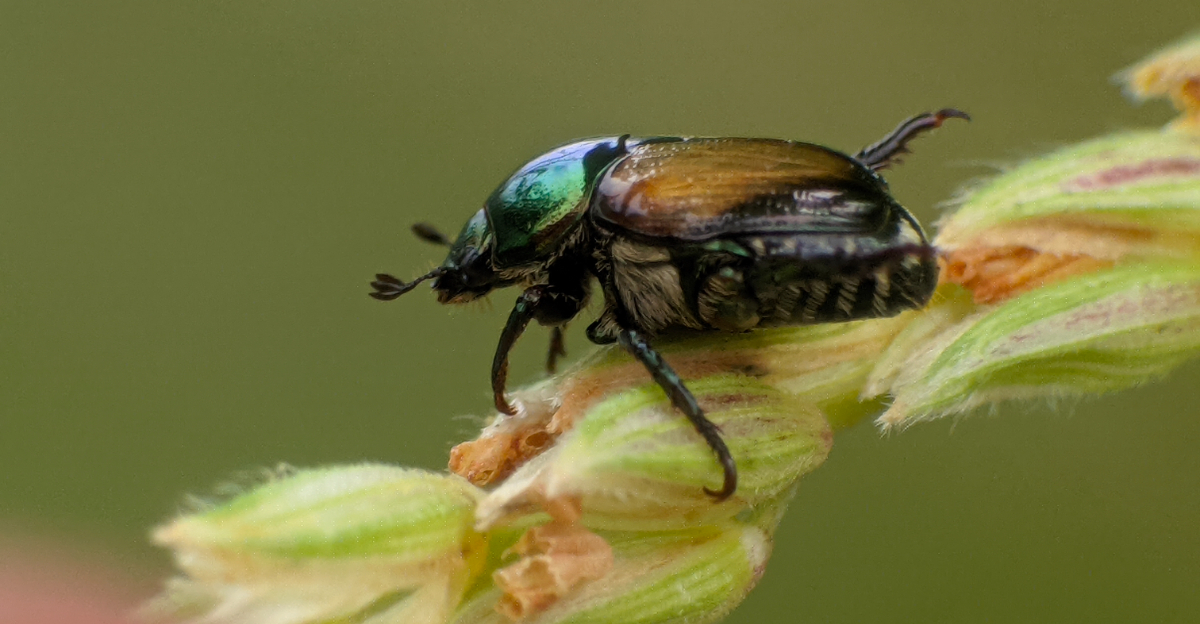
If your rose bushes are looking more skeleton than shrub lately, Japanese beetles are probably to blame. These small, metallic insects have been quietly expanding their range across Kentucky, and they are not picky eaters.
Roses, grapes, beans, linden trees, and over 300 other plant species are all fair game. A single beetle releases a pheromone that draws in more beetles, so what starts as a minor nuisance can turn into a full-scale feeding frenzy within days.
The damage they leave behind, ragged holes and lacy, see-through leaves, is hard to miss and even harder to reverse. But you do have options.
From timing your garden visits to choosing the right sprays, there are eight practical steps Kentucky gardeners can take to slow them down and protect what they have worked hard to grow.
1. Know What You Are Looking For
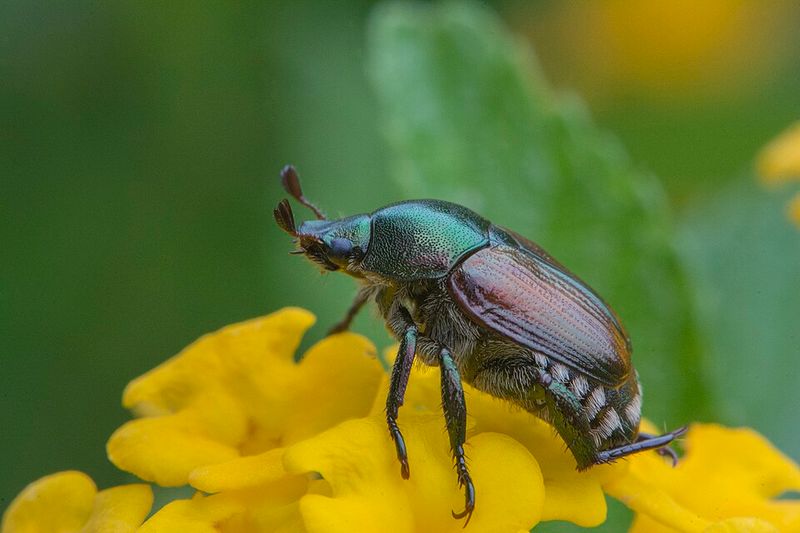
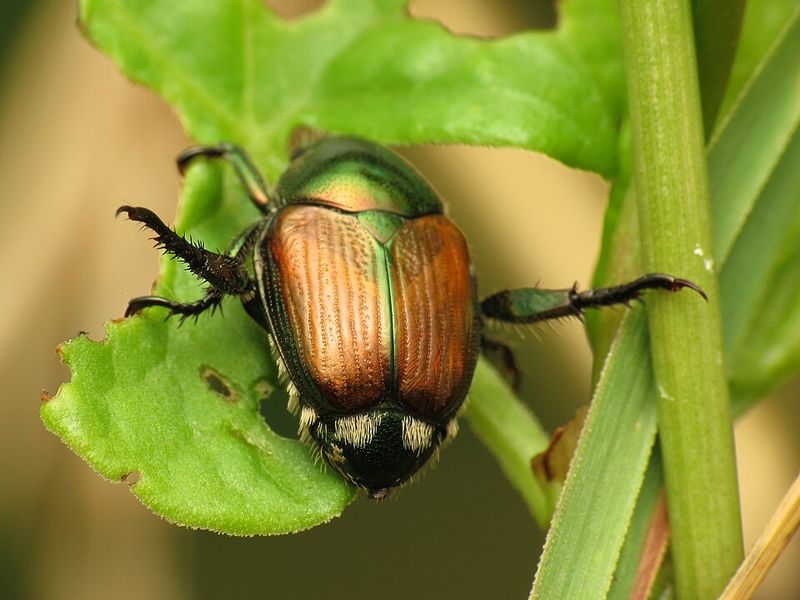
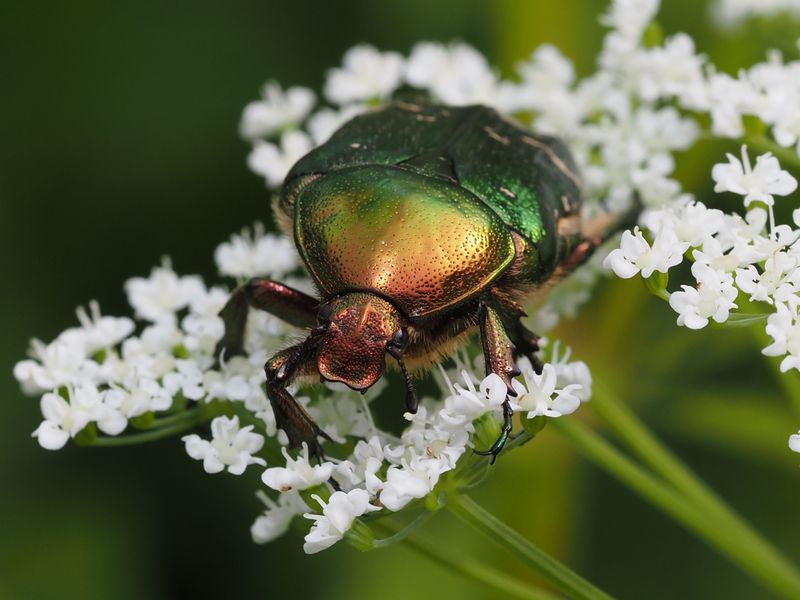
Spotting the enemy early is half the battle. Japanese beetles are just under half an inch long with a shiny green head and bronze wing covers.
Along each side of their body, you will notice small white tufts of hair. That detail alone sets them apart from other beetles you might see in your yard.
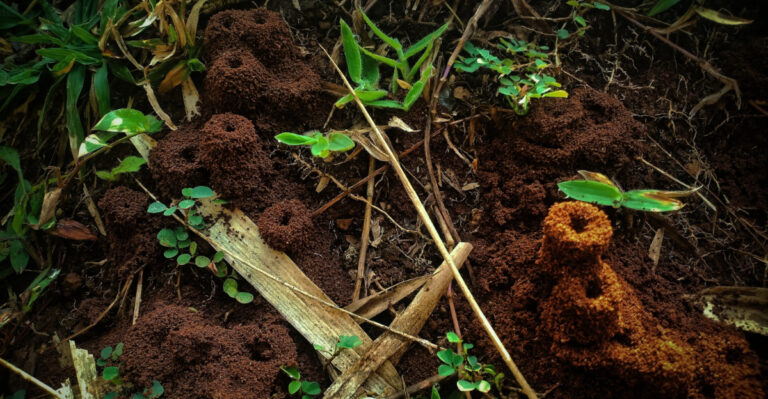
The beetles you spot on top of leaves are only part of the picture. Their grubs live underground and feed on grass roots before emerging as adults in late spring.
They tend to feed in clusters, so where you spot one, more are usually close behind. Skeletonized leaves with only the veins left behind are a classic sign of their feeding.
In Kentucky, adults typically emerge in late June and remain active through August, with peak feeding happening in July. Knowing this window helps you prepare in advance rather than react after the damage is done.
Learning to recognize both the adult beetles and the damage they cause puts you ahead of the problem. You cannot fight what you cannot identify, and mistaking them for another pest wastes precious time.
Beetles are also drawn to certain plants more than others. Roses, linden trees, and Japanese maples tend to attract the heaviest feeding, while plants like boxwood and red maple are rarely touched.
Japanese beetles spreading in Kentucky have now been confirmed across all counties in the state. Grab a magnifying glass and get familiar with what these bugs actually look like up close.
2. Learn When They Show Up
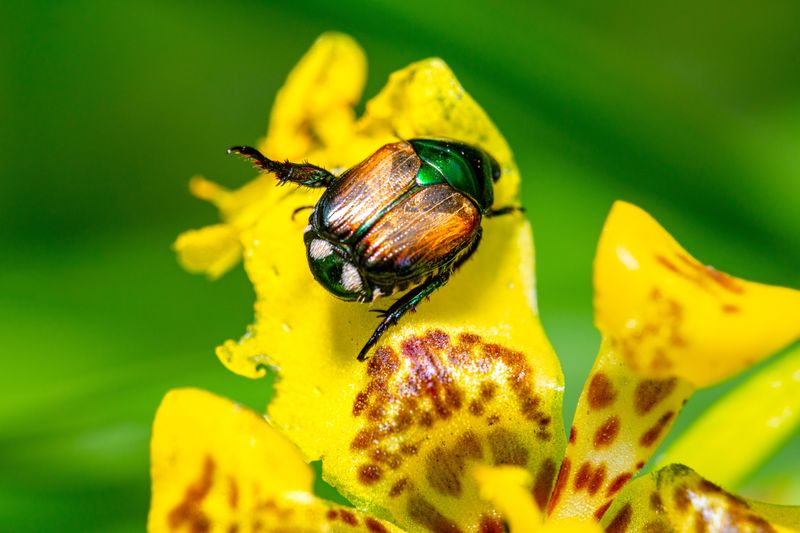
Timing is everything when you are dealing with seasonal pests. Japanese beetles in Kentucky typically emerge in late June and stay active through mid-August.
In some parts of Kentucky, populations have shifted as the beetle continues to expand its range. Milder seasonal conditions can make it easier for grubs to survive underground and emerge in greater numbers.
They are most aggressive during warm, sunny afternoons. That is when they feed hardest, so checking your garden in the morning gives you a head start.
Adult beetles live for about 30 to 45 days, which might sound short, but the damage they do in that window can be severe. A single summer can feel like a very long one when your plants are under attack.
Your Kentucky Garden Changes Every Week. Your Plan Should Too.
Gardening in Kentucky changes quickly throughout the season. Every Friday you’ll receive a simple weekly plan showing exactly what to plant, prune, fertilize, harvest, and protect so you never miss the right timing.
The damage also compounds quickly. Beetles release a feeding pheromone that signals others to join, so a plant that looks fine on Monday can look completely stripped by Friday.
Knowing their schedule lets you prepare in advance rather than react in a panic. You can have your sprays mixed, your row covers ready, and your traps avoided before the first beetle even shows up.
Early detection also means you can avoid overreacting. Reaching for the strongest chemical spray right away is rarely necessary if you catch the problem while numbers are still low.
Mark your calendar for the last week of June. Start checking your most vulnerable plants daily, and you will catch the invasion early enough to make a real difference in how much damage gets done.
3. Hand-Pick Them Off Your Plants
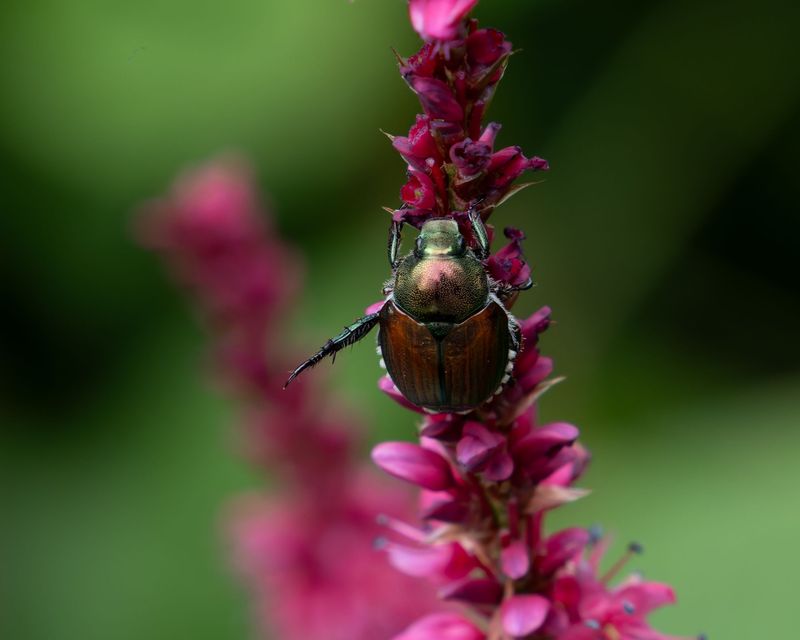
Old-fashioned as it sounds, hand-picking actually works. Early in the morning, beetles are sluggish and easy to knock into a bucket of soapy water.
The soap breaks the surface tension, and the beetles cannot escape once they hit the water. It is satisfying, free, and requires no chemicals.
This method is also one of the safest options if you have pets or children spending time in the garden.
Wear gloves if touching bugs is not your thing. A wide-mouthed jar or a disposable cup makes collecting them even easier when you are moving through the garden quickly.
Focus on checking the tops of leaves first, since beetles tend to cluster there in the morning sun. Shake branches gently over your bucket and watch them drop right in.
Pay extra attention to roses, beans, and linden trees since these tend to draw the heaviest beetle traffic. Clearing them first gives your most vulnerable plants the best chance.
This method works best when populations are still manageable. If you catch the infestation early, hand-picking every day for a week can seriously reduce the number of adults laying eggs in your soil.
It also gives you a daily read on how bad the infestation actually is. If numbers are climbing despite your efforts, that is a signal to bring in additional methods.
It takes about ten minutes each morning, which is a small price for keeping your garden intact. Consistency is what makes this approach effective over the long haul.
4. Protect Your Most Vulnerable Plants First
Not every plant in your yard is equally at risk. Japanese beetles have a clear hit list, and roses, grapes, linden trees, and beans are at the top of it.
Knowing which plants they love most helps you prioritize your protection efforts. You do not need to treat every inch of your yard, just the spots where they will cause the most harm.
Plants like boxwood, holly, and red maple are rarely touched by Japanese beetles. Knowing what they avoid is just as useful as knowing what they target.
Start by inspecting your most prized or most edible plants first each day. A rose bush covered in feeding beetles can lose all its blooms in less than 48 hours.
Consider grouping your most vulnerable plants together if you have flexibility in your garden layout. Concentrated protection is easier to manage than scattered coverage across a wide area.
If you are planning new plantings, this is also a good moment to reconsider which species go where. Strategic placement now can mean significantly less beetle pressure in future seasons.
Applying a protective spray or cover to high-risk plants before beetles arrive is far more effective than treating after an infestation has already started. Think of it as setting up a perimeter before the storm hits.
Saving your most beloved plants first gives you a clear win and keeps your motivation strong throughout the season.
5. Use Row Covers During Peak Season
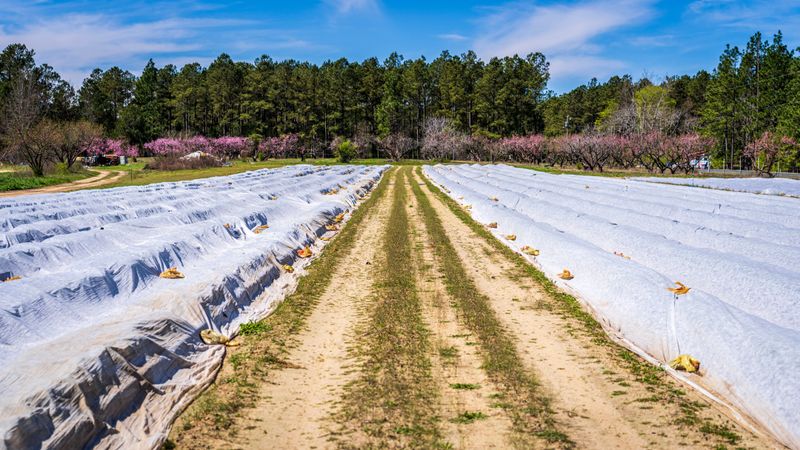
Row covers are one of the most underrated tools in a gardener’s arsenal. These lightweight fabric barriers physically block beetles from reaching your plants.
You can find them at most garden centers or order them online. They let sunlight and water through while keeping pests out, which makes them ideal for vegetable gardens.
They work equally well on ornamental plants like roses if you are willing to sacrifice blooms temporarily. Protection sometimes means making a short-term tradeoff to save the plant long-term.
During the peak beetle weeks from late June through July, draping row covers over beans, peppers, and other target crops can prevent feeding damage entirely.
Secure the edges with garden staples or rocks so beetles cannot sneak underneath. Even a small gap can become an entry point for a determined swarm.
Check under the covers every few days to make sure no beetles have found their way in. A covered infestation is harder to spot and can do just as much damage if left unchecked.
Remove the covers during flowering if your plants need pollination. Timing matters, so check your specific crop needs before leaving covers on too long.
Row covers are reusable for several seasons if stored properly after use. That upfront cost pays off quickly when you compare it to the price of replacing destroyed plants every summer.
6. Try Neem Oil And Other Natural Sprays
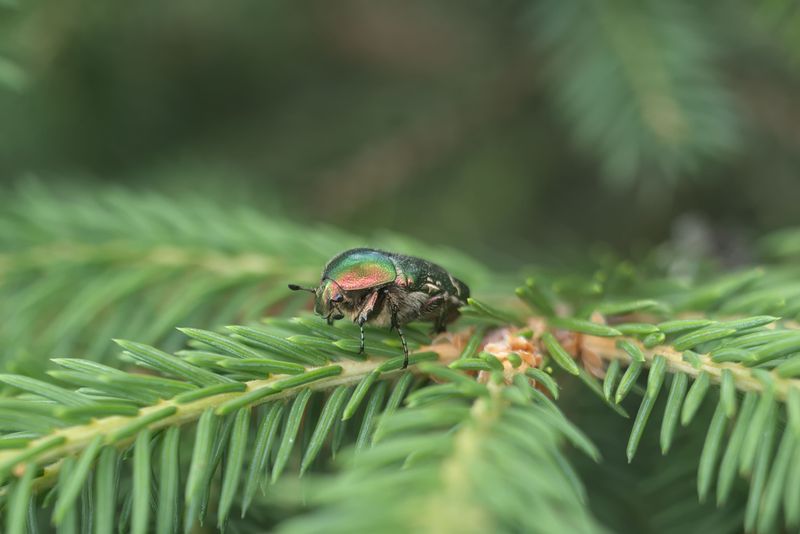
Neem oil is a plant-based spray that disrupts the feeding and reproductive behavior of Japanese beetles. It does not wipe them out instantly, but it makes your plants far less appealing over time.
Mix it according to the label instructions and apply it in the early morning or evening to avoid burning leaves in direct sun. Reapply after rain since water washes it off quickly.
A consistent neem oil schedule over two to three weeks can noticeably reduce beetle activity on treated plants. Sporadic application is far less effective than sticking to a routine.
Spinosad is another natural option derived from soil bacteria. It is more aggressive than neem oil and works faster on active infestations without being harsh on pollinators when used correctly.
Pyrethrin sprays made from chrysanthemum flowers offer another layer of defense. They act fast on contact but break down quickly in sunlight, making them a lower-risk choice for edible gardens.
Kaolin clay is worth mentioning as well. Applied as a spray, it coats leaves with a fine white film that irritates and confuses beetles without harming the plant itself.
Always read labels carefully before applying anything to food crops. Some natural sprays are still harmful to bees, so timing your application when pollinators are least active is a smart habit.
Rotating between different natural sprays can help maintain the effectiveness of your defense strategy over time.
7. Avoid Japanese Beetle Traps
Beetle traps seem like an obvious solution, but they often make the problem worse. These traps use floral and pheromone-based lures that attract beetles from a wide area.
Studies have shown that traps draw in far more beetles than they actually catch. The overflow ends up feeding on whatever plants are nearby, which usually means your garden.
If you are going to use a trap, place it as far from your garden as possible. At least 30 feet away is the general recommendation from most extension services.
Some gardeners place traps along the edges of their property to intercept beetles before they reach the garden. This can work as a buffer strategy, but only if the trap is emptied and maintained regularly.
Even then, traps work best as a monitoring tool rather than a population control strategy. They help you track when beetles have arrived, not reduce how many are feeding on your plants.
Neighbors who use traps near your property line can also funnel beetles into your yard. It is worth having a friendly conversation about shared pest management during beetle season.
Skipping the trap and focusing your energy on barriers, hand-picking, and targeted sprays will give you far better results. Traps feel like action but often create a bigger headache than the one they promised to fix.
8. Target The Grubs Before They Hatch
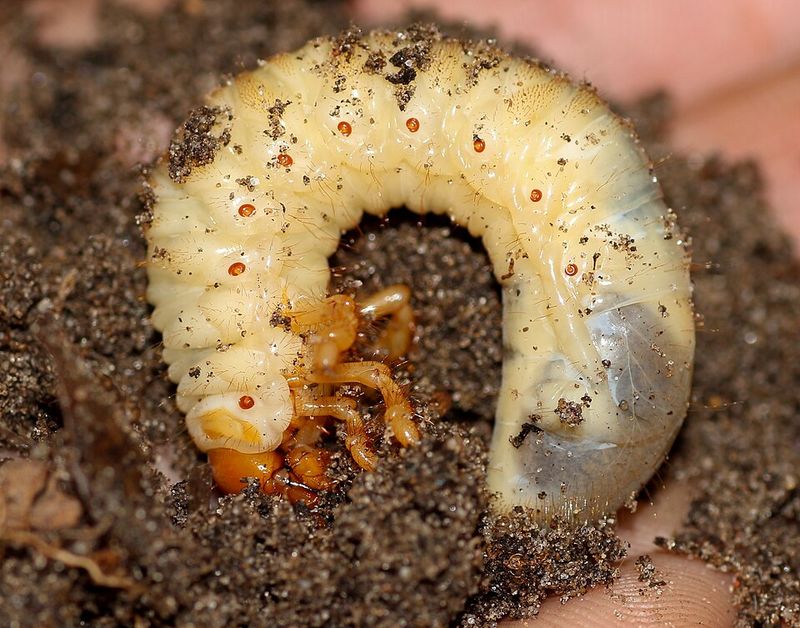
The adult beetles you see in summer are only part of the story. After feeding, female beetles lay eggs in your lawn, and those eggs hatch into white grubs that chew through grass roots underground.
Treating the grub stage breaks the cycle before next year’s adults even emerge. Milky spore targets Japanese beetle grubs specifically and is considered safe for other soil life, though its effectiveness can vary by location.
Beneficial nematodes are another biological option that can be watered into your lawn in late summer. They seek out grubs in the soil and are safe for pets, children, and earthworms.
Chemical grub treatments are also available at garden centers and work quickly if applied at the right time. Late July through August is the window when young grubs are closest to the surface and most vulnerable.
A healthy, thick lawn is naturally more resistant to grub damage. Keeping your grass watered and well-fed gives it the strength to withstand some grub activity without showing visible harm.
Targeting grubs is one of the most powerful long-term strategies for managing Japanese beetles spreading across Kentucky lawns and gardens for seasons to come.