How Downspout Placement Can Cause Yard Erosion In Arizona This Summer
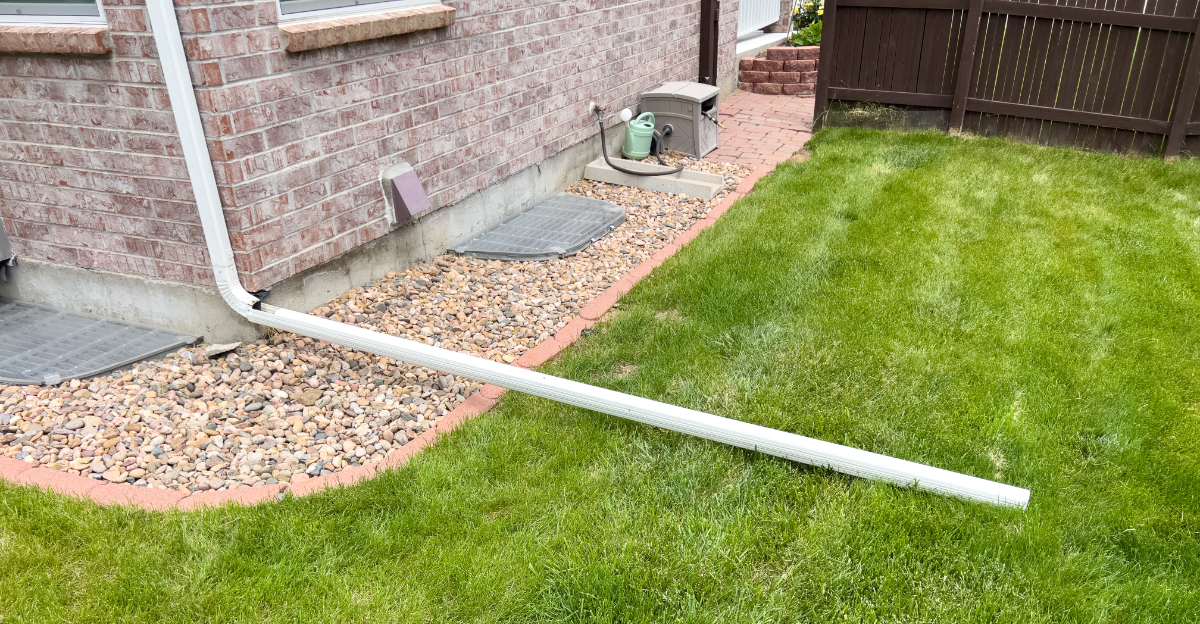
Heavy rain does not have to fall for long to start washing soil across a yard. One overlooked downspout can send a powerful stream of water into the same spot every time a storm arrives.
At first, the changes seem minor, but small gullies and exposed roots often appear before homeowners realize what is happening. Catching the problem early is much easier than repairing the damage later.
Summer storms bring sudden bursts of rainfall to Arizona, making downspout placement more important than many people expect.
Water should spread safely through the landscape instead of carving channels into the soil.
Before the next storm moves through, check where every downspout releases water around your home.
Small adjustments can help protect planting beds, prevent erosion, and keep your landscape looking its best throughout the season.
1. Runoff Concentrates In The Same Spot
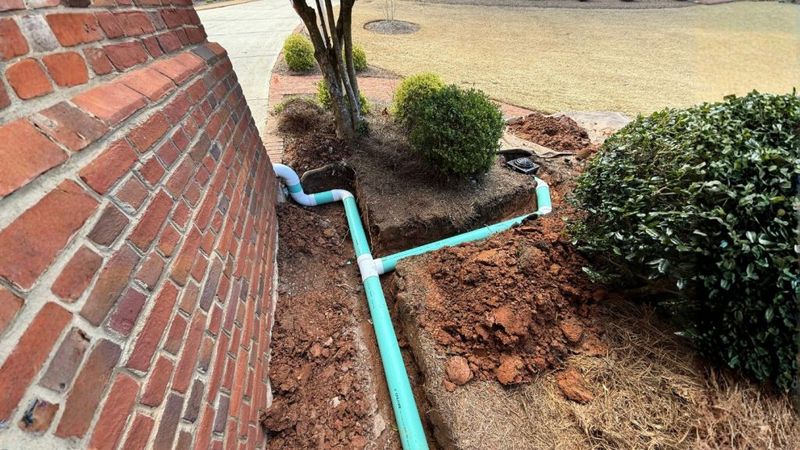
Water is patient, but it is also relentless. Every time rain falls, your downspout sends all of it rushing to one single patch of ground.
Over a few storms, that concentrated pressure starts carving a hole you cannot ignore.
Dry desert soil is especially vulnerable. Unlike soil in wetter climates, it often has a hard crust on top.
Once that crust breaks, the looser material underneath washes away quickly during each new rainstorm.
Repeated hits to the same spot compact the area, strip away nutrients, and leave behind a sunken, bare patch. Nearby plants often suffer too, since their roots lose surrounding soil support.
Repositioning your downspout outlet even a few feet can spread the impact across a wider area. Wider coverage means less force hitting any single point, which gives soil time to absorb water instead of losing it.
Adding a layer of gravel or river rock around the outlet also helps cushion the blow. Rock absorbs impact and slows water down before it reaches bare dirt.
Watch where your downspout drains after every storm this summer. If you see a growing depression or bare patch forming, that is your early warning sign that concentrated runoff is actively working against your yard.
2. Splash Blocks Spread Water More Evenly
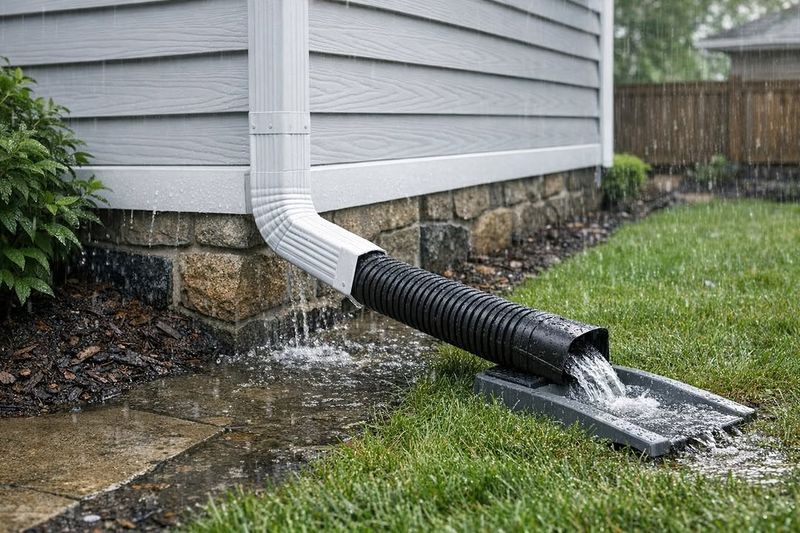
Splash blocks are simple, but they punch above their weight. Placed directly under a downspout outlet, they redirect water outward instead of letting it pound straight down into bare soil.
Without one, the force of falling water acts almost like a small drill. It loosens soil particles, pushes them aside, and sends them downstream with each passing storm.
Splash blocks interrupt that cycle at the source.
Concrete and plastic versions are both widely available at hardware stores. Concrete blocks tend to stay in place better, especially if monsoon winds pick up during storms.
Plastic ones are lighter and easier to reposition if needed.
Placement matters just as much as having one at all. Point the block away from your foundation and toward an area that can handle extra moisture, like a gravel bed or a planted slope with established root systems.
Slope also plays a role. A block that sits level with the ground does not direct water as effectively as one angled slightly downward away from the house.
Your Arizona Garden Changes Every Week. Your Plan Should Too.
Gardening in Arizona changes quickly throughout the season. Every Friday you’ll receive a simple weekly plan showing exactly what to plant, prune, fertilize, harvest, and protect so you never miss the right timing.
A small tilt makes a noticeable difference in where water ends up.
3. Downspout Extensions Redirect Water Safely
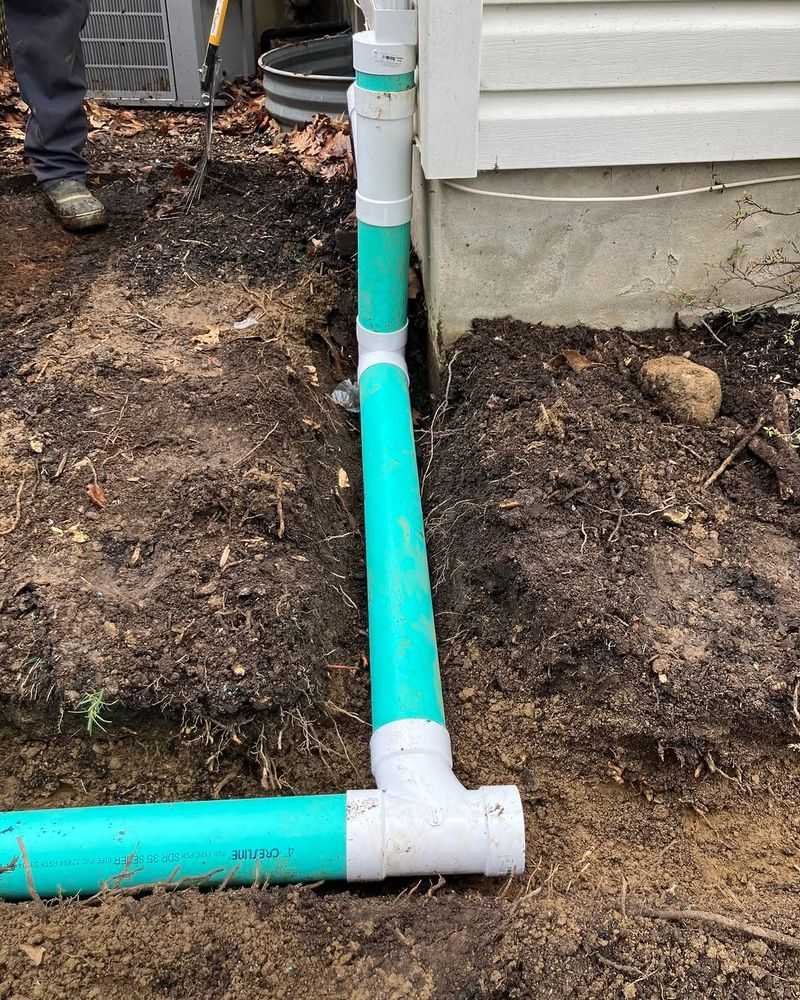
Short downspouts are one of the most common mistakes homeowners overlook. Water exits just inches from the foundation, soaks in near the base of the house, and sends runoff directly into vulnerable soil zones.
Extensions fix that problem by moving the discharge point further from the house.
Even a four-foot extension can make a meaningful difference in where water ends up and how much erosion it causes nearby.
Flexible accordion-style extensions are popular because they bend around obstacles easily. Rigid extensions made from PVC pipe are more durable but require a bit more planning to install at the right angle.
Directing the extension toward a rock bed, a dry creek channel, or a planted area with ground cover gives the water somewhere useful to go.
Sending it toward bare soil without any protection just moves the erosion problem a few feet further away.
Underground extensions are another option worth considering. Buried pipe carries water well past landscaped areas and releases it at a safer distance from both the foundation and any planted zones.
Arizona monsoons can dump over an inch of rain in under an hour in some areas.
4. Rock Channels Slow Fast-Moving Runoff
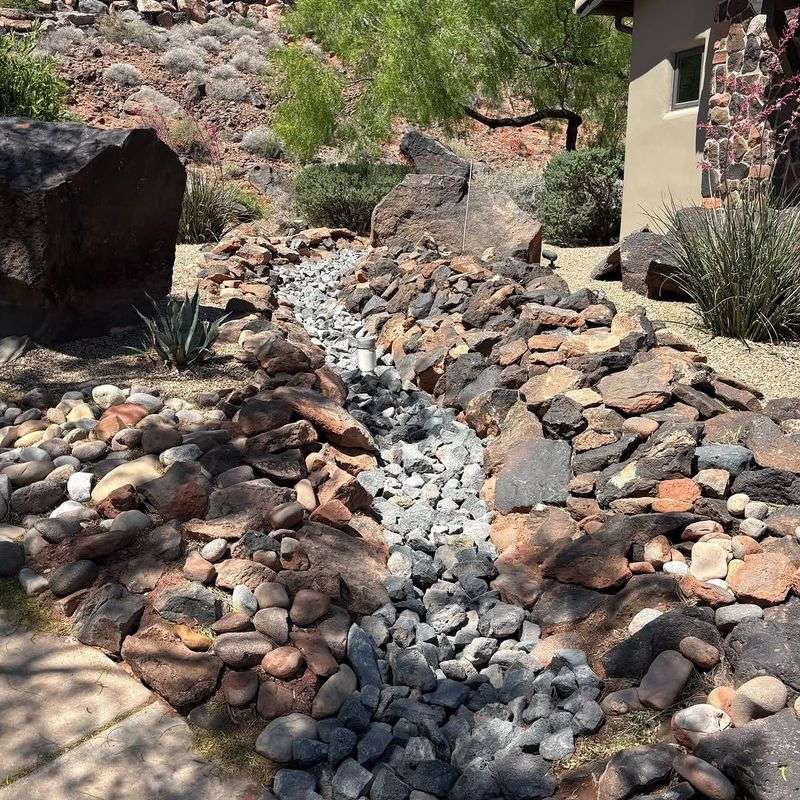
Fast water tears things apart. When runoff picks up speed across a sloped yard, it does not just carry dirt, it carves channels and strips away whatever is in its path.
Slowing that water down is one of the most practical things you can do.
Rock channels, sometimes called dry creek beds, are built to guide water while absorbing its energy. The irregular surfaces of rocks and gravel force water to slow down, spread out, and infiltrate rather than race across the surface.
Building one does not require professional help in most cases.
You dig a shallow channel along the natural path water already takes, line it with landscape fabric to prevent weed growth, then fill it with river rock or gravel of various sizes.
Larger rocks at the entry point near the downspout help absorb the initial impact. Smaller gravel further along the channel keeps water moving at a manageable pace without letting it accelerate again.
Rock channels also blend well with desert landscaping styles common across the region. Rather than looking like a drainage fix, a well-built channel can actually improve the appearance of a yard and add visual structure to a flat or sloped space.
5. Ground Cover Holds Soil In Place
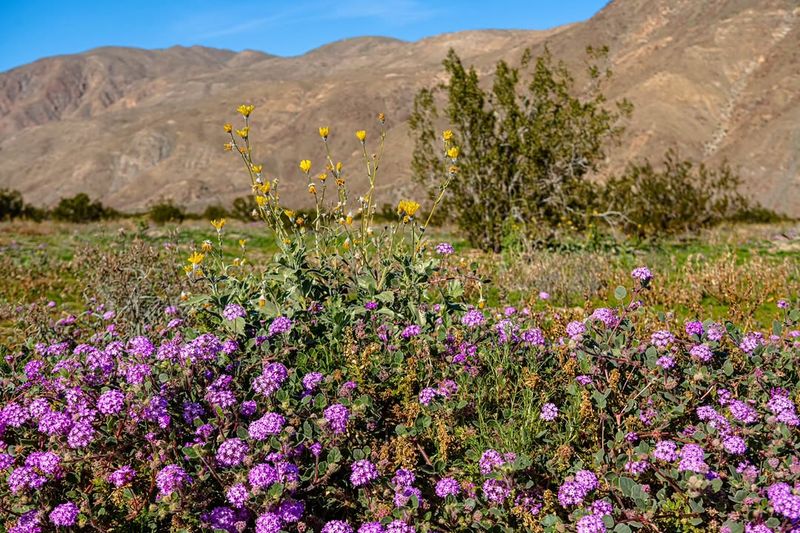
Bare soil has no defense against moving water. Exposed ground in a desert yard is especially prone to erosion because the surface bakes hard between rains and then cracks under the first heavy downpour of the monsoon season.
Ground cover plants solve that problem in a straightforward way. Their roots bind soil particles together, making it much harder for water to dislodge and carry them away.
Even shallow-rooted varieties provide meaningful protection during moderate storms.
Drought-tolerant species work best in this climate. Lantana, trailing rosemary, and desert marigold are a few options that spread well and handle intense heat without needing heavy irrigation.
Native ground covers often establish faster and require less maintenance once settled in.
Planting near downspout outlets gives the most direct benefit. Established plants in that zone intercept water before it can gain momentum and start eroding the surrounding area.
The root network acts as a natural anchor for the surrounding soil.
Mulch added between plants fills in the gaps before full coverage develops. Gravel mulch is especially practical in desert yards because it does not blow away easily and adds another layer of protection against direct water impact.
6. Steep Slopes Wash Away More Easily
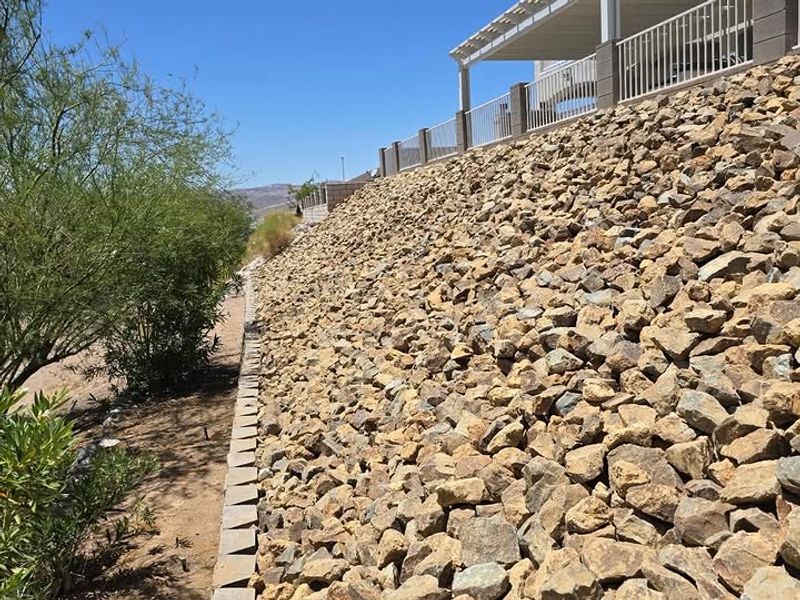
Gravity is working against you on a sloped yard. Water does not just flow down a hill, it accelerates.
By the time it reaches the bottom, it can carry a surprising amount of soil, gravel, and organic material with it.
Downspouts positioned at the top of a slope can make erosion far worse than most homeowners expect. All that concentrated roof runoff gets added to whatever is already flowing downhill, and the combined force strips soil fast.
Retaining walls are one solution for steeper grades. Even a low wall made from stacked stone or concrete block can intercept runoff, slow it down, and give water time to absorb before continuing downhill.
Terracing is another approach that works well in Arizona yards with significant elevation changes.
Breaking a long slope into a series of flat steps reduces the distance water can travel at speed, which limits how much erosion each storm can cause.
Redirecting the downspout away from the slope entirely is worth considering if the grade is severe.
Moving the outlet to a flatter section of the yard or into a rock channel that runs parallel to the slope avoids sending extra water straight down the most vulnerable area.
Even modest slopes deserve attention.
7. Inspect Downspouts After Heavy Storms
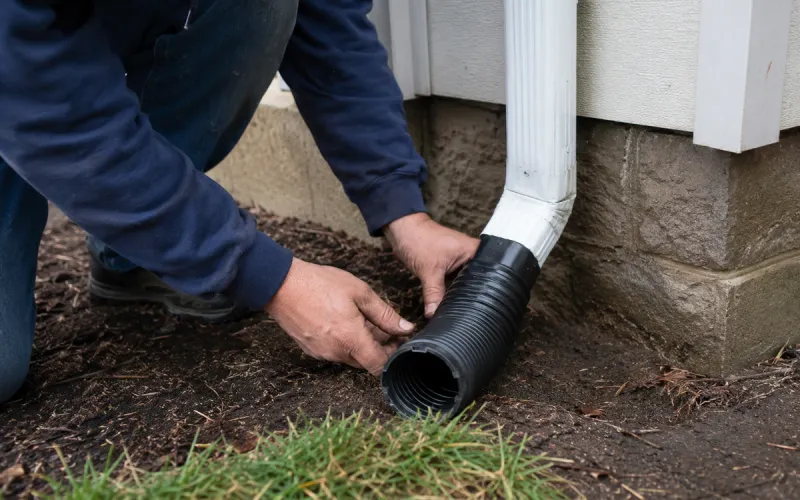
After a heavy monsoon storm passes, most people just wait for the yard to dry out and move on. Taking fifteen minutes to walk around and check your downspouts can catch small problems before they turn into expensive ones.
Look at the soil directly around each outlet. Fresh erosion channels, displaced gravel, or bare patches that were not there before are all signs that water is hitting too hard or flowing in the wrong direction.
Check the downspout itself for clogs. Debris from storms, including leaves, roof granules, and small twigs, can partially block the pipe and cause water to overflow from the sides or back up under the roofline.
Also look at where extensions and splash blocks sit after the storm.
Heavy water flow can shift them out of position, and a misaligned block or extension can send water directly into unprotected soil zones.
Photograph problem areas after each major storm. Side-by-side comparisons over a few weeks reveal whether erosion is getting worse or staying stable.
That kind of documentation also helps if you need to show a contractor what has been happening.
Catching issues early in the season gives you time to make adjustments before the next wave of storms arrives.