How to Care for Rosemary Trimmed Into a Mini Christmas Tree in Texas

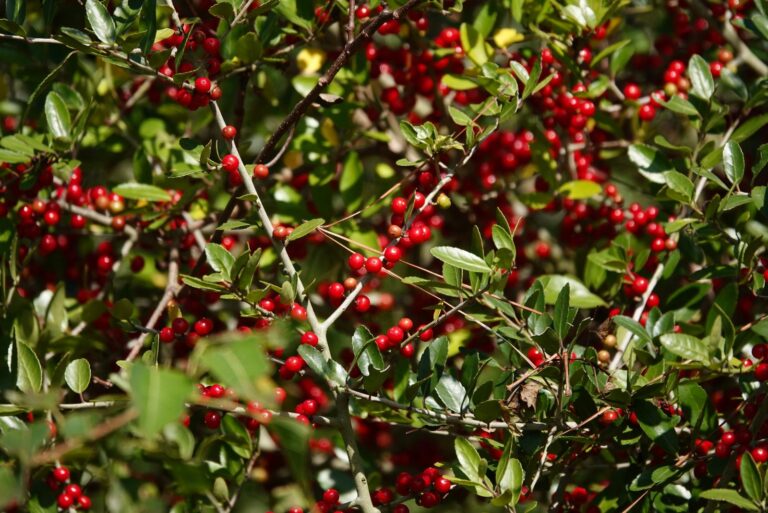
One of the most cold-hardy plants in this whole holiday trend was found growing in a yard in Arp, a small town in East Texas. That discovery gave gardeners a tough little herb that shrugs off cold that would sink many of its cousins.
What I find interesting is how often these fragrant cones get treated like disposable decor. They show up in grocery stores every December, sheared into perfect points and wrapped in shiny foil.
Then January rolls around, and many of them quietly brown out on a kitchen counter.
I could be wrong, but I think most of those plants struggle for simple reasons. Too little sun, too much water, and a warm, dry house can wear them down fast.
You might be surprised by how long one of these little trees can last with a few smart habits. So why let yours become a one-season wonder?
1. That Foil-Wrapped Rosemary Tree Is Begging You to Unwrap It

Grocery store rosemary trees look adorable in their crinkly foil sleeves. Sadly, that pretty wrapping is often the first thing working against your plant.
Foil traps water at the bottom of the pot. Rosemary roots hate sitting in soggy soil, and root rot can set in quickly when water has nowhere to go.
Peel the foil off as soon as you get home, or poke several holes in the bottom and set the pot on a saucer instead.
Next, check the soil with your finger. Many holiday rosemary plants are packed into small pots with dense, peaty mix that stays wet for days.
If the roots are circling the pot or the soil feels heavy, plan to repot soon.
Choose a container only one or two inches wider, with real drainage holes. A clay pot is a smart pick because it breathes and dries out faster than plastic.
Fill it with a fast-draining mix, such as potting soil blended with coarse sand or perlite.
I find it helpful to treat this first week as a welcome-home check. Unwrapping, checking roots, and giving better drainage can buy your little tree months, even years, of fresh growth and holiday cheer.
2. Bright Window Light Keeps Rosemary Needles Green and Full

Sunshine is the fuel this Mediterranean herb runs on. Outdoors, rosemary wants at least six to eight hours of direct sun each day, and indoors it wants as much as you can give.
A south-facing window is usually your best bet in winter. West-facing glass can work too.
A spot in the middle of a room, even a well-lit one, often leaves the plant stretching, thinning out, and dropping its needle-like leaves.
Watch for clues. Pale growth, long gaps between leaves, and a lopsided lean toward the window all point to a plant asking for more light.
Turn the pot a quarter turn every few days so every side of your cone gets equal time in the sun.
If your windows are shaded by trees or porches, a simple LED grow light can help. Keep it a few inches to a foot above the plant for about 12 to 14 hours a day.
Across much of Texas, mild winter days also offer a treat. When temperatures sit comfortably above freezing, carry the pot outside to a sunny patio for a few hours.
Your rosemary will thank you with tighter, greener growth.
3. Water the Rosemary Tree Only When the Top Inch of Soil Feels Dry

Here’s a twist that surprises plenty of new owners. Rosemary is more likely to struggle from too much water than too little.
Overwatering is the most common reason holiday rosemary trees decline. Wet roots can’t breathe, and rot follows.
Before you water, push a finger an inch or two into the soil. If it still feels damp, wait.
When the soil is dry, water slowly until it runs out of the drainage holes. Then empty the saucer after about 15 minutes.
Letting the pot sit in a puddle defeats the purpose of good drainage.
Growth slows in winter, so you may only need to water every week or two indoors. Heated homes dry soil faster, though, so keep checking rather than following a strict calendar.
There is one catch worth remembering. Rosemary also dislikes drying out to the point of crispiness in a pot, because it often doesn’t bounce back well once leaves turn brittle and brown.
The sweet spot is dry on top, a little moist deeper down.
A light pot is your hint it needs a drink. A heavy one means patience.
Lift it often, and you’ll get a feel for its rhythm.
4. Light Snips Keep That Christmas Tree Cone Shape Sharp
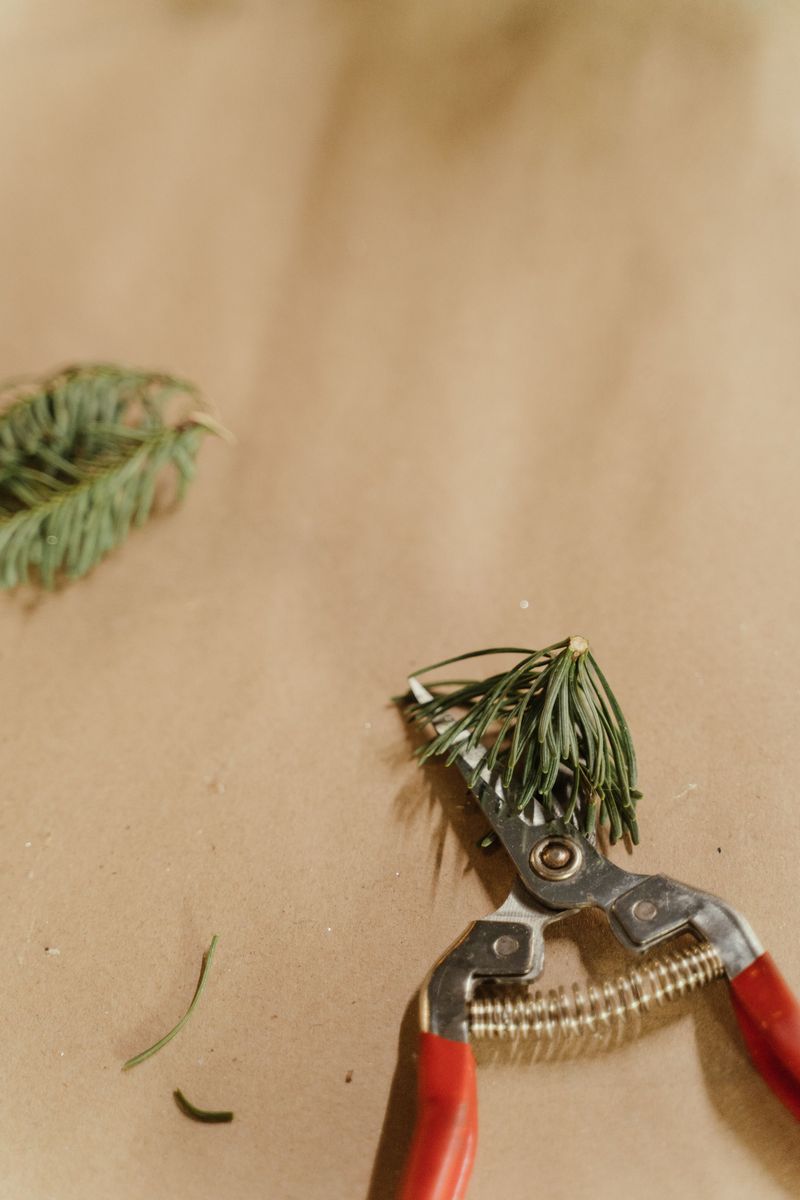
Think of trimming as a haircut, not a buzz cut. Small, regular snips keep your rosemary tree looking crisp without stressing it.
Use clean, sharp scissors or pruners. Trim only the soft green tips that stick out past the cone outline.
Work from the bottom up, keeping the base wider and the top narrower.
Avoid cutting back into old, woody stems. Rosemary rarely sprouts new growth from bare wood, so deep cuts can leave lasting holes in your tree.
A good rule is to remove no more than about one-third of the new growth at a time.
Spring and early summer are the best times for shaping, since that’s when the plant is growing actively. In winter, stick to light tidying.
Some gardeners set a paper cone or tie a string around the plant as a guide for a cleaner silhouette.
And those clippings? Please don’t toss them.
Fresh rosemary sprigs are perfect for roasted potatoes, holiday chicken, or bread.
You can even root a few cuttings in moist sand to start your own baby trees. I never get tired of how one plant can turn into a whole family of tiny evergreens.
5. A Texas Freeze Can Still Catch Potted Rosemary Off Guard
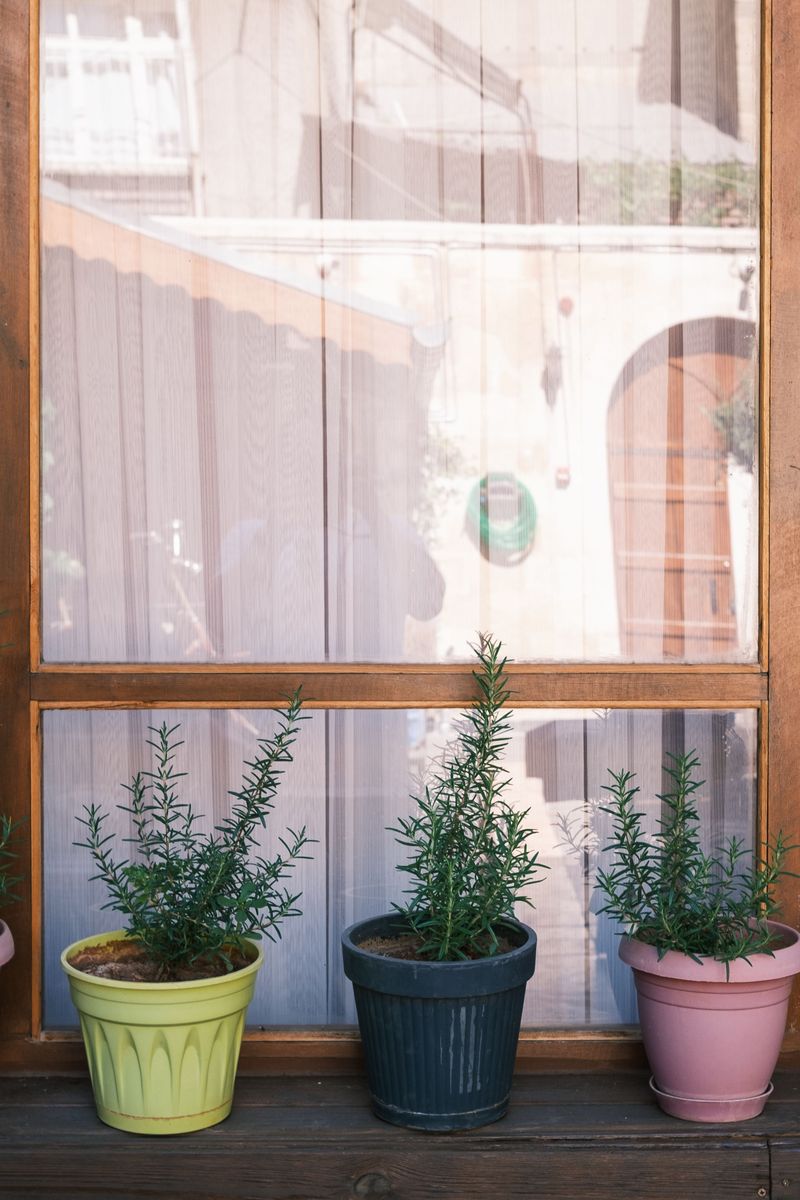
Rosemary in the ground can handle a surprising amount of cold. Potted rosemary is a different story, because roots in a container sit exposed on every side.
Texas covers USDA zones 6 through 10, so winter looks very different in Amarillo than in Corpus Christi. The Panhandle can see hard freezes often.
South Texas may barely dip below freezing all season.
A sensible plan is to bring potted trees into a garage, shed, or the house when nights drop below the upper 20s. Many gardeners move them in any time a freeze is forecast, just to be safe.
Hardy types like ‘Arp’ tolerate more cold, but small pots still lose heat quickly.
Plants too big to move can be grouped against a south-facing wall. Wrap the pot in a towel or burlap, then drape frost cloth over the top.
Pull off any plastic covers the next morning so moisture and heat don’t build up.
Memories of the February 2021 winter storm remind us that even mild areas can face hard freezes. Watch the forecast, and keep the soil on the dry side before a cold snap, since wet soil freezes harder.
6. Browning Rosemary Needles Usually Point to Roots or Dry Air
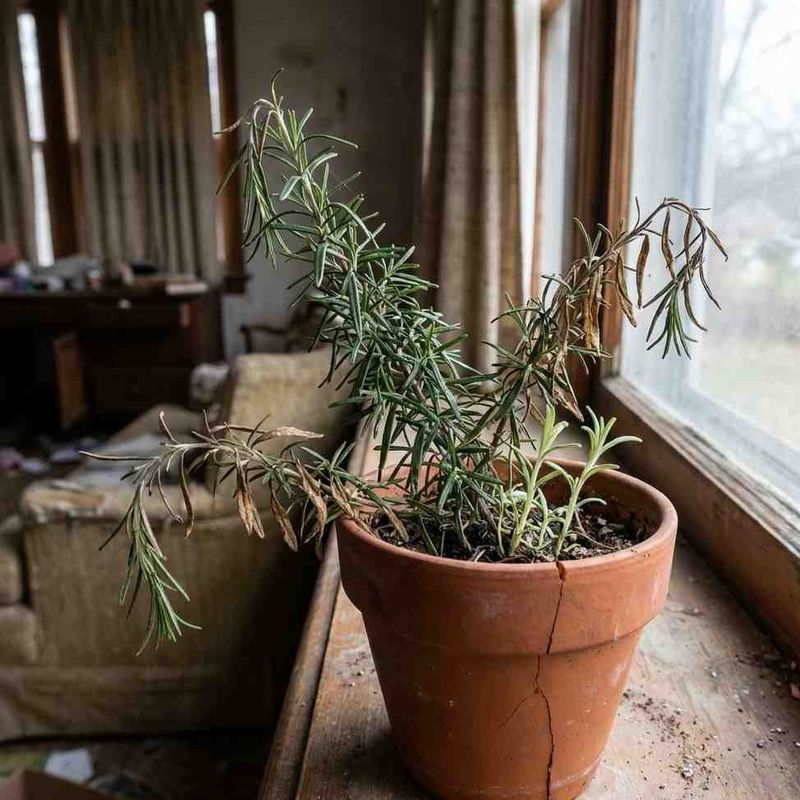
Brown needles can feel alarming, especially right before guests arrive. Luckily, the cause is usually easy to narrow down.
Start at the base. Brown, soft stems paired with damp soil suggest root rot from overwatering.
Let the soil dry out, improve drainage, and trim off affected growth. Severe cases may not recover, so catching it early matters.
Crispy, brittle needles with bone-dry soil tell the opposite story. Water thoroughly and check more often going forward.
Indoor heat brings its own troubles. Dry air can invite spider mites, tiny pests that leave pale speckles and fine webbing on stems.
Rinsing the plant in the shower or sink helps knock them off. Insecticidal soap or neem oil can manage stubborn cases, though you should follow the label if you plan to cook with the herb.
Powdery mildew sometimes shows up as a white, dusty coating, mostly where air is stale. Space the pot away from walls and other plants, and run a fan occasionally to keep air moving.
A few brown needles low inside the plant are normal, too. Older leaves shaded by new growth often fade naturally, and a gentle shake will clear them out.
7. Spring Is Prime Time to Feed and Repot Your Holiday Rosemary
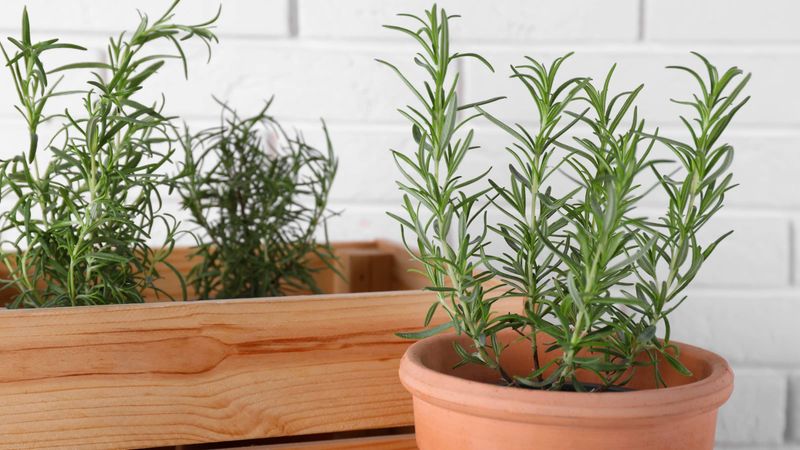
Once winter fades, your rosemary wakes up hungry for space and a bit of food. Spring is when it puts on fresh green growth, making it the ideal time for a little upgrade.
Gently slide the plant out of its pot and look at the roots. If they wrap around the edges, move it into a container one size larger.
A mix of potting soil with perlite or coarse sand keeps drainage fast.
Rosemary is a light feeder. Too much fertilizer makes soft, floppy growth and can weaken the flavor.
A balanced, diluted liquid fertilizer once a month during spring and summer is plenty. Skip feeding in winter, when growth slows down.
Here’s something worth knowing about Texas soil. Rosemary actually prefers neutral to slightly alkaline conditions, so the limestone-rich soils found around Central Texas suit it nicely if you later move it into the ground.
Spring is also a great time to do your main shaping. Fresh shoots respond well to trimming, letting you rebuild the cone before summer heat arrives.
By December, your little tree should be fuller than when you first brought it home.
8. Your Little Rosemary Tree Could Become a Sturdy Garden Shrub
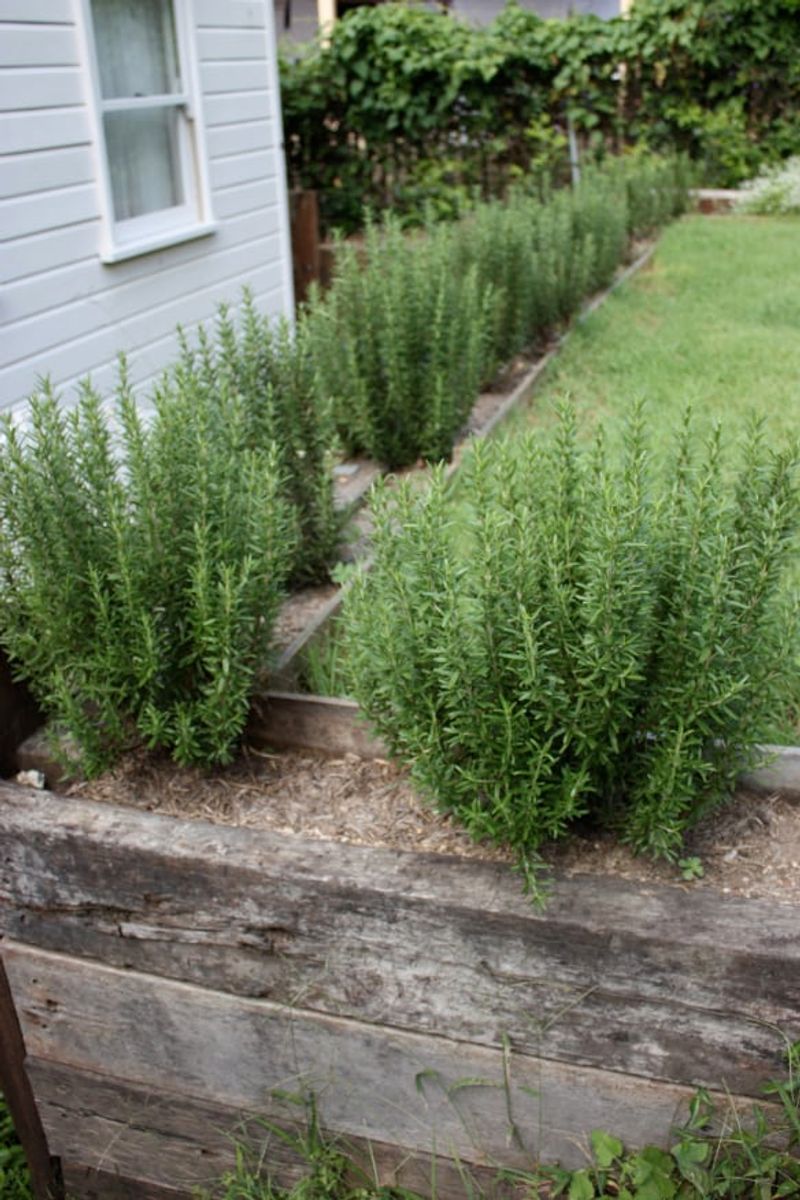
Your holiday tree doesn’t have to stay small forever. In much of Texas, rosemary grows into a handsome evergreen shrub that can reach three to five feet tall.
Plant it outdoors in spring, after the danger of frost has passed. Pick a spot with full sun and soil that drains quickly.
Raised beds or slopes work wonderfully in areas with heavy clay.
Texas A&M AgriLife Extension often highlights rosemary as a tough, drought-tolerant herb for home landscapes. Once established, it needs little water and rarely bothers with pests.
Bees love its small blue flowers, which often bloom in late winter and spring.
Gardeners in the Panhandle and other colder areas may prefer to keep their tree in a pot. That way, it can come inside during harsh freezes.
Hardy varieties like ‘Arp’ give you the best odds if you try it in the ground there.
You can also keep it potted everywhere and reshape it each fall for the holidays. I can see why so many gardeners love this plan.
One plant gives you fresh herbs for cooking, food for pollinators, and a fragrant little tree, year after year.