How To Harvest Ohio Basil So It Keeps Growing All Summer
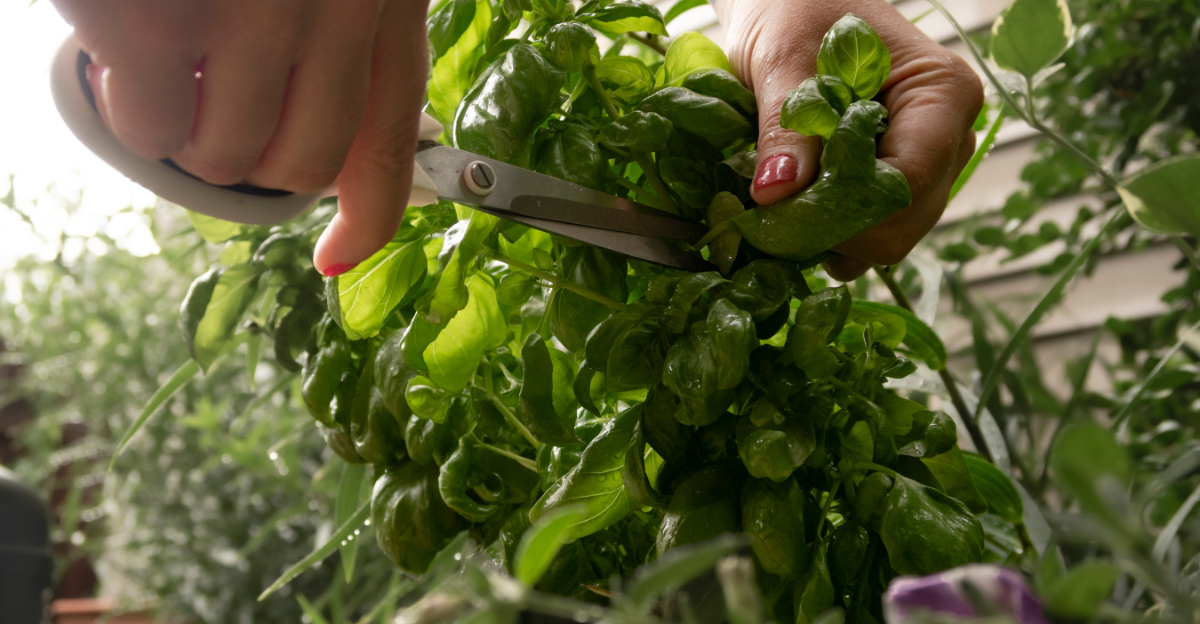
The first basil harvest of summer can decide how much you pick from that plant weeks later. Snip in the wrong place, and your Ohio basil may turn tall, sparse, and far less productive than you hoped.
Make the cut in the right spot, and the plant responds with more stems, more leaves, and a fuller shape that lasts deep into the warm season. That matters in Ohio, where basil has a limited window between spring chill and the first cool nights of fall.
You want every harvest to give you fresh leaves for the kitchen without robbing the plant of its momentum. The trick is not to take less.
It is to take from the right part of the plant at the right time. Once you know where your scissors should land, each harvest can help set up the next one instead of quietly shortening your basil season.
1. Cut Above A Leaf Node For Double Growth
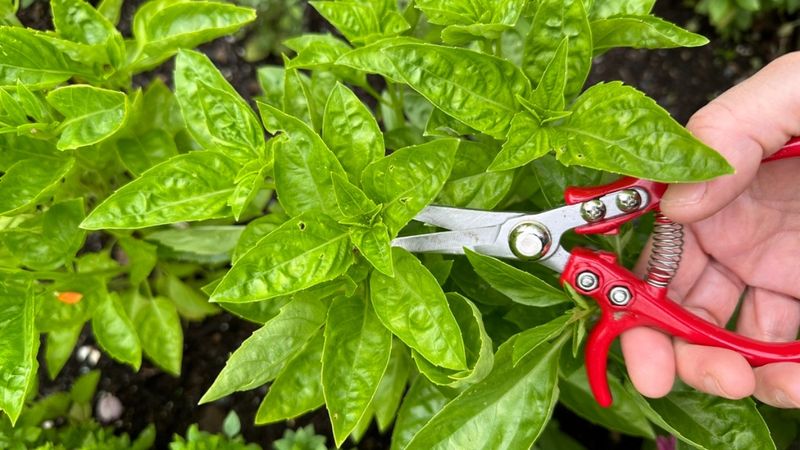
Every basil stem has small junctions where two leaves grow outward from opposite sides. That junction is called a leaf node, and it is the most important spot to know before you ever make a cut.
Placed just above that point, a clean cut removes the stem tip while leaving both leaf attachments intact below the cut.
New shoots can then emerge from both sides of that node. Ohio State University Extension supports cutting basil just above the point where two leaves meet the stem.
New growth can then emerge from both sides of that junction. Over several weeks of harvesting this way, a single plant can develop many more stems than it started with.
A plant harvested randomly by pulling individual leaves from different spots tends to stay narrow. Repeated cuts above leaf nodes create a wider, bushier shape with more harvestable tips.
Each well-placed cut sets up the next harvest by encouraging branching lower on the plant. Gardeners who learn this spot and use it consistently tend to get far more usable growth across the whole season.
Finding the right node is simple once you know what to look for. Run a finger down the stem until you feel two leaves branching outward, then place your cut just a quarter inch above that spot.
2. Take Stems Instead Of Single Leaves
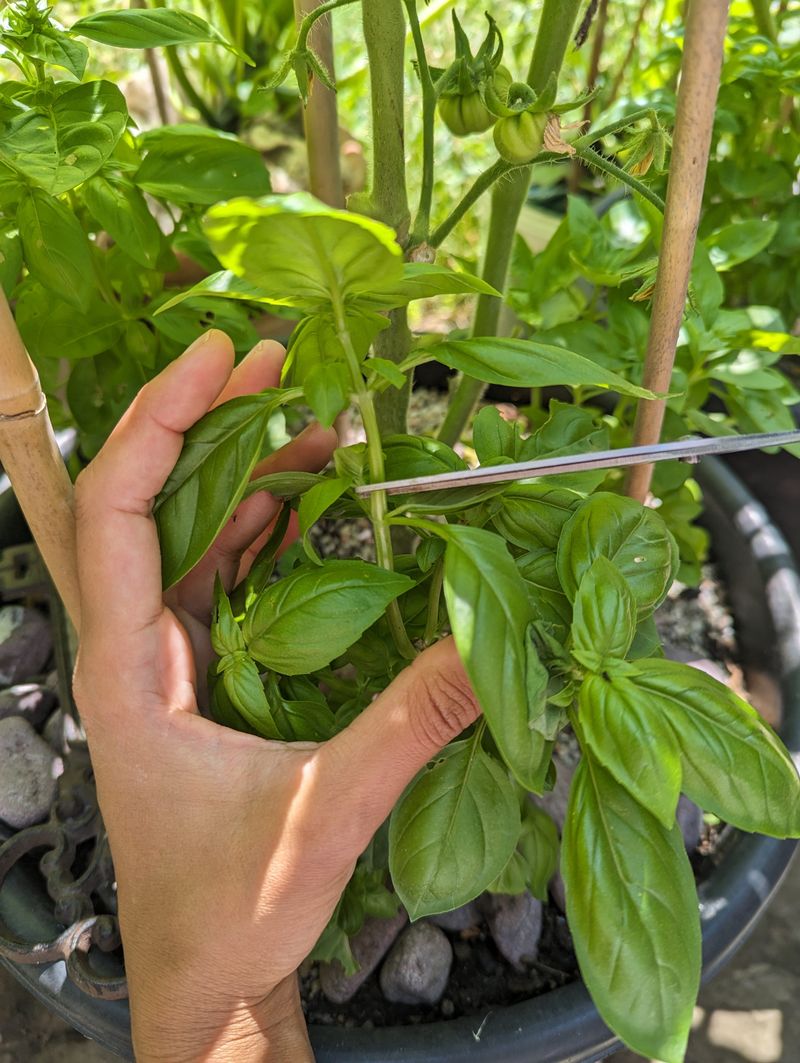
Reaching for a single large leaf is a common instinct, especially when a recipe only calls for a small amount. Picking one leaf here and one there does not harm the plant outright, but it also does not encourage the kind of branching that keeps a basil plant productive all season.
A better habit is to harvest short stem sections rather than isolated leaves.
Ohio State University Extension recommends cutting where two leaves meet the stem. Removing a stem tip this way sends energy toward the lower nodes, which then push out new side shoots.
Each new shoot becomes a future harvest point, so the plant gradually fills out instead of stretching upward on a few bare stems.
Your Ohio Garden Changes Every Week. Your Plan Should Too.
Gardening in Ohio changes quickly throughout the season. Every Friday you’ll receive a simple weekly plan showing exactly what to plant, prune, fertilize, harvest, and protect so you never miss the right timing.
A practical approach is to select a stem that has grown four to six inches above its nearest leaf node pair, then cut just above that lower node. You end up with a useful sprig of several leaves for the kitchen, and the plant gains two new growing tips where one used to be.
Picking individual leaves from the same stem repeatedly can strip it bare without triggering that branching response. Stem harvesting is more productive for keeping basil generous through summer.
Picking a single leaf when you only need one is still perfectly fine on occasion.
3. Harvest Often For A Bushier Plant
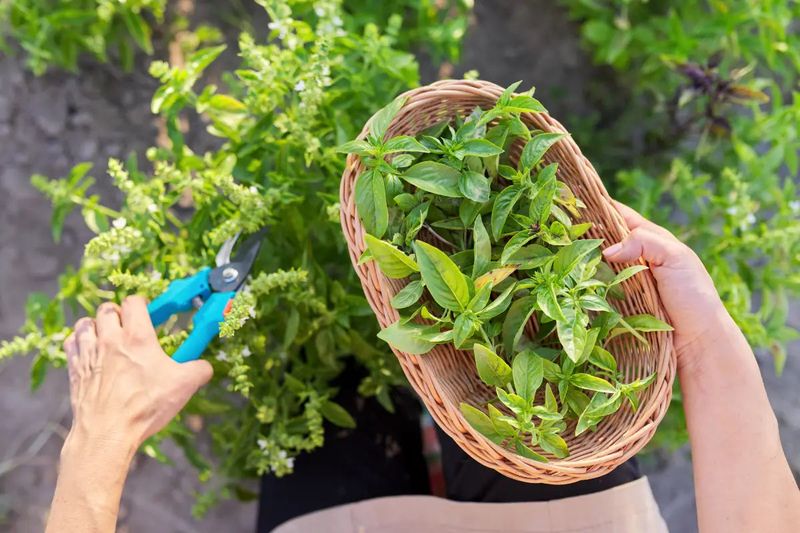
Frequent harvesting might seem like it would exhaust a basil plant, but the opposite tends to be true. Cutting the growing tips regularly signals the plant to push out new side shoots rather than channel all its energy into one tall central stem.
Ohio State University Extension supports frequent harvesting of basil as a way to encourage continued growth and delay flowering.
A plant that goes several weeks without any harvesting can grow tall and leggy, with most of its energy concentrated in a single upward shoot.
Routine tip harvesting keeps multiple growing points active at once, which means more stems, more leaves, and more flavor-ready growth to work with.
Basil growth speed varies with temperature, sunlight, soil moisture, container size, and plant vigor. That means no single harvesting schedule fits every garden.
Gardeners do not need to wait until a plant looks enormous before making their first harvest. Even young plants benefit from early tip pinching once they have developed several sets of leaves.
That first small harvest encourages branching right from the start. Checking the plant every week or so and removing tips that have grown a few inches above the nearest node is a reasonable approach for most Ohio summers.
Regular attention keeps the plant compact, productive, and much easier to manage as the season moves forward.
4. Leave One-Third Behind After Bigger Cuts
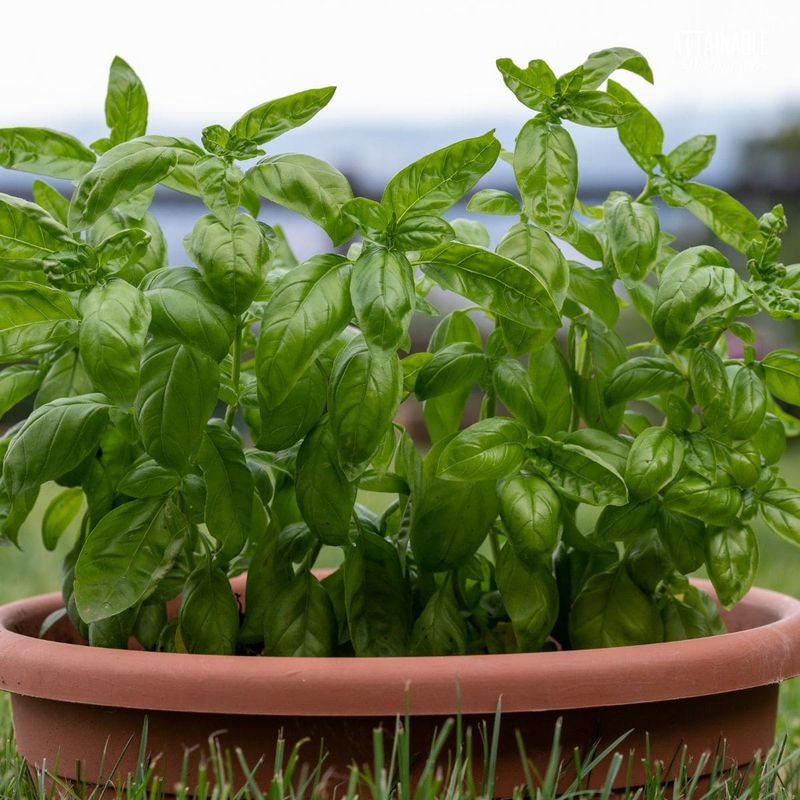
Sometimes a recipe calls for more than a few sprigs. Making pesto, preserving basil for winter, or prepping a large batch of sauce can mean needing a generous harvest all at once.
Ohio State University Extension indicates that up to two-thirds of a basil plant can be harvested at once. That gives gardeners plenty of flexibility during larger harvests.
Practically speaking, that means if a plant has twelve inches of leafy growth above the soil, removing up to eight inches is within a reasonable range. Healthy stems and foliage left behind give the plant what it needs to recover and keep producing.
Taking nearly the entire plant at once can slow recovery significantly, so leaving at least one-third of the plant intact is a smart minimum for any larger harvest.
Smaller, routine harvests do not need to come anywhere close to that two-thirds maximum. Most weekly tip sessions remove only a small fraction of the plant’s total growth.
The two-thirds figure is useful to know for those bigger moments when you need a lot at once. Cutting above active leaf nodes even during a large harvest helps speed recovery, because those lower nodes are already positioned to push out new shoots.
Keeping that habit in place during both small and large harvests is one of the most reliable ways to maintain a productive plant through the whole season.
5. Pinch Flower Buds Before They Open
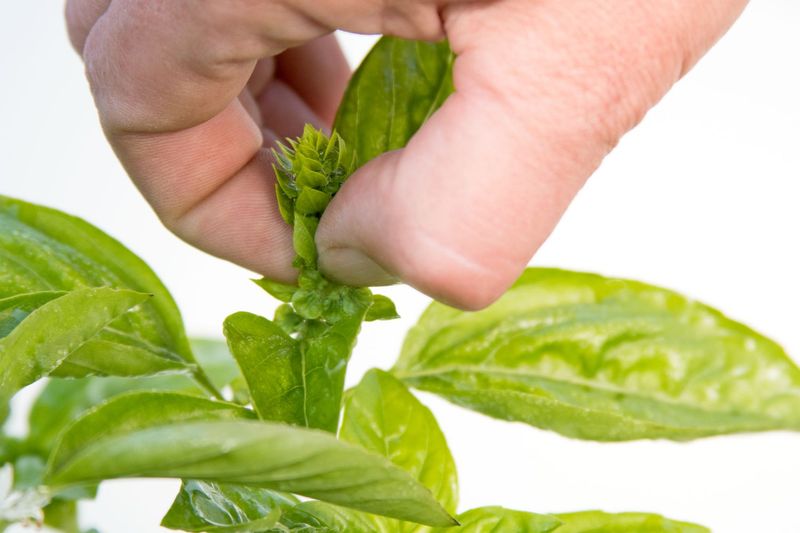
Spotting a small cluster of tiny buds at the very top of a basil stem is a sign the plant is shifting gears. Basil is an annual, meaning it completes its full life cycle in one growing season.
Once it senses the right conditions, it begins directing energy toward flowering and eventually seed production rather than leaf growth.
Ohio State University Extension and other university Extension resources recommend removing flower buds before they open when continued leaf production is the goal.
Pinching off those bud clusters early redirects the plant’s energy back toward vegetative growth.
Letting a few flowers open does not immediately stop leaf production. However, unchecked flowering can gradually reduce the amount of harvestable leaf growth over time.
Flower-bud removal and regular stem harvesting work well together. Frequent stem-tip harvesting often removes developing buds before they become visible.
That is one reason routine harvesting helps delay flowering naturally. Checking the tops of stems during each harvest session and pinching off any bud clusters you find is a quick and effective habit.
Gardeners who stay consistent with this practice tend to enjoy more productive leaf growth deeper into summer. The buds are easy to spot once you know what to look for, and removing them takes only a few seconds per plant.
6. Morning Cuts Capture The Best Flavor
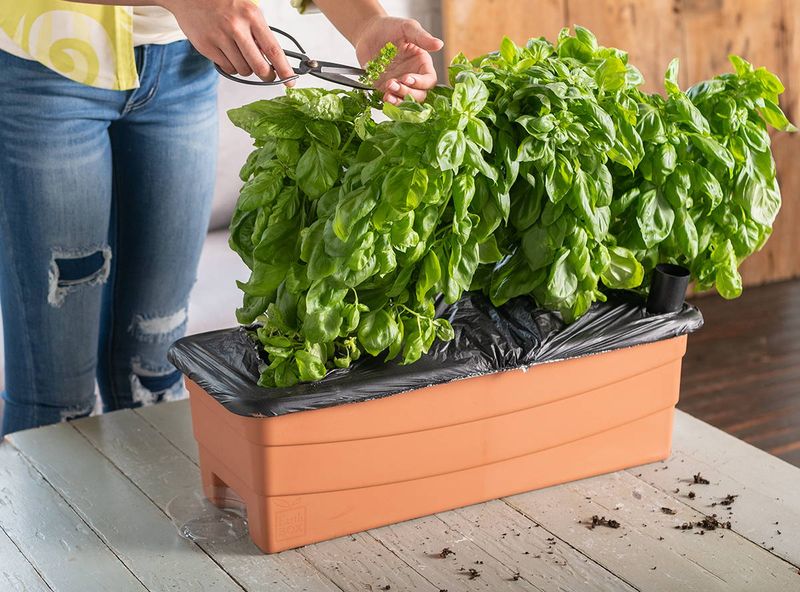
There is something noticeably bright and aromatic about freshly cut basil gathered in the morning. University Extension resources recommend harvesting herbs after the dew has dried while the day is still cool.
This timing tends to preserve strong flavor in the leaves. A morning harvest, once any surface moisture has evaporated, is a practical approach that many experienced herb gardeners prefer.
Harvesting later in the day is not going to ruin the flavor, but morning is especially useful when collecting a larger amount for immediate kitchen use. The leaves are firm, fragrant, and at their best for dishes that rely on fresh basil’s character.
Clean cutting tools or clean hands help keep each cut smooth and reduce unnecessary damage to the stem.
Morning harvesting also pairs well with a quick visual check of the whole plant. Scanning for new flower bud clusters, checking for signs of stress, and noting which stems are ready for their next cut all take only a minute or two.
Building that brief inspection into a morning routine keeps small issues from becoming bigger problems later in the season. Freshly harvested basil is especially satisfying in caprese salad, pasta, or herb oil.
The experience is even better when the leaves come straight from the garden at peak freshness.
7. Weekly Tip Harvests Keep New Shoots Coming
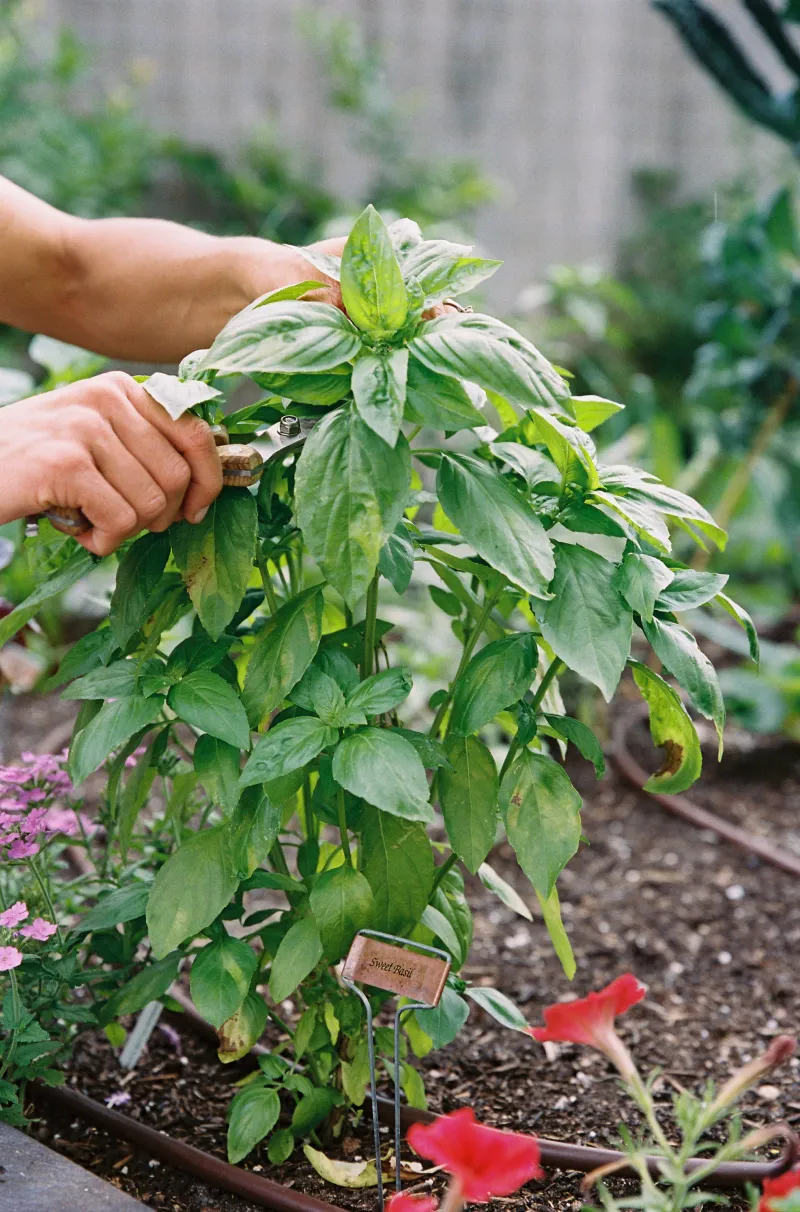
Check your basil a few days after harvesting and you may find fresh shoots emerging from the lower nodes. Seeing that new growth is one of summer gardening’s most satisfying moments.
Those new shoots are the direct result of earlier cuts made above leaf nodes, and they represent the next round of harvestable growth. Checking in on plants regularly keeps that cycle moving.
Extension guidance supports regular tip harvesting as a way to maintain productive growth and keep multiple growing points active throughout the season.
A tip harvest means removing just the top portion of a stem, typically a few inches, to expose the node below and encourage branching from that point.
Plants in warm, sunny conditions with consistent moisture may need attention more frequently than slower-growing plants in shadier spots.
Rigid weekly schedules do not work for every garden, because growth rate depends on weather, soil conditions, container size, and plant health.
A better approach is to check the plants every several days and harvest any tips that have grown a few inches above the nearest node pair.
Staying ahead of the growth prevents stems from stretching too long between harvests, which can make the plant harder to manage and more likely to push toward flowering.
Small, steady harvests keep the plant compact and productive far longer than occasional large cuts spaced weeks apart.
8. Make The Big Harvest Before Flowering Takes Over
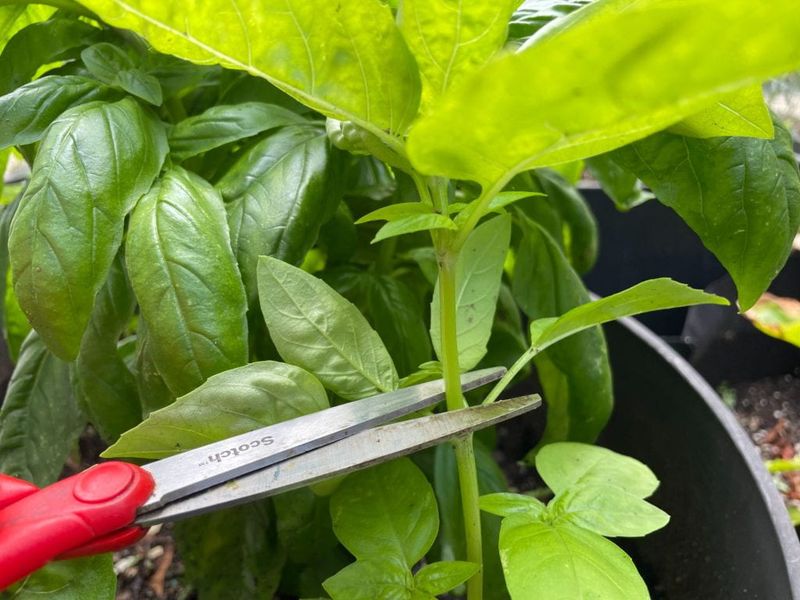
No matter how carefully a gardener harvests and pinches throughout the season, there comes a point when basil pushes hard toward flowering and seed production. Consistent harvesting can extend basil’s productive leaf-growing period.
But basil is an annual, and eventually its natural drive to complete its life cycle becomes difficult to hold back. Ohio State University Extension notes that basil should be harvested before flowering and seed production take over.
Recognizing that moment is useful. When flower buds appear faster than they can be pinched, and new leaf growth slows noticeably, a larger harvest makes sense.
A generous cut at that stage can capture the remaining quality foliage. Keep it within the two-thirds guideline before the plant’s energy shifts fully toward reproduction.
Basil is also sensitive to cold temperatures, and the approach of cooler fall weather in the region can further speed up that transition.
Making that larger harvest while the leaves are still in good shape is a practical way to end the season well. Cutting above leaf nodes even during this final session is worth doing, because some plants do push out a bit more growth afterward.
The same habits that worked all summer also improve the final harvest. Keep cutting above nodes, harvesting often, and staying ahead of flower buds.
Consistent practice throughout the season is what builds a plant worth harvesting from start to finish.