Changing Drainage In Your Ohio Yard Could Cost You, Here Is What To Know
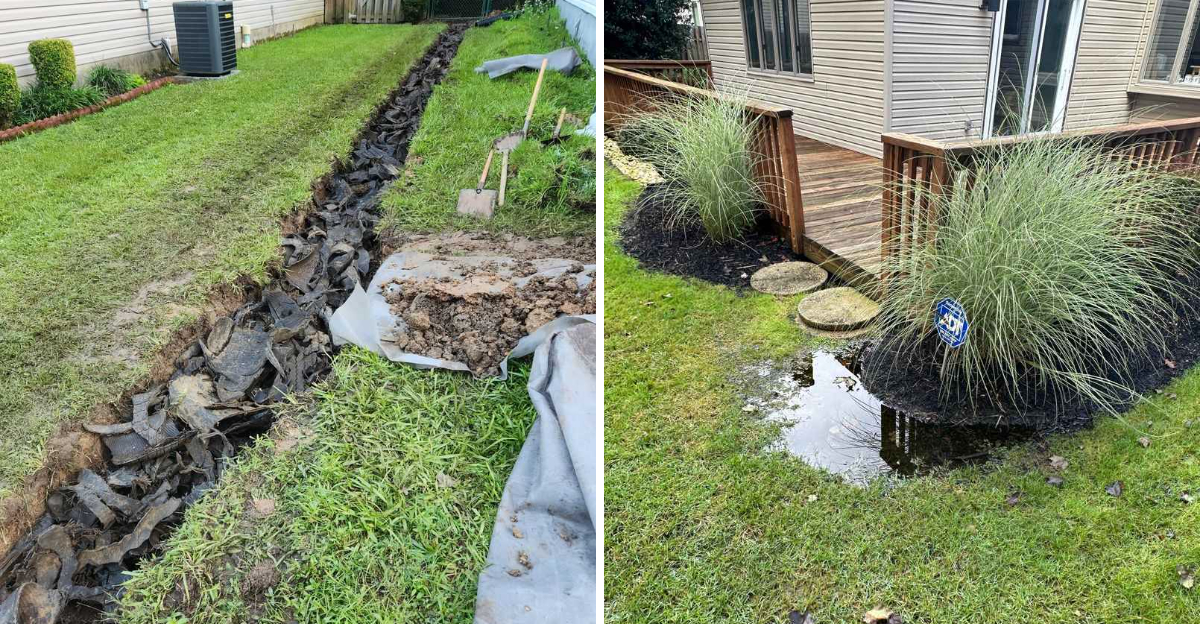
Many Ohio homeowners assume the water in their yard is their business.
Their property. Their lawn. Their drainage problem to solve however they see fit.
That assumption holds up fine until the neighbor’s basement floods. Until the permit violation notice arrives. Until the contractor realizes the French drain outlet was installed somewhere it was never allowed to be.
Have you ever made a drainage change in your yard without checking whether it was allowed?
Many Ohio homeowners have. Some of them had no idea there were rules to check in the first place.
The regulations around stormwater management in Ohio are more specific than most people realize. They vary by municipality, involve multiple agencies, and carry real penalties when ignored.
None of this means yard drainage is impossible to improve. It means the improvement has to be done in the right order, starting with the right information.
Eight things every Ohio homeowner should understand before moving a single shovel of dirt.
1. Know Local Permits Before Moving Water
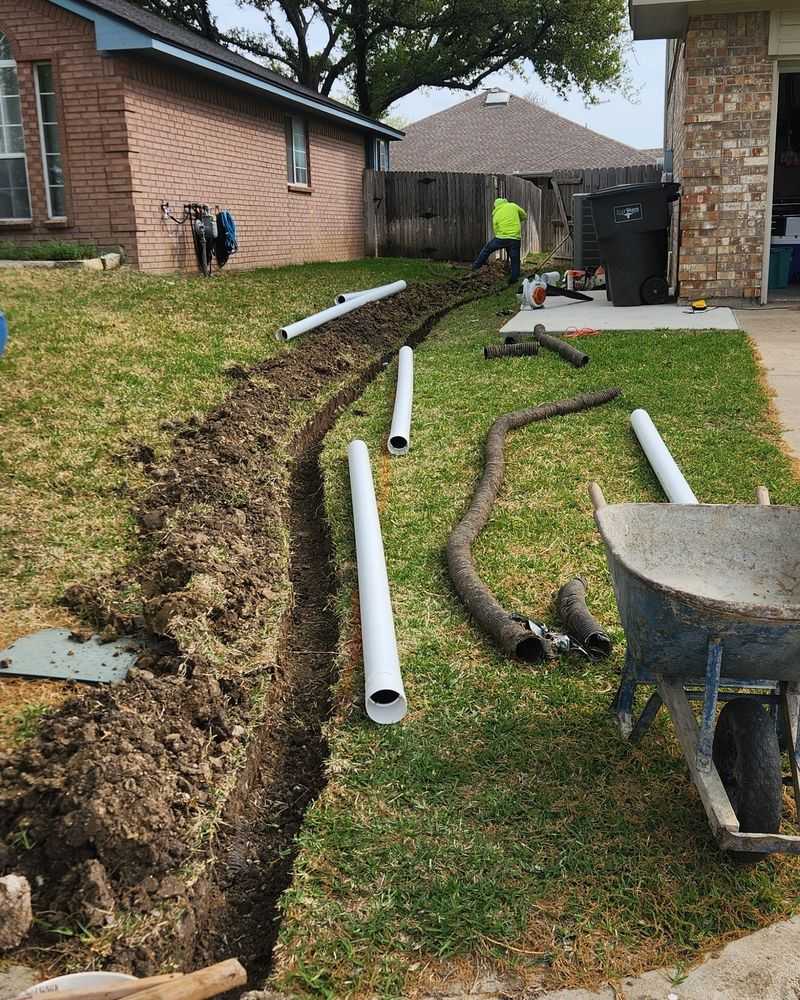
Many Ohio homeowners assume that because a yard is private property, the water in it can be managed any way the owner sees fit. That assumption gets expensive quickly when the permit notice arrives after the work is already done.
Redirecting stormwater in Ohio often requires a permit from the local municipality, county engineer, or Ohio EPA depending on the project scale.
Requirements vary significantly across the state. A small township may have minimal regulations while Columbus, Cleveland, and Cincinnati operate under detailed stormwater management codes with real enforcement behind them.
Fines for unpermitted drainage work can range from a few hundred to several thousand dollars. Restoration of original grading at the homeowner’s expense is also a common requirement when work proceeds without approval.
The right first step is a phone call to your county engineer or city planning office before any digging begins. Checking with your local Soil and Water Conservation District is another reliable path to understanding what triggers a permit in your specific area.
Some projects require nothing. Installing a small rain barrel, for example, typically needs no formal approval. But grading, trenching, and rerouting downspouts toward a street or drainage ditch frequently do.
Getting the paperwork right before the project starts costs a phone call and possibly some waiting time. Getting it wrong after the project finishes costs considerably more.
Is a quick call to the county engineer the most exciting part of a yard project? No. Is it the cheapest part? Almost certainly.
2. Direct Downspouts Safely Away From Neighbors
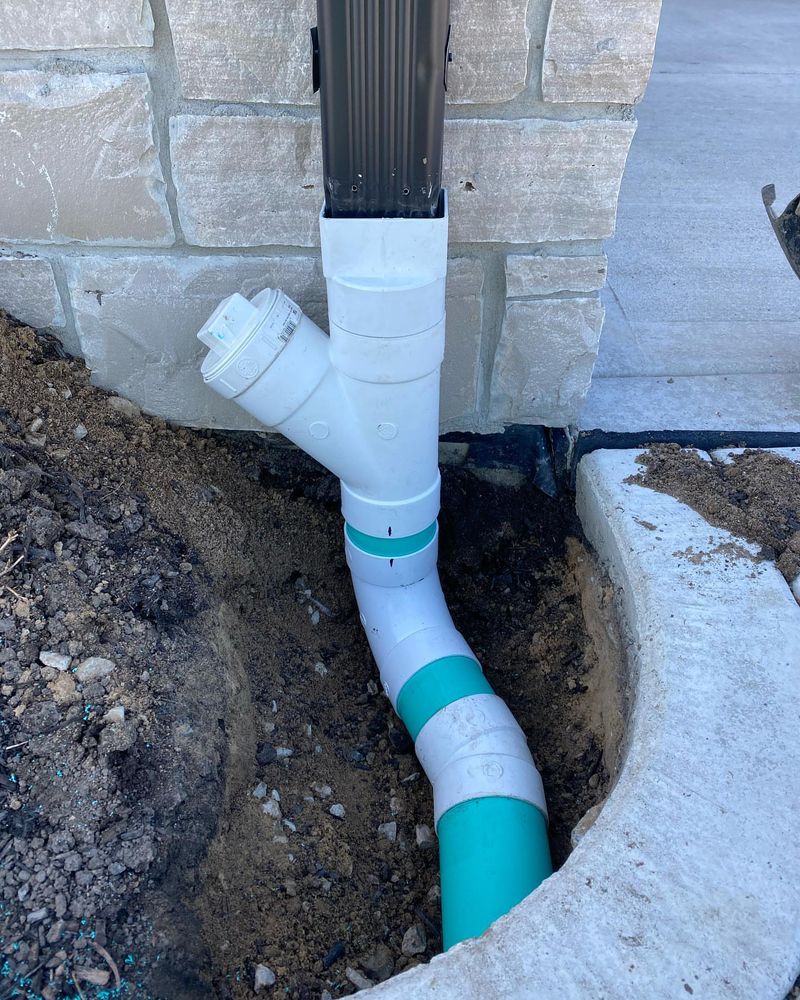
Roof water moves in large volumes and it moves fast. A single inch of rain falling on a two-thousand-square-foot roof produces more than twelve hundred gallons of runoff.
When that volume exits a downspout pointed toward a neighboring property, it becomes someone else’s problem at a rate that generates genuine disputes.
Ohio law applies what is called the common enemy doctrine to surface water, which historically gave property owners broad rights to defend against water flowing onto their land.
Your Ohio Garden Changes Every Week. Your Plan Should Too.
Gardening in Ohio changes quickly throughout the season. Every Friday you’ll receive a simple weekly plan showing exactly what to plant, prune, fertilize, harvest, and protect so you never miss the right timing.
Courts have increasingly sided with neighbors who can demonstrate that deliberate drainage changes caused flooding or property damage on their side of the line.
Concentrated roof runoff directed onto an adjacent lot can create civil liability, particularly when it damages foundations, landscaping, or structures.
The practical fix is usually straightforward. Downspout extensions, flexible diverters, and buried discharge pipes guide water away from property lines and toward permeable areas of your own yard.
Directing downspout discharge at least ten feet from your foundation and away from neighboring structures reduces both the risk to your neighbor and the legal exposure to you.
Splash blocks slow water as it exits the spout and reduce erosion near the discharge point. Pairing a downspout extension with a rain barrel captures water for later use while reducing the immediate runoff volume heading toward the property line.
Small adjustments to downspout positioning prevent large arguments with the people next door.
The water does not know where your property ends. Your neighbor definitely does.
3. Use Swales To Manage Stormwater
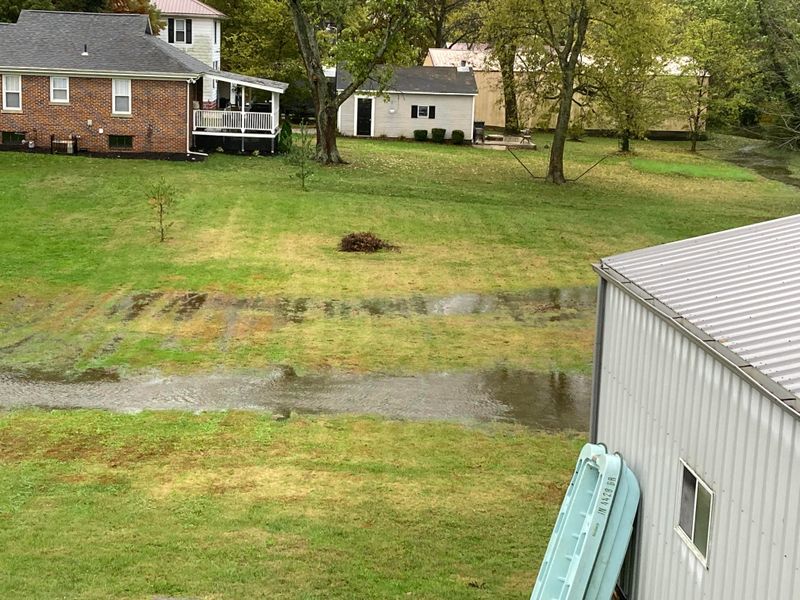
A swale is a shallow, vegetated channel that slows water, spreads it out, and gives it time to soak into the ground rather than racing across the yard toward a street, storm drain, or neighboring basement.
Ohio’s relatively flat terrain in the central and western parts of the state makes swales particularly useful.
Without them, even moderate rainfall creates sheet flow that erodes topsoil, pools in low spots, and overwhelms drainage systems designed for smaller volumes.
A well-designed swale directs water along a controlled path while filtering sediment and pollutants along the way.
The grade should be gentle, typically between one and five percent, keeping water moving without causing erosion.
Dense turf, native grasses, or low-growing groundcovers stabilize the soil and improve infiltration. Rocks or check dams placed at intervals slow the flow in steeper sections.
Before digging, confirm that the swale outlet connects to an appropriate discharge point. Options include a storm drain, detention area, or natural watercourse where discharge is permitted.
Sending swale water onto a neighbor’s property or toward a public road without authorization creates the exact problem the swale was meant to solve.
Planning the full path of the water before breaking ground is not optional. It is the step that determines whether the swale functions as designed or simply relocates the flooding to a different address.
A swale is elegant in its simplicity. It moves water gently and lets the ground do the rest. Does your yard have one? It might benefit from it.
4. Install French Drains The Right Way
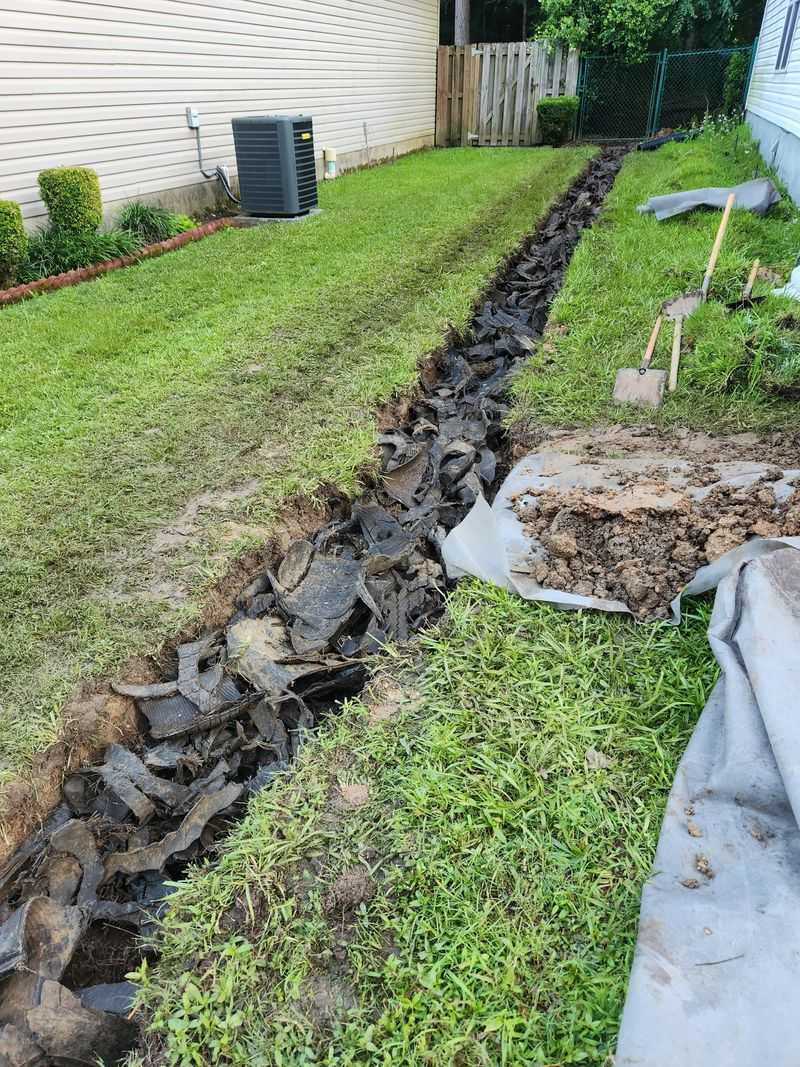
French drains are among the most popular drainage solutions for waterlogged Ohio yards, and for good reason.
They are relatively affordable, effective at relieving subsurface moisture, and manageable as a DIY project for many homeowners. The outlet location is where most installations run into serious problems.
The concept is straightforward. A perforated pipe wrapped in filter fabric sits inside a gravel-filled trench, collecting groundwater and directing it toward a safe discharge point.
Where that discharge point is located determines whether the project solves a drainage problem or creates a legal one.
Discharging into a neighbor’s yard, a protected wetland, or a public ditch without permission can trigger fines or legal action regardless of how well the drain itself is constructed.
Outlets should connect to an approved stormwater system, a dry well on your own property, or a natural watercourse where discharge is explicitly permitted.
Before any digging begins, call 811 to have underground utilities marked. Ohio law requires this step before excavation, and skipping it risks contact with gas lines, water mains, or buried cables.
Depth and slope affect long-term function. A minimum slope of approximately one percent keeps water moving through the pipe without stagnating.
Gravel size, fabric type, and pipe diameter all influence how long the system performs before maintenance is needed.
A French drain installed correctly is a quiet, reliable solution that works for years without much attention.
Installed incorrectly, it is a very expensive way to make a neighbor angry
5. Check Soil Slope Before Digging
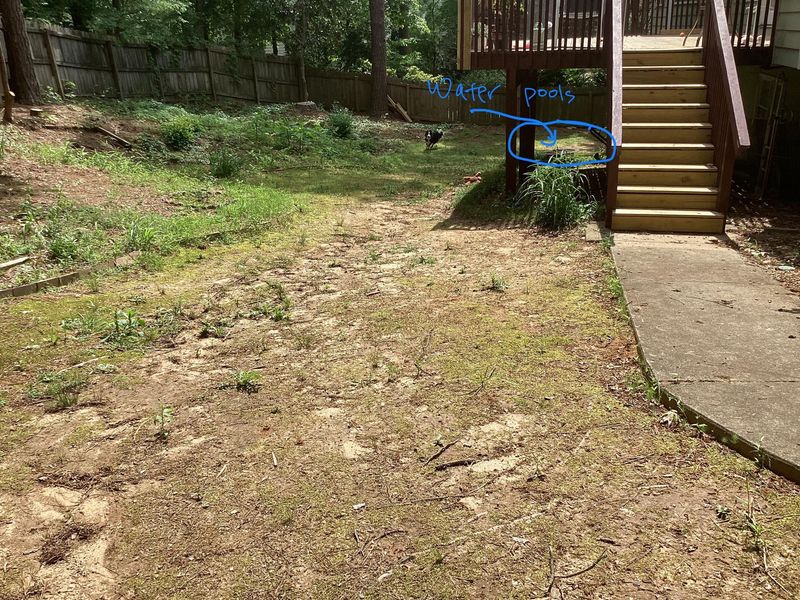
Soil grade is the factor behind most residential drainage problems that no amount of pipes or plants can fully compensate for. Water follows gravity without exception.
When a yard slopes in the wrong direction, the drainage infrastructure on top of it is fighting a permanent uphill battle.
The foundational guideline is that soil should slope away from a home’s foundation at a rate of at least six inches over the first ten feet.
This keeps water from pooling against the house and finding pathways into basements or crawl spaces. Beyond that zone, the slope should continue directing water toward a safe outlet rather than toward a neighbor’s property or an area prone to pooling.
Checking slope does not require expensive equipment. A line level, a long string, and a tape measure provide a reasonably accurate picture of how your yard drains.
Laser levels offer more precision for larger projects, and hiring a surveyor is worth the cost when significant regrading is involved.
Regrading a yard has ripple effects. Moving soil changes where water goes across the entire drainage picture, not just the section being addressed.
Ohio homeowners who regrade without mapping the full drainage path sometimes push water toward a neighbor’s foundation or into a previously dry area.
Mapping your slope before touching the ground prevents those outcomes.
Gravity is not negotiable. Understanding which direction it is pulling the water in your yard is the starting point for every drainage decision that follows.
6. Use Rain Gardens To Absorb Excess Water

Rain gardens are one of the most practical and visually appealing solutions available to Ohio homeowners dealing with excess water.
A shallow planted depression collects runoff from roofs, driveways, or lawns and allows it to soak slowly into the ground rather than rushing off the property.
A properly built rain garden drains completely within twenty-four to forty-eight hours, which eliminates the standing water conditions that support mosquito breeding.
Native plant species handle rain garden conditions particularly well because they are adapted to both wet and dry cycles.
Swamp milkweed, blue flag iris, cardinal flower, and black-eyed Susan manage periodic flooding and summer dryness without requiring significant maintenance.
Their deep root systems improve soil structure and infiltration over time, which means the garden performs better each season rather than declining.
Placement determines function. A rain garden should sit at least ten feet from the foundation and away from septic systems and utility lines.
A natural low spot where water already tends to collect is the ideal location, as long as that area does not remain saturated for more than a couple of days after rain. Clay-heavy or compacted soils may need amendment with compost to support adequate drainage.
The environmental benefits extend beyond the property line. Rain gardens filter pollutants before water reaches groundwater or streams, support pollinators, and reduce pressure on municipal storm systems.
A drainage problem becomes a pollinator habitat and a neighborhood conversation starter. Not bad for a shallow bowl and a few native plants.
7. Monitor Runoff During Heavy Storms
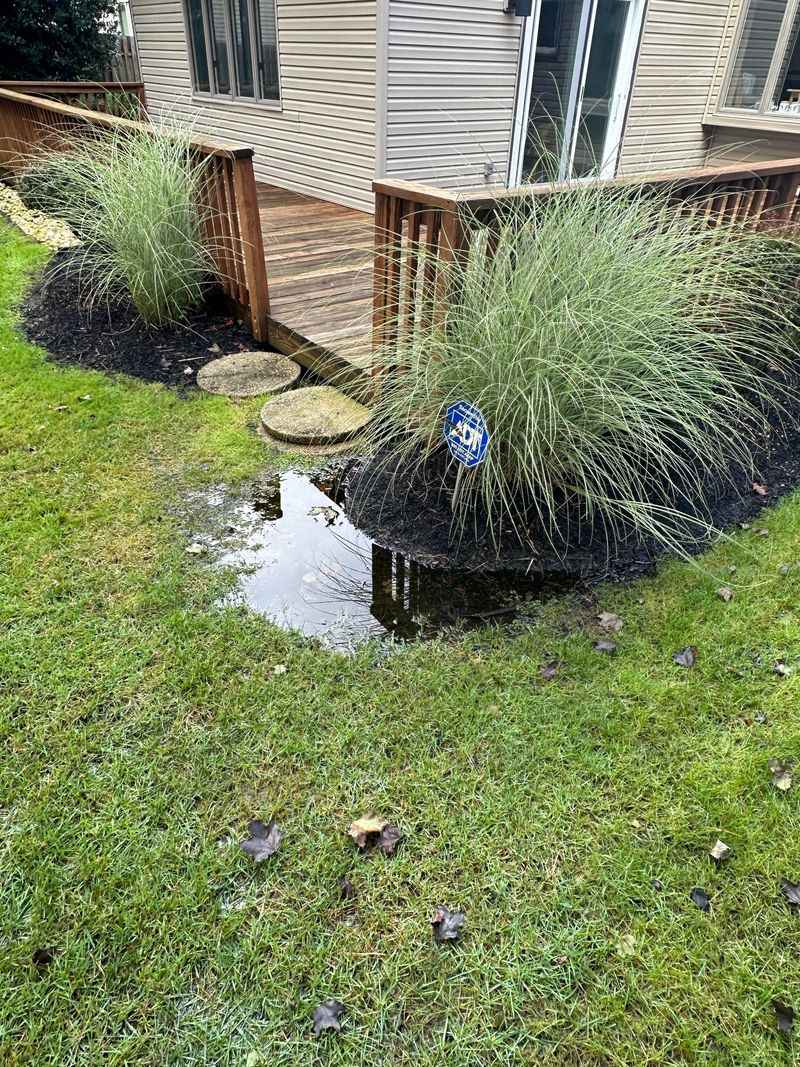
Some homeowners install a drainage solution once and assume it works indefinitely. They check it on a dry afternoon, see nothing alarming, and move on.
The drainage system’s actual performance happens during rainfall, which is the only time the relevant information is available.
Walking a property during or immediately after a heavy rainstorm reveals things that no amount of dry inspection can show.
Where water pools. Where it moves fastest. Where it exits the property and where it ends up after that. Whether downspouts are handling volume or overflowing. Whether a swale or rain garden is filling and draining as intended.
These observations are worth documenting. Photos or a simple sketch taken across multiple storm events reveal patterns that single observations miss.
A spot that holds water for two hours after a light rain may hold it for three days after a heavy one, creating conditions for root stress, mosquito habitat, or foundation moisture issues that develop gradually.
Ohio’s rainfall patterns have shifted toward heavier, less frequent downpours over recent years. A drainage system adequate for conditions a decade ago may no longer handle current storm volumes.
Seasonal monitoring, particularly in spring when soil is already saturated from snowmelt, provides the data needed to make adjustments before problems escalate.
A drainage issue caught during a storm costs a note in a phone and possibly an afternoon of work to address.
The same issue discovered after a neighbor’s basement floods costs significantly more and involves considerably less friendly conversation.