How To Properly Stake And Support Georgia Perennials That Flop In Summer Heat
Few things are more disappointing than watching a perennial look great in late spring, only to find it leaning, bending, or sprawling across the garden a few weeks later.
One heavy rain, a stretch of summer heat, or a period of rapid growth can completely change the way a plant looks.
Flowers that were standing tall suddenly end up resting on neighboring plants or hanging far outside the space where they belong.
It is a common frustration because the problem often appears just as perennials are reaching their peak. Healthy growth can become too much for stems to support, especially when plants are covered in blooms.
At that point, many gardeners are left wondering whether they should leave the plant alone or try to step in.
Some Georgia perennials are especially prone to flopping during summer, but that does not mean they have to stay that way.
The right support can help plants keep their shape, stay upright, and continue putting on a much better display through the hottest part of the season.
1. Choose The Right Support Before Plants Flop
Waiting until a stem bends is already too late. Choosing the right support before plants flop is the smartest move you can make in a summer garden.
Not every support works for every plant. Bamboo stakes work well for single-stemmed plants like delphiniums.
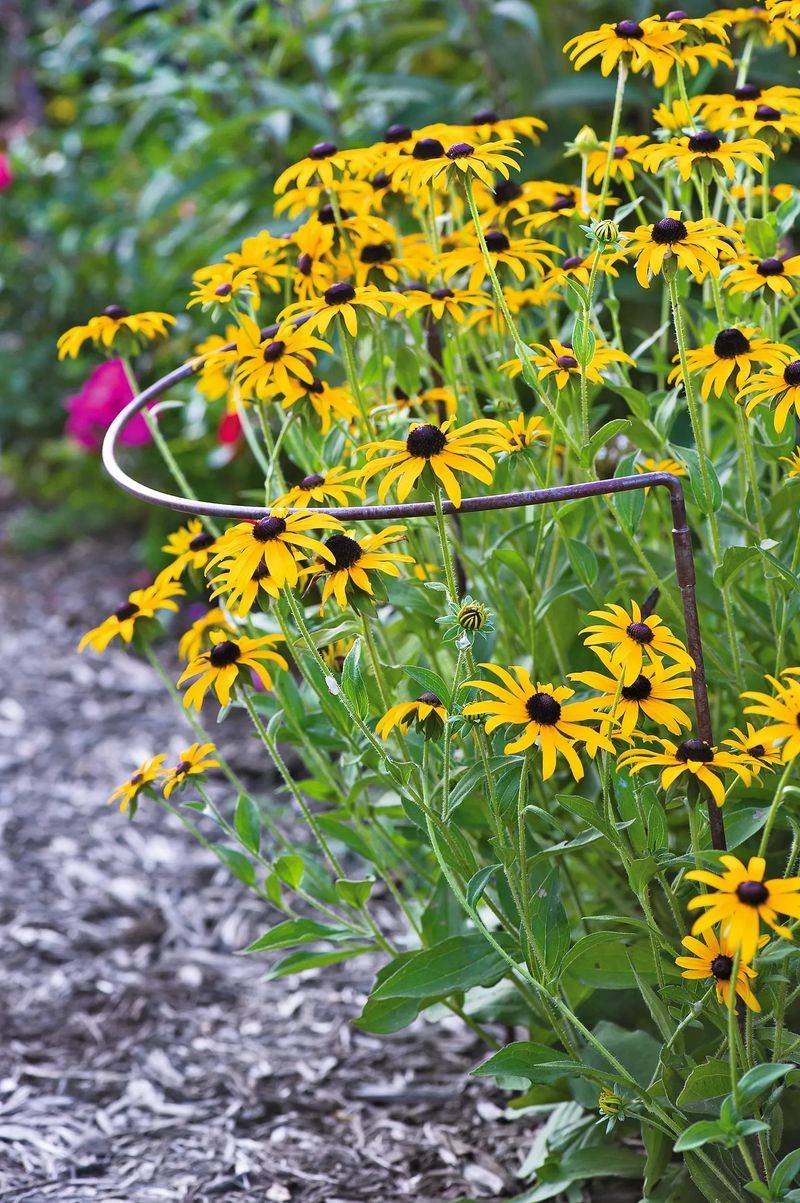
Wire hoops or grow-through grids suit bushy perennials like coneflowers and black-eyed Susans that spread wide as they grow.
Look at last year’s garden notes. Plants that flopped before will flop again.
Plan supports for those spots before new growth gets past six inches tall.
Cage-style supports let stems grow up through the grid naturally. By the time the plant blooms, the support is nearly invisible.
Bamboo and wooden stakes are better for plants with one strong central stem that just needs a little backup.
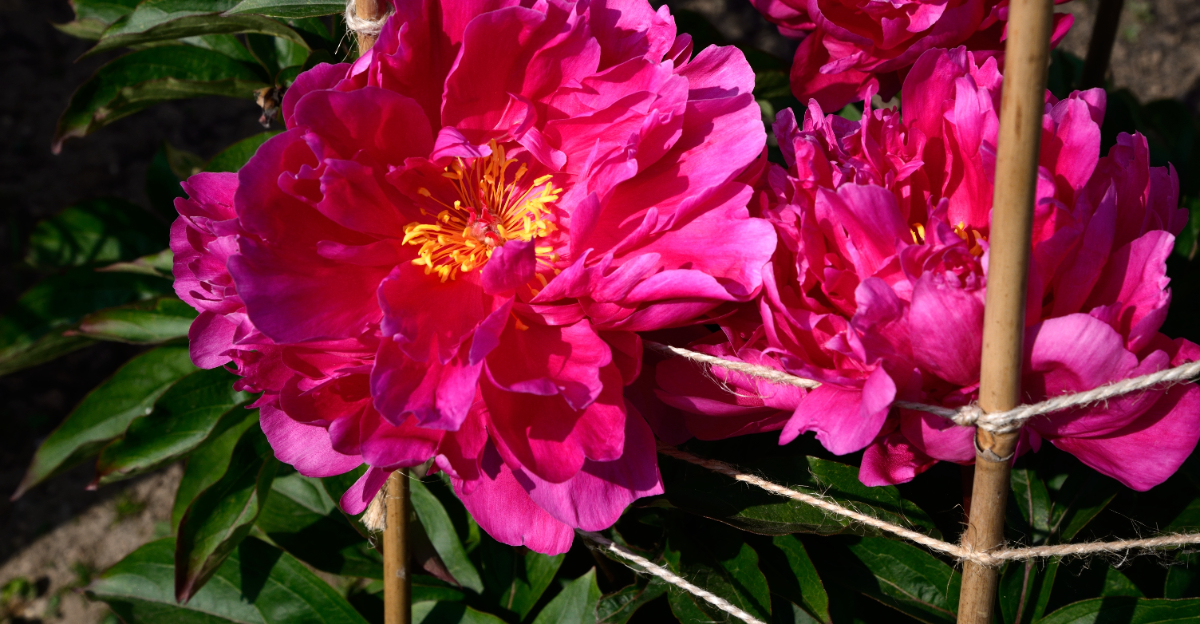
Weight matters too. A heavy bloomer like a peony needs a sturdy ring support, not a flimsy single stake.
Match the support strength to the expected plant size at full bloom.
Cost is worth considering. Wire hoops last for years with basic care.
Bamboo stakes are cheap but may need replacing each season. Investing in quality supports saves time and money over the long run.
2. Install Stakes While Stems Are Still Upright
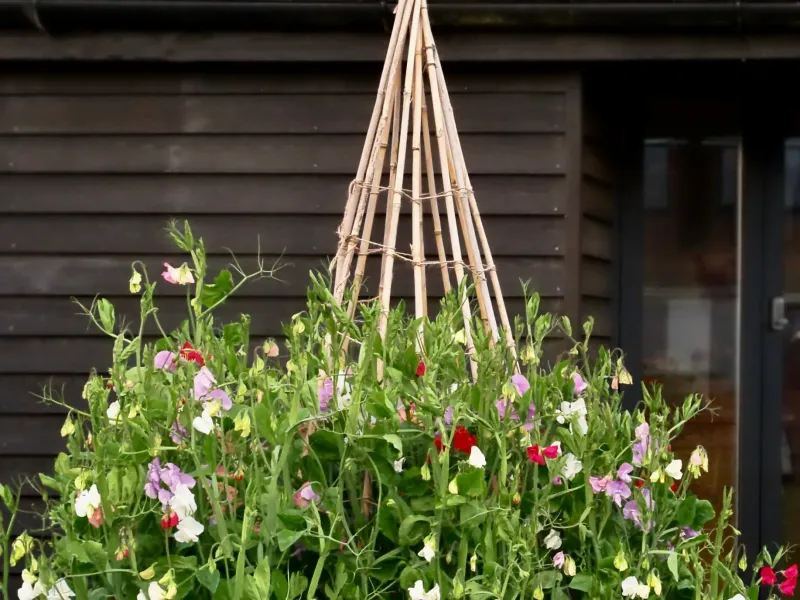
A flopped stem rarely bounces back clean. Catching it early, while stems are still upright, makes all the difference between a quick fix and a permanent lean.
Push stakes into the ground when stems reach about one-third of their expected height. At that stage, roots are active but not yet crowded.
You avoid spearing bulbs or damaging root systems that sit close to the surface.
Angle stakes slightly toward the plant. This keeps pressure even when wind or rain pushes against the stem.
Straight vertical stakes can actually create a pivot point that snaps stems during storms.
Set grow-through supports even earlier, ideally right after the last spring frost. Young stems thread up through the grid on their own.
Your Georgia Garden Changes Every Week. Your Plan Should Too.
Gardening in Georgia changes quickly throughout the season. Every Friday you’ll receive a simple weekly plan showing exactly what to plant, prune, fertilize, harvest, and protect so you never miss the right timing.
By mid-June, the support disappears into the foliage completely.
Mark stake locations with a small flag or ribbon if you install them before foliage fills in. It is easy to forget where you placed them and accidentally yank them out while weeding.
Depth matters a lot. Short stakes wobble and pull free in wet soil.
Push them at least six to eight inches deep depending on plant height. Taller plants need deeper anchoring to handle summer storms.
3. Match Support Types To Plant Size
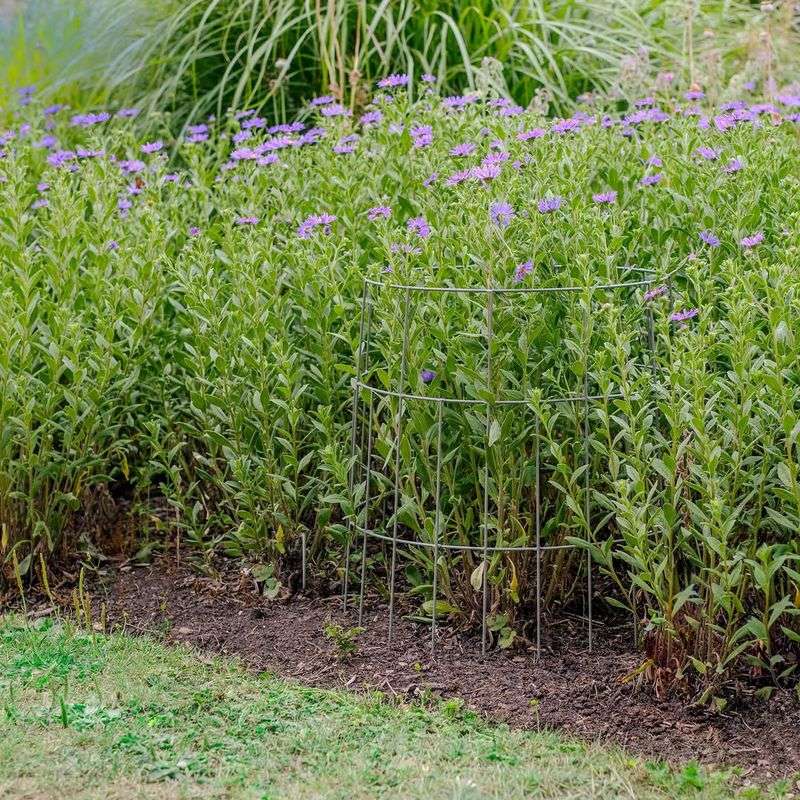
Slapping a tall stake next to a low spreading plant looks awkward and does nothing useful. Support size should match plant size, full stop.
Short perennials under eighteen inches rarely need staking at all. Sturdy little plants like coreopsis or salvia hold themselves up fine.
Focus your energy on taller varieties that are known to lean.
Medium-height plants between two and three feet do well with single bamboo stakes or small link stakes. Link stakes connect end to end and create a flexible boundary that moves with the plant without pinching stems.
Tall perennials over three feet need serious support. Use heavy-gauge wire hoops, tall tomato cages, or multiple stakes with twine strung between them.
A single stake rarely holds a large clump steady through a summer downpour.
Clumping perennials spread wide and need support from the outside in, not just a center stake. Grow-through grids placed early let the whole clump rise through evenly.
Center-only staking causes the plant to bow outward at the edges.
Check mature plant size on the plant tag or seed packet before buying supports. Buying too small wastes money.
Buying too large looks clunky and can actually restrict natural stem movement.
4. Use Soft Ties That Will Not Cut Stems
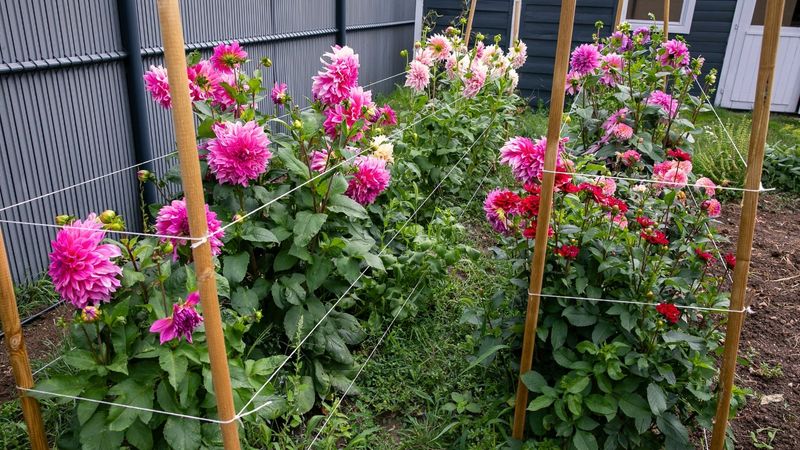
Wire twist ties belong in the kitchen drawer, not the garden. Hard ties cut into stems as plants grow, and that damage invites pests and opens wounds that weaken the plant over time.
Soft ties made from foam, rubber, or stretchy fabric move with the stem. They hold without gripping too tight.
Plants can swell slightly as they grow and the tie simply stretches along with them.
Old nylon stockings work surprisingly well. Cut them into strips and use them just like commercial soft ties.
They are cheap, flexible, and gentle enough even for young stems that are still tender.
Velcro garden tape is another solid option. It sticks to itself, adjusts easily, and can be repositioned without tearing the stem.
Checking ties every two to three weeks lets you loosen anything that starts to look tight.
Always tie in a figure-eight shape between the stem and the stake. This cushions the stem and prevents it from rubbing directly against the hard surface.
Direct contact causes bark abrasion and weakens the stem at the contact point.
Avoid tying too close to a node or bud. Pressure near growth points can stunt new shoots.
Leave at least an inch of clearance above any visible bud when placing a tie.
5. Support Heavy Blooms From Multiple Sides
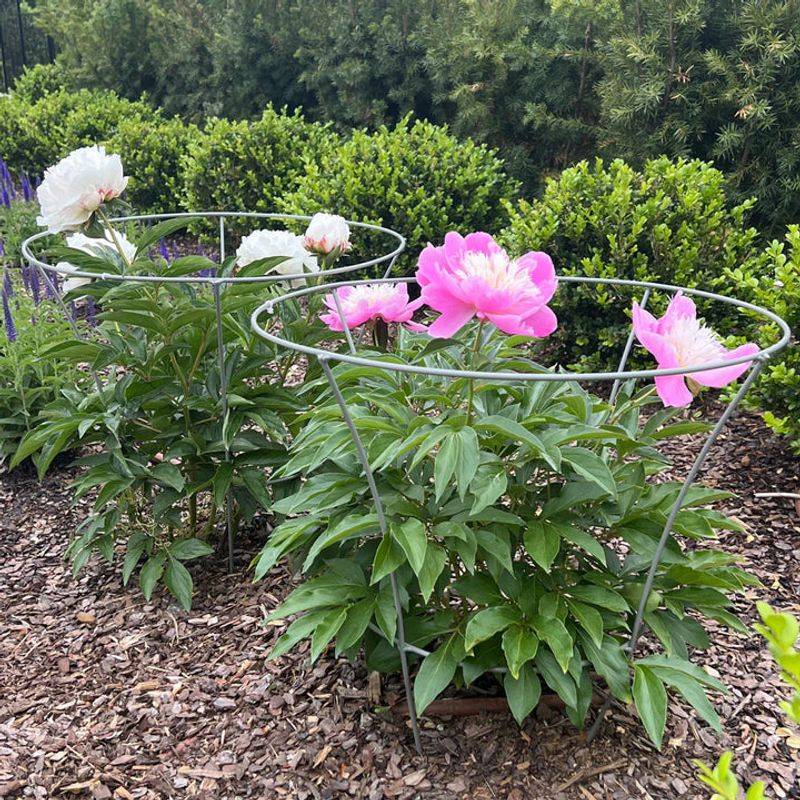
One stake cannot save a plant with a dozen heavy blooms pulling in every direction. Heavy bloomers need support from multiple sides to stay upright through summer.
Peonies are the classic example. Their blooms are enormous and water-soaked after rain.
A single center stake just tips the whole plant sideways. Ring supports that surround the entire clump spread the load evenly.
Place three stakes in a triangle around a heavy bloomer. Run soft twine between all three stakes at two height levels.
This creates a cradle effect that catches stems no matter which direction they lean.
After a heavy rain, blooms can double in weight from trapped water. Check supports the morning after any storm.
Gently shake excess water off blooms before stems get a chance to permanently bend under the load.
Wide perennials like rudbeckia or tall phlox benefit from a second tier of support. Add a higher ring of twine about halfway up the stem height.
This prevents the top third of the plant from flopping even when the base stays firm.
Spacing between stakes matters. Set them far enough apart that they surround the full width of the plant at peak bloom size.
Cramming stakes too close together just bunches the stems without actually supporting the outer ones.
6. Hide Supports Before Foliage Fills In
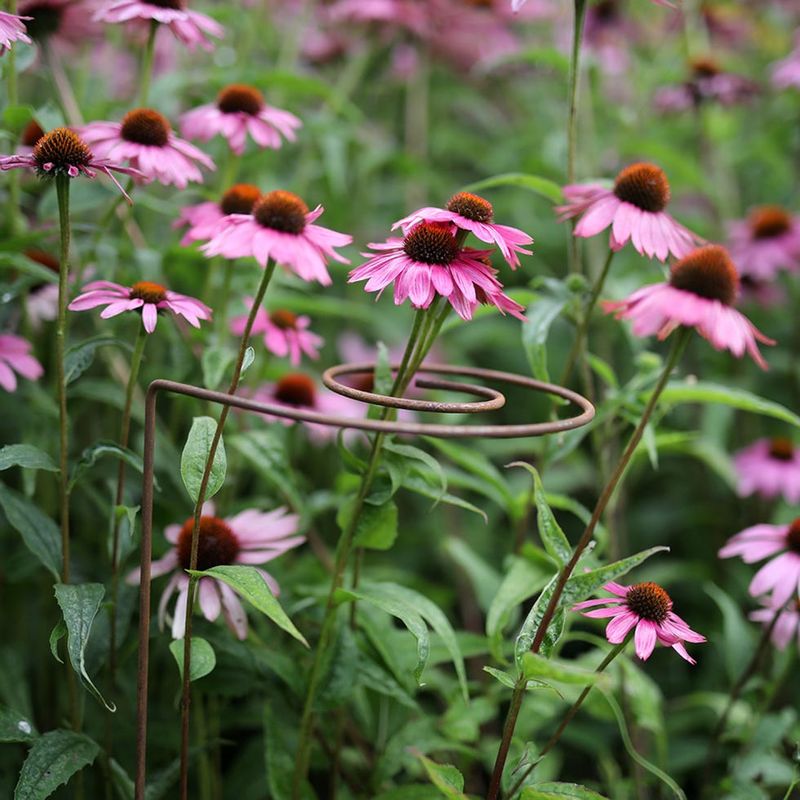
Nothing ruins a beautiful garden photo like a forest of sticks poking above the flowers. Good support work should be nearly invisible by the time plants reach full size.
Green bamboo stakes blend into foliage far better than natural wood or bright metal. Match stake color to the dominant leaf color in your bed.
This one small choice makes a big visual difference from across the yard.
Install supports early enough that foliage grows up and around them naturally. Plants installed when stems are short will cover most of the hardware by mid-summer.
Late installation means hardware stays visible all season.
Wire hoops painted green or brown disappear into plant growth fast. Unpainted silver wire reflects light and draws the eye straight to it.
A quick coat of flat green spray paint takes two minutes and makes a huge difference.
Push stakes to the outer edge of the plant clump rather than the center. Outer placement keeps the stake hidden behind leaves while still providing solid support.
Center stakes often remain visible as a bare pole rising through the foliage.
Mulch around the base of stakes helps them blend at ground level. A visible stake base sticking out of bare soil looks messy even when the upper portion is hidden.
Tuck mulch right up to each stake base.
7. Check Stability After Summer Storms
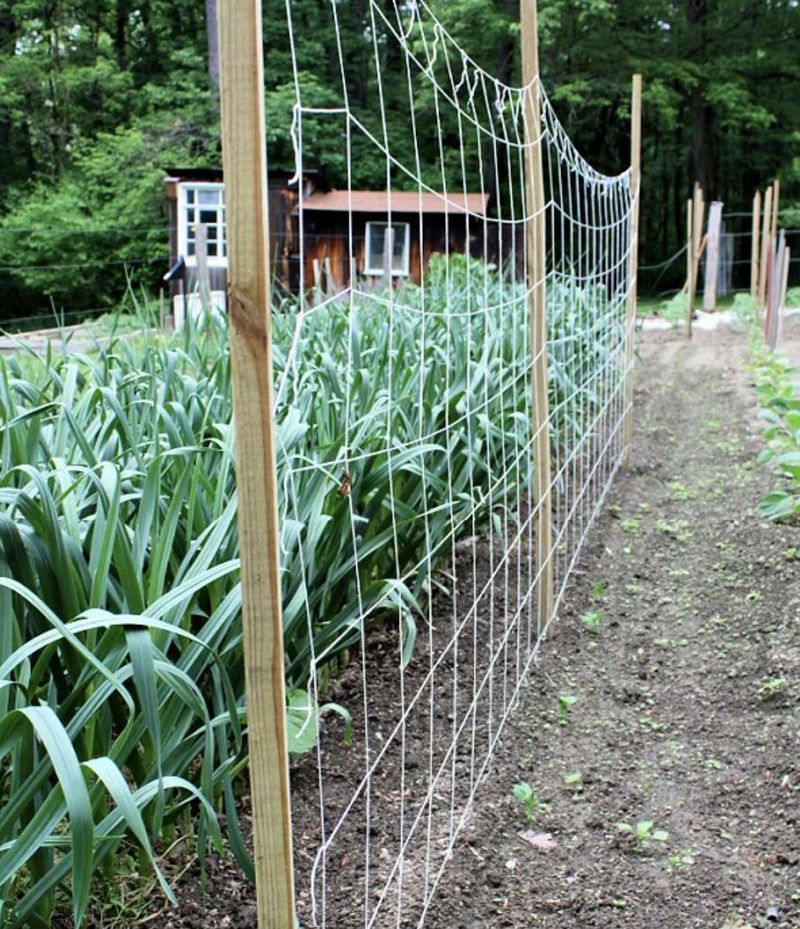
Summer storms roll through fast and leave a mess behind. Walking your beds the morning after any heavy rain or wind event is one of the most useful habits a gardener can build.
Wet soil loosens stake anchors quickly. A stake that felt solid before the storm may rock freely afterward.
Push any loose stakes back to full depth and firm the soil around the base with your boot.
Check every tie after a storm. Stems that shifted under wind load may have pulled ties tight.
Loosen anything that looks strained before it cuts into the stem or snaps under continued pressure.
Look for stems that bent but did not break. Gently guide them back toward vertical and add a new tie if needed.
Bent stems can recover if you catch them within a day or two of the storm.
Heavy rain can also weigh down foliage enough to pull grow-through grid supports sideways. Re-level any tilted grids and anchor them with an extra stake if the original setup felt unstable.
Storms also knock mulch around. Bare soil around stake bases dries out fast and shrinks, which loosens stake anchors further.
Refresh mulch after storms to keep moisture levels steady around your supports.
Post-storm checks take maybe fifteen minutes for an average-sized bed.