How To Set Up An Ohio Backyard That Luna Moths Will Return To Every Single Year
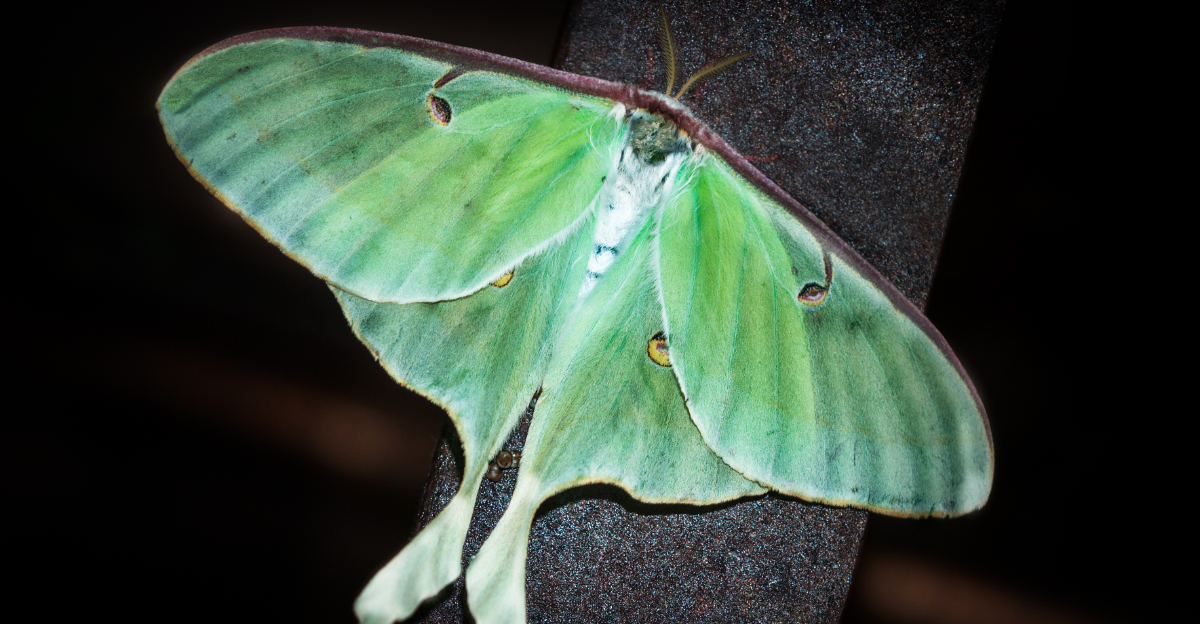
A luna moth landing in your backyard is the kind of moment that stops you mid-sentence. That wingspan, that color, that almost unreal elegance.
Most people see one once and spend the next several years hoping it happens again. Hope is not a strategy, though.
Luna moths are not wandering randomly. They are looking for something very specific, and Ohio backyards that have it become spots they come back to, season after season.
The ones that don’t have it get a flyover at best. The good news is that setting up the right environment is completely doable for an average Ohio yard.
It is not about perfection or a massive landscaping budget. It comes down to a handful of deliberate choices, the right native plants, the right conditions, and one or two habits worth picking up.
Your yard can be that place. Here is exactly how to make it happen.
1. Plant The Host Trees Luna Caterpillars Need Most
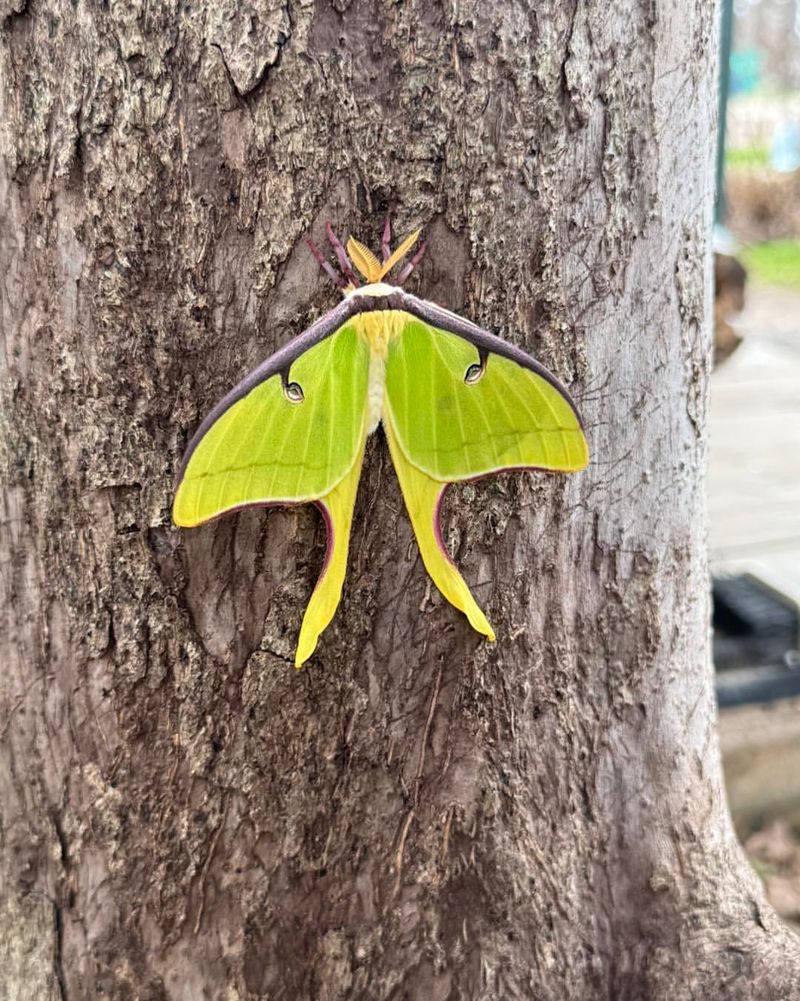
A backyard without the right trees is a backyard that luna moth caterpillars simply cannot use. Before adults ever appear, the caterpillars need leaves to feed on, and choosing the correct host trees is where habitat building starts.
The Ohio Department of Natural Resources Moths of Ohio field guide identifies hickory and walnut as primary host plants for luna moths in this state.
Extension-supported host lists also include sweetgum, maple, oak, willow, and sumac as trees that may support caterpillars in local landscapes. Not every tree on that list will suit every yard, so matching the species to your soil type, sun exposure, and available space matters.
A silver maple may thrive in a wet corner where a hickory would struggle.
Planting host trees is a long-term investment, not an instant solution. A sapling planted this fall will not attract luna moths next spring, but it will grow into meaningful habitat over the years ahead.
Think of it as building something that compounds in value each season. Even a single well-chosen native tree adds real leaf area and caterpillar food to your yard.
If space is tight, a smaller native species like a native willow or young sumac clump can offer habitat without taking over the entire yard.
2. Keep Mature Hickory And Walnut In The Yard
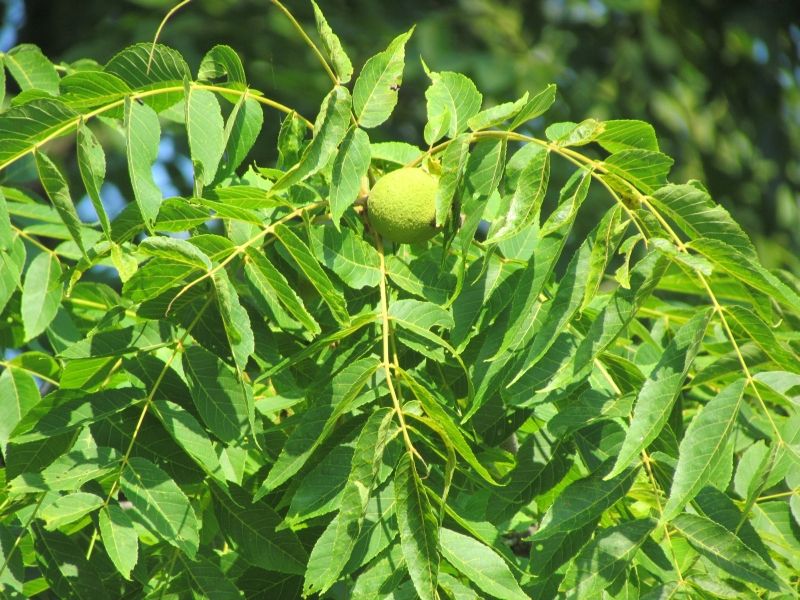
That big hickory dropping shells on your driveway every fall? It might be one of the most valuable things in your entire yard for luna moths.
Mature host trees offer something young saplings simply cannot. They provide a wide canopy full of leaves, years of established root strength, and a reliable food source for caterpillars season after season.
Removing a healthy mature tree to avoid the mess removes far more habitat than any new planting can quickly replace.
Black walnut is a common concern for homeowners. The nuts are heavy, the husks stain, and the roots release a compound called juglone that affects some nearby plants.
Those are real inconveniences, but they are manageable with the right plant choices nearby and a little seasonal cleanup. Hickory trees drop shells and small branches, which can feel messy, but that leaf and debris layer also supports the broader yard ecosystem.
Your Ohio Garden Changes Every Week. Your Plan Should Too.
Gardening in Ohio changes quickly throughout the season. Every Friday you’ll receive a simple weekly plan showing exactly what to plant, prune, fertilize, harvest, and protect so you never miss the right timing.
Pruning for safety or structure is completely reasonable. Removing deceased limbs, clearing branches over the roof, or shaping the canopy around power lines makes sense.
The goal is not to keep every tree exactly as it grows. The goal is to avoid cutting down a healthy, mature host tree just because it creates minor seasonal inconvenience.
In terms of luna moth habitat, a mature hickory or walnut is genuinely hard to replace.
3. Build A Leafy Edge Instead Of A Bare Lawn
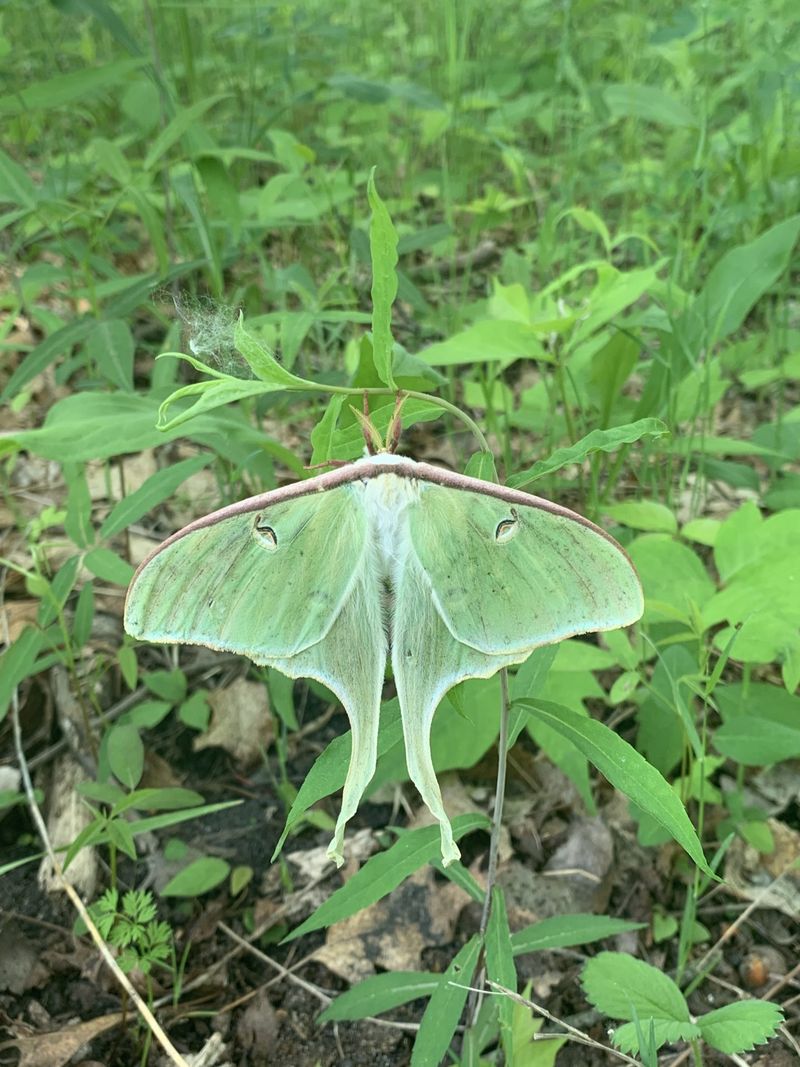
Short grass from fence to fence gives luna moths almost nothing to work with. A yard structured entirely around a mowed lawn offers no shelter, no layering, and no transition zones.
Moths and caterpillars need those areas to move comfortably between trees and ground cover. The layout of your backyard matters just as much as the plants you choose.
One of the most practical steps you can take is widening the bed under your host trees. Instead of mowing right up to the trunk, pull the lawn back by several feet and fill that space with native ferns, native wildflowers, or low shrubs.
That wider bed softens the edge, reduces foot traffic near the roots, and creates a more natural habitat zone. Native groundcovers like wild ginger or woodland sedge work well in shaded spots under larger trees.
Reducing hard lawn edges throughout the yard also helps. A yard with gradual transitions gives more options for insects moving through at different life stages.
Those transitions can run from tall canopy to understory shrubs to shorter native plants to lawn. Luna moths are not the only ones that benefit from this kind of structure.
Fireflies, native bees, and dozens of other insects use layered yards more effectively than open grass. Building those layers does not require a full landscape overhaul.
Starting with one bed, one corner, or one tree ring is enough to begin.
4. Dim The Night Lights During Moth Season
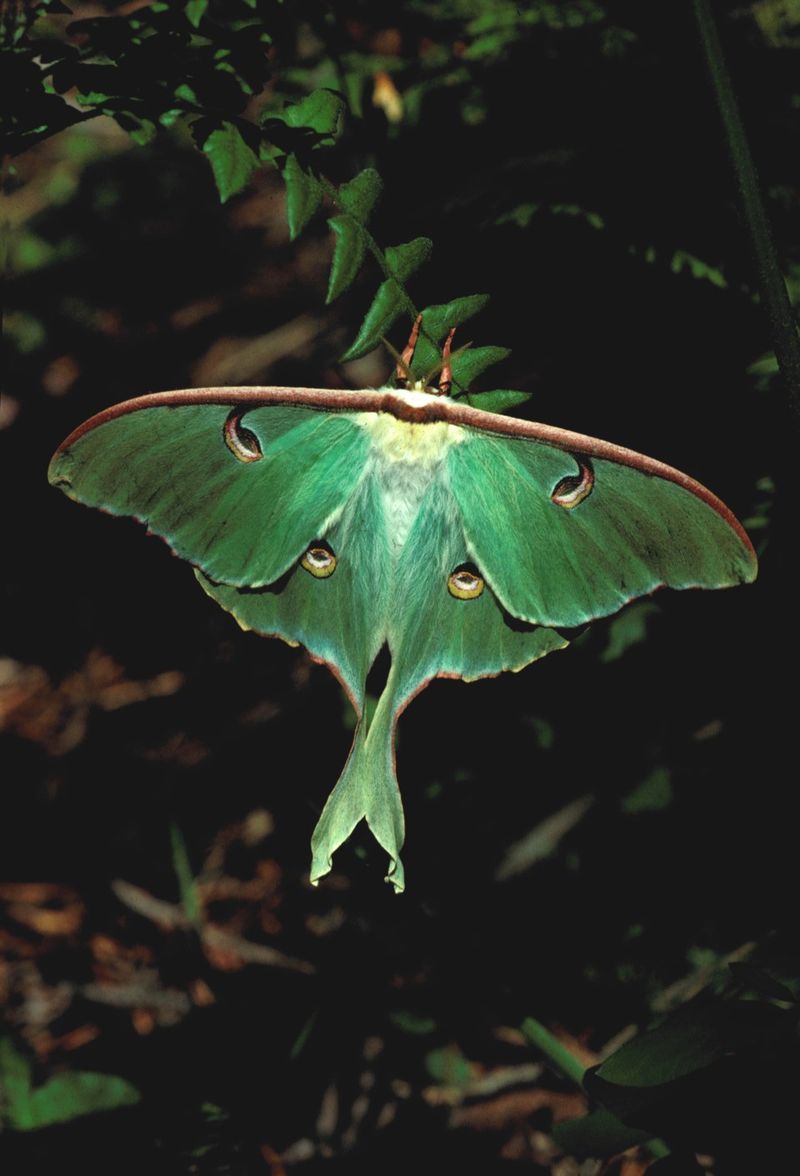
Porch lights and luna moths have a complicated relationship. Adult luna moths are nocturnal and are drawn to light sources.
That sounds exciting until you realize that a bright floodlight can pull them away from safer areas, leave them exposed to predators, or exhaust them circling a fixture all night. Outdoor lighting is one of the easiest habitat factors to adjust, and it does not require spending money on new plants or trees.
Swapping a cool white bulb for a warmer amber or yellow bulb reduces the wavelengths that attract moths most strongly. Adding a motion sensor to porch lights means the light is only on when someone actually needs it, rather than running all night.
Shielded fixtures that direct light downward instead of out into the yard and tree line make a noticeable difference. Timers that shut off decorative or security lights after midnight are another low-cost option.
Closing curtains in rooms with bright interior lighting also helps reduce light spill into the yard. Luna moth season in our state generally peaks in late spring through midsummer, so focusing on these adjustments during May, June, and July is most useful.
None of these steps require keeping your yard completely dark. The goal is simply reducing unnecessary light exposure during the hours when moths are most active.
That makes the habitat around your host trees safer and more functional.
5. Stop Spraying The Caterpillars You Want To Keep
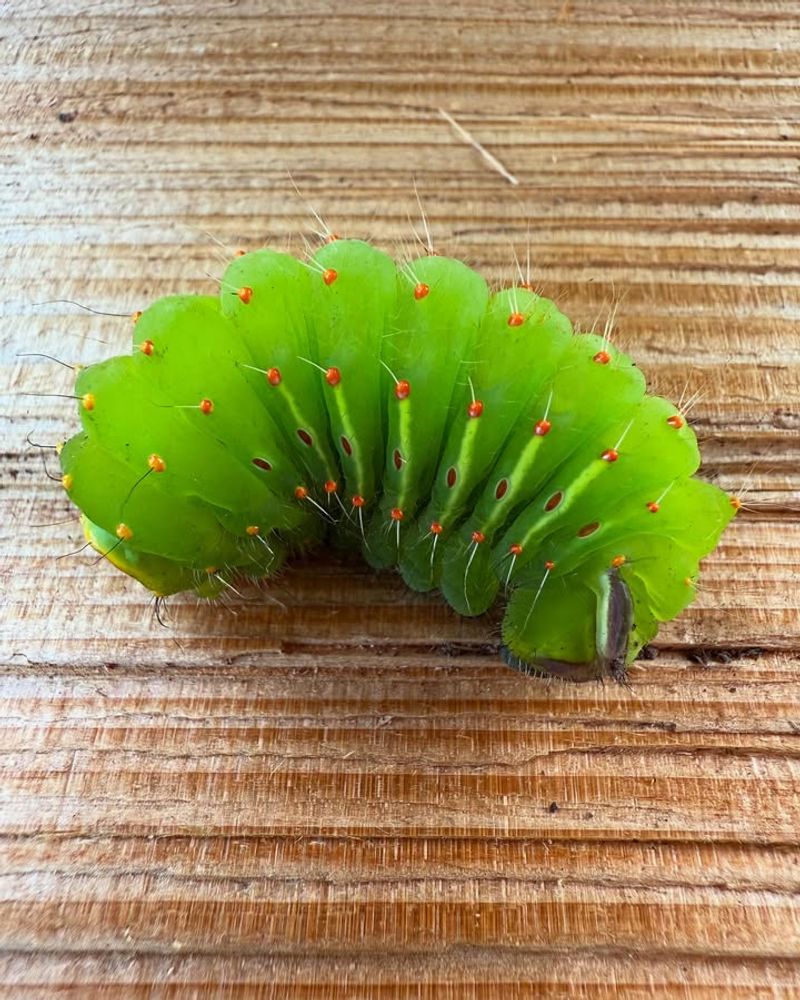
Seeing chewed leaves on a hickory or walnut tree can feel alarming. But before reaching for a spray bottle, it is worth pausing to think about what might be doing the chewing.
Luna moth caterpillars feed on host tree leaves, and some level of leaf damage on a healthy, established tree is a normal part of having a functioning yard ecosystem. A few eaten leaves on a mature hickory are not a sign that the tree is in danger.
Broad-spectrum insecticides applied to host trees can destroy luna moth caterpillars along with every other insect feeding or resting on those leaves. Products that contain Bt (Bacillus thuringiensis) are often marketed as safe for gardens.
But certain formulations can affect non-target moth and butterfly caterpillars as well. Before spraying anything on a host tree, checking with OSU Extension or your local Extension office is a smart move.
The more useful approach is to focus on keeping host trees healthy through proper watering, mulching, and avoiding soil compaction near the roots. A healthy tree can handle moderate caterpillar feeding without lasting harm.
If a pest problem seems serious, getting a proper identification first saves time, money, and the insects you are trying to protect. Targeted, informed action is almost always more effective than routine preventive spraying across the yard.
6. Leave Safe Leaf Litter Where Cocoons Can Rest
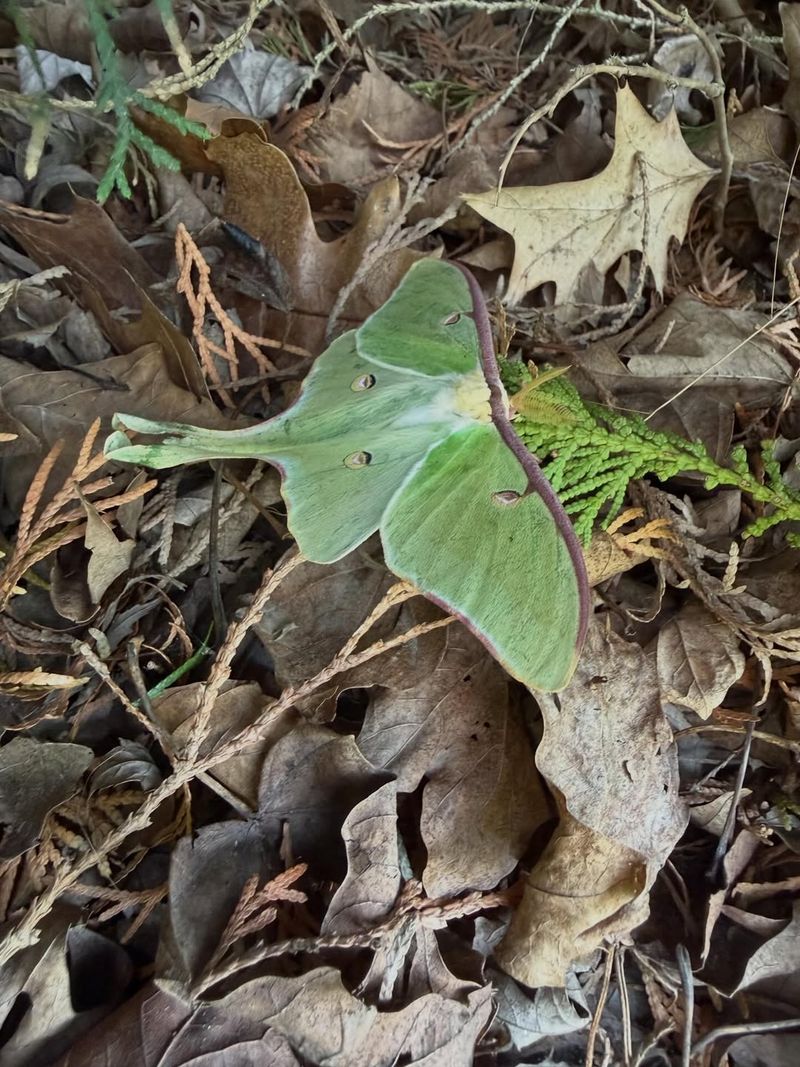
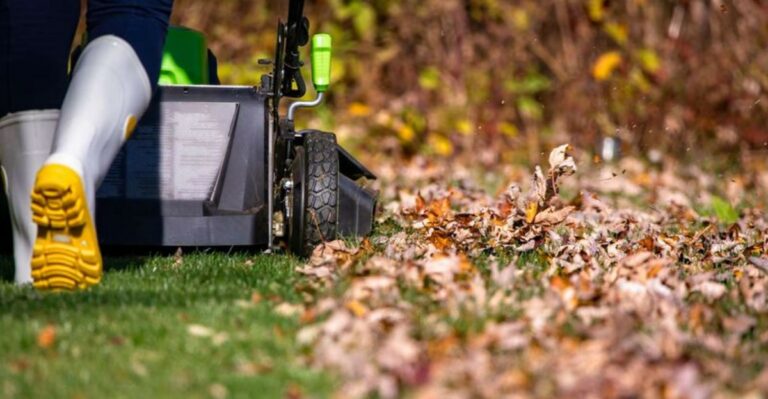
Every fall, a lot of well-meaning yard work removes exactly the kind of habitat that supports overwintering insects. Luna moth cocoons are associated with leaf litter and sheltered ground-level areas.
That means a thorough leaf blowing and bagging session across the entire yard can quietly eliminate habitat that took all summer to build. This does not mean leaving the yard in total disarray – it means being thoughtful about where cleanup happens and where it does not.
Keeping paths, patios, driveways, and foundation areas tidy is completely reasonable. Nobody wants leaves piled against their house or blocking a walkway.
The goal is to identify one or two intentional leaf zones where leaves can stay undisturbed through fall and into early spring. Good spots include under a host tree, along a back fence line, or in a low-traffic corner.
Those areas do not need to be large. Even a modest patch of undisturbed leaf cover adds real habitat value.
Shredding leaves with a mower and leaving them in garden beds is another option that keeps the yard looking maintained while still providing ground-level cover. Raking leaves into a back corner under shrubs works just as well.
The key is resisting the urge to bag and remove every single leaf from every part of the yard. Some seasonal mess is not a problem – for luna moths and dozens of other native insects, it is actually the point.
7. Add Native Shrubs For A Softer Backyard Habitat
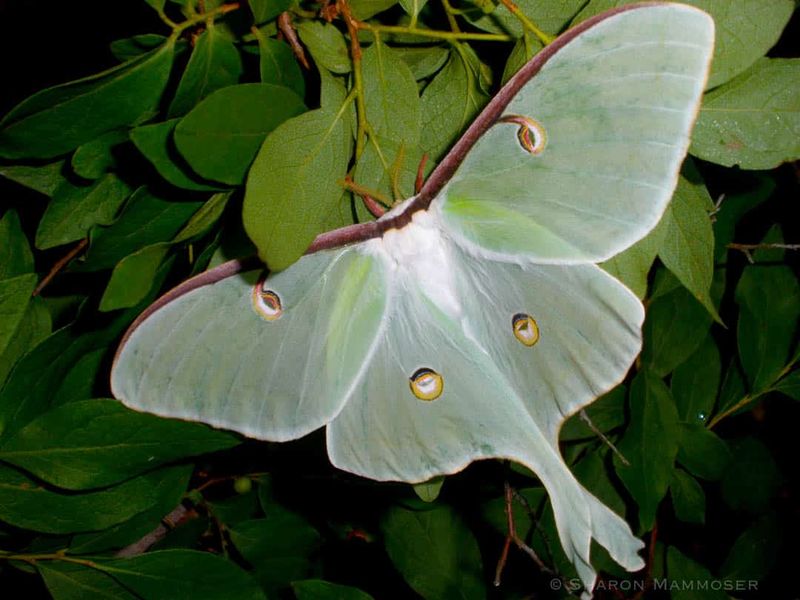
Trees handle the heavy lifting in a luna moth habitat, but shrubs do important structural work that trees alone cannot. A yard that goes straight from tall canopy to open lawn has a gap in the middle layer.
Insects, birds, and other wildlife need that layer for cover, movement corridors, and wind protection. Native shrubs fill that gap and make the overall habitat more complete.
Good native shrub options for Ohio yards include native viburnums, buttonbush, native hazelnuts, elderberry, and native hollies. The best choice depends on your light levels and soil moisture.
These plants support a wide range of native insects beyond luna moths, which builds the kind of layered food web that makes any habitat stronger over time. Choosing shrubs that fit your actual yard conditions gives them the best chance of thriving without constant maintenance.
Those conditions include sun, shade, wet soil, dry soil, or something in between.
Shrubs also reduce wind exposure across the yard, which can help moths and other flying insects navigate more easily on warm nights. Planting a shrub border along a fence line, at the edge of a tree canopy, or between a garden bed and a lawn creates natural transition zones that feel less exposed.
Mature size matters when selecting shrubs. Reading the plant tag or checking with a local native plant nursery before buying prevents the common problem of a shrub outgrowing its spot within a few seasons.
8. Let A Few Wild Corners Stay Quiet And Undisturbed
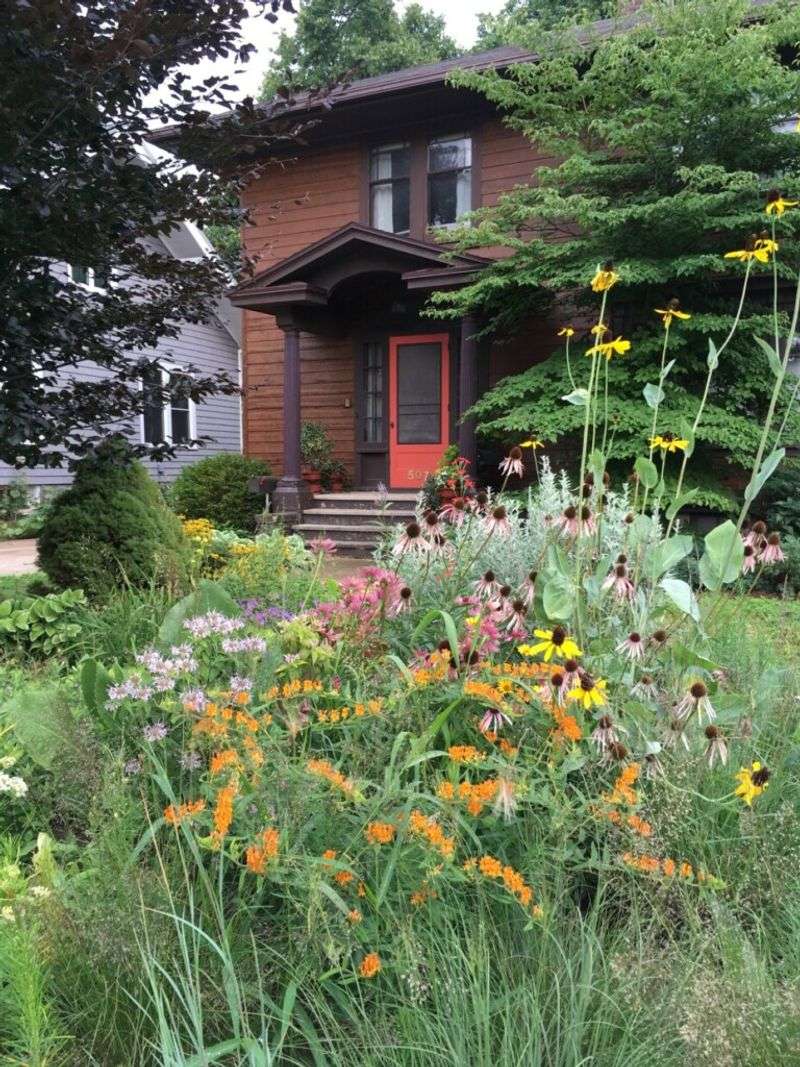
Not every square foot of a backyard needs to be trimmed, blown, or tidied on a weekly schedule. Some of the most valuable habitat in a yard is simply the part that gets left alone.
A back corner near a fence, a shaded strip under a tree line, or a low-traffic edge along a property boundary can become a quiet refuge. Luna moths and dozens of other native species can use it if the disturbance level stays low.
The trick to making a wild corner work in a suburban yard is keeping it intentional. A defined border signals to neighbors and visitors that the area is purposeful, not forgotten.
That border can be a simple row of stones, a short edging strip, or a planted edge of native groundcover. A small sign identifying it as a wildlife habitat area can help too.
That small visual cue makes a big difference in how the space is perceived.
Inside that corner, the goal is minimal intervention. Skip the leaf blower, delay any cutting until late spring after overwintering insects have had time to emerge, and avoid digging or turning the soil unnecessarily.
Native plants that self-seed or spread slowly can fill the space over time without much help. Luna moths and many other native insects are not asking for a manicured garden.
They are asking for a patch of yard that stays calm, covered, and undisturbed long enough for them to complete what they need to do.