How To Stop California Citrus Leaves From Curling During August Heat
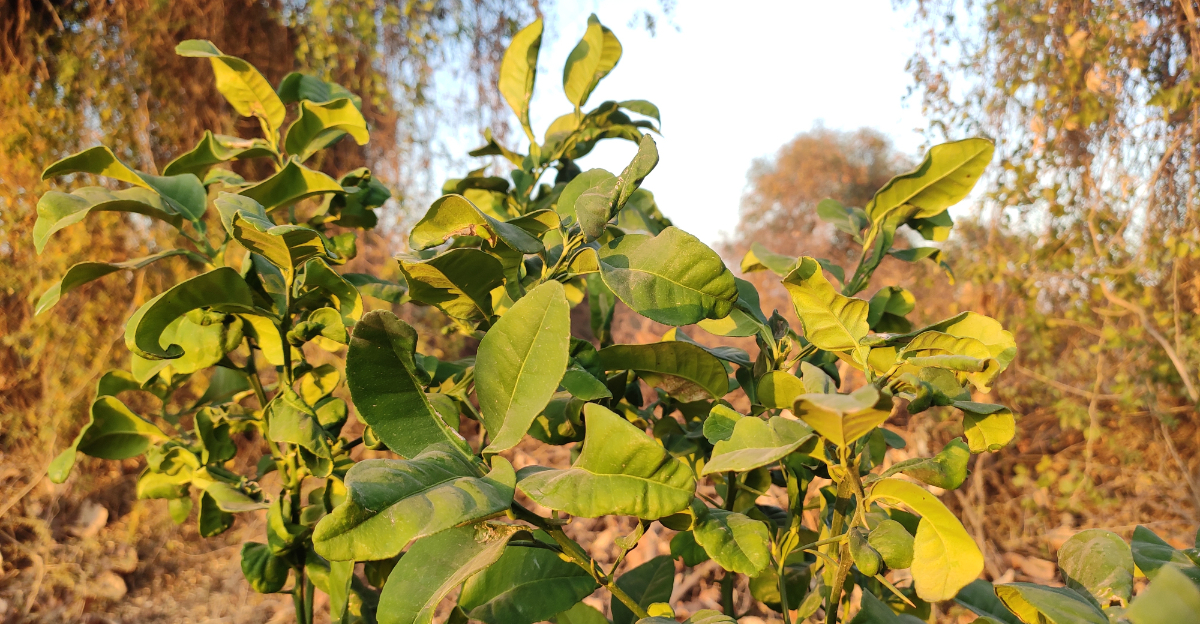
Curled citrus leaves can make a healthy California tree look distressed almost overnight, especially during August’s hottest stretch. The leaves may cup inward, twist along the edges, or droop even when the soil still feels damp.
That reaction is the tree’s way of responding to stress, but the cause is not always as simple as “it needs more water.”
Intense sun, dry wind, uneven irrigation, reflected heat, root problems, and sap-feeding pests can all produce similar symptoms. Pouring on extra water without checking the soil may even make matters worse.
The key is noticing when the curling appears, which leaves are affected, and what the surrounding conditions have been like.
A few targeted adjustments can often help the tree recover while protecting fruit and new growth.
Before changing your routine, it helps to understand what those curled leaves are actually trying to tell you.
1. Giving Thirsty Roots A Proper Deep Drink
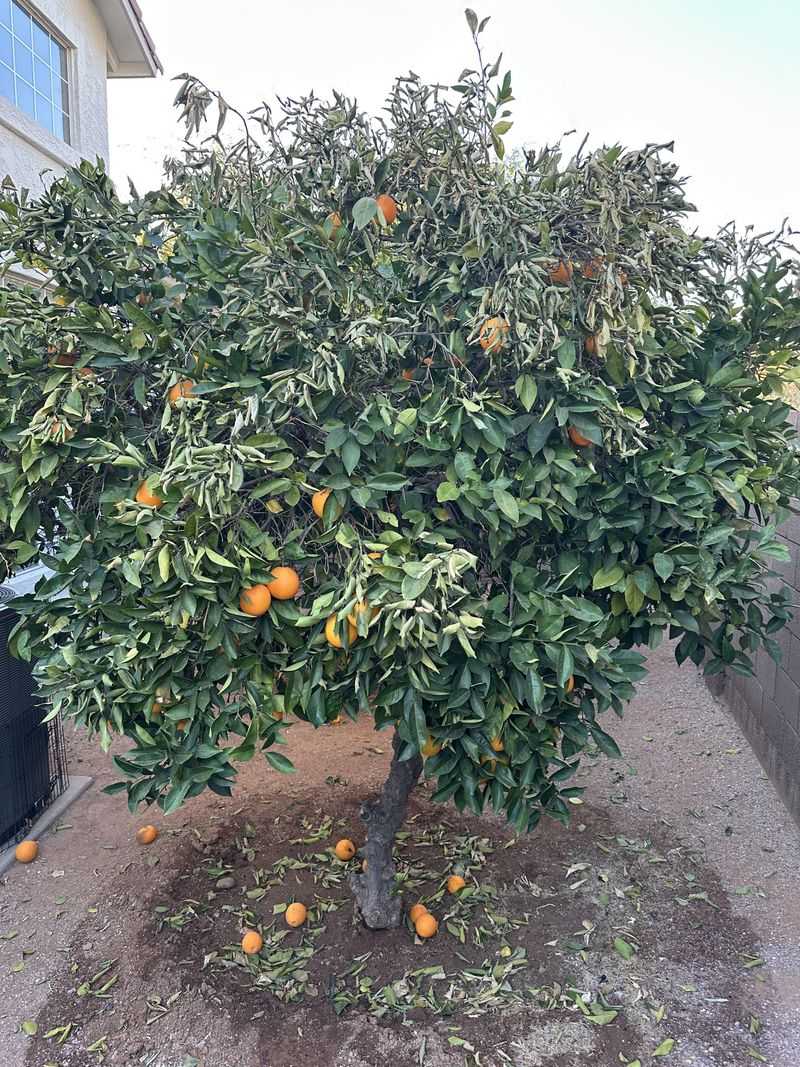
Most people water their citrus trees too quickly and move on. A fast splash from the hose barely reaches the deep roots where the tree actually pulls up moisture.
During August, that kind of shallow watering leaves the roots dry and stressed, which causes the leaves to curl tightly inward.
Deep watering means letting water soak slowly into the soil for at least 30 to 45 minutes. You want the moisture to reach 12 to 18 inches below the surface.
That is where the feeder roots live, and those are the roots that keep your tree hydrated during the hottest weeks.
A drip irrigation system works really well for this. You can also use a soaker hose laid in a circle around the drip line of the tree.
The drip line is the outer edge of the tree’s canopy, not right next to the trunk.
Water your citrus deeply two to three times per week during August heat waves. Early morning is the best time because less water evaporates before it soaks in.
Sandy soils dry out faster than clay soils, so check your soil by poking a finger two inches deep. If it feels dry, it is time to water again.
Proper deep watering is often the fastest fix for curling leaves.
2. Stopping The Soil From Baking Between Waterings
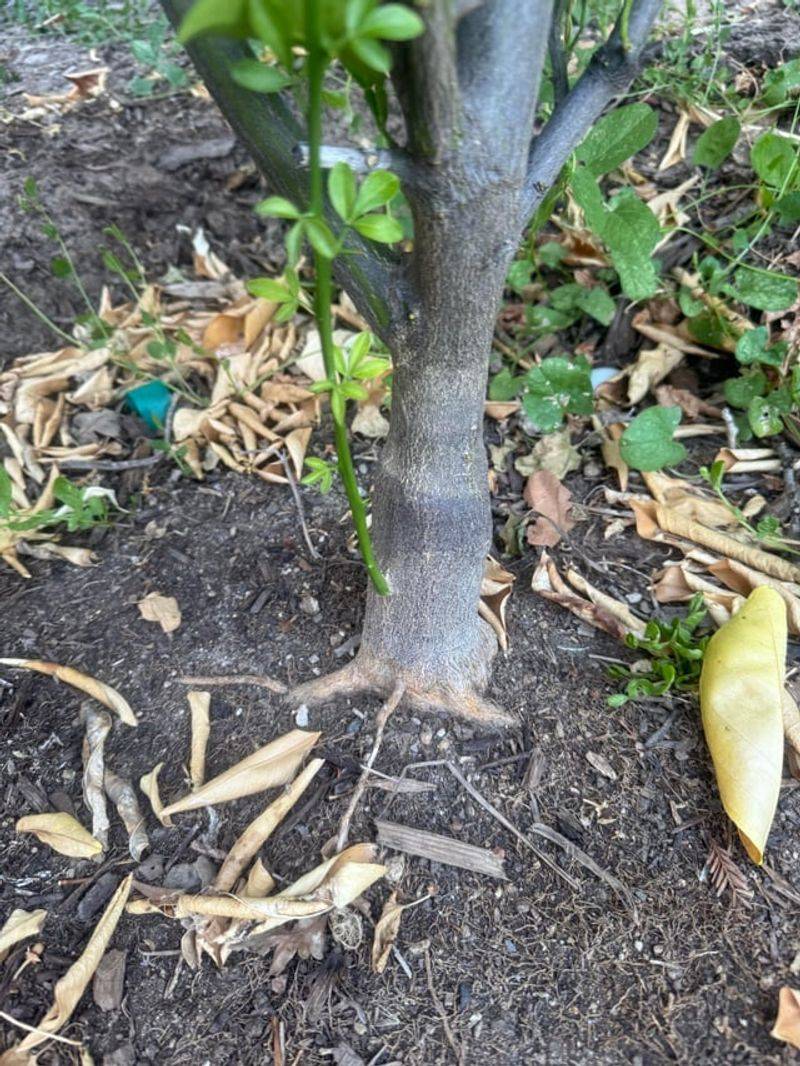
Hard, dry soil is one of the sneakiest causes of leaf curl that people overlook. When the ground bakes in August sun, it becomes almost like concrete.
Water runs off instead of soaking in, and roots struggle to breathe or absorb nutrients properly.
Compacted soil also heats up much faster than loose, healthy soil. Surface temperatures on bare, hard ground can reach 140 degrees on a hot afternoon.
Those extreme temperatures stress the roots directly and push the whole tree into survival mode, which shows up as curling leaves.
One great fix is to aerate the soil lightly around the drip line using a garden fork. Push the fork in about four inches and wiggle it gently.
Do this every few feet around the tree. This opens up the soil so water and air can move through more easily.
Your California Garden Changes Every Week. Your Plan Should Too.
Gardening in California changes quickly throughout the season. Every Friday you’ll receive a simple weekly plan showing exactly what to plant, prune, fertilize, harvest, and protect so you never miss the right timing.
You can also mix in a layer of compost around the base of the tree, keeping it a few inches away from the trunk. Compost improves soil structure, holds moisture longer, and keeps root temperatures cooler.
Healthy, loose soil acts like a sponge and holds onto water between your deep watering sessions. Fixing your soil is one of the most effective long-term strategies for keeping citrus leaves from curling in the summer heat.
3. Adding Mulch Without Hugging The Trunk
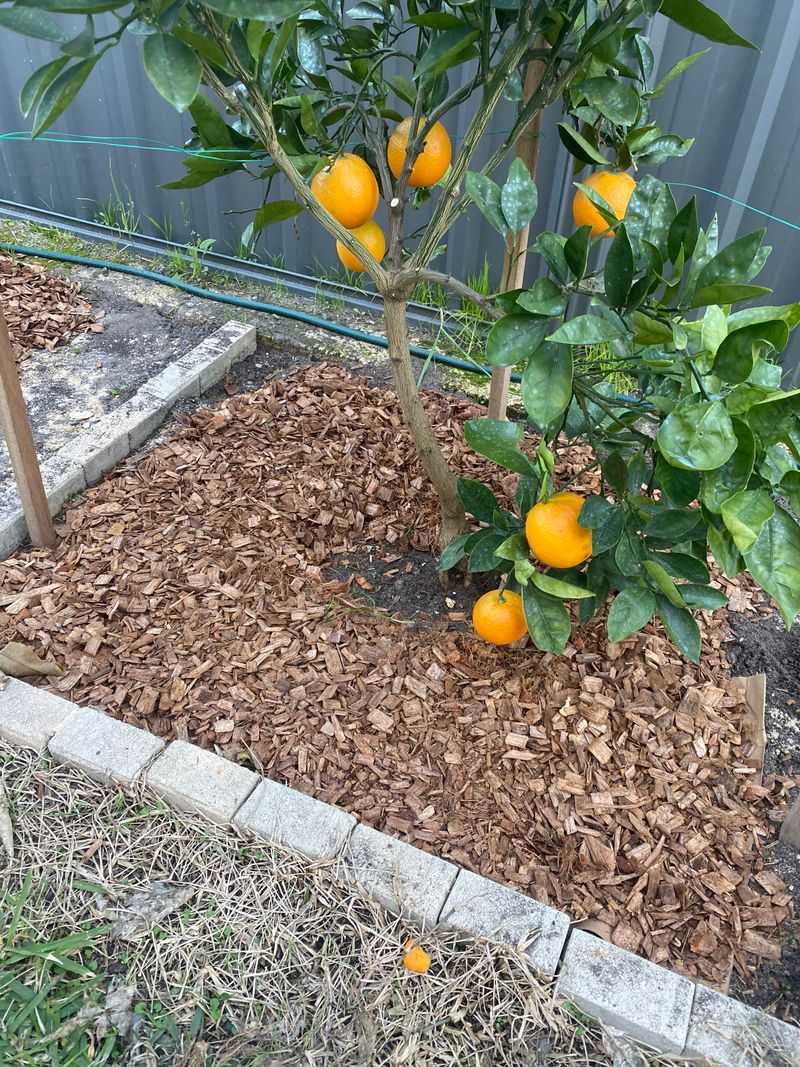
Mulch is one of the best tools a citrus grower can use during August. A thick layer of organic mulch keeps the soil cool, slows down water evaporation, and regulates root temperature all at once.
It is like giving your tree a shady blanket to rest under. Wood chips, straw, or shredded bark all work well as mulch. Spread a layer about three to four inches thick in a wide circle around the tree.
The circle should extend out to the drip line, which is the edge of the tree’s canopy overhead.
Here is the part that trips up a lot of people. Never pile mulch right up against the trunk of the tree.
Leaving a gap of at least four to six inches around the base of the trunk is really important. Mulch pressing against the trunk traps moisture and can cause rot or invite pests and fungal problems.
Refreshing your mulch layer once during the summer is a good idea because it breaks down over time. Fresh mulch also does a better job of blocking weeds that compete with your tree for water and nutrients.
In California’s scorching inland valleys, a proper mulch ring can lower soil temperature by 10 to 20 degrees. That cooling effect alone can make a noticeable difference in how your citrus handles the August heat.
4. Keeping Afternoon Sun From Scorching New Growth
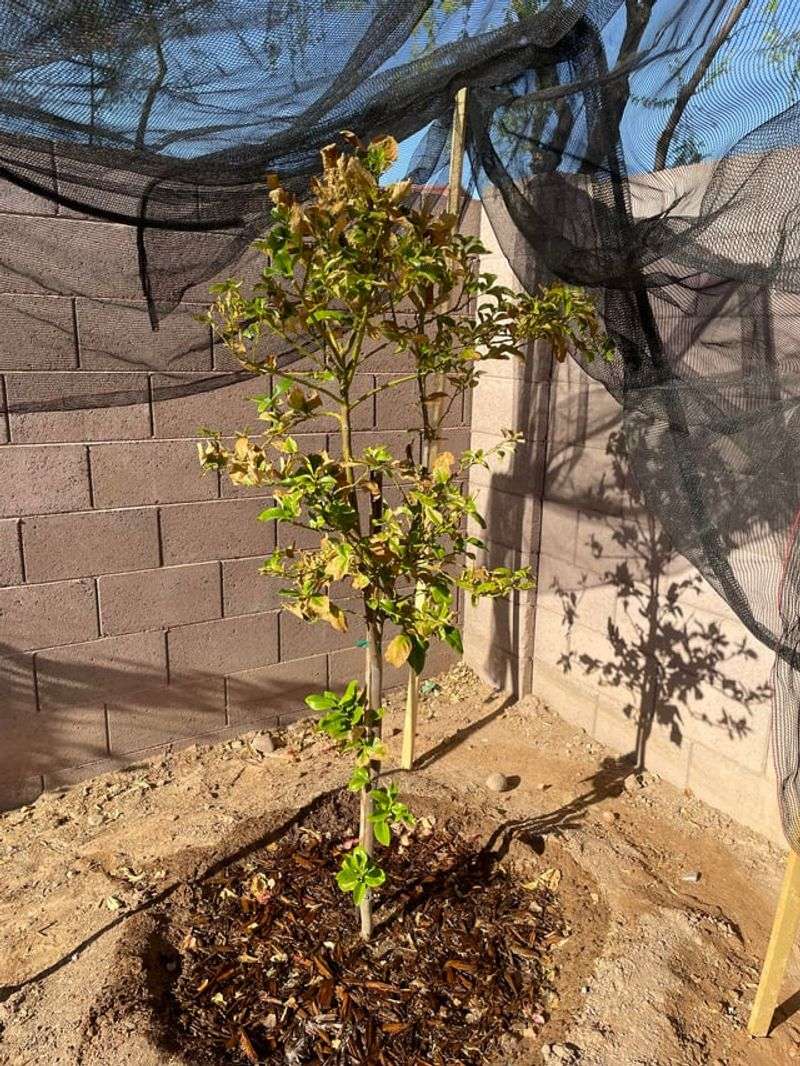
New growth on a citrus tree is especially tender and vulnerable. Young leaves that sprout during a summer heat wave often curl, bleach, or look papery because they have not had time to toughen up.
Afternoon sun in California during August is the harshest light of the day.
In areas like the Central Valley or the Inland Empire, afternoon temperatures regularly push past 105 degrees. That kind of heat combined with direct sun can scorch new citrus leaves within hours.
Once leaves are scorched or badly curled, they rarely recover their original shape.
A simple shade cloth stretched over the sunny side of the tree can make a big difference. You can find shade cloth rated at 30 to 40 percent shade at most garden centers.
Attach it to wooden stakes or a simple frame so it blocks the harsh western sun from about 1 p.m. to 5 p.m.
You do not need to cover the entire tree. Blocking afternoon sun on the west and southwest sides is usually enough to protect the most vulnerable new growth.
Remove the shade cloth in the evening so the tree gets full airflow overnight. This trick is especially helpful for younger trees that have not developed a thick, mature canopy yet.
Protecting new growth from direct afternoon sun is a simple step that pays off quickly in reduced leaf curl and a healthier-looking tree.
5. Checking For Leaf Miners Before Blaming The Heat
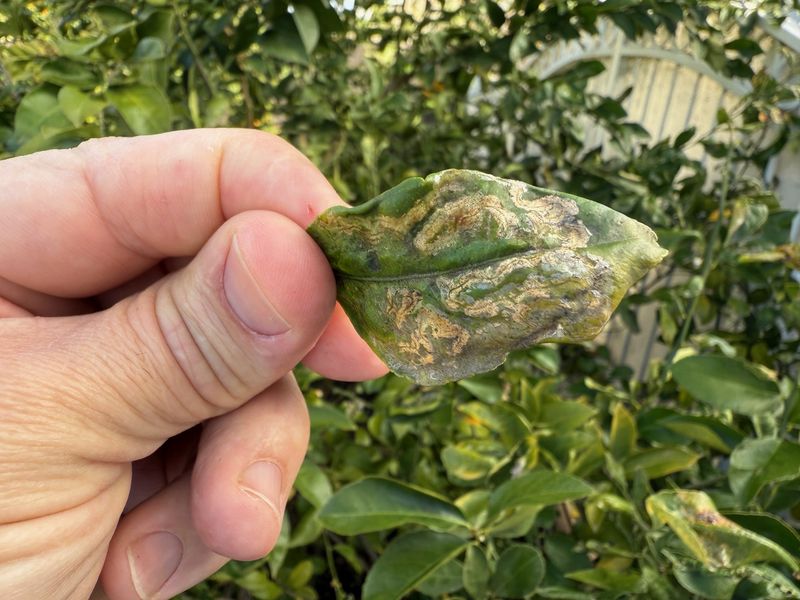
Not every curled citrus leaf is caused by heat or water stress. Sometimes a tiny pest called the citrus leaf miner is the real culprit.
This small moth lays its eggs on young citrus leaves, and the larvae tunnel through the leaf tissue as they feed.
The tunneling creates squiggly silver or white trails you can see when you hold the leaf up to the light. As the damage builds up, the edges of the leaf curl inward and the leaf looks twisted or distorted.
Many gardeners mistake this for heat stress and never find the real problem.
Leaf miners are most active during late summer when citrus trees push out new flushes of growth. The young, soft leaves are easy targets.
Older, tougher leaves are usually not affected because the larvae cannot tunnel through them as easily.
Check the undersides and edges of new leaves closely. Look for those telltale winding trails.
If you spot leaf miner damage, you can spray new growth with spinosad-based insecticide or neem oil to reduce future infestations.
There is no treatment that fixes already-damaged leaves, but protecting new growth helps the tree recover.
In northern regions, leaf miners tend to arrive a bit later in the season, but in southern and inland areas they are often active by mid-July. Catching the problem early saves a lot of stress for both you and your tree.
6. Watching For Aphids Hiding Under Curled Leaves
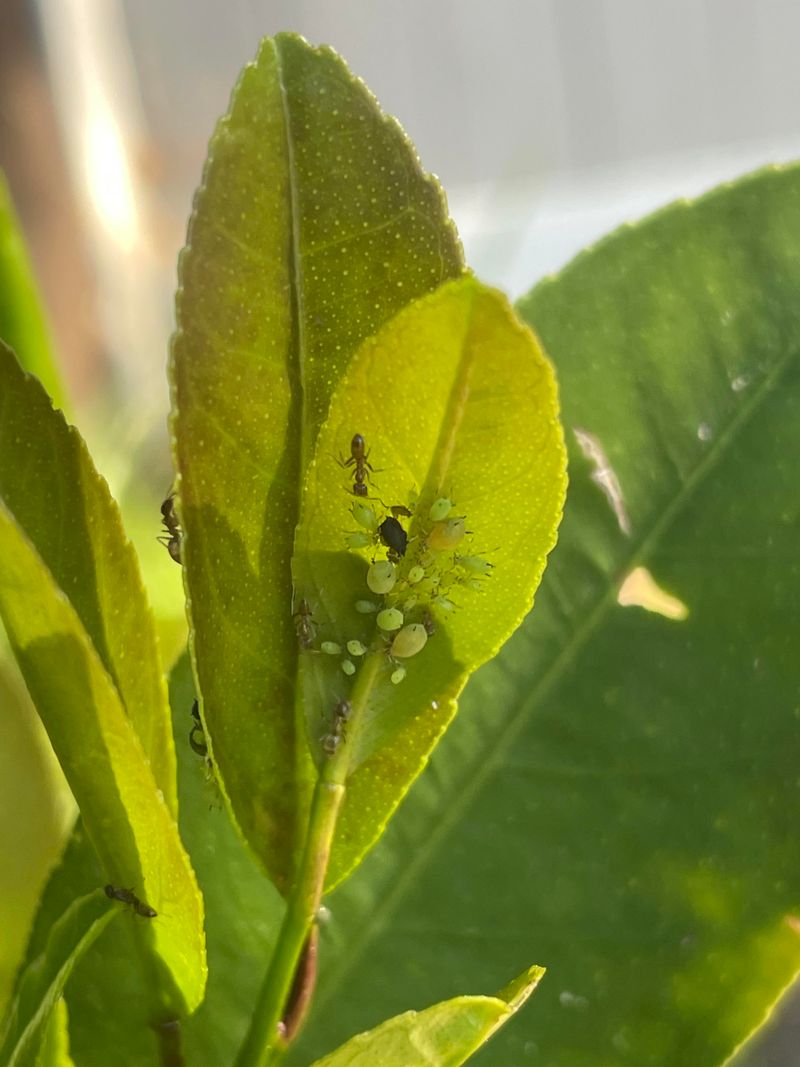
Curled citrus leaves create a perfect hiding spot for aphids. These tiny, soft-bodied insects cluster on the undersides of leaves and on new growth.
They suck the sap right out of the leaf tissue, which causes leaves to curl, pucker, and look distorted.
Aphids reproduce incredibly fast. A small group can turn into a massive infestation in just a week or two, especially during warm summer weather.
The damage they cause is often mistaken for heat stress because the leaves look so similar when they curl.
Flip over a few curled leaves and look carefully. Aphids are usually yellow, green, or black and are smaller than a sesame seed.
You might also notice a sticky, shiny coating on the leaves below them. That sticky stuff is called honeydew, and it is a waste product aphids leave behind.
Ants are often seen crawling on infested trees because they feed on that honeydew.
A strong blast of water from a garden hose knocks aphids off the leaves and is one of the easiest first steps. For heavier infestations, insecticidal soap spray works really well and is safe to use around kids and pets.
Spray in the early morning or evening to avoid leaf burn. Checking your trees weekly during August gives you the best chance of catching aphids before they cause serious damage to your citrus.
7. Skipping Heavy Fertilizer During The Hottest Weeks
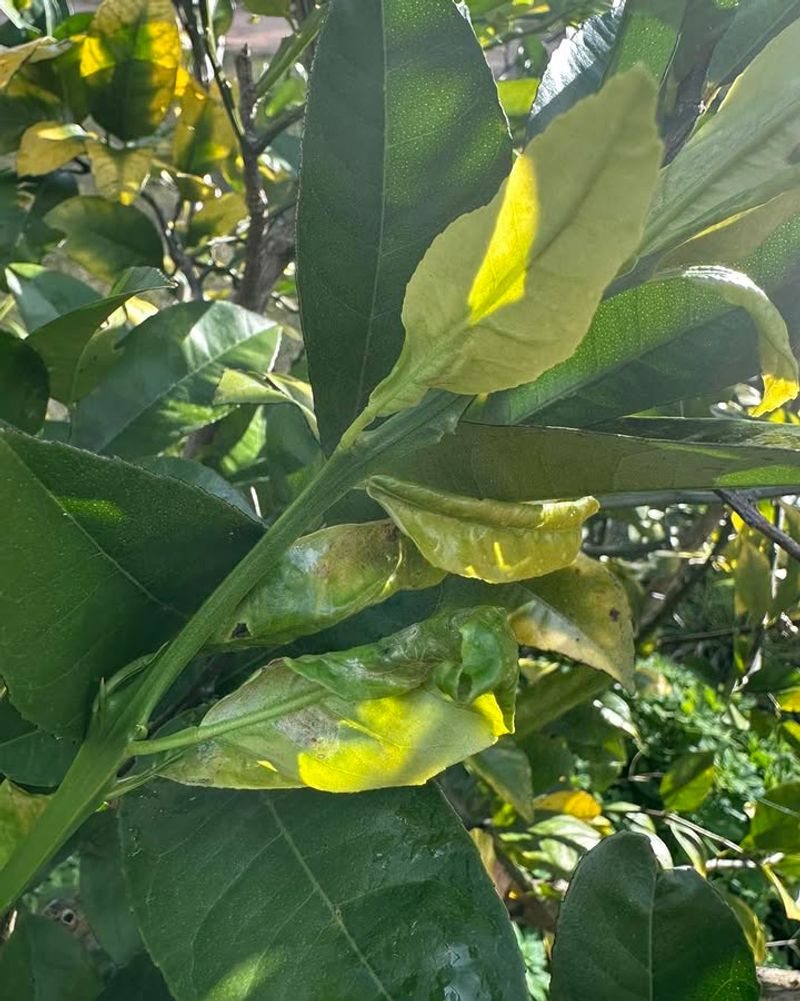
Fertilizing citrus during a heat wave sounds like a helpful idea, but it can actually backfire. When temperatures are extreme, citrus trees slow down their growth and focus all their energy on staying hydrated.
Pushing the tree to grow faster with heavy fertilizer adds stress it does not need right now.
High-nitrogen fertilizers are especially problematic in August. They force the tree to push out new, tender growth at exactly the wrong time.
That soft new growth is the first thing to curl, scorch, or get attacked by pests like leaf miners and aphids during a heat wave.
Salt buildup is another concern. Fertilizers are salt-based, and when the soil is hot and dry, those salts concentrate near the roots.
High salt levels pull moisture away from the roots instead of delivering it, which makes leaf curl worse and stresses the tree further.
Hold off on any heavy feeding from mid-July through the end of August. If your tree looks like it truly needs a nutrient boost, use a light foliar spray of diluted liquid fertilizer in the early morning.
This delivers nutrients directly through the leaves without stressing the roots. Resume regular fertilizing in September when temperatures start to drop.
Citrus trees in California generally follow a feeding schedule of early spring, late spring, and early fall, which naturally avoids the harshest summer weeks.
8. Protecting Potted Citrus From Heat-Trapping Walls
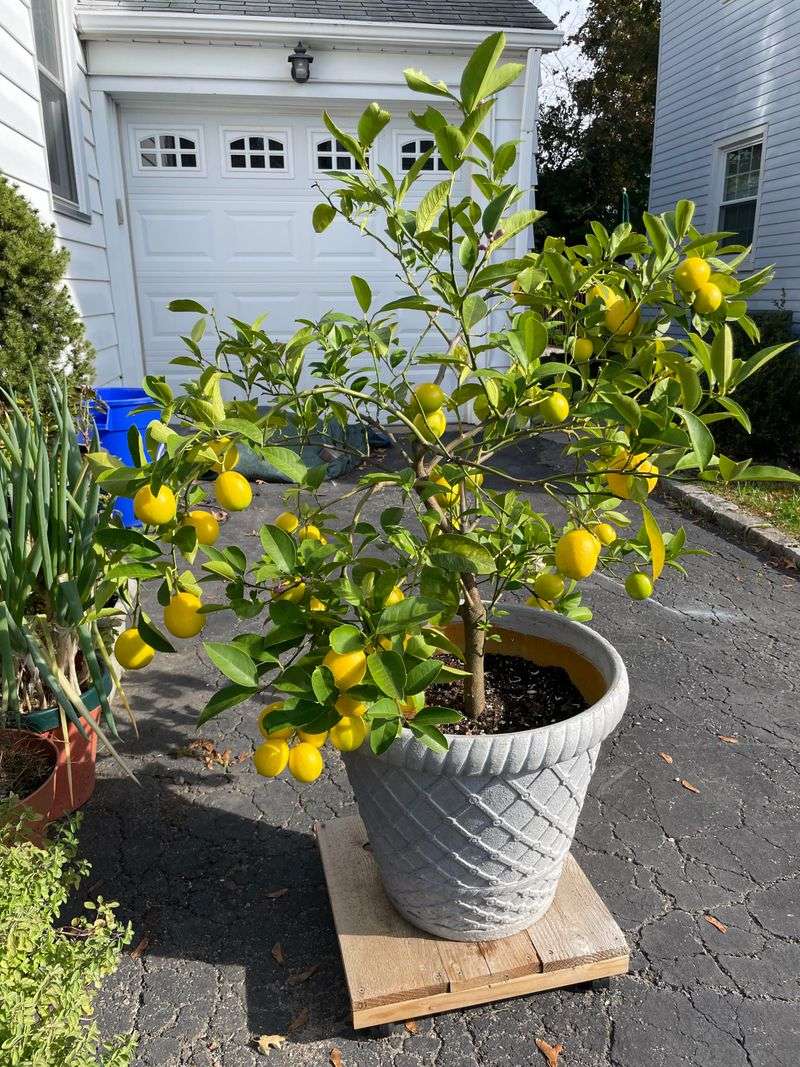
Potted citrus trees face a unique challenge during August. Unlike trees planted in the ground, a container-grown citrus has its entire root system surrounded by a pot that absorbs and traps heat.
On a hot day, the soil inside a dark-colored pot can reach temperatures that damage roots and cause rapid water loss.
Walls make this problem worse. South-facing and west-facing walls reflect heat back onto whatever is nearby.
A potted citrus sitting against one of those walls can experience temperatures 20 to 30 degrees hotter than the open air. That extra heat is a major driver of leaf curl in container-grown trees.
Moving your potted citrus to a spot with morning sun and afternoon shade is one of the quickest fixes. A covered patio or the east side of your home works really well.
If moving the pot is not possible, wrap it in a light-colored burlap or reflective pot wrap to reduce heat absorption.
Potted citrus also dries out much faster than in-ground trees, so checking soil moisture daily during heat waves is a smart habit. Water whenever the top two inches feel dry.
Elevating the pot slightly on pot feet improves drainage and allows air to circulate underneath, which reduces heat buildup. Smaller pots dry out fastest, so consider repotting into a larger container before next summer arrives.
Giving your potted citrus a cooler spot makes a noticeable difference almost immediately.