8 Illinois Climbing Plants For Fast Fence Coverage With No Foundation Worries
My backyard used to feel like a fishbowl. Every time I dragged my lawn chair outside, I could feel eyes drifting over from the other side of the fence.
It was not relaxing. It was a performance.
I finally got fed up and started researching climbing plants, mostly out of desperation, and what I found genuinely surprised me. Bare fences do very little.
They mark a boundary, sure, but they hand over your entire yard to anyone curious enough to glance over. Here is the thing about Illinois though.
The climate is actually quite generous for fast-growing vines. One good season and a boring wood or chain-link fence can disappear completely behind thick, lush greenery.
Landscaping is fairly low-key, and the structure looks solid. Just a plant doing what it does best.
These climbing plants are tough, beautiful, and perfectly matched for Illinois weather. Your fence will never look the same again.
1. Virgin’s Bower
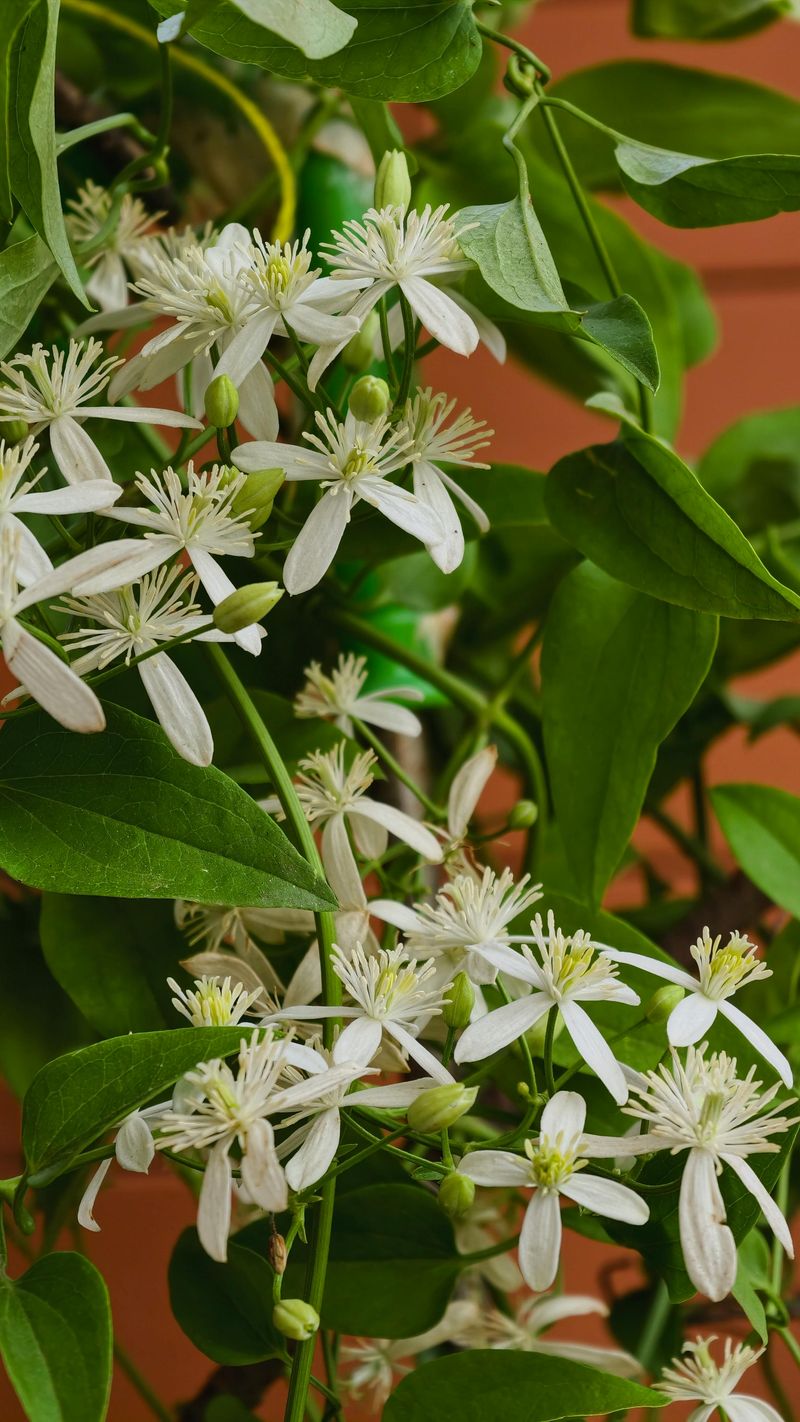
Few vines move as fast as Virgin’s Bower once it gets comfortable in your yard. Clematis virginiana doesn’t grow, it surges, climbing up to twenty feet in one season.
The blooms arrive in late summer, and they are worth every bit of the wait. Clusters of small white flowers drape over the vine like a soft, frothy cloud, drawing in butterflies and native bees by the dozens.
After the flowers fade, the plant produces silvery, feathery seed heads that look stunning well into fall.
One thing gardeners love about Virgin’s Bower is how little it asks for in return. It thrives in full sun to partial shade and handles average soil without complaint.
Plant it near a fence post, give it something to grab onto, and step back.
Because it uses twining leaf stems rather than adhesive pads or roots, it will never damage your fence structure or creep toward your home’s foundation. That means you get all the beauty with none of the worry.
It also goes dormant to the ground each winter.
Birds enjoy the fluffy seed clusters as winter food and nesting material, so you are essentially building a small wildlife habitat too. For a plant that gives this much back, it demands surprisingly little from you.
2. Coral Honeysuckle
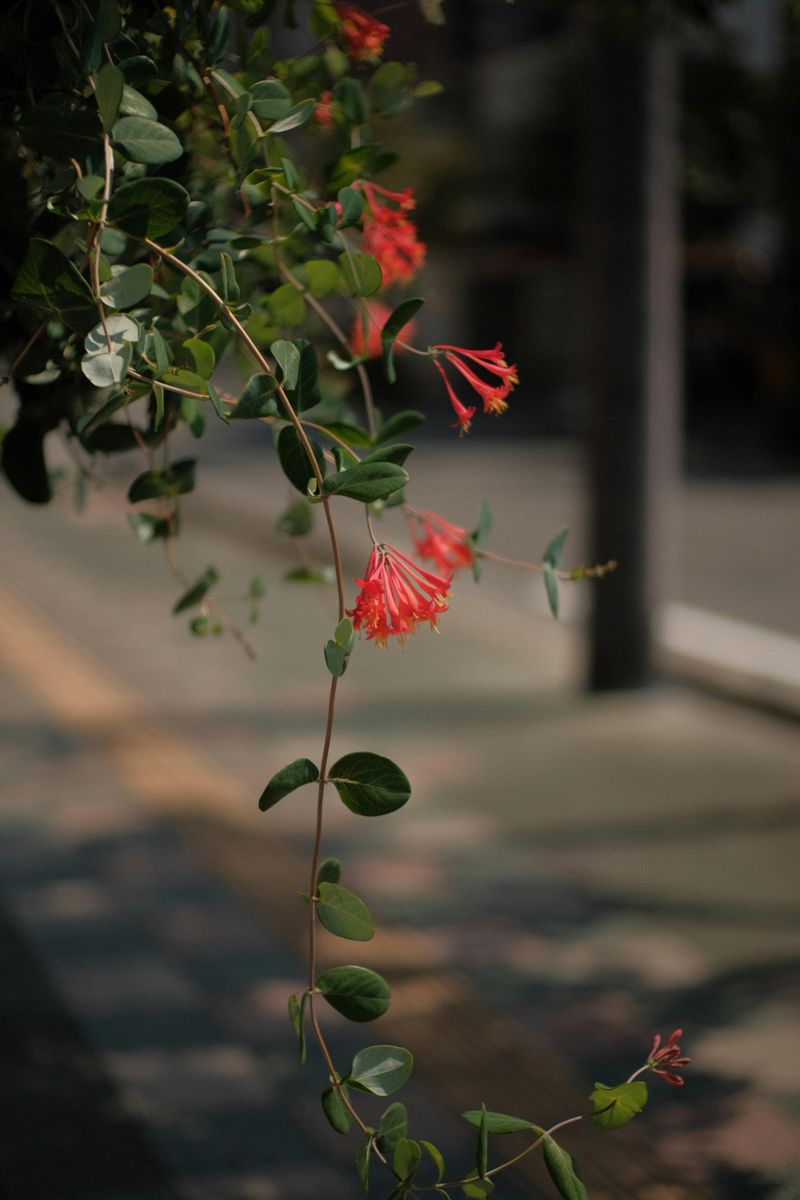
Hummingbirds will find your fence before you even finish planting this one. Native Lonicera sempervirens delivers the showstopping blooms of honeysuckle without the invasive baggage.
It climbs by twining its stems around fence rails and posts, reaching heights of ten to twenty feet without causing any structural harm. The roots stay shallow and contained, so your fence posts and nearby foundation have nothing to fear.
Growth is steady and reliable rather than explosive, which means you stay in control of where it goes.
In Illinois, Coral Honeysuckle performs best in full sun but tolerates light shade without dropping its flower production significantly. It blooms from spring through early fall, giving you months of color rather than just a brief seasonal show.
Your Illinois Garden Changes Every Week. Your Plan Should Too.
Gardening in Illinois changes quickly throughout the season. Every Friday you’ll receive a simple weekly plan showing exactly what to plant, prune, fertilize, harvest, and protect so you never miss the right timing.
That long bloom window makes it one of the most rewarding vines you can grow on a fence.
The plant is semi-evergreen in milder winters, meaning it sometimes holds its leaves even when temperatures drop. In colder Illinois winters it may lose some foliage, but it bounces back strong in spring.
Pruning is simple, just trim after blooming to keep the shape tidy.
Bright red berries follow the flowers and provide food for songbirds through late fall. Planting Coral Honeysuckle means feeding wildlife while beautifying your fence at the same time.
3. American Wisteria
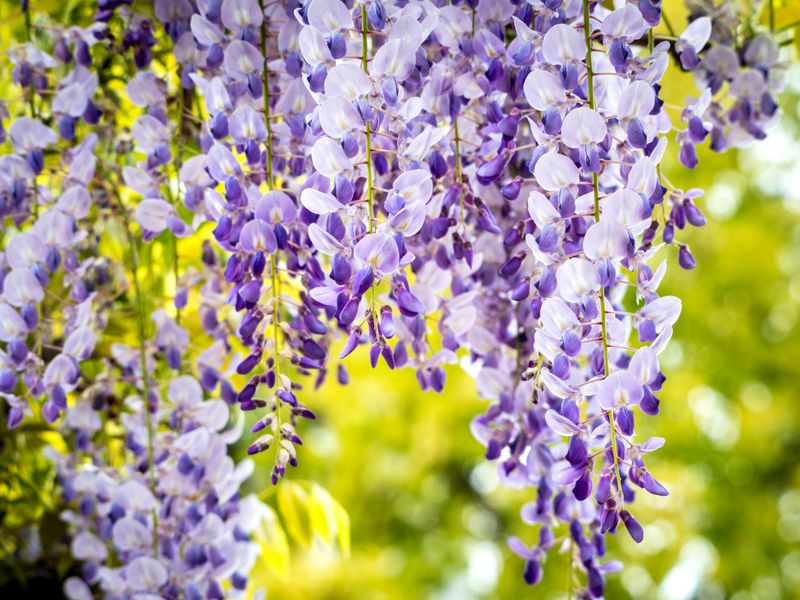
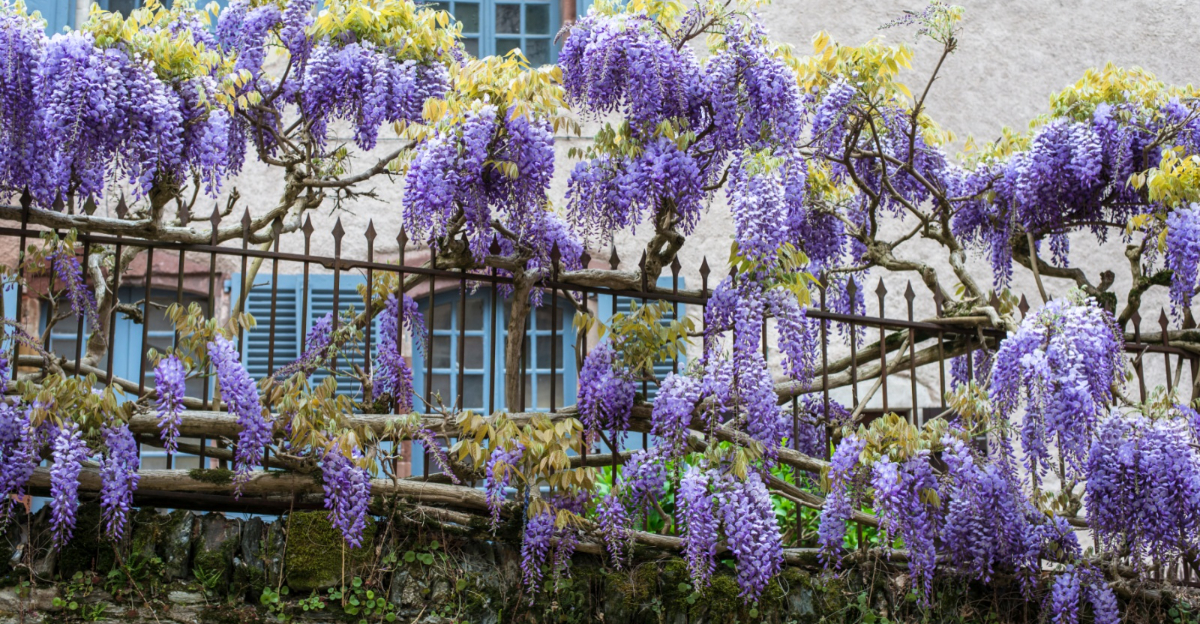
Purple waterfall is the only way to describe American Wisteria in full bloom. Wisteria frutescens produces long, drooping clusters of lavender to violet flowers that smell faintly sweet and stop passersby in their tracks every spring.
Best of all, this is the well-behaved American cousin of Asian wisteria, which can overwhelm structures and become extremely difficult to manage.
American Wisteria is a much more manageable plant, growing to around fifteen to thirty feet rather than the hundred-foot monsters its Asian relatives become.
It twines around fence rails and wires without sending out invasive runners that threaten foundations or nearby structures.
For Illinois homeowners who want that dramatic wisteria look without the headaches associated with Asian varieties, this is the answer.
The vine blooms reliably on new wood, which means a light annual pruning in late winter actually encourages more flowers. Give it a sturdy fence, full sun, and moderately fertile soil, and it will reward you generously.
It does take two to three years to hit its stride, but once established, it blooms faithfully every spring.
Pollinators go absolutely wild for the flower clusters, and the dense summer foliage provides excellent fence coverage once blooming ends. The leaves turn a pleasant yellow in fall before dropping, giving you one last seasonal color show.
Pods that follow the flowers add a subtle architectural interest to the bare winter fence.
Patience is the only real price of admission here, and most gardeners agree the payoff is completely worth it.
4. Prairie Rose
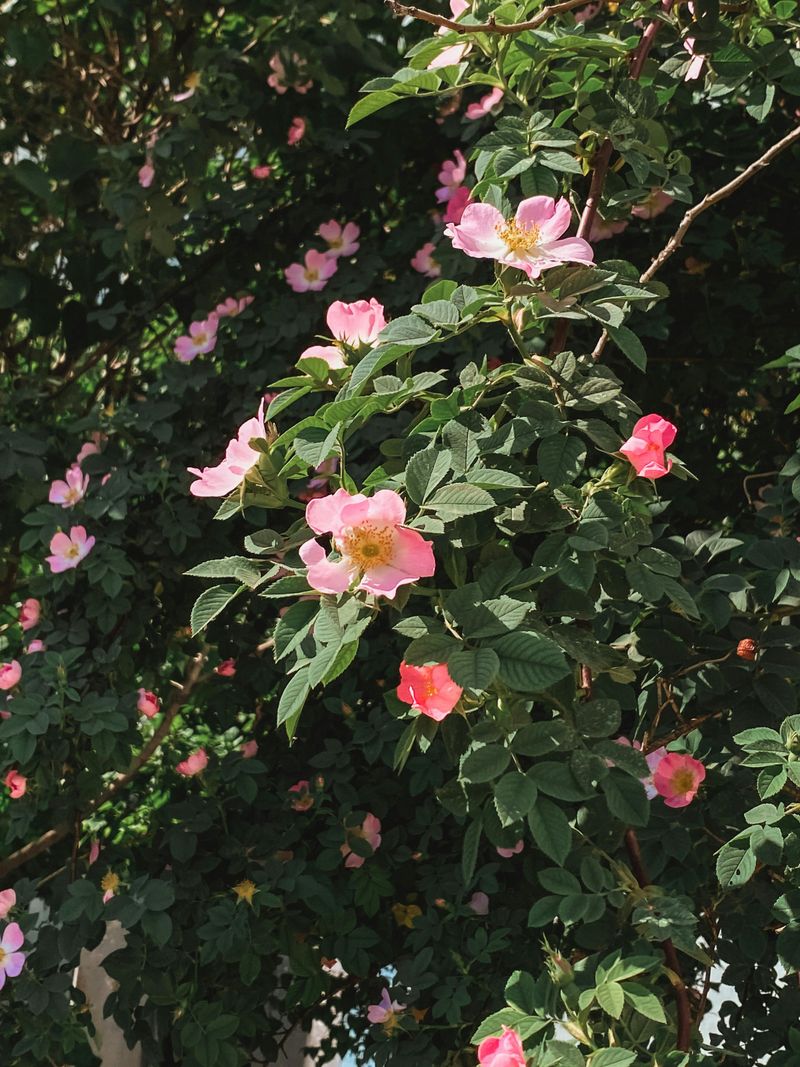
Tough as the landscape it was named after, Prairie Rose brings old-fashioned charm to any fence without demanding much in return. Rosa setigera is North America’s only truly native climbing rose, and it has been gracing Illinois fences and hedgerows for centuries.
The blooms are a soft, warm pink that fade gracefully to nearly white at the edges as they age.
This rose climbs by arching its long canes over and through fence openings rather than clinging with specialized roots. That means zero damage to fence boards, posts, or anything nearby.
Canes can reach eight to fifteen feet, providing solid fence coverage by midsummer when most other plants are just getting started.
Prairie Rose blooms once per season, typically in June and July, but the show it puts on during that window is genuinely spectacular.
After the flowers drop, it produces small, round red hips that persist through fall and winter, feeding birds and adding color to an otherwise bare fence line.
Wildlife value from a single plant does not get much better than this.
It handles poor soil, drought, and heat with the kind of attitude that makes other plants look dramatic. Full sun brings out the best bloom production, though it tolerates light shade without shutting down entirely.
Minimal pruning keeps the canes manageable and encourages fresh growth each season.
Gardeners who want a native, low-fuss climbing plant with real visual impact should put Prairie Rose at the very top of their list.
5. Native Passionflower
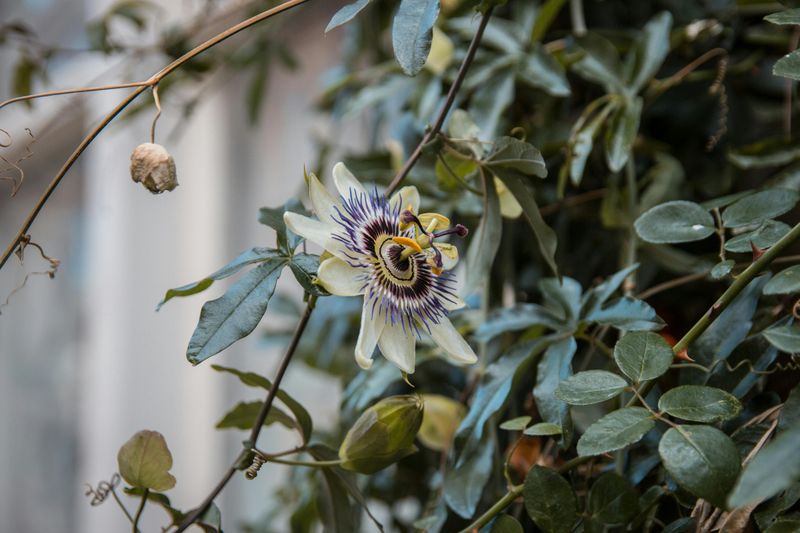
Nothing in the plant world looks quite as otherworldly as a passionflower blossom up close.
Passiflora incarnata, the native passionflower of the eastern and central United States, produces intricate purple and white flowers that look like they belong in a tropical rainforest rather than an Illinois backyard.
Surprise: it is completely winter-hardy here and grows like it means business.
This vine climbs using curling tendrils that wrap around fence wires and rails without puncturing or gripping the surface with adhesive. That makes it completely safe for wood, chain-link, and vinyl fences alike.
Growth can reach fifteen to twenty feet in a single season under good conditions, making it one of the fastest fence-fillers on this list.
Beyond the jaw-dropping flowers, it produces edible fruits called maypops that ripen in late summer. The fruits taste like a mild, tropical blend of citrus and guava, and they are a genuine bonus for adventurous gardeners.
Native bees absolutely swarm this plant all season long. It also supports several fritillary butterfly species that move through Illinois during the warmer months.
Plant it in full sun to partial shade and give it average to dry soil. Passionflower actually performs better in leaner soils because rich soil pushes leafy growth at the expense of flowers.
It spreads slowly by underground runners, so keep an eye on it in smaller gardens.
Once you see the first flower open, you will understand why people call this plant a living work of art.
6. American Bittersweet
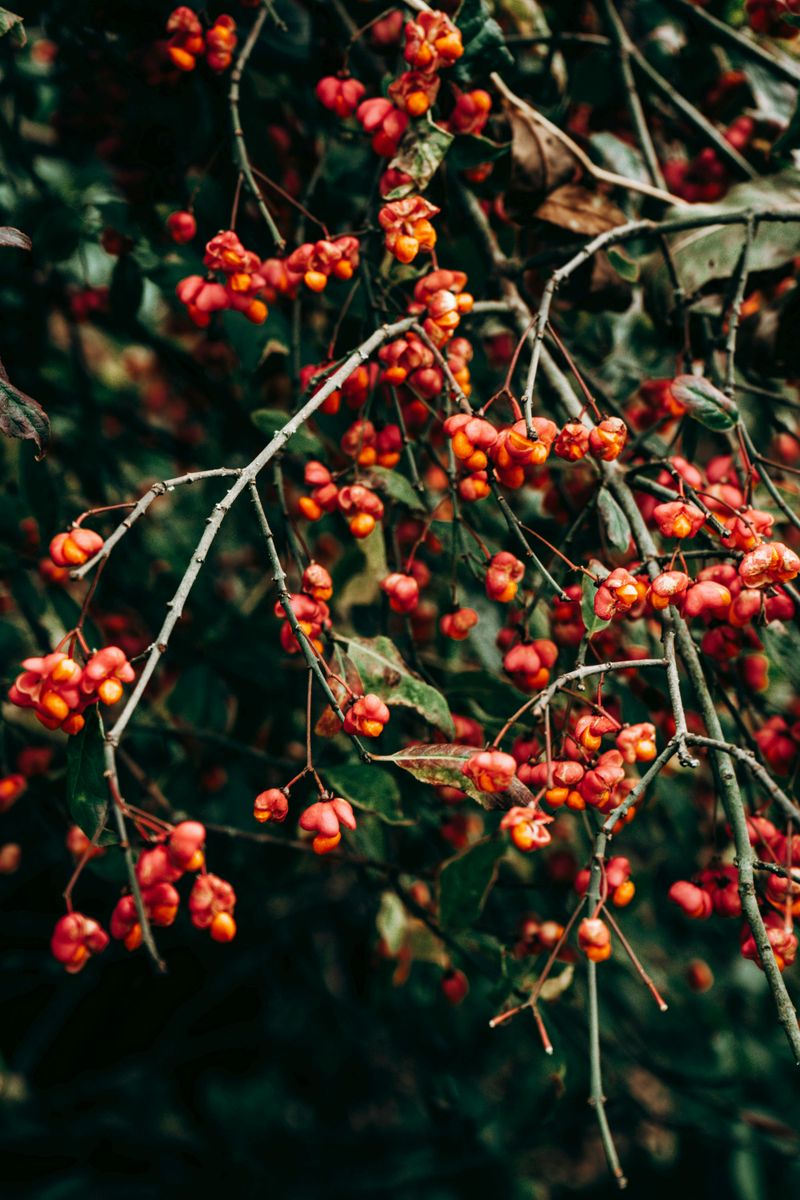
Fall is when American Bittersweet becomes the most talked-about plant in the neighborhood. Celastrus scandens bursts into color in autumn, revealing clusters of brilliant orange and red berries that split open to show a scarlet interior.
It is one of the most visually striking native vines you can grow on a fence, especially from October through December.
During the growing season, it works quietly to cover fence panels with dense, glossy green foliage. Stems twine around fence rails and wires, building coverage steadily from spring through summer without causing any damage to the fence structure.
The vine stays focused on climbing upward rather than sending roots outward toward foundations.
The native version is far less aggressive, though it still appreciates room to roam and benefits from occasional pruning to keep it in check.
One important detail: this vine is dioecious, meaning you need both a male and female plant to get berries. Plant them within a few feet of each other and let nature handle the rest.
The berries are toxic to humans, so keep young children and pets in mind when choosing a planting location.
Birds devour the berries through winter, and the bare, berry-studded stems make beautiful seasonal wreaths if you want to bring a bit of that color indoors too.
7. Crossvine
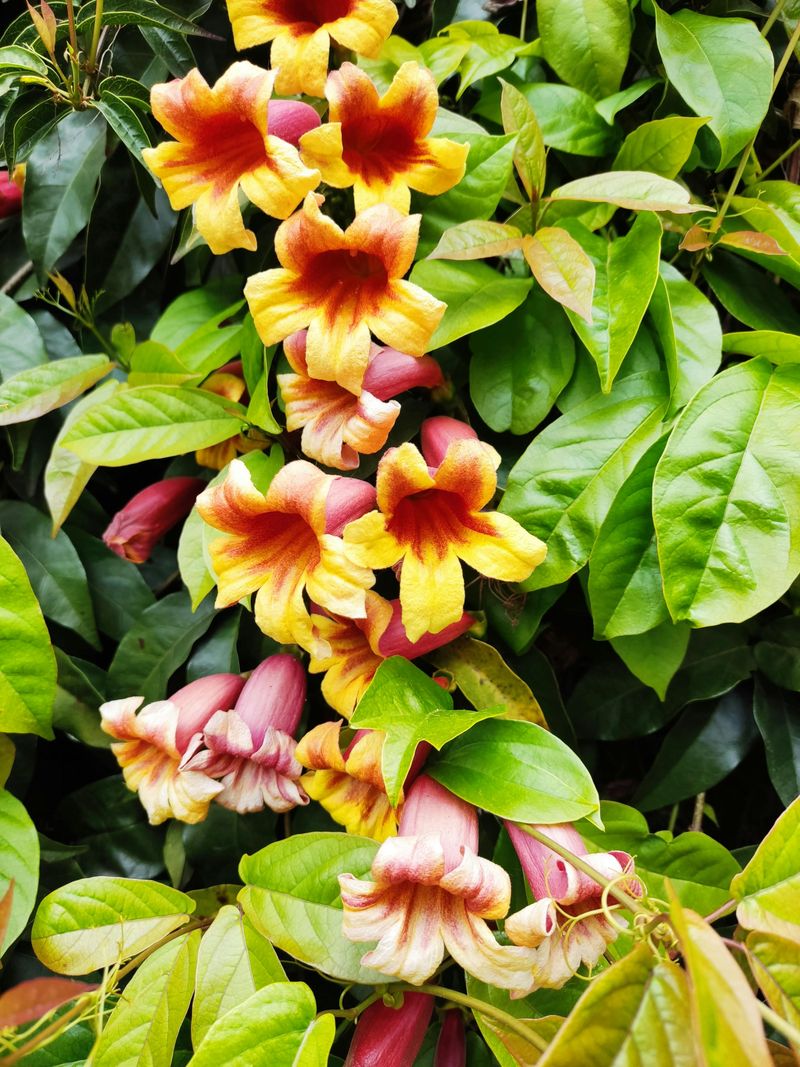
Early spring feels a lot more exciting when Crossvine is on your fence. Bignonia capreolata bursts into bloom before most other vines have even thought about waking up, covering fence panels in clusters of bold orange and red tubular flowers as early as April.
Hummingbirds returning from migration head straight for it like they have GPS coordinates saved from last year.
What sets Crossvine apart from other fast-growing fence vines is its attachment method. It uses small, disk-shaped adhesive pads to grip surfaces, which means it can climb smooth wood and even brick without needing wires or rails.
However, those pads do not penetrate surfaces deeply, so fences remain undamaged and foundations stay safe as long as you guide the vine along the fence rather than toward the house.
Crossvine is semi-evergreen, holding its leaves through mild Illinois winters and re-leafing quickly after harsher ones. That semi-evergreen habit means your fence gets coverage almost year-round rather than going completely bare in winter.
It reaches twenty to fifty feet at full maturity, making it one of the more vigorous options on this list.
Full sun produces the heaviest bloom, but the plant handles partial shade without complaint. It prefers moist, well-drained soil but adapts to average garden conditions once established.
Occasional pruning after the spring bloom keeps it tidy and encourages a fresh flush of growth.
For sheer early-season color and wildlife value, Crossvine is nearly impossible to beat on an Illinois fence line.
8. Trumpet Vine
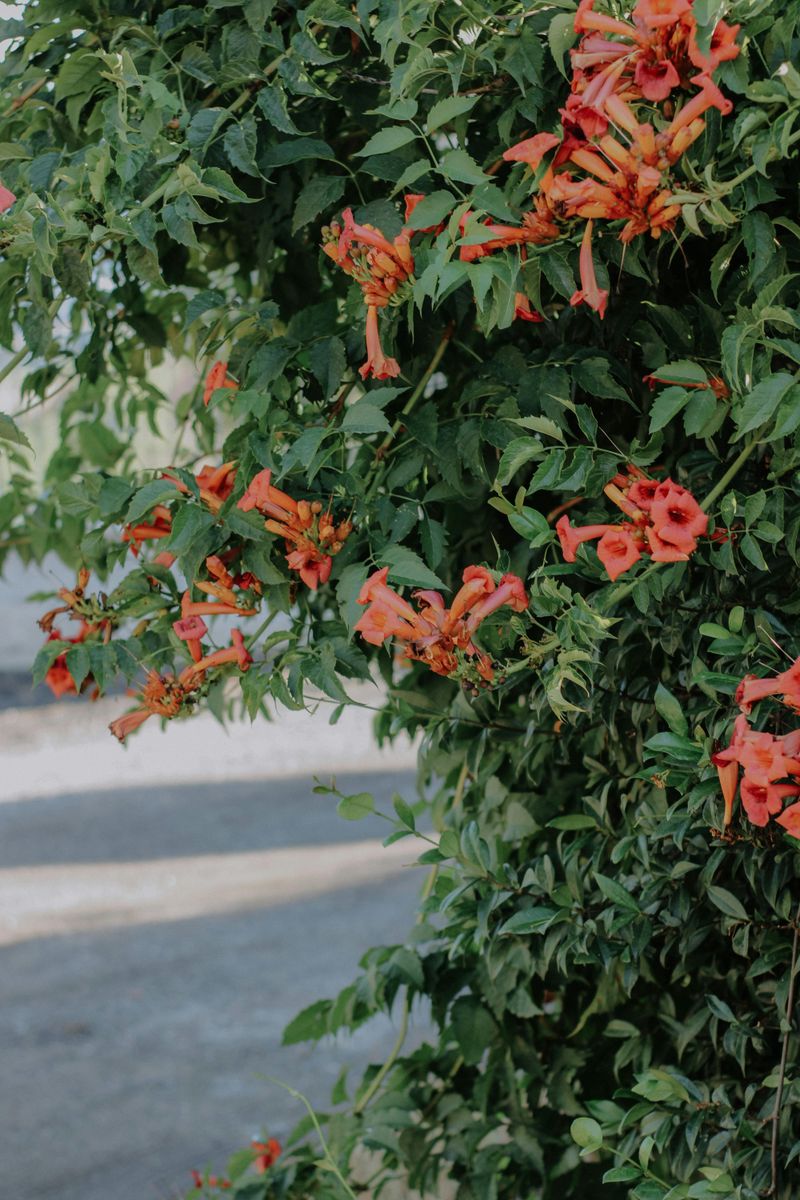
Few vines cover a fence as boldly and quickly as Trumpet Vine. It is a true native climber that has been growing wild across Illinois for centuries, and once established, it gets to work fast.
Stems can reach thirty to forty feet at full maturity, building dense, layered coverage across wood, chain-link, and rail fences alike.
The flowers arrive in midsummer and run well into early fall. Long, flared trumpets in vivid shades of orange and red cluster at the ends of each stem, and hummingbirds treat them like a buffet from the moment they open.
The bloom period stretches for weeks rather than days, giving you a long window of serious color.
Trumpet Vine climbs using small aerial rootlets that grip fence surfaces without penetrating deeply or causing structural harm. The climbing rootlets grip without damaging fence surfaces, and the roots stay well away from foundations.
New shoots near the base are easy to manage with occasional trimming. Guide the stems along the fence rather than toward the house and you will have full control of where it goes.
It thrives in full sun and handles average to poor Illinois soil without complaint. Established plants are drought-tolerant and genuinely low maintenance once they hit their stride.
A firm pruning in late winter keeps the size manageable and encourages the heaviest flower production each summer.
Seed pods that follow the flowers split open in fall to reveal winged seeds, adding a subtle architectural detail to the fence through winter. For sheer coverage speed, wildlife value, and color payoff, Trumpet Vine earns its place on any Illinois fence line.