The Bright Red Growth On Indiana Roses Is Not New Growth
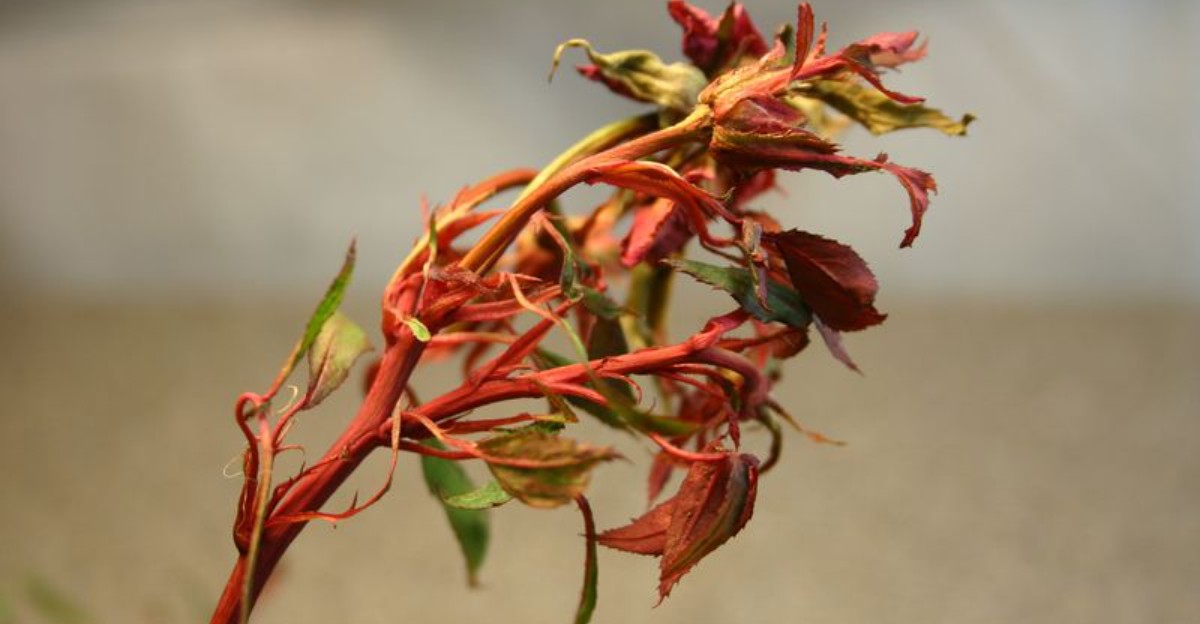
September in Indiana has a sneaky way of playing tricks on even the sharpest backyard gardeners. A splash of bright red shows up, and everyone assumes the season is offering a generous encore.
Red usually signals fresh, vigorous growth, the kind of color that earns quiet bragging rights over the fence. Sometimes, though, that color is less of a celebration and much more of a red flag.
Something microscopic may have drifted in on a warm August breeze and settled down without any invitation. By the time the color finally shows, it has been comfortable there for several weeks.
A gardener who reads that flash of crimson correctly stays a step ahead of a puzzled one. The shrub, meanwhile, keeps blushing away like it has no clue it started all this drama.
Red Shoots That Signal Trouble In Indiana Rose Beds
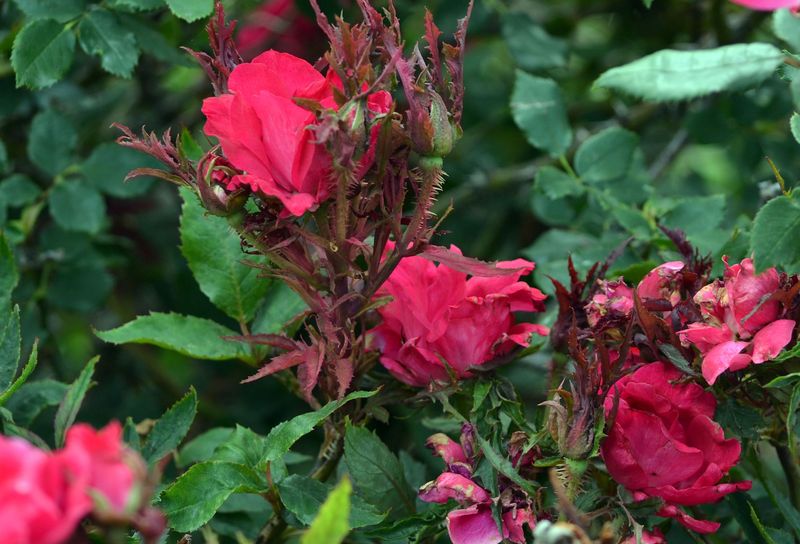
Gardeners across Indiana often cheer when scarlet shoots appear, assuming the bush is pushing fresh, healthy canes. That flush of red can actually be the first visible sign of rose rosette virus.
Normal new growth starts reddish, then fades to green within a week or two of unfolding. Infected growth keeps its wild color, thickens oddly, and refuses to settle into a normal shape.
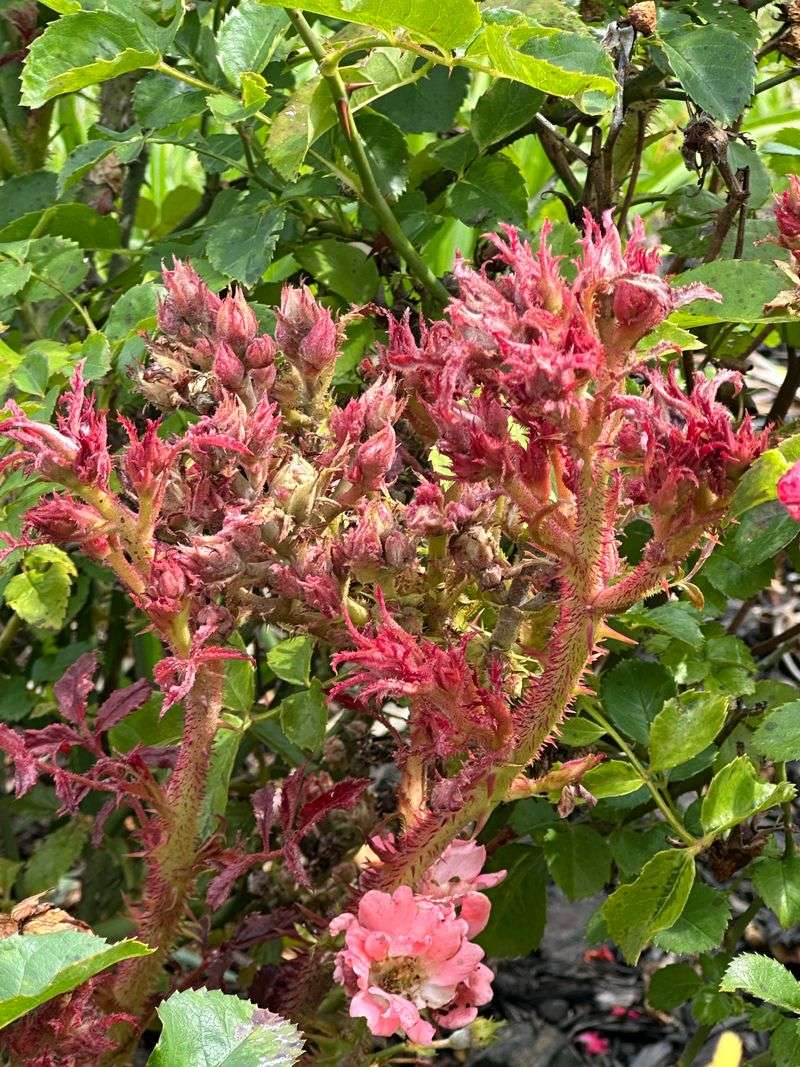
The stems often look rubbery and swollen, with far more thorns than any neighboring cane on the same shrub. Leaves may be small, crinkled, and bunched together like a tight red broom.
Indiana’s fencerows full of wild multiflora roses keep this virus circulating year after year across the countryside. Backyard roses sit downwind, which gives the problem an easy path into ordinary home gardens.
Catching the difference early matters because no spray or tonic on the shelf will cure an infected plant. Your best tools are a careful eye and a willingness to act quickly.
Walk your beds once a week and compare shoots on the same bush side by side for reference. Healthy red tips mature and green up, while suspicious ones stay loud, twisted, and strangely prickly.
Take a photo whenever something looks off so you can track how that shoot changes over time. Pictures make it far easier to confirm a pattern before you reach for the pruners.
Neighbors with roses appreciate a heads-up, since this trouble rarely stops politely at one property line. Shared watchfulness along a street protects more bushes than any single gardener can manage alone.
The Tiny Mite Behind The Crimson Warning
Blame for the scarlet mess belongs to a mite so small that you would need magnification to see it. Phyllocoptes fructiphilus rides the wind between bushes, carrying rose rosette virus along for the trip.
These mites gather in leaf bases and bud scales, feeding where the tender tissue stays softest. A single strong breeze can move hundreds of them across a suburban yard in seconds.
Unlike spider mites, they spin no webbing and leave no obvious speckling across the leaf surface. You may notice the strange growth months before you ever suspect a mite was involved.
Your Indiana Garden Changes Every Week. Your Plan Should Too.
Gardening in Indiana changes quickly throughout the season. Every Friday you’ll receive a simple weekly plan showing exactly what to plant, prune, fertilize, harvest, and protect so you never miss the right timing.
Populations build through summer heat, so by September Indiana bushes have had a long exposure window. Warm, breezy afternoons in August and early fall push these travelers the farthest distances.
Wild multiflora roses growing along Indiana ditches and woodlots act as a steady, reliable mite nursery. Those thickets hold the virus quietly, then hand it off to nearby garden roses.
Miticides can knock populations back, though timing and spray coverage must be nearly flawless to help. Most home gardeners get better results by removing sources and spacing plants more thoughtfully.
Leaf blowers, pruning tools, and even shirtsleeves can move mites short distances around your property. Rinsing gloves and wiping blades between bushes costs nothing and lowers your overall risk.
Understanding the carrier changes how you garden, because you stop staring only at the roses themselves. The fencerow past your property line may matter more than any bottle in the shed.
September Timing And Late Season Symptoms In The Garden
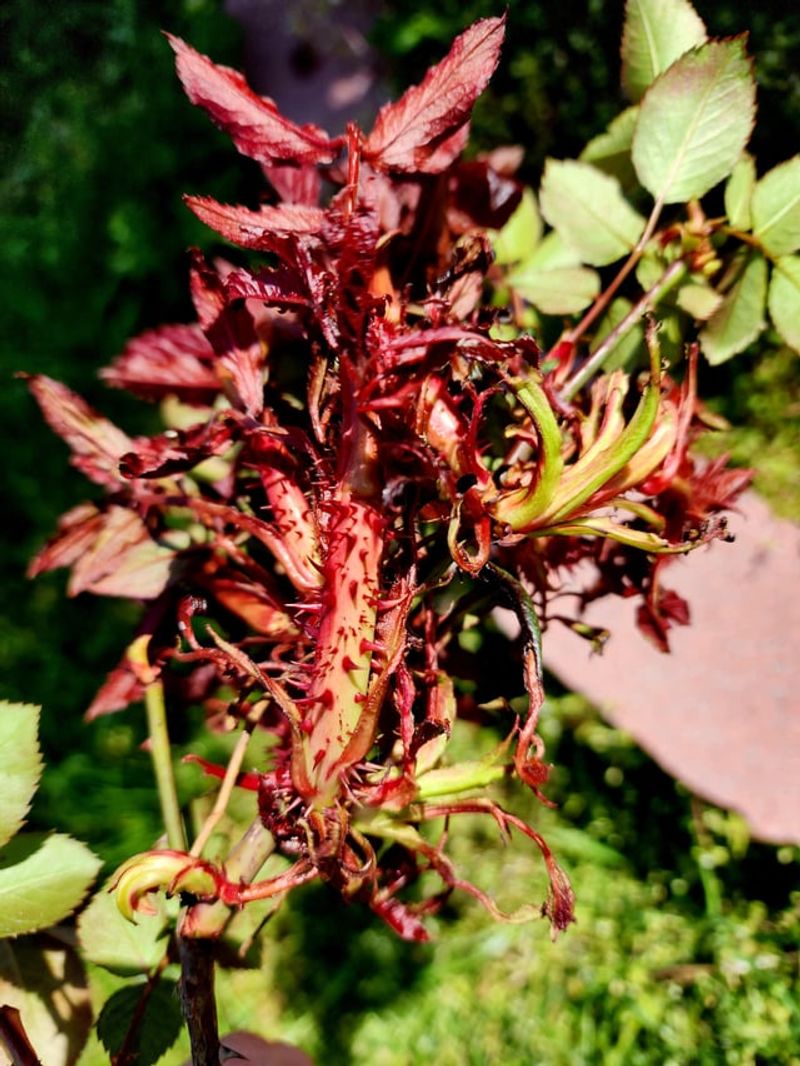
Fall confuses people because plenty of shrubs blush naturally once Indiana nights start turning cool. Virus symptoms, however, ignore the calendar in a way ordinary autumn coloring does not.
September inspections carry real value since infections from spring and summer have had months to reveal themselves. Leaves remain attached, which gives you plenty of evidence to compare across the whole plant.
Look for a single cane growing far faster than its neighbors, often with unusual thickness and stiffness. That runaway shoot may carry clusters of tiny leaves packed into a broom-like tuft.
Thorn counts tell a strong story this time of year, especially on newer wood near the top. Infected canes sprout soft, crowded prickles that feel almost like coarse sandpaper under your fingers.
Buds opening into distorted, strap-shaped petals give you another September clue worth writing down carefully. Flowers may look stunted, oddly colored, or simply refuse to open the way they should.
Cool weather slows symptom development, so a mild Hoosier autumn sometimes delays the most obvious signs. Plants infected late in the season may look fine until the following May or June.
Checking now beats waiting for spring because removal goes easier while the problem stays contained. Fall soil digs nicely after rain, and the garden has fewer competing chores demanding attention.
Mark questionable bushes with bright ribbon so you can recheck them after the first hard frost. A simple ribbon saves you from guessing which shrub worried you three weeks earlier.
Common Mistakes With Suspicious Canes
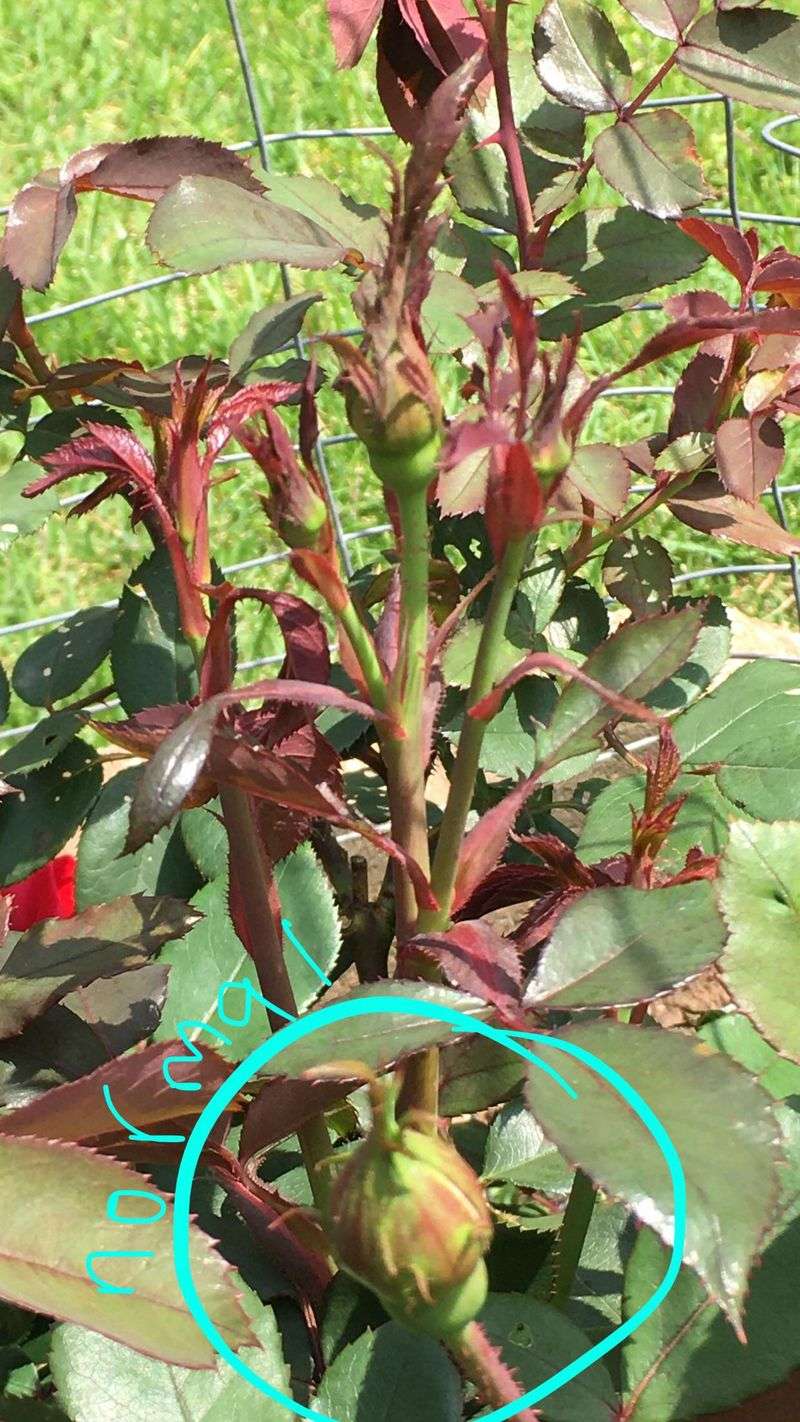
A gardener’s first instinct is usually to snip the weird cane off and call the matter settled. Pruning alone rarely fixes anything, since the virus moves through the plant’s entire system.
Another frequent error involves blaming herbicide drift, which can create similar twisted, reddish, distorted shoots. Lawn spray damage usually shows up on several plant types nearby, while this trouble targets roses.
Some folks reach for fertilizer, hoping a generous feeding will push the bush back toward normal. Extra nitrogen only produces tender new shoots that mites find especially welcoming.
Tossing infected clippings onto the compost pile keeps mites uncomfortably close to your remaining bushes. Wind carries them straight back into the same bed within a day or two.
Waiting until spring hands the mites several extra months to travel toward your neighbor’s fence line. Each week of delay raises the odds another bush picks up the identical problem.
Using unwashed pruners on healthy roses right after cutting a suspect cane invites unnecessary risk. A quick wipe with an isopropyl solution between plants takes roughly ten seconds.
Clearing rose beds with a powerful leaf blower can fling mites a surprising distance across the yard. Raking by hand keeps debris, and the tiny hitchhikers, much closer to the ground.
Second-guessing yourself is normal, so send clear photos to your county Purdue Extension office first. Those educators answer this question constantly and will not judge your gardening skills.
Removal Steps For An Infected Rose Bush
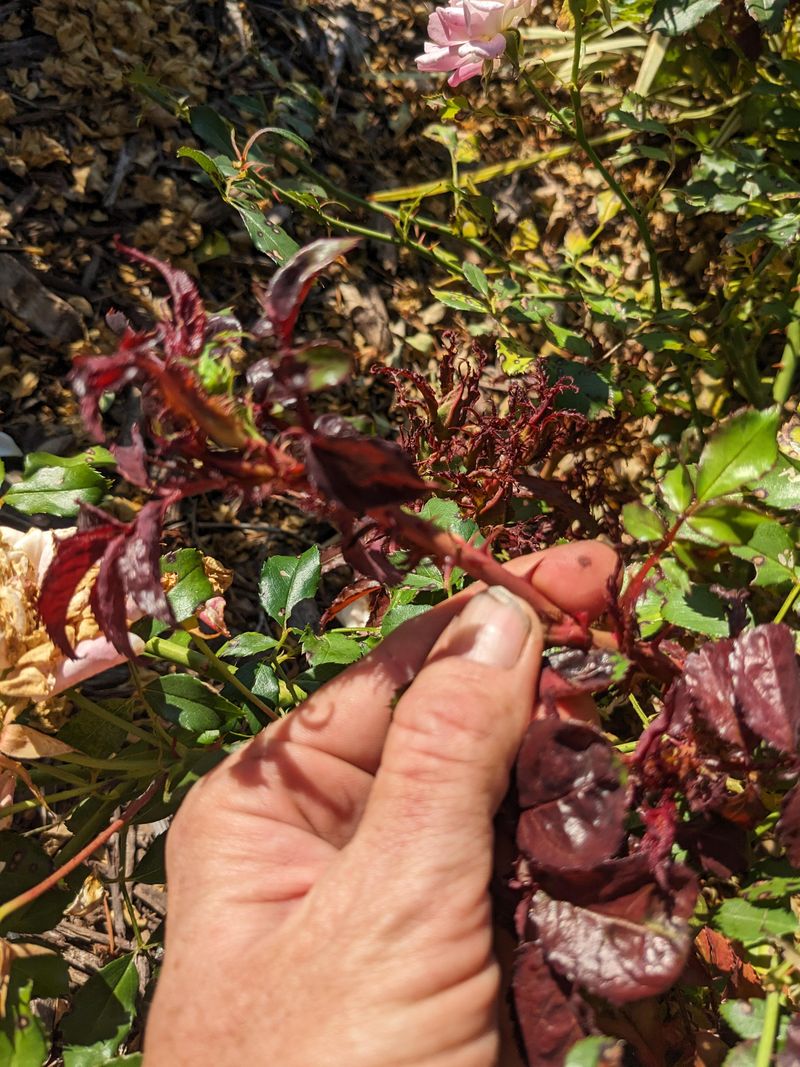
Once you feel confident about the diagnosis, removal works best on a calm morning without wind. Still air keeps mites from sailing toward the rest of your garden while you work.
Bag the plant before cutting if possible, wrapping the canes inside a heavy contractor bag. That wrap traps loose leaves and mites that would otherwise scatter across the bed.
Dig out the roots as well, because leftover pieces can resprout with the virus still inside them. A sharp spade and steady patience handle most established shrubs in a Hoosier yard.
Skip the compost pile, and skip burning unless your Indiana township allows open fires safely. Household trash pickup remains the simplest, tidiest destination for bagged infected material.
Sanitize pruners, loppers, and your spade with a disinfecting solution or a diluted bleach rinse afterward. Tools carry more than sap between plants, so cleaning them protects every survivor.
Wash your gloves and change shirts before touching other roses later that same afternoon. Mites cling to fabric remarkably well and happily accept a free ride.
Inspect nearby bushes closely during the project, since close neighbors often show quiet early symptoms. Finding a second case today saves you a repeat performance next June.
Mark your calendar and revisit the empty spot monthly for stray shoots from missed root fragments. Any sprout that appears deserves pulling and bagging without much hesitation.
Replanting And The Soil Left Behind
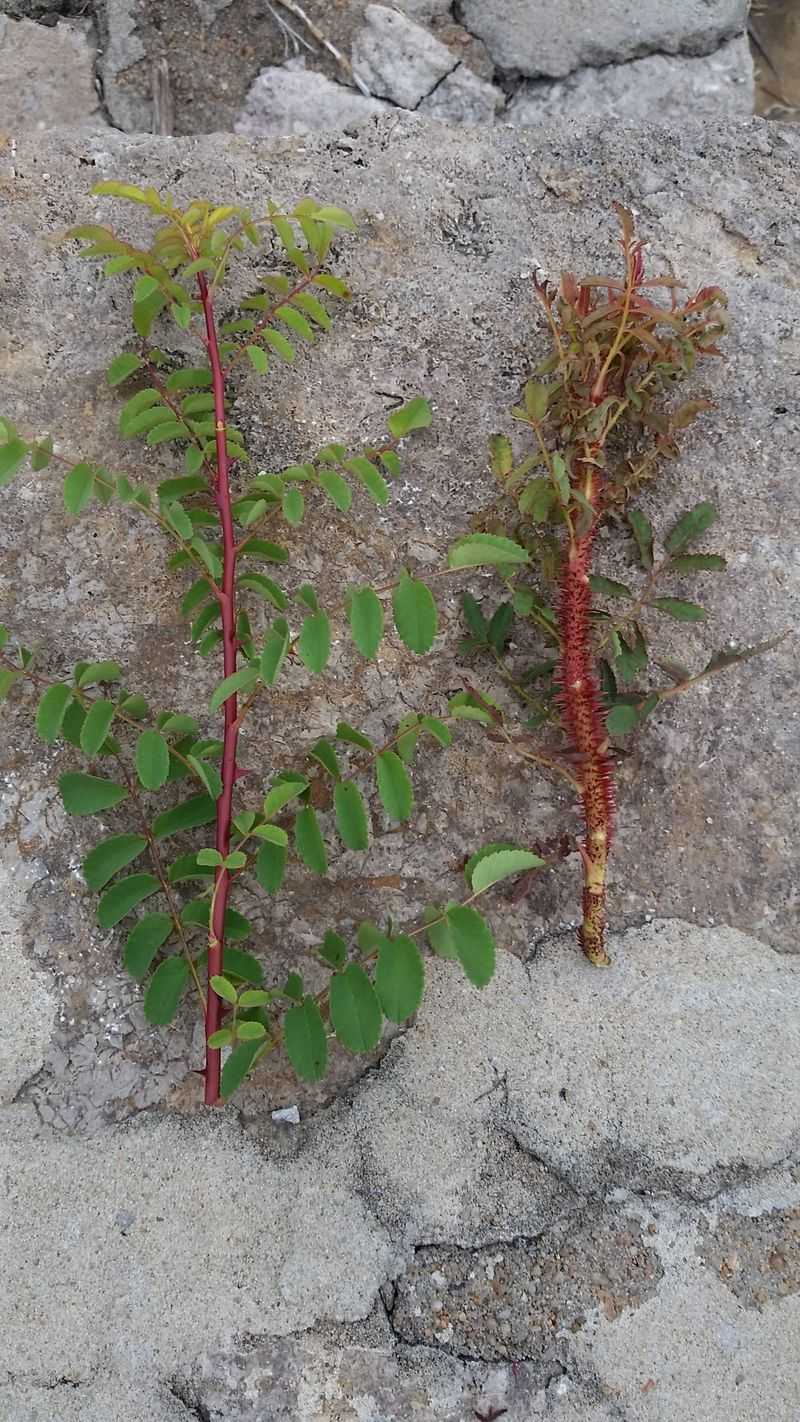
One relief follows removal. This virus does not linger inside Indiana garden soil. It survives within living rose tissue and inside the mites, not within dirt particles.
That means tomatoes, hydrangeas, coneflowers, and nearly anything else can occupy the open space safely. Only roses carry this particular problem, so surrounding plants face no added danger.
If you want another rose in that spot, wait a few weeks and watch for root sprouts. Those stray shoots are the genuine concern, not the ground they happened to grow from.
Fall planting suits much of Indiana, though October installs need water until the ground freezes solid. Spring planting gives young roots a longer stretch to settle before summer heat arrives.
Choose a location with good airflow and morning sun so replacements stay strong and dry. Crowded corners trap humidity and make weekly monitoring harder than it needs to be.
Space new bushes farther apart than before, because touching canes pass mites from plant to plant. Four feet between roses feels generous in year one and sensible by year three.
Consider mixing non-rose shrubs into the bed, which slows any future spread through the planting. Variety turns an easy buffet into a scattered snack for wind-blown pests.
Gardens bounce back fast, and one lost shrub rarely ends anyone’s rose growing ambitions. Plenty of Hoosier beds honestly look better the second time around.