Indiana Sycamores Are Shedding Bark In Sheets And Nothing Is Wrong
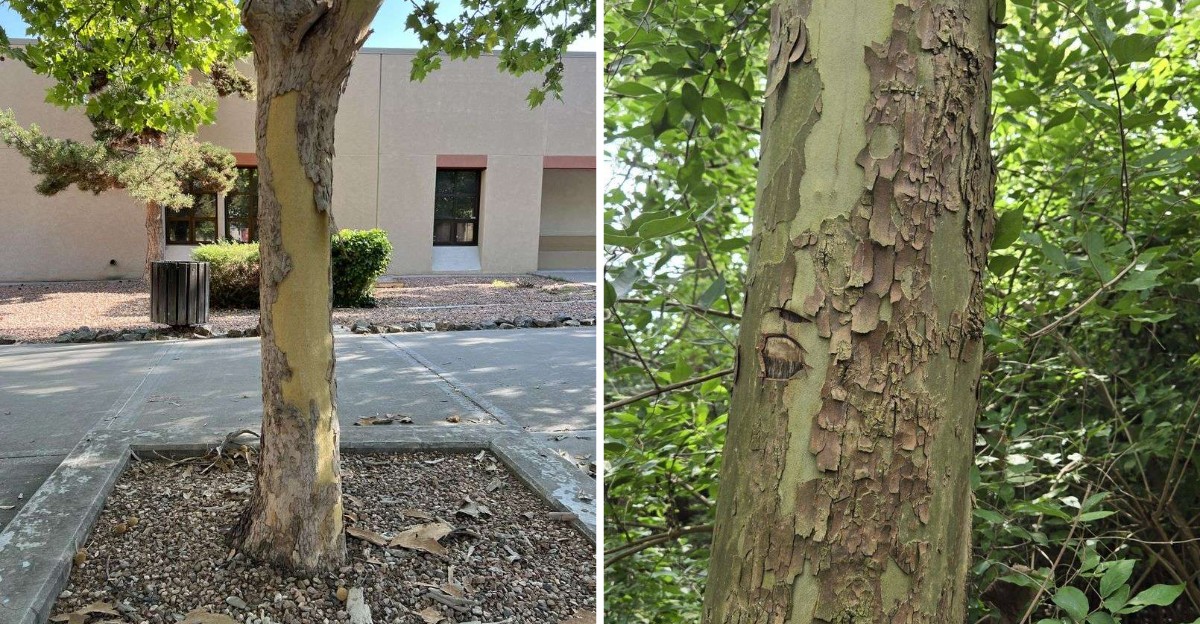
Walk along almost any Indiana riverbank this month and you may hear a dry, papery crack somewhere overhead. Seconds later, a pale curled slab lands on the trail right beside your shoe.
It honestly looks like someone peeled a giant strip of wallpaper and abandoned it out in the woods. Neighbors start worrying, group chats light up, and somebody immediately blames the summer heat.
What’s actually happening is far less dramatic than the giant mess scattered across your lawn would suggest. Certain trees simply outgrow their own stiff jackets and toss them aside year after year without apology.
After a closer look, those curled sheets stop looking alarming and start looking oddly fashionable. The squirrels, meanwhile, have already hauled off the best pieces for reasons only squirrels understand.
The Simple Growth Explanation Behind Those Pale Patches
Picture a growing kid squeezing into last winter’s coat, with seams straining and buttons ready to pop. That awkward image explains exactly what an American sycamore trunk does through a warm Indiana summer.
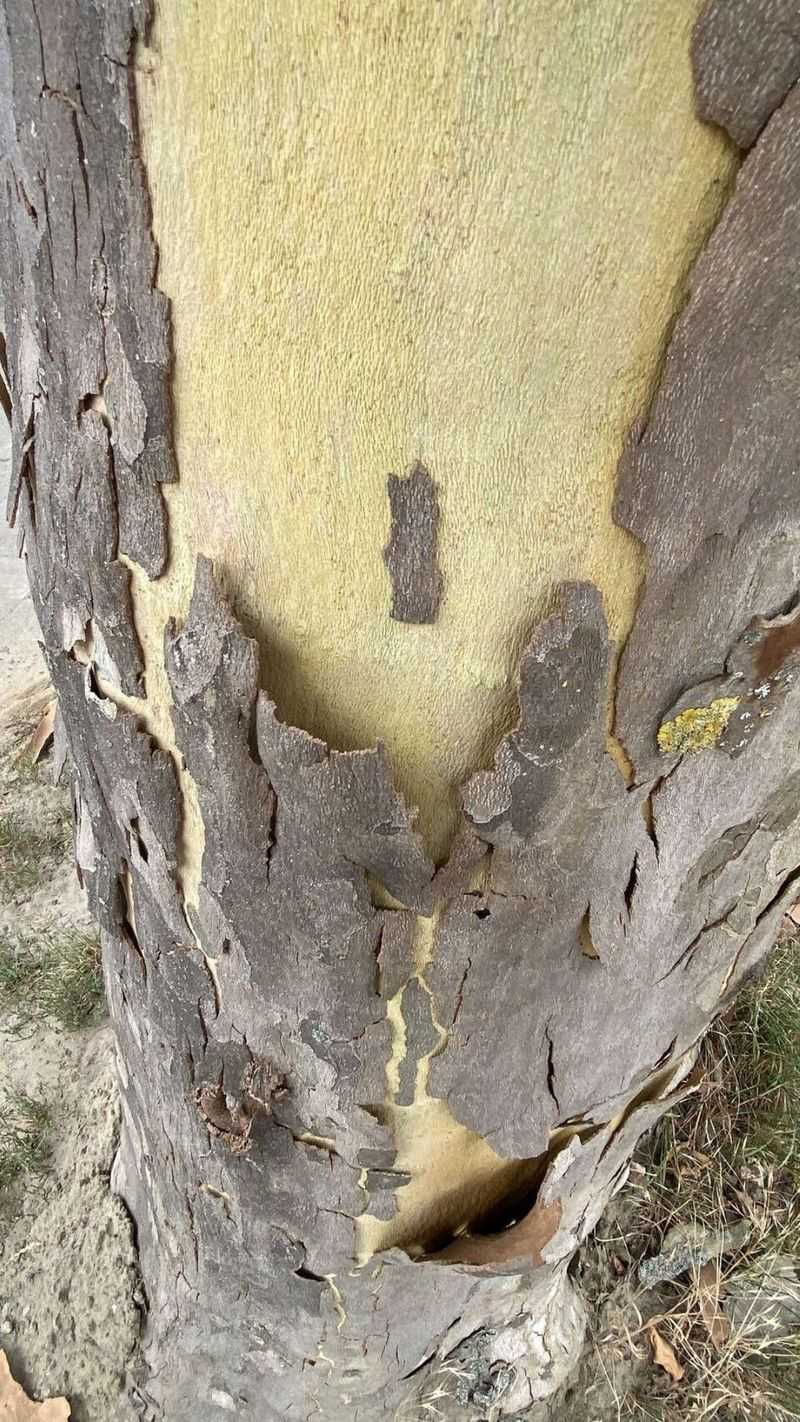
Sycamores add wood quickly, and their outer bark is stiff, brittle, and unable to stretch along with them. So the old layer splits, curls, and drops away in big jigsaw plates.
Underneath sits fresh bark in cream, olive, and soft gray, which is why the trunk looks camouflaged. Botanists call the process exfoliating bark, a fancy term for a very ordinary wardrobe change.
Older trunk wood near the base keeps rough, dark plates because growth there has slowed considerably. Upper limbs, still stretching fast, go bone white and smooth, giving sycamores their ghostly winter look.
Indiana soils along the White and Wabash rivers suit these trees, so growth here runs especially strong. Faster growth means larger shed pieces, some wide as dinner plates and surprisingly loud on landing.
Nothing about the peeling signals infection, insect damage, or drought stress on a healthy young tree. In fact, a trunk that stops renewing its surface layers deserves more attention than a flaky one.
London planetrees, common along Indianapolis streets, behave the same way because they share sycamore parentage. Once you spot the pattern, city sidewalks start looking like a free outdoor art gallery.
Keep one shed sheet on a shelf as a conversation piece, because guests will ask about it. It weighs almost nothing and smells faintly of damp river woods.
Late Summer And Early Fall Timing In Indiana
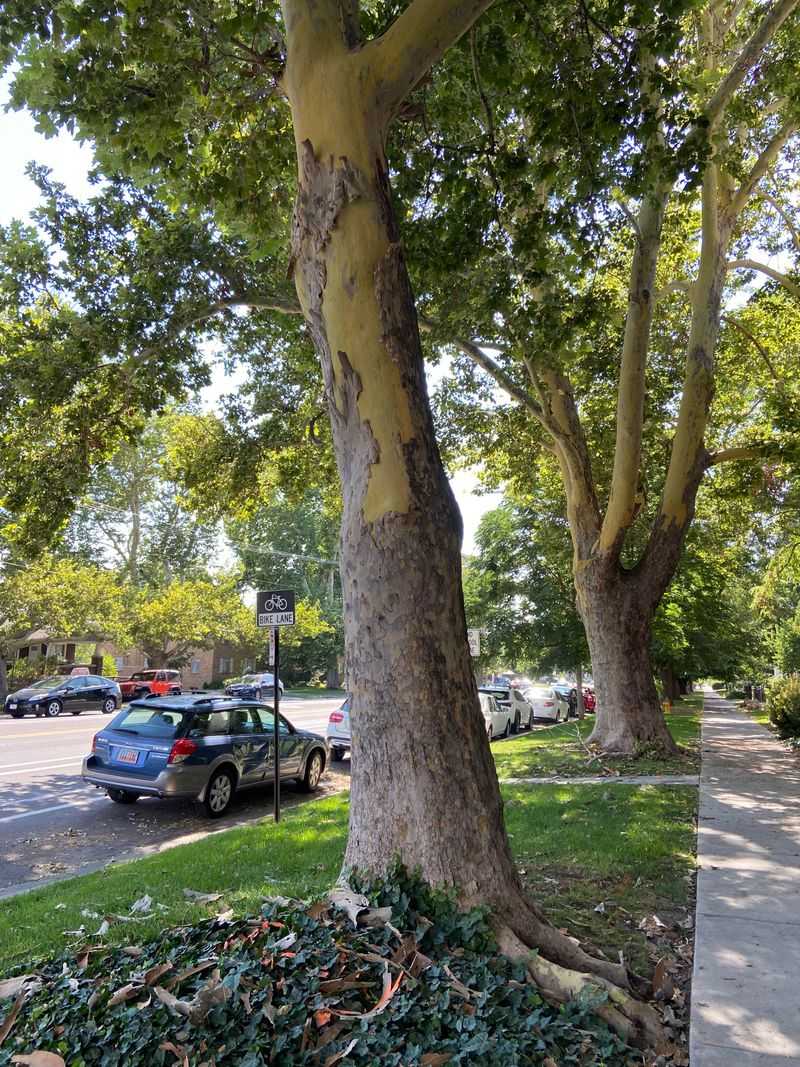
September is prime peeling season across much of the state, though the show can start in July. Warm days, growth spurts from spring rain, and drying winds loosen plates all at once.
Spring and early summer bring the real growth push, when trunks expand at their quickest rate. By late summer the outer shell has been stretched past its limit and simply lets go.
Dry stretches in August speed things up because brittle bark cracks more easily than damp bark. A single thunderstorm gust can then strip a trunk clean in about twenty noisy minutes.
Homeowners often notice the mess right when they start raking leaves, which doubles the confusion. Bark and leaves arriving together feels like trouble, yet both are ordinary autumn housekeeping chores.
Your Indiana Garden Changes Every Week. Your Plan Should Too.
Gardening in Indiana changes quickly throughout the season. Every Friday you’ll receive a simple weekly plan showing exactly what to plant, prune, fertilize, harvest, and protect so you never miss the right timing.
Young trees under fifteen years old shed the most because their diameter changes fastest. Mature giants along Brown County creeks peel in smaller flakes, spread across a longer window.
Cool October weather usually slows the drop, and winter reveals the bright white upper branches. That pale canopy against gray Indiana skies is the payoff for tolerating a messy September.
Keep a rough mental calendar so next year’s shedding does not catch you off guard. Writing the dates on a garden note helps separate normal timing from genuine surprises.
Neighbors comparing notes often find their sycamores peel within the same two or three weeks. Trees are synchronized by weather, not by gossip, though the gossip spreads much faster.
Normal Peeling Versus Genuine Trouble
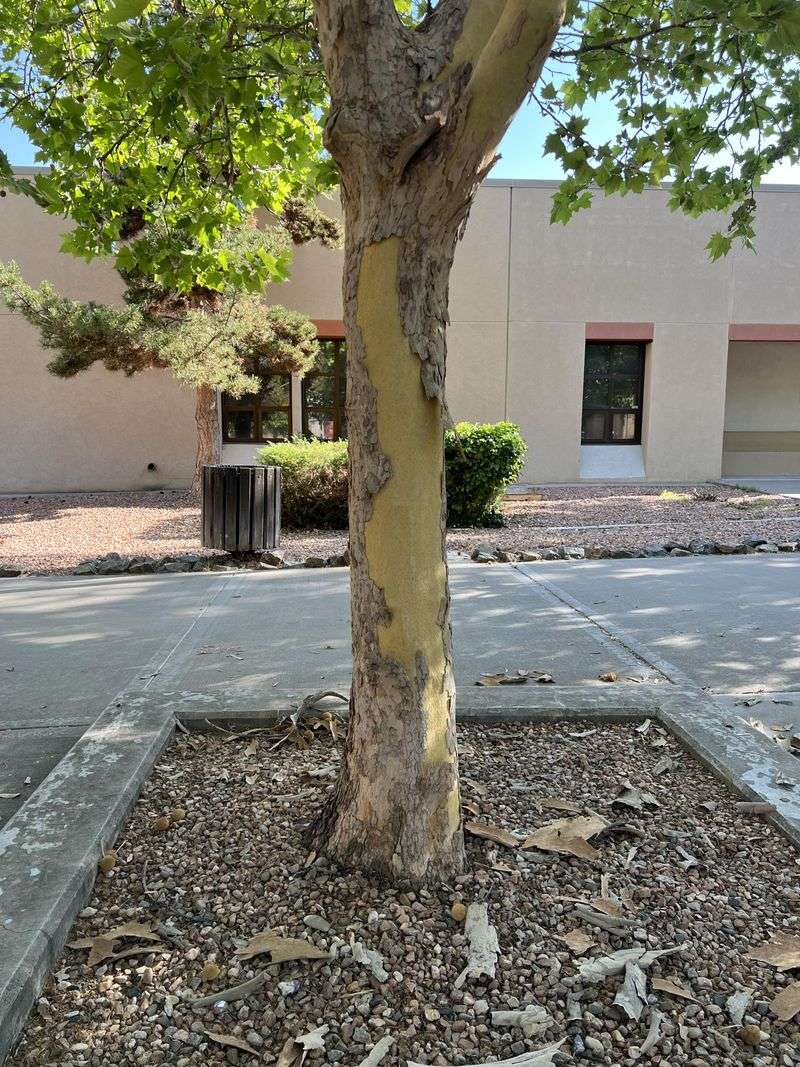
Here is the useful test that separates harmless shedding from a problem actually worth investigating. Look at the leaves and twigs, not at the pile of bark near your feet.
Healthy sycamores wear full green canopies in September, with firm twigs that bend instead of snapping. Fresh bark underneath the shed plates should feel smooth, dry, and pleasantly cool to touch.
Warning signs look different, and they involve soft, dark, or oozing patches on the trunk. Sunken areas, sawdust piles, or small round holes suggest borers rather than routine seasonal renewal.
Anthracnose, a fungus common in wet Indiana springs, browns leaf edges and twists young shoots. Peeling bark alone does not point to it, so check foliage before worrying about sprays.
A trunk that peels while the crown thins from the top down deserves a closer look. Call a certified arborist in that situation, since crown decline has many possible causes.
Mushrooms growing at the base or thick fungal shelves on the trunk matter far more than flakes. Those growths hint at interior decay, which changes how safely a large limb hangs overhead.
Bare patches with green wood beneath are simply the newest layer catching sunlight for now. Give them a few weeks and the color settles into that familiar patchwork camouflage.
Snap a phone photo each September for comparison, because memory exaggerates messes over time. Side by side pictures usually prove your tree is doing fine and you were just nervous.
Common Mistakes Homeowners Make With Loose Bark
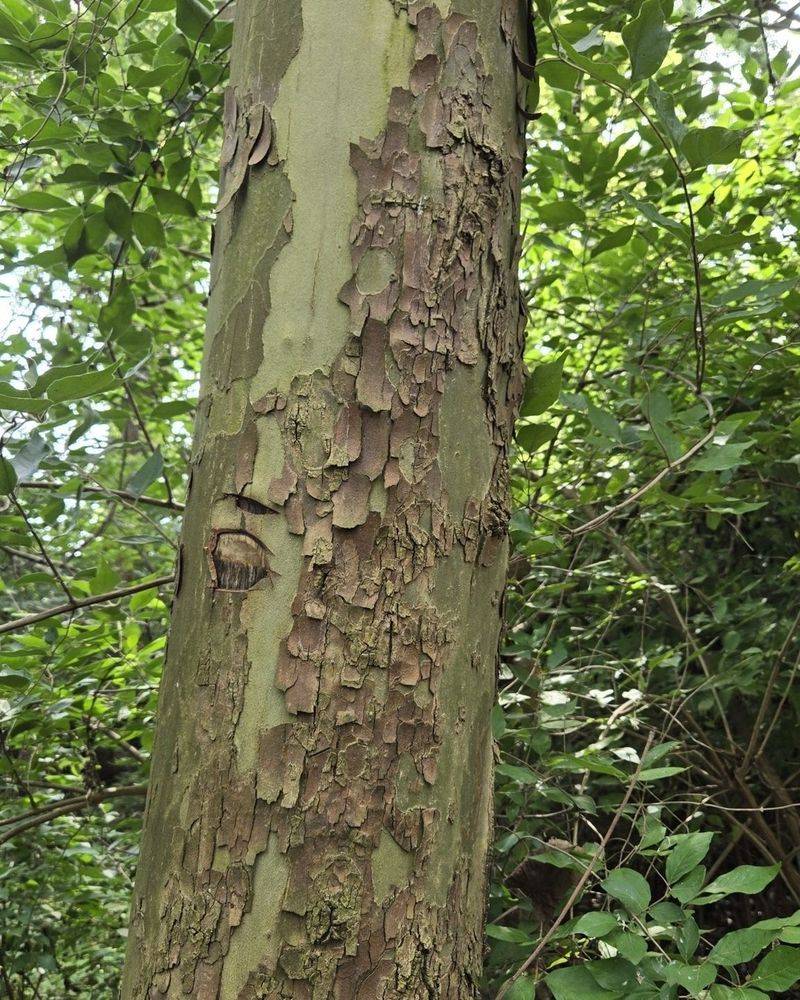
Every autumn someone grabs a pressure washer and blasts a sycamore trunk hoping to tidy it. That well meant scrubbing tears the tender layer underneath and invites an actual wound.
Pulling half attached plates by hand ranks second on the list of regrettable weekend projects. Loose pieces release on their own schedule, and tugging can strip living tissue with them.
Painting or sealing the trunk is another old habit that modern tree care has largely abandoned. Coatings trap moisture against wood, which encourages the very decay they were meant to stop.
Heavy fertilizer applications are tempting, yet extra nitrogen pushes soft growth that outpaces root support. A soil test through your county extension office costs little and prevents expensive guesswork.
Fungicide sprays get bought in a panic, though peeling bark responds to none of them. Save that money for mulch instead, which does far more good around a young trunk.
Piling mulch against the bark creates a damp collar that softens the trunk base. Spread it like a wide doughnut instead, two or three inches deep with an open center.
Mowing close enough to nick the trunk causes real wounds that peeling can easily disguise. Keep the mower deck a comfortable arm’s length away from every young sycamore trunk.
Waiting until winter to prune is smart, so resist the urge to trim in September. Late season cuts heal slowly and give insects a fresh doorway before cold weather arrives.
Smart Cleanup And Yard Care For Shed Pieces
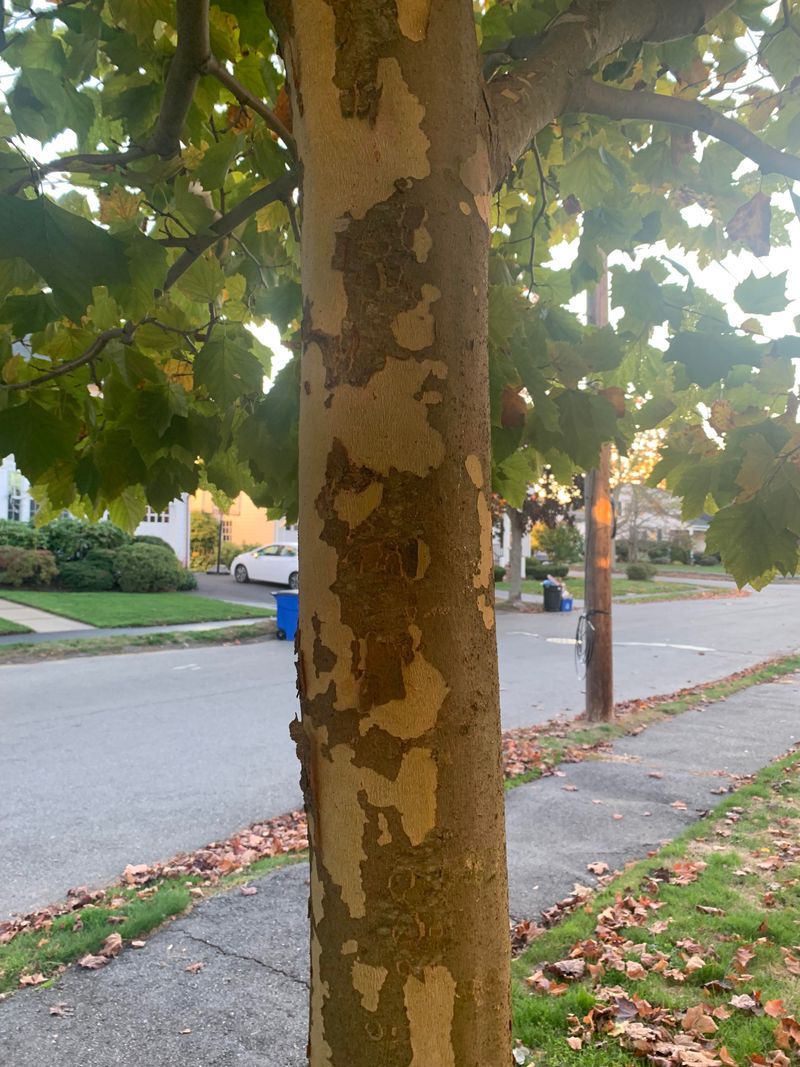
Shed bark makes surprisingly good free mulch, which shocks people already hauling it toward the curb. Run the pieces over with a lawn mower or snap them by hand into smaller chips.
Spread the broken bits under shrubs, where they hold moisture and slowly feed the soil below. Sycamore bark breaks down more slowly than leaves, so that coverage lasts right through winter.
Compost piles accept the material happily, though it needs company from grass clippings or kitchen scraps. Mixing wet and dry ingredients keeps the pile working instead of sitting there doing nothing.
Large curved sheets earn a second life in craft projects, nature journals, and classroom displays. Kids love comparing the rough outer face against the smooth, pale inner surface underneath.
Clear driveways and sidewalks first, since flat bark plates turn slippery after an afternoon rain shower. A stiff broom handles that job much faster than a leaf rake on hard surfaces.
Gutters deserve a careful check in October, because curled pieces block downspouts as well as leaves. Ten minutes on a ladder now prevents an ice dam headache during an Indiana January.
Resist the urge to rake the root zone perfectly bare during every single fall weekend. Roots appreciate a rough, littered surface that mimics the riverbanks where these trees belong.
Bag nothing unless you truly must, since hauling yard waste discards a genuinely useful resource. Your flower beds will quietly thank you next July when the ground stays cooler.
The Long Term Payoff Of A Healthy Sycamore
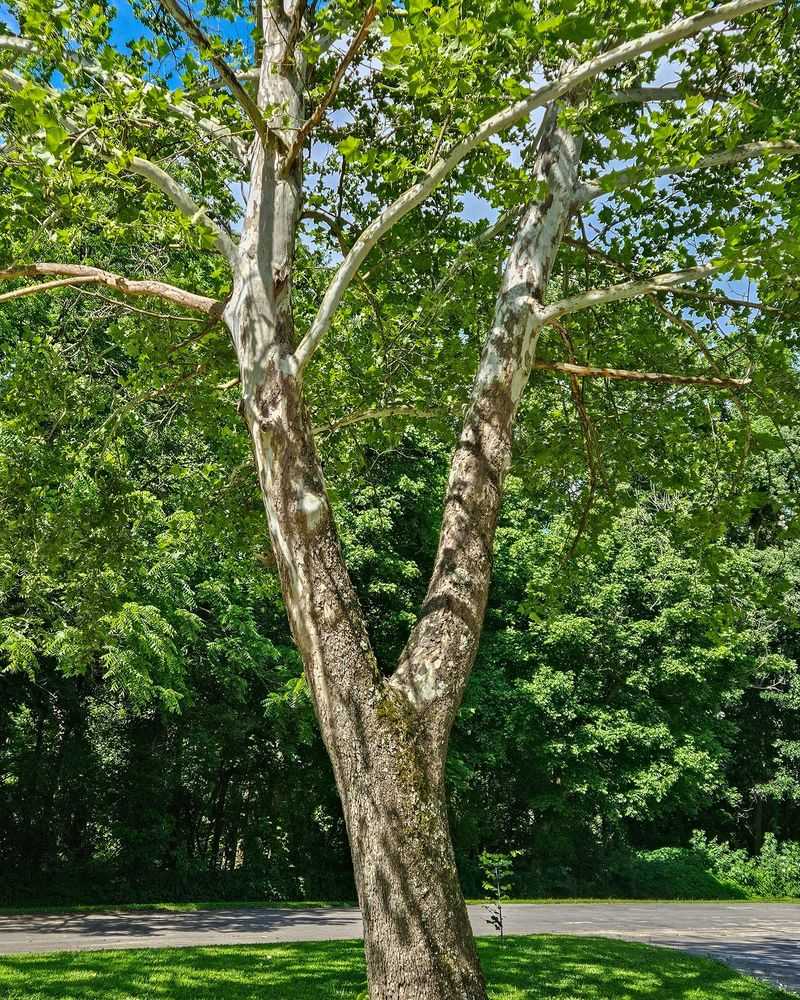
Patience with the mess earns a reward that few other Midwestern shade trees can truly match. Mature sycamores throw wide, cooling shade across yards and can outlive the houses beside them.
Indiana holds some of the largest sycamore specimens in the country, with trunks that can stretch beyond ten feet across. The famous hollow sycamore stump near Kokomo has stood as one of the state’s oddest tourist attractions for over a century.
Growth of two feet per year is common on young trees with decent water and sun. That speed makes sycamores a favorite for new subdivisions needing quick shade and privacy screening.
White upper limbs create a winter landmark that stands out from every road in the county. Photographers chase that pale glow in January, when bare branches catch low afternoon light.
Wildlife benefits too, since hollow trunks host owls, raccoons, chimney swifts, and even honey bees. Peeling plates even give tiny insects and roosting bats snug hiding spots along the trunk.
Root systems tolerate the wet clay soils that frustrate maples, oaks, and many ornamental choices. Low, damp spots in Hoosier backyards suit sycamores far better than most homeowners expect.
Energy savings arrive within a decade, as afternoon shade cuts cooling bills on west facing walls. One well placed tree can lower nearby air temperature by several genuinely noticeable degrees.
Every sheet of bark on the ground marks another inch of trunk quietly added. Seen that way, the cleanup starts to feel like collecting receipts for healthy growth.