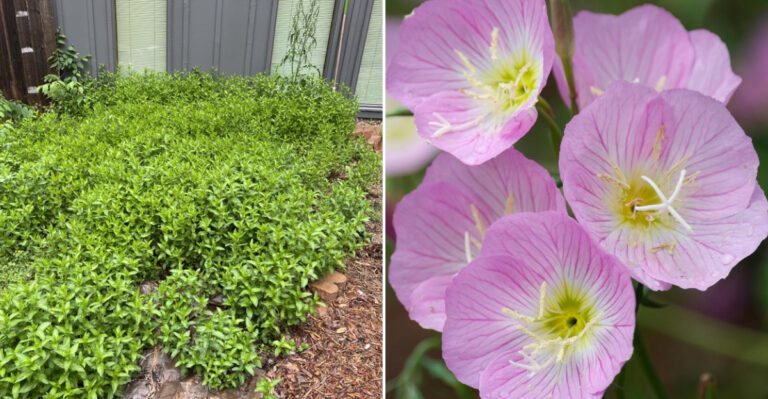
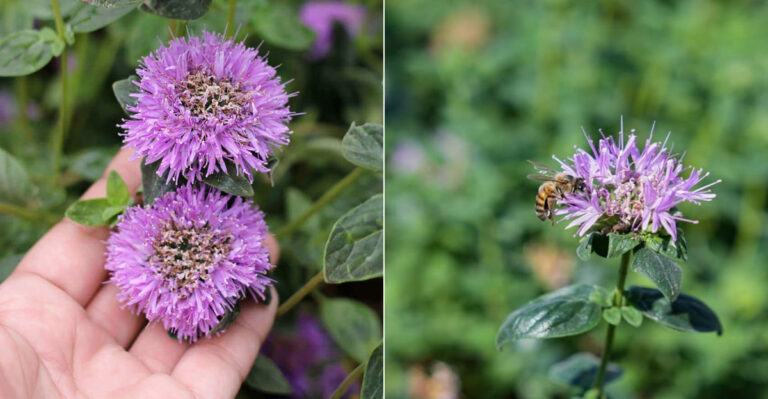
Long-Blooming Oregon Perennials That Keep Flowering For Three Months Or More
Late August in Oregon, and most borders have finished.
The peonies are a memory. The iris are long gone. Everything looks like a garden waiting for October to put it out of its misery.
Then somewhere down the street, one bed is still going.
Not hanging on. Actually flowering, with fresh color and no obvious explanation.
That neighbor did not water more or fertilize harder. They made a decision back in March that most people never think about.
Here’s the thing about bloom time. Nearly every plant tag lists it, and almost nobody reads that line before buying.
Two weeks of spectacular or twelve weeks of steady, and the tag tells you which you’re getting.
A handful of Oregon perennials genuinely run three months or longer. Not with tricks, not with products, just with the right site and one specific habit that takes about five minutes a week.
Curious which plants keep the show running into fall?
1. Plant Oregon Perennials With Extended Blooms
Many gardeners fall for a plant at its peak, then live with eleven months of foliage.
The real value comes from flowers that hold for months rather than weeks. Planning around bloom length keeps a border working long after the early performers finish.
Oregon complicates the math in a useful way. Climate ranges from the wet Willamette Valley to the drier high desert east of the Cascades, and bloom timing shifts accordingly.
The same plant may flower noticeably longer in one town than another, which is why local observation beats any published chart.
Trimming is the habit doing most of the work. Removing faded flowers keeps many perennials producing rather than switching energy toward seed.
Without that regular trimming, even a strong bloomer often slows by midsummer.
Three or more months is realistic and not automatic. Drainage, sun exposure, and steady water during dry stretches all factor in.
One caveat worth stating plainly. First-year plants rarely deliver their full bloom window, since establishment takes a season or two.
Treat the plants below as building blocks. Each brings different color, form, and rhythm, and mixing them prevents gaps where nothing is flowering.
Start small, watch how each behaves in your specific yard, and adjust from there.
2. Grow Yarrow For Months Of Summer Color
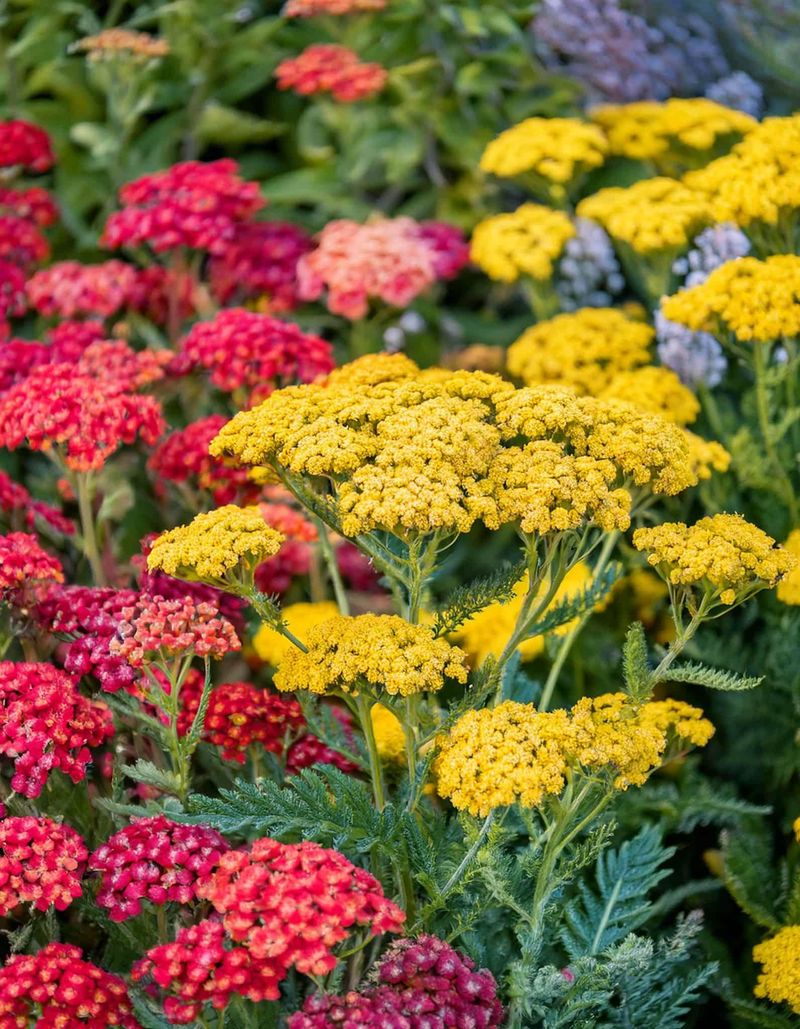
Tough and genuinely attractive, yarrow performs when weather turns hot and dry.
Flat clusters of tiny flowers function as landing pads for butterflies and bees.
Yarrow qualifies as a summer bloomer that can flower from early summer into fall when old heads get removed. A strong run from June through August is realistic, sometimes longer with consistent trimming and mild weather.
Drought tolerance explains much of its Oregon popularity. Established plants need very little water, which suits the dry summer pattern well.
Full sun and fast draining soil are the requirements. Soggy roots are one of the few things that genuinely harm it.
Foliage smells pleasant when brushed, and colors run from creamy yellow through deep red and soft pink.
Color fading is worth knowing about. Many of the warmer-toned cultivars soften considerably as flowers age, so the deep red you bought may finish closer to dusty pink.
Your Oregon Garden Changes Every Week. Your Plan Should Too.
Gardening in Oregon changes quickly throughout the season. Every Friday you’ll receive a simple weekly plan showing exactly what to plant, prune, fertilize, harvest, and protect so you never miss the right timing.
Cutting stems for a vase encourages more blooms in the garden.
One habit to watch. Yarrow spreads by rhizomes and flops in rich soil, so skipping fertilizer keeps it sturdier and better behaved.
The old nickname soldier’s woundwort came from battlefield use, and that toughness shows up in the garden too.
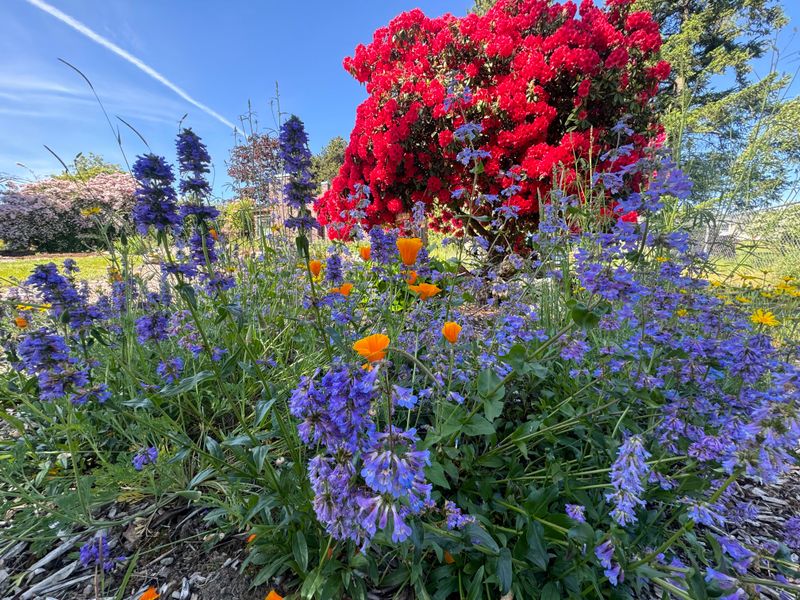
3. Add Penstemon For Long Flower Seasons
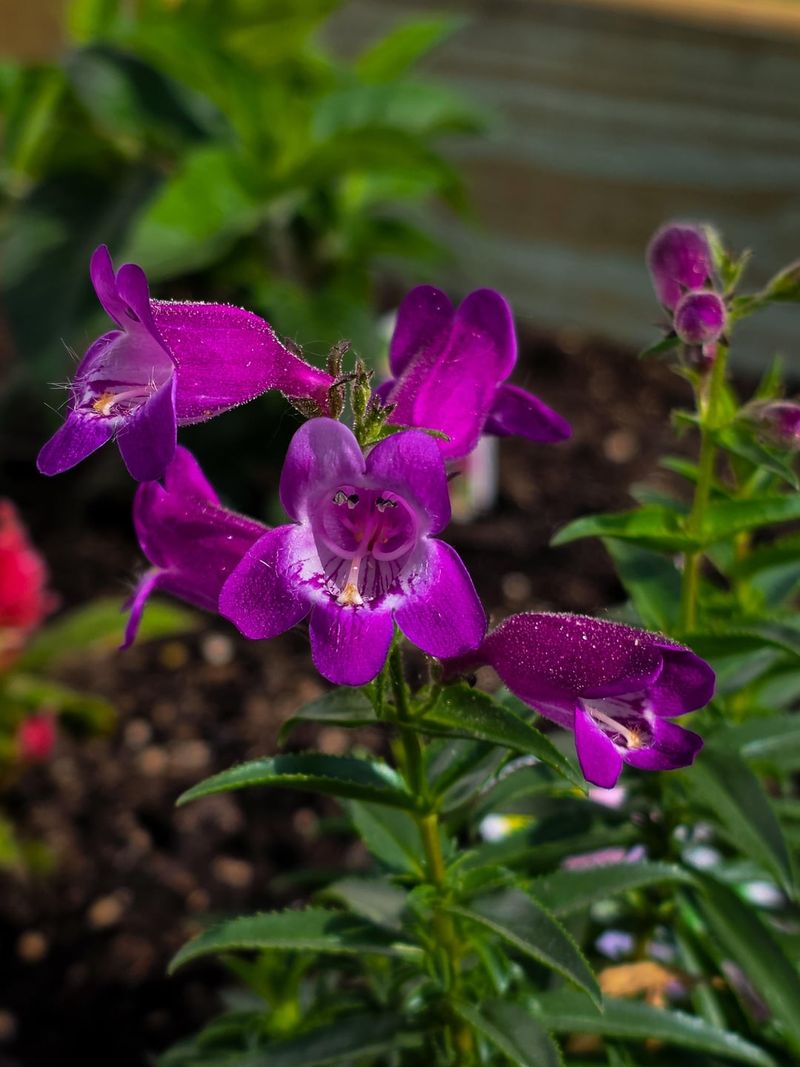
Hummingbirds appear to have penstemon on speed dial.
Tall spikes of tube-shaped flowers suit long bills and long tongues, making the plant a busy hub through summer.
Often called beardtongue, penstemon comes in a wide color range from bright red through soft purple and blue.
Many penstemons bloom across the summer months, and removing finished stalks can prompt a second flush.
Site selection carries more weight here than anywhere else on this list. Penstemon wants full sun and soil that drains freely, since wet winter ground is what usually finishes it.
Drier parts of Oregon suit it readily. Even in the wetter valley it performs well on a slope or in a raised bed where water moves through.
Native penstemons fit the state’s conditions particularly well, and local nurseries can point toward the right species for your area.
Spacing helps too. Air movement between plants reduces disease pressure in humid spots.
Skip heavy feeding, which produces floppy stems.
Lifespan runs shorter than many perennials, often three to five years, so letting some plants set seed keeps the patch renewing.
Pair it with lower plants that cover its bare lower stems late in the season.
4. Choose Blanket Flower For Continuous Blooms
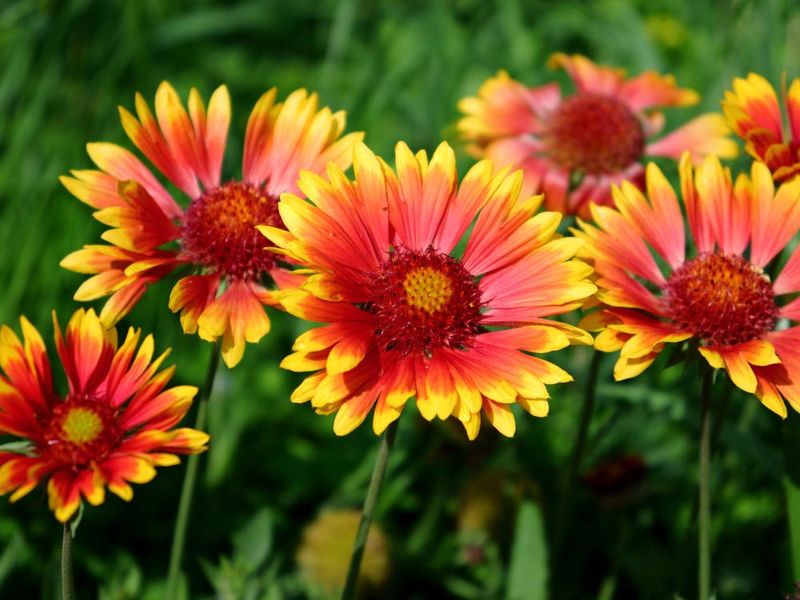
If a sunset could grow in a flower bed, it would look like blanket flower.
Fiery red centers ringed with golden yellow give Gaillardia a warm glow that holds for months.
This plant earns its place on any long-bloom list. Descriptions consistently place it as a summer-long bloomer flowering from early summer into fall, particularly with regular trimming.
Heat and sun suit it, and it shrugs off dry spells once established. Those traits fit Oregon gardens that bake through July and August.
Full sun and well-drained soil are essential, since heavy wet ground shortens its life considerably.
Trimming keeps the parade moving. Pinch or cut faded blooms weekly and the plant continues producing fresh daisies.
Skip that step and flowering slows as the plant shifts toward seed.
Short lifespan is the known tradeoff. Many plants last only two or three years, which catches people off guard.
The upside is self-seeding. Volunteers often replace the originals, though seedlings from hybrid cultivars may not match the parent’s color.
Bees and butterflies work it heavily, and the blooms hold up as cut flowers.
Group several plants together so the reds and golds blend into one warm patch rather than reading as scattered singles.
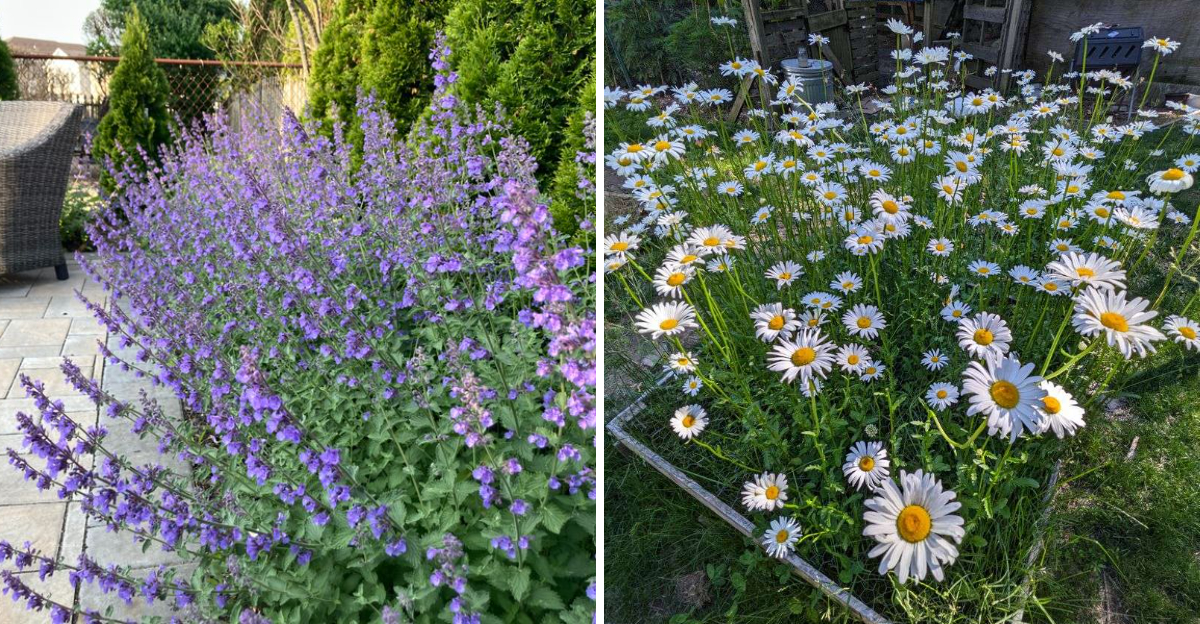
5. Grow Catmint For Reliable Repeat Flowers
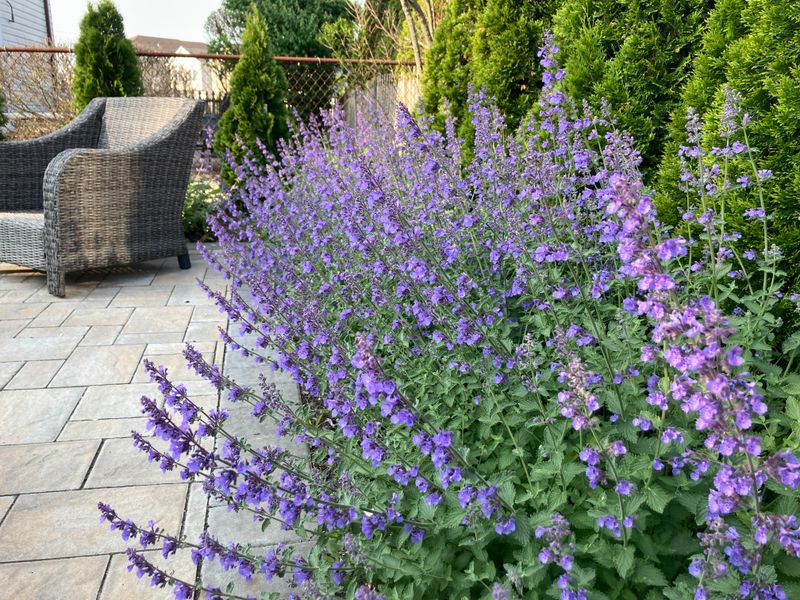
Cool clouds of blue-purple haze describe what catmint brings to a border.
Nepeta forms soft mounds of small flowers floating above gray-green foliage for weeks.
Here’s where one easy move pays off substantially. After the first flush fades, shearing the whole plant back by about a third prompts a fresh wave of flowers.
That mid-season haircut is what stretches catmint’s bloom from early summer into fall.
Without shearing you still get a long show. The rebloom is what carries color across three months or more.
Catmint handles dry sunny spots and poor soil without complaint, which suits Oregon’s summer dry season well.
Give it drainage and room to reach its natural mounded shape. Crowding produces the floppy sprawl people complain about.
Bees work it constantly, and the aromatic foliage tends to discourage deer and rabbits.
Self-seeding varies by cultivar. Walker’s Low and similar named selections stay tidier, while some seedling-grown catmints scatter freely.
Catmint is related to catnip, and most ornamental types interest cats far less.
That said, don’t be surprised when a neighborhood cat decides your border makes an excellent afternoon bed.
6. Use Coreopsis For Easy Seasonal Color
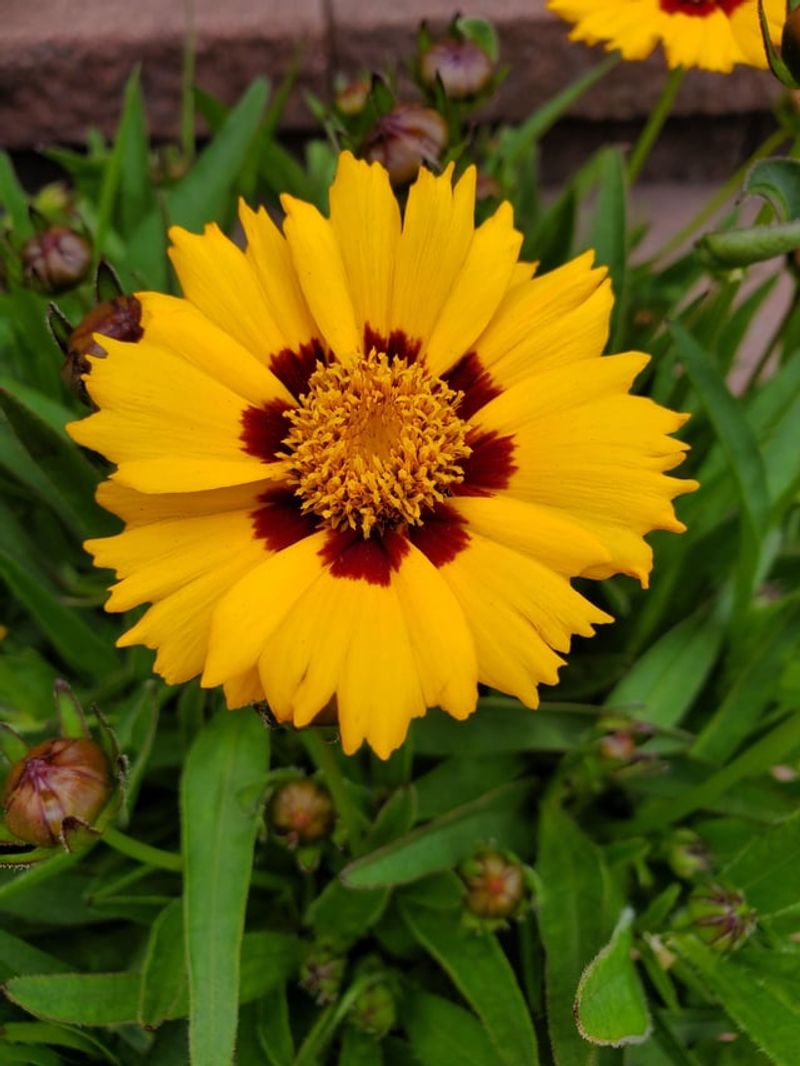
Sometimes called tickseed, coreopsis produces bright daisy-like blooms in yellow and gold so thickly the foliage nearly disappears.
Low maintenance is its main selling point. Gardeners reach for it when they want substantial color without much work.
With regular trimming, many types flower from early summer into fall.
Full sun is the requirement, along with soil that drains well. Established plants handle dry stretches, which fits Oregon’s rain-free summers.
Too much shade or soggy ground cuts flowering short.
Light shearing after the first wave tidies the plant and encourages more blooms. Threadleaf types respond well to being sheared all at once for a midsummer refresh.
Color range has expanded well beyond classic yellow into red, pink, and bicolor blends.
Hardiness varies considerably across those newer colors though. The traditional yellow forms and threadleaf types generally overwinter more reliably in Oregon than many of the recent hybrids.
Some of the flashier introductions perform more like annuals here, which is worth knowing before buying several.
Pollinators use the open accessible flowers heavily, and finches visit for seed if a few heads stay standing in fall.
For a border that handles heat and keeps producing, coreopsis is dependable and inexpensive.
7. Grow Salvia To Fill The Gaps Between Everything Else
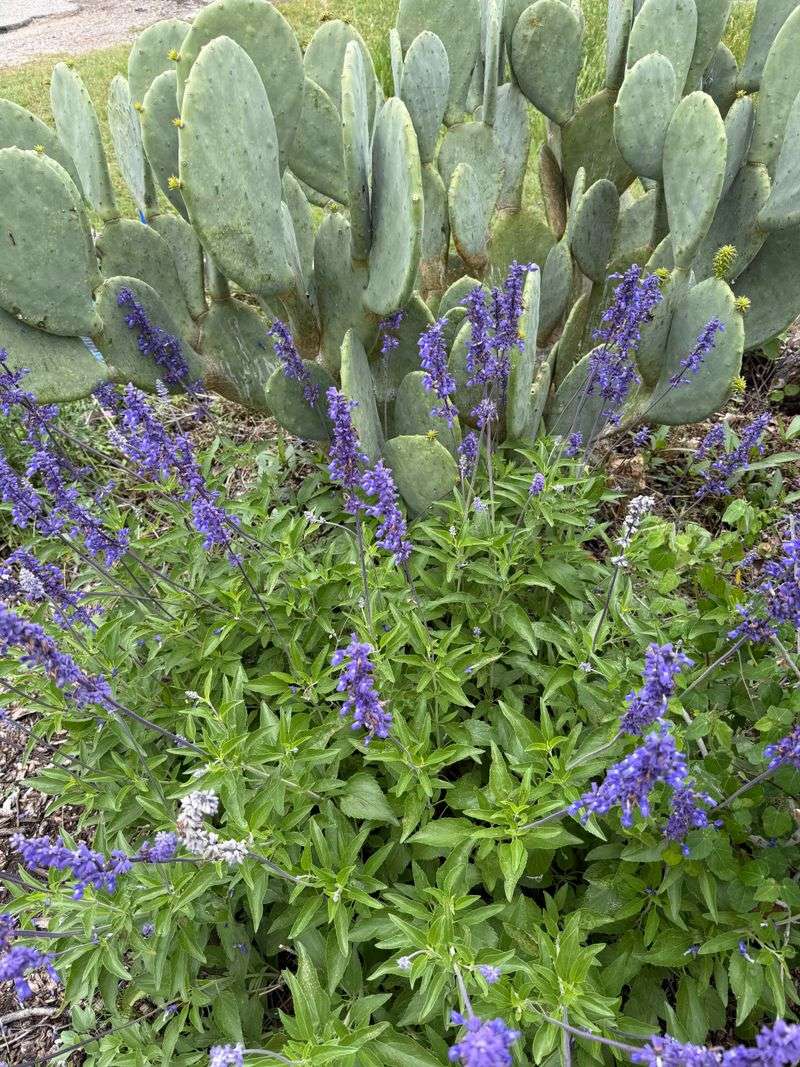
Perennial salvia deserves more attention in Oregon borders than it gets.
Spikes of purple, blue, or rose flowers rise above aromatic foliage, and the bloom period stretches remarkably long with the right treatment.
May Night, Caradonna, and similar cultivars typically start in late spring and continue well into summer.
Cutting back after the first flush is what extends the season. Shearing spent flower spikes down to the basal foliage often produces a second and sometimes third wave.
Full sun and good drainage cover the requirements. Salvia handles dry conditions once established, which suits the region’s summer pattern.
Wet winter soil is the main risk, as with most drought-adapted perennials.
Deer generally leave it alone, since aromatic foliage discourages browsing.
Bees and hummingbirds both work the flowers steadily, and the vertical form contrasts well with the mounding and flat-topped plants elsewhere on this list.
Spacing matters for airflow. Crowded plants develop foliage problems in humid conditions.
Skip fertilizer for the same reason it hurts yarrow and penstemon. Rich soil produces soft growth that flops under its own weight.
For a border needing vertical structure and a long run of color, salvia handles both without asking much in return.
8. Add Geranium For Amazing Ground Cover
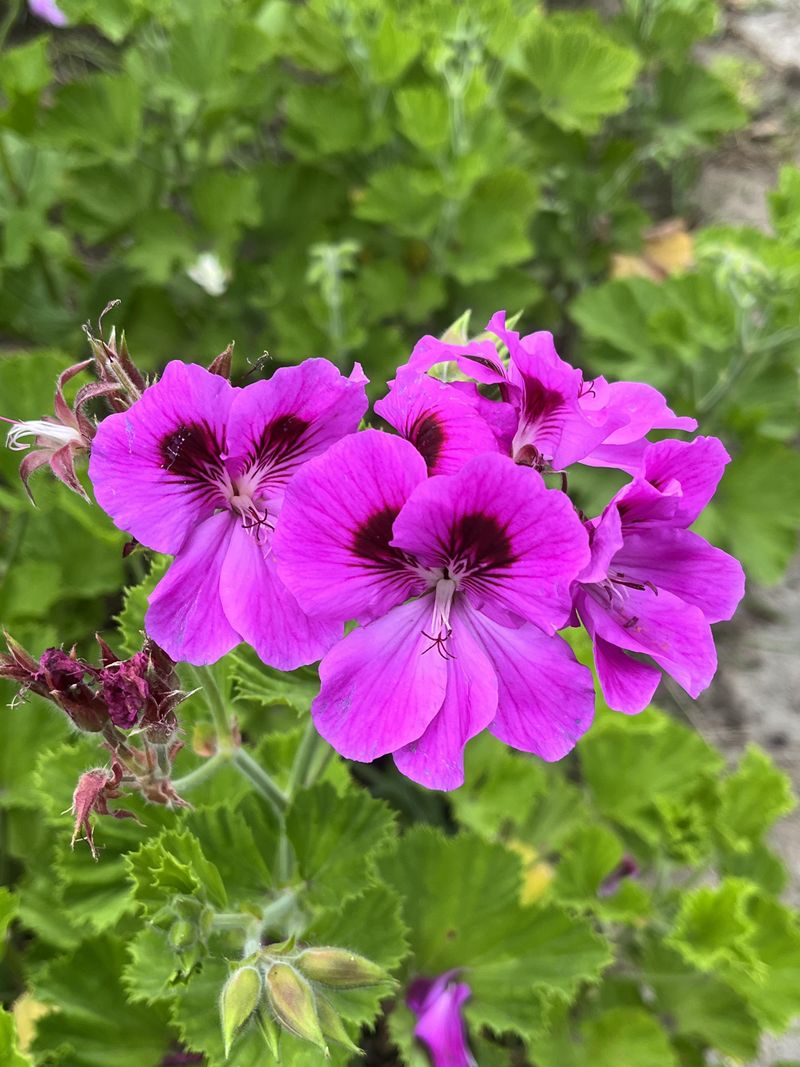
Hardy geranium is the plant that quietly outlasts most of the border.
Not the annual bedding type sold in flats. These are true perennials forming low spreading mounds with saucer-shaped flowers in pink, purple, blue, or white.
Rozanne is the standout for bloom length. It typically starts in early summer and continues into fall with almost no intervention, which is unusual for a plant this undemanding.
Other cultivars run shorter but rebloom well after shearing. Cutting back tired growth by half in midsummer produces a fresh flush within a few weeks.
Light tolerance is broader than most plants on this list. Full sun works in cooler Oregon gardens, while afternoon shade suits hotter inland sites better.
That flexibility makes hardy geranium useful where sun-demanding perennials struggle.
Soil needs are modest. Average garden soil with reasonable drainage covers it, and established plants handle dry spells adequately.
Deer generally pass it by, which counts for something in rural Oregon gardens.
The spreading habit fills space between taller plants and suppresses weeds. Rozanne in particular sprawls wider than expected, often three feet across.
Foliage often colors up in fall, adding a final round of interest after the flowers finish.
9. Use Shasta Daisy To Run All Summer With One Habit
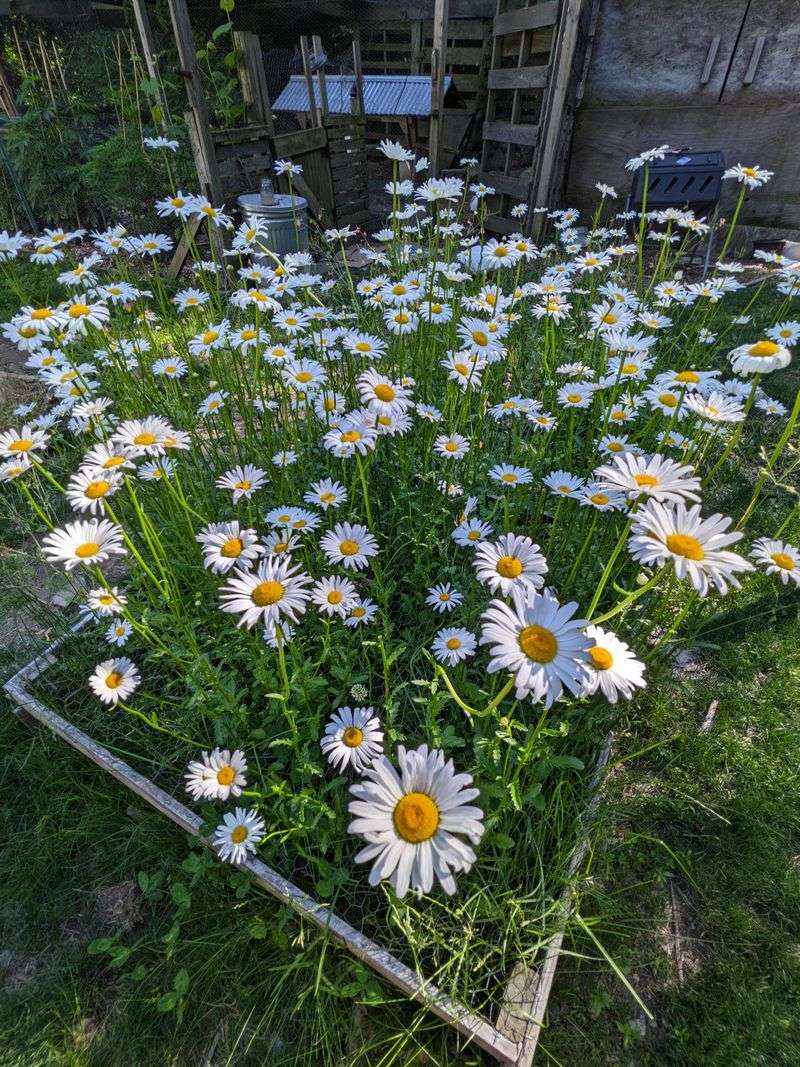
Shasta daisy delivers the flower most people picture when they think of a garden.
Clean white petals around a yellow center, held on sturdy stems above dark green foliage.
Bloom season runs long with trimming. Becky is the cultivar to know, since it typically flowers from early summer into September and holds up better in heat than older selections.
Trimming is not optional here. Left alone, plants set seed and flowering drops off noticeably by August.
Full sun and well-drained soil are the requirements. Wet winter ground shortens the plant’s life, as with most perennials in this group.
Division every two or three years keeps clumps vigorous. Centers thin out otherwise, and flowering declines along with it.
Stem strength varies by cultivar. Shorter selections stand on their own while taller ones may need support in exposed sites.
Cut flowers last well in a vase, which gives you a reason to keep harvesting and keeps the plant producing.
Pollinators use the open flower form readily, particularly smaller native bees and hoverflies.
Deer do browse Shasta daisies, so a fenced bed or a repellent routine matters where pressure is heavy.
Cut plants back to basal foliage after flowering finishes, and the clump comes through winter in better shape.