Native Florida Alternatives To Wax Myrtle’s Invasive Lookalikes
Wax myrtle has a look that works in almost any Florida yard. Fast, evergreen, tough enough to handle the climate without complaint.
That combination made it popular, and popularity created a market for plants that look similar but behave very differently once established. Several shrubs get sold as wax myrtle alternatives that are anything but.
They mimic the silhouette, they move through nurseries without much scrutiny, and they end up in Florida yards where they spread in ways the homeowner never agreed to.
Florida’s native palette has legitimate alternatives that deliver the same visual qualities without the ecological baggage.
Dense, evergreen, adapted to this climate, and actually belonging here rather than working against the surrounding landscape. The lookalikes are convincing.
That is exactly what makes them a problem. Know what you are actually planting before it goes in the ground, because some of these mistakes are very hard to undo.
1. Walter’s Viburnum Replaces Privet With Native Structure
Privet hedges have a reputation for looking tidy, but the tradeoff is a shrub that spreads aggressively and crowds native plants. Walter’s viburnum (Viburnum obovatum) offers a much better deal.
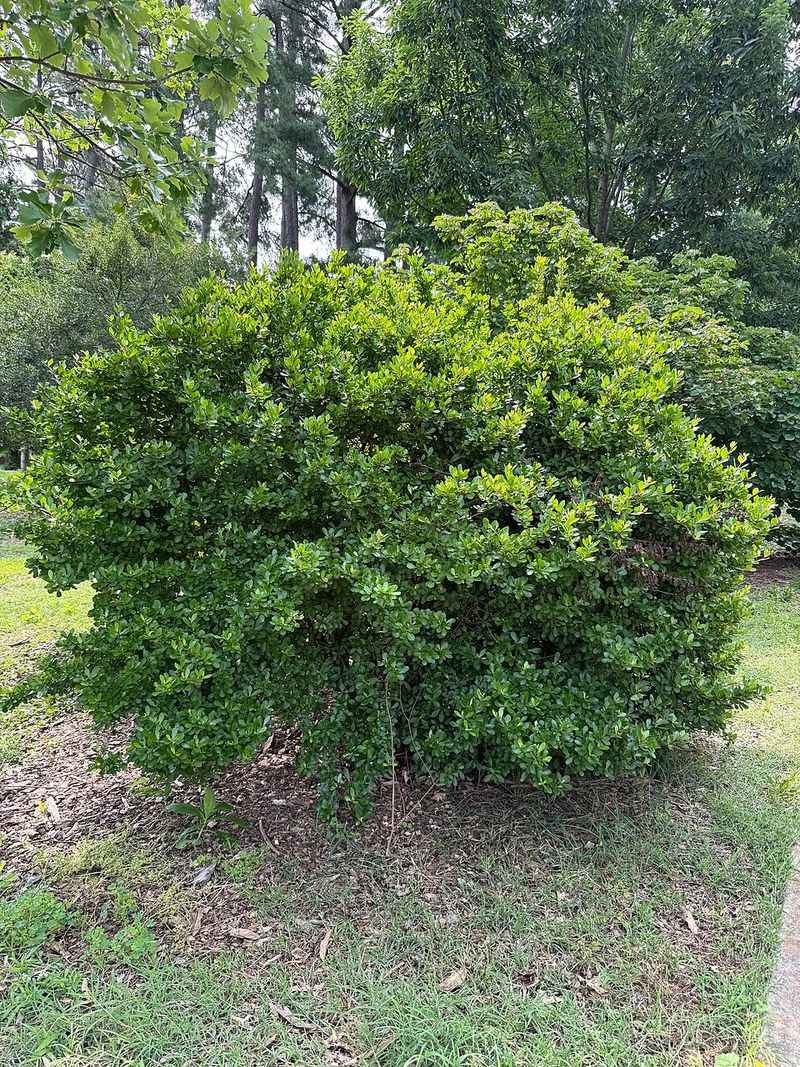
Native to Florida and parts of the Southeast, it forms a dense, evergreen screen with small dark leaves that hold their color through the seasons.
Spring brings clusters of tiny white flowers that attract pollinators before most other shrubs have even leafed out. Birds use the cover and seek out the small dark fruit that follows.
The plant works well as a clipped hedge, a loose privacy screen, or even a small multi-trunk tree depending on how you manage it.
Cultivars vary widely in mature size. Compact forms like ‘Mrs. Schiller’s Delight’ stay low and tidy, while full-size plants can reach 10 to 15 feet or more.
Choosing the right form for your space matters from the start. A large-form viburnum crammed into a small foundation bed will need constant cutting to stay in bounds, and that defeats the purpose of planting something native and low-maintenance.
Give it full sun to part shade, and water regularly during the first season to help it establish. Once settled in, it handles dry spells well.
Skip the formal shearing if you want berries and flowers, since both appear on natural growth.
2. Simpson’s Stopper Gives Glossy Screening Without The Invasive Risk
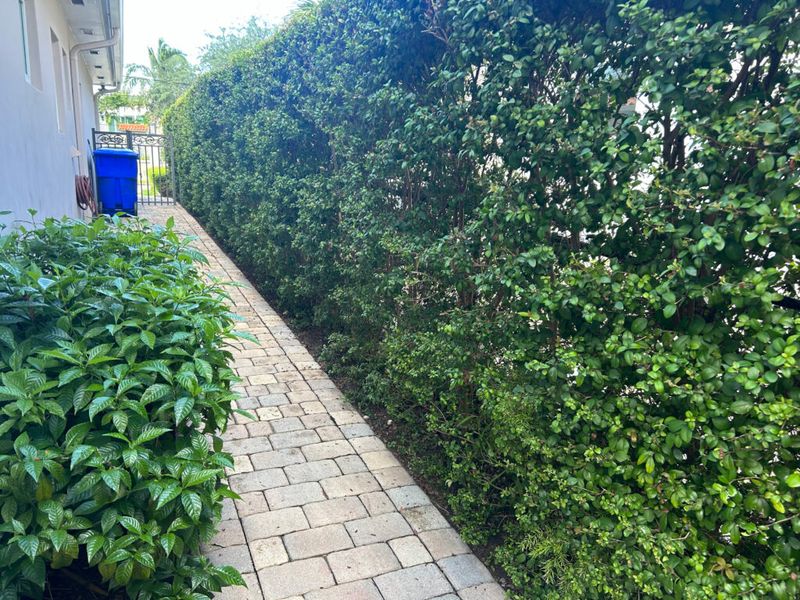
Glossy foliage and a neat, upright form are exactly what draws some gardeners toward non-native hedge shrubs. Simpson’s stopper (Myrcianthes fragrans) delivers that same polished look without any of the invasive risk.
Native to southern and central regions of this state, it grows naturally in hammocks and coastal areas where its evergreen leaves catch the light beautifully.
The flowers are small, white, and fragrant, and they attract native bees and butterflies throughout the warmer months. Fruit ripens from orange to red, drawing in birds like mockingbirds and cedar waxwings.
Near a patio or side yard, the fragrance alone makes it worth planting close to where people spend time outdoors.
Your Florida Garden Changes Every Week. Your Plan Should Too.
Gardening in Florida changes quickly throughout the season. Every Friday you’ll receive a simple weekly plan showing exactly what to plant, prune, fertilize, harvest, and protect so you never miss the right timing.
In mixed native hedges, Simpson’s stopper fills the mid-layer nicely. It can be pruned lightly to maintain a clean edge, but it also looks great left to grow in its natural rounded form.
Mature plants typically reach 10 to 20 feet if left unpruned, so give it real space rather than squeezing it between structures.
Cold sensitivity is a real factor here. This plant performs best in southern and warmer central regions.
In areas prone to frost, it may suffer tip damage or dieback in unusual cold snaps. Site it in a sheltered spot if you are near the northern edge of its range, and let it establish slowly with regular watering through the first year.
3. Yaupon Holly Brings Evergreen Berries Without Brazilian Pepper Trouble
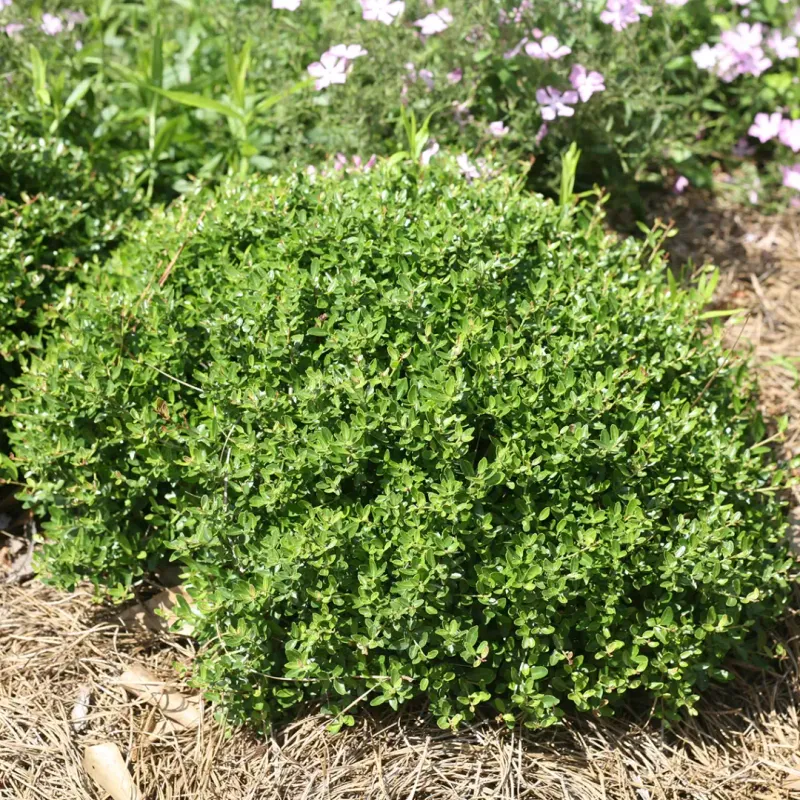
Brazilian peppertree is one of the most problematic invasive plants in this state. It spreads fast, produces masses of red berries that birds scatter widely, and forms dense thickets that push out native vegetation.
Yaupon holly (Ilex vomitoria) can fill the same visual role, a dense evergreen shrub with red winter berries, without any of that ecological damage.
Yaupon is native across much of Florida and the Southeast. It tolerates drought, salt spray, sandy soil, and a surprisingly wide range of light conditions.
Few native shrubs are as adaptable. The red berries that appear on female plants in fall and winter attract robins, cedar waxwings, bluebirds, and many other species that depend on fruit through the colder months.
Berry production requires both a female plant and a compatible male pollinator nearby. Most nurseries that carry yaupon sell sexed plants, so ask before you buy if berries are your goal.
Dwarf forms like ‘Nana’ stay compact and work well for low hedges or foundation plantings. Upright forms can reach 15 to 25 feet and make excellent tall screens or small specimen trees.
Weeping forms add a dramatic accent near water features or garden beds.
Yaupon can sucker from the roots over time. In a naturalistic planting that is fine, but in a tidy hedge you may want to remove suckers as they appear.
Pruning is straightforward, and the plant responds well without losing its shape.
4. Dahoon Holly Adds Native Winter Color For Birds
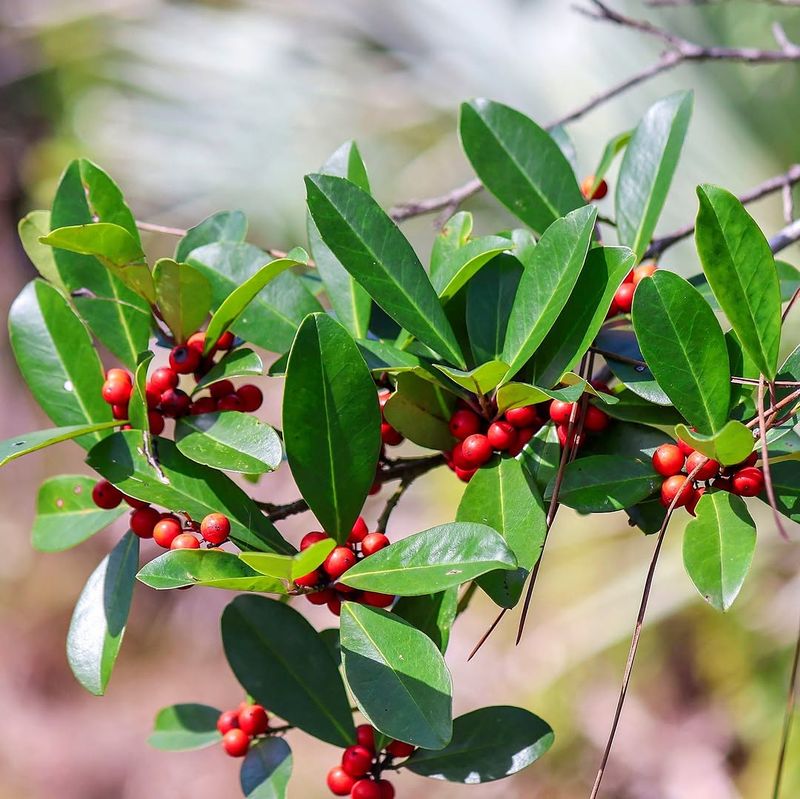
Some of the best bird-friendly plants in this state are the ones that hold their fruit through winter, when food sources get thin. Dahoon holly (Ilex cassine) does exactly that.
Native to wet lowlands, pond edges, swamps, and moist flatwoods throughout Florida, it produces heavy clusters of red berries that ripen in fall and persist well into the colder months.
Birds go after those berries with enthusiasm. Robins, bluebirds, hermit thrushes, and yellow-rumped warblers are among the species that rely on dahoon fruit during winter visits.
Small white flowers in spring add quiet pollinator value before the berries develop. The narrow, evergreen leaves hold their deep green color all year, giving the plant a clean, upright presence in the landscape.
Dahoon holly naturally becomes a tall shrub or small tree, often reaching 20 to 30 feet at maturity in good conditions. It works well as a tall privacy screen, a layered background plant in a native garden, or a specimen near water.
Like other hollies, it needs both a female plant and a compatible male nearby to produce fruit reliably.
Moisture is the key site requirement here. Dahoon holly does best in wet to consistently moist soils and struggles in dry, well-drained sites.
A rain garden edge, a low spot in the yard, or an area near a pond or retention basin suits it well. Give it room to grow and it will reward you for decades.
5. Marlberry Offers A Warm-Region Screen With Bird-Friendly Fruit
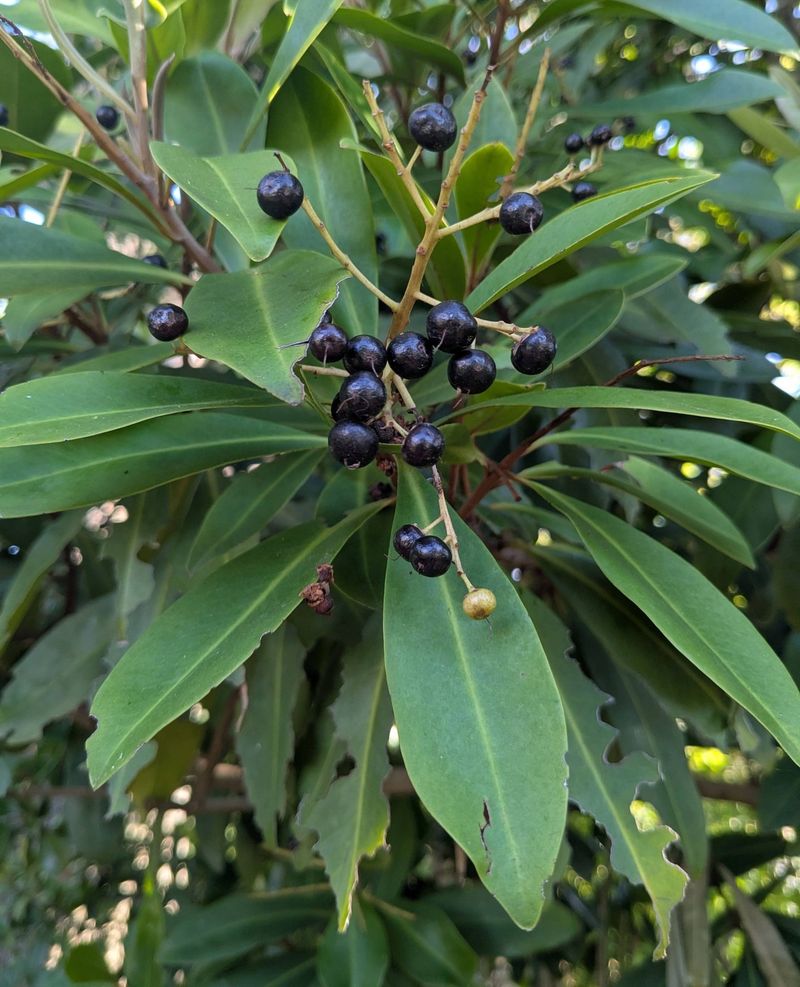
Shady side yards and understory spots can be tricky to fill with shrubs that look good and support wildlife. Marlberry (Ardisia escallonioides) is one of the best native options for exactly those spots in warm regions of this state.
It grows naturally in coastal hammocks and shaded areas in southern and central regions, forming a glossy, upright shrub that fits neatly under a tree canopy.
Clusters of small white to pinkish flowers appear along the branches and attract pollinators. Dark berries follow and ripen to a deep purple-black that birds find very appealing.
Mockingbirds, catbirds, and other fruit-eating species visit regularly when the berries are ripe. The foliage stays deep green and attractive through the year, making marlberry a solid evergreen choice for shaded screening in mixed native plantings.
One important note: marlberry should not be confused with invasive ornamental Ardisia species, particularly coral ardisia (Ardisia crenata) and shoebutton ardisia (Ardisia elliptica), both of which are listed as invasive in this state.
Native marlberry is a completely different plant, but the mix-up happens at nurseries and in online searches, so always verify the scientific name before purchasing.
Marlberry suits warm, frost-light regions best and may suffer in areas with hard freezes. It prefers part shade to full shade and does not thrive in hot, exposed, dry sites.
Use it in layered native screens behind taller trees, or as a mid-height anchor in a shaded garden bed.
6. Firebush Replaces Flashy Invasives With Nectar And Berries
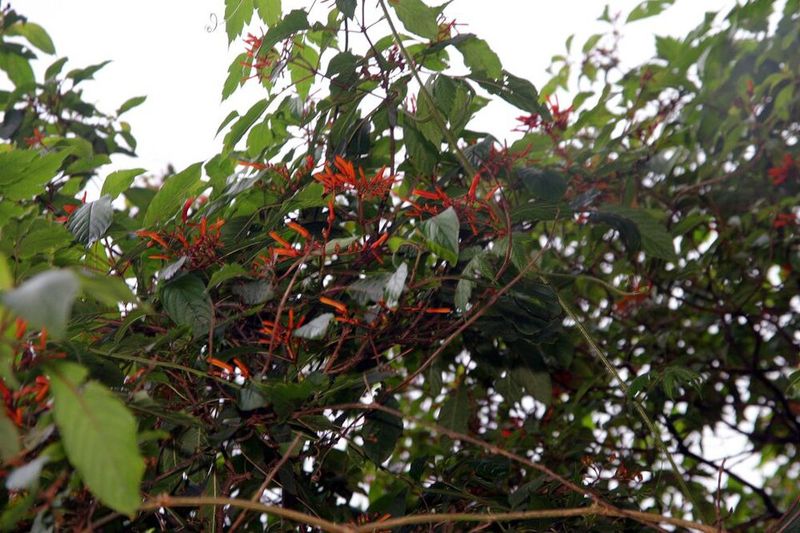
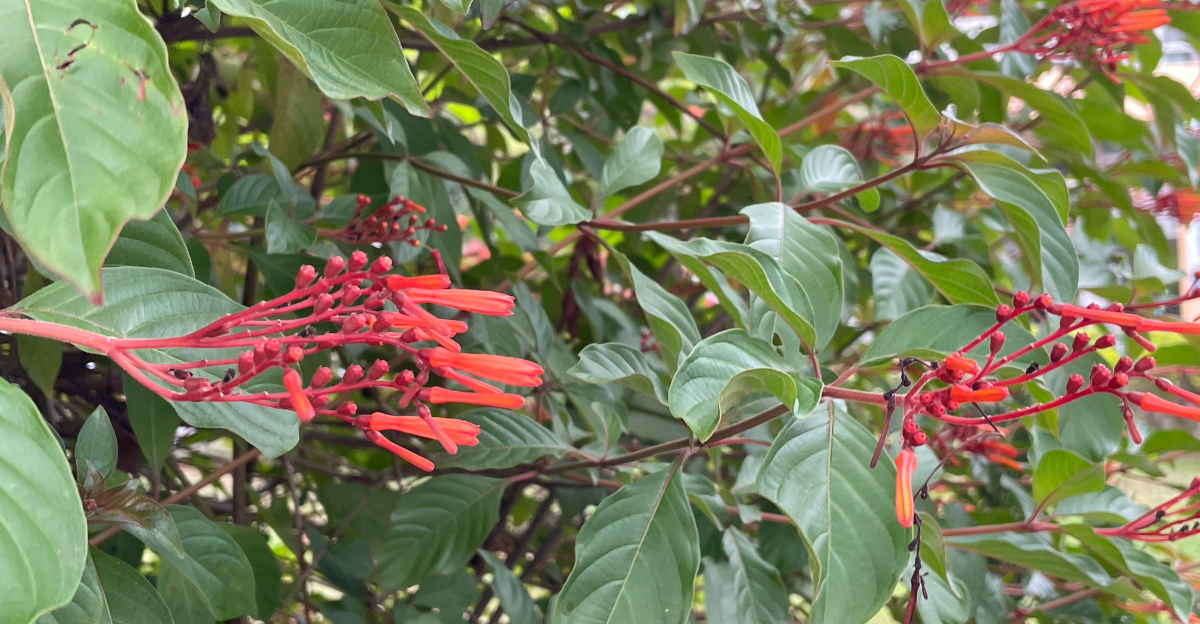
If you have ever watched a hummingbird work its way through a row of tubular red flowers, you already know why firebush (Hamelia patens) earns its spot in a native yard.
This fast-growing, warm-season shrub puts on a serious show from late spring through fall, with clusters of orange-red tubular flowers that hummingbirds and butterflies cannot resist.
Small dark berries follow and bring in fruit-eating birds as well.
Native firebush is a Florida native, though it is worth knowing that a non-native variety is sometimes sold under the same common name. The native form has narrower leaves and a more open, airy structure.
Ask for the Florida native species specifically when shopping at nurseries, and look for Hamelia patens var. patens to be sure.
Firebush grows fast in warm weather and can reach 5 to 15 feet depending on conditions and pruning. It works well as a loose, wildlife-friendly screen along a sunny fence line or garden edge.
Cold is a real limitation in northern and central regions, where it may freeze back to the ground in winter. In most cases it rebounds from the roots in spring, but it will not hold its evergreen structure through a hard freeze.
Think of firebush as a warm-season wildlife powerhouse rather than a formal evergreen hedge. Pair it with taller native shrubs for year-round structure, and let it do what it does best: feed pollinators and birds from summer through fall in full sun.
7. Fiddlewood Builds Dense Cover Without Resorting To Privet
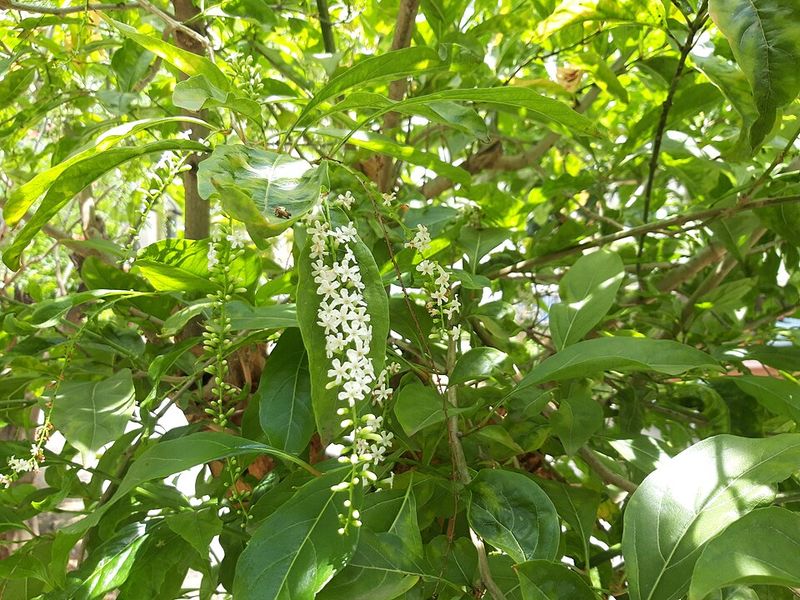
Along sunny coastal edges and warm inland yards where privet sometimes gets planted for quick cover, fiddlewood (Citharexylum spinosum) can step in as a far better native choice. It forms dense, leafy cover that birds use for nesting, roosting, and shelter.
The screening function is real, and the plant earns its place in a natural privacy planting without any of the invasive spread that makes privet such a problem.
Fragrant white flowers appear in long, drooping clusters and attract butterflies and other pollinators. Small orange to reddish fruit follows and draws in mockingbirds, catbirds, and other fruit-eating species.
The foliage is semi-evergreen to evergreen in warm regions, holding its lush look through most of the year in southern and coastal areas.
Fiddlewood can grow into a large shrub or small tree, sometimes reaching 25 feet or more in ideal conditions. That size is worth planning for.
Selective pruning can keep it in a shrub form for a shorter screen, but trying to force it into a tight clipped hedge may frustrate you over time. Give it room, let it grow naturally, and it will reward you with consistent cover and wildlife activity.
It performs best in full sun to light shade and tolerates coastal salt air reasonably well. Warm regions suit it best.
In areas with regular hard freezes, it may not perform as reliably. Use it as a background anchor in a layered native screen, or as a standalone specimen where you need height and density along a property line.
8. Wax Myrtle Still Works When You Want The Real Native
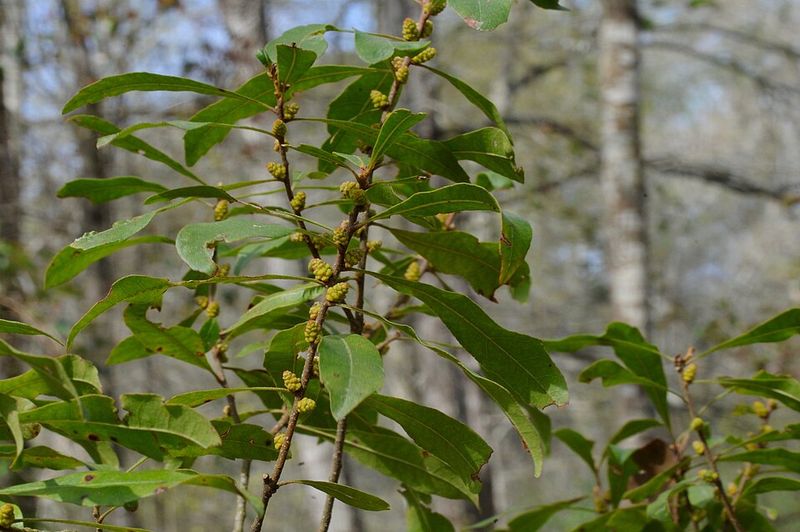
After reading about invasive lookalikes, it is worth saying clearly: wax myrtle is not the problem. Southern wax myrtle (Morella cerifera) is a true Florida native, and it is one of the most useful evergreen shrubs in the state.
It grows across a wide range of conditions, tolerates wet and dry soils, handles full sun and part shade, and establishes relatively quickly compared to slower-growing natives.
The waxy, blue-gray berries that cluster along the stems are a major food source for yellow-rumped warblers, tree swallows, and other birds that rely on high-fat fruit during migration and winter. The aromatic foliage is pleasant near patios and garden paths.
Pollinators visit the small spring flowers, adding quiet ecological value before the berries develop.
Wax myrtle can grow 10 to 15 feet tall or more, and it has a tendency to sucker from the base over time. In a naturalistic hedge or wildlife planting, that spreading habit is an asset.
In a tidy formal landscape, plan for some selective pruning to keep it in bounds. It responds well to cutting and can be maintained as a large shrub, a multi-trunk small tree, or a loose informal screen.
The confusion this article addresses is simple: some gardeners accidentally choose invasive shrubs when they meant to plant something like wax myrtle. Choosing the real native, verified by scientific name and a reputable native nursery, is always the better option.
Morella cerifera is the plant worth growing.