Native Georgia Plants That Pull In Dragonflies And Keep Mosquitoes Down
A Georgia backyard can feel peaceful at dusk right up until mosquitoes start claiming every exposed ankle.
Dragonflies can change that atmosphere.
These aerial hunters catch small flying insects on the wing, but they do not appear just because a yard has flowers.
They need the right combination of water, perches, prey, and plant structure before they treat a garden like reliable hunting ground.
That is where native wet-site plants become useful.
Shrubs, tall perennials, and bog plants can build layers around ponds, rain gardens, and damp low spots. Those layers give dragonflies places to rest while also supporting the broader insect life that keeps the habitat active.
So which Georgia natives deserve space near the water?
The strongest choices handle moisture well and create structure without turning the yard into a mosquito nursery.
Pair them with moving or well-managed water, remove stagnant pockets, and the whole garden can become a much better place for dragonflies to patrol through the hottest part of summer each year, especially on muggy evenings.
1. Plant Buttonbush Around Moist Ground
A soggy corner that frustrates most shrubs can be exactly where buttonbush starts showing off.
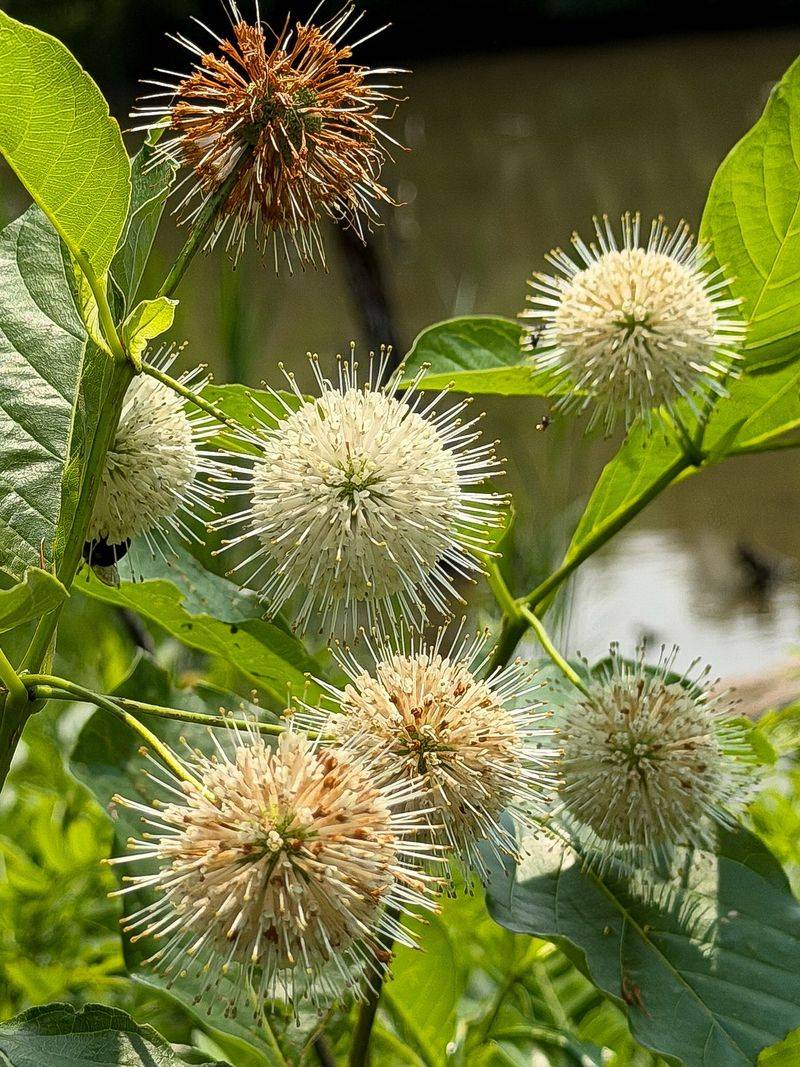
Cephalanthus occidentalis is native to Georgia wetlands, stream edges, and flood-prone ground. It handles periodic standing water better than many landscape shrubs, which makes it a strong choice beside ponds or along the lower edge of a rain garden.
The rounded white flowers appear like little pincushions in summer.
Those blooms attract bees, butterflies, and other insects, adding activity around the same open spaces dragonflies use for hunting. The shrub itself adds another important feature: sturdy, elevated stems.
Dragonflies often pause between flights.
A branch above open water gives them a clear perch and a wide view of passing prey. Buttonbush can supply those lookout points while also adding shade and structure around the wet edge.
Give the shrub room.
Mature plants can reach 6 to 12 feet tall and spread nearly as wide, so this is not a tiny filler for the front of a flower bed. Use it where a broad, natural shape belongs.
Consistent moisture keeps it happiest.
Dry upland soil can leave the plant struggling, especially through a Georgia summer.
Buttonbush does not chase mosquitoes away. It builds the sort of waterfront property dragonflies actually want, and the rent is paid in flowers, perches, and a lot more life around the pond.
2. Add Cardinal Flower Along Wet Edges
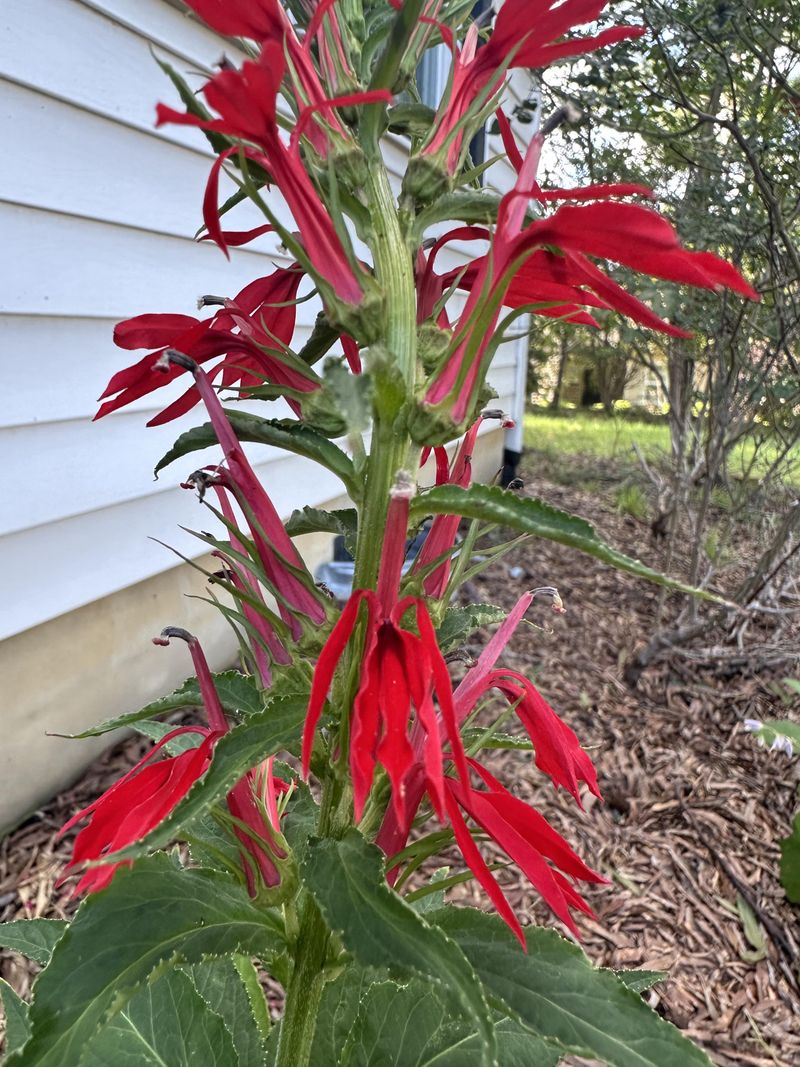
Few plants can make a wet garden edge look louder than cardinal flower.
Lobelia cardinalis sends up vivid red flower spikes during summer, bringing a sharp burst of color to stream margins, pond edges, and rain gardens that stay consistently moist.
The plant usually reaches about 2 to 4 feet tall.
That height matters beyond design. Upright stems can give dragonflies extra perching points near open water, where they can rest between quick hunting flights.
Hummingbirds notice the flowers first.
Their visits add even more movement to the planting, while other insects use the surrounding habitat. Dragonflies are not coming for nectar. They benefit from the busy, layered environment the plant helps create.
Your Georgia Garden Changes Every Week. Your Plan Should Too.
Gardening in Georgia changes quickly throughout the season. Every Friday you’ll receive a simple weekly plan showing exactly what to plant, prune, fertilize, harvest, and protect so you never miss the right timing.
Moisture decides where cardinal flower belongs.
Dry soil can set it back quickly, so place it where the root zone stays reliably damp through summer.
Morning sun with some afternoon relief works well in many hot Georgia gardens, though bright sites with constant moisture can also perform beautifully.
Mulch lightly around the base.
That helps slow water loss without burying the crown. Once established, small clumps can expand gradually and make the wet edge look more natural over time.
Cardinal flower brings color, height, and habitat without needing to pretend it is a mosquito trap.
The red spikes may grab your attention first, but those sturdy stems quietly give dragonflies another place to park between patrols.
3. Use Joe Pye Weed For Tall Structure
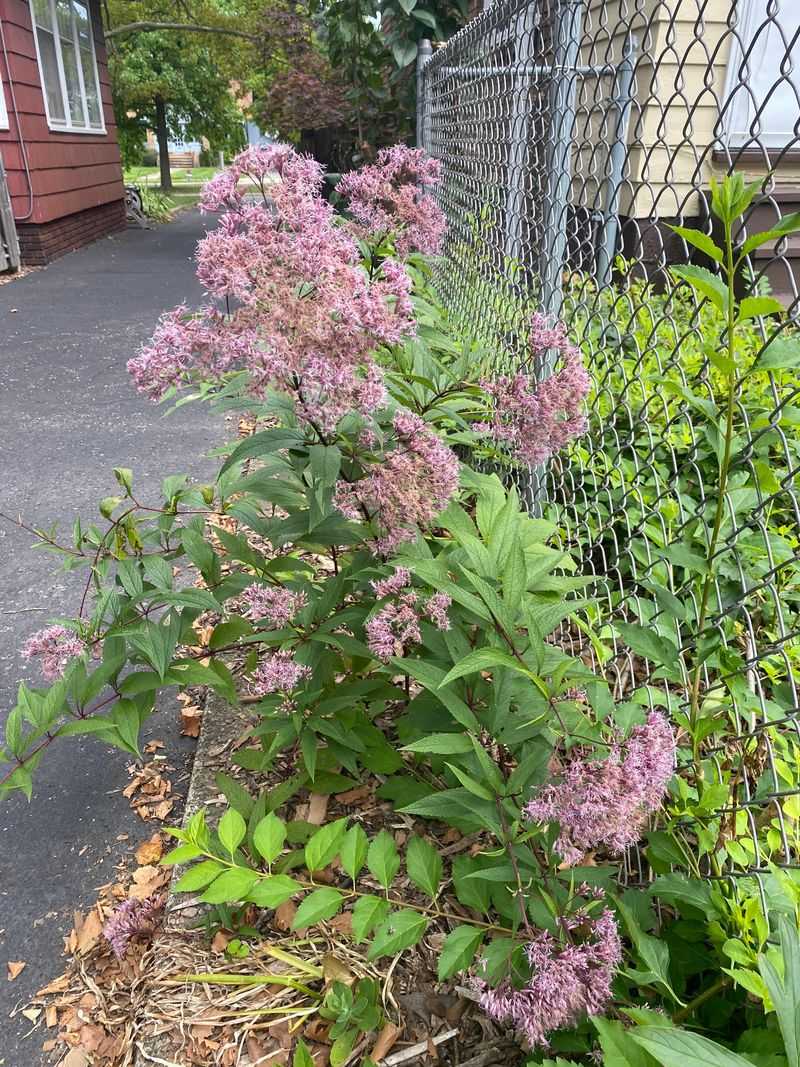
A rain garden can feel flat until something rises well above everything else.
Joe Pye weed handles that job with confidence. Native Eutrochium species can reach 6 feet or more, creating tall stems topped with broad clusters of dusty pink to mauve flowers in late summer.
That height gives dragonflies excellent lookout points.
A perch above surrounding foliage offers a clear view across open ground and water, which suits an insect built to hunt while flying.
The flowers add another layer.
Bees, butterflies, wasps, and other insects visit the blooms, especially later in summer when some earlier flowers have already faded. That activity strengthens the prey base around the planting rather than relying on one pest species alone.
Give Joe Pye weed moist soil and plenty of room.
Full sun to partial sun works well, especially where the ground holds moisture without staying stagnant for long stretches.
Place it toward the back of a rain garden or along a pond edge where the height feels intentional.
Space plants generously so the stems do not turn into a crowded thicket.
A lighter cut in early summer can keep the final height more manageable and encourage branching without removing the plant’s strong vertical presence.
Joe Pye weed does not believe in subtle architecture.
It builds a natural observation tower, hangs a late-summer insect buffet near the top, and leaves dragonflies with one of the best seats in the yard.
4. Work Blue Vervain Into Damp Beds
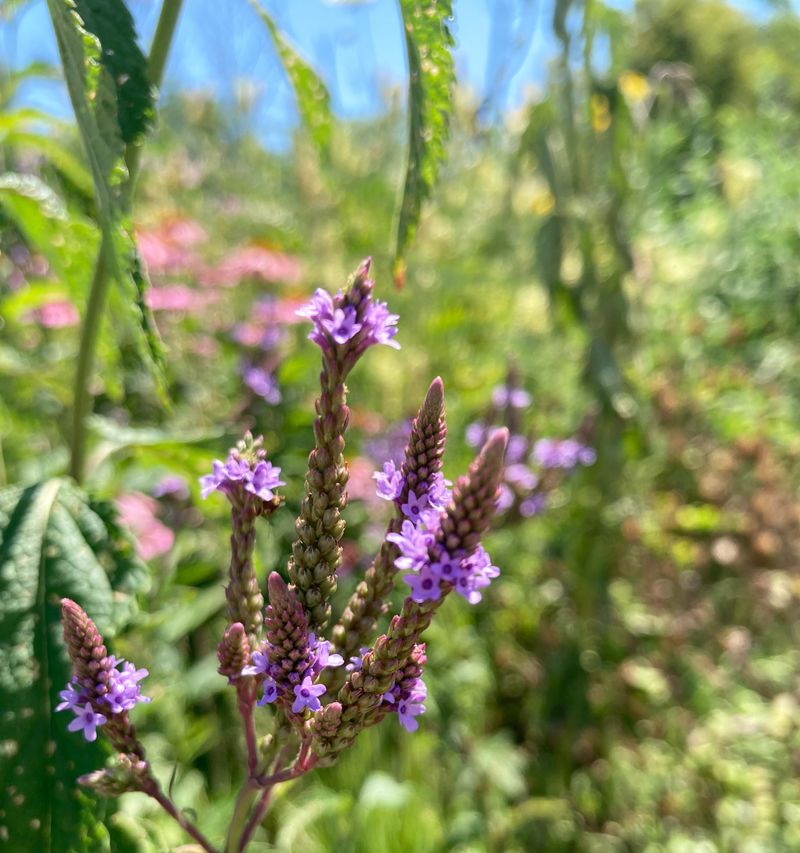
Tall purple spikes can make a damp planting look much more organized.
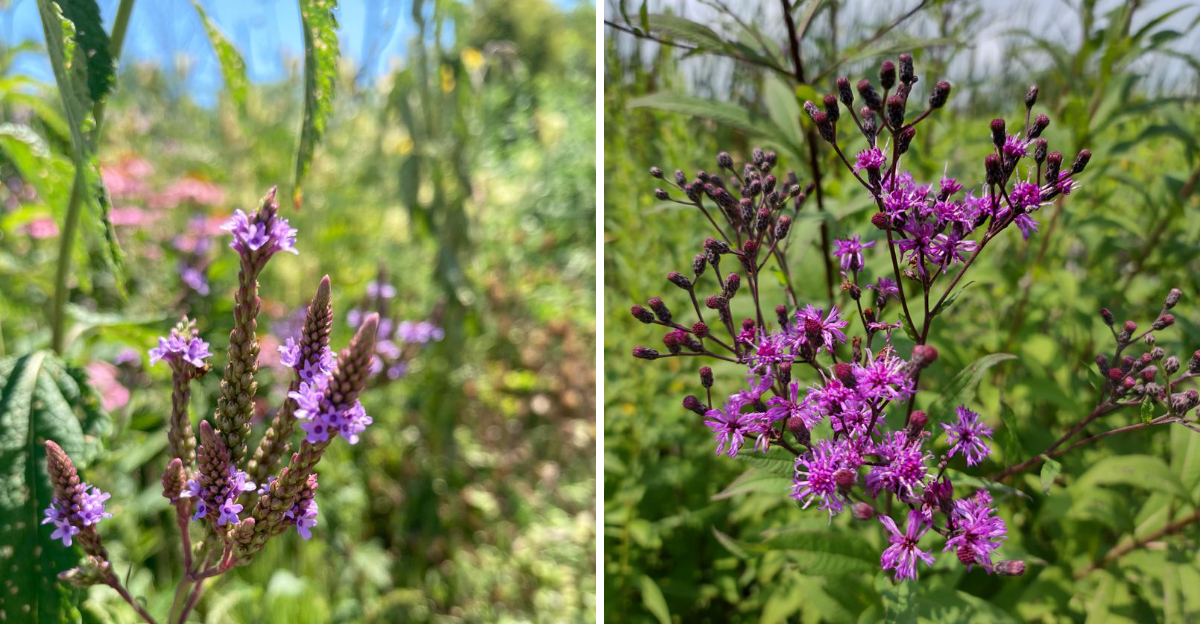
Blue vervain, Verbena hastata, naturally grows in moist meadows and wet edges, giving Georgia gardeners a native perennial that handles both summer sun and steady soil moisture.
The plant usually reaches about 3 to 5 feet tall.
Narrow flower spikes rise above the foliage and open gradually, creating weeks of small blooms rather than one brief burst.
Those flowers draw bees and other insects.
That activity helps keep the wet edge biologically busy, which matters to dragonflies searching for small flying prey around open spaces.
The stems also make handy perches.
Dragonflies often pause on upright vegetation between hunting flights, especially near ponds, rain gardens, and ditches that hold water after storms.
Plant blue vervain where the soil stays damp.
Full sun usually produces the strongest stems and heaviest bloom. A site that dries completely for long stretches can leave the plant looking thin and stressed.
Give it some freedom to reseed.
A small group can gradually become a natural-looking drift, which works especially well beside buttonbush or cardinal flower.
Thin crowded seedlings when the patch starts closing every gap.
The goal is habitat, not a purple traffic jam.
Blue vervain brings height without bulk and flowers without fuss. It gives the wet edge a little vertical rhythm, then lets dragonflies use the spikes like tiny observation posts over the garden.
5. Add Winterberry Around Rain Garden Edges
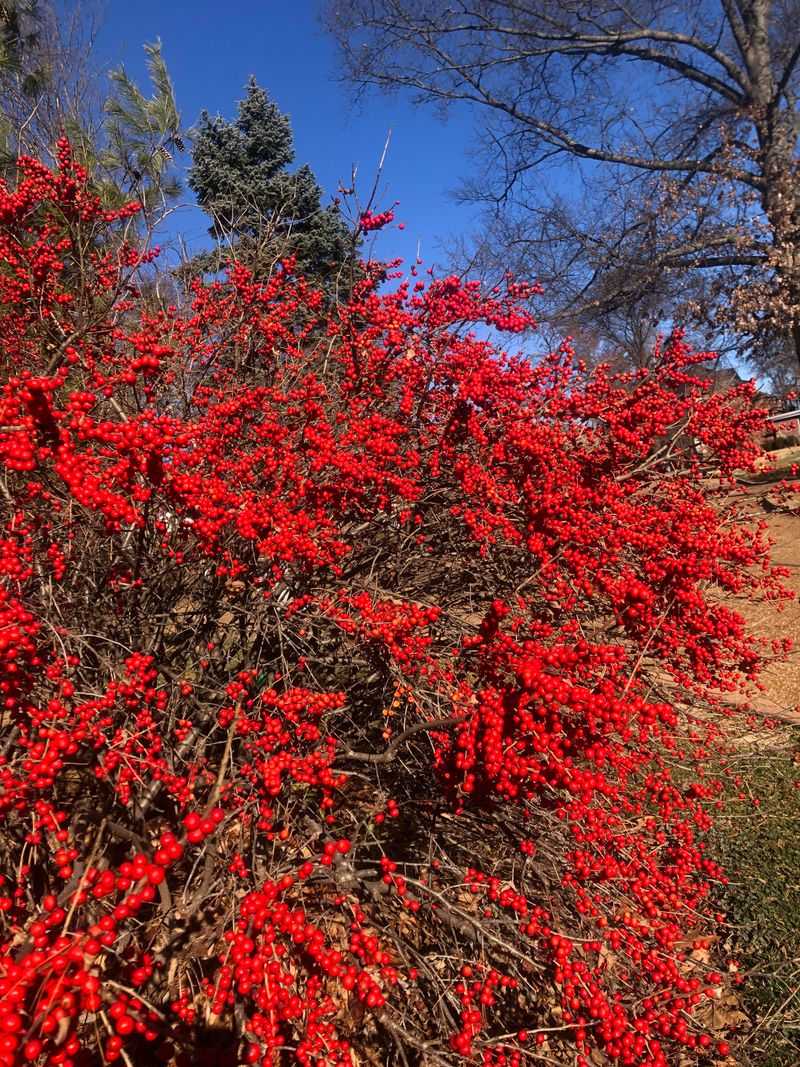
A shrub that earns attention in January can still help shape dragonfly habitat in July.
Winterberry, Ilex verticillata, fits wet woodland edges and rain garden margins across Georgia. It tolerates moist ground and seasonal flooding, making it useful just above the lowest, wettest part of the planting.
Summer foliage creates dense structure.
Branches offer resting points for dragonflies moving between water and nearby hunting areas, while the shrub helps build a layered edge instead of leaving open water surrounded by bare mulch.
Late-season berries add another reward.
Female plants can carry bright red fruit after the leaves drop, giving birds a winter food source and keeping the rain garden visually useful long after dragonfly season slows.
Berry production needs both sexes.
A compatible male nearby allows female plants to set fruit, so plan the group before buying several identical shrubs.
Sun to partial shade works well.
Brighter sites often produce heavier flowering and fruiting, while partial shade suits a softer woodland-style edge.
Give the roots consistent moisture during establishment.
Once settled, winterberry handles wet swings better than many conventional landscape shrubs.
The plant does not reduce mosquitoes directly, and its value reaches well beyond summer pest pressure.
Winterberry builds structure, supports wildlife, and keeps the rain garden working through several seasons.
Dragonflies get summer perches. Birds get winter berries. The gardener gets a shrub that refuses to clock out after Labor Day.
6. Use Pitcher Plants In True Bog Conditions
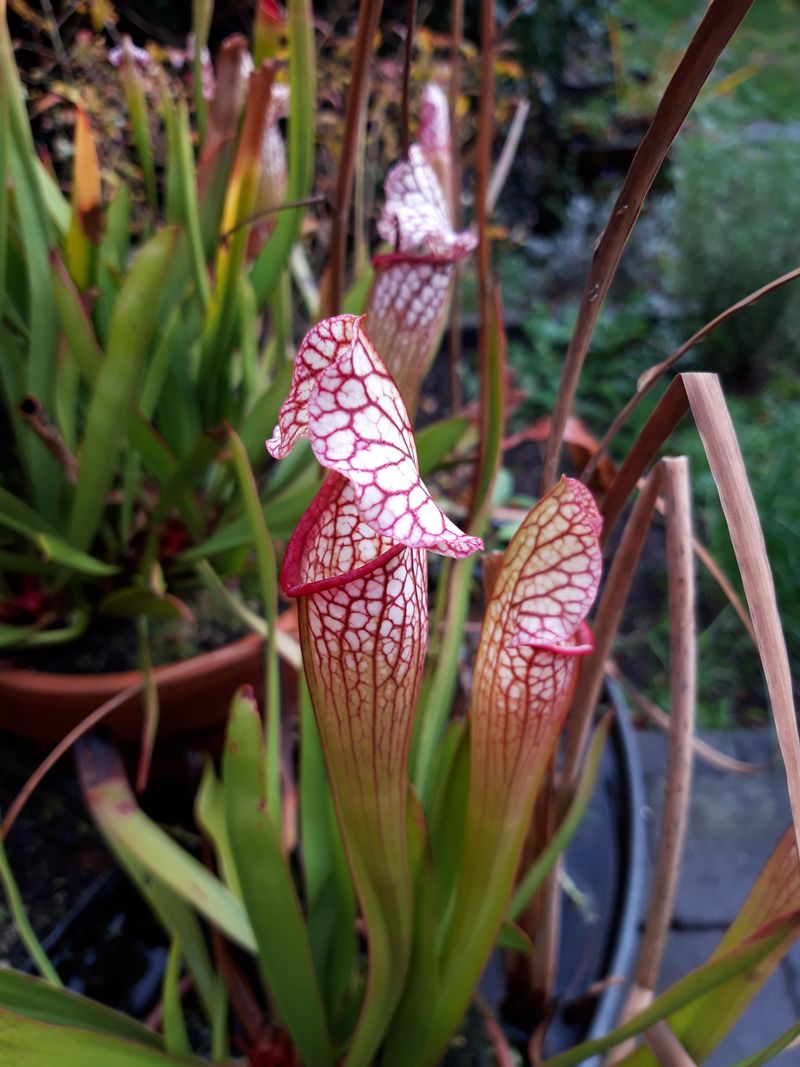
Pitcher plants look so unusual that they can tempt gardeners into putting them anywhere wet.
That usually ends badly.
Native Sarracenia species belong in true bog conditions with full sun, acidic soil, low fertility, and constant moisture. Georgia’s coastal plain supports several remarkable species, but those wild populations should stay exactly where they are.
Use nursery-propagated plants from reputable growers.
A lined bog bed or large container can recreate the special conditions they need. Peat-based acidic media mixed with coarse sand can provide the low-nutrient root zone these plants prefer.
Keep the medium wet with rainwater or distilled water.
Mineral-heavy water can create problems over time because pitcher plants evolved in remarkably lean environments.
The tubular leaves trap insects, but that does not turn a bog garden into a meaningful mosquito-control machine.
Their greater value comes from creating specialized wet habitat and adding another native layer to a wildlife-focused yard.
Open sun is essential.
Shade weakens growth and reduces the strong pitcher development that makes these plants so distinctive.
Keep aggressive neighbors away too.
Fast-growing perennials can crowd them quickly and steal light.
Pitcher plants are not the easygoing option on this list.
They are the specialist.
Give them the exact bog conditions they expect, and they can become one of the most memorable pieces of a Georgia water garden without being assigned a mosquito-control job they never applied for.
7. Plant Ironweed Around Moist Sunny Ground
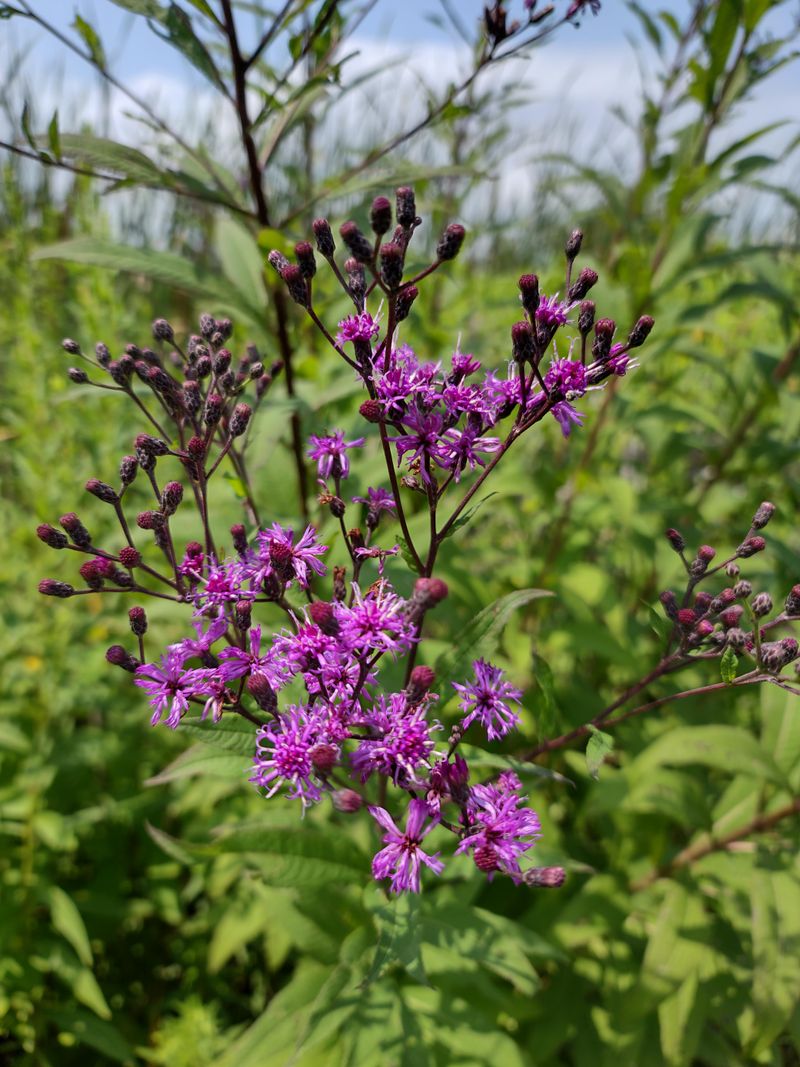
The sunny side of a rain garden can handle a plant with some attitude.
Ironweed brings plenty.
Native Vernonia species send tall, tough stems upward through summer and finish with vivid purple flower clusters that can pull butterflies and bees into the garden from across the yard.
Mature plants often reach 5 to 8 feet.
That height creates excellent perching structure for dragonflies, especially near open water or damp ground where hunting activity stays high.
The flowers build more insect traffic around those perches.
Late-summer bloom keeps the habitat active as earlier species begin fading, which helps maintain a steady mix of potential prey through the hottest part of the season.
Plant ironweed in full sun.
Moist ground suits it well, especially along the upper edge of a rain garden or in a low meadow that stays damp after storms.
Give each clump space.
The stems are strong, but crowded plants can lose some of the bold shape that makes ironweed valuable in a border.
A spring cutback can keep plants shorter and encourage more branching where full height feels excessive.
Leave some seedheads standing into winter.
Birds may use them, and the dried stems add structure after frost clears the flowers away.
Ironweed does not whisper its way into the landscape.
It builds a purple watchtower, attracts a crowd below, and gives dragonflies another high-rise perch with an excellent view of dinner traffic.