7 Native Michigan Shrubs That Are Better Than Yew Along Foundation Beds
Yew has long been a foundation planting staple, but several native Michigan shrubs offer better performance without the deer damage yew commonly attracts.
Inkberry holly provides similar evergreen structure while tolerating a wider range of soil and moisture conditions.
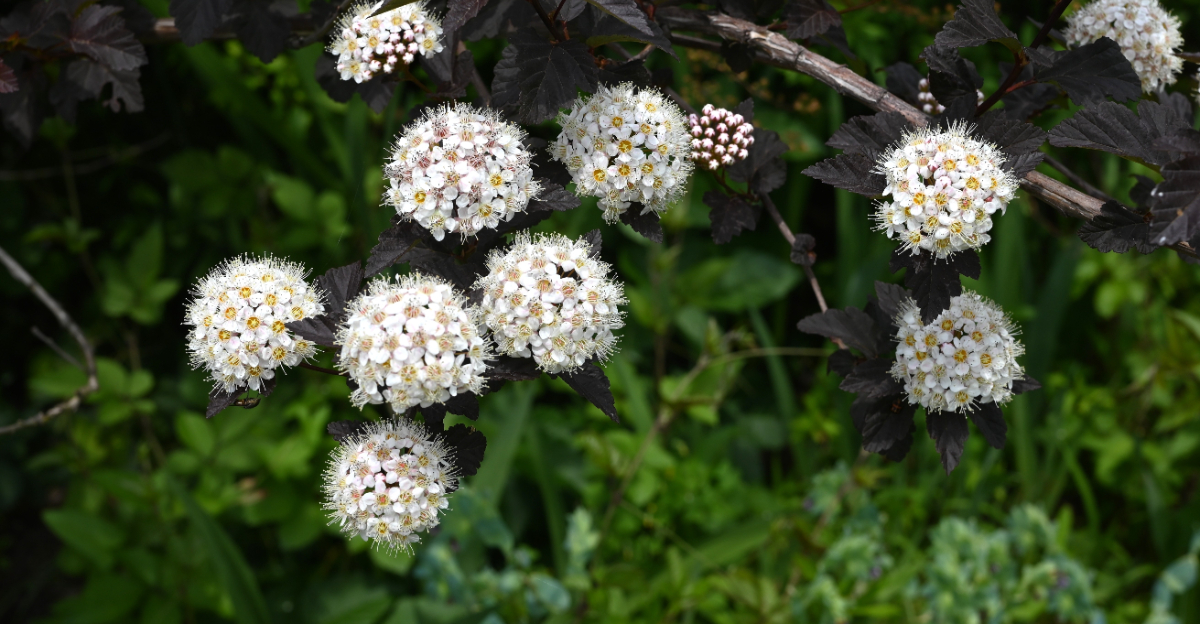
Ninebark adds seasonal interest through both foliage color and blooms, something yew’s uniform green simply cannot offer. Fragrant sumac stays compact and low growing, working well in tighter foundation spaces.
Red chokeberry brings multiseason appeal with spring blooms, summer berries, and vibrant fall color. Sweet fern offers a soft, textured alternative that thrives in poor, sandy soil common around many foundations.
Arrowwood viburnum provides dense coverage along with berries that attract birds throughout fall and winter. Bayberry rounds out the list, offering evergreen structure along with fragrant foliage that yew cannot match.
Choosing any of these natives creates a foundation planting that supports local ecosystems far better than yew.
1. Northern Bush Honeysuckle Fits Smaller Foundation Beds
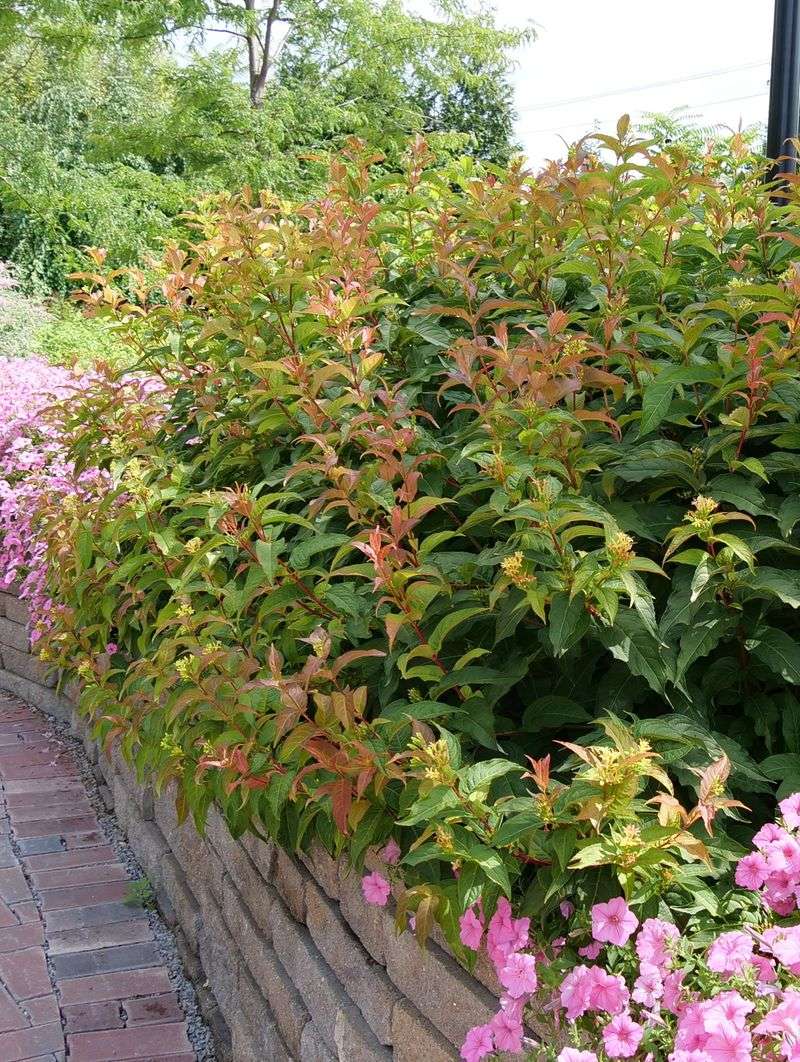
Compact, cheerful, and surprisingly tough, Diervilla lonicera is one of those plants that earns its spot without any fuss.
Northern bush honeysuckle grows naturally across Michigan woodlands, so it already knows how to handle the climate.
Most plants top out at around two to four feet tall and wide, which makes it a natural fit for foundation beds where you do not want a shrub taking over the entire space.
The flowers are a soft yellow, appearing in early to midsummer, and they attract bumblebees and other native pollinators.
Unlike the invasive exotic honeysuckles that have caused problems across the Midwest, this one is a well-behaved native that plays nicely with surrounding plants.
You will not spend your weekends hacking it back or worrying about it spreading where it should not.
Fall is where Northern bush honeysuckle really shines. The foliage turns shades of orange, red, and bronze, adding a warm seasonal glow to your foundation planting.
That kind of multi-season interest is something a plain evergreen yew simply cannot offer.
Another bonus is its adaptability. Diervilla lonicera tolerates part shade to full sun, handles dry soils reasonably well once established, and even does fine on slopes.
It also spreads slowly by root suckers, which means over time you get a fuller look without buying extra plants.
For a small foundation bed that needs color, texture, and low maintenance all at once, Northern bush honeysuckle checks every box with room to spare.
2. New Jersey Tea Stays Compact In Sunny Spots
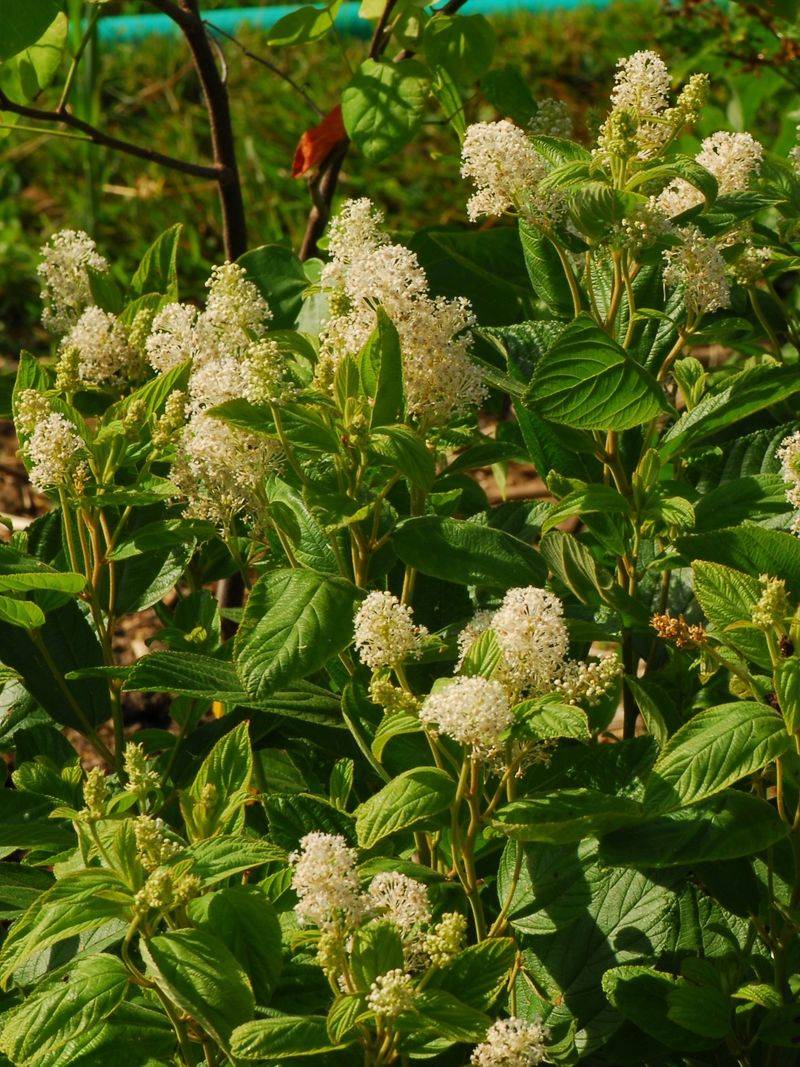
There is something quietly fascinating about a shrub with a name rooted in American history. During the Revolutionary War, colonists brewed tea from the dried leaves of Ceanothus americanus as a substitute for imported British tea.
That historical quirk alone makes it a great conversation starter when guests admire your foundation planting.
New Jersey tea grows to about three to four feet tall and wide, keeping a tidy, rounded shape that works beautifully along house foundations. It thrives in full sun and handles dry, well-drained soils better than most shrubs, including yew.
Your Michigan Garden Changes Every Week. Your Plan Should Too.
Gardening in Michigan changes quickly throughout the season. Every Friday you’ll receive a simple weekly plan showing exactly what to plant, prune, fertilize, harvest, and protect so you never miss the right timing.
If your foundation bed bakes in afternoon heat and the soil drains fast, this is one of the few native shrubs that will genuinely thrive rather than just survive.
In late spring to early summer, it produces clusters of tiny white flowers that are irresistible to native bees, butterflies, and beneficial insects.
The floral display lasts several weeks, giving your foundation bed a bright, airy look during a season when many shrubs are just sitting there doing nothing.
Wildlife value here goes beyond looks, since the plant also supports the larvae of several native butterfly species.
Once established, New Jersey tea requires very little attention. It fixes nitrogen in the soil through root bacteria, which actually improves the growing conditions around it over time.
Pruning is rarely necessary, and the plant tends to stay naturally compact. For a hot, sunny foundation bed where you want flowers, wildlife, and low maintenance, New Jersey tea delivers more than a yew ever could.
3. Fragrant Sumac Handles Tougher Dry Sites
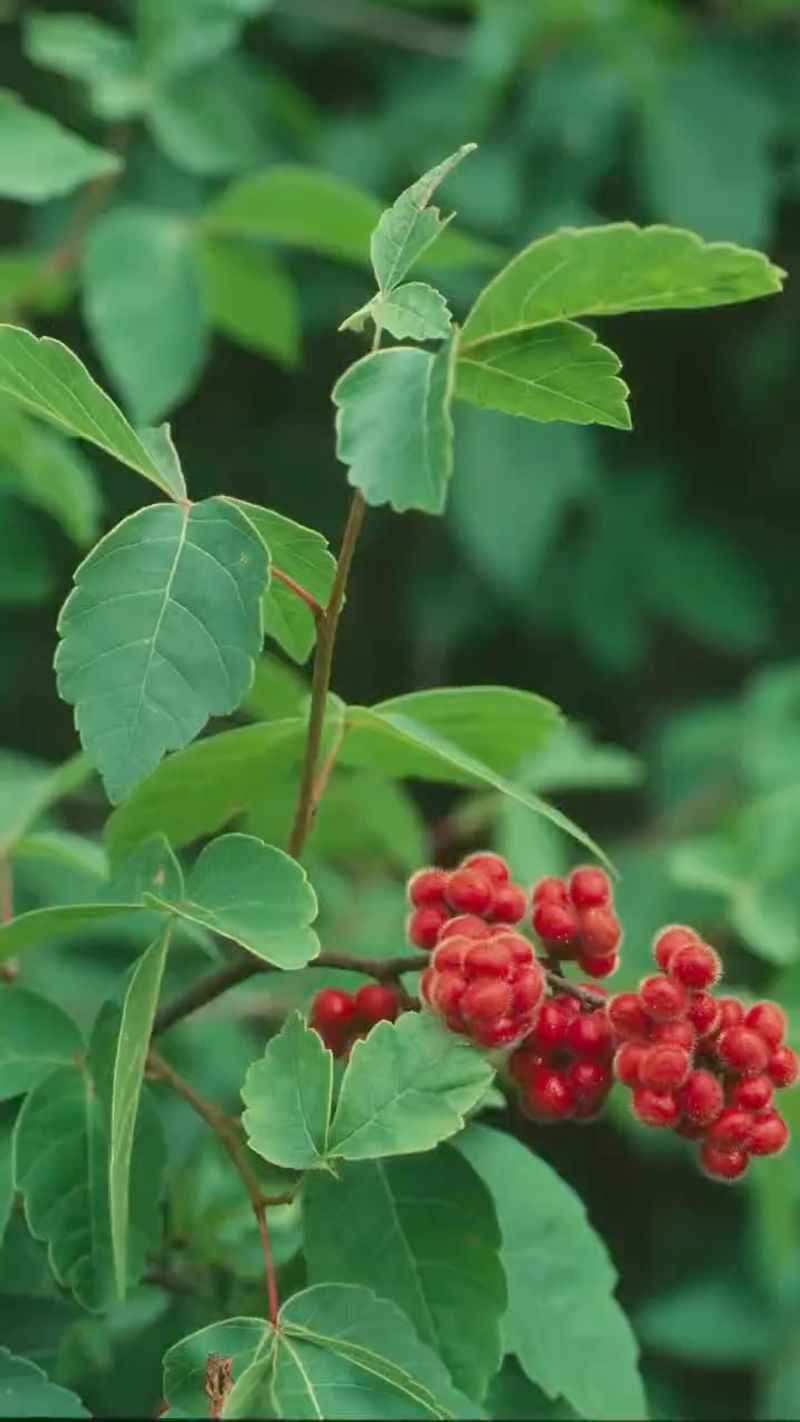
Not every foundation bed has rich, moist soil, and that is exactly where fragrant sumac steps up. Rhus aromatica is built for tough conditions, growing naturally on dry, rocky, or sandy soils across Michigan where other shrubs would struggle.
If your foundation bed gets full sun, drains fast, and tends to dry out in summer, fragrant sumac might be the most practical choice on this entire list.
The compact cultivar called Gro-Low is especially popular for foundation use, spreading low and wide to about two feet tall and six feet across. Standard fragrant sumac can grow a bit larger, so check the label before planting if space is limited.
Either way, the plant has a relaxed, natural look that softens the hard lines of a house foundation without hiding the architecture entirely.
Spring brings small yellow flowers before the leaves emerge, giving early pollinators a welcome food source. Summer foliage is a glossy, aromatic green, and when you brush against the leaves, you get a pleasant citrusy scent.
That fragrance is one of its most charming qualities and something no yew can offer.
Come fall, the show really begins. Fragrant sumac turns blazing shades of orange, red, and scarlet, putting on one of the most vivid autumn displays of any native shrub.
Small red berries also form in late summer, attracting birds before winter arrives. For dry, sunny foundation beds that feel like a landscaping challenge, fragrant sumac turns that problem into a genuine opportunity for seasonal beauty.
4. Black Chokeberry Adds Flowers And Fruit
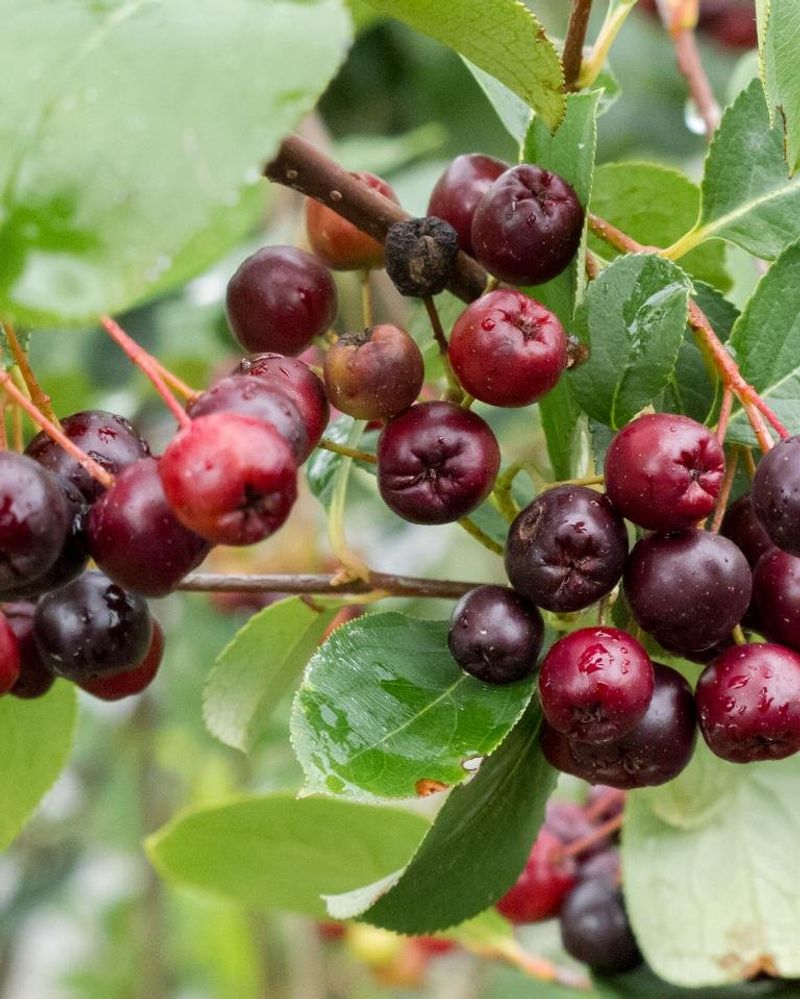
Black chokeberry might not be the flashiest name in the plant world, but Aronia melanocarpa earns serious respect among native plant gardeners.
It offers something different in every season, which is exactly what a foundation bed needs to stay interesting year-round.
White flowers appear in spring, glossy green leaves fill out the summer, and by late summer the plant is loaded with clusters of dark purple-black berries.
Those berries are genuinely valuable for wildlife. Songbirds, especially cedar waxwings and robins, flock to chokeberry fruit in fall and winter.
The berries also happen to be among the most antioxidant-rich fruits in North America, so if you want to snack on a few yourself, go right ahead. Most people find them quite tart fresh off the shrub, but they make excellent jams and juices.
Black chokeberry typically grows four to five feet tall and spreads slowly by root suckers to form a natural colony over time.
It tolerates a wide range of soil conditions, including wet spots, heavy clay, and part shade, making it far more flexible than yew in tricky foundation situations.
Full sun will give you the best berry production and the most vivid fall color, which turns a rich red-orange in autumn.
Maintenance is minimal once the shrub is established. You can lightly trim it to keep things tidy, but it does not need heavy pruning to stay in shape.
For a foundation bed that you want working hard for birds, pollinators, and seasonal beauty all at once, black chokeberry is a standout choice that outperforms a plain evergreen shrub on every level.
5. Shrubby Cinquefoil Adds Long Lasting Flowers
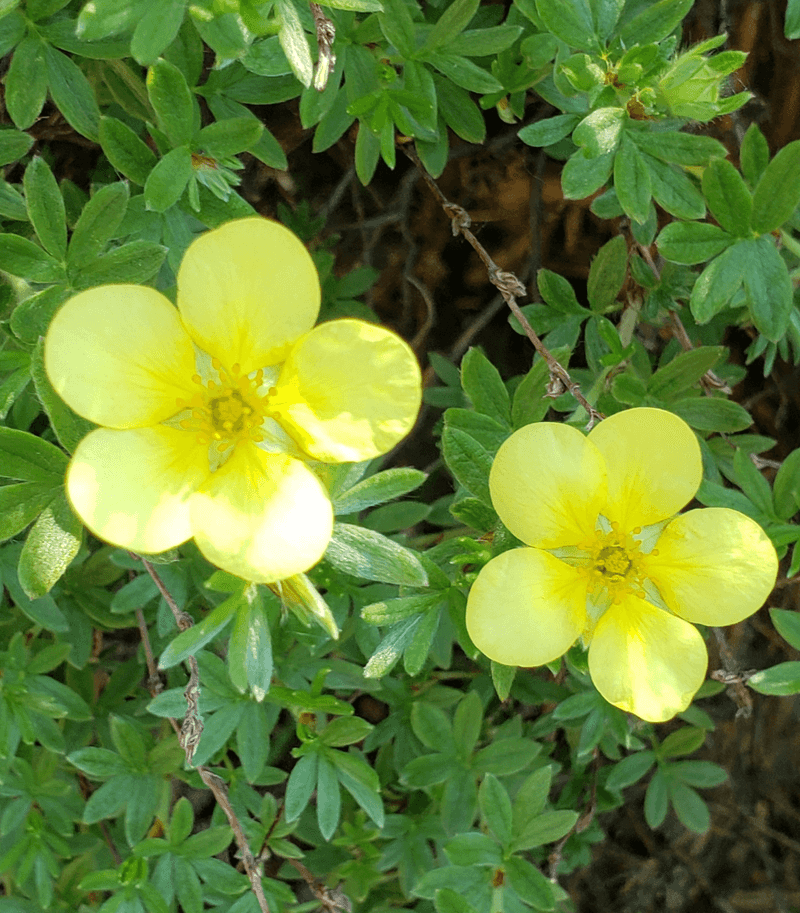
If there is one native shrub that flowers longer than almost anything else in a Michigan garden, shrubby cinquefoil is it.
Dasiphora fruticosa blooms from late spring all the way through fall, producing cheerful yellow flowers for months on end.
That kind of staying power is rare in the shrub world, and it makes a huge difference when you want your foundation planting to look lively all season long.
Most varieties grow two to four feet tall and wide, keeping a naturally tidy, rounded shape. The fine-textured foliage has a soft, feathery look that contrasts nicely with bolder-leafed plants nearby.
Cultivars come in yellow, white, pink, and orange, so you have real options when it comes to matching your home’s exterior colors or your personal style.
Shrubby cinquefoil loves full sun and handles dry to medium soils well. It is also native to Michigan and much of northern North America, meaning it is well adapted to cold winters and hot summers without needing extra coddling.
Native bees visit the flowers regularly throughout the blooming season, so you are also supporting local pollinators simply by growing it.
One practical advantage over yew is that shrubby cinquefoil does not require much pruning. A light trim in early spring keeps it looking fresh, but it naturally holds a compact shape without constant cutting.
It also has no serious pest or disease problems in Michigan landscapes. For a sunny foundation bed where you want color from May through October, shrubby cinquefoil delivers a flowering performance that a yew simply cannot match.
6. Ninebark Works Where There Is More Room
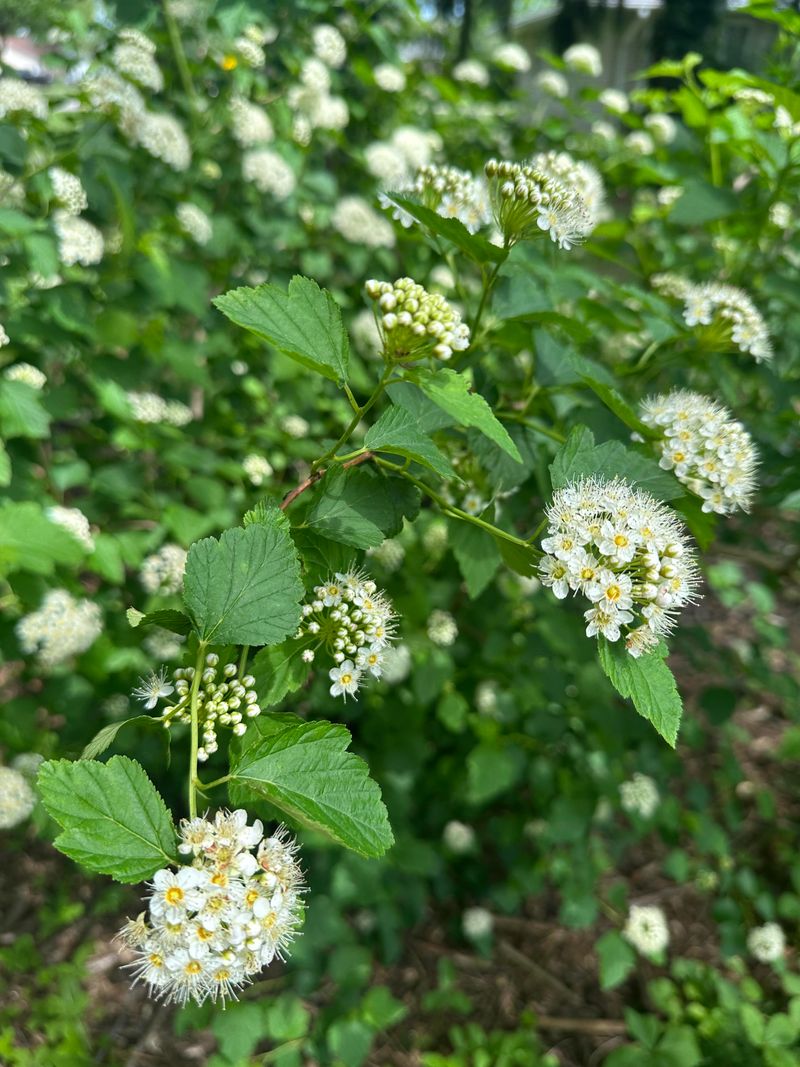
Ninebark is the kind of shrub that makes people stop and ask what it is.
Physocarpus opulifolius has everything going for it: clusters of white or pinkish flowers in late spring, bold foliage in shades of green, gold, or deep burgundy depending on the cultivar, and peeling bark that adds fascinating winter texture.
Few foundation shrubs can match that kind of year-round visual interest. The one thing to know upfront is that ninebark gets big.
Standard varieties can reach six to ten feet tall and wide, so this is not the right choice for a narrow bed directly against the house.
If you have a wider foundation planting area or a corner spot with some breathing room, though, ninebark fills that space beautifully and commands real attention from the street.
Compact cultivars like Tiny Wine or Little Devil top out at three to four feet, making them more manageable for tighter spaces. These smaller forms keep the same great foliage color and flower display in a much more proportionate package.
Always check the mature size on the tag before planting so you are not surprised a few years down the road.
Ninebark is incredibly adaptable, tolerating wet or dry soils, full sun or part shade, and heavy clay. It has very few pest problems and rarely needs spraying.
Birds use the seed heads in fall and winter, adding wildlife value beyond the flowers. For a foundation bed with space to grow, native ninebark rewards you with texture, color, and wildlife appeal that no yew comes close to providing.
7. Winterberry Brightens Moist Foundation Beds
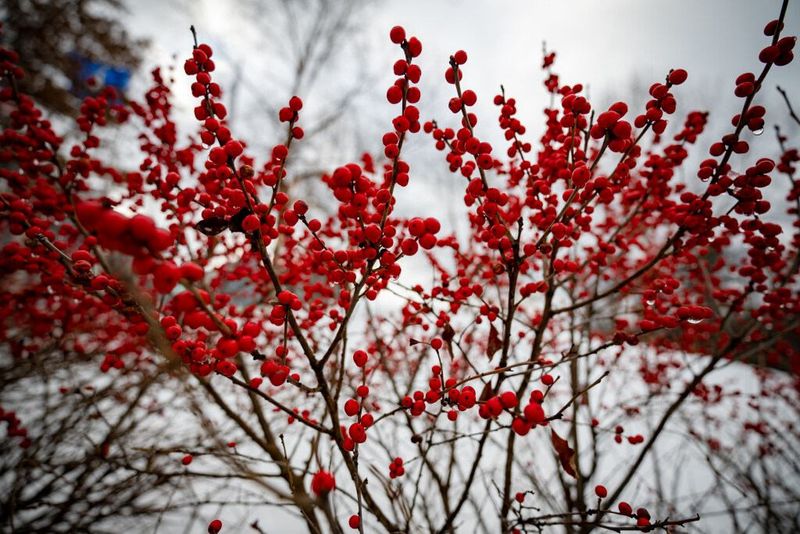
When most shrubs look dull and bare in winter, winterberry is putting on its best show.
Ilex verticillata is a native Michigan holly that produces masses of brilliant red berries in fall, and those berries stay on the branches well into winter, creating a striking display against snow or gray skies.
No yew has ever looked this good in January. Winterberry thrives in moist to wet soils, which makes it perfect for foundation beds that tend to stay soggy after rain or snow melt.
Many homeowners struggle to find shrubs that tolerate those wet spots near downspouts or in low-lying areas.
Winterberry not only tolerates moisture, it genuinely prefers it, making it a smart solution for a tricky planting challenge.
There is one important detail to know before you plant: winterberry is dioecious, meaning you need both a male and a female plant to get berries. The female plant produces the fruit, but it needs a male plant nearby to pollinate the flowers first.
One male can typically pollinate several females within about 50 feet. When you shop, look for a named male pollinator variety that blooms at the same time as your chosen female.
Birds absolutely love winterberry fruit. Bluebirds, robins, and cedar waxwings will visit repeatedly through winter, turning your foundation bed into a lively wildlife feeding station during the quietest months of the year.
Winterberry grows four to eight feet tall and spreads by suckering to form a natural colony. For moist, acidic foundation sites, it offers beauty and wildlife value that a yew simply cannot touch.